
Key Takeaways
- The right foundation depends on whether your tiny home is permanent or movable, your building site conditions, local climate, and building codes.
- Common tiny house foundation types include slab foundations, pier foundations, gravel pads, skid foundations, rubble trench, and hybrid options.
- Park model tiny homes often sit on engineered gravel pads or concrete slabs, while permanent tiny homes more often use slab, pier, or crawl space systems.
- Tiny houses on foundations are considered real property, making it easier to secure loans compared to tiny houses on wheels that tend to depreciate in value.
- Permits, zoning laws, and proper site prep are just as important as the foundation type itself for safety, legality, and long-term performance.
- Introduction: Why Tiny House Foundations Matter
- Step One: Evaluate Your Building Site and Local Rules
- Main Tiny House Foundation Types (Permanent and Semi-Permanent)
- Slab Foundations and Concrete Pads
- Pier and Post Foundations
- Gravel Pads and Skid Foundations
- Rubble Trench and Other Alternative Foundations
- Foundations for Park Model Tiny Homes vs. Permanent Tiny Homes
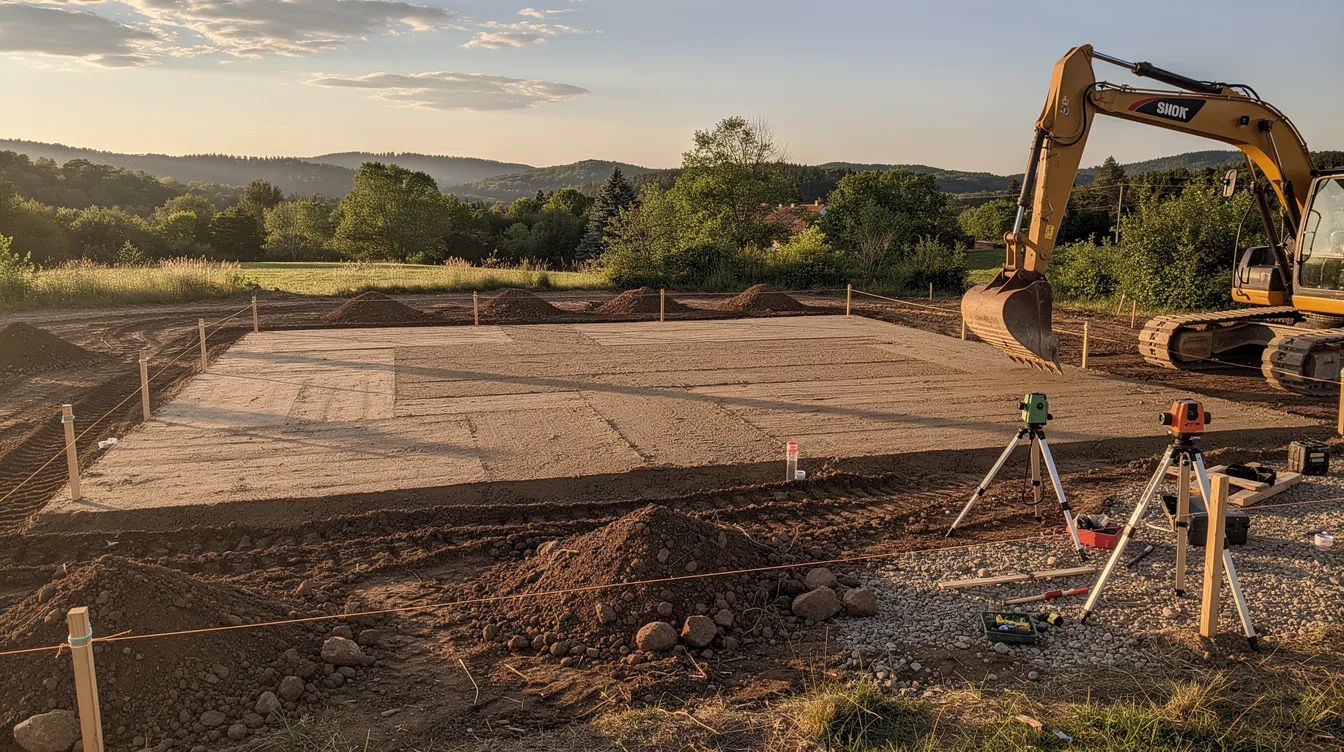
- Site Prep, Drainage, and Utilities
- Permits, Building Codes, and Zoning for Tiny House Foundations
- Cost Ranges and Budget Planning for Tiny House Foundations
- How to Choose the Right Foundation for Your Tiny Home
- Frequently Asked Questions About Tiny House Foundations
Introduction: Why Tiny House Foundations Matter
Even a small house measuring 200–400 square feet can weigh 15,000–30,000 pounds when fully built and furnished. That weight needs a solid base. The foundation you choose affects everything: safety, comfort, durability, and even your ability to get insurance or financing.
Building a tiny house on a foundation allows for greater stability and durability compared to mobile homes, especially in harsh weather conditions. Tiny houses on foundations also require less maintenance than those on wheels, as they don’t experience wear and tear from movement and travel.
There are three main categories to understand. Tiny houses on wheels are mobile structures built on trailers. Park model tiny homes follow RV or ANSI standards (typically under 400 square feet) and often sit on gravel pads or concrete slabs. Permanent tiny homes follow residential building codes and use foundations like slabs, piers, or crawl spaces.
Your foundation decision must consider the building site, building permits, long-term plans, and budget. This guide compares costs, climate performance, and legal factors to help you find the best foundation for your project.
Step One: Evaluate Your Building Site and Local Rules
No foundation decision happens in a vacuum. Site prep, soil type, frost line depth, and local building codes all determine what’s possible on your land.
Assessing Your Site
Start with a visual inspection of your building site:
- Slope: Anything over 15% favors pier foundations to avoid expensive grading
- Drainage: Watch how water moves after rain
- Access: Can concrete trucks or heavy equipment reach the site?
- Vegetation: Large trees and roots may need removal
For soil type, dig a 2-foot test hole. Clay soil holds water and can expand. Sandy or gravel soil drains well and compacts easily. For bigger projects, a professional soil report is worth the money.
Climate and Code Considerations
The frost line matters in cold states. Per the International Residential Code, footings must extend below undisturbed ground—12 inches in southern zones up to 60+ inches in places like Minnesota. Foundations above frost depth will heave and crack.
Zoning laws and building codes vary widely. Some areas treat pier foundations as temporary structures. Others require full concrete slabs. By 2024–2026, many municipalities use IRC Appendix Q for tiny homes under 400 square feet, but local amendments differ. Always check with your local building department before you plan anything.
Main Tiny House Foundation Types (Permanent and Semi-Permanent)
Understanding the major foundation type options helps you narrow your choices before digging into details, and comparing the best foundation options for a tiny house can further clarify which system fits your site and long-term plans.
Main categories include:
- Slab foundation (concrete poured on grade)
- Pier and post foundation (elevated on concrete piers or wooden posts)
- Skid foundations (beams on compacted ground)
- Gravel pad foundations (crushed stone base)
- Rubble trench foundations (stone-filled trenches with grade beams)
- Hybrid systems combining multiple approaches
Permanent tiny home foundations become real property—harder to move but easier to finance. Semi-permanent bases offer future relocation flexibility. There’s no single best foundation for all situations. The goal is matching your foundation to your climate, soil, and long-term dream, just as choosing tiny house plans that fit your life should reflect how you actually intend to use the space.
Slab Foundations and Concrete Pads
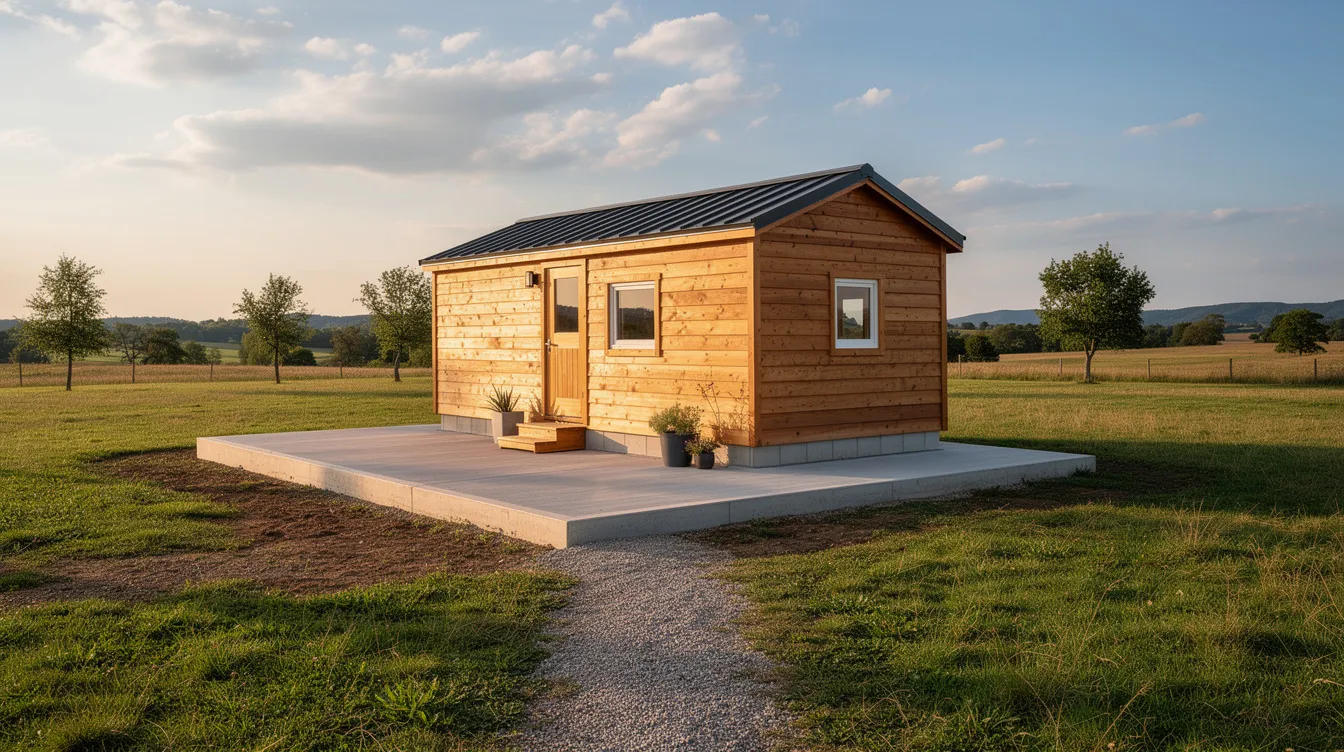
Slab on grade foundations are a common choice for tiny houses, involving a concrete slab poured directly on prepared soil, providing a durable and level surface.
How It’s Built
A slab foundation involves:
- Excavation (6–12 inches deep)
- Compacted gravel base (4–6 inches)
- Rebar or wire mesh reinforcement
- Vapor barriers for moisture protection
- Pouring concrete (4–6 inches thick with control joints)
For a 12×36 or 13×40 tiny home, foundations are typically poured 2–3 feet larger in both directions. This provides stability and working space around the structure.
When Slabs Work Best
Concrete slabs excel on flat, well-drained sites with moderate frost lines. In colder regions, you’ll need thickened edges or frost-protected shallow foundations with insulation, and it’s smart to plug these choices into a tiny home cost calculator to see how different foundation specs affect your total budget.
Advantages:
- 75–100 year potential lifespan
- Very stable for heavy park model homes
- Low maintenance
- Easy to meet building codes for permanent tiny homes
- Termite resistance (no wood-soil contact)
Disadvantages:
- Higher up-front cost
- More disruptive site prep
- Less access to plumbing for future changes
- Can crack on poorly compacted or expansive clay soils
The cost of a slab on grade foundation typically ranges from $5,000 to $10,000 for a 200-400 sq ft tiny home, with build times around 1-2 weeks.
Pier and Post Foundations
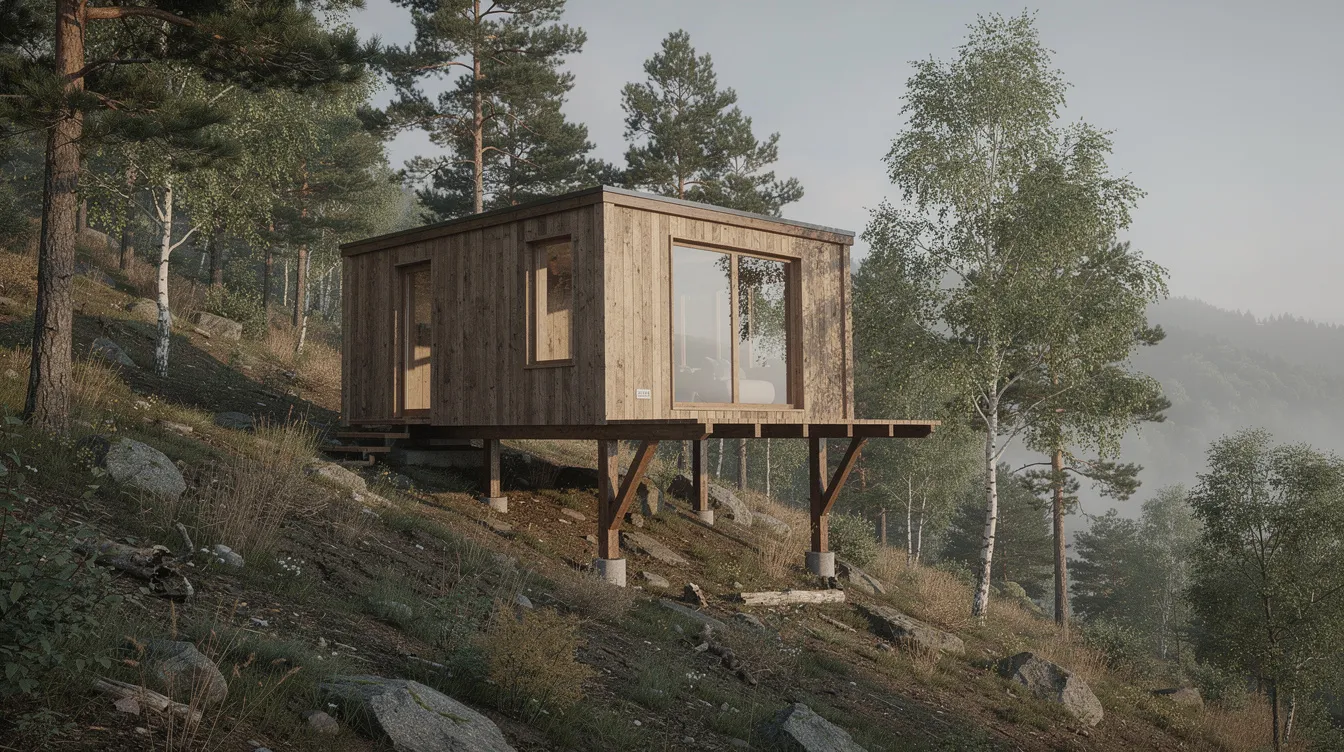
Pier or post foundations elevate the structure on concrete piers or wooden posts, making them ideal for sloped or uneven terrain, and allowing for better drainage.
How It’s Built
A typical pier foundation uses concrete piers or sonotubes 8–16 inches in diameter. These sit on footings below frost depth, placed in a grid under the tiny home frame. Beams connect the piers to support the floor system.
Some DIY builders use helical piers (screw-in steel shafts) as a faster, engineered variation. These work especially well in areas with deep frost lines or where access for machinery is limited.
When Piers Work Best
Pier foundations shine on sloped building sites, near flood-prone areas, or where homeowners want airflow and under-floor access, which is why they’re frequently used under tiny house park model homes that need elevation for ventilation and tie-downs.
Advantages:
- Less concrete than slabs (typically 40% less)
- Adjustable for uneven terrain
- Easy future access to plumbing and wiring
- Potentially lower cost on steep or rocky land
- Better airflow reduces moisture issues
Disadvantages:
- More point loads into soil (requires careful spacing)
- Potential for movement without proper bracing
- More steps or ramps to reach elevated floor
Crawlspace foundations raise the tiny house above ground, providing access to plumbing and utilities while allowing for better airflow and insulation, particularly in humid climates. Post and pier foundations generally cost between $8,000 and $15,000, making them a cost-effective option for uneven terrain.
Many jurisdictions accept engineered pier foundations for small permanent homes, but spacing, diameter, and bracing must follow local code requirements.
Gravel Pads and Skid Foundations
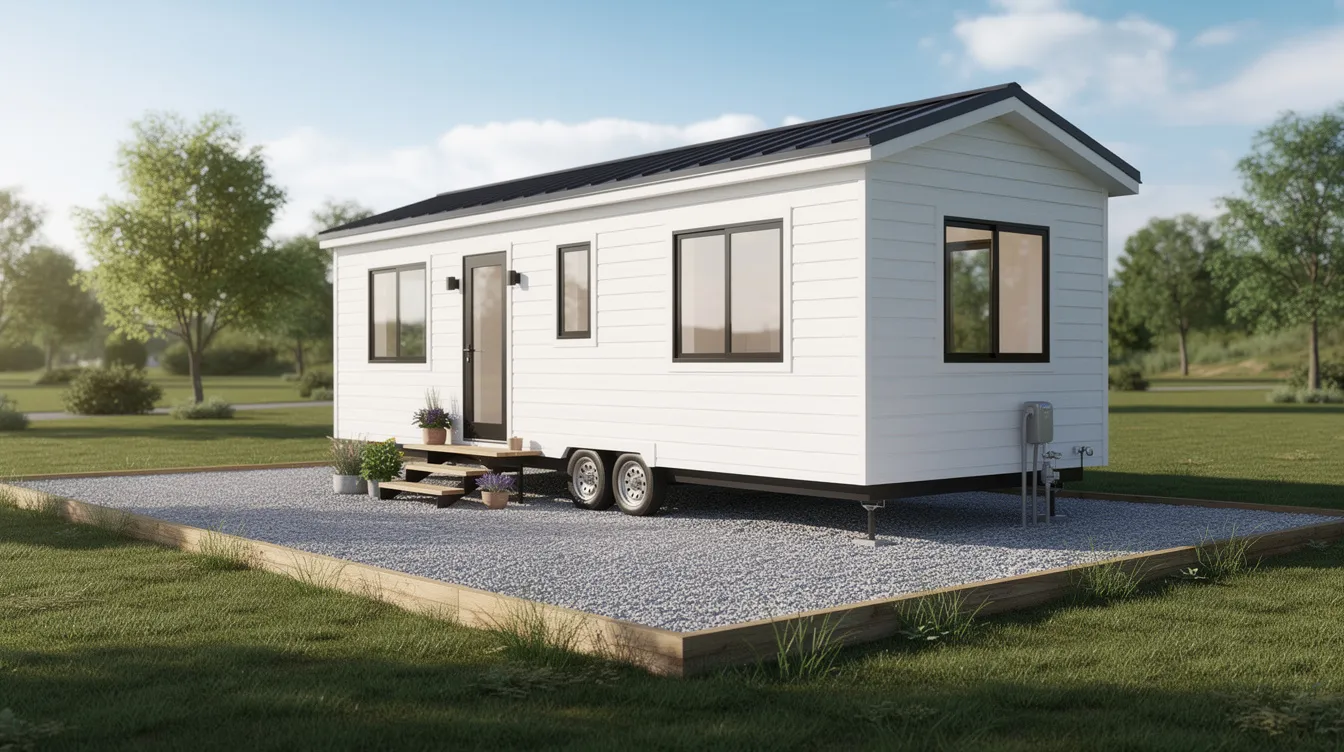
Gravel pads and skid foundations are common for park model tiny homes and portable tiny cabins where some mobility is still desired, which pairs well with tiny homes under $20K that many buyers want to keep relatively easy to relocate.
Gravel Pad Construction
A proper gravel pad involves:
- Excavating organic material and topsoil
- Compacting subsoil to 95% density
- Adding 6–8 inches of compacted crushed stone
- Laser leveling the surface for proper drainage
The pad should extend 3 feet beyond the tiny home footprint in all directions. This protects against water pooling and provides workspace.
Skid Foundations
Skid foundations use pressure-treated beams that sit on compacted gravel or concrete blocks. They support the floor system while allowing limited repositioning with equipment. This keeps the structure classified as movable for future relocation.
Gravel Pad Advantages:
- Excellent drainage
- Relatively low overall cost
- DIY-friendly
- Suitable base for skids, piers, or blocking
Skid Foundation Advantages:
- Quick to install
- No deep digging required
- Simpler to move the structure locally
Drawbacks:
- Relies on good compaction and monitoring
- In wet or soft soils, settlement or frost heave causes leveling issues
- May need re-leveling with shims every 2–5 years
Gravel pad foundations are the most affordable option for park model tiny homes, costing around $5-$9 per square foot when constructed by a professional. Many park model communities specify minimum gravel pad thickness or concrete strip pads under the frame for warranty compliance.
Rubble Trench and Other Alternative Foundations
Rubble trench foundations are an eco-friendly option that involves digging a trench filled with stone or rubble, providing both structural support and drainage without extensive earth moving.
How Rubble Trench Works
The basic concept:
- Dig a narrow trench below frost depth around the footprint
- Line with geotextile fabric
- Fill with compacted stone or local rubble
- Top with a grade beam or small stem wall
This method traces back to Frank Lloyd Wright’s 1930s designs. A Tennessee case study showed a 200 sq ft home built for $1,500 using local rubble, compared to $8,000 for a conventional slab.
Rubble trench foundations can be incredibly low-cost if done by hand and with locally sourced materials, making them an affordable option for eco-conscious builders who are also exploring affordable tiny house buildings and designs to keep overall project costs down.
Where It Works:
- Well-drained gravel or sandy soils
- Gentle slopes
- Climates allowing alternative building methods
Limitations:
- Not suitable for expansive clays or wet sites
- Harder to permit in conservative jurisdictions
- Often requires an engineer for approvals
Block Wall Foundations
Block wall foundations provide continuous perimeter support and allow for usable subterranean levels like a crawl space or basement, but they are not well suited for sloping land. Block wall foundations are among the most expensive options, with costs typically ranging from $15,000 to $25,000 due to material and labor expenses.
Hybrid systems combining rubble trench perimeters with interior piers, or insulated raft slabs for cold climates, offer flexibility for specific site conditions. Always consult local building officials and structural engineers before pursuing non-standard foundations.
Foundations for Park Model Tiny Homes vs. Permanent Tiny Homes
Park model tiny homes (under 400 sq ft, built to ANSI A119.5 standards) differ significantly from site-built permanent tiny homes following residential codes, including rules on tiny house maximum height that can affect both design and foundation choices.
Park Model Setups
Common park model configurations include:
- Gravel pads with concrete blocks and leveling jacks
- Full poured concrete pads
- Slab foundations with anchor points and tie-downs
Many park model communities and RV resorts require specific foundation types, such as a 4–6 inch concrete slab or engineered gravel pad, to simplify installation and inspections.
Permanent Tiny Home Options
Permanent tiny homes might use slab foundations, pier foundations, crawl spaces, or even basements depending on local building codes. These structures become real property subject to full code compliance.
Owning a tiny house on a foundation typically leads to property appreciation, as the land and structure together hold value over time, unlike mobile homes which depreciate. This matters for resale value and financing options.
Choosing Your Path:
Factor | Park Model | Permanent Tiny Home |
|---|---|---|
Foundation | Gravel pad, blocks, simple slab | Slab, piers, crawl space |
Permits | Often treated as RV | Full building permits |
Financing | Personal property loans | Mortgage eligible |
Mobility | Easier to relocate | Essentially permanent |
If you might move in 5–10 years, a gravel pad with skids makes sense. For a forever home, a full slab or engineered pier system offers better long-term value. |
Site Prep, Drainage, and Utilities
Even the best-designed foundation fails if site prep and drainage are neglected.
Basic Site Prep Steps
- Clear vegetation from the building footprint
- Remove topsoil and organic material
- Resolve major roots or stumps
- Rough grade to shed water away from the foundation
- Compact soil to proper density
Drainage Design
Protect your investment with proper drainage:
- Positive slope away from the house (minimum 5% for 10 feet)
- Gutters and downspouts directing water away
- Swales or shallow ditches for surface water
- French drains near footings in wet areas
Utility Planning
Plan utility routing before finalizing foundation layout, including septic and waste solutions; many tiny homeowners opt for tiny house septic options for sustainable living that integrate well with their chosen foundation. This includes:
- Water supply lines
- Sewer or septic connections
- Electrical conduit
- Possible gas lines
For slabs, pipes get buried in concrete. Plan ahead or face expensive fixes later. Photograph and map underground utilities before backfilling. Your future self will thank you.
Permits, Building Codes, and Zoning for Tiny House Foundations
Legal compliance matters as much as structural design. Foundations often trigger full building permit review even for tiny homes.
Required Permits
Building permits are essential for constructing a tiny house on a foundation, and the requirements can vary significantly by location, often costing between $1,000 and $3,000.
Typical permits include:
- Zoning permit (land use and setbacks)
- Building permit (structure and foundation)
- Electrical permit
- Plumbing permit
- Septic or sewer connection permit
Zoning permits dictate how close a tiny house can be to property lines and may specify construction methods, which can be found on local municipality websites or offices.
Code Requirements
Tiny houses on foundations must comply with local building codes, which include regulations on dimensions, ceiling heights, and other structural requirements, and these codes can vary widely across different municipalities.
The IRC and Appendix Q provide guidance for small dwellings, but local amendments vary. Building codes influence:
- Minimum footing depth
- Frost protection requirements
- Uplift and lateral bracing rules
- Anchoring methods for wind and seismic zones
Contact your local building department early. Bring draft site plans and foundation sketches. Verify which foundation types are acceptable in your specific area before you’ve started building.
Cost Ranges and Budget Planning for Tiny House Foundations
Foundations typically account for 10–25% of a tiny home’s total project cost.
Approximate Cost Ranges (2025–2026)
Foundation Type | Cost per Sq Ft | Total for 200 Sq Ft |
|---|---|---|
Gravel pad | $5–9 | $2,000–6,000 |
Skid foundation | $2–4 | $2,000–5,000 |
Pier foundation | $4–7 | $8,000–15,000 |
Slab foundation | $6–10 | $5,000–10,000 |
Rubble trench | $3–5 | $1,500–5,000 |
Block wall | $12–18 | $15,000–25,000 |
Cost Drivers
Major factors affecting your money:
- Concrete prices (fluctuating 15–20% since 2023)
- Excavation depth and difficulty
- Site access for equipment
- Soil conditions requiring remediation
- DIY vs. fully contracted work
Budget a 10–15% contingency for foundation and site work. Hidden rocks, poor soil, or unexpected code requirements often appear once digging starts, and you’ll want enough left over to execute tiny house floor plans that work for you without compromising key features.
Consider long-term operating costs too. Better drainage, insulation, and vapor barriers on day one reduce moisture issues, energy bills, and repair costs over the life of your tiny home. Solar panels and other systems also benefit from a stable, level foundation.
How to Choose the Right Foundation for Your Tiny Home
Use this decision framework to find your best foundation match.
Key Questions
- Permanent or movable? Forever homes favor slabs or piers. Future relocation favors gravel pads with skids.
- What’s your local climate? Deep frost lines need foundations below frost or frost-protected designs.
- What’s your site like? Flat sites work for slabs. Sloped or flood-prone land needs piers.
- What do codes allow? Some jurisdictions only accept engineered slabs.
- What’s your budget? Gravel pads cost least. Block walls cost most.
Typical Pairings
- Flat site, permanent home: Slab or insulated slab
- Sloped site, flood zone: Pier foundation
- Park model, semi-permanent: Gravel pad with skids or blocking
- Eco-conscious build, good soil: Rubble trench
Pier foundations offer easier access for future upgrades. Slabs feel more like conventional homes and may appraise more favorably. Either way, get at least two quotes from contractors familiar with small homes before committing to your plan, and make sure your foundation choice supports the cute tiny house design or aesthetic you ultimately want to live in.
Frequently Asked Questions About Tiny House Foundations
Can I build a tiny house foundation without a building permit?
In most US jurisdictions, any permanent tiny home foundation requires at least a building permit and zoning review. Some rural counties have size thresholds or agricultural exemptions, but these are local exceptions. Skipping permits can lead to fines, stop-work orders, or difficulties insuring or selling the property later. Always verify with your city or county office.
What is the cheapest tiny house foundation that is still reliable?
For flat, well-drained sites, a properly compacted gravel pad paired with skids or blocks is often the lowest-cost, code-acceptable option for park model tiny homes. For permanent dwellings, a simple slab-on-grade or minimal pier system may be most affordable while meeting code. Cheap should never mean unsafe—soil conditions, drainage, and frost depth must still be respected.
Can I move a tiny house that was built on a foundation?
Most site-built permanent tiny homes on slabs, crawl spaces, or basements aren’t designed to move. Moving would mean building a new foundation entirely. Park model tiny homes on gravel pads, skids, or non-permanent piers can often be moved by professional haulers if the frame remains intact. If future relocation matters, choose foundation options that keep the structure classified as movable.
How thick should a concrete pad be for a tiny home?
Many small-home pads are 4–6 inches thick, with local codes often specifying at least 4 inches plus thicker edges for heavier loads and frost resistance. Park model manufacturers may require specific thickness, reinforcement, and anchor details. Never guess on slab thickness—use engineered or code-based details for your tiny home’s dimensions and weight.
Do I need to insulate my tiny house foundation?
In cold and mixed climates, insulating a slab or sealing the underside of a pier-supported floor significantly improves comfort and energy efficiency. Common approaches include rigid foam under and around slab edges, spray foam between floor joists, and insulated skirting around raised homes. Building energy codes may require specific R-values for floors and slab edges in your area.