Key Takeaways
- Tiny homes under 400 square feet can be insured, but coverage type (RV, manufactured home, specialty tiny home insurance) depends on construction and usage
- Standard homeowner’s policy usually won’t cover a tiny home on wheels—specialty carriers like Strategic Insurance Agency, Foremost Insurance Group, and American Modern fill most gaps
- Insurance requirements change if your tiny home is financed, rented out, or moved between states—work with an experienced insurance company or independent agent
- DIY build tiny homes and uncertified units are insurable through specialty markets rather than mainstream home insurance
- Expect annual premiums roughly between $400 and $2,400+ depending on usage, location, and coverage limits
Can You Insure a Tiny House in 2026?
Yes. Tiny homes can be insured. But they rarely fit neatly into normal house insurance categories.
Tiny homes, typically defined as dwellings of 400 square feet or less, may require specialized insurance policies such as manufactured home insurance, RV insurance, or other types of coverage depending on their classification and construction standards. Insurers may treat your tiny home as an RV, manufactured home, park model, accessory dwelling unit, or a “specialty dwelling.” This classification drives which policy form is available.
A tiny house on wheels parked seasonally at campgrounds is usually insured differently from a tiny home on a permanent foundation in Raleigh, NC or Portland, OR. Tiny homes often do not qualify for traditional homeowners insurance policies and may require specialized coverage.
The major growth in tiny houses between 2020 and 2025 prompted many carriers to offer niche products. Still, underwriting guidelines remain stricter than for standard homes. Self-built and non-certified tiny homes face the most scrutiny and almost always require a specialty insurer or a strategic insurance agency working across multiple markets.
- What Qualifies as a Tiny Home (and Why Insurers Care)
- Types of Insurance Available for Tiny Homes
- How To Choose an Insurance Company for Your Tiny Home
- How Much Does Tiny Home Insurance Cost?
- Insurance Requirements and Legal Considerations
- Notable Tiny Home Insurance Options (and How They Differ)
- Practical Tips for Getting Tiny Home Insurance Approved
- FAQ
- Can I insure an off-grid tiny home with solar and composting toilets?
- Does my tiny home insurance cover me when I move the house to a new state?
- What if my tiny home is parked on a friend’s land—whose insurance applies?
- Will renter’s insurance protect me if I lease or borrow a tiny home?
- Can a tiny home be covered if it’s used partly as a home office or small business?
What Qualifies as a Tiny Home (and Why Insurers Care)
For insurance purposes, “tiny home” is as much a legal definition as a lifestyle term. Misclassification can leave coverage gaps.
The 2021 International Residential Code Appendix Q defines tiny houses as 400 square feet or less. However, some cities and counties—parts of Colorado and North Carolina, for example—allow tiny homes up to 600-800 square feet under local zoning laws.
Insurers look at several key types:
- Tiny homes on wheels (THOW): Often registered as travel trailers
- Tiny homes on foundations (THOF): Built to residential code standards
- Park models: Semi-permanent installations in communities
- ADUs: Accessory dwelling units on existing residential lots
Building standards and certifications strongly influence coverage options. The Recreational Vehicle Industry Association (RVIA) certification matters for RV-classified homes. The National Organization of Alternative Housing (NOAH) certification helps with specialty programs.
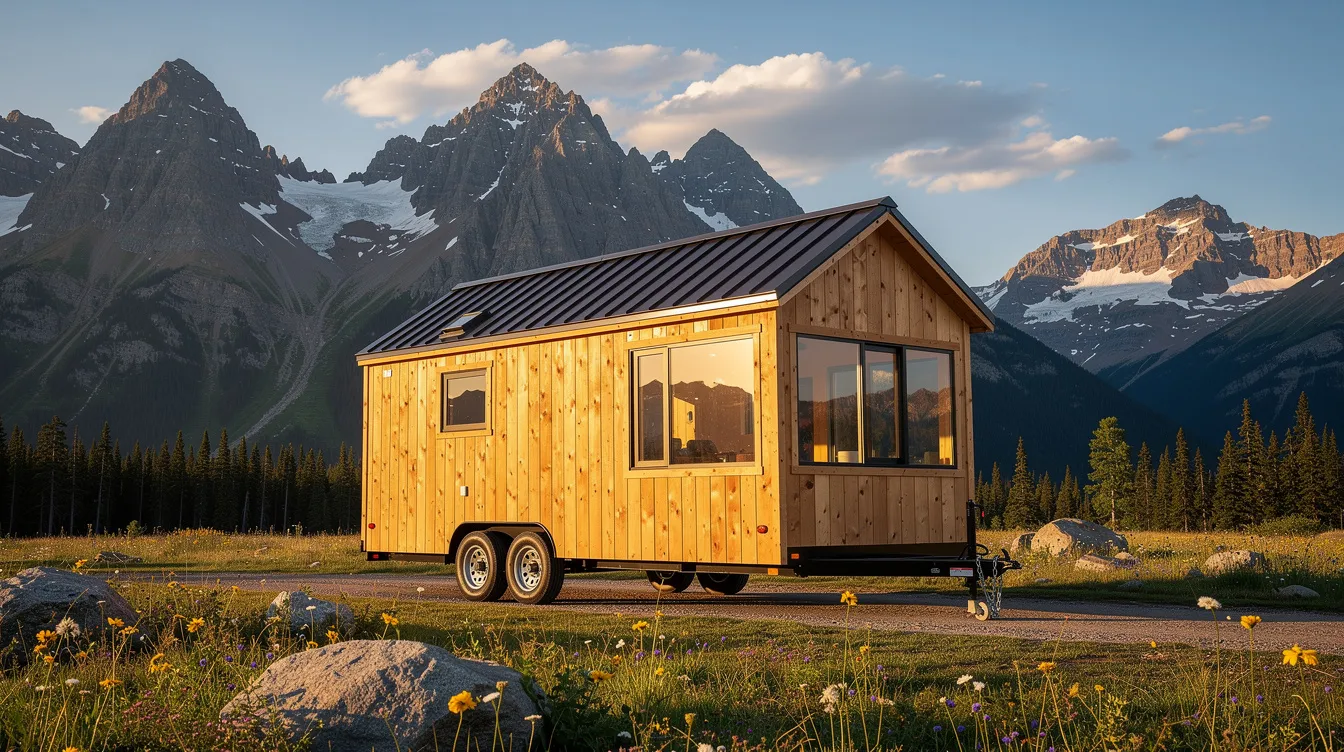
A 220 square foot NOAH-certified THOW will be classified entirely differently from a 500 square foot code-built ADU in Seattle. The first might qualify for RV insurance or specialty tiny home insurance. The second might fit under homeowners insurance or manufactured home coverage, depending in part on the type of foundation you choose for your tiny house.
Types of Insurance Available for Tiny Homes
No single policy type fits every tiny home. Owners may move between policy types as their situation changes—construction, moving, renting, full-time living. Insurance for tiny homes can vary significantly based on whether the home is stationary or mobile, with different policies available for each type.
Specialty Tiny Home Insurance Programs
Agencies like Strategic Insurance Agency can place a tiny home on a custom homeowner’s-style policy. They cover dwelling, personal property, and liability. Strategic offers optional trip endorsements (around $150 per policy term) for moves. They don’t require NOAH or RVIA certification, making them ideal for DIY builds.
Homeowner’s Policy for Foundation Tiny Homes
A tiny home on a permanent foundation might qualify for traditional homeowners policy coverage—if it meets local building codes and serves as a primary residence or ADU. Some insurers treat backyard tiny homes under other structures coverage attached to the main home’s policy.
Manufactured/Mobile Home Insurance
Mobile home insurance (HO-7 style policies) works for tiny homes built off-site and installed on foundations. Foremost Insurance Group and American Family Insurance offer programs for qualifying tiny homes with proper certifications, and well-thought-out tiny house plans that fit your life can make it easier to document build quality for insurers.
RV and Travel Trailer Coverage
Tiny homes built on wheels may require RV insurance if registered as travel trailers with Vehicle Identification Numbers. Foremost Insurance Group and Progressive offer these programs. They combine auto liability (for towing) with dwelling coverage. Full-timer options exist for year-round occupancy.
Dwelling Fire Policies
For a non-owner-occupied cabin or weekend tiny home on private land, dwelling fire policies cover the structure and basic liability without full homeowner protections. American Modern offers these for vacation properties and alternative housing.
Landlord Insurance
Using your tiny home as a full-time rental, Airbnb, or part of a tiny home village? You may need landlord insurance with premises liability, loss of rent coverage, and higher liability limits. Standard policies typically exclude income-producing activities.
Builder’s Risk Insurance
Builder’s risk insurance is essential for those constructing a tiny home, as it protects the structure and building materials during the building process. Coverage must be transitioned to a different policy once construction is complete.
How To Choose an Insurance Company for Your Tiny Home
Choosing an insurer is less about brand name and more about finding an insurance company or agency that understands tiny homes.
When searching for tiny home insurance, it’s crucial to understand how your tiny house is classified, as this will dictate the type of policy you can obtain and the coverage options available.
Start with a clear decision sequence:
- Classify your tiny home (THOW vs foundation)
- Determine use (primary residence, vacation, rental)
- Check for certifications (RVIA, NOAH, local permits)
- Note if stationary or frequently moved
Working with an independent insurance agent can be beneficial when looking for tiny home insurance, as they can help you determine your coverage needs and compare quotes from various insurers. An independent strategic insurance agency can shop many carriers—including Foremost, American Modern, and specialty markets—to match your tiny home with the right program.
Discuss specific underwriting questions with your agent:
- Year built and builder details
- Square footage and foundation type
- Certification status
- Hook-ups (water, sewer, power)
- Intended use
Ask about common exclusions: restrictions on full-time RV park occupancy, limits on moving the home, or prohibitions on short-term rentals.
How To Buy Tiny Home Insurance Step-By-Step
Here’s a simple process:
- Gather documentation: Photos, floor plans, invoices, certification documents
- Confirm registration: How is your home titled? Does it have a VIN?
- List personal property value: Estimate contents for coverage purposes
- Contact agents: Request quotes online where available, by phone for specialty insurers
- Provide details: Build cost, location ZIP code, prior claims, safety features
- Review coverage: Check dwelling coverage, personal property coverage, liability coverage, and deductibles
- Set effective date: Align with when the home leaves the builder’s lot or transitions from construction
How Much Does Tiny Home Insurance Cost?
The cost of tiny house insurance can vary significantly based on factors such as size, location, and type of coverage, with premiums reported to range from $400 to over $2,400 per year.
Main pricing factors include:
- Location (wildfire, hurricane, hail exposure)
- Square footage and construction quality
- Certification status
- Distance to fire services
- Movement frequency
Sample Scenarios:
Tiny Home Type | Location | Coverage | Annual Premium Range |
|---|---|---|---|
200 sq ft THOW (seasonal) | Colorado | $75,000 dwelling | $400-$800 |
350 sq ft ADU on foundation | Raleigh, NC | $100,000 dwelling | $900-$1,400 |
280 sq ft DIY build (full-time) | Oregon | $60,000 dwelling | $500-$1,200 |
Coverage choices change cost. Higher dwelling coverage limits, replacement cost on contents, lower deductibles, and trip endorsements all push premiums higher. |
Cost-management strategies:
- Bundle with auto or umbrella policies (10-20% discount)
- Increase deductibles where affordable
- Add security features (locks, hitch locks)
- Accurately value a low-cost DIY build—don’t overinsure

Insurance Requirements and Legal Considerations
Insurance requirements for tiny houses depend on how your home is financed, registered, and used.
Lenders almost always require proof of adequate tiny home insurance until the loan is paid off. Loan documents typically specify minimum dwelling and liability coverage limits.
DMV registration of a THOW as a travel trailer or recreational vehicle triggers mandatory liability coverage if towed on public roads. Physical damage coverage is strongly recommended but not always mandated by law.
The eligibility for tiny home insurance depends on factors such as whether the home is built on a permanent foundation or is mobile, as well as local building regulations and zoning laws. Local zoning affects both legality and insurability. A tiny home in a jurisdiction that prohibits residential mobile homes may face coverage challenges.
Verify whether your municipality treats a backyard tiny home as an ADU subject to specific setbacks and minimum square footage. Confirm with your insurer that the policy aligns with local laws.
Special Rules for DIY Builds and Uncertified Tiny Homes
DIY build tiny homes often lack factory records or certification labels. Insurers may require:
- Material receipts and construction photos
- Third-party inspections
- Documented electrical and plumbing work
Insurance for tiny homes often requires certification from recognized organizations, which can influence the availability and cost of coverage. Some mainstream carriers decline DIY tiny homes altogether—specialty markets accessed through a strategic insurance agency become essential, especially if you build a tiny house yourself from the ground up.
Safety upgrades help: proper electrical work, smoke and CO detectors, tie-downs, and compliant trailers. Building to a recognized standard like IRC Appendix Q improves both safety and insurability.
Notable Tiny Home Insurance Options (and How They Differ)
Some insurance companies have created separate divisions for tiny homes and park models, while others may lump them together, leading to varying coverage options and requirements.
Strategic Insurance Agency operates across nine states (Arizona, California, Colorado, Idaho, North Carolina, New Mexico, Oregon, Tennessee, Washington). They place tiny homes into tailored homeowner’s-style policies with flexible coverage. Trip endorsements are available. No certification required—ideal for unconventional builds and for clients working with top micro house builders focused on quality and affordability.
Foremost Insurance Group has dedicated programs for travel trailers, park models, and tiny homes. Their coverage suits mobile tiny houses in RV parks, including units placed by owners exploring the best Idaho tiny homes and local builders. Certification or specific build standards may be required.
American Modern insures manufactured or specialty dwellings, including some stationary tiny homes. This can be useful if you’re looking at small homes in Washington State, including tiny and prefab options and need coverage for a compact primary residence or vacation place. Access is typically through independent agents who understand niche property risks.
Big national brands like Progressive may insure qualifying tiny homes through RV or mobile home insurance products. Others rely on specialty markets or decline non-standard builds, so using a tiny home cost calculator to understand your build budget can help you align coverage limits with what you actually spend.
Insurance for tiny homes can be more complicated than for traditional homes, often requiring specialized policies depending on the home’s classification. Policy details vary significantly between companies—direct discussion with an insurance agent is essential.
When a Strategic Approach Makes Sense
Work through an independent agency when dealing with:
- DIY builds lacking certification
- Homes moved across multiple states
- Tiny home villages or communities
- Mixed-use setups (personal plus rental)
Agencies with access to multiple specialty carriers can design coverage strategies including builder’s risk policy during construction, tiny home insurance for occupancy, and landlord insurance once rental activity begins, especially for affordable tiny house designs used as rentals or ADUs.
Practical Tips for Getting Tiny Home Insurance Approved
Many denials stem from incomplete information or unclear usage plans. Preparation improves approval odds.
Documentation tips:
- Date construction photos throughout the build
- Keep itemized cost lists and invoices
- Save receipts for roofing, windows, trailer, insulation
Certifications that help:
- NOAH certification
- RVIA certification
- Local building permits
- Electrical inspections
Be clear about how your home will be used in 2025-2026. Full-time residence? Weekend cabin? Airbnb rental? Traveling between states? Whether you choose one of the best tiny house designs for modern living as a primary home or a short-term rental, this determines which policy forms and endorsements fit.
Understanding your budget—for example, if you’re shopping tiny homes under $20K as an entry point into tiny living—also matters, because lower build costs usually justify lower dwelling limits. Proactive risk-reduction steps make insurance carriers more comfortable:
- Anchor stationary tiny homes
- Install smoke/CO detectors and fire extinguishers
- Add security devices
- Use quality tie-down equipment on wheels
FAQ
Can I insure an off-grid tiny home with solar and composting toilets?
Many insurers will cover off-grid tiny homes. They may ask additional questions about electrical systems, heating appliances, water storage, and waste handling to assess fire and liability risks. Providing installation documentation for solar panels, inverters, propane lines, and wood stoves helps underwriters. Some insurance carriers may limit or surcharge off-grid risks based on their assessment.
Does my tiny home insurance cover me when I move the house to a new state?
Many stationary tiny home policies exclude damage while in transit unless a specific trip endorsement is purchased. RV insurance typically covers collision and road hazards during moves. Notify your insurer before moving, confirm whether transit coverage is required, and check if crossing state lines triggers a policy rewrite under new state rules.
What if my tiny home is parked on a friend’s land—whose insurance applies?
Your own insurance policy covers your tiny home structure and your personal liability. The landowner’s homeowners insurance addresses premises-related issues on their property. Both parties should talk with their respective insurance companies. Document any agreements about rental of the pad or utility hookups so liability responsibilities are clear.
Will renter’s insurance protect me if I lease or borrow a tiny home?
A renter’s policy generally covers your personal property and personal liability—not the tiny home structure itself. That remains the owner’s responsibility to insure. Verify the owner has valid coverage on the unit. Confirm with your own insurer that living in a tiny home is acceptable under your renter’s policy terms.
Can a tiny home be covered if it’s used partly as a home office or small business?
Limited business use (like a remote worker’s desk) may be acceptable on many personal policies. Operating a client-facing business or short-term rental typically requires endorsements or commercial coverage. Disclose any business or income-producing activities to your agent so the policy is structured correctly—avoiding denied claims due to unreported commercial use.