
Choosing between tiny houses and ADUs affects cost, legal compliance, property value and lifestyle flexibility. The right option depends on your budget, property ownership status, local zoning laws and long-term housing goals.
Below is a practical comparison of tiny house vs ADU living.
Tiny House vs ADU: Key Differences
The fundamental distinction comes down to mobility versus permanence, and understanding accessory dwelling units as flexible infill housing helps clarify how ADUs differ from more mobile tiny homes.
Accessory Dwelling Units (ADUs) are defined as secondary housing units on a property with an existing primary residence, while tiny homes are often mobile and focus on minimalist living, typically under 400 square feet. ADUs are permanent structures that must comply with local building codes and zoning regulations, whereas tiny homes can be either permanent or mobile, often built on wheels and sometimes classified as recreational vehicles (RVs).
Both tiny homes and ADUs can provide affordable housing solutions, but they serve different purposes:
- Tiny houses emphasize compact living spaces, minimalism, and often mobility
- ADUs focus on property value appreciation, rental income potential, and stable housing
The choice between an ADU or tiny home impacts your legal status, financing options, and long-term investment potential significantly.
Legal Status and Zoning Requirements
Legal classification determines where and how each dwelling structure can be used, affecting everything from permanent residences to potential rental income.
Tiny House Legal Considerations
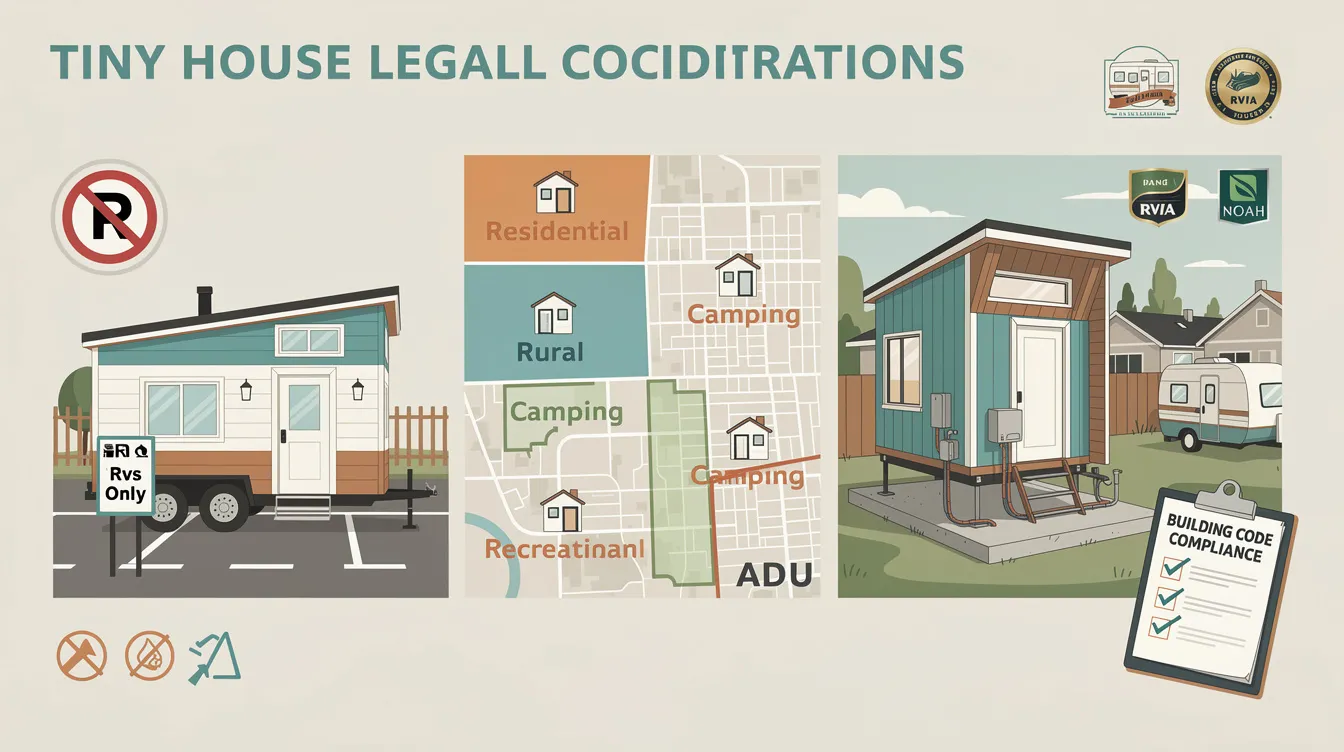
Many cities do not allow tiny homes as full-time residences, especially those on wheels, which are often classified as recreational vehicles (RVs) rather than legal dwelling units. This legal classification creates significant challenges for year round living.
Tiny homes often face regulatory variability depending on local zoning. If a tiny house sits on wheels, local jurisdictions may restrict where it can be parked, how long it can remain, and whether it qualifies for residential occupancy. Zoning restrictions frequently limit tiny houses to rural, camping, or recreational zones only.
For foundation-based tiny homes, building codes apply more traditionally. In California, tiny homes can be classified as Accessory Dwelling Units (ADUs) if they are built on a permanent foundation, comply with local building codes, and connect to utilities. This pathway offers a hybrid solution but requires meeting the same building codes as any residential structure.
Permits and building code compliance vary dramatically by location. Tiny houses on wheels often require RVIA or NOAH certification for insurance and financing purposes, while those on a concrete pad or permanent foundation must pass standard residential inspections.
ADU Legal Framework
ADUs benefit from growing municipal support across the country. Roughly 18 U.S. states now mandate that municipalities allow accessory dwelling units, with many cities streamlining permit processes and reducing discretionary approvals.
ADUs are generally classified as permanent structures and must meet local building codes, safety standards, and zoning requirements. To build an ADU, homeowners typically need to obtain a building permit, zoning clearance, and possibly additional permits for electrical, plumbing, and mechanical work, which involves submitting construction plans for local review.
Utility connections are required—ADUs must connect to water, sewer, and electrical infrastructure, either independently or shared with the main house. Foundation standards follow residential code requirements.
The legal status of a permitted ADU supports rental income generation and property integration. An ADU can be legally rented as a secondary dwelling, with income allowed under long-term lease arrangements in most jurisdictions. This legal clarity makes ADUs attractive for homeowners seeking to generate rental income or accommodate family members.
Cost and Investment Potential
Upfront costs differ dramatically between these secondary housing units, as do long-term financial returns.
Tiny House Financial Considerations
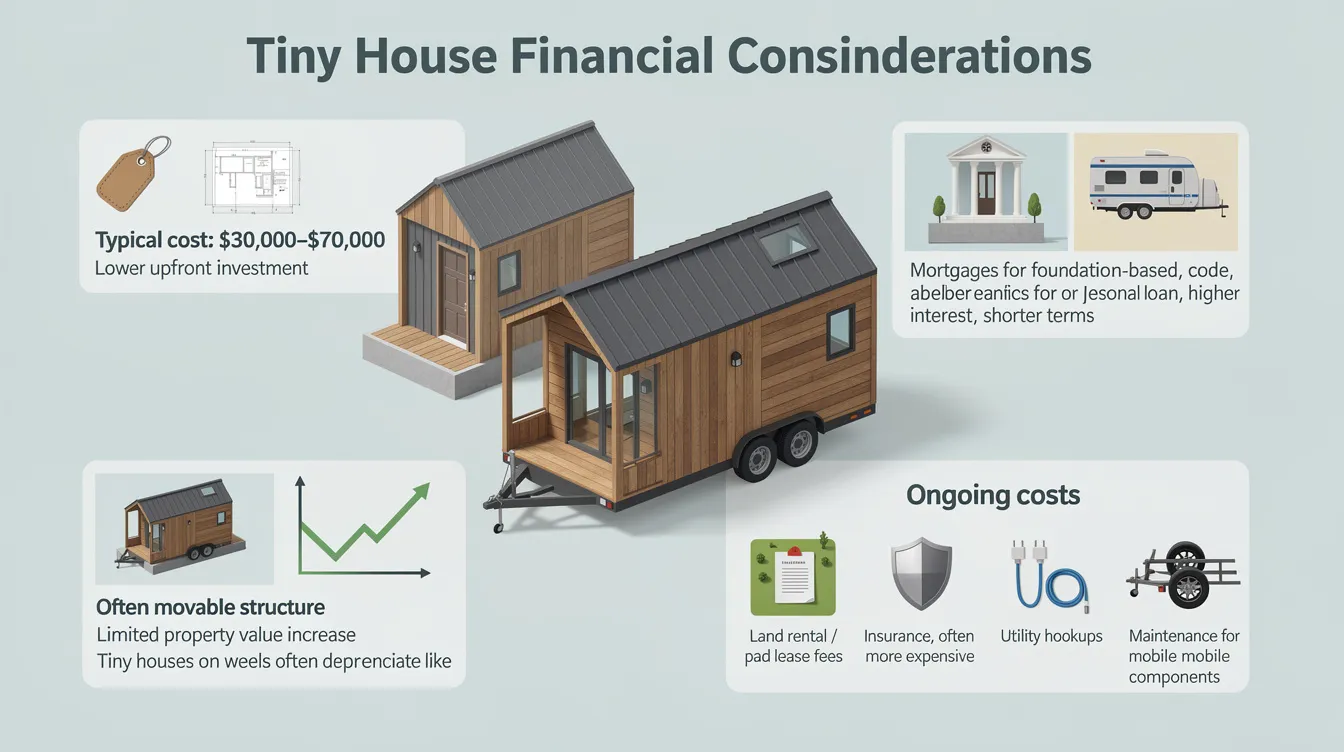
Tiny homes typically cost between $30,000 to $70,000 to build or buy, making them attractive for those seeking affordability. Using an ultimate tiny home cost calculator can help you understand how size, materials, and location influence your final budget. This lower upfront investment appeals to minimalist lifestyle enthusiasts and those with limited budgets.
However, financing presents challenges. Mortgages are often unavailable unless the tiny home is foundation-based and meets all residential codes. Tiny houses on wheels are typically financed as RVs or through personal loans with higher interest rates and shorter terms.
Tiny homes typically do not add long-term value to a property in the same way that ADUs do, as they are often classified as movable structures and may not meet residential standards. Tiny houses on wheels frequently depreciate like vehicles rather than appreciating like real property.
Ongoing costs include:
- Land rental or pad lease fees
- Insurance (often more expensive and harder to obtain)
- Utility hookups when not connected to existing infrastructure
- Maintenance for mobile components
ADU Investment Value
ADUs generally require a higher initial investment, ranging from $180,000 to $400,000 for moderately sized new constructions, but they often provide better long-term value and potential rental income.
Financing options are more favorable. ADUs can be financed through home equity loans, cash-out refinancing, and sometimes ADU-specific grants or incentive programs. Long-term financing at conventional mortgage rates is typically available.
ADUs can significantly increase a property’s value and provide a reliable source of rental income, as they are assessed as part of the real estate and comply with local regulations. Homes with ADUs often sell for 20-35% more than similar properties without secondary dwelling units.
The potential for rental income is generally higher with ADUs, as they are legally classified as residential units and can be rented out long-term. In high-demand markets, studio or one-bedroom ADUs generate $1,400 to $3,500 monthly, creating break-even periods of 7-15 years depending on local conditions.
Size and Living Space
Available space directly affects daily living and functionality in both housing types, making thoughtful tiny house floor plans that maximize comfort especially important when square footage is limited.
Tiny House Space Design
The size of tiny homes is generally limited to a maximum of 400 square feet, with most ranging from 100 to 400 square feet. This limited space requires intentional design and lifestyle adjustments.
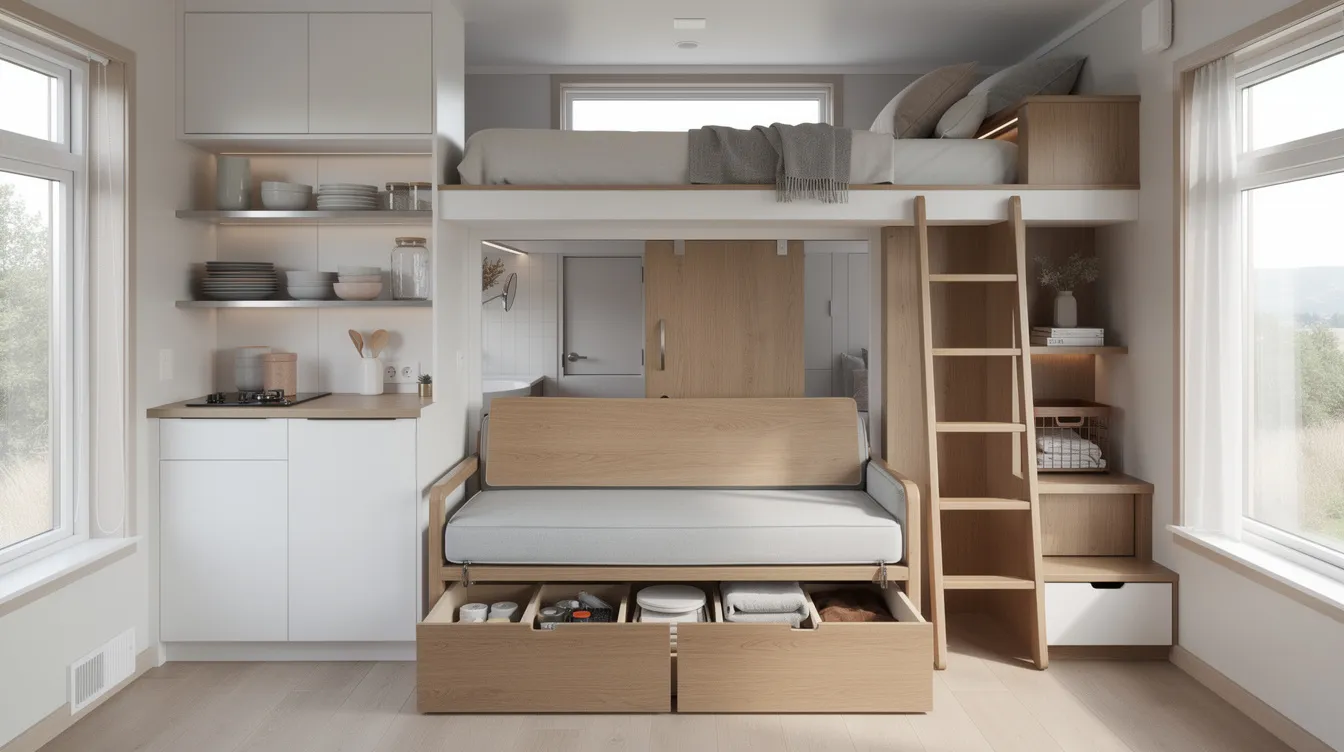
Space-saving features are essential, and many tiny house inspiration and resource guides focus on multifunctional furniture and clever storage to keep small spaces livable:
- Lofted sleeping areas to maximize floor space
- Multi-functional furniture that serves multiple purposes
- Vertical storage solutions
- Compact kitchens and bathrooms
Tiny homes prioritize minimalism and mobility, often requiring creative storage solutions and multi-functional furniture, which can limit their livability compared to the more spacious and functional design of ADUs. Studying tiny house interiors that maximize every square foot can reveal how design choices offset some of these constraints. Weight distribution constraints on mobile units further limit interior layout options.
Storage challenges require ongoing management and a commitment to minimalist living. Those accustomed to traditional housing may find the transition difficult.
ADU Space and Functionality
ADUs can be up to 1,200 square feet, providing more space and amenities compared to tiny homes. The size of ADUs can vary significantly, with local regulations determining maximum allowable square footage.
ADUs are designed for long-term living and include full-sized appliances and separate living areas, making them suitable for multigenerational living or rental income generation. Layouts typically include:
- Separate bedrooms
- Full kitchens with standard appliances
- Complete bathrooms
- In-unit laundry options
- Private entrances
Higher ceilings, better insulation, and more storage options create comfort levels comparable to a traditional home. Design flexibility allows ADUs to match existing home architecture, creating visual cohesion on the same property.
Maintenance and Durability
Construction standards significantly affect long-term upkeep and expected lifespan.
Tiny House Maintenance Needs
Tiny houses often use lighter construction materials, which can create durability concerns over time. Following best practices from a detailed guide on how to build a tiny house can improve structural integrity and long-term performance. Mobile units face additional challenges from road wear, vibration, and weather exposure during transport.
Expected lifespan varies significantly. A well-built tiny house on a permanent foundation can last decades, but wheeled units typically require more frequent maintenance of trailers, undercarriages, sealants, and joints.
Maintenance is simplified by smaller size—less square footage means fewer surfaces, systems, and components to maintain. However, specialized repair requirements can offset this advantage. Contractors experienced with tiny home construction are fewer, and components may be non-standard.
Off-grid systems including solar panels, composting toilets, and water collection add maintenance complexity and periodic replacement costs.
ADU Maintenance Requirements
ADUs are built to residential-grade standards with materials and construction methods matching a single family home. This means maintenance follows standard home repair procedures.
Expected lifespan mirrors traditional housing—50 to 100 years depending on construction quality and maintenance. Professional service availability is high, with standard contractors able to address most repair needs.
Maintenance costs are higher in absolute terms due to larger size and more systems. HVAC, plumbing, roofing, and electrical all require attention. However, budgeting is predictable, and maintenance schedules follow established patterns.
Utility costs and property tax increases accompany ADU ownership. Insurance follows standard homeowner or rental property coverage, which is typically easier to obtain than tiny house insurance.
Lifestyle and Flexibility Considerations
Personal goals, family needs, and future plans should drive the decision between these housing options.
Mobility versus stability represents the core trade-off. Tiny houses on wheels offer relocation flexibility—ideal for remote workers, frequent movers, or those uncertain about long-term location. ADUs anchor homeowners to a specific property but provide stable extra living space.
Life stage affects suitability significantly. Singles or couples may adapt well to compact living spaces in tiny homes, especially if they pursue custom tiny homes tailored to their lifestyle. Families with children, those seeking privacy, or those with multigenerational living needs typically require the more space an ADU provides.
Local climate influences daily experience. Tiny houses are more sensitive to temperature extremes due to limited insulation and compact heating systems. ADUs with thicker walls and full HVAC systems handle extreme weather more effectively. In harsh climates, an ADU provides more comfortable year round living.
Community resources matter as well. Tiny houses in remote locations may require self-sufficient systems for water, waste, and power, making affordable tiny house designs and tips valuable for planning efficient off-grid setups. ADUs connected to municipal infrastructure eliminate these concerns.
Tiny House vs ADU: Which Should You Choose?
Choose a tiny house if you prioritize mobility, embrace minimalist living, and prefer lower upfront costs while accepting zoning limitations. Exploring tiny house plans that fit your life can help align layout and features with your day-to-day needs. Tiny homes work well for those without property ownership, those seeking simple efficient living, or those drawn to the tiny home movement’s values.
Choose an ADU if you own property with an existing home, want long-term investment value, seek potential rental income, or need to accommodate family members. ADUs are generally considered a stronger investment than tiny homes because they are permanent structures that can significantly increase property value and generate rental income.
Consider these decision factors:
- Property ownership: ADUs require owning property with a main dwelling; tiny homes can work on rented land
- Budget: Tiny homes suit budgets under $80,000; ADUs typically require $180,000-$400,000
- Local regulations: Check your city’s zoning laws for both options before committing
- Timeline: Tiny homes can be purchased quickly; ADUs require permitting and construction time
- Income goals: ADUs offer reliable rental unit potential; tiny homes may face restrictions for long-term rentals
While tiny homes are generally less expensive upfront, ADUs typically offer better long-term value due to their potential to increase property value and generate rental income. However, both options can succeed when properly matched to individual circumstances and local requirements.
For those wanting elements of both, a tiny home ADU—built on a permanent foundation to meet local building codes—offers compact living with legal residential status and property value benefits, and examples of great tiny homes that redefine small space living can illustrate what’s possible within a compact footprint.