
Looking for a tiny house floor plan that maximizes space while providing two separate bedrooms? Discover compact layouts from 500-1000 square feet designed for couples, small families, and those wanting flexible living spaces. From single-story designs to loft configurations, our guide covers the most practical 2-bedroom tiny house floor plans to fit your lifestyle and budget.
Find your ideal layout and start planning your dream tiny home today.
2-Bedroom Tiny House Layouts for Every Living Situation
A 2-bedroom tiny home is typically designed to fit within 1,000 square feet, maximizing space efficiency while providing comfort and privacy. Whether you’re embracing a minimalist lifestyle or simply need practical blueprints for a small footprint dwelling, understanding the different layout types helps you match your floor plan to your specific living needs.
Common layouts for 2-bedroom tiny homes include side-by-side bedrooms, split-end bedrooms with a central living area, and open-plan designs with lofted bedrooms. Exploring tiny house floor plans that work for you helps clarify which configuration offers the most advantages depending on your household composition and daily routines.
Single-Story Layouts for Accessibility
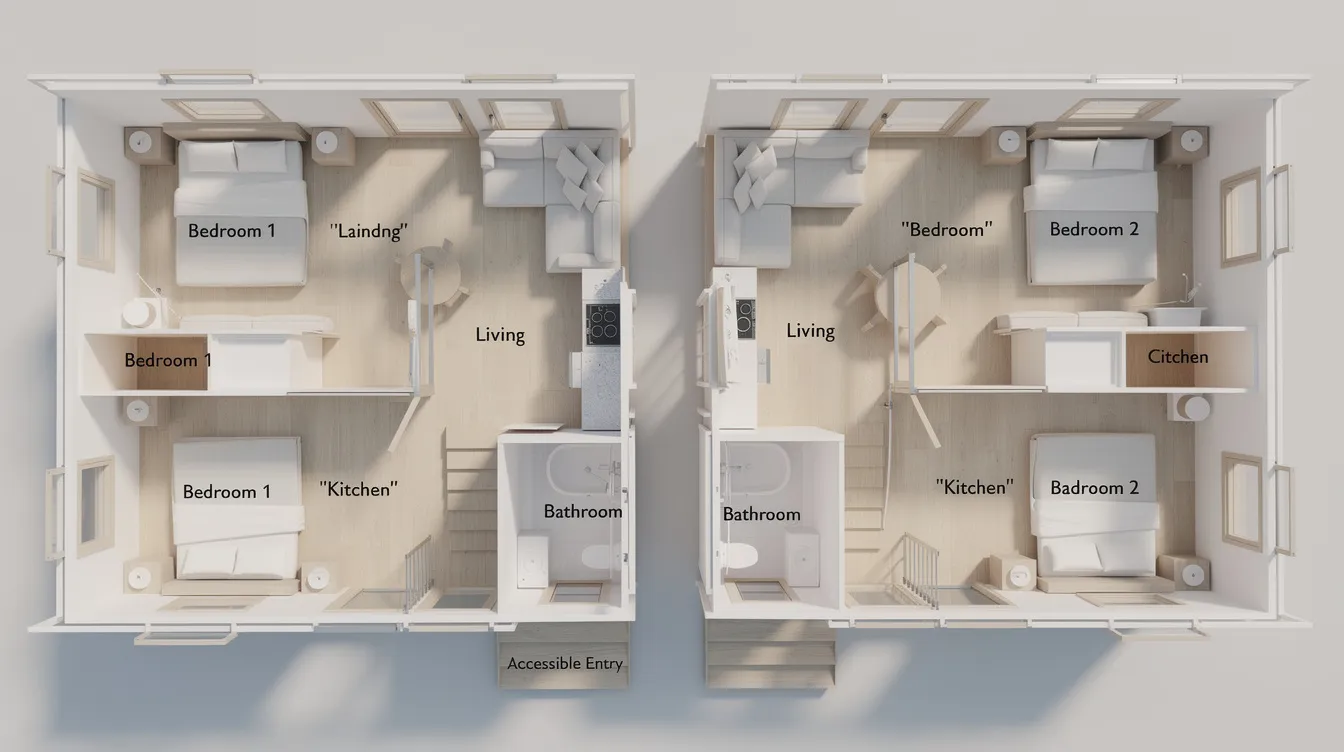
Single-story tiny house plans place both bedrooms on the ground floor, eliminating the need for stairs or ladders. Side-by-side bedroom configurations typically position sleeping areas at one end of the home with a central living space connecting to the kitchen and bathroom.
The split-end bedroom layout places bedrooms at opposite ends of the home, providing privacy and a central living area that encourages social interaction. This design works exceptionally well for couples with different sleep schedules or households combining living and office space.
For aging-in-place considerations, single-story layouts offer wider doorways, zero-threshold bathrooms, and ground-floor access throughout. Recommended square footage ranges from 600-800 sq ft for comfortable single-story two-bedroom tiny homes with adequate living space and storage.
Loft-Style Layouts for Space Maximization
Loft configurations represent one of the most effective strategies for maximizing space in a limited area. One ground-floor bedroom combined with a lofted bedroom above the living space keeps the footprint compact while maintaining separate sleeping areas.
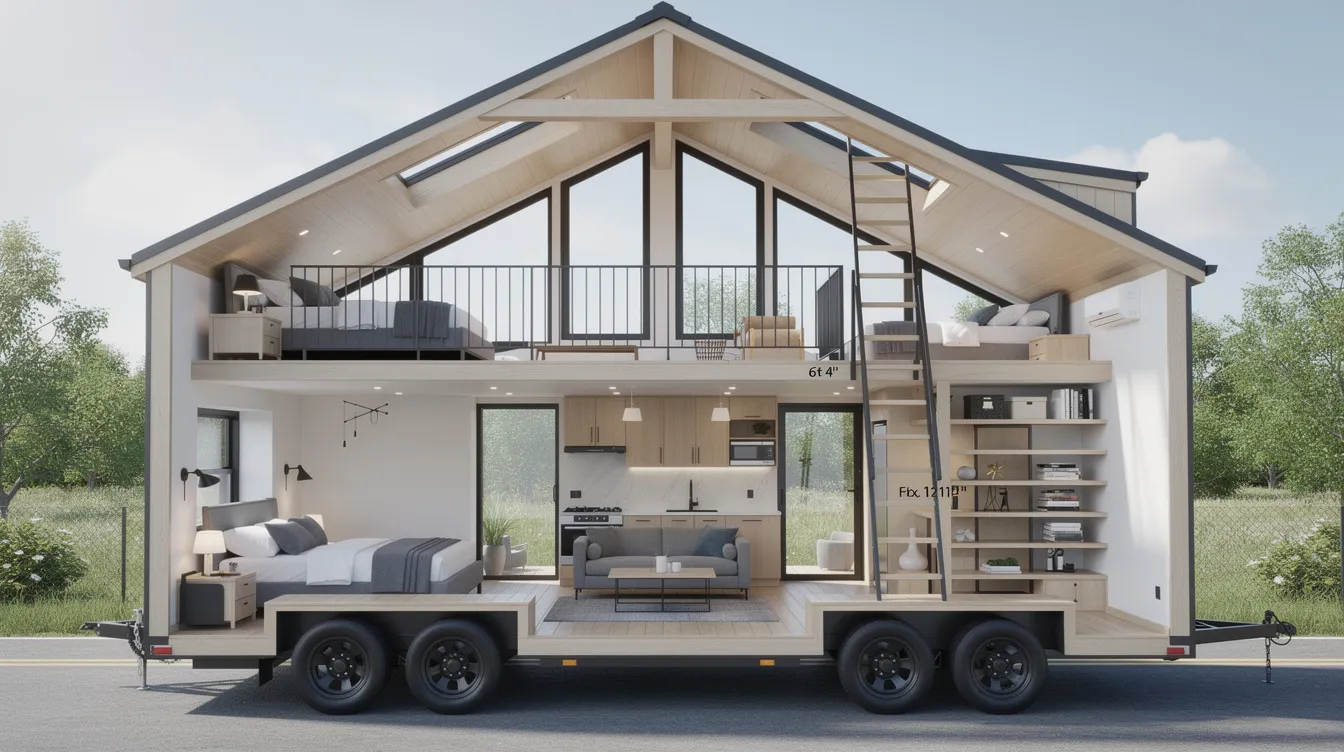
The dual loft bedrooms layout features two lofted sleeping areas above a central living space, ideal for maximizing vertical space in a compact design. Popular tiny house layouts include 36-foot-long trailers with two loft bedrooms, offering impressive functionality within smaller footprints of 500-700 sq ft.
Some modern tiny home plans offer up to 6 feet 4 inches of headroom in the master loft for better functionality. Ceiling height requirements vary based on local codes, with ladder access for tiny house lofts saving floor space while stairs provide easier daily use. High ceilings and skylights are frequently used in two-bedroom layouts to make them feel more open.
Multi-Level and Split-Level Designs
Multi-level tiny house floor plans create visual interest and natural separation between zones. Looking at great tiny homes that redefine small-space living can provide inspiration for mezzanine combinations with ground-floor bedrooms that offer elevated sleeping or living areas without full second-story construction.
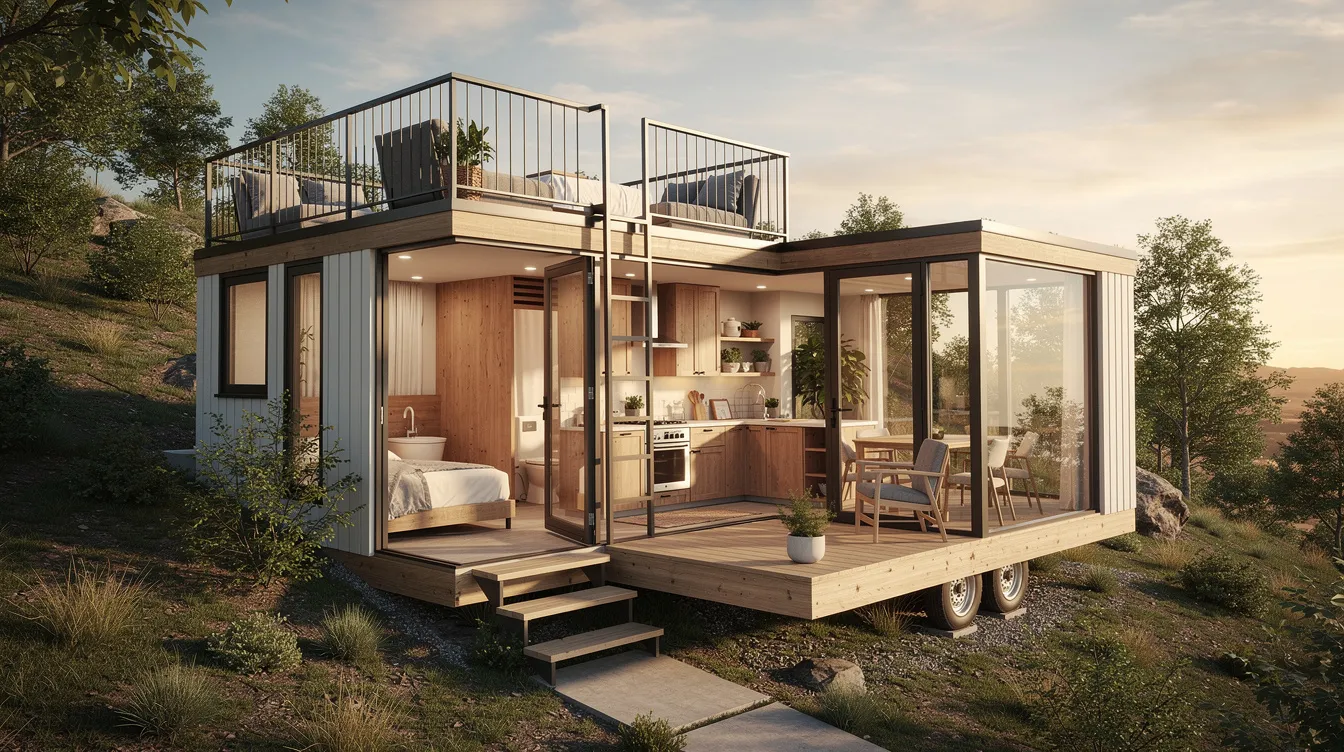
An L-shaped tiny home layout separates private and shared areas, with bedrooms and a bathroom in one section and the kitchen and living space in another, creating a cozy outdoor area. Design lovers often explore cute tiny house designs for their dream home when considering split-level layouts with mid-level landings that work particularly well on sloped lots, turning challenging terrain into architectural features.
Half-floor bedroom placements add depth and character while maintaining practical access throughout the home. These designs suit homeowners seeking unique style combined with functional living arrangements.
Choose the Right Floor Plan for Your Living Needs
Designing a 2-bedroom tiny home means making smart use of every space, ensuring that every corner serves a purpose without feeling crowded. Reviewing tiny house plans that fit your life can help you decide on the right floor plan based entirely on who will live there and how the space will be used daily.
For Couples and Empty Nesters
Couples and empty nesters often benefit from master bedroom plus home office or guest room combinations. Ground floor master and loft layouts often include a U-shaped kitchen and open living room, creating efficient daily flow.
Privacy considerations for different schedules may require buffer zones between bedrooms—closets, bathrooms, or utility areas placed between sleeping spaces reduce noise transfer. Storage solutions become essential when downsizing from larger homes, with integrated shelves and built-in cabinetry preserving floor space.
For Small Families with Children
Small families need careful consideration of safety in loft bedrooms. Stairs rather than ladders provide safer access for young children, and guardrails must meet minimum height requirements of 36 inches.
Ground-floor bedroom options keep children’s sleeping areas accessible and eliminate climbing hazards. Play space integration often happens in the great room or living area, with storage for toys and activities built into walls and under seating.
For Remote Workers and Entrepreneurs
Converting a second bedroom to dedicated office space requires thoughtful planning for lighting, ventilation, and acoustics. Custom tiny homes for perfect small-space living often showcase large windows that bring natural light essential for productive work environments.
Flexible layouts accommodate work-from-home needs through pocket doors, sliding partitions, or convertible furniture that transforms bedrooms between office and guest functions. Ideas from inspiring tiny house interiors that maximize every square foot can guide soundproofing considerations that become practical necessities for professional video calls in small spaces.
For Rental Income and Guest Accommodations
ADU-compliant layouts for backyard rental units must meet local building standards regarding separate sleeping areas, egress windows, and minimum square footage. In many areas, two-bedroom tiny homes are permitted on private land if they meet local building standards, and some cities allow them in tiny home communities or as Accessory Dwelling Units.
Separate entrance options increase privacy for both renters and property owners. Zoning laws and building codes for two-bedroom tiny homes vary significantly by location, determining where they can be built and under what conditions.
Construction Methods and Foundation Options
The construction approach you choose directly affects floor plan possibilities, cost, and timeline. Using a tiny home cost calculator can clarify how building or buying a 2-bedroom tiny home comes with different costs depending on the method, size, and features.
Traditional Stick-Built Construction
Traditional stick-built construction offers maximum flexibility for custom floor plans. You can create exactly the layout you envision, adjusting room dimensions, window placements, and ceiling heights to your specifications.
Permanent foundation requirements typically include footers below frost depth and compliance with local building codes. Superior insulation and energy efficiency come standard with proper wall assembly, reducing long-term heating and cooling costs.
Shipping Container Conversions
Shipping container conversions provide structural durability and a modern industrial style. For budget-conscious builders, Home Depot tiny house kits offer another way to achieve compact living, as single container homes limit width to approximately 8 feet, while dual container configurations expand possibilities significantly.
Structural modifications require careful engineering when cutting openings for windows, doors, and interior passages. Container tiny homes often offer cost-effective timelines compared to traditional construction, though interior finishing and insulation add to the budget.
Modular and Prefab Options
Modular and prefab options deliver factory-built quality control with faster on-site installation. Expandable wing designs allow homes to grow over time as needs and budgets permit.
Stacked modular box configurations create two-story layouts with precise manufacturing tolerances. This approach reduces construction waste and weather delays, making it attractive for DIY builds or tight project timelines.
Space Optimization and Interior Design Tips
Utilizing vaulted ceilings in tiny house designs can create a spacious feel within a limited area, enhancing the overall living experience. Strategic interior design transforms compact floor plans into comfortable, functional homes.
Smart Storage Solutions
Incorporating built-in storage solutions and multi-functional furniture is essential in tiny house designs to maximize space and maintain organization. Built-in storage under stairs and in bedroom alcoves captures otherwise wasted space.
Multifunctional areas in tiny homes often include folding tables, pocket doors, and extensive built-in storage. Vertical storage strategies for small bedrooms use wall height effectively, while hidden storage in floor and ceiling spaces keeps belongings accessible but out of sight.
Creating Visual Space
Open floor plan strategies between the living room, dining, and kitchen areas eliminate visual barriers and create flow. Designs for tiny homes often incorporate porches or large glass doors to expand the living area outwards, connecting interior and exterior spaces.
Light color schemes and natural light maximization make rooms feel larger than their actual square footage. Strategic mirror placement and thoughtful lighting design enhance both functionality and the perception of openness. High ceilings and loft openings maintain an airy feel even in compact footprints.
Planning Your 2-Bedroom Tiny House Project
Turning your tiny house floor plans from saved plans into reality requires systematic planning. Resources that explain how to build a tiny house emphasize that before starting a tiny house project, it is essential to check local zoning regulations, parking rules, foundation requirements, and minimum size limits to ensure compliance.
The cost of tiny house construction generally varies based on length, choice of materials, and layout, even though they are cheaper than regular houses. In general, smaller homes cost less to build or maintain than larger dwellings, but the cost per square foot for a tiny home can sometimes be higher than for a larger home. Budget accordingly for permits, utility connections, and interior finishing beyond the basic structure.
Zoning research should happen early—requirements for land use, setbacks, and minimum dwelling sizes vary dramatically by location. Finding qualified builders and architects experienced with tiny homes ensures your project meets both your vision and local code requirements.
Timeline expectations from planning to move-in typically range from several months for prefab options to a year or more for custom builds. Discover your perfect 2-bedroom tiny house floor plan and take the first step toward a simpler lifestyle today.