
The ultra tiny house represents a radical answer to a simple question: how little space do you actually need? Typically spanning just 80 to 200 square feet, these compact homes—often mounted on wheels—push minimalist living to its practical limits while keeping costs dramatically lower than traditional housing.
Unlike standard tiny homes that commonly range from 250 to 400 square feet with full amenities, an ultra tiny house prioritizes extreme efficiency and zoning flexibility. The difference matters more than you might think. Many jurisdictions treat structures under 120 to 150 square feet as “sheds” or accessory structures, sidestepping the permitting headaches that derail larger builds.
Interest in these micro dwellings has grown steadily since around 2015, but the real spike came between 2020 and 2023. Remote work exploded, housing costs climbed past $400,000 for median U.S. homes, and suddenly a $25,000 backyard studio didn’t sound so crazy. Tiny house inquiries rose over 300% on some platforms during this period.
- Why Ultra Tiny Instead of a Regular Tiny House?
- Design Principles of an Effective Ultra Tiny House
- Real-World Ultra Tiny House Examples (80–200 Sq Ft)
- Ultra Tiny House Costs in 2024–2026
- Legal, Zoning, and Placement Considerations
- Interior Layouts for Ultra Tiny Living
- Off-Grid & Sustainable Systems for Ultra Tiny Houses
- Furnishing & Storage: Making 80–200 Sq Ft Feel Livable
- Who an Ultra Tiny House Is (and Isn’t) Right For
- Getting Started: From Idea to Move-In
Why Ultra Tiny Instead of a Regular Tiny House?
In 2026, the math has only gotten more compelling. With median U.S. home prices hovering around $420,000 to $450,000 and urban rents averaging $2,000 monthly, the appeal of a sub-200-square-foot dwelling isn’t just philosophical—it’s financial survival for many solo professionals and remote workers seeking peace from housing costs that have consumed their budget.
The cost difference is stark. An 80 to 120 square foot ultra tiny home typically runs $12,000 to $35,000, while a 300 square foot tiny home costs $45,000 to $100,000. Monthly expenses diverge just as sharply: ultra tiny setups often achieve under $60 per month through solar panels, propane heating, and a composting toilet, compared to $150 to $250 for larger tiny homes requiring grid-tied utilities.
Feature | Ultra Tiny (80-120 sq ft) | Standard Tiny (250-300 sq ft) |
|---|---|---|
Upfront Cost | $12,000–$35,000 | $45,000–$100,000 |
Monthly Utilities | Under $60 | $150–$250 |
Permits Required | Often minimal | Usually full permits |
Carbon Footprint | 70-80% lower | Standard tiny baseline |
Key Takeaway: An ultra tiny house lets you own your own tiny house for roughly the price of a used car while keeping ongoing costs below your monthly streaming subscriptions.
Design Principles of an Effective Ultra Tiny House
In a sub-200 square foot space, every inch must earn its place. This isn’t about sacrifice—it’s about creating smart design solutions that make living space feel intentional rather than cramped.
Modular transforming zones form the foundation of effective ultra tiny layouts. A sofa that becomes an 80-inch bed, a table that folds flat against the wall, a desk that converts to kitchen prep surface—these aren’t luxuries but necessities. The best designs treat each room as a stage where multifunctional tiny house furniture and storage solutions play multiple roles throughout the day.
Vertical storage exploits ceiling heights of 8 to 10 feet that would otherwise become empty space. Above-door cabinets 10 to 12 inches deep, loft cubbies accessible through 30-inch-wide pocket doors, and wall-mounted shelving systems can double your effective storage without consuming floor area.
Multi-use furniture anchors daily function. Murphy beds with 12 to 18 inches of under-storage, 24-inch-deep kitchen counters fitting galley setups, and flip-up work surfaces make a 7-foot wall accommodate sleep, work, and dining. The secret lies in designing for how you actually move through the day.
Daylight optimization transforms perceived space dramatically. Full-height windows spanning 4 to 6 feet, light neutral palettes, strategically placed mirrors, and glass sliders that blur indoor-outdoor boundaries make 120 square feet feel spacious rather than confined. Natural light and well-designed tiny house interiors do more for livability than additional square footage.
Outside-inside connection effectively doubles usable living area. A 100 to 200 square foot deck connected through a glass slider creates an outdoor room for warm months, extending your home’s footprint without adding construction costs.
Floor plan illustration: An 8×20 foot ultra tiny layout places a 24-inch-deep galley kitchen along the long wall, a 24×30-inch wet bath module at the entry end, and a lofted sleeping area over the bathroom, leaving 100 square feet of main floor for living with 36-inch clear egress paths.
Real-World Ultra Tiny House Examples (80–200 Sq Ft)
Real builds tell the story better than theoretical designs. These three case studies from recent years show what’s actually possible across different budgets and use cases, similar to other elegant tiny homes that redefine modern living in small footprints.
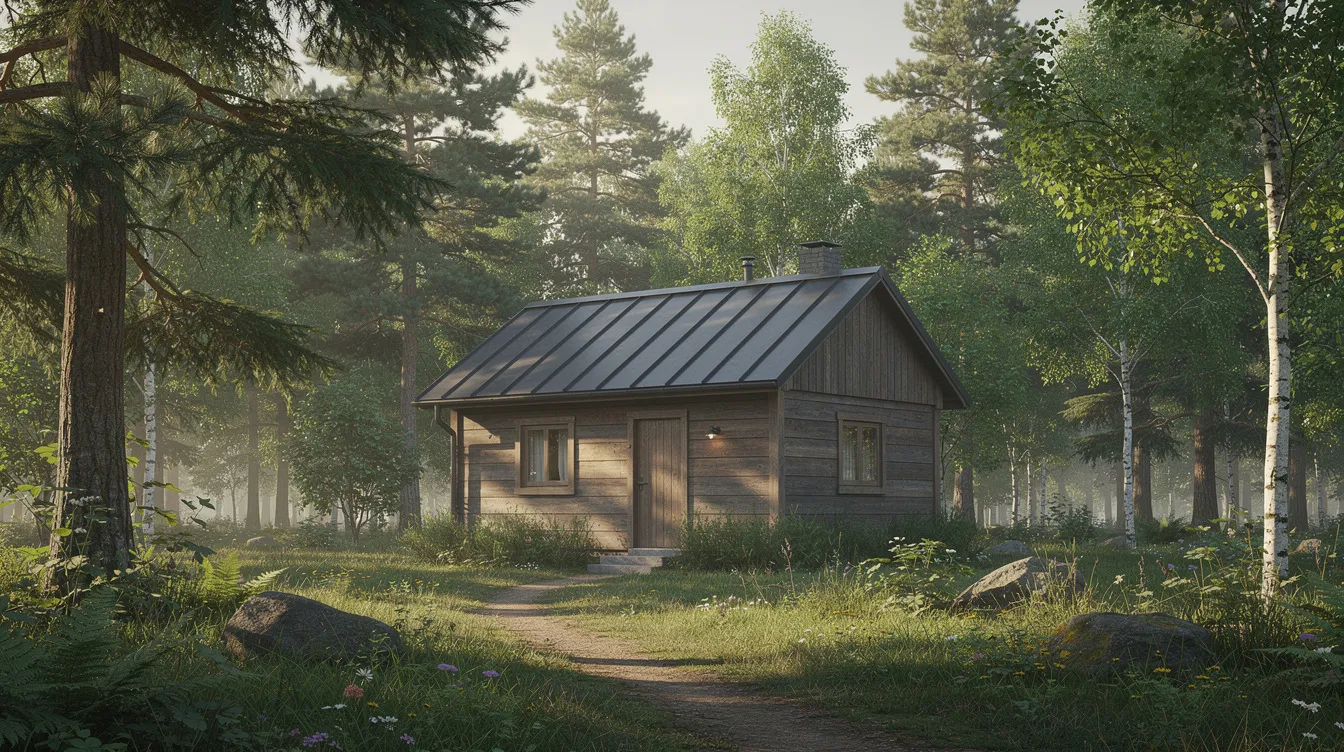
In Oregon, a 96 square foot off-grid cabin completed in 2022 sits on an 8×12 foot footprint, built for around $14,000 using a mix of new and reclaimed lumber with corrugated metal roofing. The loft sleeps two comfortably, while a small wood stove handles heating. A 100W solar panel powers 12V LED lighting, and a basic composting toilet keeps things simple. The owner registered it as a “shed” on rural land, avoiding full building permits entirely.
Urban applications work differently. In Austin, Texas, a 120 square foot prefab unit was craned over a fence into a townhouse backyard in 2024 for $32,000 turnkey. This guest house includes a 24×30-inch wet bath, built-in desk, sofa-bed, and 9,000 BTU mini-split HVAC. The owner uses it as a home office during the week and an Airbnb on weekends, earning $1,500 monthly while the unit qualified as an ADU under the city’s relaxed 2023 codes.
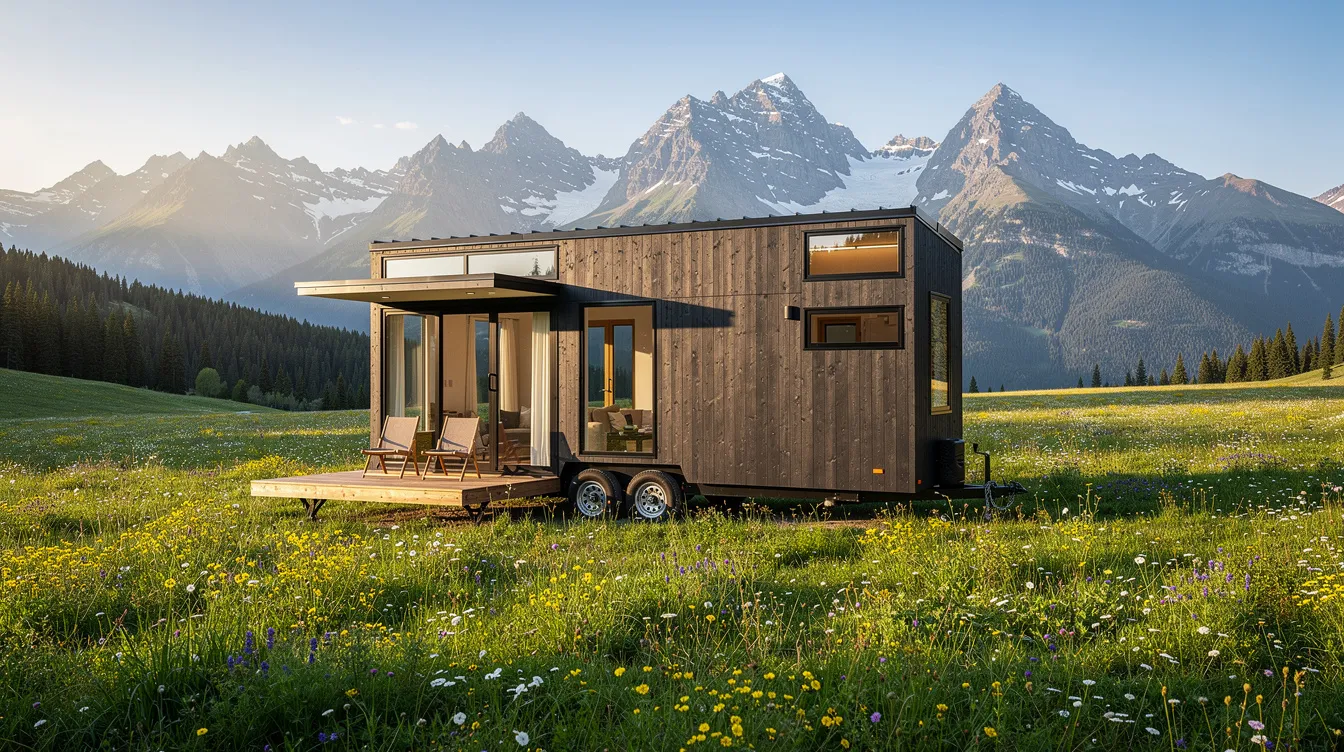
For those interested in mobility, a 160 square foot micro home on a double-axle 16-foot trailer registered in 2023 for $25,000 to $35,000 demonstrates resilience-focused design. Two-inch foam insulation enables four-season use, a 5-foot galley kitchen handles meal prep, and a cassette toilet keeps the bathroom compact. Models like this resemble self-contained tiny homes for modern off-grid living. The owner tows it between RV parks and family backyards, connected to community wherever they land.
Ultra Tiny House Costs in 2024–2026
Material prices have stabilized since the 2021 lumber spike, though they haven’t fully returned to pre-2020 levels. Lumber now runs around $500 to $700 per thousand board feet compared to the $1,800 peaks, making budget planning more predictable for those ready to build.
A typical 120 to 160 square foot ultra tiny budget breaks down as follows:
Category | Cost Range |
|---|---|
Trailer (14-16 ft) or Foundation | $2,000–$7,000 |
Shell & Framing (with insulation) | $6,000–$12,000 |
Interior Finishes & Cabinets | $4,000–$10,000 |
Systems (electrical, plumbing, solar) | $3,000–$8,000 |
Three realistic scenarios emerge from these ranges. DIY builders using salvaged materials and performing most labor themselves can complete 80 to 120 square feet for $6,000 to $15,000—roughly $125 per square foot with 200 to 400 hours of work. A hybrid approach where tiny house builders construct the shell while you handle interior finishing runs $20,000 to $40,000. Full professional turnkey builds with designer finishes from a company like Irontown Modular or other custom tiny home builders for small-space living start around $35,000 and climb to $70,000 or more. |
Build Type | Size | Total Cost | Cost/Sq Ft |
|---|---|---|---|
DIY | 96 sq ft | $12,000 | $125 |
Hybrid | 128 sq ft | $32,000 | $250 |
Professional | 160 sq ft | $56,000 | $350 |
Legal, Zoning, and Placement Considerations
The smallest houses aren’t automatically exempt from regulations. Zoning varies dramatically between cities, counties, and states, making local research essential before you spend money on materials.
Many North American regions treat structures under 120 to 150 square feet as “sheds” or accessory structures that may not require full building permits. The catch: these classifications often prohibit legal full-time dwelling. Tiny homes on wheels face additional complexity, typically requiring RVIA or park model code compliance and restriction to RV parks or backyards with specific host agreements.
Notable policy examples as of 2024-2025 include Portland, Oregon’s ADU code allowing up to 200 square foot backyard units with utility hookups; California’s AB 1033 streamlining sub-150 square foot ADUs; and Colorado counties like Fremont permitting off-grid cabins under 120 square feet in rural zones with composting toilets and graywater systems.
Placement options typically include backyard ADUs for family or rental income, remote micro-cabins on your own land with off-grid power and composting waste systems, or urban infill on narrow lots using an ultra tiny footprint under 12 feet wide—similar to many tiny houses for sale for minimalist buyers that target these use cases.
Before committing, verify: site access for delivery or construction, utility availability or off-grid alternatives, required setbacks (typically 5 to 10 feet), height limits (usually 10 to 15 feet), and any use restrictions. Non-compliance can result in fines up to $10,000 in some jurisdictions.
Interior Layouts for Ultra Tiny Living
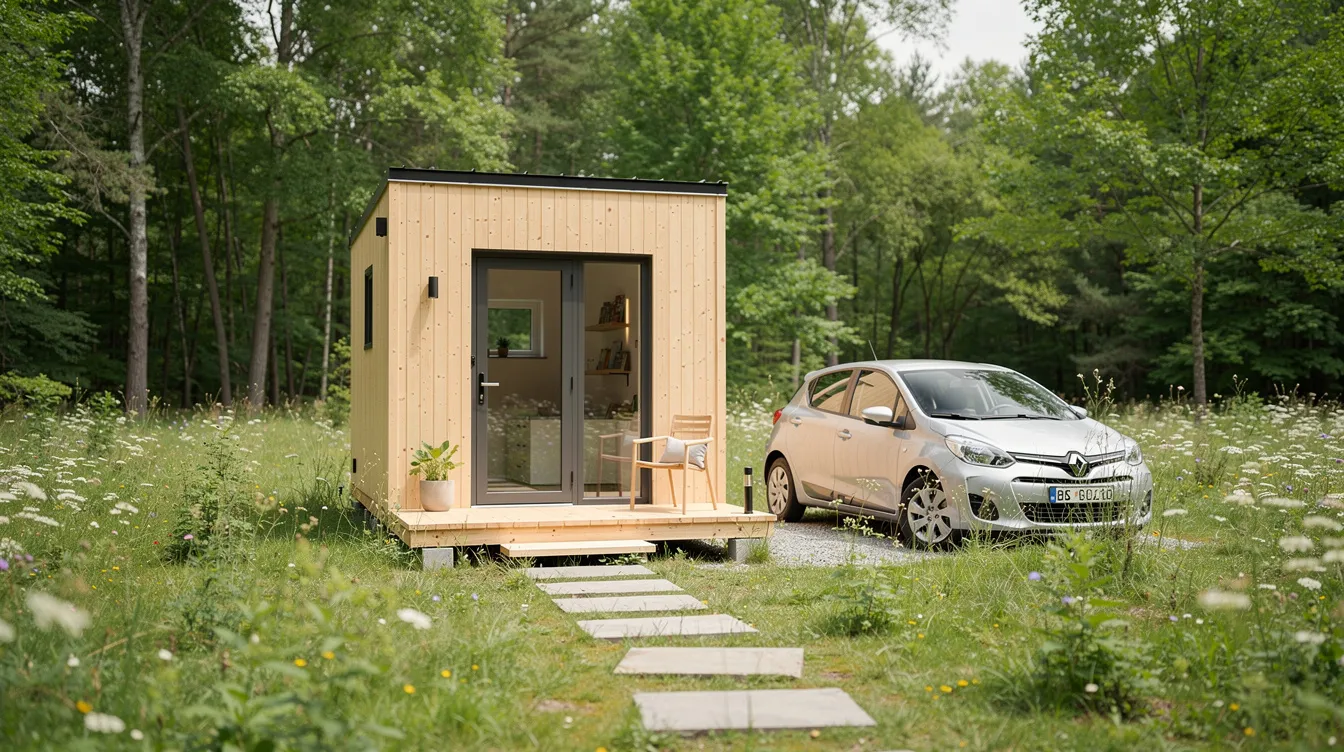
The layout determines daily comfort more than raw square footage. A well-designed 120 square foot home can feel more livable than a poorly planned 200 square foot one.
Three floor-plan strategies dominate ultra tiny design. The linear galley layout runs kitchen and storage along one 18-foot wall, places the bathroom at one end, and positions the bed or sleeping loft at the opposite end. This works well for 8×16 to 8×20 foot footprints and illustrates how tiny house floor plans can prioritize circulation. The center core layout positions the bathroom and main storage in the middle of the floor plan with living and sleeping zones at each end, maximizing natural light from both ends. The lofted layout elevates sleeping above the bathroom or entrance, freeing the main floor for kitchen, living, and workspace.
Concrete dimensions keep designs realistic. Bath modules typically run 24 to 30 inches wide with cassette or composting toilets. Circulation paths need 24 to 30 inches minimum, though careful door and window placement prevents a cramped feel. Loft bedroom areas require at least 30 inches of head room with handrail-equipped ladders and non-slip surfaces for safety compliance.
Illustration: A 7×18 foot plan showing center bath module (30 inches wide), galley kitchen opposite the entry with 24-inch counters, fold-down bed in the rear zone, and 80-inch sofa-bed for guests in the front living area.
Off-Grid & Sustainable Systems for Ultra Tiny Houses
Ultra tiny houses pair naturally with off-grid or low-impact living. The loads are small, heating and cooling demands are minimal, and even a modest roof can host enough solar for basic needs.
Power systems typically involve 400 to 800W of rooftop solar panels paired with 2 to 5 kWh lithium battery banks. This setup handles lights, laptop charging, phone charging, and small appliances comfortably. A well-designed 160 square foot home can operate entirely off-grid with this configuration.
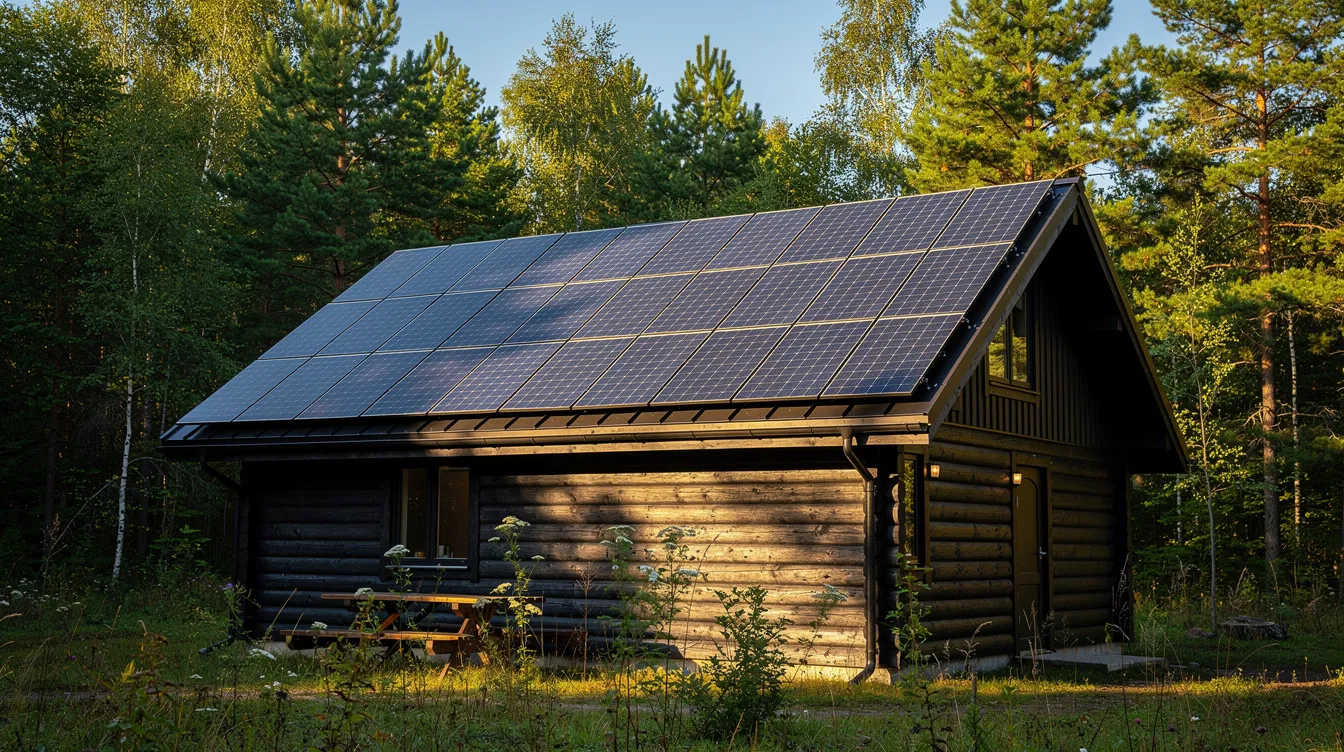
Heating and cooling scale to the space. A 9,000 BTU mini-split efficiently handles 120 to 200 square feet for around $2,000 installed. Smaller cabins in colder climates often use 4,000 BTU propane heaters or compact wood stoves. The rule of thumb: a well-insulated 160 square foot ultra tiny house can often be heated with under 4,000 BTU per hour in mild climates using R-20 closed-cell spray foam insulation.
Water and waste require thoughtful planning. Fresh water tanks of 20 to 40 gallons work for most owners, supplemented by rainwater collection from the roof where legally permitted. Composting toilets like the Nature’s Head (around $1,000) eliminate water use and sewage hookups but require attention to odor management through proper venting and maintenance. Cassette toilets offer a simpler learning curve but need regular pumpout. Graywater filters can divert sink and shower water to mulch basins where local regulations allow, and all of these systems need to be integrated thoughtfully into tiny house plans that fit your life.
Materials and insulation matter enormously in small spaces. Closed-cell spray foam or high-R rigid insulation creates tight envelopes that minimize energy needs. Low-VOC finishes resist the condensation and heavy use that comes with tiny home living, keeping interior air quality healthy and clean lines looking fresh.
Furnishing & Storage: Making 80–200 Sq Ft Feel Livable
In an ultra tiny house, customization matters more than brand names. Focus on built-ins and exact-fit solutions rather than off-the-shelf furniture that wastes precious inches.
Custom built-in benches with lift-up lids provide seating with hidden storage at an 18-inch seat height for comfort. Wall-mounted folding tables handle dining and remote work without consuming permanent floor space. Beds with 12 to 18 inches of clearance underneath accommodate drawers or rolling bins for clothing and gear.
Storage strategies exploit overlooked spaces throughout the design. Shelves 10 to 12 inches deep above doors and windows hold books and light items. Toe-kick drawers under kitchen cabinets store flat items like cutting boards. Exterior-access hatches provide weatherproof storage for tools, hoses, and seasonal gear without cluttering the interior, echoing many of the solutions found in great tiny homes that redefine small-space living.
Visual calm requires discipline. Smooth cabinet fronts, a limited color palette, and hidden appliances behind cabinet doors keep the eye relaxed. The style should feel intentional, not cluttered.
Essential built-ins checklist: integrated seating with storage, Murphy bed or convertible sofa-bed, fold-down desk surface, galley kitchen with vertical cabinets, and a 24-inch hanging closet for clothing.
Who an Ultra Tiny House Is (and Isn’t) Right For
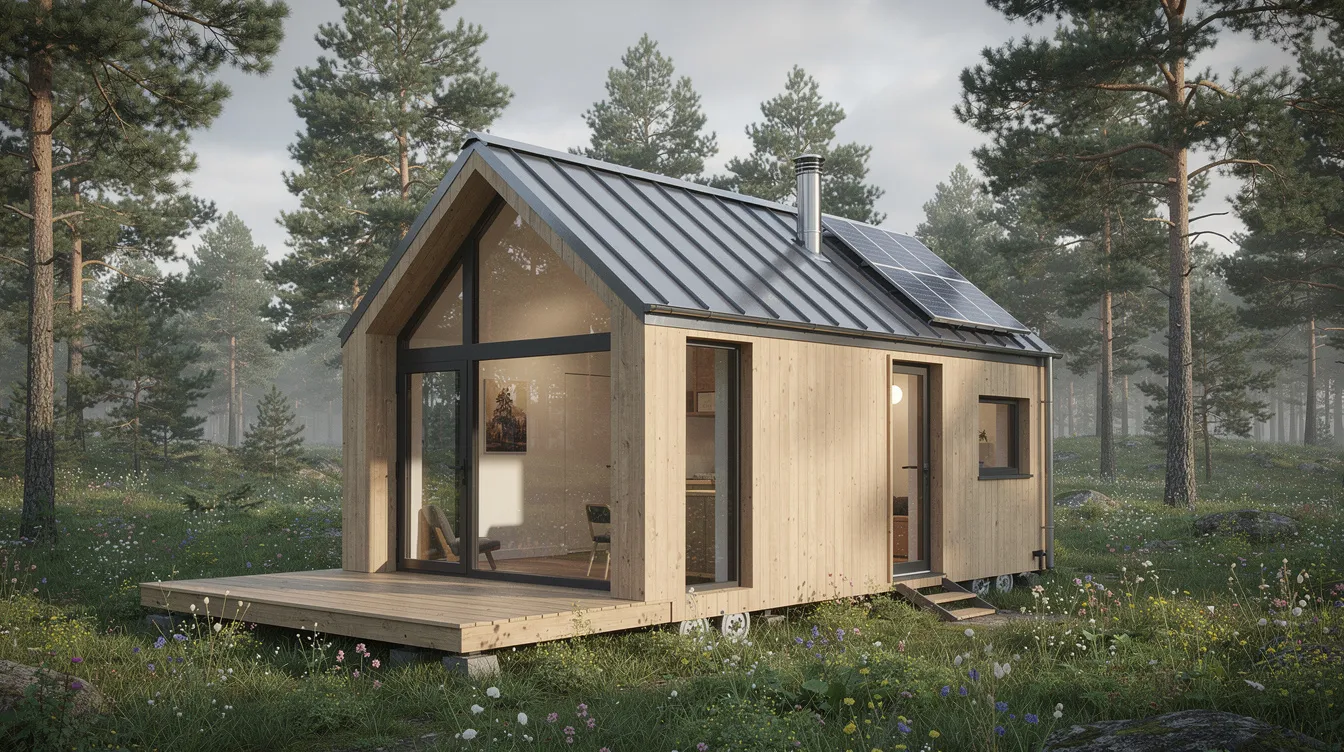
Ultra tiny living fits specific life stages and temperaments, not everyone. Being aware of both the appeal and the limitations leads to better decisions.
Ideal candidates include solo professionals or students wanting a low-cost base near city centers. Remote workers benefit from a dedicated backyard studio detached from their main living space—one Denver resident spent $25,000 on a 128 square foot office-guest unit in 2024 and now works in focused silence while family life continues in the main house. Retirees use ultra tiny structures as seasonal cabins or vacation home retreats, enjoying nature on weekends without full-time commitment.
Honest limitations exist. Families with children or large pets will find under 150 square feet too restrictive for full-time living. Storage-heavy hobbies requiring large instruments or extensive sports gear demand more space than these footprints allow. A couple using a 160 square foot micro-cabin on weekends since 2023 reports loving the escape but acknowledging that full-time living would require serious decluttering of their current lifestyle.
Before committing, assess your daily routines, your belongings, and your privacy needs. The best part of ultra tiny living comes from alignment between your dreams and your actual habits—not just excitement about the concept or images of minimalist tiny houses for sustainable living.
Getting Started: From Idea to Move-In
The process from idea to move-in follows a logical sequence: define purpose, choose size, confirm legality, set budget, then design and build.
Purpose clarity comes first. Decide whether you’re creating a full-time home, a backyard ADU for rental income, a home office, or a vacation cabin. Each use case shapes every decision that follows.
Size and format flow from purpose. Choose between an 80 to 120 square foot micro-cabin for minimal needs versus a 140 to 200 square foot unit offering more flexibility. Decide whether wheels make sense for your location or whether a simple pier foundation serves better.
Legal verification protects your investment. Contact your local planning department, describe your intended use, and confirm setback rules, utility requirements, and any restrictions on full-time occupancy. This step takes a phone call or two but saves thousands in potential fines or forced removal.
Budget and timeline need realistic grounding. DIY builds typically span 3 to 12 months of part-time work depending on your skills and the complexity you’re excited to tackle. Professional builds run 8 to 16 weeks after design approval from the team. Use simple online floor-plan software like SketchUp, spreadsheets for tracking materials and money spent, and photo logs to document progress.
Ultra tiny projects succeed when they start with honest needs analysis and a clear plan—not just an impulse to “go small.” The tiny house movement continues to grow because it offers genuine freedom, but that freedom requires thoughtful preparation. Define what you’re solving for, run the numbers, and explore what’s legally possible in your location before the first board gets cut.