
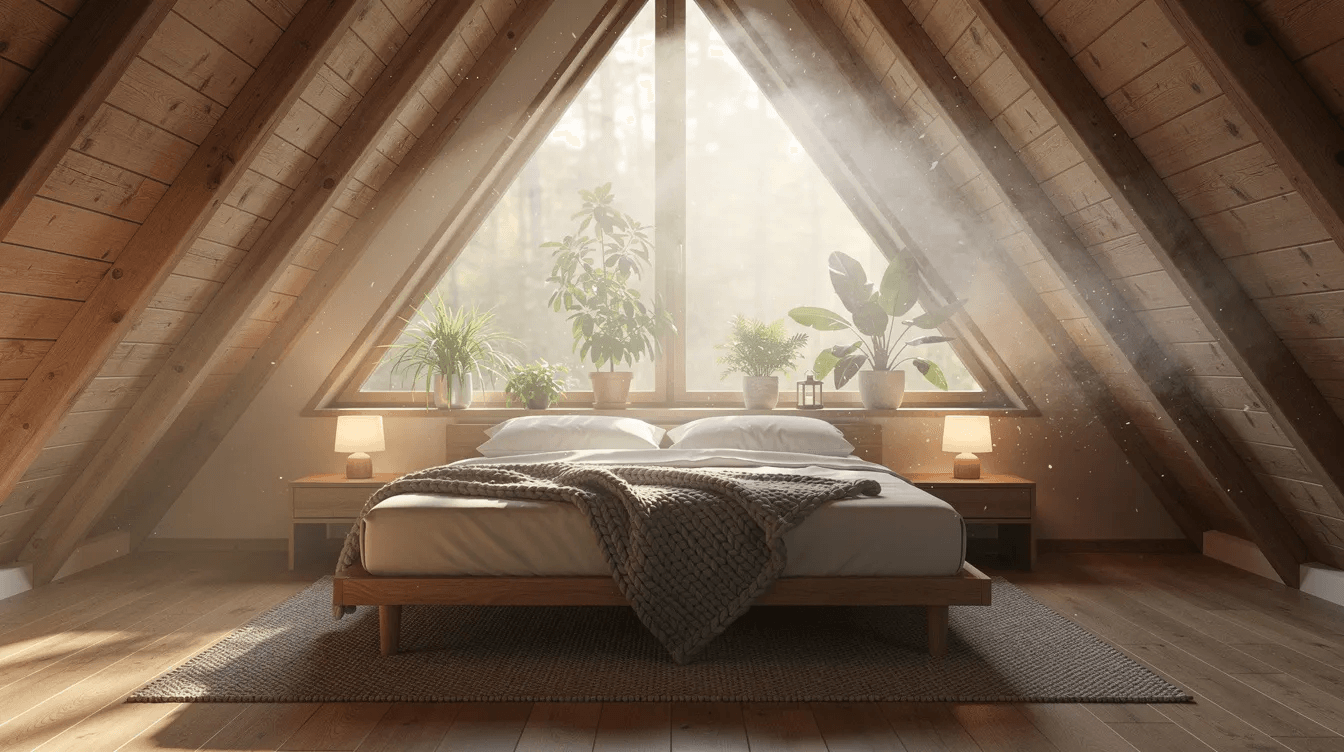
The a frame bedroom is one of those spaces that either works beautifully or feels like sleeping inside a tent that forgot to unfold. That steeply pitched roof creates an unmistakable silhouette—walls that become ceilings, dramatic triangular windows, and a warmth that standard bedrooms simply cannot replicate.
This architectural style gained popularity between the 1950s and 1970s, with pioneers like John Campbell’s 1951 “Leisure House” making a frame house plans accessible to everyday families. Today, you’ll find these bedrooms in vacation homes scattered across snowy mountainous regions in the US and Europe, where the steep roof does serious work shedding heavy snow loads.
This guide focuses specifically on decorating and planning your frame bedroom—not the entire house. Honestly, these ideas are things you can apply this weekend.
The main challenges you’ll face:
- Low headroom under the eaves (often dropping to 3-4 feet near walls)
- Limited vertical wall space for furniture and art
- Tricky bed placement that demands mapping around ceiling heights
- Introduction to A Frame House Plans
- Characteristics of an A Frame Home
- Our Moody A Frame Bedroom Makeover
- Embracing the Angled Architecture
- Lighting an A Frame Bedroom Softly
- Layering Textures for Cabin-Cozy Comfort
- Built-In Storage Under the Eaves
- Vertical Space and Loft Possibilities
- Keeping It Simple and Functional
- Decor and Accessories for A Frame Bedrooms
- Conclusion and Final Tips
Introduction to A Frame House Plans
A frame house plans have become a beloved choice for anyone dreaming of a cozy retreat or the perfect getaway. Defined by their steeply pitched roof and instantly recognizable “A” silhouette, these homes offer a unique architectural style that wraps you in comfort and charm from the moment you step inside. Whether you’re planning a vacation home for family gatherings or a snug hideaway to enjoy with friends, a frame house plans deliver a welcoming atmosphere that’s hard to match.
The simplicity of a frame design means you can construct a home that’s both stylish and energy-efficient, without sacrificing comfort. These plans are incredibly versatile—ideal for everything from a compact cabin to a spacious family house. Their durable structure stands up to the elements, making them a smart investment for those who want a home that lasts. If you’re searching for a unique space to enjoy quality time and create lasting memories, a frame house plans are the perfect foundation for your next project.
Characteristics of an A Frame Home
What sets an a frame home apart is its striking triangular profile, created by the steeply pitched roof that extends almost to the ground. This architectural style isn’t just eye-catching—it’s practical, too. The sharp angle of the roof is perfect for shedding snow and rain, making a frame homes a popular choice in mountain and forest settings where weather can be unpredictable.
Inside, you’ll find a space that feels both open and intimate. High ceilings at the center give the house an airy, spacious feel, while the sloped sides create cozy nooks that are perfect for bedrooms or reading corners. The simplicity of a frame house plans means they’re easier to construct and maintain, and their sturdy design ensures your home will stand the test of time. With a rich history and undeniable charm, a frame homes offer a unique blend of comfort and style—making them the ideal setting for your perfect getaway.
Our Moody A Frame Bedroom Makeover
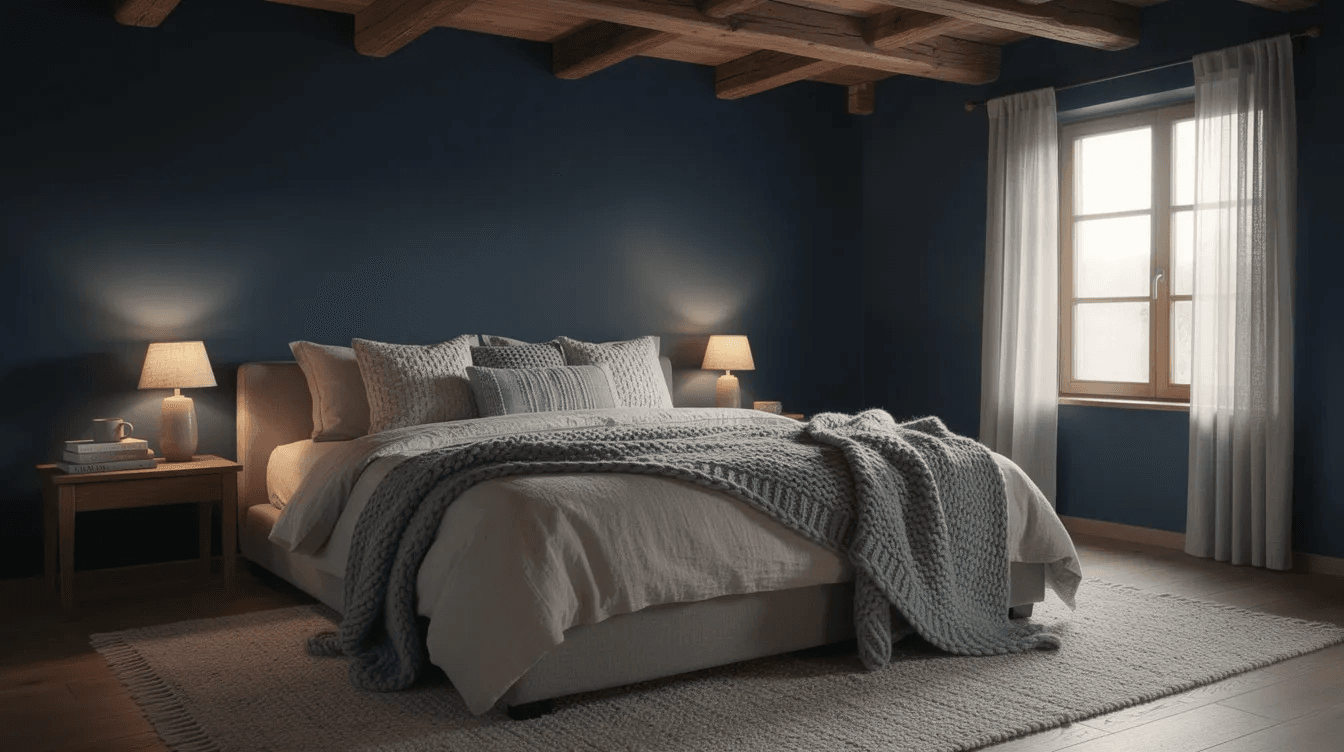
In late 2025, we completed and closed a makeover of a 230 sq ft loft bedroom with exposed beams that felt more construction site than relaxation retreat. The bare pine paneling had charm but needed direction.
There was a lot of work and attention to detail that went into the renovation, from selecting finishes to optimizing the layout. We moved toward a moody palette: walls in a deep blue-green similar to Valspar’s “Victorian Tapestry” in matte finish. That matte was key—it softened reflections from every angled surface and brought instant warmth to all that wood.
The bed became our foundation piece: a queen walnut spindle platform (under 14 inches high) centered under the ridge beam. We flanked it with low-profile stools as nightstands and slotted a narrow 1960s teak dresser under the lowest slope where nothing else would fit. The layout tweak that made everything work? Moving the bed 18-24 inches from the door swing and slightly off-center to dodge rafter head bumps while maintaining symmetry with the window.
Layered bedding wrapped the room in comfort: heavy linen duvet, cotton percale sheets, a vintage tassel throw, and faux-fur pillows that visually warmed all that pine. The simplicity of wood and glass became cozy rather than stark. After a long day, this space is the perfect spot to unwind and recharge.
My way of creating a cozy and functional A-frame bedroom is to focus on thoughtful layout, layered textures, and maximizing every inch for both comfort and style.
Embracing the Angled Architecture
If you love the rustic, cabin-like feel of A-frame spaces, exploring cozy log cabin interior ideas can offer extra inspiration for how to highlight wood, texture, and natural materials in your bedroom.
Working with the steep a frame structure—not against it—is the entire design philosophy here. This isn’t a space where you fight the angles; you embrace them.
Choose low-profile beds positioned where ceiling height exceeds 6’6” (about 198 cm) above the pillow area. Platform beds under 14 inches high, futons, or floor mattresses work perfectly. Tuck seating into the lowest eaves using floor cushions or a low chaise—traditional armchairs won’t find a home here.
Visually emphasize what makes this room unique: leave beams exposed, paint the ceiling one shade lighter than walls, and use the central ridge as your symmetry axis.
Quick checks before committing:
- Walk the room barefoot, noting where you naturally duck
- Use painter’s tape to mark no-go zones on the floor
- Measure head clearance at bed pillow position
Smart Furniture Placement
Every piece needs mapping around clear walking paths of at least 30 inches where the height feels comfortable. There are a lot of creative solutions needed for furniture placement in an a frame bedroom, similar to the careful layout planning required in cozy modern small bedrooms. This isn’t optional—it’s the difference between a room that works and one that gives you daily bruises.
Position the bed either centered under the ridge beam or pushed to one side with the headboard against the tallest wall. Let window placement guide this decision—a great view is worth sacrificing perfect symmetry. A-frame bedrooms can benefit from low-profile beds and built-in shelves to accommodate sloped ceilings.
Use a digital room planner or graph paper that includes the roof slope line and low knee walls before buying anything large. Backless benches or stools make ideal nightstands since they can partially tuck under the slope without eating floor space.
Lighting an A Frame Bedroom Softly
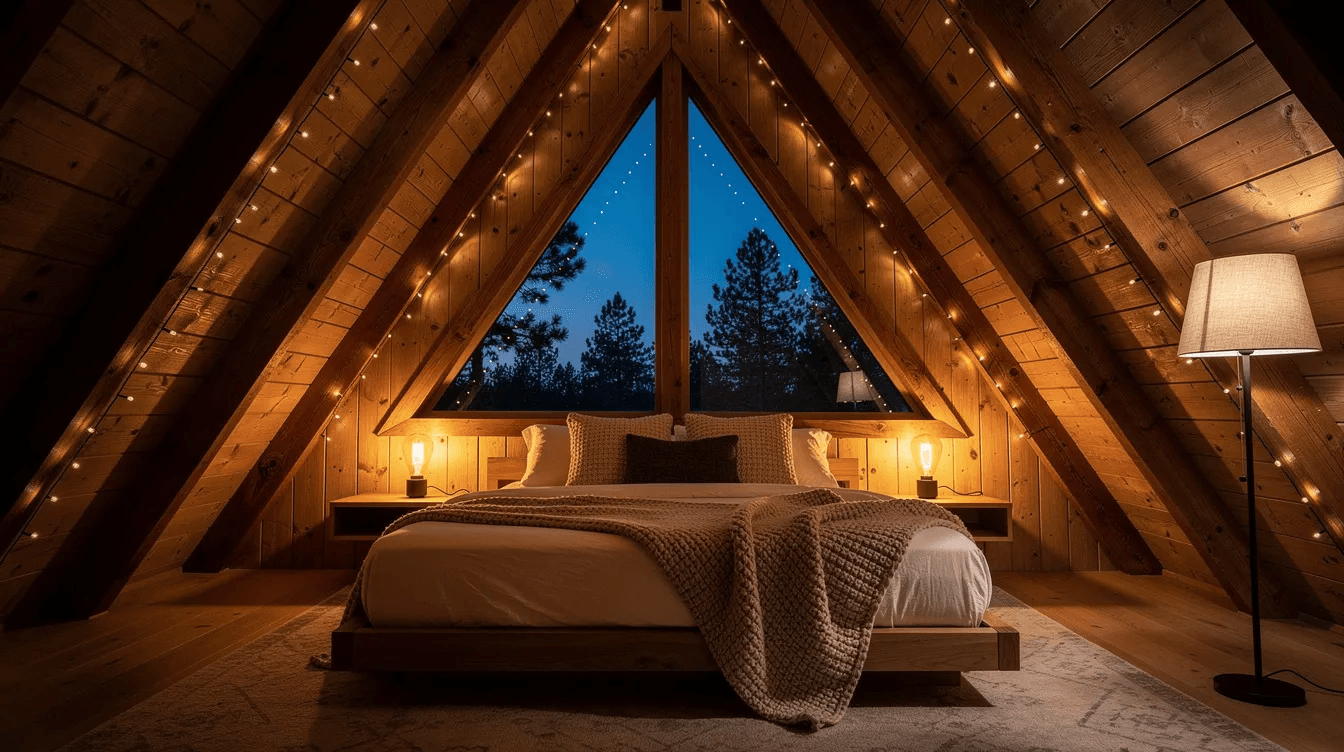
The steep roof can make a frame bedrooms feel dark, especially in winter or when trees wrap around the structure. This is where people often make mistakes—harsh overhead fixtures that highlight every low ceiling angle.
Layer your light strategically: ambient for overall illumination, task for reading, and accent for mood. Thoughtful lighting is one of the simplest cozy bedroom ideas you can borrow for an A-frame space. Plug-in wall sconces on vertical knee walls work brilliantly. String lights following a beam line create warmth without construction.
Fixture recommendations:
- Dimmable table lamps on nightstands (2700-3000K bulbs)
- Plug-in sconces under 12 inches deep on knee walls
- Skylights along the roof plane where possible
- Enlarged gable windows for bright morning light
Warm bulbs and dimmers keep the room cozy while minimizing glare on sloped surfaces.
Making the Most of Windows and Views
Position the bed to face the best view if you have a large triangular window—even if it means the bed isn’t perfectly centered. The view is worth it. Use light linen panels or sheer roller shades ceiling-mounted along the slope. A ceiling-mounted track spanning 8 feet across the triangular window wall preserves the frame without bulk.
Add blackout cellular blinds behind sheers for year-round use, controlling early sunrise and energy loss through those beautiful glass gables while complementing forest-inspired interior design that brings the surrounding landscape into your bedroom.
Layering Textures for Cabin-Cozy Comfort
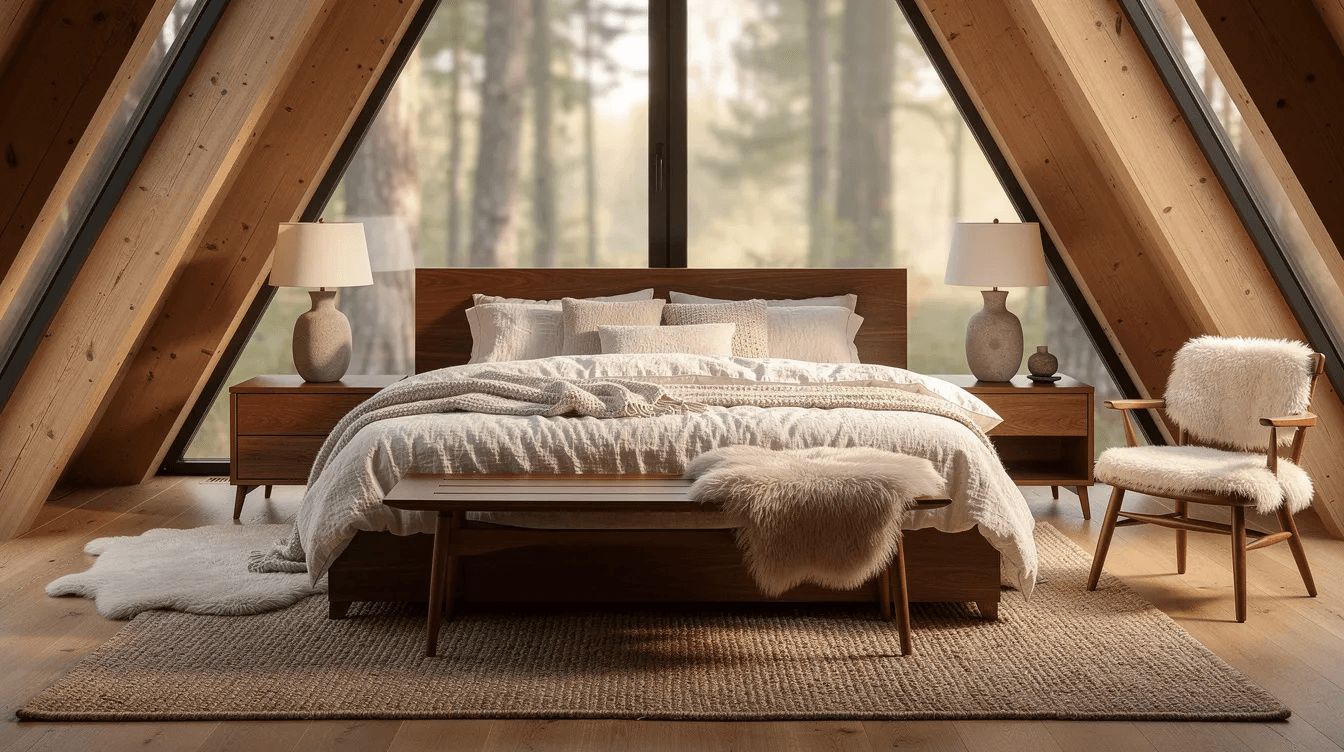
An a frame home is essentially a simple box of wood and glass. Texture is what transforms it from stark to welcoming, especially if you love layering textiles and decor in a small cozy boho bedroom.
- Natural wood furniture (walnut, teak, oak)
- Stone or clay lamps for weight
- Linen or cotton bedding
- Wool or jute rugs extending 24 inches beyond the bed
- Shearling or faux-fur accents
Anchor the bed with a vintage wool rug for warm feet on cold mornings. Layer throws at the foot—one knitted, one woven—plus 2-3 different pillow textures. This prevents that flat, catalog look.
Color Palettes that Suit A Frame Bedrooms
Two clear directions work here:
Moody: Forest greens, inky blues, charcoal. Deep blue-green walls with warm white ceiling and medium walnut furniture with brass hardware.
Airy: Warm whites, pale greiges, honey oak, sand tones. Ecru walls with natural wood accents.
Paint knee walls darker and ceilings lighter to visually lift the peak. Or use a single color in two sheens—matte on walls, eggshell on ceiling—to keep small spaces calm.
Built-In Storage Under the Eaves
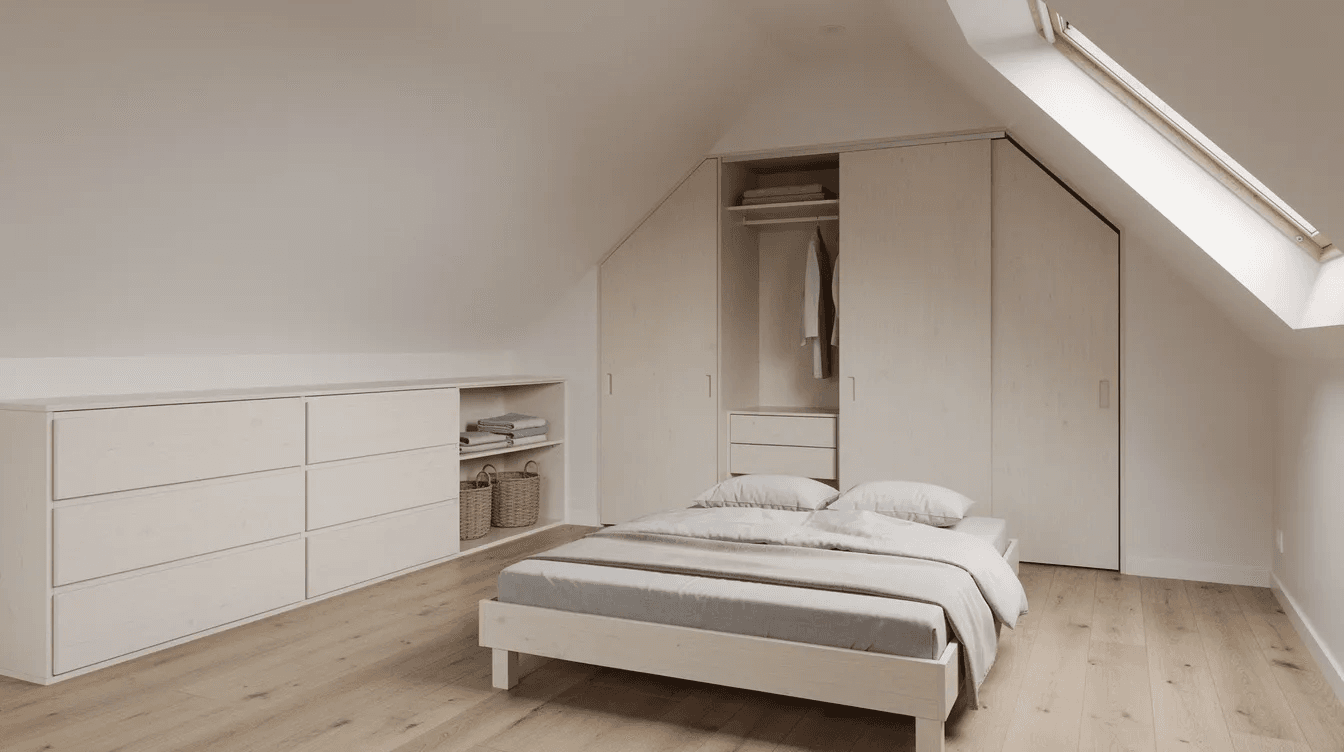
Traditional closets rarely exist in a frame bedrooms. Convert the dead zones under 3-4 feet of height into custom drawers or cubbies running the full wall length.
Frame a shallow built-in closet along the tallest wall with sliding doors so standard hangers still fit. Use simple plywood fronts painted to match walls—storage visually recedes and the room reads bigger.
One project example: fitting six 30-inch-wide drawers under one slope for out-of-season clothes and linens. The price of custom built-ins pays off in livability.
Freestanding Pieces That Still Work
Keep pieces under 30 inches high on sloped sides:
- Three-drawer dressers
- Blanket chests
- Storage benches
Use woven baskets along the lowest roofline edge for items that don’t need daily access. Ideas from custom tiny homes for small-space living can also spark smart storage solutions that keep everything feeling streamlined. Choose pieces with clean lines and visible legs—they help the room feel less crowded than chunky alternatives.
Vertical Space and Loft Possibilities
While the sides slope down, the center offers surprising height that’s often wasted. Add high shelving along the upper ridge for books and plants, accessed with a step stool stored under the bed, much like the smart vertical solutions you’ll find in mountain tiny house getaways.
In larger a frames, a partial loft can create a separate sleeping nook, kids’ bunk area, or overhead luggage platform. Choosing the right ladder for a tiny house loft can also inspire safe, space-saving access solutions here. Check local codes for guardrail height and minimum headroom (typically 6’8” / 203 cm minimum) before planning any loft work.
Safety and Access Considerations
Stable ladders with handrails are essential for any loft access. Add non-slip treads and adequate lighting at both landings. The same mindset that makes yurt hut getaways feel safe and cozy applies here: prioritize comfort and peace of mind. Keep at least one clear escape path to a door or window—even in compact spaces, this is non-negotiable.
Keeping It Simple and Functional
A frame bedrooms shine when you resist over-furnishing. Let the silhouette, beams, and view be the focal points. One bed, two nightstands, one dresser, one chair. That’s the formula.
Choose durable, easy-to-maintain materials—washable duvet covers, machine-washable rugs—especially for weekend homes. Use hidden storage to keep surfaces clear and maintain that airy feeling people love about these spaces.
The charm of a frame bedroom design comes from embracing the angles, creating layers of texture, and solving storage smartly. You don’t need a complete renovation to experience the difference. Try one concrete change this week: repaint those walls in a moody tone, or simply move the bed under the ridge beam. That’s how you find the perfect getaway feeling in your own home.
Decor and Accessories for A Frame Bedrooms
Decorating an a frame bedroom is all about celebrating its unique angles and cozy vibe. Start by choosing a warm, earthy color palette—think wood tones, soft neutrals, and nature-inspired hues—to create a welcoming and relaxing atmosphere. Layer in plush textiles like chunky knit throws, soft pillows, and area rugs to add comfort and charm to the space.
Bring in natural elements to blur the line between indoors and out. Wooden furniture, woven baskets, and a few leafy plants can make the room feel fresh and inviting. When it comes to accessories, look for pieces that work with the room’s distinctive shape: wall-mounted lamps save precious floor space, while floor-to-ceiling curtains can emphasize the dramatic height of the walls and windows.
Strategically arrange your furniture to make the most of every inch—tuck storage baskets under the eaves, use low-profile beds, and keep the layout open for easy movement. If you need a dose of wanderlust while you plan, explore top A-frame cabins you’ll want to escape to for real-life examples of cozy, angled retreats done right. With a thoughtful mix of textures, colors, and accessories, your frame bedroom will become a cozy, welcoming retreat that’s perfect for relaxation and enjoying the unique character of your home.
Conclusion and Final Tips
Designing a frame bedroom is all about embracing the unique structure and letting its charm shine through. Remember to work with the angles, not against them—choose low, comfortable furniture, layer in cozy textures, and let natural light and views take center stage. Keep your decor simple and functional, focusing on pieces that enhance the room’s warmth and character.
Whether you’re planning a new build or refreshing an existing space, a frame house plans offer endless possibilities for creating a perfect getaway that feels both stylish and welcoming. Take your time, experiment with layouts and colors, and don’t be afraid to let your personality show. With a little creativity and thoughtful planning, your frame bedroom can become the ultimate retreat for family, friends, and quiet moments of relaxation. Enjoy the process—and the cozy results!