A-frame housing has experienced a remarkable resurgence since around 2015, driven by the tiny house movement, Airbnb vacation rentals, and social media’s love affair with photogenic cabin escapes. These distinctive triangular structures—defined by their steeply pitched roof extending nearly to ground level—have found renewed popularity in snowy regions, lakeside plots, and forested retreats across the U.S., Canada, and Northern Europe.
This guide delivers concrete information on a frame house plans, realistic construction costs for 2024-2026, honest pros and cons, and modern design ideas. Whether you’re dreaming of a 400 square foot weekend cabin or a 2,000+ square foot family lodge, you’ll find practical details to inform your next project. Before you begin, it’s important to have a clear idea of your desired A-frame design and budget to ensure accurate planning and cost estimation.
- What Is an A-Frame House?
- History and Evolution of A-Frame Houses
- Why Choose an A-Frame House? Key Benefits
- Drawbacks and Design Challenges of A-Frame Housing
- How Much Does an A-Frame House Cost?
- Is an A-Frame Cheaper Than a Conventional House?
- Structural Strength, Safety, and Insulation
- Sustainability of A-Frame Houses
- Basements, Foundations, and Site Considerations
- Floor Plans and Interior Layouts in A-Frame Houses
- Modern A-Frame Styles: From Rustic Cabin to Luxury Lodge
- Typical A-Frame House Sizes and Example Plans
- Planning, Permits, and Working With Professionals
- Who Is an A-Frame House Best For?
- Conclusion: Is A-Frame Housing Right for Your Next Home?
What Is an A-Frame House?
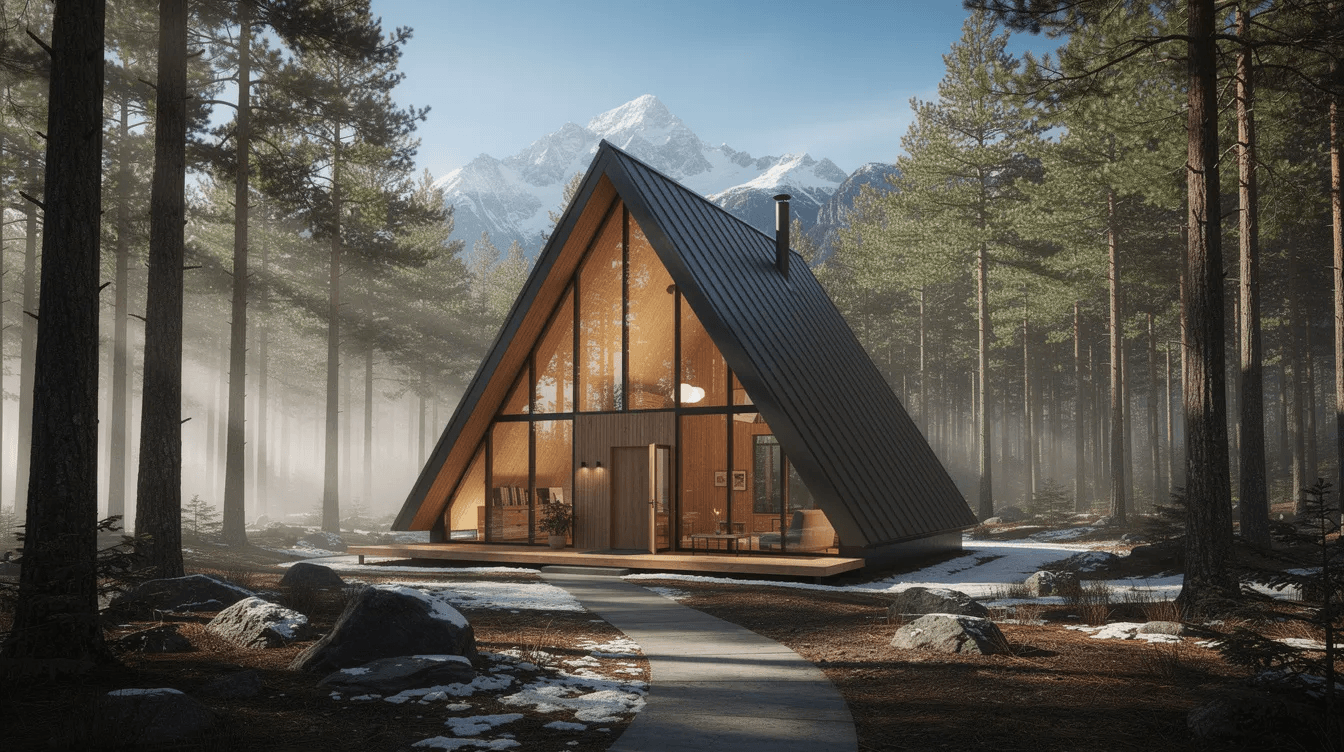
An a frame house is a triangular building form where the roof structure extends almost to ground level on both sides, creating the characteristic capital “A” silhouette. The steeply pitched roof—typically angled between 55 and 65 degrees—integrates roof and walls into a single continuous surface, making the shape both structurally efficient and visually striking.
The style traces back to medieval European timber huts, which used simple A-shaped forms for quick construction in forested areas. A pivotal modern example is R.M. Schindler’s 1934 a frame cabin at Lake Arrowhead in California, which popularized the form as a progressive, minimalist retreat. The design exploded during the 1960s and 1970s as affordable vacation homes throughout the U.S. Rockies, Adirondacks, and Scandinavia.
Modern a frame homes range from 200-400 square footage tiny house designs to 2,000+ square foot family residences. Common structural options include:
- Open or closed gable ends for ventilation and views
- Dormers punched into the roof to reclaim headroom
- Skylights for additional natural light
- T-shaped or cross-gabled variations extending beyond the simple triangle
- Porches, such as wrap-around or front porches, which enhance outdoor living and connect the home to its natural surroundings
Modern A-frame homes also showcase a high level of detail in their interiors, with high-quality finishes and thoughtful design elements that enhance comfort and luxury.
History and Evolution of A-Frame Houses
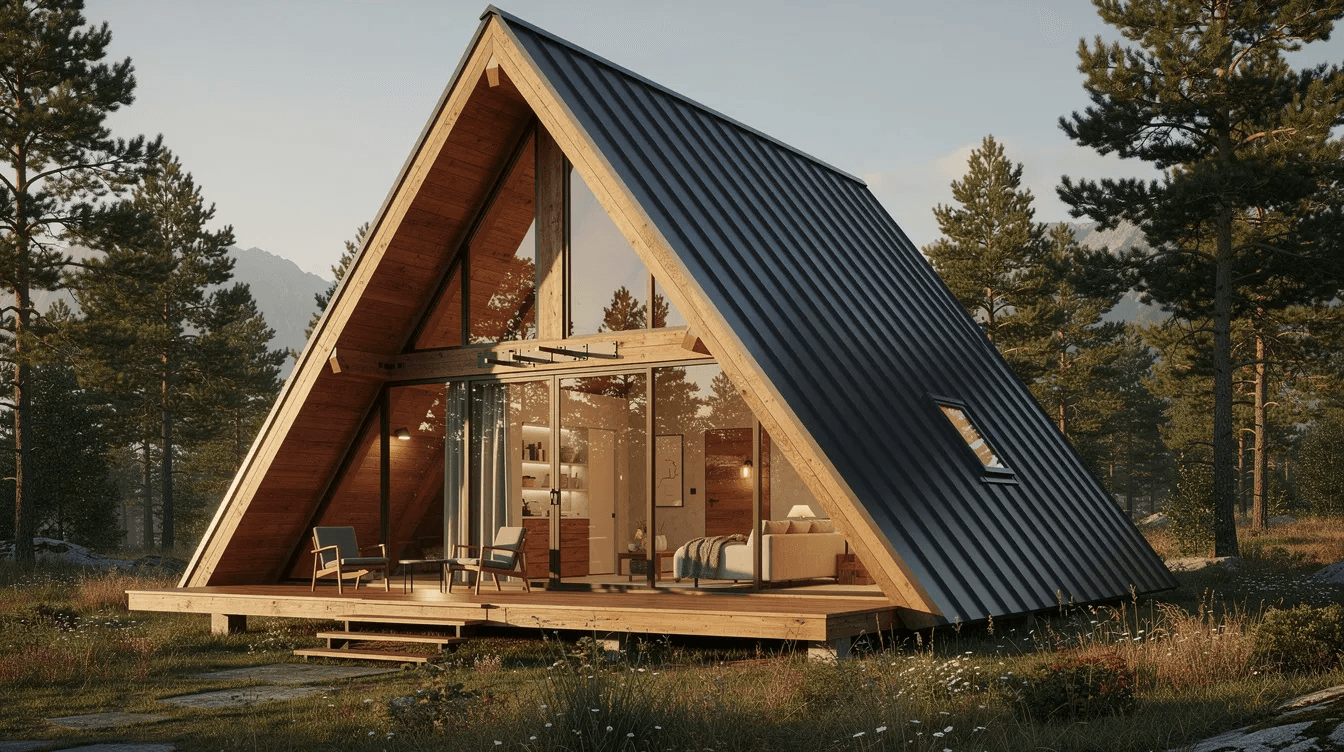
The story of A-frame houses stretches back centuries, with early examples of triangular shelters found in cultures across the globe. However, the iconic modern a frame house plans that we recognize today truly took shape in the mid-20th century. During the 1950s and 1960s, architects and builders began to embrace the steeply pitched roof and bold triangular shape as a practical and stylish solution for vacation homes, especially in mountainous and forested regions.
These early A-frame homes were celebrated for their simple construction and efficient use of materials, making them accessible to a wide range of homeowners. The distinctive frame houses quickly gained popularity for their ability to blend seamlessly into natural surroundings, offering a unique connection to the outdoors. As the style evolved, designers began to experiment with larger windows, including dramatic floor to ceiling windows that filled the living space with natural light and framed stunning views.
Over the decades, a frame house plans have adapted to changing tastes and technologies. Modern a frame homes now feature a variety of materials, from classic timber to sleek metal and glass, and often include open floor plans that maximize both space and energy efficiency. Today, you’ll find A-frame houses in a range of settings—from remote lakesides to bustling urban neighborhoods—each one showcasing the enduring appeal of the triangular form, the steeply pitched roof, and the seamless connection between interior and exterior spaces. Whether you’re drawn to the nostalgia of a rustic cabin or the clean lines of a contemporary retreat, the evolution of A-frame architecture offers endless possibilities for creating a house that feels both timeless and modern.
Why Choose an A-Frame House? Key Benefits
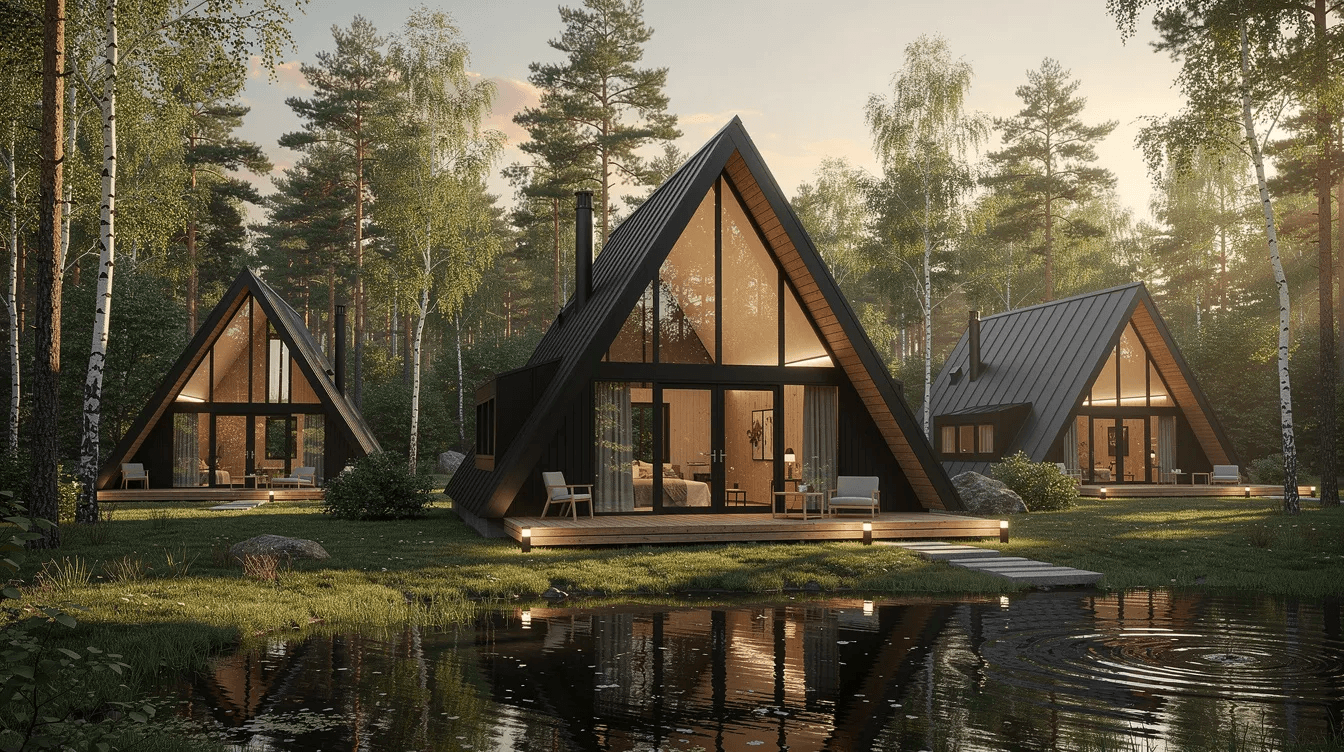
The a frame form delivers several practical advantages that explain its enduring appeal. Here’s why builders continue choosing this distinctive shape.
Climate Performance
The steep 55-65° roof pitch sheds heavy snowfall and rain quickly, reducing risk of roof overload in regions like the Rockies, Alps, or Scandinavia. Properly engineered designs can handle snow loads up to 100 pounds per square foot, making them exceptionally reliable in harsh winter climates.
Dramatic Interior Atmosphere
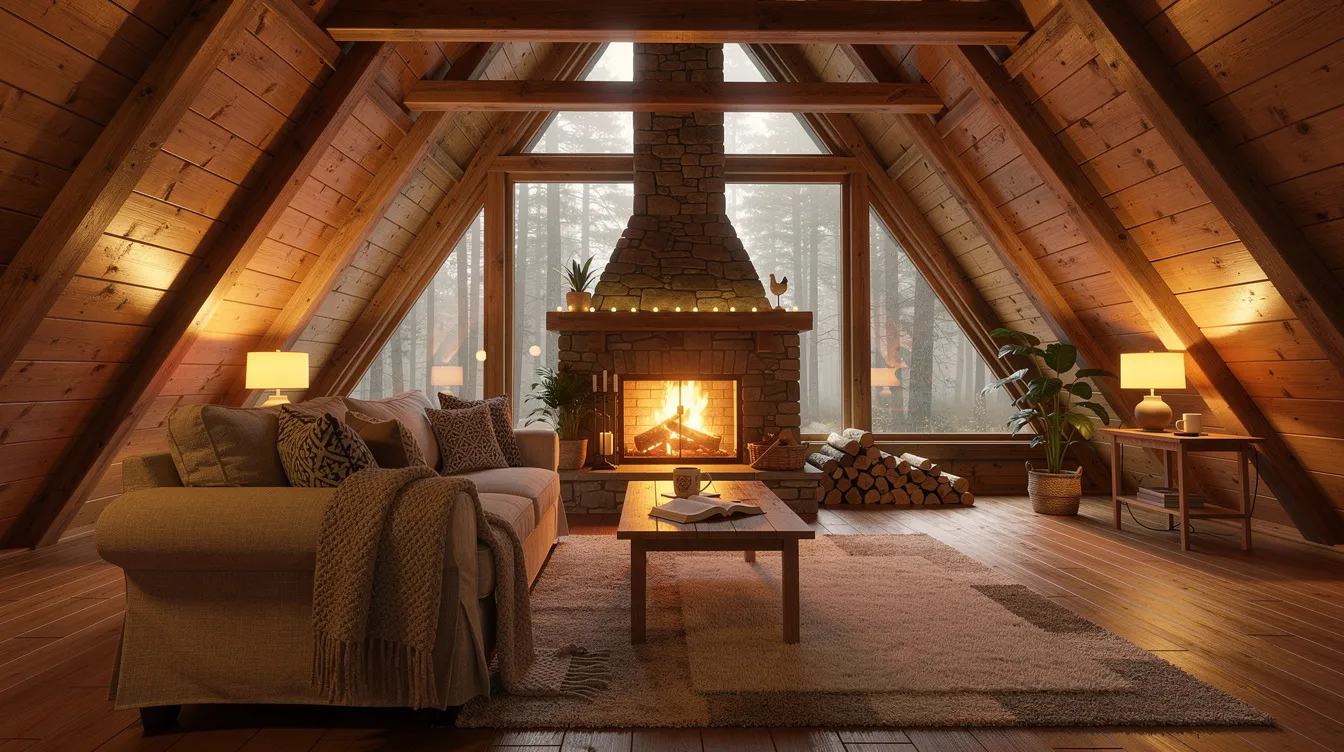
Soaring ceilings in the central zone, exposed heavy timber rafters, and floor to ceiling windows at the gable ends create a cozy yet expansive living space. Interior volumes can reach 25-30 feet, fostering visual drama while maintaining warmth.
Energy Efficiency Potential
The compact envelope minimizes thermal bridging, enabling R-40+ roof insulation when using rigid foam or structural insulated panels. South-facing glazing can provide passive solar gain, yielding 10-15% heating savings according to NREL studies.
Key practical benefits include:
- Strong indoor-outdoor connection through full-height glazing and decks
- Ideal layout for nature-oriented living in natural surroundings
- Repetitive triangular frames can be prefabricated, allowing shell erection in 3-7 days
- Reduced labor costs of up to 40% compared to stick-built rectangles
- High rental appeal—Vermont a frame properties show 25% higher occupancy rates
Drawbacks and Design Challenges of A-Frame Housing
Despite their appeal, a frame houses present real limitations worth considering before committing to this style.
Reduced Usable Floor Area
Steeply sloped walls mean 40-60% of upper levels have headroom below the 7-foot minimum required by most building codes. This space often cannot be counted as habitable area, limiting official square footage.
Furnishing Difficulties
Standard wardrobes, bookshelves, and kitchen cabinets don’t fit well against sloped walls. Builder forums report that 70% of owners face adaptation frustrations, often requiring custom built-ins costing 20-50% more than standard cabinetry.
Additional challenges include:
- Regulatory hurdles: Some municipalities enforce minimum eaves heights or roof-to-wall ratios that clash with pure A-forms, especially in suburban HOAs
- Climate mismatches: In hot regions, unshaded gable glass can cause peak solar heat gains over 200 BTU/sq.ft./hr, demanding expensive low-E triple glazing
- Acoustic limitations: Open lofts transmit sound up to 30 dB higher than walled rooms, unsuitable for families needing privacy
- Limited expansion options: The triangular shape constrains future additions compared to rectangular house designs
Mitigation strategies: Dormers can reclaim 100-200 square feet of usable loft space. Partial knee walls, mechanical ventilation with ERVs, and careful glazing orientation help address these concerns during the planning phase.
How Much Does an A-Frame House Cost?
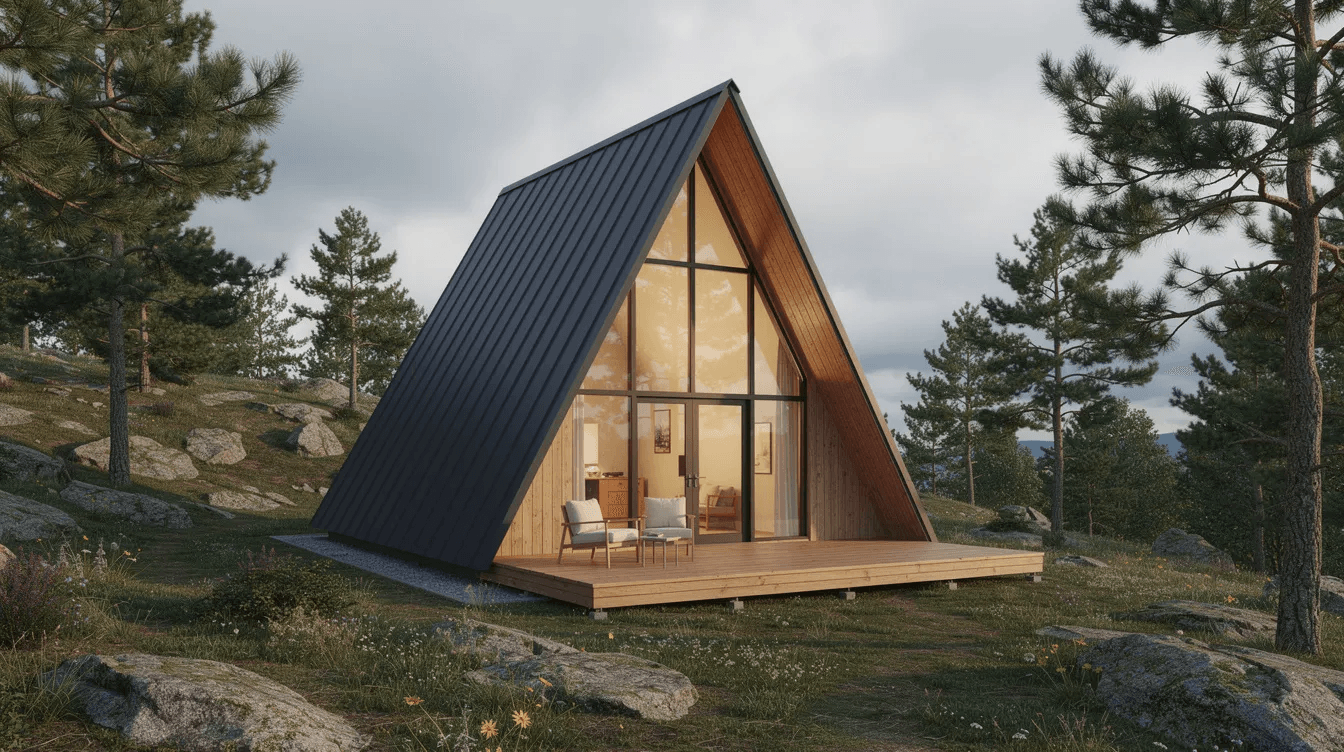
Construction costs vary significantly by location, materials, and finish level. These costs reflect a complete A-frame house, including all structural, interior, and exterior finishes. Here are specific ranges to guide your budget planning.
U.S. Cost Guidance (2024-2026)
Turnkey construction typically runs $200-$400 per square foot including finishes. A simple 1,000 square foot a frame might cost $220,000-$350,000 excluding land. Basic 700 square foot cabins using prefab kits can hit $150,000, while luxury versions with SIPs and triple-pane windows reach $500/sq.ft.
European Pricing
In Germany, Austria, and Scandinavia, turnkey packages range 2,000-3,000 EUR/m² ($120-$180/sq.ft.). Passivhaus energy standards add approximately 15% for enhanced airtightness.
Key cost drivers:
- Roof-to-floor ratio: A-frames have 1.5-2x more roofing surface than floor area, increasing material costs by roughly 25%
- Glazing proportion: Large gable windows add 40% cost premium over standard windows
- Foundation type: Slabs run $5-10/sq.ft., while basements cost $25-40/sq.ft.
- Custom carpentry: Built-ins for sloped walls increase interior finishing costs
- Site accessibility: Remote mountain or lakeside locations add material delivery expenses
Prefab vs. Custom: Shell kits from providers like Shelter-Kit start around $80/sq.ft., cutting design and labor costs but limiting modifications. Fully bespoke architect-designed homes cost more upfront but fit the site better, similar to how top micro house builders balancing quality and affordability approach compact custom projects.
Is an A-Frame Cheaper Than a Conventional House?
The a frame shape alone does not automatically make a home more affordable than conventional houses with standard gable roofs.
Cost savings typically come from:
- Simplified structural repetition using identical triangular frames
- Smaller footprints (many a frame homes are 400-1,200 sq.ft.)
- Reduced exterior wall variety and detailing
- Prefabrication efficiency in kit-based construction
However, several factors can push costs higher:
- Large high-performance windows at gable ends
- Custom interior carpentry to suit sloped ceiling geometry
- Relatively large roof surface requiring premium roofing materials
- Specialized contractor experience with triangular framing
Concrete comparison: A compact 900 square foot a frame versus a 900 square foot rectangular cottage built in the same rural county in 2025 may end up similar in overall budget once finishes and windows are matched.
When A-frames are cheaper: Small, simple, prefab projects (20% savings potential for 500 sq.ft. kits)
When they’re not: Large, glass-heavy, highly customized designs (15-25% premium over conventional)
Focus on total project cost—design, permits, site work, utilities, building, and furnishing—rather than frame type alone when trying to economize.
Structural Strength, Safety, and Insulation
The triangular geometry at the heart of a frame architecture provides inherent structural advantages while demanding careful attention to thermal performance.
Structural Strength
The truss-like form distributes vertical loads efficiently through compression along the rafters to the foundation. This makes a frame structures exceptionally resistant to wind (engineered for 120-150 mph per ASCE 7 standards) and heavy snow accumulations without intermediate supports, allowing spans up to 40 feet wide.
Safety Considerations
Modern a frame homes in snowy regions are designed using current building codes—like the International Residential Code—to handle specific ground snow loads. Proper construction requires engineered connections (hurricane ties at every rafter) and professional inspections. Insurance data shows 15% failure rates from under-engineered amateur builds, emphasizing the importance of professional involvement.
Insulation Strategy
Since the roof functions as the wall, the entire A-surface needs continuous insulation from foundation to ridge. Modern approaches include:
- 2×12 rafters filled with R-38 blown cellulose plus rigid exterior foam for R-50 total
- Structural insulated panels (SIPs) at R-6.5 per inch
- Passive house-certified examples achieving energy use as low as 20 kBtu/sq.ft./year
Window Performance
Large gable windows should use double or triple glazing with low-E coatings, argon fill, and thermally broken frames. Target U-values around 0.15 and solar heat gain coefficients of 0.4 for south-facing glass, 0.25 for north-facing.
Discuss snow load calculations, wind exposure, and insulation details with a local architect or structural engineer early in your project.
Sustainability of A-Frame Houses
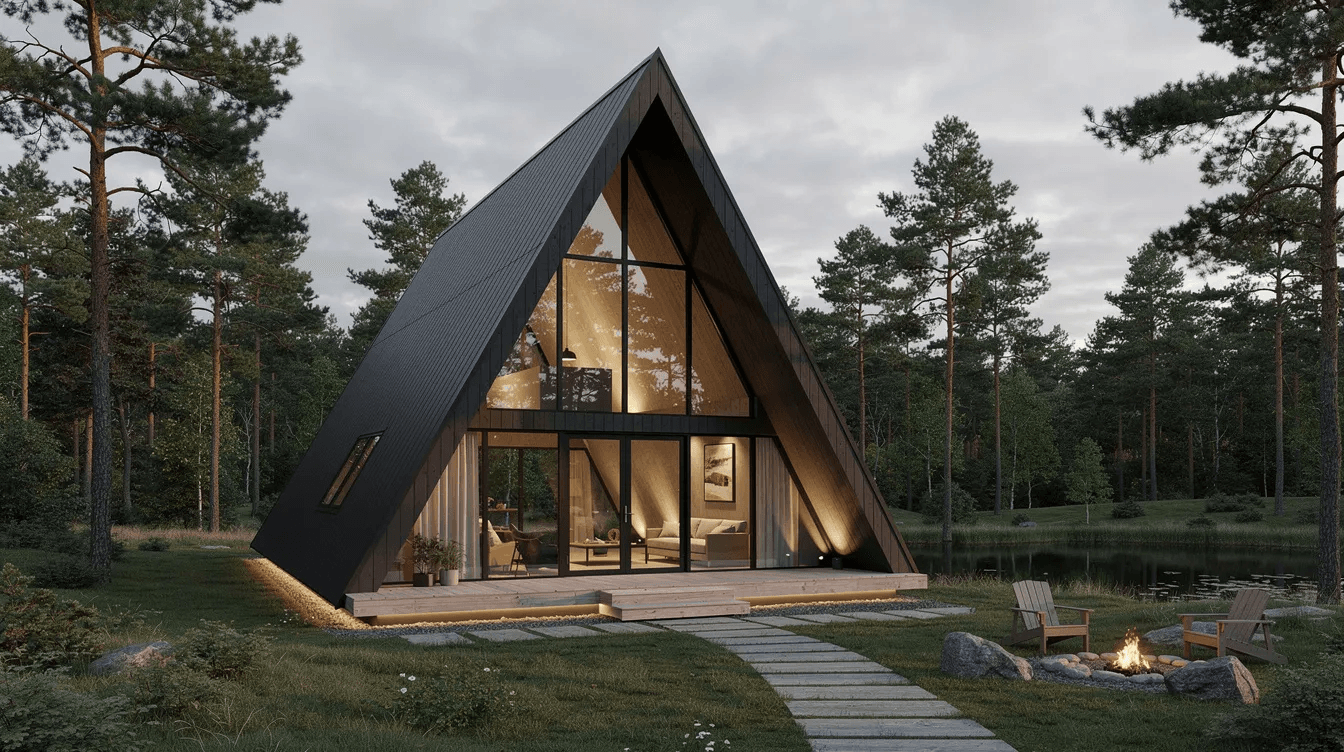
A-frame houses are widely recognized for their sustainability and energy efficiency, making them a smart choice for eco-conscious homeowners. The hallmark triangular shape and steeply pitched roof are not just visually striking—they also serve practical, environmentally friendly purposes. The design allows snow and rain to slide off effortlessly, reducing the risk of roof damage and minimizing maintenance needs over time.
One of the standout features of many a frame house plans is the use of large windows and open interiors, which flood the living space with natural light. This abundance of daylight reduces reliance on artificial lighting and helps maintain a comfortable indoor environment, even during colder months. The compact square footage typical of a frame homes means less energy is required for heating and cooling compared to larger, conventional houses, further enhancing energy efficiency.
Sustainability in A-frame construction goes beyond just the shape and size. Many modern a frame house plans incorporate eco-friendly materials such as reclaimed wood, recycled insulation, and low-VOC finishes. Additionally, features like solar panels, rainwater harvesting systems, and energy-efficient windows can be seamlessly integrated into the design, supporting a low-impact lifestyle, comparable to fully self-contained tiny homes for modern off-grid living. The simple construction methods often used in building frame houses also reduce waste and streamline the building process, making these homes both affordable and environmentally responsible.
Ultimately, A-frame houses offer a unique blend of style, efficiency, and a strong connection to nature. With thoughtful planning and the right materials, an A-frame can provide a sustainable, comfortable, and affordable living space that stands the test of time—proving that good design and environmental responsibility can go hand in hand, much like Earthship tiny homes for sustainable living that push eco-friendly design even further.
Basements, Foundations, and Site Considerations
Foundation selection significantly impacts both construction cost and usable space in a frame house plans.
Foundation Options
- Concrete slab-on-grade: Best for flat sites with frost depths under 24 inches ($4,000-$8,000 for a 30×40 footprint)
- Crawlspace: Suitable for moderate climates with sloping terrain
- Full basement: Common in colder regions, adding 800+ square feet of storage, bedrooms, or utility space
Basements are often essential for gaining extra rooms since above-grade a frame volume is spatially constrained by the sloped walls, and many small-footprint projects benefit from carefully choosing the best foundation for a tiny house based on soil, climate, and mobility needs.
Site Factors
Before finalizing your site selection, conduct a thorough search for suitable land, considering zoning, lot size, and access to utilities to ensure your a frame housing project meets all requirements.
- Frost depth (36-48 inches in cold climates)
- Soil bearing capacity (CBR >2 for pier foundations)
- Local groundwater levels
- Slope conditions—hillside sites in Colorado or the Alps often require stepped or pier foundations
Drainage Importance
Steep 60-degree roofs shed water and snow at speeds up to 20 mph. Grading, perimeter drains, and gutters must direct runoff away from the foundation. Inadequate drainage causes 10% higher moisture issues in basements without proper systems diverting 5-10 gallons per minute during heavy runoff.
Check local codes for height limits, setback requirements, and allowed styles before selecting your site, especially near lakes, coasts, or protected landscapes.
Floor Plans and Interior Layouts in A-Frame Houses
A frame floor plans typically organize living space around an open main level with one or two loft areas tucked under the roof, maximizing the dramatic interior volume.
**Small A-Frame (600-900 sq.ft.)
Open living area, kitchen, and dining on the ground floor with a bathroom and utility space. A sleeping loft above—access is provided by stairs or a ship ladder optimized for tiny house lofts—accommodates a queen bed. This layout ensures safe and convenient access to upper-level spaces, making it suitable for 1-2 people or short-term rental use.
Mid-Size A-Frame (1,000-1,400 sq.ft.)
Main level with one or two bedrooms, shared living area, and full bathroom. Upper loft contains additional sleeping space or a home office. Mezzanine lounges are popular for remote workers seeking inspiring views.
Family Lodge (1,600-2,100 sq.ft.)
Great room with 20-foot vaulted ceilings, two bathrooms, ground-floor primary bedroom for accessibility, and loft suite or additional bedrooms above. Multiple lofts accessed by alternating-tread stairs (compliant with IRC R311.7 for steep rises up to 12 inches).
Space-Maximizing Techniques
- Built-in benches and beds under sloped walls
- Storage drawers integrated into knee wall zones
- Compact galley kitchens aligned along the higher side of the interior
- Open-riser stairs that preserve sightlines to gable windows
Plan circulation carefully so stairs don’t block key views toward those dramatic floor to ceiling windows at the gable ends.
Modern A-Frame Styles: From Rustic Cabin to Luxury Lodge
Contemporary a frame home plans embrace three main aesthetic directions, all maintaining the iconic silhouette while differing in materials and atmosphere.
Rustic Cabin Style
Dark-stained timber cladding, exposed heavy beams (often 6×12 Douglas fir), stone fireplaces, and warm earthy interior palettes. Cedar shake roofing and fieldstone details create classic Adirondack or Black Forest character. This style celebrates the traditional mountain chalet heritage of a frame architecture.
Nordic Minimalist Style
Light-colored thermally modified wood siding (like Lunawood), matte black standing-seam metal roofs, clean geometric decks, and predominantly white interiors with blonde wood accents. Simple furniture, minimal ornamentation, and connection to nature define this Scandinavian-inspired approach, closely aligned with Scandinavian tiny home designs for modern living.
Luxury Lodge Style
Large expanses of glazing using systems like NanaWall spanning 20 feet, high-end finishes including wide-plank oak flooring and quartz countertops, spa-like bathrooms with freestanding tubs, and integrated smart-home systems. Attention to detail is evident in the interior design, with custom millwork and carefully selected fixtures that enhance both comfort and luxury. This direction appeals to high-end rental investors and those creating a dream home with modern amenities.
Material Considerations Across Styles
Element | Rustic | Nordic | Luxury |
|---|---|---|---|
Siding | Cedar/dark stain | Light wood/thermally modified | Mixed wood/stone |
Roofing | Cedar shake | Standing-seam metal | Premium metal/slate |
Windows | Bronze/wood frames | Black frames | Black/custom colors |
Interior | Warm tones | White/light wood | Designer finishes |
 |
Typical A-Frame House Sizes and Example Plans
This section provides concrete size examples to orient your planning—not full blueprints, but realistic starting points, which you can pair with tiny house plans that fit your life if you’re exploring compact living more broadly.
Small Cabin (400-500 sq.ft.)
Footprint around 20×24 feet. One open sleeping loft, one bathroom, combined living and kitchen area. Suited for 1-2 people, weekend getaways, or Airbnb rentals. Simple construction makes this an accessible entry point.
Mid-Size Home (900-1,200 sq.ft.)
Footprint around 28×36 feet. Two bedrooms, 1-2 bathrooms, small loft or mezzanine. Ideal for couples or small families wanting a primary or secondary vacation home.
Lodge-Scale (1,800-2,200 sq.ft.)
Footprint around 40×50 feet. Three bedrooms, 2-3 bathrooms, loft lounge, generous great room. Common for high-end rental properties in mountain regions with strong ROI potential.
Plan Provider Options
Many a frame home plans providers offer multiple widths and lengths using identical structural logic, similar in spirit to crafting your dream Amish tiny house where traditional craftsmanship and compact layouts are tailored to individual needs:
- 28×32 feet (compact)
- 30×40 feet (mid-size)
- 30×48 feet (extended)
- 36×52 feet (lodge scale)
Stretching the footprint adds rooms while maintaining the efficient triangular form.
Planning, Permits, and Working With Professionals
Despite their apparent simple construction, a frame houses require careful professional input to comply with local codes and perform well over decades.
Typical Planning Steps (2024-2026)
- Site survey assessing frost lines, soil conditions, and setbacks
- Conceptual design with architect or designer
- Structural calculations for snow, wind, and seismic loads as applicable
- Permit application with local building department
- Final construction documents for builder
Common Permit Issues
- Maximum height restrictions
- Lakefront or coastal setback requirements
- Wildfire defensible-space requirements (100-foot clearance, Class A roofing)
- Energy code compliance for glazing and insulation values
Professionals to Involve
- Architect: Navigate codes, optimize site orientation, create a plan that maximizes your location. Working with a company specializing in A-frame house plans ensures you benefit from their expertise in this unique style and a personalized design process tailored to your needs.
- Structural engineer: Calculate snow loads using formulas like Pf = 0.7CeCtIpg per IRC R301.2.3
- Professional builder: Execute the project with proper connections and inspections
Even self-builders should consider getting a professionally engineered shell (foundation, structure, envelope) while handling interior finishes independently. This addresses the most critical safety and code requirements.
Who Is an A-Frame House Best For?
A frame housing suits specific lifestyles and locations particularly well.
Ideal Users
- Couples or small families who value character over conventional layouts
- Nature lovers seeking strong connection to natural surroundings and inspiration from top A-frame cabins as nature retreats
- Remote workers wanting inspiring spaces with dramatic views
- Investors targeting scenic short-term rentals (80% of Colorado a frame homes serve as rentals yielding 8% ROI)
Best Locations
- Forested or mountainous plots ideal for mountain tiny house getaways
- Near lakes and ski areas
- Regions with significant seasonal changes where cozy interiors shine
Potential Mismatches
- Large multi-generational households needing many closed bedrooms
- Those who dislike sloped ceiling spaces or loft living
- Dense urban neighborhoods with restrictive zoning
- Hot climates without budget for premium shading and glazing
A frame housing is less about maximizing traditional square footage and more about achieving a distinct sense of atmosphere and landscape connection.
Conclusion: Is A-Frame Housing Right for Your Next Home?
A frame housing offers an iconic form with strong structural logic, cozy yet dramatic interiors, and genuine connection to nature. The triangular shape efficiently sheds snow and rain while creating soaring interior volumes that few other house designs can match.
However, reduced headroom, furnishing constraints, and layout limitations require honest evaluation. Upfront planning around climate, orientation, insulation strategy, and furniture placement is essential to transform an a frame from weekend novelty into comfortable year-round living.
Review example a frame floor plans in your desired size range. Consult local professionals familiar with sloped-roof construction. Visit existing a frame structures if possible to experience the space firsthand.
The enduring appeal of a frame housing lies in its blend of traditional cabin charm and modern design possibility. With proper planning and professional guidance, your dream a frame can become a distinctive home that stands beautifully for 50 years or more. Start sketching your ideas—and imagine how you would personalize your own A-shaped retreat.