The a frame house has become one of the most recognizable and sought-after architectural forms for cabin lovers, vacation property investors, and anyone drawn to distinctive home designs. This guide walks you through everything you need to know about frame houses—from their origins and structural advantages to real-world costs and livability considerations.
- What is an A-frame house?
- What is the point of an A-frame house?
- Typical features of A-frame houses
- How much does it cost to build an A-frame house?
- Is it cheaper to build an A-frame house than other homes?
- Pros and cons of A-frame houses
- Are A-frame houses strong and safe?
- Insulation, energy efficiency, and comfort in A-frame houses
- Do A-frame houses have basements and how are they laid out inside?
- Variants and related A-frame types
- Who are A-frame houses ideal for?
- Conclusion: Is an A-frame house right for you?
What is an A-frame house?
An a frame home is a structural form defined by its triangular shape, where the roofline slopes steeply from the ridge peak down to nearly ground level on both sides, forming a profile that resembles the letter “A.” The walls essentially become part of the roof plane, eliminating traditional vertical walls except for short knee walls at the base.
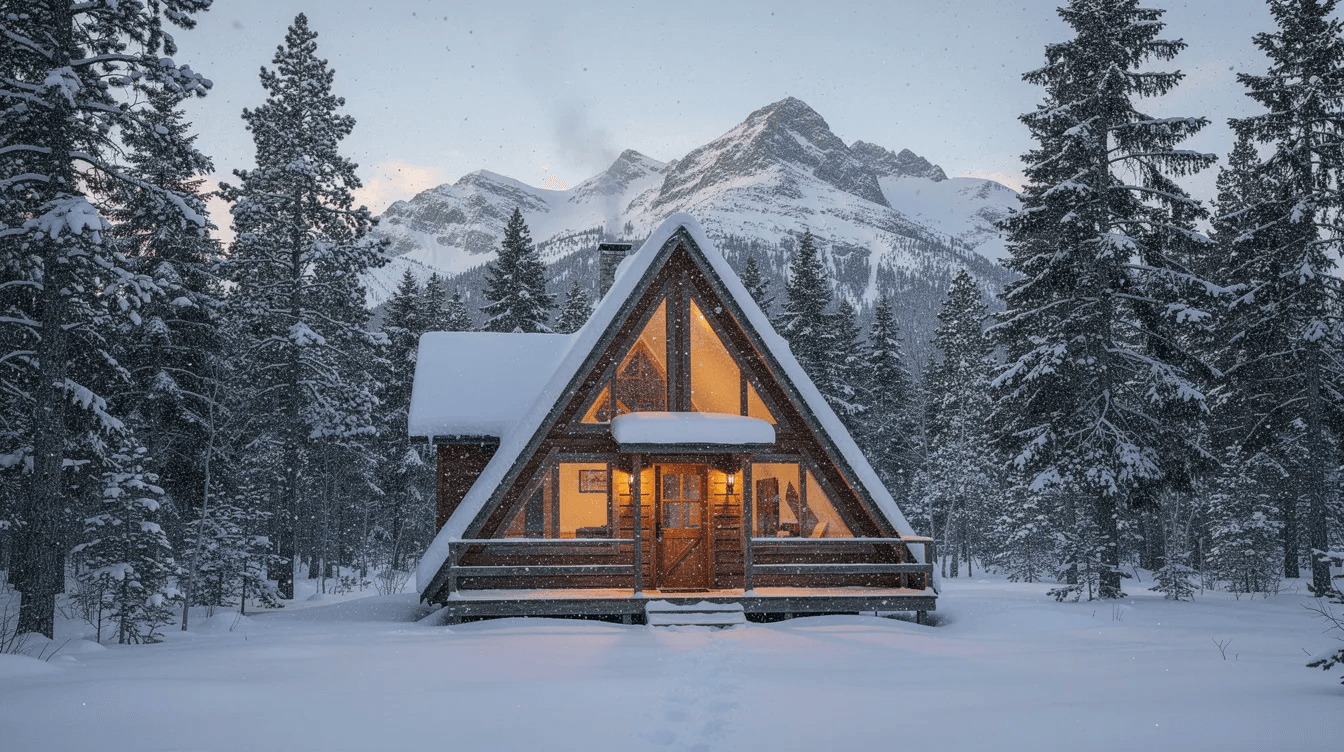
This distinctive form traces back to medieval European huts and chalets in alpine regions like Scandinavia and the Alps, where the steeply pitched roof was practical for shedding snow. The modern revival occurred in the United States during the 1950s through 1970s, when these structures became popular as affordable lakeside cabins and ski retreats. A pivotal early example is R.M. Schindler’s 1934 Lake Arrowhead Cabin in California, which adapted the form into a sleek, glass-fronted prototype that influenced decades of subsequent designs.
Defining characteristics of a frame type houses:
- Roof pitch between 50 and 60 degrees (often precisely 55 degrees)
- Prominent front and rear gable ends, frequently glazed with large windows
- Deep overhanging eaves for shade and weather protection
- Minimalist silhouette emphasizing the roof as the dominant feature
- Compact footprints ideal for sloped or wooded sites
What is the point of an A-frame house?
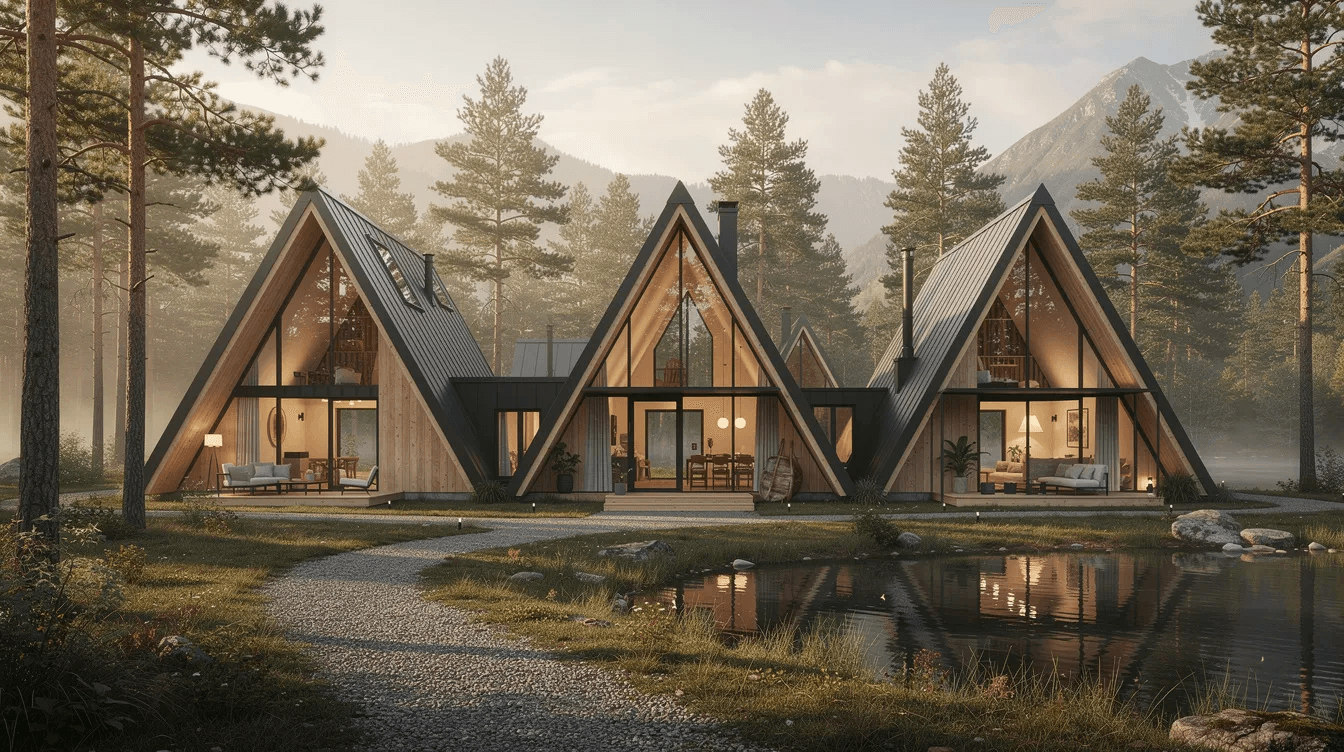
The core purpose behind the a frame shape combines climate-responsive engineering, structural simplicity, and cost-effectiveness. This isn’t just about aesthetics—it’s a form that evolved to solve specific problems.
The steep triangular roof efficiently sheds heavy snowfall in alpine, Scandinavian, and Rocky Mountain environments. Snow accumulation slides off via gravity, preventing structural collapse under loads that can exceed 50-100 pounds per square foot in severe winters. The same principle applies to rain and wind-driven debris in coastal areas.
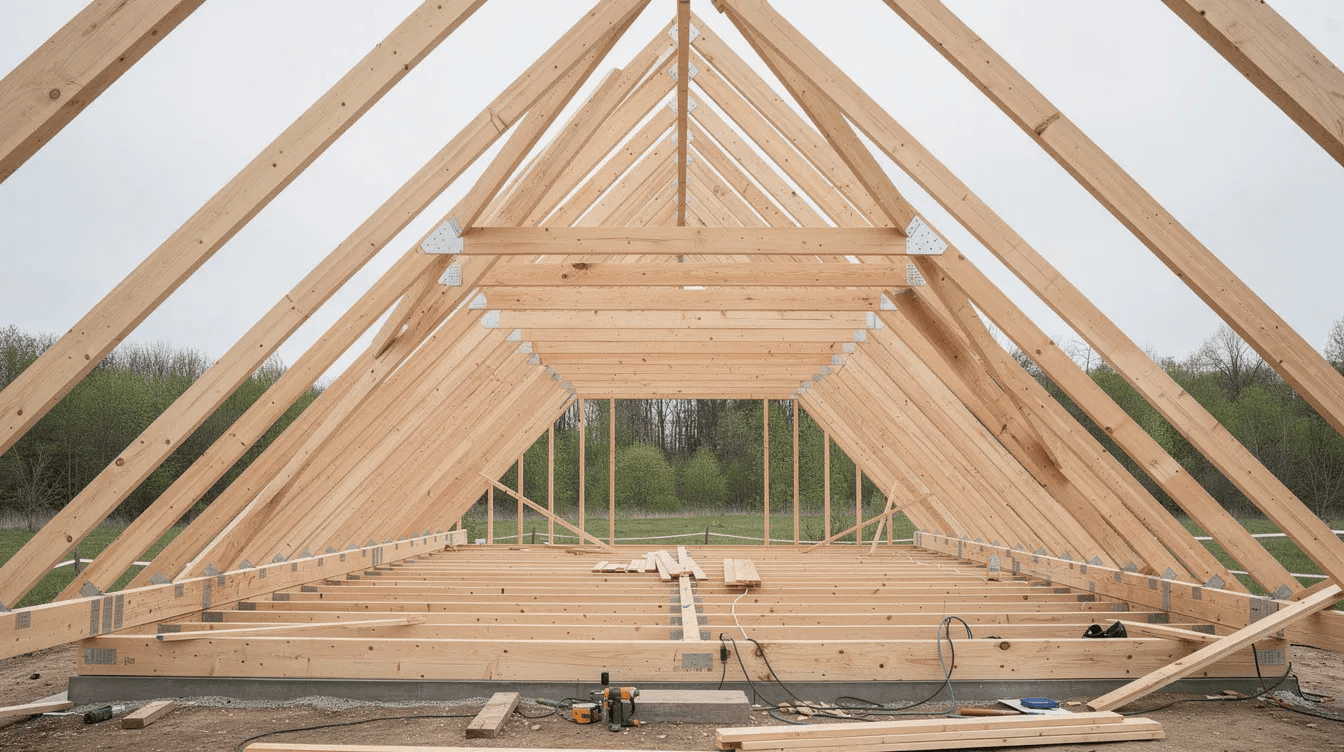
Structurally, the triangle distributes gravitational, wind, and seismic loads evenly along the rafter lines directly to the foundation. This creates an inherently rigid shell with minimal wall bending, reducing material needs by up to 20-30% compared to rectangular gable-roof houses.
Key design problems the a frame solves:
- Snow shedding without manual removal
- Wind resistance via aerodynamic form (tested up to 120+ mph)
- Material efficiency through fewer walls and repetitive framing
- Simple construction suited to DIY builds and prefab kits
- Aesthetic appeal that drives rental demand in vacation markets
- Versatility for challenging sites with poor access
Typical features of A-frame houses
Understanding the physical characteristics of frame house plans helps you evaluate whether this style fits your needs. Here’s what defines the form architecturally and technically.
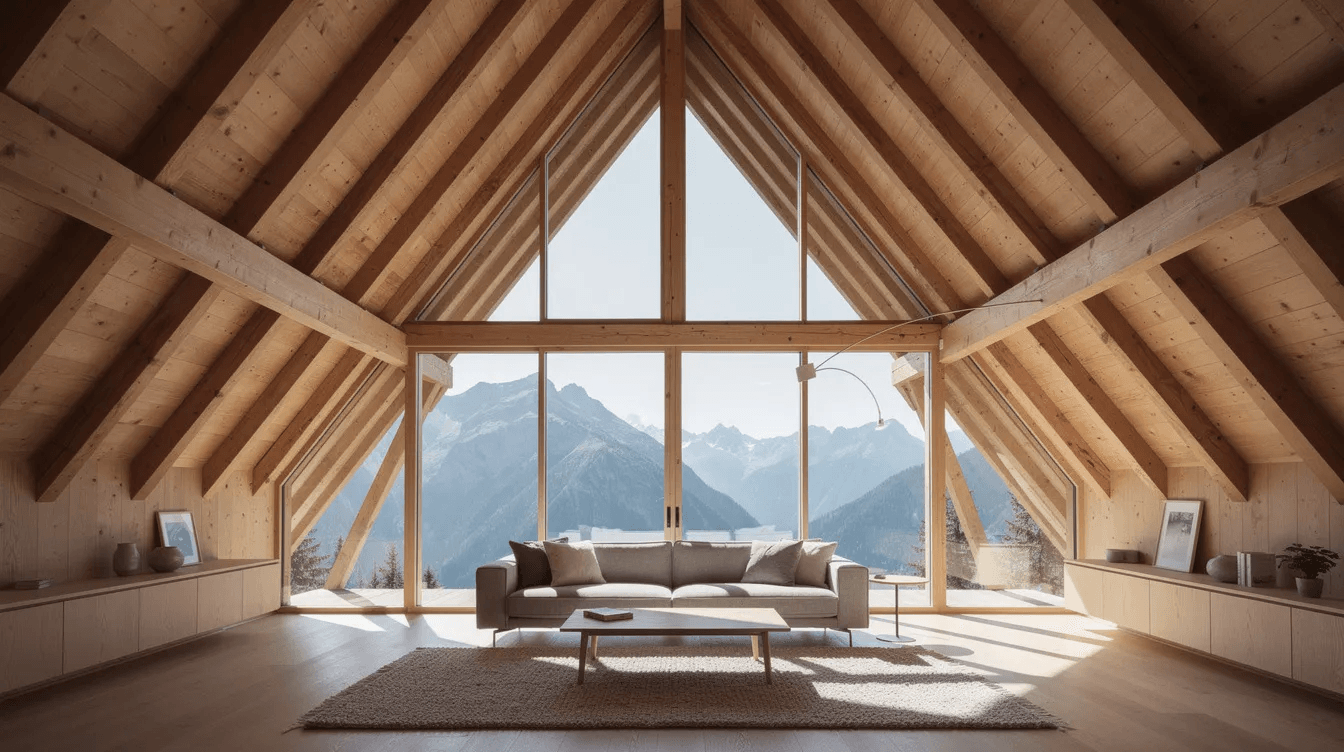
Roof structure:
- Long rafters spanning from central ridge to knee-wall height near ground level
- Symmetrical pitches typically at 55-60 degrees
- Dimensional lumber (2×10 or engineered glu-lam beams) spaced 16-24 inches on center
- Collar ties or knee braces for additional stability
Windows and glazing:
- Floor to ceiling windows dominating gable ends (40-70% of facade area)
- Double or triple-pane low-E glass with argon fill
- U-values around 0.25-0.35 Btu/hr-sq ft-°F for thermal performance
- Orientation toward views such as mountains, forests, or lakes
Exposed structure and materials:
- Visible rafters, purlins, and king post trusses creating vaulted ceilings
- Open spans reaching 30-40 feet without intermediate supports
- Cedar or Douglas fir cladding common in classic builds
- Standing-seam metal roofs for durability (50+ year lifespan)
- Reference example: 1970s cedar-clad resort a frame cabin structures in Vail, Colorado
Energy and insulation features:
- Continuous insulation under roof sheathing (R-40 to R-60)
- Air-tight membranes like peel-and-stick for envelope sealing
- South-facing solar panels leveraging vast roof surface (1.5-2x the floor area)
Interior layout:
- Open floor plans combining kitchen, dining, and living under 20-30 foot ceilings
- Loft or mezzanine bedrooms accessed by space-saving stairs
- Natural light flooding through expansive gable glazing
How much does it cost to build an A-frame house?
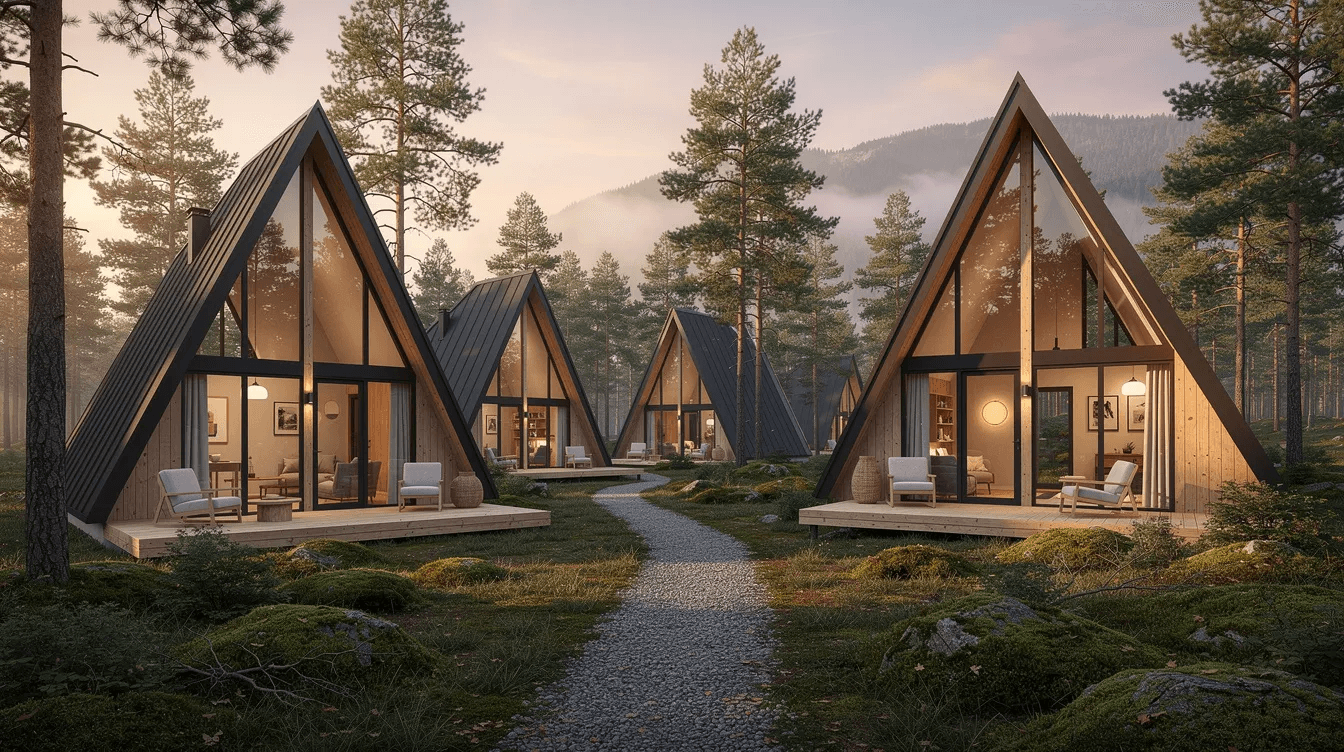
In 2024-2025 North American markets, building an a frame house typically costs $100 to $300 per square foot ($1,075 to $3,230 per square meter), varying by location, finishes, and engineering complexity. High-end custom builds in urban or seismic zones can exceed $400 per square foot.
Example cost scenarios:
Project Type | Square Footage | Estimated Total Cost |
|---|---|---|
Weekend cabin | 600 sq ft (56 m²) | $80,000 – $200,000 |
Primary residence | 1,000 sq ft (93 m²) | $150,000 – $400,000 |
DIY tiny house | 80 sq ft | $700 – $2,000 (salvaged materials) |
Key cost drivers: |
- Remote site access: Helicopter or mule delivery in mountains adds 20-50%
- Snow-load engineering: $5,000-$15,000 in structural engineering fees for 50-100 psf designs
- Oversized large windows: $50-$150 per square foot installed
- Premium interior finishes: Reclaimed wood at $20-$50 per square foot
- Regional labor rates: $50-$150 per hour depending on location
Prefab kit options:
Shell kits from manufacturers like Den Outdoors or Pacific Homes range from $40,000-$90,000, excluding foundation, utilities, and interior finishes. Foundation costs vary significantly: slabs run $5-$10 per square foot versus basements at $20-$40 per square foot, so it’s worth reviewing the best foundation options for tiny houses if you’re planning a compact A-frame build.
Is it cheaper to build an A-frame house than other homes?
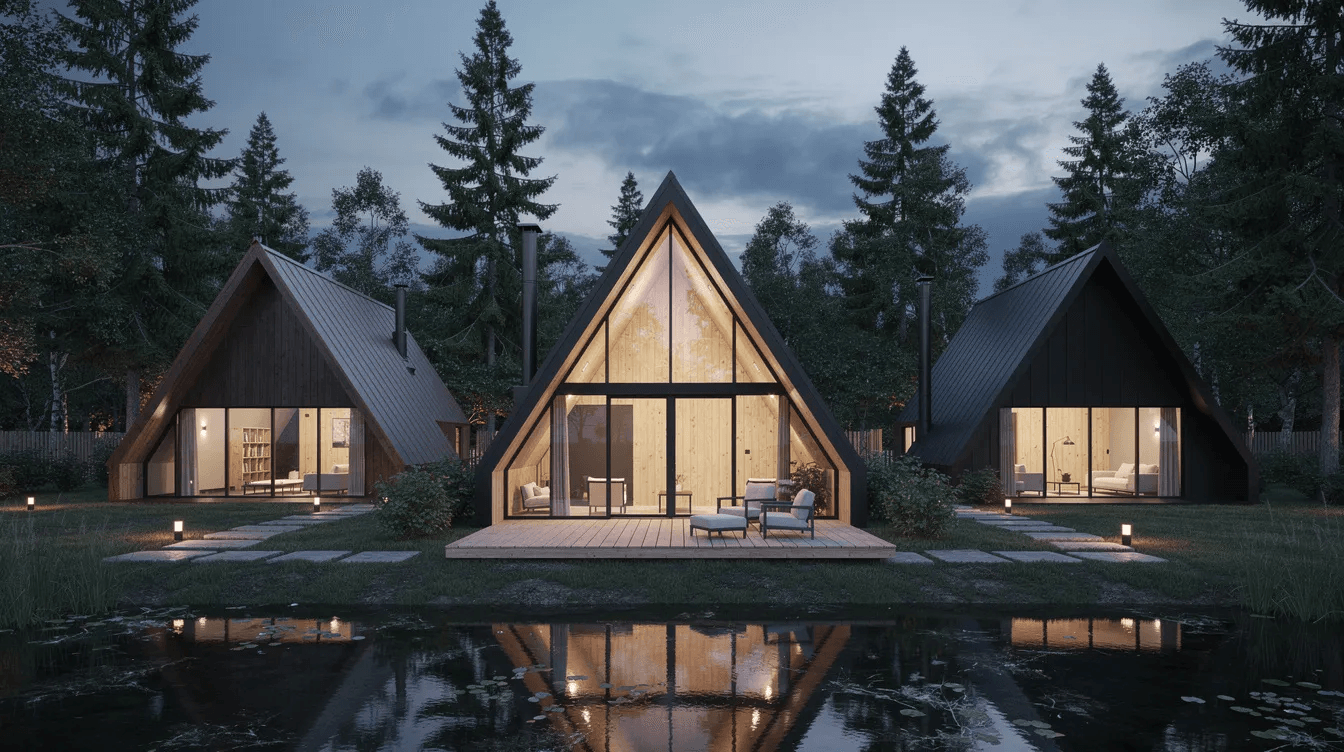
A-frames can be more economical than many house types due to their simple geometry, but they’re not automatically cheaper than all conventional houses. The comparison depends heavily on features like glazing, site conditions, and scale.
Cost-saving aspects:
- Repetitive framing with identical rafters reduces material waste by 15-25%
- Fewer interior walls enable open plans and faster labor (20-30% quicker build times)
- Smaller footprints for cabins mean lower total costs
- DIY potential: Self-building with kits can save 30-50% on labor
Cost-increasing aspects:
- Large custom gable windows can add $30,000+ for 300 square feet of glazing
- Steep roofs require more scaffolding and specialized roofing ($15-$25/sq ft vs. $10 for standard gable)
- Engineering for wind and snow loads adds premiums
Comparative example:
House Type | Cost per Sq Ft | Notes |
|---|---|---|
A-frame (small cabin) | $120 – $180 | Strong advantage under 1,000 sq ft |
A-frame (full home) | $150 – $300 | Costs equalize with dormers/basements |
One-story gable ranch | $130 – $220 | Standard comparison |
One notable case: A couple built an 80 square foot tiny a frame for $700 ($8.75/sq ft) using salvaged wood, demonstrating the extreme low-end potential for DIY enthusiasts. |
Pros and cons of A-frame houses
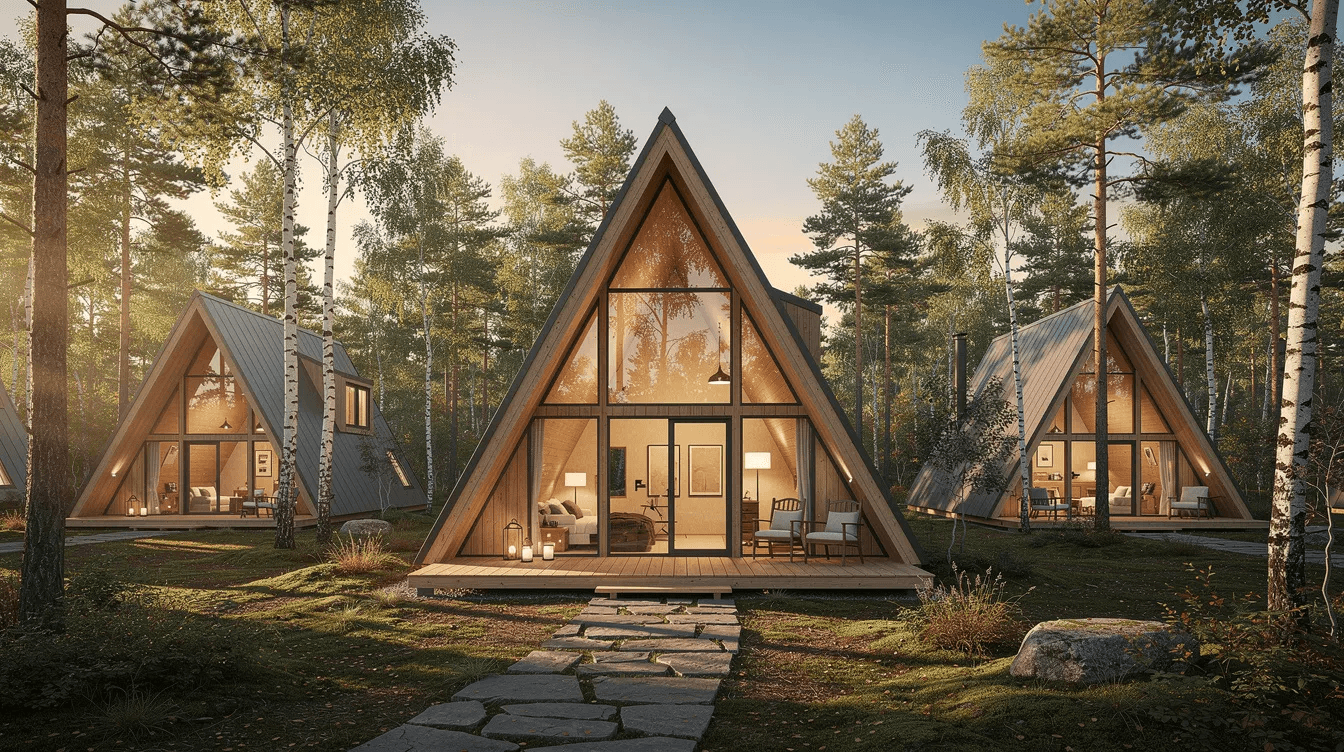
The same features that make a frame type houses charming can also create limitations. Understanding both sides helps you make an informed decision.
Advantages:
- Exceptional snow shedding via 55-degree pitches (handles 50+ psf loads)
- Robust triangular structure resisting 120+ mph winds and seismic forces
- Dramatic vaulted interiors with 20-30 ft ceiling heights
- Abundant daylight from gable glazing (reduces lighting needs 30-50%)
- Strong connection to landscape through floor-to-ceiling views
- Cozy loft bedrooms ideal for couples or small families
- High rental appeal: Iconic photos boost Airbnb bookings 20-40% in ski areas
Disadvantages:
- Reduced usable living space under slopes (only 60-70% full height)
- Challenging furniture placement against angled walls
- Limited wall storage and closets without custom built-ins
- Overheating risks from south-facing glass (20-30% higher cooling loads without overhangs)
- Potential drafts at roof-wall junctions if not properly sealed
- Code conflicts: Some Alpine villages and U.S. HOAs enforce minimum eaves heights or ridge limits
Adding dormers can reclaim interior space but increases construction cost by 10-20%.
Are A-frame houses strong and safe?
Properly engineered a frame houses are structurally very strong. The triangular geometry creates an inherently stable form that efficiently handles multiple load types.
How the structure works:
Gravity and wind loads run directly down the rafters into the foundation, reducing bending forces in the walls. This direct load path minimizes the need for shear walls and enables open spans without intermediate supports. Nordic tests show well-built examples surviving wind gusts up to 150 mph.
Performance in harsh climates:
- Snow loads: Engineered designs handle 100+ psf accumulation
- Wind resistance: Aerodynamic form minimizes uplift forces
- Regional examples: Widely used in Scandinavian and Japanese mountain regions with 200+ cm annual snowfall
Safety requirements:
- Deep frost-protected footings (4-6 ft in cold climates)
- Moisture barriers at ground contacts (sill gaskets preventing rot)
- Code-compliant snow/wind designs per ASCE 7-22 standards
- Fire performance: Non-combustible Class A metal roofs recommended
- Seismic bracing with hold-downs and proper sheathing
When detailed correctly, a frame houses match or exceed the safety of conventional stick-frame construction, with no disproportionate failure rates in FEMA data.
Insulation, energy efficiency, and comfort in A-frame houses
Large roof surfaces (70-80% of the building envelope) and big gable windows make insulation strategy especially important for modern a frame home designs. The good news: these structures can meet high-performance standards with proper detailing.
Insulation approaches:
- Continuous R-50+ roof layers (2-4 inches polyiso over rafters)
- Spray foam (R-6.5/inch) filling rafter bays
- Mineral wool for breathability in moisture-prone climates
- Target: Whole-house HERS scores under 50
Window specifications:
- Triple-pane glazing with U-values of 0.15 or better
- Low-E coatings to control solar heat gain
- Thermally broken frames to prevent condensation and heat transfer
Energy advantages:
- Compact volume with low surface-to-volume ratio aids efficiency
- Passive solar gain through south/southeast glazing provides 20-30% winter heating
- Vast roof surface accommodates 10-20 kW solar panels for net-zero potential
Design tip: Orient the main glazed gable to the south or southeast with 4-6 ft roof overhangs. This blocks 90% of high summer sun while admitting low-angle winter rays. Passivhaus-certified a frame designs have achieved 80% energy savings compared to code-minimum builds.
Challenges to address:
- Summer overheating: Specify SHGC (solar heat gain coefficient) under 0.25
- Stack-effect drafts: Install HRV/ERV for controlled ventilation
Do A-frame houses have basements and how are they laid out inside?
A-frames can be built on slabs, crawlspaces, or full basements depending on site conditions, climate, and budget. In colder regions like the U.S. Midwest or Central Europe, basements are common for gaining extra living area and housing mechanical systems, and tools like a tiny home cost calculator can help you compare these options at the planning stage.
Foundation options:
Type | Cost/Sq Ft | Best For |
|---|---|---|
Slab | $5 – $10 | Mild climates, tight budgets |
Crawlspace | $10 – $15 | Moderate climates, utility access |
Full basement | $20 – $40 | Cold climates, storage/guest rooms |
Prefab-minded buyers might also compare these choices with contemporary prefab home designs, which often package specific foundation systems with their kits. Typical ground floor layout (400-800 sq ft):
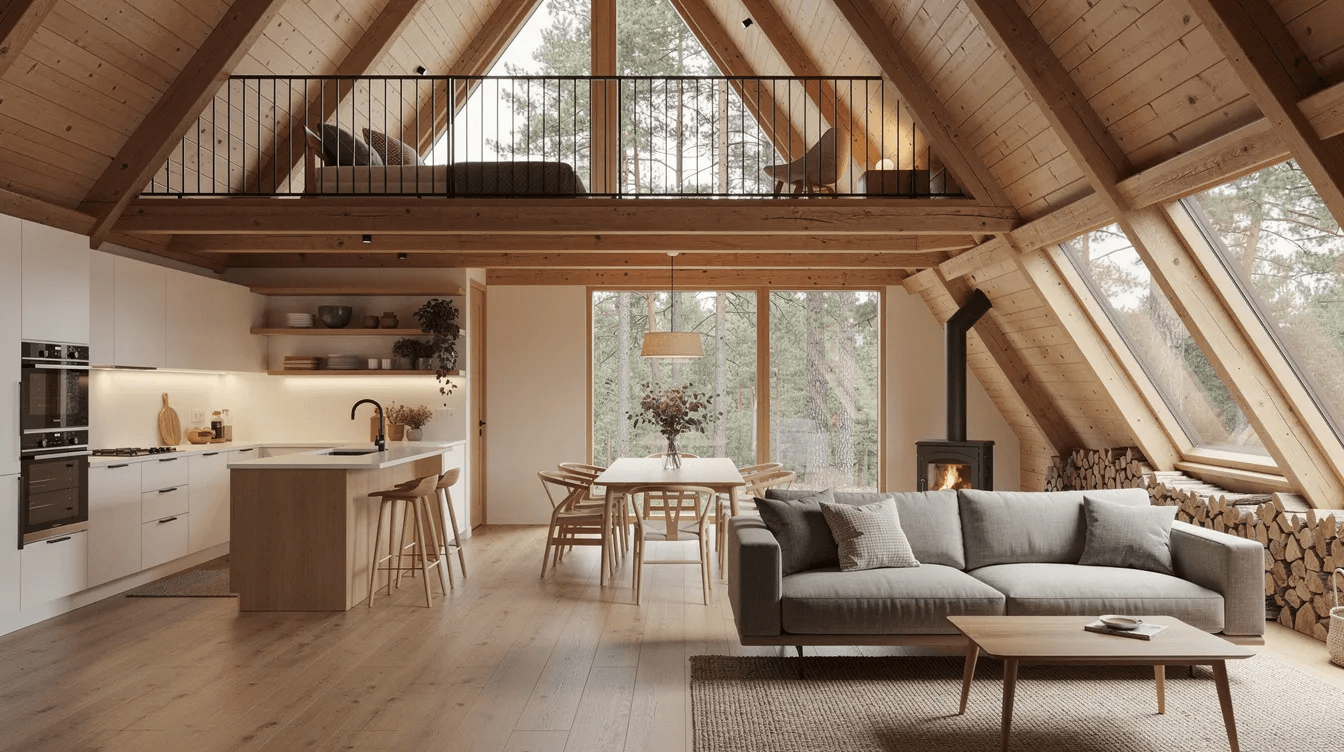
- Open-plan living area combining kitchen island, dining, and living zones
- Sliding gable glass opening to deck or porch
- Vaulted ceiling peaking at 20-25 ft
- Bathroom tucked under the slope
Upper level layout (200-400 sq ft):
- Loft or mezzanine bedrooms with half-walls
- Eaves closets utilizing sloped space
- Sometimes a small third-level sleeping nook at the peak
Creative storage solutions:
- Under-stair drawers and cabinets
- Platform beds fitted to roof slopes
- Soffit cabinets along knee walls
Finnish “mökki” a frame floor plans demonstrate how 800 square feet can comfortably support 2-4 person living with thoughtful space planning, similar to the compact layouts seen in Amish-crafted tiny houses.
Variants and related A-frame types
The basic A-shape has spawned numerous variations that expand functionality while maintaining the iconic silhouette. Understanding these options helps when reviewing a frame home plans for larger households or comparing them with mountain tiny house getaways that use different compact cabin forms.
Cross-gabled or T-shaped A-frames:
Main A-volume with perpendicular wings for additional bedrooms, garages, or home offices. These hybrids can reach 1,500+ square feet while preserving the distinctive roofline.
Prow-front A-frames:
Extended glazed fronts with a projecting “prow” facing the view, jutting 5-10 feet beyond the main structure. Popularized in 1970s resort developments around Lake Tahoe and Colorado ski towns, they appeal to the same nature-focused buyers who might also consider eco yurt designs for sustainable living.
Tent-roof or pyramid houses:
Four triangular roof planes meeting at a central point, all sloping to ground level. Common in compact German holiday parks and Finnish “Finncottage” kits (200-400 sq ft).
Scandinavian “stuga” variants:
Elongated forms with shed dormers, offering modular expandability for forest and coastal sites while maintaining the steep roof pitch. Some buyers cross-shop these with yurt prefab options for similar lightweight, nature-immersed structures.
Modern a frame houses increasingly incorporate these hybrid approaches, balancing the form’s character with practical space requirements for year-round living, and they can even be paired with ultra-sustainable concepts like Earthship-style tiny homes for off-grid performance.
Who are A-frame houses ideal for?
A-frames suit specific lifestyles and locations particularly well. Here’s a concise buyer’s guide to help you evaluate fit.
Ideal users:
- Couples or small families seeking weekend cabins in snowy or wooded areas
- Digital nomads wanting minimalist retreats (400-800 sq ft)
- Vacation rental investors targeting mountain and lake destinations
- DIY builders interested in simple construction and kit options
Use as vacation home rentals:
High visual appeal on booking platforms like Airbnb drives premium nightly rates ($200-500 in destinations like Aspen or the Adirondacks). Looking at top A-frame cabin getaways shows how the unique shape photographs well, boosting bookings 30-50% compared to conventional listings.
Year-round living potential:
Modern a frame house plans over 1,000 square feet with added wings, storage solutions, and proper insulation can support full-time living. Related forms like chalet-style tiny house models offer similar year-round potential. Climate fit is best in cold and temperate regions, though warm-climate builds work with careful shading and ventilation.
Not ideal for:
- Families needing multiple private bedrooms with full-height walls
- Those requiring extensive storage or traditional room layouts
- Sites with restrictive HOA or building codes limiting roof angles
Conclusion: Is an A-frame house right for you?
The a frame house offers a distinctive combination of climate performance, structural efficiency, and architectural character that few other house designs can match. With costs typically ranging from $100-$300 per square foot and strong appeal in vacation rental markets, these structures make financial sense for the right buyer and site.
Before committing, weigh the dramatic interiors and snow-shedding capability against practical constraints like reduced wall space and furniture placement challenges. Review local building codes for roof angle restrictions, consult detailed a frame house plans that match your square footage needs, and get a site-specific estimate accounting for foundation type and access conditions.
Modern materials, R-50+ insulation, triple glazing, and rooftop solar panels can transform a charming dream cabin into a high-performance home. Whether you’re planning a tiny house weekend retreat or a year-round mountain chalet, the a frame form rewards those who appreciate its honest geometry and connection to nature.