
A brick tiny house combines the durability of masonry with the freedom of compact living. If you’re looking to downsize, create a backyard office, or build a weekend retreat that blends into heritage neighborhoods, brick offers something wood and metal simply can’t match.
- Quick Answer: Is a Brick Tiny House Right for You in 2026?
- What Exactly Is a Brick Tiny House?
- 18 Inspiring Brick Tiny House Exterior Ideas
- Interior Layouts: Making a Small Brick Shell Feel Big
- Brick Tiny House Plans Under 500 Sq. Ft.
- Brick Tiny House on Wheels: Is It Practical?
- Why Choose Brick for a Tiny Home? Benefits & Drawbacks
- How Much Does a Brick Tiny House Cost to Build in 2026?
- Energy Efficiency, Comfort & Sustainability in Brick Tiny Homes
- Converting an Existing Small Brick Building into a Tiny House
- Frequently Asked Questions About Brick Tiny Houses
Quick Answer: Is a Brick Tiny House Right for You in 2026?
A brick tiny house is typically under 600 square feet, using brick as the primary exterior material—sometimes paired with wood siding and a metal roof. These structures suit downsizers seeking low-maintenance longevity, remote workers wanting insulated backyard offices, and owners building weekend cabins in areas where brick matches the surrounding country charm.
In April 2026, average DIY brick tiny houses in the USA cost $45,000–$90,000 depending on finishes, foundation type, and location. Compared to wood or metal-clad tiny homes, brick delivers superior fire resistance (1–2 hour ratings), excellent sound insulation blocking up to 50 decibels, and thermal mass that reduces heating and cooling needs.
Here’s what to acknowledge before you build:
- Brick offers a beautiful, classic exterior that can last over a century with minimal upkeep
- Fire resistance and sound insulation outperform most alternatives
- Weight becomes a challenge—a 400 sq ft brick shell can weigh 20,000–30,000 pounds
- Transport is impractical for full masonry; most brick tiny houses sit on permanent foundations
- Initial costs run 20–50% higher than wood equivalents
The rest of this article walks through design inspiration, tiny house floor plans, real-world costs, and sample projects to help you find the right approach.
What Exactly Is a Brick Tiny House?
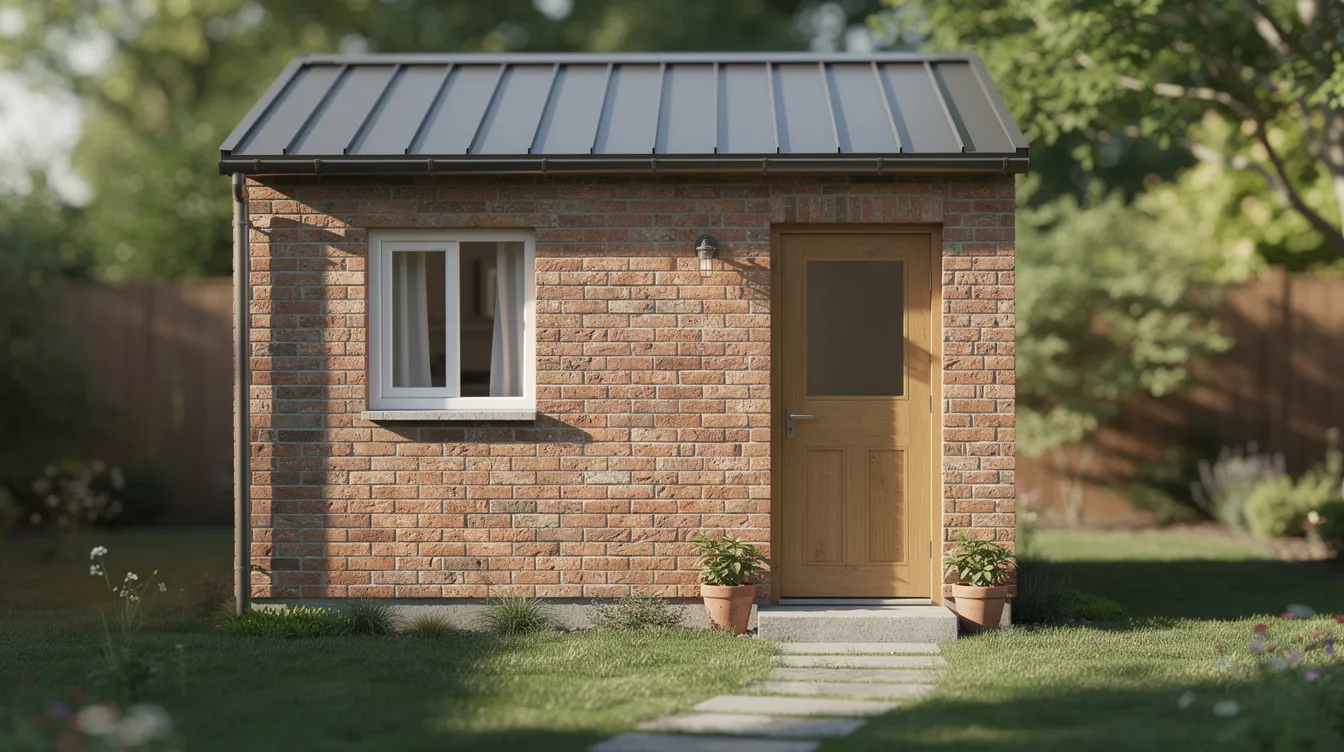
A tiny house officially caps at 600 square feet, though brick versions typically range from 160–500 square feet to maximize durability while keeping the footprint minimal.
- Exterior composition: Full brick masonry walls, brick veneer over timber or steel framing, or hybrid facades combining brick with cedar siding
- Foundation types: Permanent slab or crawlspace foundations dominate; choosing the best foundation for a tiny house depends on soil conditions, mobility needs, and budget, and brick on trailers is rare due to weight exceeding 10,000–14,000 lb axle ratings
- Popular uses: Accessory dwelling units (ADUs), garden cottages, lane houses, and short-term rentals
- Zoning advantage: Cities with strict design codes (Charleston, Savannah, UK heritage districts) often prefer brick to match existing traditional house aesthetics
- Space trade-off: Thick brick walls (8–12 inches) reduce interior room compared to framed construction
18 Inspiring Brick Tiny House Exterior Ideas
These design ideas range from storybook cottages to modern urban studios. Use them as inspiration for your own unique build.
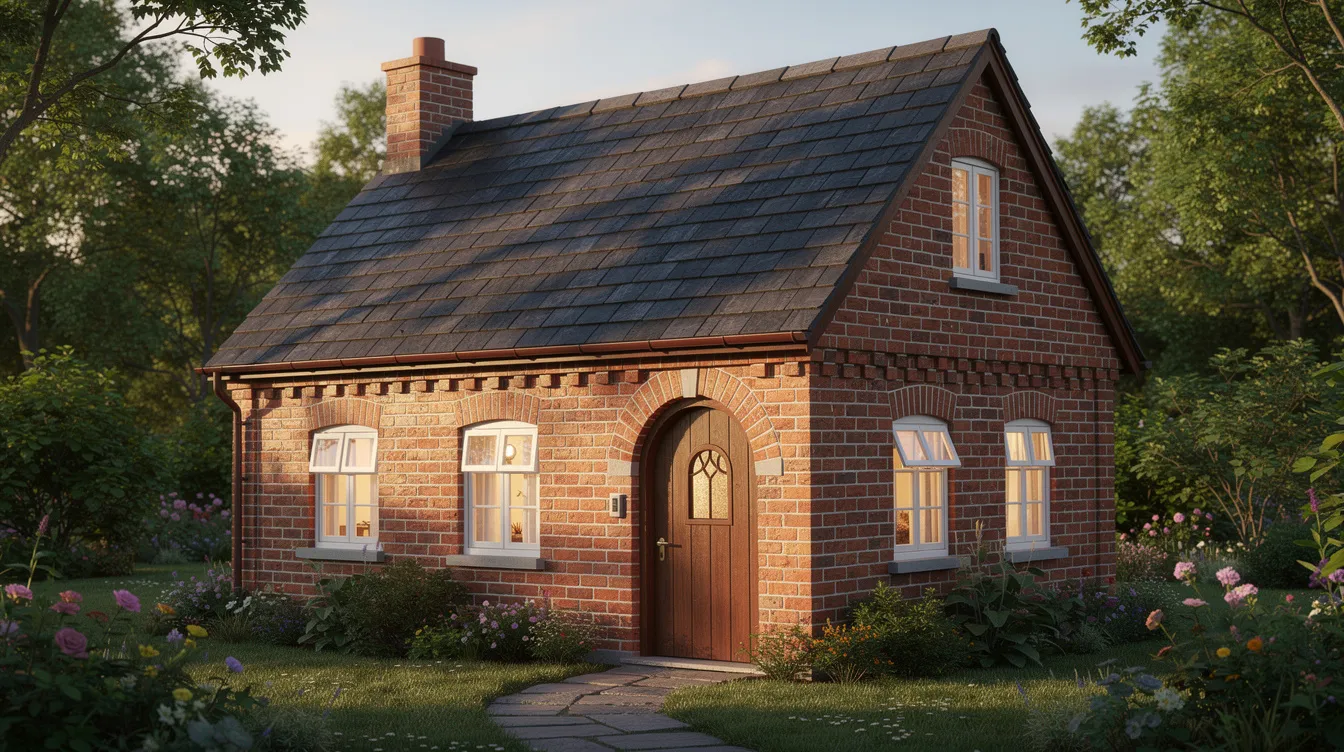
1. Traditional Red Brick Cottage – About 320 sq ft with gable roof, arched doorway, and soldier-course brick headers. Complete storybook charm.
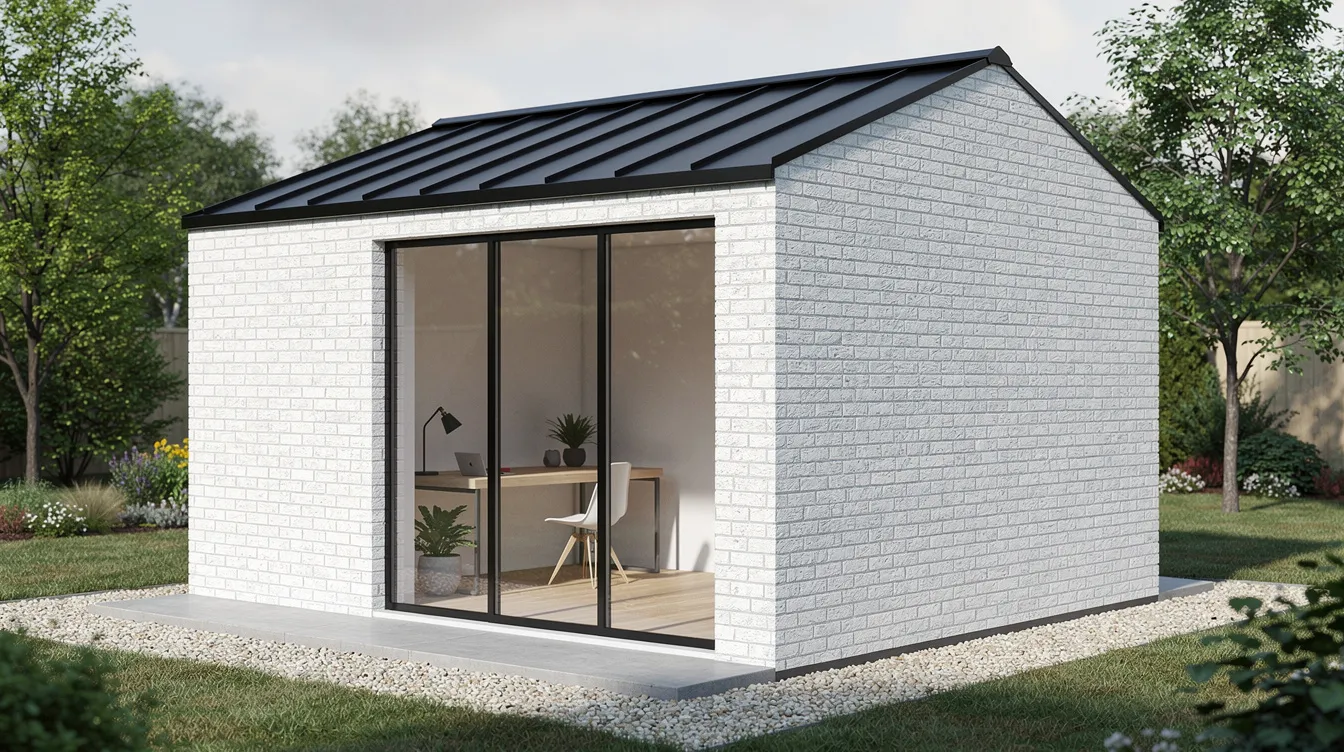
2. Whitewashed Brick Studio – Around 260 sq ft with black metal roof and floor-to-ceiling glass on one elevation for maximum natural light.
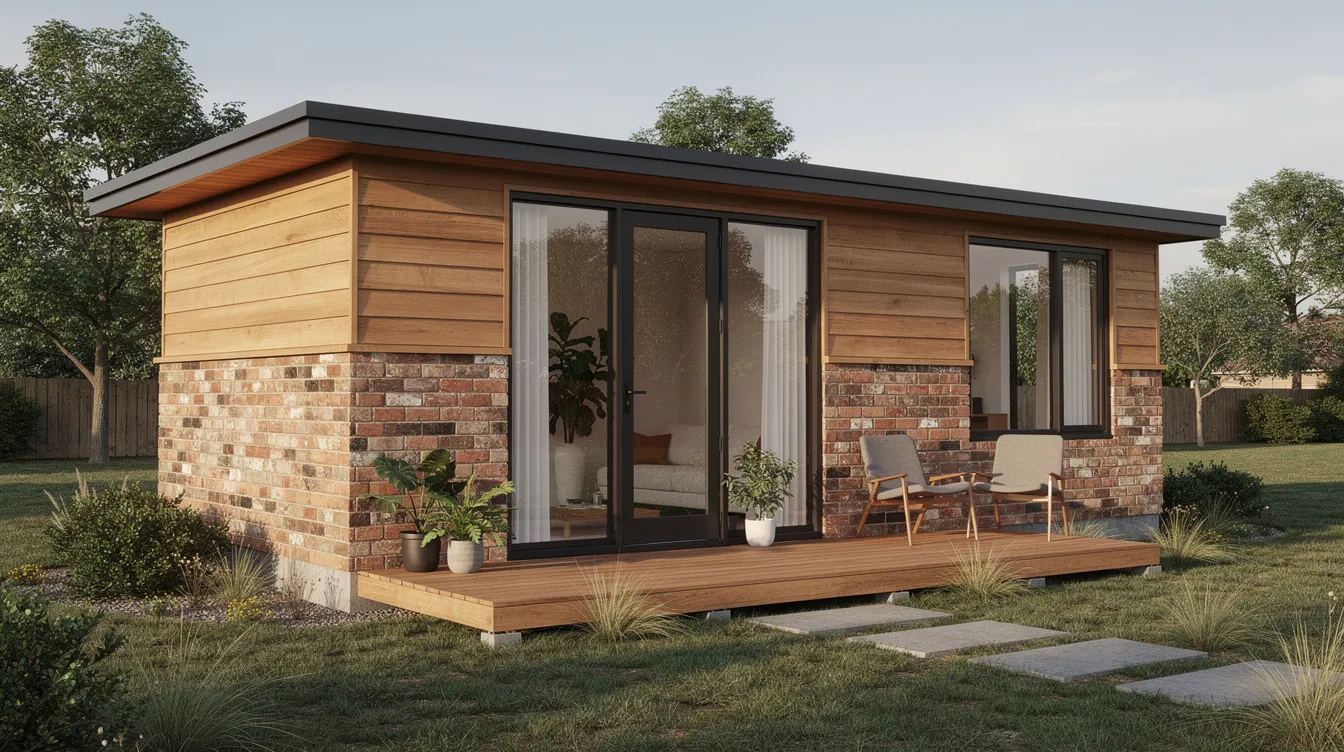
3. Mixed Brick-and-Cedar Hybrid – 420 sq ft combining reclaimed brick with wood siding and flat roof for an inviting, modern look.
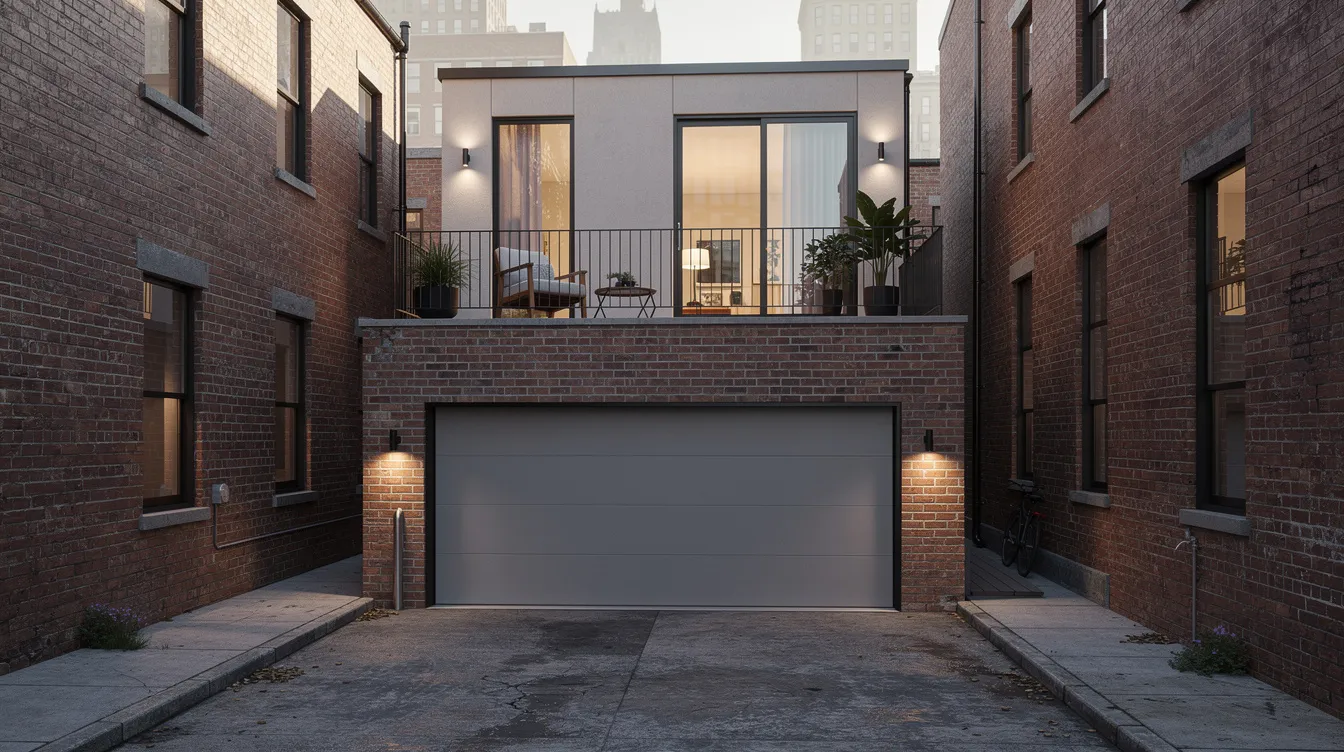
4. Urban Laneway Studio – Built over a garage, approximately 380 sq ft with brick parapet and rooftop deck.
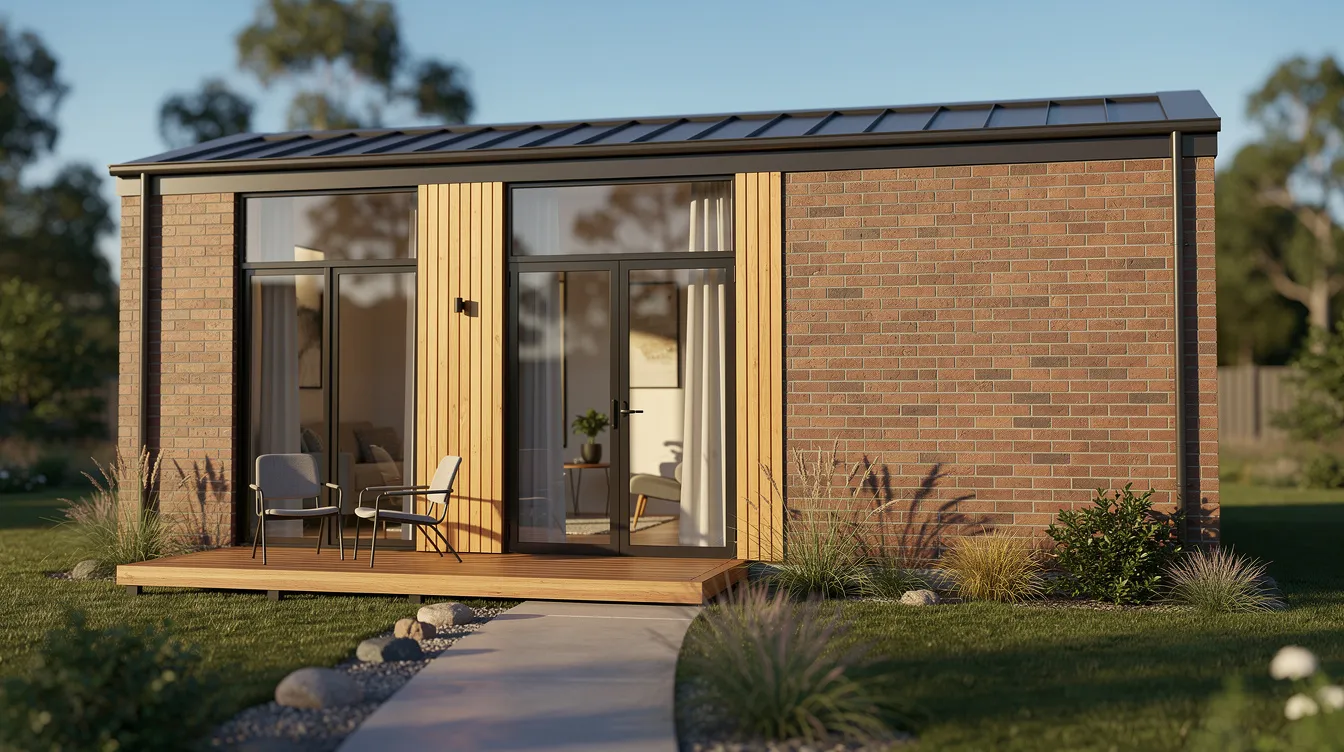
5. Rustic Brick Cabin – 300 sq ft with metal awnings over full-height windows, perfect for summer retreats.
6. Brick Micro-Loft – 280 sq ft with asymmetrical facade and retractable glass walls for indoor-outdoor flow.
7. Converted Pump House – Repurposed 240 sq ft brick structure with new insulation, lintels for window openings, and a cool industrial interior.
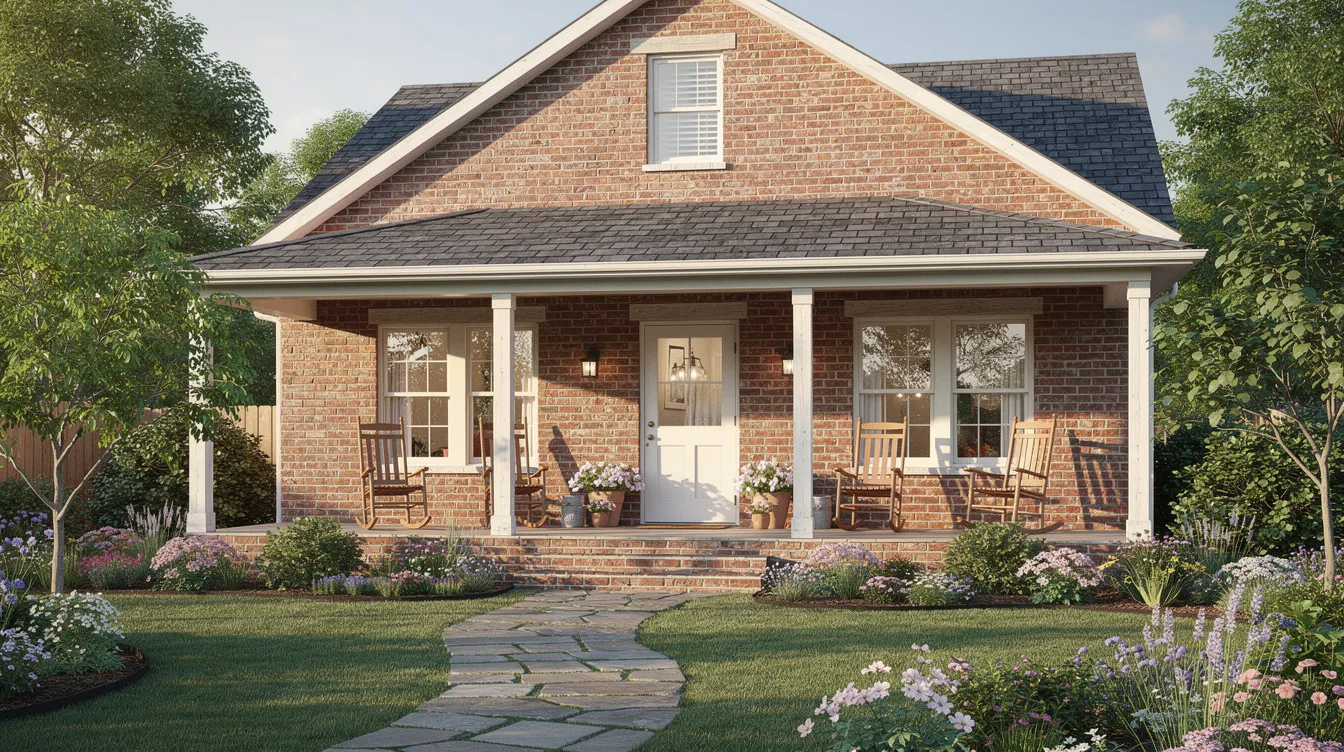
8. Garden Brick Guest Suite – 350 sq ft with covered porch, French doors, and climbing vines on the exterior wall.
9. Brick Boathouse – 300 sq ft water-facing design with standing-seam metal roof and full-height glazing.
10. Modern Brick Box – 400 sq ft with flat roof, slim black-framed windows, and minimal detailing.
11. Heritage Brick Cottage – 280 sq ft with double-hung windows and classic proportions for older neighborhoods.
12. Brick-and-Glass Pavilion – 320 sq ft featuring one solid brick wall and three glass walls.
13. Reclaimed Brick Studio – 260 sq ft using salvaged brick from demolished buildings for sustainability.
14. Brick Carriage House – Converted 400 sq ft structure with original brick exterior and new loft interior.
15. Courtyard Brick Home – 350 sq ft with French doors opening to a private brick patio.
16. Split-Level Brick Tiny – 430 sq ft with living space below and sleeping loft above.
17. Brick Office-Studio Combo – 280 sq ft designed for remote work by day, guest space by night.
18. Corner Lot Brick Cottage – 380 sq ft with wrap-around porch and brick columns.
Interior Layouts: Making a Small Brick Shell Feel Big
Thick brick walls can reduce usable floor space by 10–20% compared to framed construction. Strategic window placement and high ceilings help compensate.
Common layouts inside brick tiny houses include, and exploring tiny house floor plans that work for you can clarify which arrangement best fits your lifestyle:
- Galley kitchen along one exterior wall (5 ft x 8 ft)
- Combined living and dining area at the front (10 ft x 12 ft)
- Compact bathroom in a rear corner (5 ft x 7 ft with shower)
- Sleeping loft or mezzanine where codes permit 7-foot minimum headroom
High ceilings (10–12 ft in single-story designs) create more room and amplify perceived space. Tall windows set into brick openings double as window seats.
For a 350 sq ft brick cottage, consider a studio layout with a Murphy bed folding into the living area. A 480 sq ft one bedroom design might feature a separate bedroom (7 ft x 8 ft) behind a sliding pocket door.
Storage tricks that work with brick: wall-mounted shelving anchored directly into masonry, built-in benches along exterior walls, and furniture that serves dual purposes.
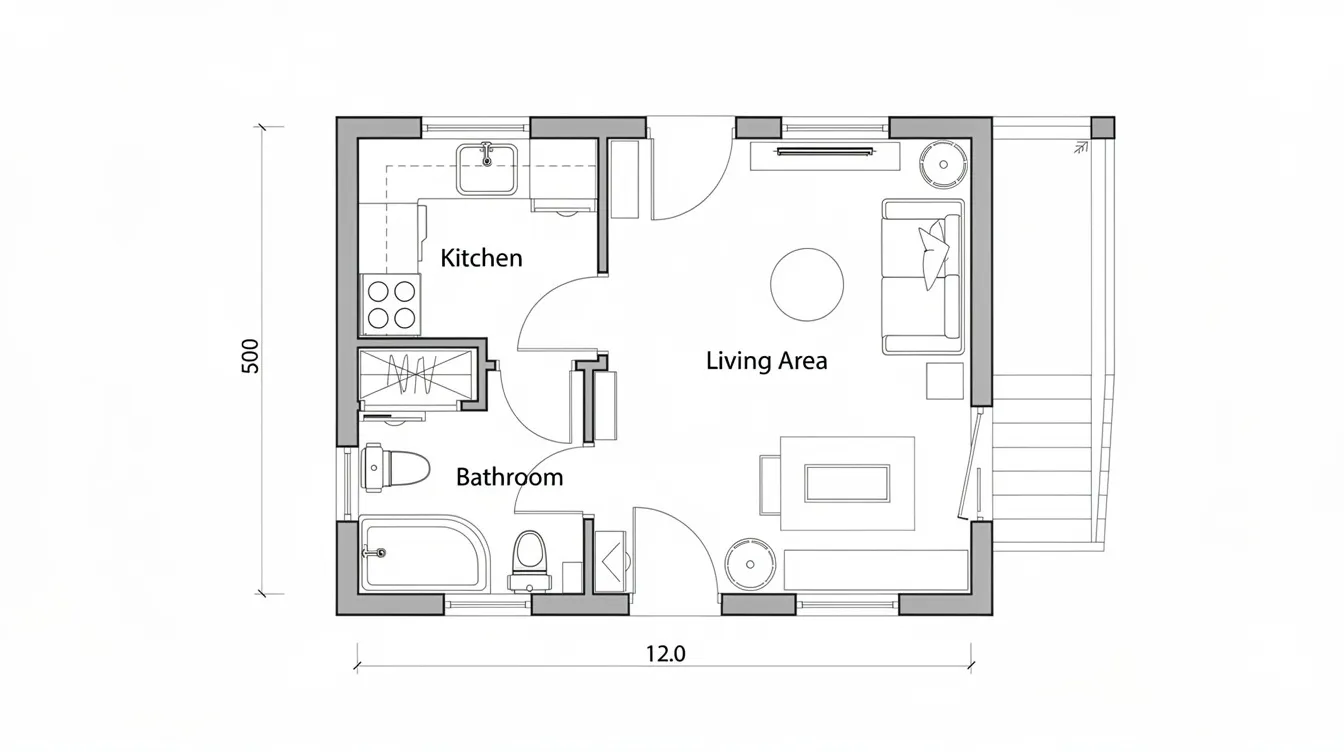
Brick Tiny House Plans Under 500 Sq. Ft.
These tiny home plans demonstrate what’s practical for brick construction, and similar tiny house plans that fit your life can help you fine-tune size and layout.
Plan #B301 – Garden Brick Cottage: 320 sq ft with one bedroom, one bath, covered front porch, and small fireplace. Slab foundation with full brick exterior.
Plan #B214 – Courtyard Studio: 260 sq ft open-plan design with French doors to a brick patio. Ideal for city guest suites or short-term sale rentals. Brick veneer on crawlspace.
Plan #B412 – Lofted Lane House: 430 sq ft with ground-floor living, alternating-tread loft stairs, and small balcony. Crawlspace foundation, full brick.
Plan #B229 – Brick Boathouse Bunkie: 300 sq ft with full-height windows on the water-facing side, metal roof, bunk area plus lounge and kitchenette.
Plan #B207 – Backyard Brick Office + Guest: 280 sq ft flexible space with compact bath and coffee bar. Slab foundation, brick veneer. Owners use it as workspace by day, delivered guest space by night.
Brick Tiny House on Wheels: Is It Practical?
Full masonry on a trailer is almost never feasible. A 400 sq ft brick shell can weigh 20,000–30,000 pounds—far exceeding standard 10,000–14,000 lb trailer ratings.
Realistic alternatives for mobile life include:
- Lightweight brick veneer panels (under 1 inch thick)
- Brick-pattern fiber-cement cladding (2–3 lbs per sq ft)
- Faux brick interior feature walls
A 28-foot tiny house on wheels with brick-look exterior, dual lofts, and economical finishes can happen for under $50,000 while respecting weight limits, especially if you draw from affordable tiny house designs and tips.
Safety notes: Verify axle ratings before design, keep wall assemblies light (20–30% of total weight max), watch DOT height and width limits (13.5 ft height, 8.5 ft width), and anchor cladding properly for road vibration.
True brick belongs on permanent foundations. Mobile “brick” tiny homes rely on advanced cladding systems—not the contrary full masonry approach.
Why Choose Brick for a Tiny Home? Benefits & Drawbacks
Brick’s advantages are substantial. Fire resistance delivers 1–2 hour ratings per standard masonry tests, while thermal mass moderates daily temperature swings—keeping your tiny home cooler in summer and warmer in winter. Sound insulation blocks 45–55 decibels, outperforming wood by 10–15 points. Low maintenance means no annual painting; just occasional repointing every 25–50 years. Plus, brick offers visual compatibility with older neighborhoods where wood or metal might stop approval.
The downside? Higher upfront cost runs 20–50% above wood-clad equivalents. A 400 sq ft brick exterior adds roughly 15,000 pounds compared to wood framing, demanding stronger foundations and sometimes engineering in seismic zones. Build time extends 2–3x when laying brick by hand. Portability is essentially gone.
Many owners buy into a compromise: brick veneer over a framed wall balances weight, cost, and that classic appearance without the full masonry commitment.
How Much Does a Brick Tiny House Cost to Build in 2026?
Costs vary by region, but expect $180–$350 per square foot for brick tiny homes on permanent foundations in the U.S.; a step-by-step guide on how to build a tiny house can help you budget each phase accurately.
Scenario 1: A 280 sq ft basic brick backyard cottage built DIY with subcontracted bricklaying runs $55,000–$75,000.
Scenario 2: A 480 sq ft high-end brick ADU with custom slim-framed windows, premium kitchen, and mini-split HVAC reaches $120,000–$165,000.
Major cost categories break down as, and many homeowners compare them with top custom tiny homes for small-space living to decide where to splurge or save:
- Foundation and site work: 20–30% of budget
- Masonry labor: 25–35%
- Framing and roofing: 15–20%
- Windows, doors, interior finishes: 20–30%
- Design and permits: 5–10%
Wood-sided tiny houses typically cost $120–$250 per square foot—lower than brick. However, you save on maintenance over the long term and may see stronger resale in ADU-friendly markets.
Energy Efficiency, Comfort & Sustainability in Brick Tiny Homes
Brick’s thermal mass works particularly well in small spaces, absorbing daytime heat and releasing it at night to smooth temperature swings by 10–15°F.
Recommended wall assemblies include 2×6 studs with R-21 insulation, a 1-inch air gap, and brick veneer achieving U-values under 0.05 BTU/hr-ft²-°F per 2026 IECC codes.
A practical example: a 350 sq ft brick tiny home in a temperate climate using a mini-split heat pump (SEER 20+), triple-pane windows, and slab edge foam can achieve $50–80 monthly electricity bills—30–50% below comparable wood homes.
Sustainability angles include reclaimed brick (diverting 1–2 tons from landfills per project), low-VOC mortars, and south-facing solar arrays on metal roofs.
Watch for pitfalls: thermal bridging at steel lintels can add 10–20% heat loss. Retrofit solutions like interior insulated plasterboard resolve this in conversions.
Converting an Existing Small Brick Building into a Tiny House
Turn a small brick outbuilding or garage into a complete tiny home with these steps, or work with top micro house builders if you prefer professional help instead of DIY.
Assessment phase: Check wall plumbness (within 1/4 inch per 8 feet), test moisture levels via calcium chloride (under 3% RH), and verify foundation integrity.
Construction phase: Add 2×4 interior furring walls with R-15 batts and vapor barriers. Cut window and door openings with proper steel lintels. Route plumbing in interior chases. Update electrical to code.
Example project: A 12 ft x 20 ft (240 sq ft) 1950s brick garage becomes a studio with kitchenette, bath, bed area, and workspace, similar in spirit to many of the great tiny homes that redefine small-space living.
Permits and zoning: File change-of-use applications and meet local requirements for 7-foot ceiling heights, 20-inch egress windows, and minimum room sizes.
Conversion costs in 2026 range from $35,000–$90,000 depending on structural upgrades and interior finish quality. This approach lets you explore brick construction without starting from scratch.
Frequently Asked Questions About Brick Tiny Houses
What size counts as a brick tiny house? Under 600 sq ft qualifies as a tiny house by movement standards, though many brick versions fall between 160–500 sq ft.
Can a brick tiny house be moved? Only in special cases using lightweight veneer or faux brick cladding. Full masonry requires permanent foundations.
Do brick tiny homes have good resale value? Often yes—particularly in California and Oregon where 2024–2026 ADU law changes created strong demand. Some markets show 10–20% premiums.
How do they perform in cold or hot climates? Excellent when properly insulated. Thermal mass reduces AC needs by up to 20% in hot zones and retains heat in winter.
Are brick tiny houses allowed everywhere? Zoning and minimum-size rules vary widely. Many U.S. cities now allow 400+ sq ft ADUs, especially when brick matches the primary home, and studying tiny house designs for modern living can reveal which styles are most code-friendly.
Can I build a brick tiny house myself? DIY works for framing and finishes, but hire professionals for masonry and structural work. 2026 codes often require engineer-stamped plans.
Whether you’re starting from a collection of tiny house plan ideas, browsing cute tiny house designs for your dream home, or converting a past structure like an old garage, brick offers durability, comfort, and neighborhood compatibility that outlasts trends. Use these resources and examples as your starting point—then create the accessible, practical brick tiny home that fits your life.