Building a home from scratch typically means weeks of measuring, cutting, and fitting lumber on site. A house frame kit changes that equation entirely. These pre-engineered, pre cut packages deliver every structural component—walls, roof, and floor framing—directly to your site, ready to assemble with labeled parts and detailed instructions.
Whether you’re planning a 400 square foot backyard ADU, a 1,200 square foot two-bedroom cottage, or a 2,300 square foot family home, frame kits turn complex construction into a systematic assembly process that DIY owners and small crews can handle.
- What Is a House Frame Kit?
- How a House Frame Kit Works: From Plans to Delivery
- Types of House Frame Kits (Timber, Steel, and Hybrid)
- Key Benefits of Building with a House Frame Kit
- Kits Engineered for Quality
- What’s Included in a Typical House Frame Kit
- Standard House Frame Kit Sizes and Example Projects
- Pavilions and Outdoor Structures
- Custom vs. Pre-Designed House Frame Kits
- Can You Build a House Frame Kit Yourself?
- Choosing the Right House Frame Kit for Your Project
- What to Expect When Your Kit Arrives
- Related Items and Accessories
- Costs, Lead Times, and Ordering a House Frame Kit
- Building Greener with House Frame Kits
- Testimonials and Customer Reviews
- Frequently Asked Questions About House Frame Kits
What Is a House Frame Kit?
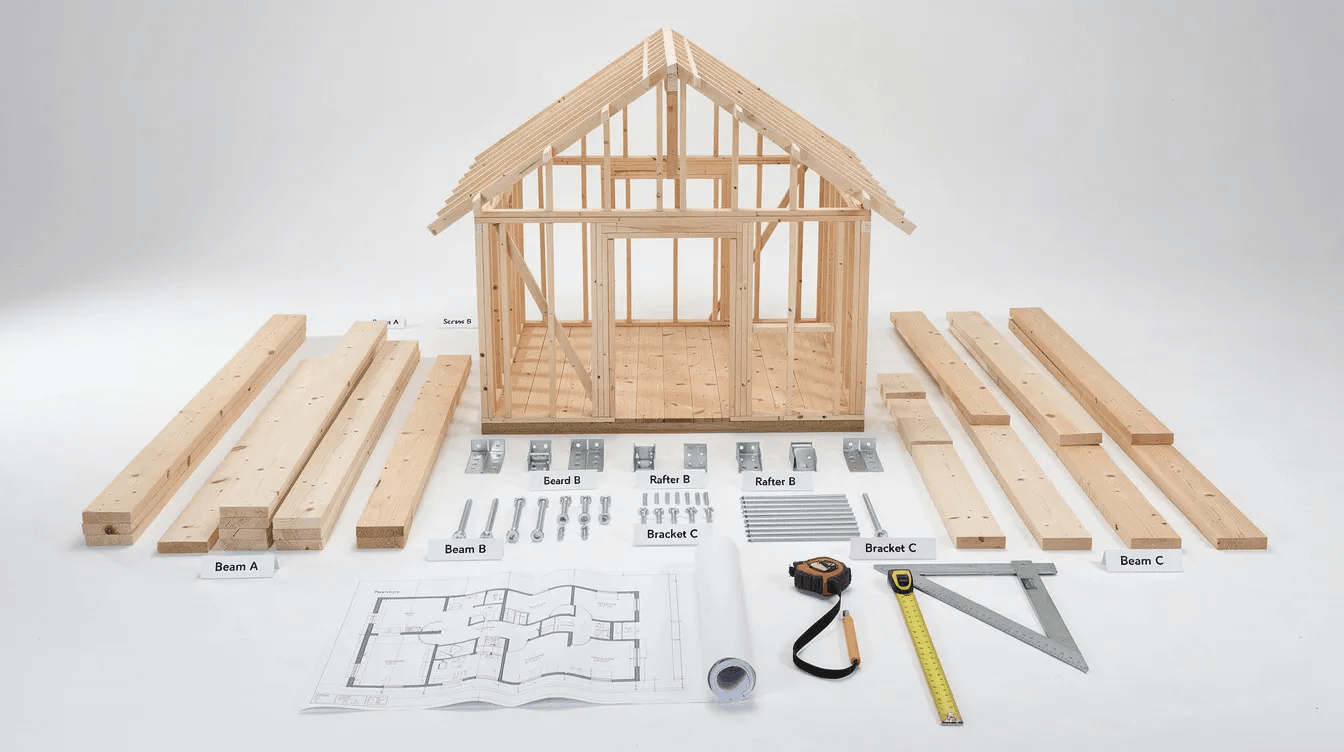
A house frame kit is a complete package of structural components manufactured off-site with precision machinery, then shipped to your build location. The kit arrives with everything needed to create the skeleton of your structure.
Key defining features of house frame kits:
- Pre cut studs, joists, beams, rafters, and trusses sized to exact specifications
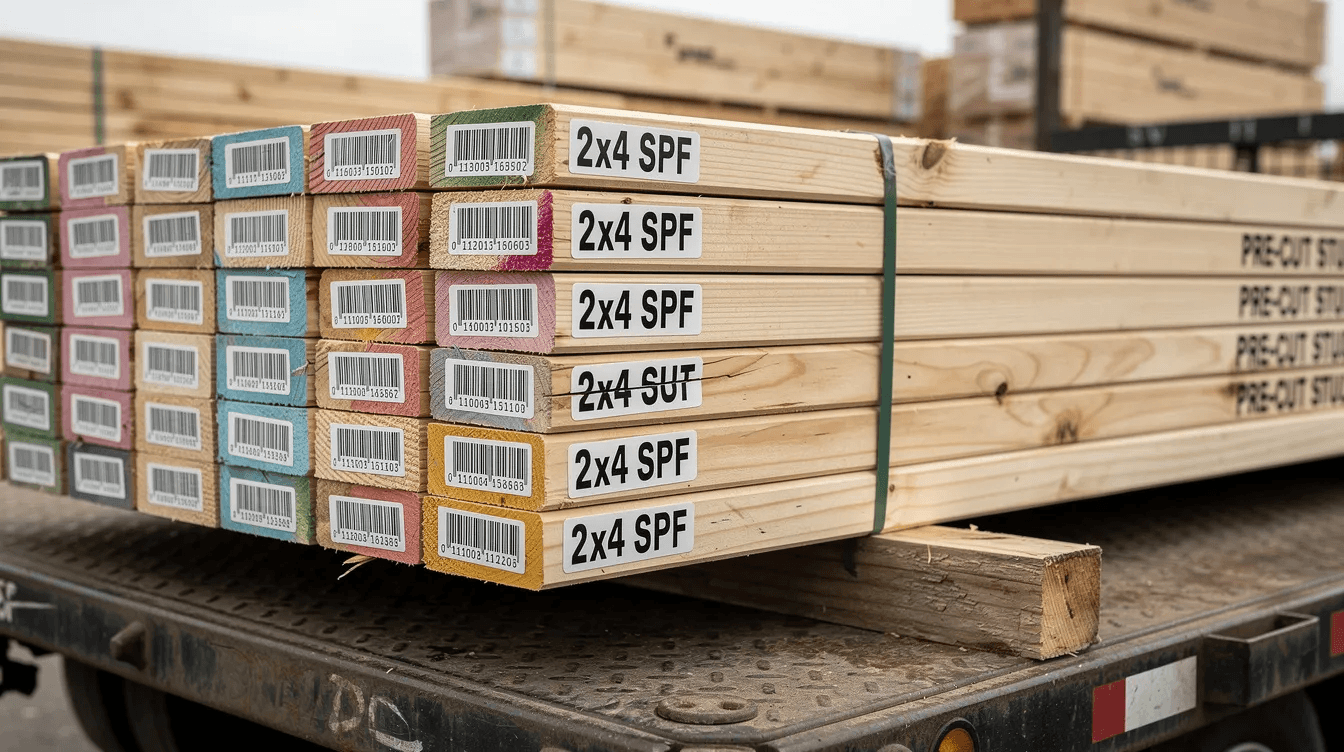
- Every piece labeled by location for straightforward assembly, using a clear number system to identify each part
- Kits engineered to meet local building codes with permit-ready drawings, providing a high level of detail in the documentation for accuracy and compliance
- Available in timber, steel, or conventional lumber materials
- Designed for full homes, ADUs, cabins, tiny houses, and barn-style structures
- Includes assembly manual with step-by-step guidance, describing each stage of the process in detail
How a House Frame Kit Works: From Plans to Delivery
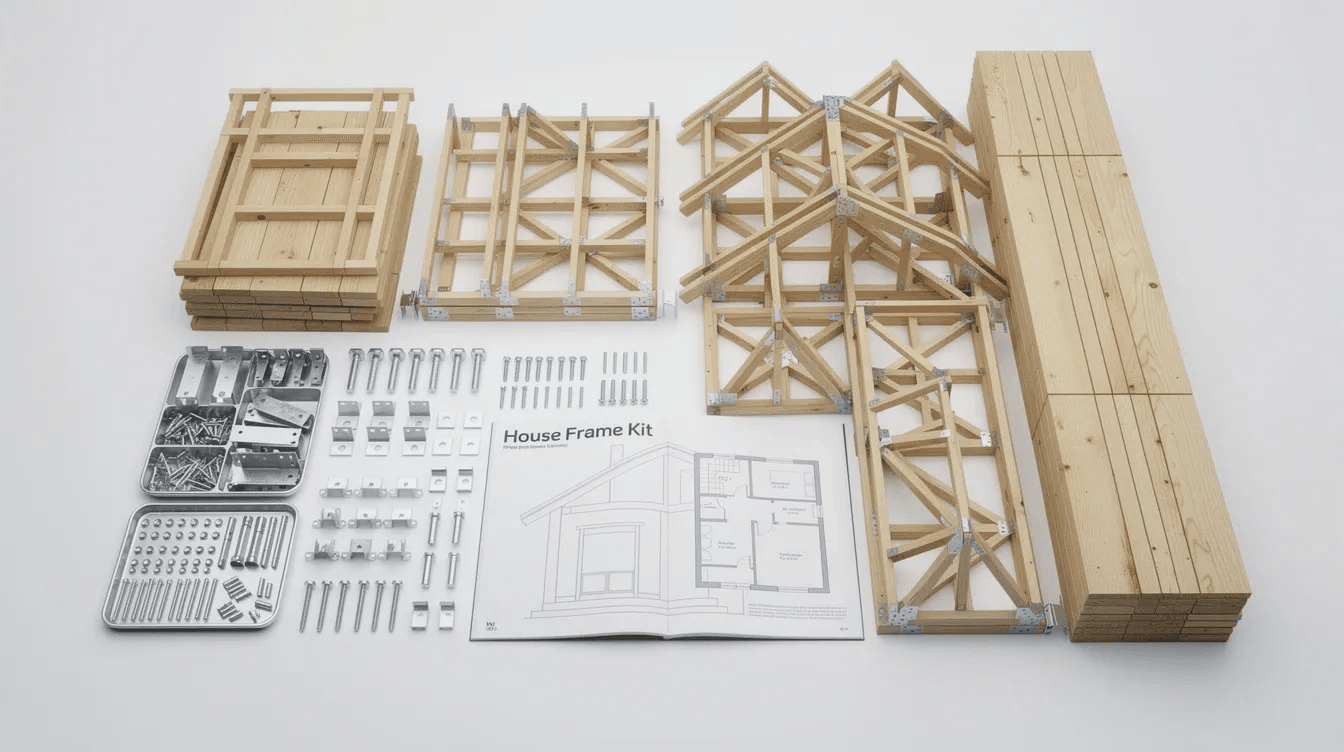
The process from design to delivery follows a predictable workflow that eliminates much of the guesswork in traditional construction. Reputable suppliers have delivered hundreds or even thousands of house frame kits, demonstrating their reliability and experience.
- Step 1: You submit custom plans or choose a stock design (e.g., 24×36 cabin, 30×40 barn home, or 16×32 tiny home)
- Step 2: Engineers convert your plans into cut lists, connection details, and permit-ready structural drawings for your local jurisdiction
- Step 3: Every stud, beam, joist, and truss is machine-cut to length with high accuracy, labeled, and grouped into clearly marked bundles for walls, roof, and floor systems
- Step 4: Components load onto flatbed or enclosed trailers and ship with a master materials list and assembly manual
- Step 5: Your kit arrives ready for foundation connection through roof framing
Lead times range from about 5 weeks for standard models to 4-6 months for complex custom homes, depending on season and design complexity.
Types of House Frame Kits (Timber, Steel, and Hybrid)
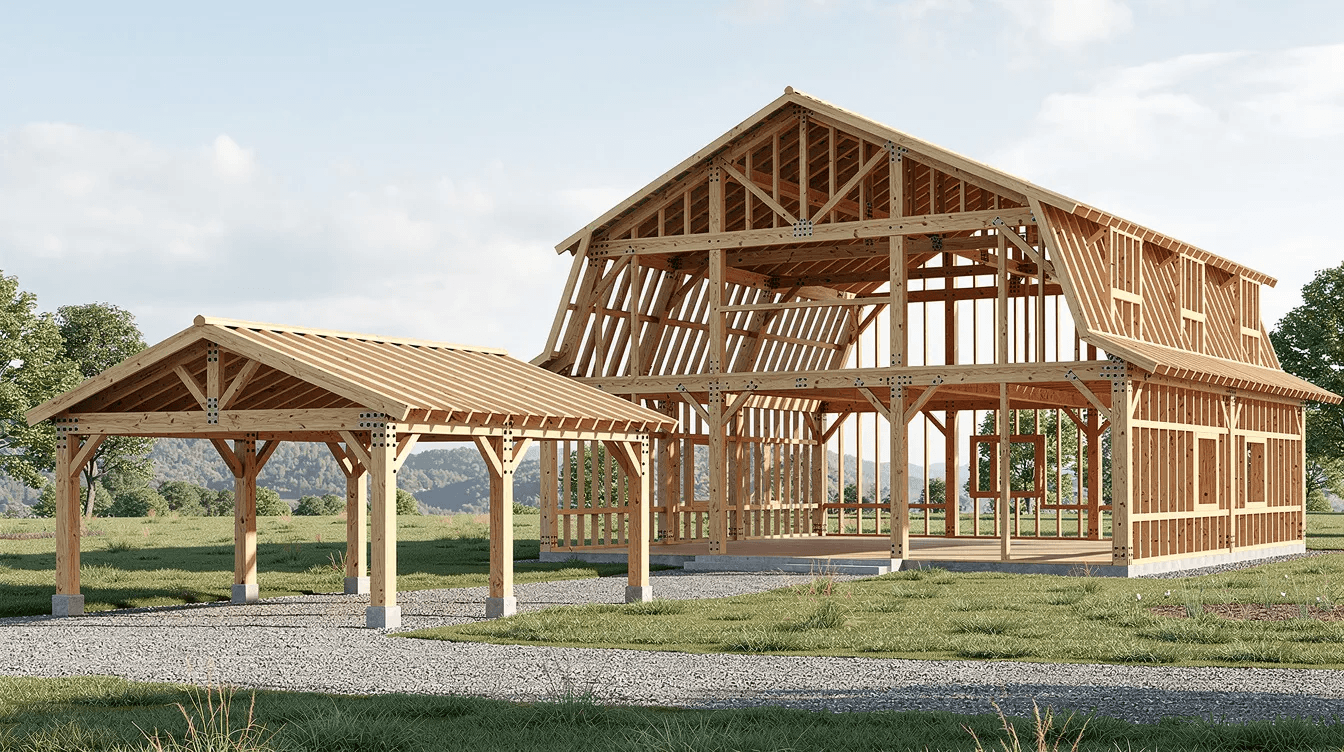
Different frame materials suit different budgets, locations, and aesthetics. Understanding your options helps you decide which approach fits your project.
- Timber frame / post-and-beam kits: Feature exposed beams and large spans up to 40 feet without intermediate support. Common for barns, pavilions, and pre built log cabins. Example sizes include 20×30 pavilions and 26×44 barn homes using 6×6 posts and 6×10 beams joined with mortise-and-tenon connections.
- Conventional lumber kits: Use 2×4 or 2×6 wall framing similar to stick-built homes but fully precut and bundled. Typical for 1,500-2,500 square foot family houses and cottages where familiarity and affordability matter.
- Light-gauge steel frame kits: Corrosion-protected steel studs and trusses ideal for tiny homes, ADUs, and studios. Offer straightness, resistance to rot and termites, and work well in humid or coastal areas.
- Hybrid approaches: Combine wood and steel—such as steel floor systems with timber roof framing, or timber great-room frames inside conventionally framed houses.
All types rely on accurate engineering, labeled components, and detailed assembly documentation to ensure a fit that meets code requirements.
Key Benefits of Building with a House Frame Kit
Kits save time, reduce waste, and increase predictability compared to fully on-site stick framing. Here’s what that means in practice:
- Time savings: Pre cut, labeled components can reduce framing time by 30-50% on an average 2,000+ square foot home, with small crews achieving weather-tight enclosures in days rather than weeks.
- Cost control: Precisely cut parts minimize miscuts and buying extra lumber. Labor savings can be substantial when owners participate in the build.
- Reduced waste: Factory-cut kits significantly cut off-cut waste—potentially saving the equivalent of multiple mature trees on a typical home compared to traditional framing.
- Predictability: Fewer surprises on site because pieces are pre-engineered to fit, with matching labels and plans that eliminate guesswork.
- DIY-friendliness: Illustrated manuals (often 250+ pages), numbered parts, and phone or email support help first-time builders complete structures they might otherwise hire out.
- Quality and durability: Many kits use premium, straight lumber or engineered steel for more accurate, longer-lasting frames than ad-hoc site cutting.
Kits Engineered for Quality
At Timber Frame HQ, our timber frame kits are engineered with a relentless focus on quality and precision. Every kit is the result of careful collaboration between our experienced team of engineers and craftsmen, ensuring that each component is pre cut to exact specifications for a flawless fit. From the initial design to the final cut, we use only premium lumber and advanced machinery to guarantee that your house or structure will stand strong for years to come.
When you choose our kits, you receive detailed instructions and a comprehensive list of all components and fasteners, making the assembly process straightforward and efficient. Each piece is labeled and prepped for easy identification, so you spend less time sorting and more time building. Whether your project is a cozy home, a spacious pavilion, or another timber structure, our kits are designed to deliver a high-quality finish and a robust frame. Trust our team to provide the precision, support, and materials you need to build with confidence and achieve a result you’ll be proud of.
What’s Included in a Typical House Frame Kit
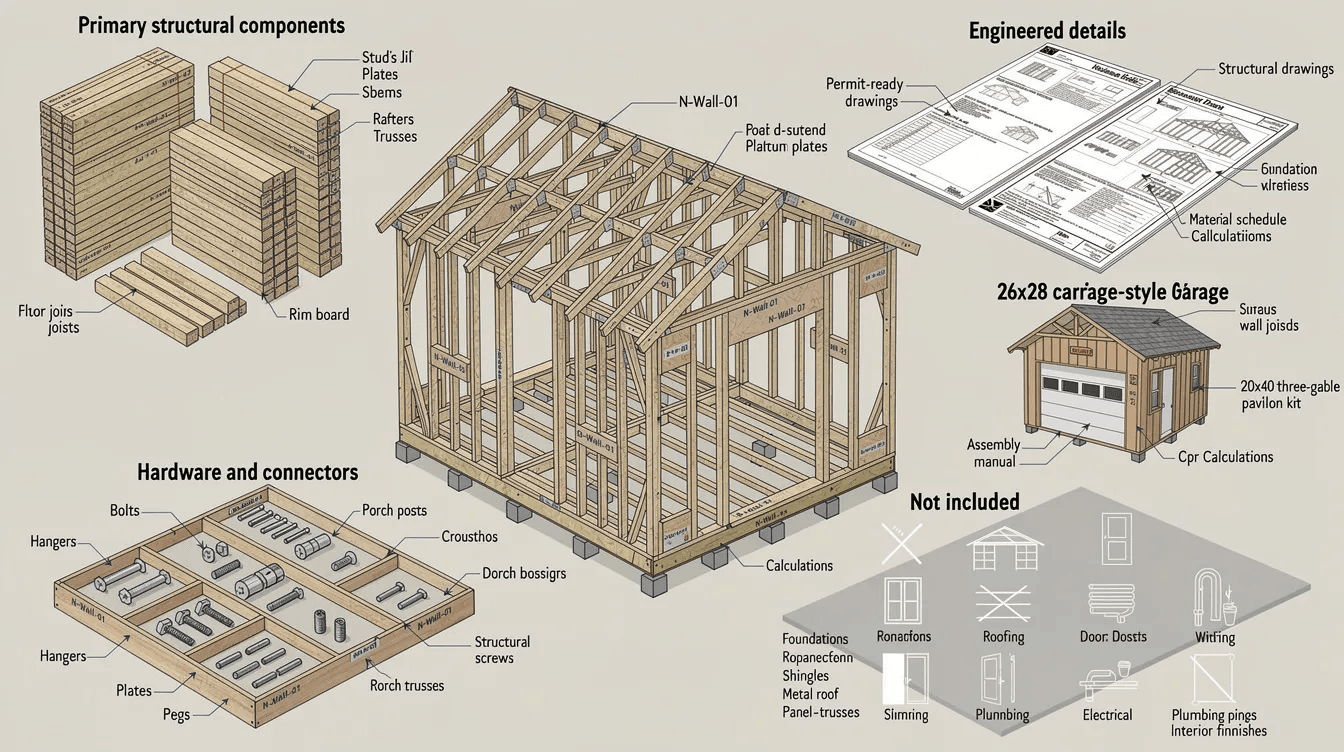
Inclusions vary by supplier, but most structural kits cover the core frame from foundation connection through roof framing.
- Primary structural components: Pre cut wall studs, plates, headers, beams, posts, rafters or trusses, floor joists, and rim boards labeled by location (e.g., “N-Wall-01”)
- Engineered details and paperwork: Permit-ready structural drawings, foundation connection details, material schedules, and code-compliant calculations
- Hardware and connectors: Bolts, hangers, plates, structural screws or pegs for all frame-to-frame connections, with clear references in the manual
- Common exclusions: Foundations, slabs, roofing shingles or metal panels, windows, doors, siding, plumbing, electrical, and interior finishes
Example kit contents:
- A 20×40 three-gable pavilion kit includes bundled wall panels, roof trusses, and floor joists with manual-referenced assembly
- A 26×28 carriage-style garage kit adds porch posts and trusses if specified in the design
Standard House Frame Kit Sizes and Example Projects
Kits are often sold in standard footprints, which simplifies engineering and pricing while offering proven designs.
For small homes and ADUs, common sizes include 12×24 studios (288 square feet), 16×32 tiny house kits (512 square feet with loft layouts), and 20×30 one-bedroom cottages (600 square feet with combined kitchen and living areas).
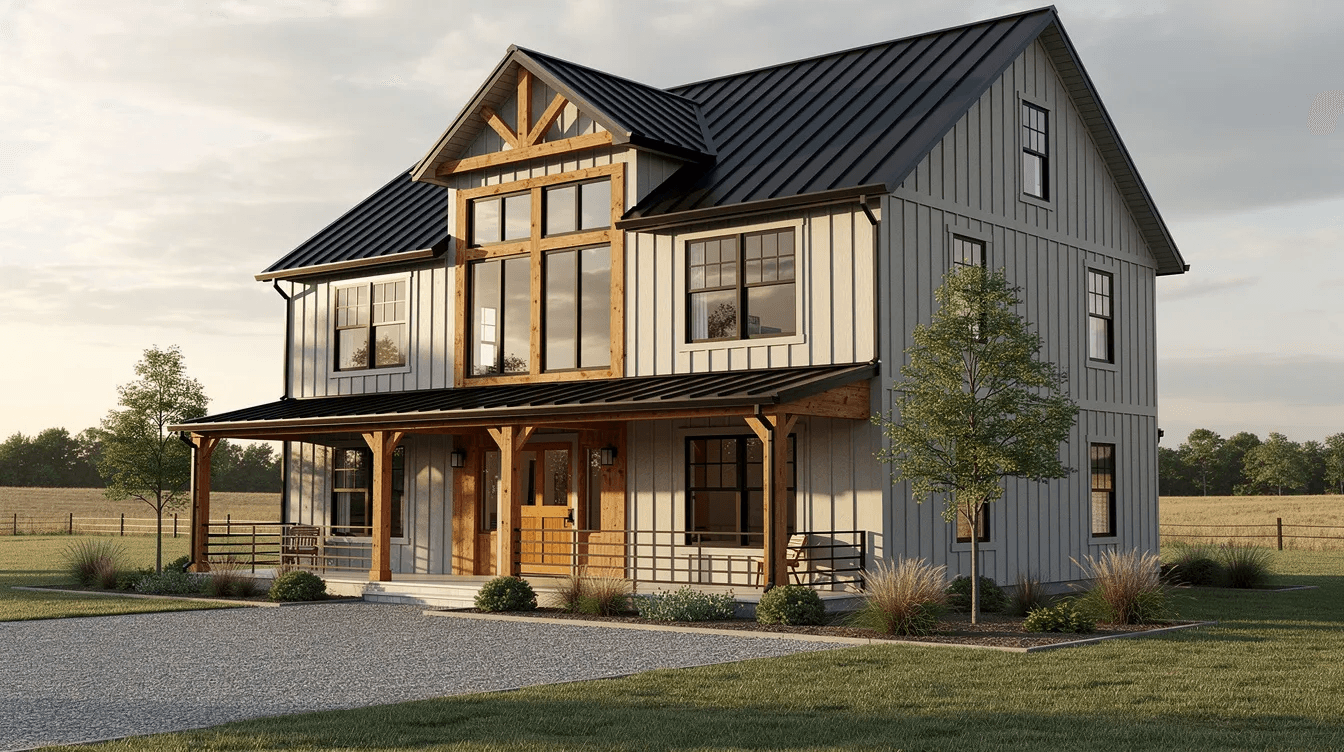
Mid-size family homes typically range from 1,600-2,300 square feet. A 24×38 two-story barn home offers approximately 1,824 square feet with three bedrooms and 2.5 baths. A 26×44 two-story design provides around 2,296 square feet with open-plan living and optional loft spaces.
Accessory projects that often use frame kits include detached garages, carports, pavilions, porches, and Amish-style tiny cabins that complement a main home. While standard footprints like 24×36, 30×40, and 40×60 are common, custom dimensions are possible but may add engineering time and cost.
Pavilions and Outdoor Structures
Transform your outdoor living space with our range of pre cut pavilion and outdoor structure kits. Designed for both beauty and function, these kits make it easy to create inviting spaces for gatherings, relaxation, or entertaining guests. Whether you envision a small gazebo or a grand pavilion, our kits are customizable to fit your unique project requirements and personal style.
Each structure is engineered for straightforward construction, with every component pre cut and labeled for a seamless assembly process. Our team is committed to supporting you at every step, from selecting the right kit to providing guidance during construction. With our customizable options, you can create an outdoor structure that perfectly complements your home and enhances your property’s value. Browse our collection to find the ideal fit for your next project and enjoy the satisfaction of building a beautiful, lasting addition to your outdoor space.
Custom vs. Pre-Designed House Frame Kits
Stock, pre-designed kits differ from fully customized frames tailored to unique sites or floor plans. Your choice affects timeline, budget, and design flexibility.
- Pre-designed kits: Offer quicker lead times, predictable pricing, and proven plans built multiple times before. Ideal for typical lots and straightforward needs.
- Custom kits: Engineered for unusual sites (steep slopes, high snow loads, coastal wind zones) and unique layouts. Require more design collaboration and review.
- Custom design process: Involves initial consultation, concept drawings, structural engineering, revision rounds, and final shop drawings for cutting.
- Customization options: Can cover footprint, roof pitch, window and door openings, interior lofts, and integration with existing structures.
Can You Build a House Frame Kit Yourself?
Many kits are engineered specifically for owner-builders with no formal construction background. The question isn’t whether it’s possible—it’s whether you’re prepared for the commitment.
Most kits can be assembled by a small crew of 2-4 people with standard hand and power tools, assuming they follow the manual and safety guidelines. Tasks like lifting heavy beams, setting trusses, or working at height may require rented equipment (telehandler, scaffolding) or a local contractor’s help for specific steps. During assembly, you may run into a bit of trouble with minor adjustments or fitting certain pieces, but these are usually easy to resolve with patience and careful attention to the instructions.
Read the construction manual fully before starting and use the supplier’s phone or email support during critical steps. Don’t hesitate to ask questions early in the process.
Local building codes still apply. DIY builders usually need permits, inspections, and sometimes an engineer stamp depending on jurisdiction and project size. Realistic timelines vary: a small cabin frame might take a long weekend, while a full two-story home frame could require several weeks of part-time work.
Choosing the Right House Frame Kit for Your Project
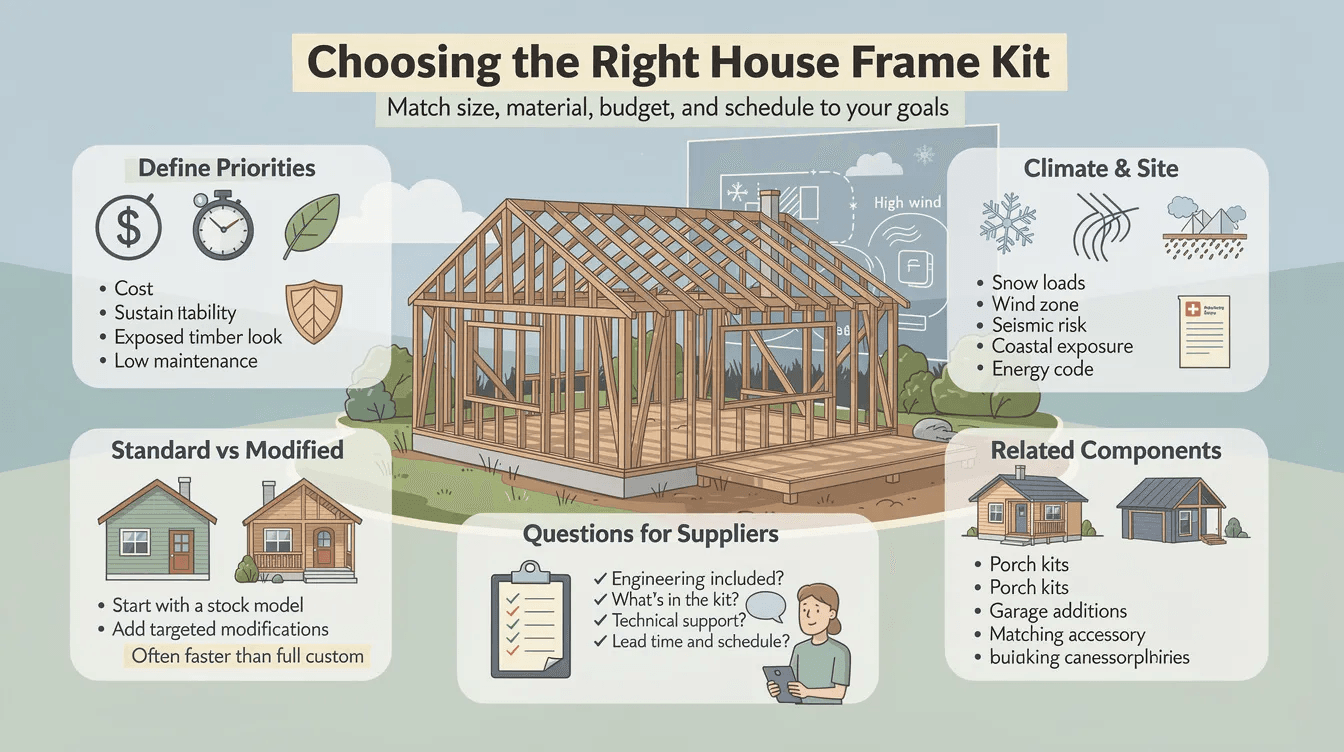
Selecting a kit involves matching size, material, budget, and schedule to your goals. You can receive immediate quotes and start your project without prolonged waiting, making the process more convenient and efficient.
- Define priorities: Determine whether cost, speed, sustainability, exposed timber aesthetics, or minimal maintenance matters most
- Consider climate and site: Heavy snow, high wind, seismic activity, coastal exposure, and local energy-code requirements affect wall thickness and roof design
- Compare standard models with modifications: Starting with a stock design and adding changes often saves time over full custom engineering, so you can avoid unnecessary waiting and move forward quickly.
- Ask suppliers specific questions: Inquire about engineering, inclusions, support, and expected lead times before placing a deposit
- Browse related items: Explore complementary components like porch kits or garage additions that pair with your main structure
What to Expect When Your Kit Arrives
When your kit arrives, you’ll receive a well-organized package containing all the pre cut components, detailed instructions, and hardware needed for your project. Each piece of lumber is clearly labeled, making it easy to identify and assemble every part of your structure. Our kits are designed to minimize waste and maximize efficiency, so you can focus on building rather than sorting or measuring materials.
Before shipping, our team will work closely with you to determine the best delivery options based on your site, the size and weight of your kit, and your project schedule. Once your kit arrives, you’ll find that the assembly process is straightforward, thanks to our step-by-step instructions and responsive support team. Should you have any questions or need assistance, we’re just a call or email away, ensuring your project moves forward smoothly and with ease.
Related Items and Accessories
To help you complete your project with style and functionality, we offer a wide selection of related items and accessories that pair perfectly with our kits. From high-quality siding and roofing materials to doors, windows, and specialty hardware, we provide everything you need to finish your structure to your exact specifications.
Our team is always available to offer recommendations and help you select the best materials and design options for your project. Whether you’re looking to enhance the look of your structure, improve its durability, or add unique features, our customization options make it easy to bring your vision to life. Explore our range of related items and let us help you create a structure that fits your needs and stands the test of time.
Costs, Lead Times, and Ordering a House Frame Kit
Kit pricing depends on size, material, complexity, and location. Project-specific quotes provide more accurate information than generic per-square-foot numbers.
For context, small 400-600 square foot cabins sit at lower price points, while 1,800-2,000 square foot barn homes command higher pricing. Many suppliers offer online estimators where users input dimensions and basic specifications to receive preliminary pricing with no obligation.
Typical payment structures:
- Deposit at order
- Progress payments during engineering and fabrication
- Final payment before shipping
Lead times run several weeks for simple, in-stock designs and up to several months for large custom homes or high-demand seasons. Shipping requires access for tractor-trailers, availability of forklifts or cranes on site, and coordination with foundation completion dates.
Please note: The supplier is not responsible for typographical errors, damages during delivery, or other issues related to the product or service.
Building Greener with House Frame Kits
Pre-engineered kits enable more efficient use of materials and lower jobsite waste compared to traditional stick framing.
Precise factory cutting reduces off-cuts and miscuts substantially. Many suppliers optimize layouts to get more usable material from each board or sheet, sometimes saving the equivalent of several full trees on an average home.
Well-designed frames also improve energy performance by enabling thicker insulated wall assemblies and tighter building envelopes. When paired with structural insulated panels (SIPs), some kits achieve R-23 walls and R-30 roofs as standard.
Testimonials and Customer Reviews
Our customers’ experiences speak volumes about the quality and reliability of our timber frame kits and our dedicated team. Builders and homeowners alike praise the ease of assembly, the superior quality of our materials, and the outstanding support they receive throughout their projects. Many have shared how our kits made their construction process smoother, faster, and more enjoyable, resulting in beautiful, durable structures they’re proud to call their own.
We invite you to browse our testimonials and customer reviews to see firsthand how our commitment to quality construction and customer satisfaction sets us apart. With Timber Frame HQ, you can trust that your project is in expert hands, from the first cut to the final assembly. Join our community of satisfied customers and experience the difference that our kits and team can make for your next build.
Frequently Asked Questions About House Frame Kits
This section addresses common concerns from first-time kit buyers.
Are house frame kits code compliant? Reputable kits are engineered to meet prevailing residential codes, with location-specific adjustments for snow load, wind, and seismic calculations where required.
What tools and skills do I need? Typical homeowner-level carpentry tools (saws, drills, levels) plus willingness to follow instructions carefully. The detailed instructions and labeled parts guide the process.
Where do suppliers ship? Most cover continental US and parts of Canada, with limitations for remote sites lacking trailer access.
Is installation labor included? Installation labor typically isn’t included in the kit price, though many suppliers offer referrals to local contractor teams familiar with their products.
How long does on-site framing take? When weather and inspections cooperate, a small cabin frame might take less time than a weekend, while a full-size home requires several weeks of work. Pre-planning and foundation readiness determine your schedule.
Contact suppliers directly to learn about their specific offerings and determine which house frame kit matches your project goals.