
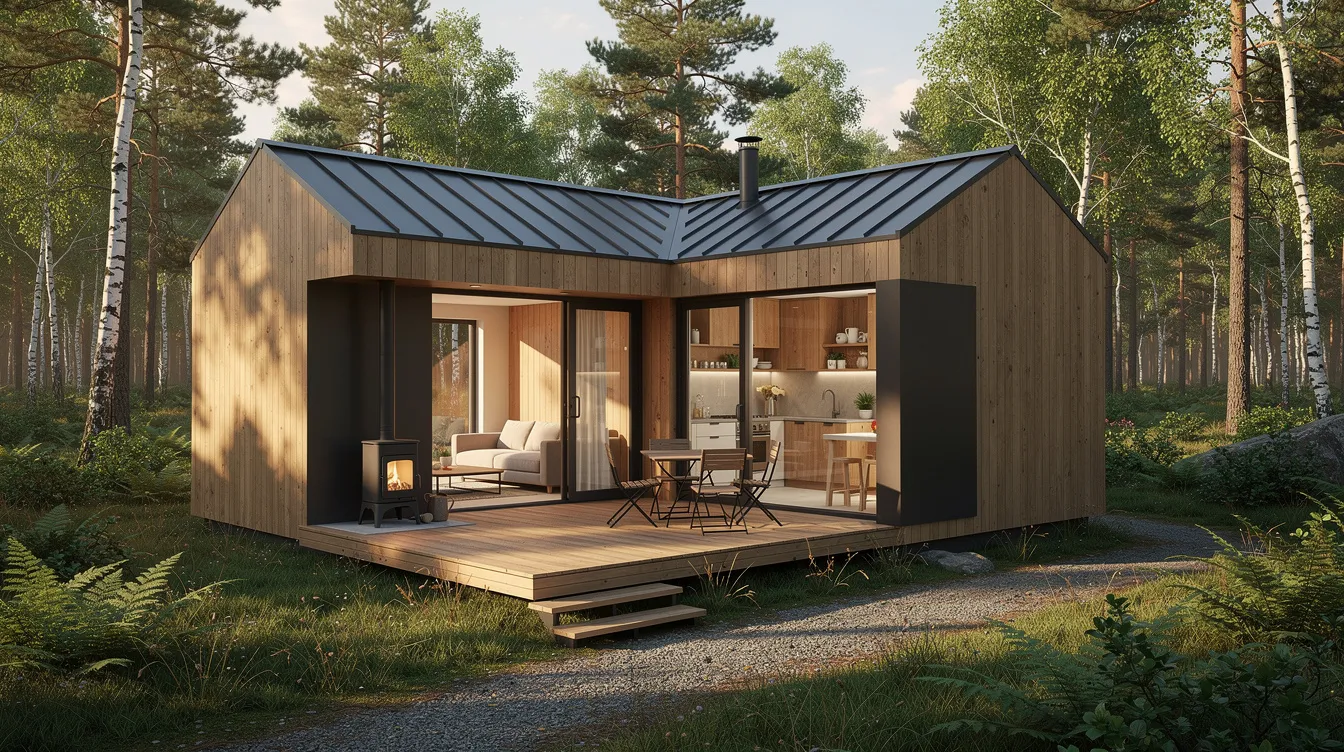
An l shaped tiny house bends at roughly 90 degrees to create distinct zones without wasting square footage on hallways. This architectural approach brings together privacy, natural light, and functional living in a compact footprint that feels surprisingly spacious compared to rectangular alternatives.
- Quick Answer: Why Choose an L Shaped Tiny House?
- What Is an L Shaped Tiny House?
- Key Advantages of L Shaped Tiny House Layouts
- Core Design Characteristics of L Shaped Tiny Houses
- L Shaped Tiny House Floor Plan Ideas by Size
- Common L Shaped Tiny House Configurations
- Privacy and Zoning in an L Shaped Tiny Home
- Maximizing Space Efficiency in the L Shape
- Natural Light, Ventilation, and Outdoor Connection
- Best Lot Types and Site Placements for L Shaped Tiny Houses
- Interior Design Strategies for L Shaped Tiny Homes
- Single-Story vs Lofted L Shaped Tiny House Plans
- Construction, Structure, and Roof Design
- Customization Options and Future Flexibility
- Potential Challenges and How to Avoid Them
- Who an L Shaped Tiny House Is Best For
- Next Steps: Planning Your Own L Shaped Tiny House
Quick Answer: Why Choose an L Shaped Tiny House?
The l shaped layout delivers three core benefits: built-in privacy between sleeping and living areas, more exterior walls for windows and ventilation, and natural zoning that makes small spaces feel larger.
Classic tiny homes in this configuration typically range from 320 to 600 square feet, while slightly larger “small house” versions extend up to around 1,000 square feet for families or multi-generational living.
- Better privacy than straight rectangles without adding interior walls
- More window walls thanks to extended perimeter, often 20-30% more than comparable rectangular footprints
- Clearer separation between active zones (kitchen, living) and quiet zones (bedroom, bath)
- Ideal for corner or irregular lots where the bend can wrap around patios or gardens
The “L” bend replaces wasted hallway space with usable living area, making every square foot work harder. This guide covers real-world floor plans, interior design strategies, and practical build considerations for l shaped tiny homes.
What Is an L Shaped Tiny House?
An l shaped tiny house is a compact dwelling whose footprint bends at approximately 90 degrees, forming two connected wings that meet at an interior corner. This shape works for true tiny homes on foundations, tiny houses on wheels, and slightly larger accessory dwelling units around 800-1,050 square feet.
- The two wings typically serve different functions: one for active spaces like kitchen and lounge, the other for quiet spaces like bedroom and bathroom
- The bend can wrap around a small deck or courtyard, creating a semi-private outdoor room without expanding the footprint
- This layout appeals to people downsizing from conventional homes because the spatial logic feels familiar, less “tube-like” than long rectangular tiny houses
Key Advantages of L Shaped Tiny House Layouts
Before diving into specific floor plans, understanding why this shape works helps you evaluate whether it fits your lifestyle.
- Improved privacy comes naturally as turning the corner separates zones without building extra walls
- Enhanced natural light and cross-ventilation result from perpendicular wall orientations that allow windows on multiple sides
- Space efficiency increases when circulation pathways double as functional areas instead of dead hallways
- Mental spaciousness makes sub-600 square foot homes feel more like traditional houses with distinct rooms
- Slight cost increase (typically 5-12% more for framing and roofing complexity) is the tradeoff, detailed later
Core Design Characteristics of L Shaped Tiny Houses
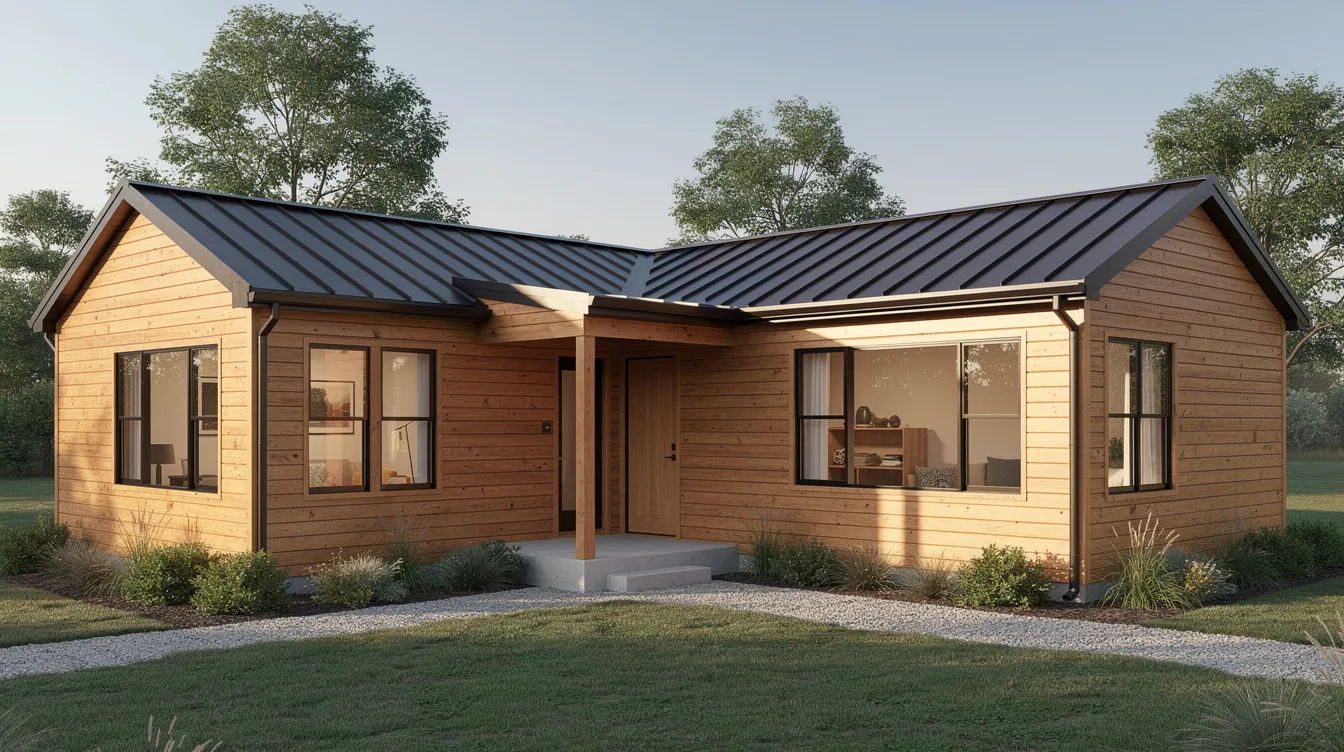
From the exterior, these homes typically present as two short bars meeting at a corner, often with different roof heights to create architectural interest and direct water away from the interior corner.
- Each wing usually has a different focus—daytime public areas versus nighttime private spaces—while sharing one continuous interior
- Designers keep sightlines diagonally across the “L” so the house feels open even when zones are distinct
- The interior corner becomes a transition zone rather than a dead end, often housing a dining area, built-in storage, or compact workspace
- Ceiling heights may vary (higher in the living wing, lower over bedrooms) to reinforce zoning without walls
L Shaped Tiny House Floor Plan Ideas by Size
These tiny house floor plans that work for you scale from compact studios to family-sized layouts:
Size Range | Configuration | Key Features |
|---|---|---|
320-380 sq ft | Single-level cabin | One wing for kitchen/living combo, other for bedroom and bathroom |
~480 sq ft | One bedroom + loft | Kitchen and lounge in long wing, bedroom/bath in short wing, loft above living area |
~600 sq ft | Two bedrooms | Bedrooms in short leg, open-plan kitchen/dining/living in long leg |
1,000-1,050 sq ft | Three-four bedrooms | Central great room wrapping the corner, two baths, flexible for families |
A 552 square foot example designed by Dr. Owen Geiger fits a single bedroom, one bath, passive solar elements, and a wood stove within a 32×32-foot l shaped footprint, illustrating how tiny house plans that fit your life can adapt to specific needs. Wing widths typically run 12-14 feet, with the longer leg (20-30 feet) housing open-plan areas. |
Common L Shaped Tiny House Configurations
There’s no single “correct” l shaped layout—instead, recurring configuration types address different priorities, much like the variety found in the best tiny house designs for modern living.
Living-First Wing Arrangement
The front door opens into a bright living and dining area forming the long leg of the “L,” with windows on two sides pulling in light. The short leg contains a compact bedroom and bathroom, partially hidden from the main entry for privacy. This works well when you want to present a welcoming living space toward the street.
Kitchen-at-the-Corner Layout
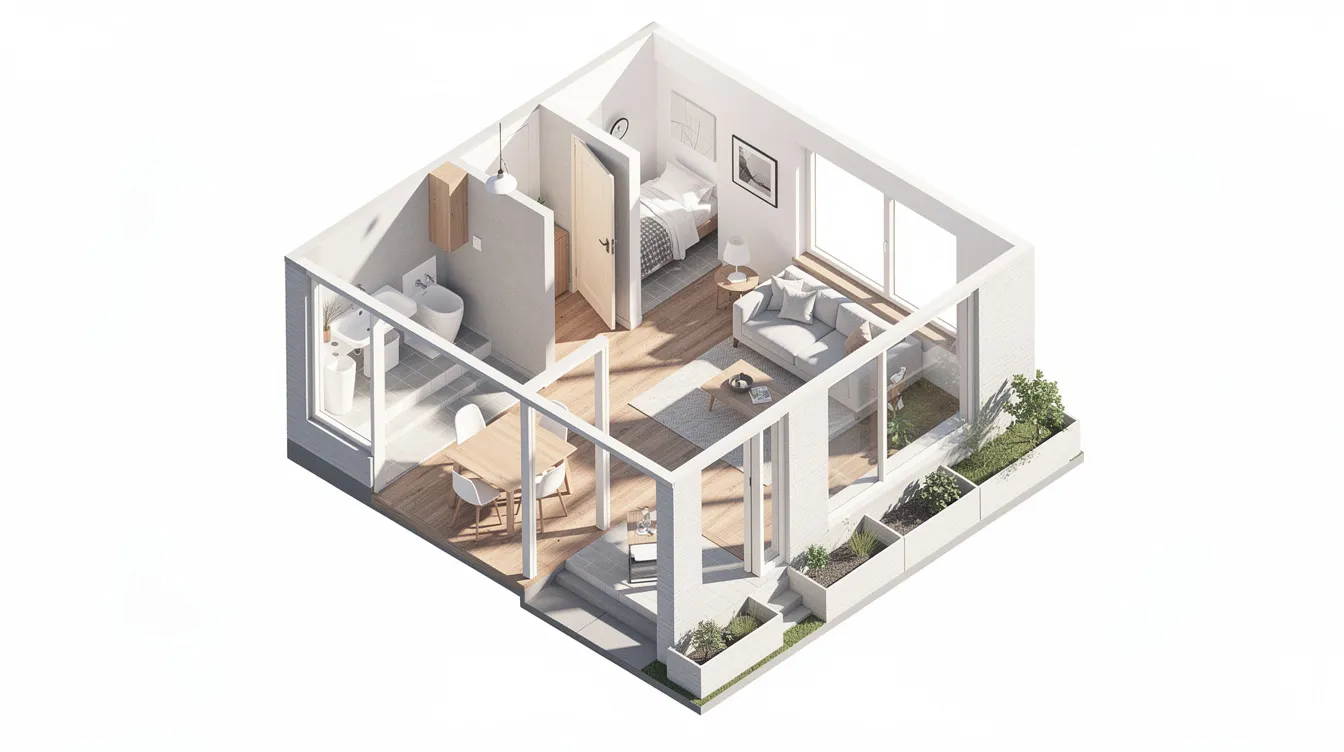
Here, the l shaped kitchen occupies the inside corner, forming a natural pivot between wings. Counters run along both legs with space for a refrigerator, dishwasher, and cooking zone. One wing flows into a living area, the other into bedrooms or a flexible room. A 400 square foot example might include an l shaped kitchen with lofted sleeping above the living wing.
Indoor–Outdoor Courtyard Concept
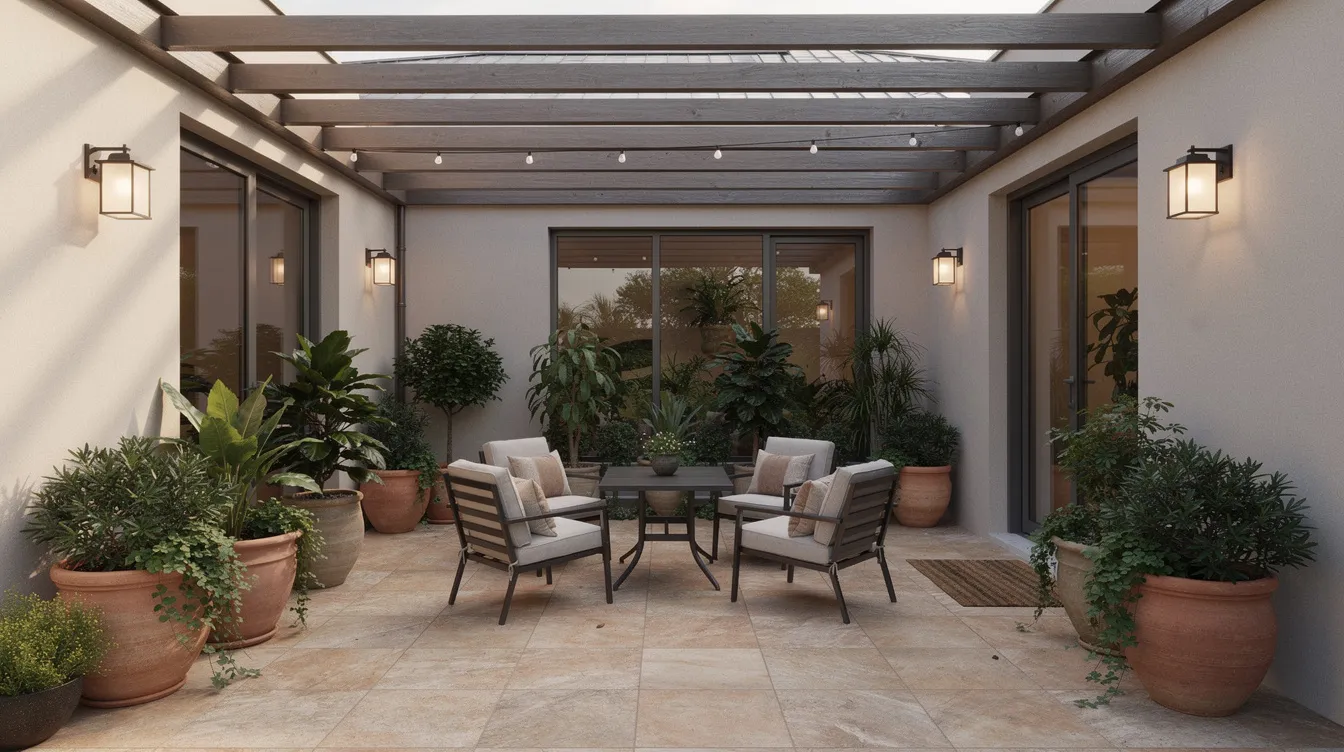
Orienting both wings around a corner deck creates a sheltered outdoor room. Large sliding doors on the inner faces allow the living area and bedroom to open directly to this pocket, effectively adding 100-200 square feet of usable outdoor space. This approach suits mild climates where outdoor living extends functionality.
Privacy and Zoning in an L Shaped Tiny Home
Privacy drives many people toward an l shaped layout over simple rectangles. The bend naturally breaks direct lines of sight, so beds and desks aren’t visible from the front door, proving that great tiny homes that redefine small space living don’t need to sacrifice seclusion.
- Placing bedrooms or a home office in the short leg separates them from social areas
- “Quiet vs. active” zoning assigns louder functions (cooking, TV) to one wing while the other remains calm
- The physical turn eliminates the exposed feeling of fully open-plan tiny living
This works especially well for couples or small families who need some separation while sharing under 600 square feet.
Maximizing Space Efficiency in the L Shape
L shaped tiny homes achieve space efficiency through smarter use rather than simply smaller footprints, echoing the priorities of inspiring modernist tiny house designs.
- The bend replaces wasted hallways with functional space—dining nooks, desk corners, or built-in shelving
- Vertical space adds room: lofts above one wing, tall cabinets at the interior corner, open ceilings above living zones
- Corner transitions become purposeful, housing the refrigerator, pantry, or compact laundry closet at the pivot point
In a 480 square foot l shaped home, this approach can reclaim 10-15% of floor area that would otherwise be circulation, fitting a full galley kitchen plus dining where a hallway would normally be.
Natural Light, Ventilation, and Outdoor Connection
The extra exterior walls in an l shaped tiny house create more space for larger windows and airflow, a key ingredient in elegant tiny homes that redefine modern living.
- Place windows or glass doors at wing ends to pull light 20+ feet deep into interiors
- Perpendicular walls allow cross-breezes, reducing mechanical cooling needs
- Position the “L” to capture south and east sun in the northern hemisphere
- Wrapping a wing around a patio extends living space outdoors, making sub-500 square foot homes feel larger
Simple shading strategies—overhangs or awnings—prevent heat buildup at the inner corner.
Best Lot Types and Site Placements for L Shaped Tiny Houses
The l shaped layout adapts to varied sites:
- Narrow lots: One wing runs deep along the property line while the other turns inward for a courtyard
- Corner lots: The “L” opens toward views or buffers from nearby streets
- Irregular parcels: Rotating the shape tucks the home into awkward corners while leaving room for parking
- Urban ADUs: Orient inward for privacy from a main house
- Rural sites: Open outward toward landscape features and sunlight
Interior Design Strategies for L Shaped Tiny Homes
Interior design should reinforce natural zoning while maintaining a cohesive feel throughout, drawing on ideas from tiny house interiors that maximize every square foot.
Furniture Placement That Supports Flow
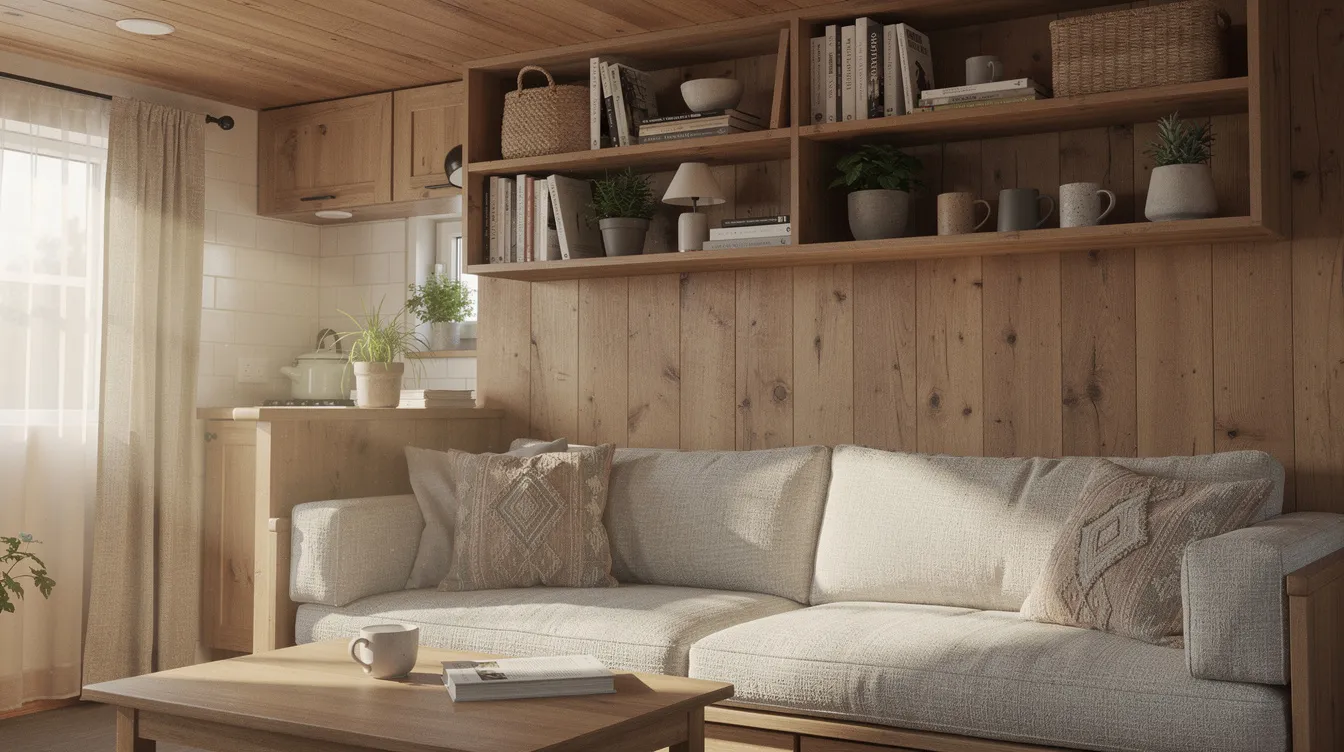
Align the sofa parallel to one leg, leaving the pivot area open as passage between wings, especially in more decorative, cute tiny house designs for your dream home. Dining tables and work desks belong near the interior corner or against walls, not floating in circulation paths. Multi-functional furniture—sofa beds, fold-down tables, nesting stools—shifts between social and private uses comfortably.
Smart Storage in Corners and Along Wings
The inner corner houses tall storage units, a pantry, or stacked washer-dryer without feeling intrusive. Full-height closets along bedroom wings create sound buffers between sleeping and living zones. Built-in benches with lift-up lids provide both seating and concealed storage along the inside faces.
Single-Story vs Lofted L Shaped Tiny House Plans
Single-story layouts prioritize accessibility and aging in place—no stairs or ladders required. A 610 square foot build in Durango, Colorado exemplifies this with wider hallways and aging-in-place features.
Lofted layouts add sleeping or storage mezzanines above one wing, common in 320-480 square foot l shaped tiny homes. Choosing the best ladder for a tiny house loft and maintaining at least one wing full-height helps avoid a cramped feel.
Construction, Structure, and Roof Design
An l shaped footprint requires slightly more complexity than a simple rectangle, but remains manageable with good planning and by following solid guidance on how to build a tiny house.
Foundation and Framing Considerations
The two wings must be structurally tied at the joint—not treated as separate structures. Use continuous sill plates and properly anchored corner posts to handle loads. Floor joists and roof rafters align across the bend with extra blocking in the corner region. Check local building codes, especially for ADU projects where regulations have tightened since 2022.
Roof and Water Management at the Interior Corner
Common strategies avoid water pooling: offset shed roofs or gables that shed water to outside edges. Well-detailed flashing, gutters, and downspouts at the meeting point prevent leaks. Overhangs protect inner corner walls from driving rain. Expect a 5-12% construction cost premium versus rectangular tiny house designs.
Customization Options and Future Flexibility
The l shaped form accommodates change over time:
- Extend wing lengths to add a second bedroom or office
- Design one wing as potentially separate—convertible to rental studio or guest suite
- Integrate outdoor spaces as semi-flexible extensions that could be enclosed later
- Move interior partitions more easily since circulation doesn’t depend on long hallways
Remote work trends and multigenerational living (increasing through the mid-2020s) make flexible wings particularly valuable.
Potential Challenges and How to Avoid Them
Not every l shaped tiny house automatically succeeds. Watch for these issues:
- Wings that are too narrow or lack windows can feel tunnel-like
- Poor furniture placement at the bend blocks natural flow
- Inconsistent finishes between wings make the home feel disjointed
Solutions are straightforward: maintain 12+ foot wing widths, place furniture thoughtfully, and use consistent materials throughout. Treat the “L” as one connected home, not two separate sticks.
Who an L Shaped Tiny House Is Best For
- Couples and small families wanting privacy between zones without major square footage increases
- ADU builders creating space for rental, aging parents, or adult children
- Downsizers who find rectangular tiny houses too exposed or “RV-like”
- Vacation rental developers seeking memorable, courtyard-focused layouts
Extremely narrow lots or ultra-mobile THOWs may still suit rectangular plans better—match your layout to your land and lifestyle.
Next Steps: Planning Your Own L Shaped Tiny House
Ready to move from inspiration to action? Start here:
- Sketch two or three rough l shaped options showing different wing lengths and room placements
- List must-haves (number of bedrooms, office space, accessibility needs) and assign them to wings
- Consult a designer familiar with compact spaces for structural and roof detailing
- Check local zoning and building codes—regulations have evolved significantly since 2020
With smart design, an l shaped tiny house delivers privacy, comfort, and natural light in a footprint that still feels genuinely tiny. Your next home might just have a bend in it.