
Key Takeaways
- A beginner can realistically move into an off grid tiny house within 12–24 months by saving, choosing land, designing or buying a tiny home, installing systems, and moving in.
- The right location, reliable power and water, and realistic expectations about small space living matter more than fancy finishes.
- You can start small with a 200–300 sq ft tiny home with basic solar and rainwater, then upgrade systems over time as budget allows.
- Expect to spend roughly $15,000–$30,000 for a DIY shell and $5,000–$15,000 for starter off grid systems (2024–2026 prices vary by region).
- Living off grid in a tiny house is achievable for beginners who plan carefully and build skills step by step.
Introduction: What “Living Off Grid in a Tiny House” Really Means
Imagine waking up with solar power running your lights, using collected rainwater for your morning coffee, and cooking on propane in a compact, efficient living space. That’s the daily reality of living off grid.
An off grid tiny house is a self sufficient tiny home—typically 160–400 square feet—that operates independently from municipal power, city water, or sewer connections. Off-grid living requires a comprehensive understanding of how to efficiently utilize natural resources, including renewable energy sources, water, and waste management systems.
The difference between a grid tiny house parked at a community with hookups and a fully off grid tiny home on private land is simple: one depends on public utilities, the other doesn’t.
The main reason beginners choose this off grid lifestyle? Lower monthly costs, flexibility in location, minimal environmental impact, and a simpler life. This ultimate guide gives you a practical roadmap with actionable steps.
- Step 1: Decide If Off Grid Tiny House Living Fits Your Life
- Step 2: Finding the Right Location for Your Off Grid Tiny Home
- Step 3: Choosing or Designing Your Off Grid Tiny House
- Step 4: Powering Your Off Grid Tiny House
- Step 5: Water, Waste, and Sanitation for Off Grid Tiny Homes
- Step 6: Daily Life, Storage, and Small Space Strategies
- Costs, Budgeting, and Timeline for Beginners
- Common Beginner Mistakes and How to Avoid Them
- FAQ: Living Off Grid in a Tiny House for Beginners
- How much does it really cost to start living off grid in a tiny house?
- Can I live off grid in a tiny house with kids or pets?
- Is it legal to live off grid in a tiny home everywhere?
- How do I get internet and stay connected while living off grid?
- What skills should I learn before moving into an off grid tiny house?
Step 1: Decide If Off Grid Tiny House Living Fits Your Life
Before buying land or a tiny home, test your tolerance for small space living and self-reliance. Living off-grid often requires a significant lifestyle adjustment and a commitment to sustainability that may not be familiar to everyone.
Ways to test first:
- Rent an off grid cabin for 1–3 months
- Stay in a tiny house Airbnb for several months
- Try RV or van life as proof-of-concept
Pros of off grid tiny house living:
- Low utilities and save money long-term
- Mobility with a house on wheels
- Closer to nature
- Smaller environmental footprint
Cons to consider:
- Limited storage in a small space
- Managing your own power, water, and waste systems
- Stricter zoning in many areas
- Less convenience for services
One of the main benefits of off-grid living is the increased self-reliance and autonomy it provides. Make a written list of must-haves versus nice-to-haves. Can your work situation function from a rural location with limited internet?
Step 2: Finding the Right Location for Your Off Grid Tiny Home
Choosing the right location is the single most important thing for successful off grid living—often more critical than the tiny house design itself. Choosing the right location for an off-grid tiny house involves assessing the availability of resources, local building regulations, and the local climate.
Research before buying:
- Zoning and building codes in specific counties
- Minimum square footage rules
- Owner-builder permits available in your region
Key factors for land:
Factor | Why It Matters |
|---|---|
Climate | Winter cold and summer heat affect system sizing |
Sun exposure | Critical for solar panel efficiency |
Rainfall averages | Determines water storage needs |
Fire/flood risk | Affects insurance and safety |
Easy access to town | 30–60 minutes for emergencies |
Local zoning laws and regulations can significantly affect where you can place your off-grid tiny house, making it essential to research these before purchasing land. It’s important to consider the amount of sunlight available in your chosen location, as this will impact the efficiency of solar panels used for energy. |
Finding affordable land:
- Tax lien sales and auction sites
- Local classifieds
- Talking to rural neighbors about unused parcels
Prioritize locations with existing driveway access or legal road frontage.
Step 3: Choosing or Designing Your Off Grid Tiny House
Off grid tiny homes come in three main types: tiny house on wheels (THOW), tiny house on a permanent foundation, and converted structures like cabins or shipping containers. Each affects legality and mobility differently, and many self contained tiny homes for modern off-grid living integrate power, water, and waste systems into these designs.
Ideal size for beginners: 200–350 square feet for one or two adults.
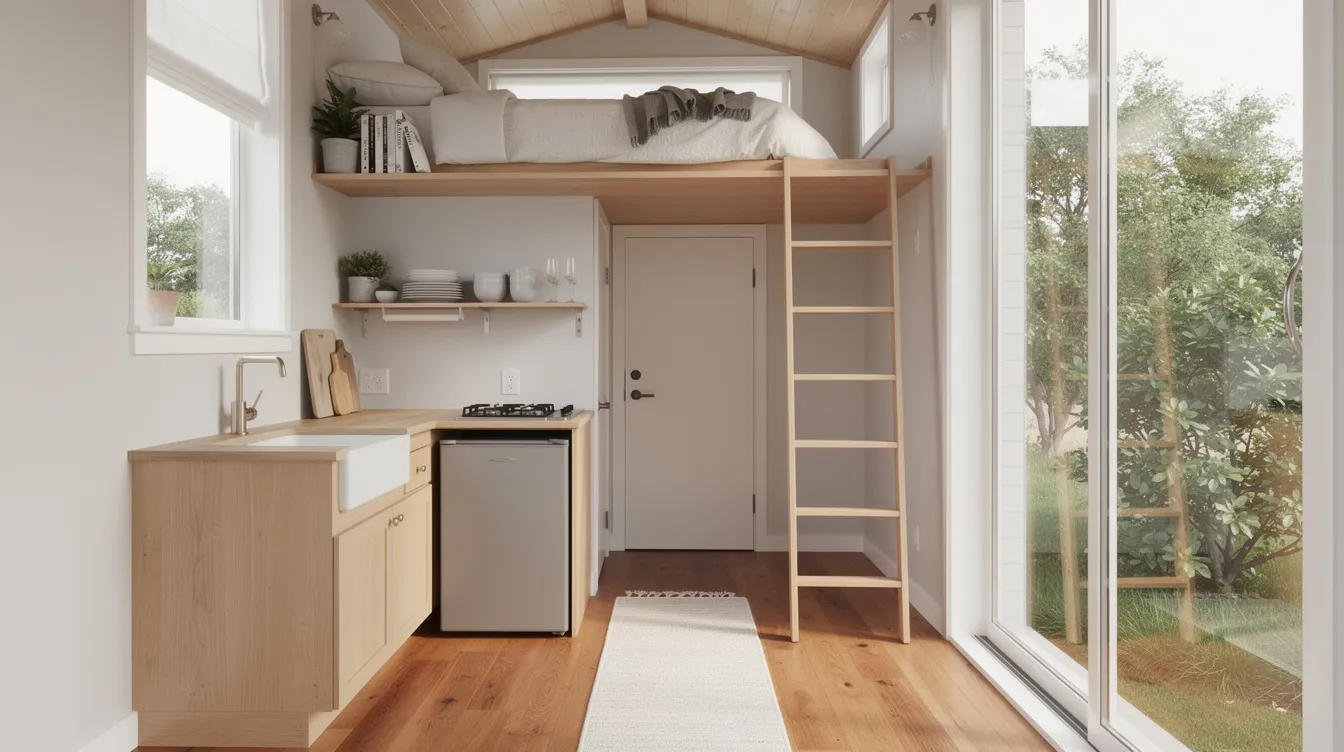
A well-planned tiny house floor plan is essential for a tiny house, where each zone—kitchen, sleeping, and living space—should be mapped out to ensure efficient use of space. When designing a tiny house, consider using foldaway furniture and maximizing wall space for storage to save space and enhance functionality.
Off grid-friendly floor plan elements:
- Clear functional zones
- Plenty of natural light
- High vertical storage
- Space for batteries, water tanks, and propane
Incorporating large windows and light colors in a tiny house design can create an illusion of more space and enhance natural light, making the interior feel larger and more inviting, much like the best tiny house interiors that maximize every square foot.
Using minimalist tiny houses for sustainable living and low-impact materials in the construction of a tiny house is crucial for environmentally conscious builders. Choose durable, low-maintenance building materials like metal roofing and composite siding over delicate finishes.
Trailer or Foundation: How Will Your Tiny House Sit?
Choosing the best foundation for a tiny house depends on your site conditions, mobility needs, and budget, so you must pick the right base structure early.
Beginners must pick the right base structure early. Here’s a quick comparison:
Factor | Trailer (THOW) | Permanent Foundation |
|---|---|---|
Cost | Often lower upfront | Higher initial investment |
Legal status | May classify as RV | Treated as dwelling |
Mobility | Can relocate | Permanent placement |
Insulation | More challenging | Better thermal performance |
Maintenance | Trailer upkeep needed | Standard home maintenance |
Choose a trailer when: |
- You want mobility between locations
- Typical sizes: 7–8.5 ft wide, 20–30 ft long
Choose a foundation when:
- Better insulation matters (cold climates)
- Easier to meet building code
- More stability for snow load and wind
Step 4: Powering Your Off Grid Tiny House
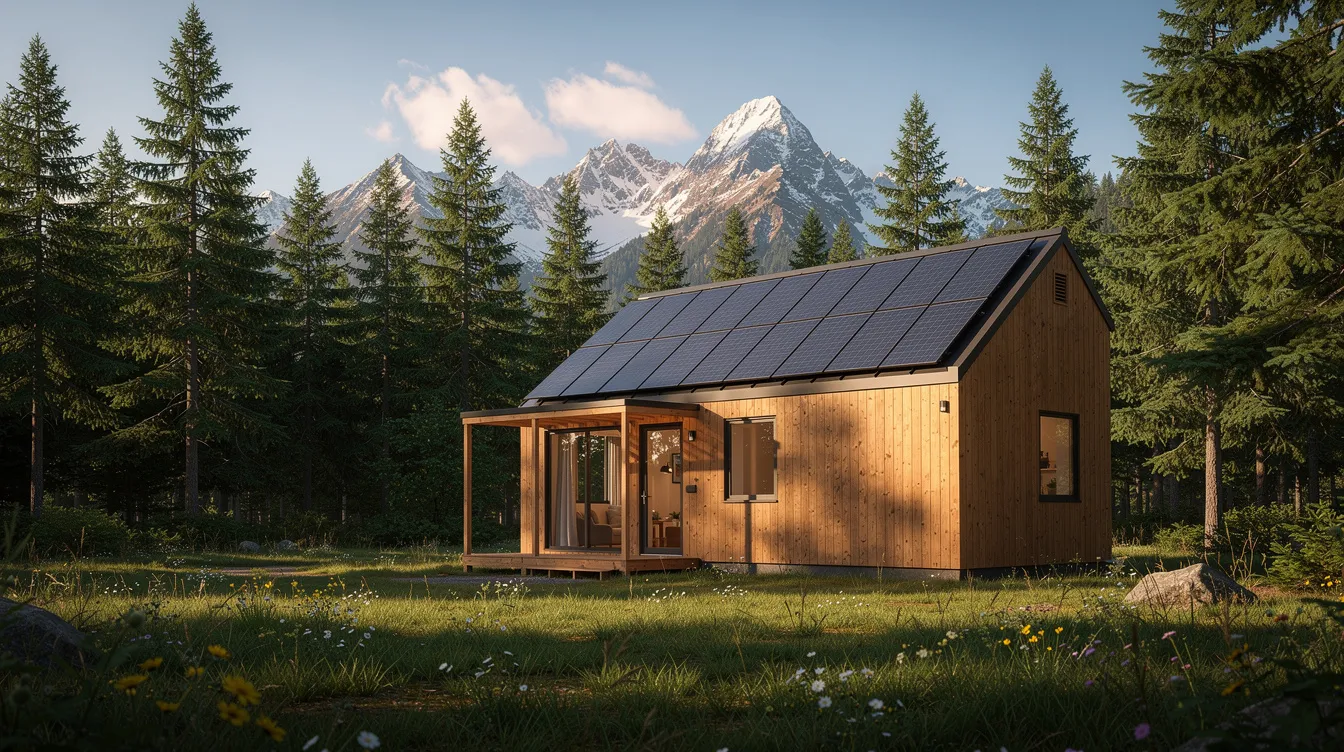
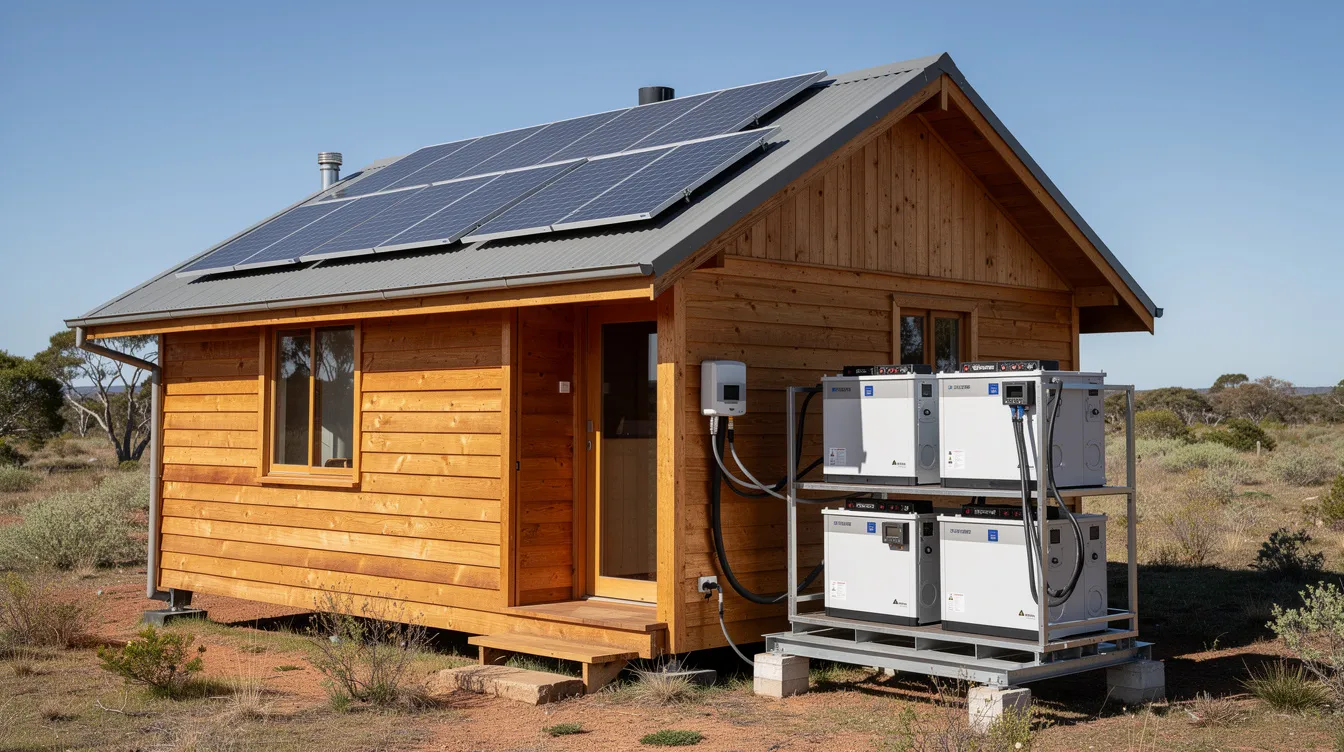
Energy is the backbone of off grid living. Generating electricity is one of the core challenges of off-grid living, with viable options including solar panels, wind turbines, and small-scale hydro systems, and some people integrate smart controls similar to those in tiny smart homes for efficient living.
Calculate daily power needs:
Appliance | Wattage | Hours/Day | Watt-hours |
|---|---|---|---|
Laptop | 100W | 8 | 800 |
LED lights | 40W | 5 | 200 |
Small fridge | 200W | 12 | 2,400 |
Water pump | 500W | 1 | 500 |
Total | 3,900 | ||
Basic solar system components: |
- Solar panels (1–3 kW typical for beginners)
- Charge controller
- Battery bank (5–15 kWh)
- Inverter
- Wiring and monitoring
Proper solar orientation and energy-efficient design are fundamental for an off-grid tiny house, allowing for maximum solar exposure and thermal comfort year round.
Backup options:
- Quiet inverter generators
- Small wind turbine in windy areas
- Micro-hydro with flowing water on property
Essential tips: oversize your battery bank slightly, protect components from heat and cold, and plan space for future expansion.
Energy-Efficient Design and Appliances
In a tiny house, reducing energy demand is cheaper than building an oversized off grid solar system.
Energy-efficient choices:
- DC fridges when possible
- Induction cooktops
- LED lighting throughout
- Low-wattage fans instead of air conditioning
Good insulation, air sealing, and ventilation strategies reduce heating and cooling loads. A small wood stove or propane heater handles cold months efficiently.
Separate luxury loads (air conditioning, big screen TVs) from essentials. Design your renewable energy system around actual priorities, not ideal scenarios.
Step 5: Water, Waste, and Sanitation for Off Grid Tiny Homes
Water and waste management systems can make or break off grid living. Water is a necessity for off-grid living, and options for sourcing water include rainwater harvesting, greywater recycling, and using low-flow fixtures to conserve water.
Water source options:
- Rainwater catchment with storage tanks
- Drilled wells
- Community water haul stations
Simple rainwater system:
- Roof collection area
- First-flush diverter
- Sediment filter
- Main storage tank (1,000–5,000 liters)
- Basic pump and pressure tank
Waste management in off-grid living often involves composting toilets and greywater recycling to maintain sanitation without public sewage systems.
Waste options comparison:
System | Pros | Cons |
|---|---|---|
Composting toilet | No water needed, nutrient recovery | Regular maintenance |
Septic system | Conventional use | Requires space, permits |
Holding tank | Simple | Needs regular pumping |
Route greywater from sinks and showers to mulch basins where legal. Use biodegradable soaps to protect local waterways. |
Practical Plumbing Layout in a Tiny House
Simple plumbing layouts reduce cost and troubleshooting.
- Group bathroom and kitchen close together to shorten hot water runs
- Use flexible PEX for supply lines
- Install clearly labeled shut-off valves for each zone
Hot water options: on-demand propane heaters, small electric heaters fed by solar power, or wood-fired water heaters for cold climates.
Protect pipes from freezing with insulation and heat tape. Locate lines inside the insulated envelope when possible.
Step 6: Daily Life, Storage, and Small Space Strategies
Daily off grid living has a rhythm: checking battery levels, managing water, bringing in firewood, and maintaining systems alongside normal work and family routines, all of which support the minimalist mindset behind exploring the world of tiny houses.
Growing your own food is essential for off-grid living, as it reduces reliance on grocery stores and promotes sustainability. Vertical gardening and container gardening are space-saving techniques for food production. Permaculture is an effective method for maximizing food production while maintaining ecological balance. Consider a root cellar for fresh produce storage.
Small space storage strategies:
- Under-stair drawers
- Toe-kick drawers
- Wall-mounted shelves
- Ceiling-hung racks
- Built-in benches with hidden storage
Living comfortably with others requires privacy zones, noise management, and clear rules about shared spaces.
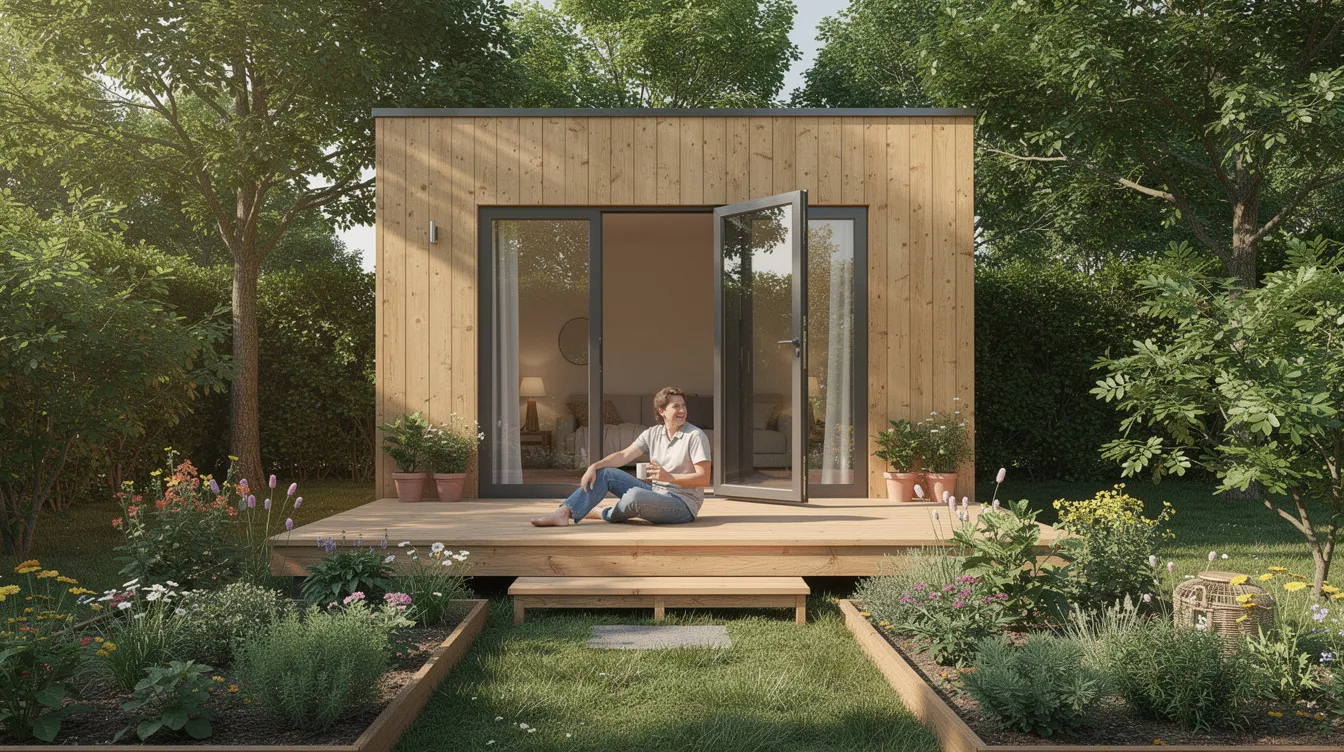
Outdoor living space—deck, covered porch, fire pit, garden—makes any off grid tiny house feel much larger and more livable throughout the year, much like many of the great tiny homes that redefine small space living.
Seasonal Challenges and Climate Considerations
Beginners often underestimate how different winter and summer feel in an off grid tiny house.
Cold climate challenges:
- Condensation and moisture
- Frozen pipes
- Snow loading on roof
- Limited winter sun for solar
- Need for reliable backup heat
Hot climate challenges:
- Overheating in small spaces
- Need for shading and cross-ventilation
- Possibly a small efficient AC or swamp cooler
Seasonal routines:
- Stack firewood by early autumn
- Clean solar panels regularly
- Rotate food storage
- Adjust clothing and bedding each season
Costs, Budgeting, and Timeline for Beginners
Social media often shows extremely cheap builds. Realistic off grid tiny houses fall into a wide cost range.
Using a detailed tiny home cost calculator can help you refine your budget before you commit.
Example cost ranges (2024–2026):
Category | DIY | Professional |
|---|---|---|
Land | $5,000–$50,000+ | Same |
Tiny house shell | $15,000–$30,000 | $40,000–$80,000 |
Off grid systems | $5,000–$15,000 | $10,000–$20,000 |
Site work | $1,000–$5,000 | $3,000–$10,000 |
Challenges of off-grid living include the initial investment in renewable energy systems and the ongoing maintenance required to keep these systems operational. Living off-grid can lead to significant financial savings over time, reducing reliance on public utilities and lowering monthly utility bills. |
Realistic timeline: 12–24 months from decision to move-in.
Budget for land, permits, site prep, house shell, utilities, furnishings, and 10–20% contingency. Side-income strategies while preparing: remote freelance work, selling unused possessions, and learning DIY skills.
Common Beginner Mistakes and How to Avoid Them
Even well-planned off grid tiny houses can run into trouble. Many issues are predictable and preventable.
Common mistakes:
- Under-sizing solar and batteries
- Buying land without checking access or legal status
- Underestimating winter challenges
- Skimping on insulation
- Overfilling the tiny home with furniture
Prevention tips:
- Do detailed load calculations
- Verify zoning with local authorities before purchase
- Talk to neighbors about real winter conditions
- Design storage before buying decor
Connect with experienced off grid tiny house owners through forums, local meetups, or workshops, and study elegant tiny homes that redefine modern living to see how good design supports comfort in a small footprint. Start with simpler systems and add complexity gradually.
FAQ: Living Off Grid in a Tiny House for Beginners
How much does it really cost to start living off grid in a tiny house?
Total cost depends on land prices, whether the tiny house is DIY or professionally built, and off grid system size. Modest DIY projects run $30,000–$60,000 total. Turn-key solutions range $80,000–$150,000+ as of 2024–2026. Track local prices and update your budget regularly, as material costs shift year to year.
Can I live off grid in a tiny house with kids or pets?
Yes, but plan carefully. Consider bunk beds, separate sleeping lofts, and robust outdoor play areas. Adjust storage for toys, school supplies, and pet food. Some families choose a slightly larger small home (400–600 sq ft) or multiple tiny homes on the same land for extra breathing room.
Is it legal to live off grid in a tiny home everywhere?
No. Laws vary widely by country, state, and municipality. Tiny houses may be classified as RV, accessory dwelling, cabin, or primary residence. Check zoning codes, minimum dwelling sizes, and rules about wells, septic, and composting toilets before buying land. Consult local officials or a land-use attorney if regulations are confusing.
How do I get internet and stay connected while living off grid?
Common options include 4G/5G hotspots, satellite internet (like Starlink), community Wi-Fi in nearby towns, and directional antennas to boost weak signals. Check coverage maps and test signal strength on the actual property before committing if remote work is essential. There’s a trade-off between ultra-remote locations and practical access to networks.
What skills should I learn before moving into an off grid tiny house?
Build foundational skills: basic carpentry and repairs, simple electrical and plumbing troubleshooting, firewood and stove safety, and water filtration management. Practice in low-risk environments like weekend cabins or backyard projects. Take short workshops or online courses, and keep printed manuals on-site when digital resources are unavailable.