

Tokyo’s land scarcity has driven architects toward radical solutions. Tokyo’s housing is more tightly packed than almost any other metropolis. Since the 1980s economic bubble, when city center and central district land prices skyrocketed, designers began building multi-story homes on plots as small as 20–40 square meters. Japanese zoning laws allow residential structures up to four stories on small lots, and a cultural norm of rebuilding every 20–30 years fosters experimental, lightweight designs. This article explores real tiny house Tokyo projects built between 2000–2025 and extracts lessons for compact urban life anywhere.
What “Tiny House” Means in the Context of Tokyo
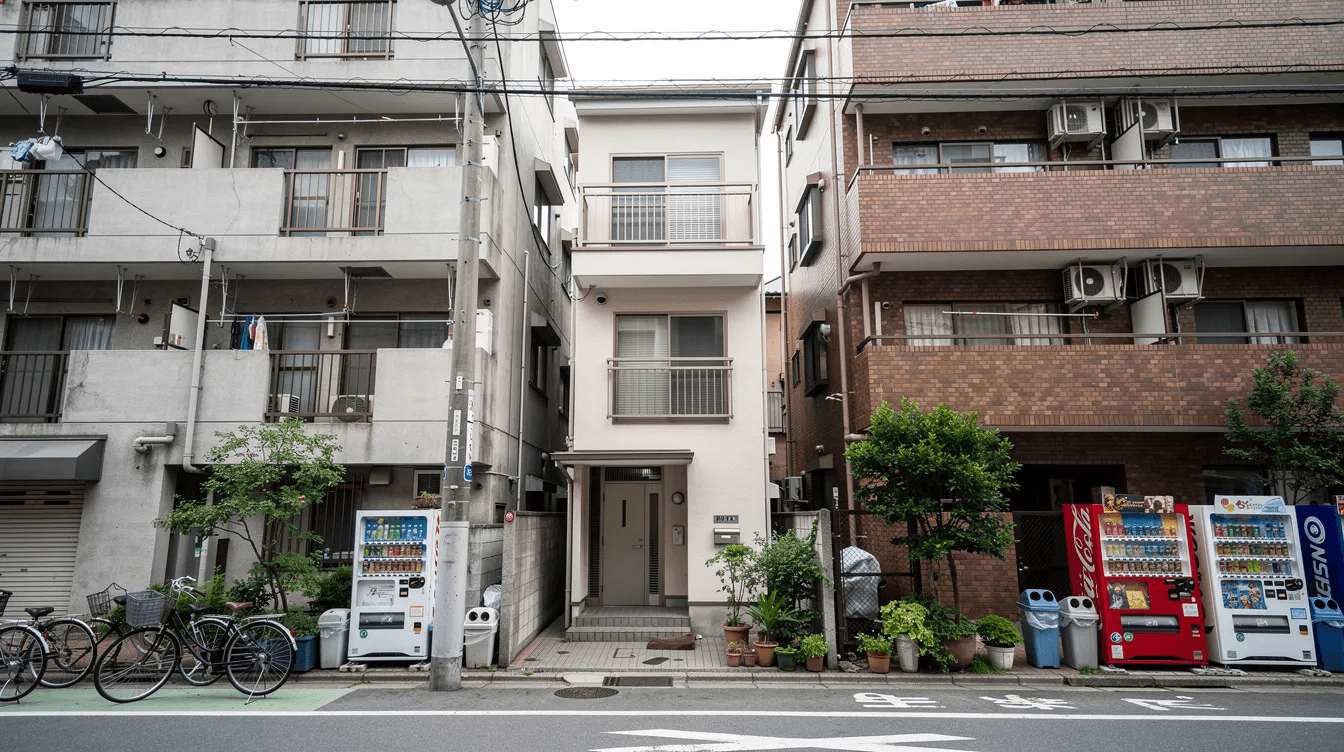
Unlike North American tiny houses on wheels built for nomadic life, a tiny house in Japan is typically a permanent urban dwelling fixed to a minuscule plot. These homes are often referred to as ‘small spaces’ and are known locally as kyosho kodate—compact houses typically ranging from 30–50 square meters, specifically designed for dense lots. Building footprints range from 15–35 square meters, with total floor areas spanning 40–80 square meters across three to four levels. Locals measure in tsubo (one tsubo equals roughly 3.3 square meters), so a “6 tsubo house” has about a 20 square meter footprint.
Central neighborhoods like Shinjuku, Shibuya, and Bunkyo impose tight constraints: narrow streets under four meters wide, close setbacks, and daylight plane regulations requiring sloped building profiles. The challenge for architects is to maximize functionality and comfort within these small spaces, often leading to creative solutions and innovative architectural techniques. These rules create tall, skinny silhouettes that define Tokyo’s residential architecture.
Japanese families accept vertical circulation and steep stairs as the price of staying near central Tokyo stations, schools, and work.
Iconic Tiny Houses in Tokyo: Real-World Case Studies
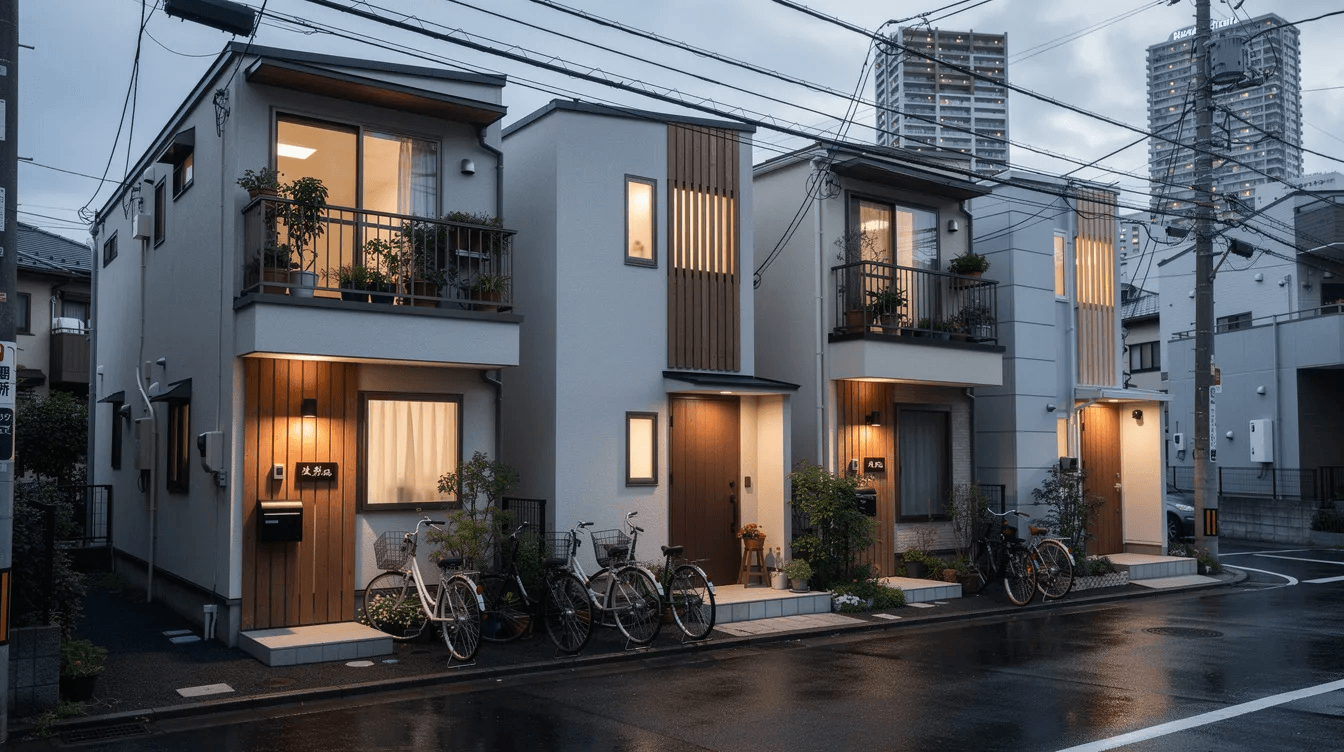
The following projects demonstrate how architects transform limited space into functional, charming homes across different Tokyo wards. The form of these tiny houses is shaped by the need to maximize vertical space and create openness, often achieved through the use of large windows that illuminate small spaces and foster an open feel, much like other elegant tiny homes that redefine modern living.
Case Study 1: Ultra-Narrow House on a 2-Meter-Wide Plot
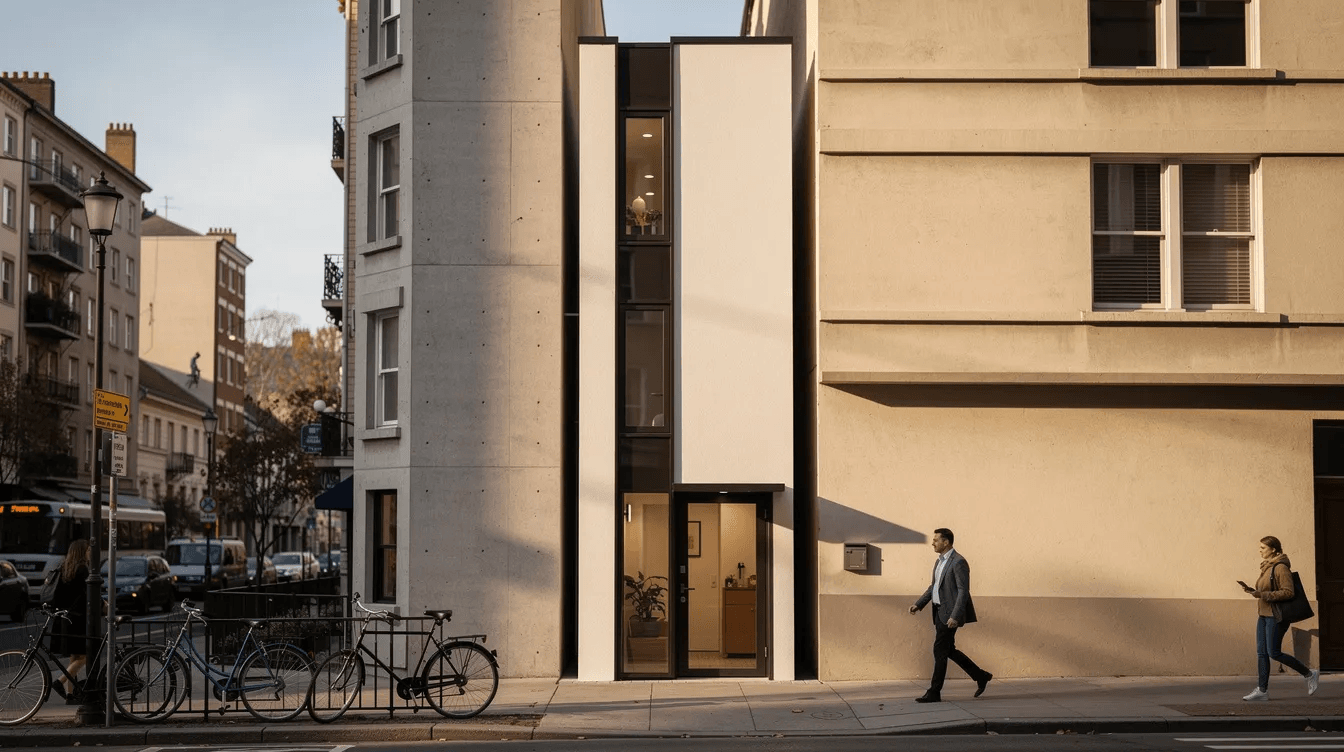
In Toshima ward, a skinny house spans just 1.8 meters wide with a 12-meter depth—a classic “flag lot” configuration. The design team decided to use floor-to-ceiling windows on the street facade and clerestory glazing above the interior staircase to pull natural light deep inside.
The ground floor holds entrance storage and bicycle parking. In some similar Tokyo homes, a basement or semi-underground level is used as a functional domestic space, integrated into the overall architectural design to maximize utility in a compact, vertically-stacked building.
The first floor features an open kitchen and living area, while the second floor contains a compact bedroom and bathroom. A rooftop deck reaches toward the sky, providing outdoor space. Built-in benches with drawers and under-stair cabinets reduce furniture needs, keeping the interior decluttered. The 1.8-M Width House by YUUA Architects & Associates also features large façade windows that illuminate small spaces and floating floors.
Case Study 2: Tiny Courtyard House Hidden in a Back Alley
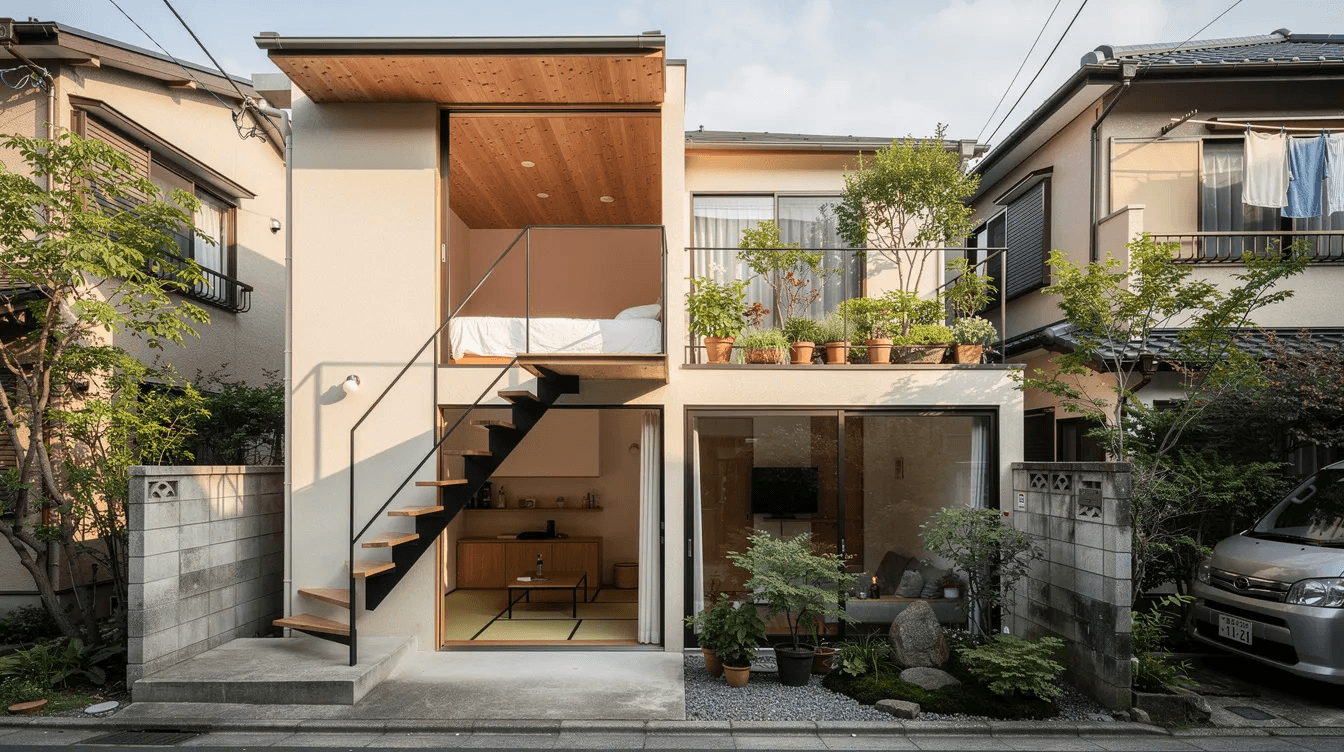
Behind a main road in Setagaya, accessible only by a narrow alley, sits a small house with two carved-out courtyards. Completed around 2015, this home uses interior light wells to meet ventilation requirements while maintaining privacy from neighbors.
A flexible tatami room occupies the ground level for work or reading. The main living space opens to the courtyard through sliding glass doors on the middle floor, integrating the interior with nearby gardens and enhancing both views and natural light. The design thoughtfully responds to its surrounding gardens, allowing the glass facades to frame garden vistas and bring the outdoors in. Notably, the 2 Courts House by Keiji Ashizawa Design includes private courtyards and uses floating stairs to create more room.
Bedrooms and a generous bath lead to a roof garden at the top, where the couple grows potted plants and hangs laundry. Unfinished cedar, light plaster walls, and steel stairs create minimal visual clutter while adding warmth.
Case Study 3: Micro Tower on a Tokyo Corner Lot
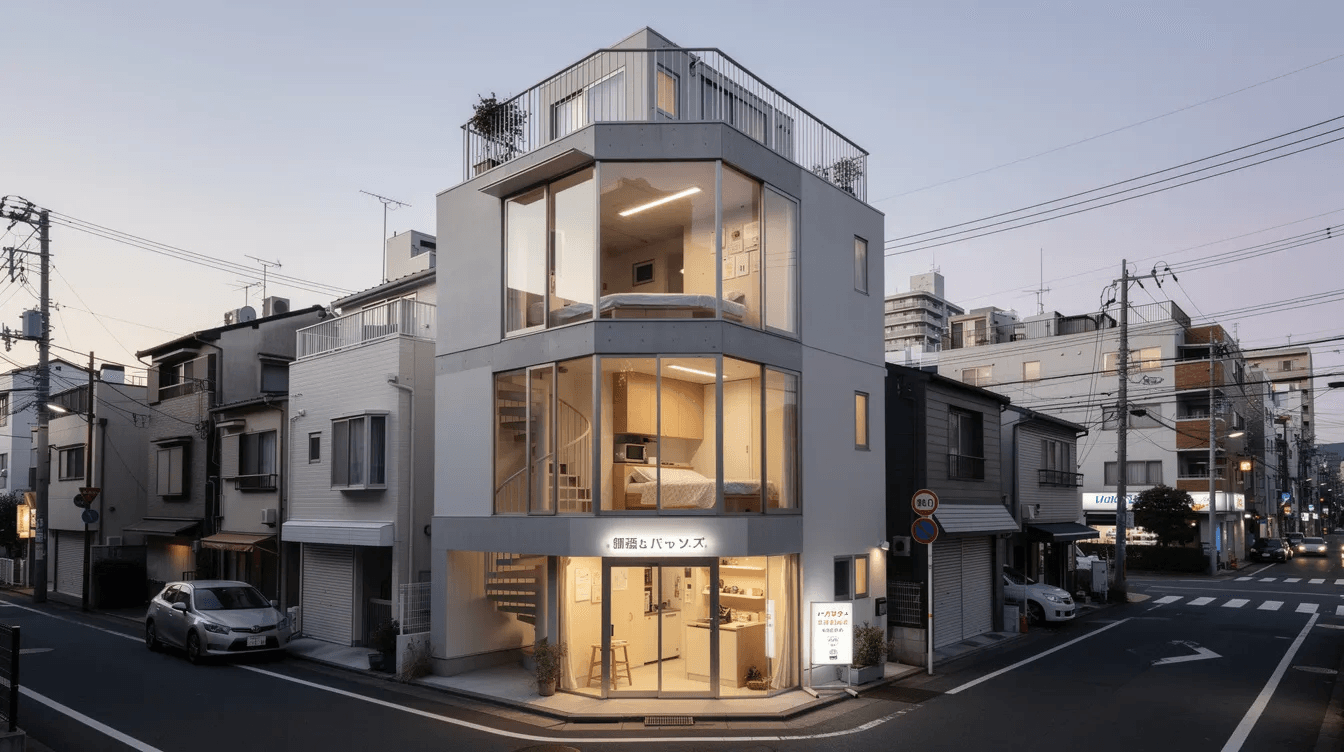
Near a commercial street in Nakano, a south-facing corner lot hosts a five-story micro tower completed in 2021. The building takes advantage of its dual frontage, wrapping glazing on visible sides while solid exterior walls protect privacy toward adjacent structures.
The project stacks a small shop at street level, then a compact kitchen and dining room, sleeping loft, and finally a roof terrace with city views. A spiral staircase connects all levels, freeing each floor from hallway volume. The stepped profile complies with sunlight regulations while creating outdoor terraces on upper levels. The design creates a strong connection between the interior and the outside urban environment, using large windows and terraces to visually and physically link the living spaces with the city beyond, echoing many inspiring tiny house interiors that maximize every square foot.
In Tokyo, the design of homes often involves vertical stacking of spaces to maximize limited land. Features like floating stairs and open ceilings are commonly used to enhance the sense of space in these small homes.
Design Strategies That Make Tiny Tokyo Houses Feel Bigger
The magic of these homes lies not in square meters but in intelligent design, often the result of creative solutions by talented persons—architects and design teams—such as those at PANDA (Person and Architecture) and similar firms. Storage is often ingeniously integrated into stairs, beneath platforms, or custom cabinetry. Features of tiny houses include built-in, foldable, or movable furniture to maximize floor space, aligning with broader ideas about exploring the world of tiny houses and how thoughtful layouts support minimalist living. Four core strategies appear repeatedly across Tokyo’s best small house projects.
Strategy 1: Building Up, Not Out
A 3.6 by 6 meter footprint can yield 70 square meters over four levels when guided by well-considered tiny house plans that fit your life. Each floor handles one function: entry and service, living, sleeping, bathing or terrace. Stairs double as light shafts and air chimneys—architects design railings and voids to keep them visually light despite their central role.
Strategy 2: Light, Views, and Privacy in Dense Neighborhoods
High-level horizontal windows, frosted glass, and interior courtyards admit sunlight without exposing interiors. Views are carefully edited to frame a shrine, patch of sky, or street tree rather than neighboring walls, supporting the same calm, intentional feel found in many minimalist tiny houses for sustainable living. These moves reduce the psychological sense of constriction.
Strategy 3: Flexible, Layered Interiors
Sliding shoji screens and pocket doors let a 12 square meter room flow between functions throughout the day. Split levels and mezzanines create visual depth, echoing many of the best tiny house designs for modern living. Built-in furniture—custom benches, desks, fold-down beds—fits exact footprints, essential when families change composition but plots remain irreplaceable.
Strategy 4: Visual Tricks That Expand Small Spaces
Continuous flooring across levels, white surfaces, exposed ceiling structure, and barrel vaults break the “shoebox” feeling. Aligning windows along sightlines makes interiors feel deeper. Even a tiny bathroom feels larger through full-height tiles and concealed storage, a tactic shared by many of the great tiny homes that redefine small space living.
Living Small in Tokyo: Daily Life, Culture, and Trade-Offs
Young couples, creative professionals, and downsizing elders typically inhabit these homes. For couples, the shared experience—often between a homeowner and his wife—highlights the collaborative and personal connection within the thoughtfully designed space. Residents of tiny homes often treat local parks and stores as extensions of their living space, making the most of their neighborhood. Proximity to train stations provides quick, walkable access to Tokyo’s amenities and public transport—efficient commutes, nearby cafes for socializing, and cultural comfort with compact private rooms. Living in tiny houses also encourages a minimalist lifestyle and decluttering, as space limitations require careful selection of belongings.
Challenges include steep stairs for aging residents, limited room for gatherings, and noise from railways. Post-2020 remote work trends have pushed architects toward adding mezzanine workspaces and study nooks.
Cost, Land, and the Economics of Tiny Tokyo Houses
Central Tokyo land costs millions of yen per square meter. Tiny houses reduce construction volume but require bespoke engineering, raising per-square-meter expenses. For readers outside Japan, kit-based options such as Home Depot tiny house kits can offer a more standardized path into small-space living. Families often buy irregular “leftover” plots near stations, commissioning architects to enter and unlock potential that standard developers overlook.
Lessons from Tokyo for Tiny Houses Around the World
Tokyo’s legal and cultural context is unique, but its tiny houses offer transferable lessons: embrace verticality with integrated stairs, design for daily routines, value outdoor fragments like balconies and roof decks, and prioritize built-in storage to create freedom from clutter.
Architects in New York, London, or Hong Kong can check these principles against local codes and adapt accordingly, while prospective residents may work with custom tiny home builders or specialized regional experts like a top tiny house builder in New York to adapt similar ideas to their own context. Tokyo’s example proves that small homes can feel aspirational—not compromised—when thoughtfully designed. The city’s tiny houses serve as laboratories for future urban life, where constraint breeds creativity and every square meter moves toward purpose.