
If owning a log cabin feels out of reach, a rent to own option might be the realistic step forward you haven’t considered yet. Here’s how the process works, what it costs, and how to decide if it’s right for you.
How Rent to Own Log Cabins Work
A rent to own log cabin is a lease-style agreement where fixed monthly payments over a set term build toward cabin ownership. Rent to own agreements for log cabins involve a two-part contract structure: one part covers the lease period, and the other covers the purchase terms at the end. The typical lease period spans 1 to 5 years, though rent to own agreements typically last for five years in many cases.
The basic structure is simple. You pay a small upfront cost (often just first month’s rent plus a deposit), then make fixed monthly payments over 36 to 60 months. Rent to own cabins allow monthly payments toward ownership, and the cabin transfers to you when the final payment is complete. No credit check is required for most rent to own cabin programs, unlike traditional mortgage underwriting. Rent to own agreements allow buyers to live in a cabin while working toward purchasing it from day one.
Most rent to own cabins are delivered as unfinished or partially finished shells, built by shed or portable building companies rather than full custom log home builders. In many U.S. states, this is treated as a rental contract on a portable building, not a mortgage – which is why approval is faster and easier.
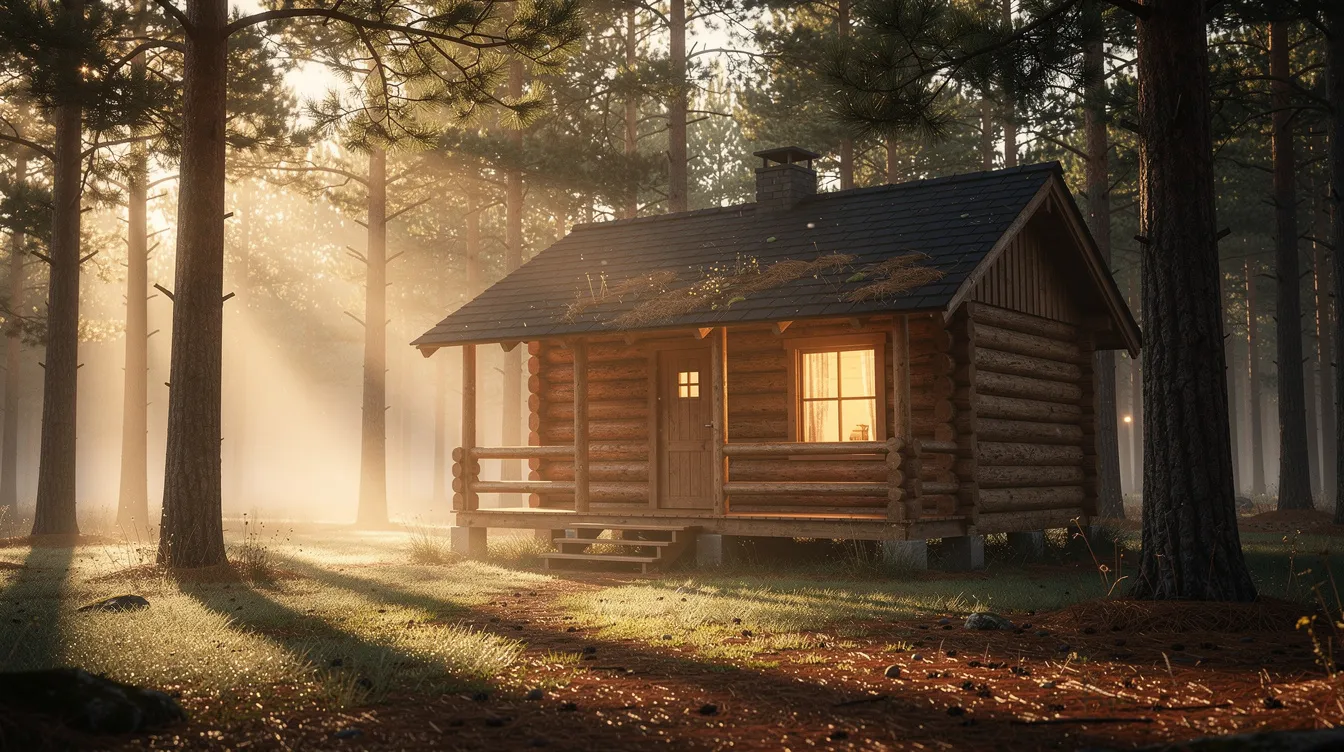
A realistic example: a 12×32 rent to own cabin at around $300–$350 per month over 48 months, with an option to pay off early without penalty. To be eligible, you’ll generally need to be 18 or older, provide proof of identity, set up automatic monthly payments, and have enough space with suitable access for cabin delivery.
Key Benefits and Drawbacks of Rent to Own Cabins
Rent to own log cabins offer flexibility and accessibility, but they’re often more expensive over time than paying cash or securing a standard loan. Understanding both sides helps you discover whether this path fits your life.
Pros. The low upfront cost is the biggest draw – often just first month’s rent plus a small security deposit. Approval is fast, and most providers skip the hard credit check entirely, so past credit issues or medical bills from recent years might not prevent approval. You get immediate use of the cozy cabin as storage, workspace, or a future getaway cabin. Rent credits accumulate in some agreements, contributing toward the purchase price. Buyers can potentially lock in the purchase price, protecting against future cost increases. A lease-option agreement allows buyers to walk away at the end of the term without foreclosure on their record. Rent to own agreements can also provide buyers time to improve finances before securing a mortgage, making it a perfect solution for people rebuilding credit.
Cons. Buyers might pay higher monthly rates compared to traditional rentals. A cabin that costs $14,000 in cash might total $17,000–$19,000 through a 5-year rent to own term. Financing a log cabin is often more challenging due to fewer comparable sales for appraisal, which is partly why rent to own exists. There are often strict modification limits in rent to own agreements regarding the property. Maintenance responsibilities can be more extensive than traditional rentals – log cabins require specialized maintenance to prevent issues like rot and pest infestation. If property values decline, buyers may end up overpaying. If payments stop, you risk losing the cabin and every payment you’ve made.
If you have good credit and stable income, compare rent to own with a personal loan or home equity line before signing. The interest savings could be worth thousands.
Popular Rent to Own Log Cabin Types, Sizes, and Styles
Most rent to own cabins are factory-built log cabin shells, delivered fully assembled as a single-wide or in two sections as a double-wide. They’re designed to be finished over time – adding interior touches, insulation, and materials as your budget allows. Unlike a dream log home from companies like Southland, which offers the largest variety of customizable log home floor plans, or Gastineau Log Homes, which provides limitless design and material options, rent to own cabins focus on simple, transportable layouts. Log cabin kits can be tailored to fit individual land requirements, but rent to own shells prioritize affordability over full customization.
Single-wide cabins are the most common rent to own option, typically 10–14 feet wide and 20–40 feet long. A 14×32 single-wide works well as a hunting cabin, weekend log cabin near a lake, or a home office with enough space to work comfortably. Double-wide cabins provide twice the living space of single-wides by joining two sections (e.g., 24×36 or 28×40), creating a layout closer to a small log home – better for longer stays or small families. Double-wide cabins cost approximately twice as much as single-wides.
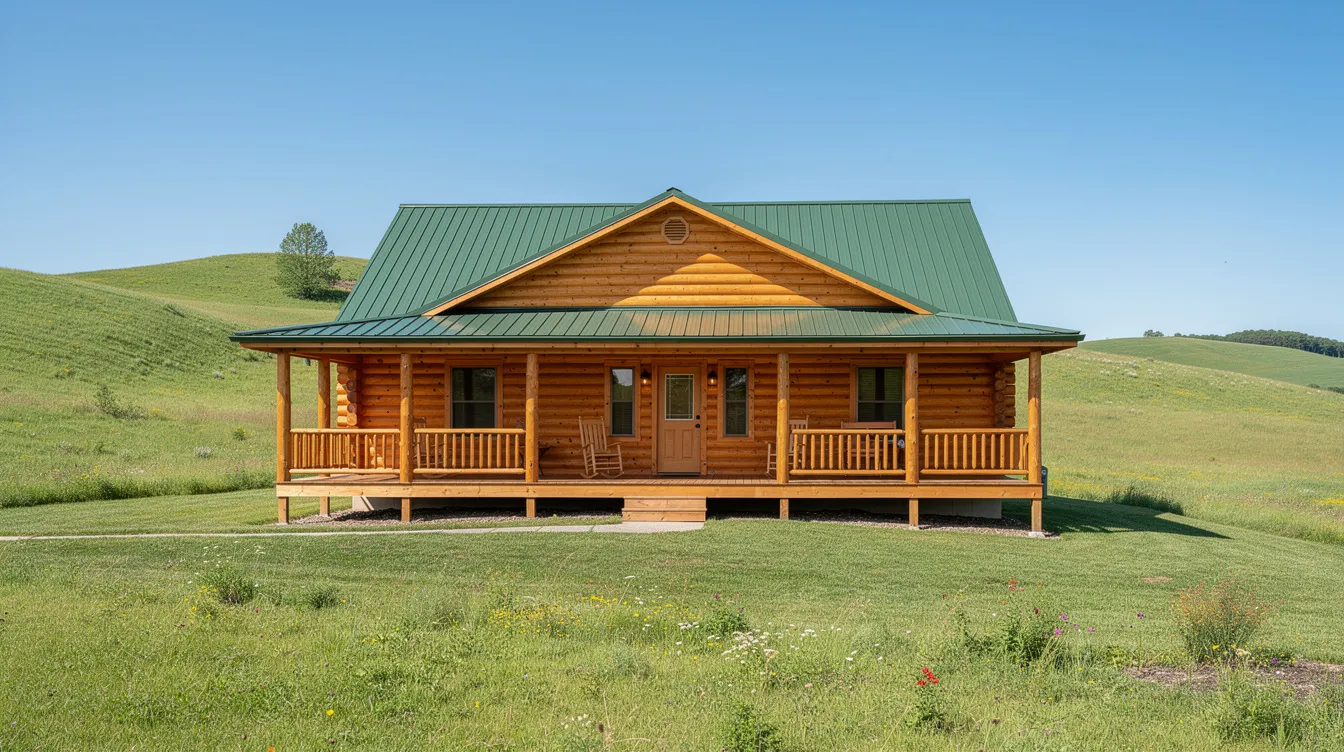
Ranch cabins are the most popular rent to own style – economical and attractive for buyers who want the classic log cabin look with a simple gable roof. High Barn cabins offer the most interior space with a loft, thanks to the gambrel roof that creates extra headroom and storage; barn style cabins usually cost about $1,000 more than ranch style. Rustic porch cabins add a full or partial front porch for outdoor seating, though adding a porch can increase costs by $1,300 to $1,700. Cabin size increases costs by approximately $500–$1,000 per size step. Upgrading to architectural shingles raises costs by $900–$1,000. Cabin styles can be customized to include porches and lofts, and customizations can include extra windows, doors, and vents, or you might compare them with pre-built log home options if you prefer something closer to a complete cabin. Exteriors may be full log, log-sided, or “log-look” siding – each with different durability and maintenance trade-offs.
Picture a 12×28 ranch-style rent to own cabin used as a fishing cabin near an Illinois river, with minimal finishes and a screen door that you could gradually upgrade using cozy log cabin interior ideas. Or a 14×36 high-barn cabin in rural Texas turned into a home office with loft storage and a sizable porch – inspiration for anyone looking to create a functional space on open land.
What a Typical Rent to Own Cabin Agreement Looks Like
Every builder’s contract is different, but most rent to own cabin agreements in the U.S. Midwest and South follow a similar pattern. It is crucial to review the contract thoroughly before signing, and having a real estate attorney review the rent to own agreement is highly recommended. Professional inspections before signing are essential for log cabins due to potential hidden issues.
Typical terms run 24, 36, 48, or 60 months. Shorter plans mean higher monthly payments but lower overall cost at the end; longer terms keep monthly rent lower but add up to more money over the life of the agreement. Upfront, expect to pay a refundable or non-refundable security deposit, first month’s rent, and possibly a small delivery fee depending on distance. An upfront option fee grants the right to purchase the cabin, typically ranging from 1% to 7% of the home price, which you can compare with the lower buy-in needed for tiny homes that redefine small space living.
Payments are fixed each month, credited toward the purchase price, and usually collected via automatic bank draft or card payment. Many contracts let you pay off the remaining balance early – a key source of flexibility. A lease-purchase agreement obligates buyers to purchase the cabin at the end of the term, while a lease-option simply gives you the right. Understanding which type you’re signing is critical.
When you start the approval process online, you may encounter a page performing security verification before the provider’s website displayed shows pricing and plans. This security service is designed to protect against malicious bots and verifies your session is legitimate – once verification successful, you’ll typically see a respond ray id confirming the bot test passed. The actual application is straightforward: basic ID check, sometimes employment or income verification, but no traditional mortgage underwriting.
Common restrictions: you must keep the cabin insured, place it on a level and accessible site, and cannot move it to a new property without written permission until it’s fully paid off. You can return the cabin at any time in good condition, but payments made are treated as rent, not refunded equity.
Is a Rent to Own Log Cabin Right for You?
The best choice depends on your credit history, savings, timeline, and how the cabin will be used – whether as a weekend retreat, storage building, home office, or stepping stone toward a dream log cabin on your own land, or even as an alternative to tiny house kits from big-box retailers if you decide a different small-structure path fits better.
If you have limited savings or imperfect credit from recent years, rent to own can be a realistic path when bank financing or a construction loan isn’t available. It makes sense when you’re testing a property before committing to a permanent log home, need fast extra space on rural land, or want to create a starter cabin you can finish gradually on evenings and weekends – the kind of freedom that traditional lending simply doesn’t offer, similar to how ranch tiny house designs give you flexible, compact retreat options.
Rent to own may not be ideal if you already qualify for a low-interest loan, plan to buy a highly customized dream log home from the start, or expect to live full-time in the cabin right away. You might find that options like modern chalet tiny house models or other small homes fit your goals better. Compare three numbers: total rent to own cost, cash purchase price, and the cost of financing the same amount with a personal loan. That side-by-side comparison will tell you everything.
Before you commit, check your budget, verify local zoning rules for cabins and portable buildings on your land, confirm delivery truck access, and think forward about your long-term plans for the property. Decide whether your ideal escape looks more like an off-grid cabin, one of the best eco yurt designs for sustainable living, or even a tiny structure in the mountains similar to curated mountain tiny house getaways. A rent to own cabin won’t always be the cheapest path to owning a log home, but for many buyers standing at the starting line with questions about credit and ready cash, it’s the most realistic one. Learn what you can, trust the numbers, and choose the path that fits your lifestyle – whether that means a finished cabin with space-maximizing tiny house interiors or one of the many tiny house nature retreats that prioritize time outdoors – your cozy getaway could be waiting just one step away.