
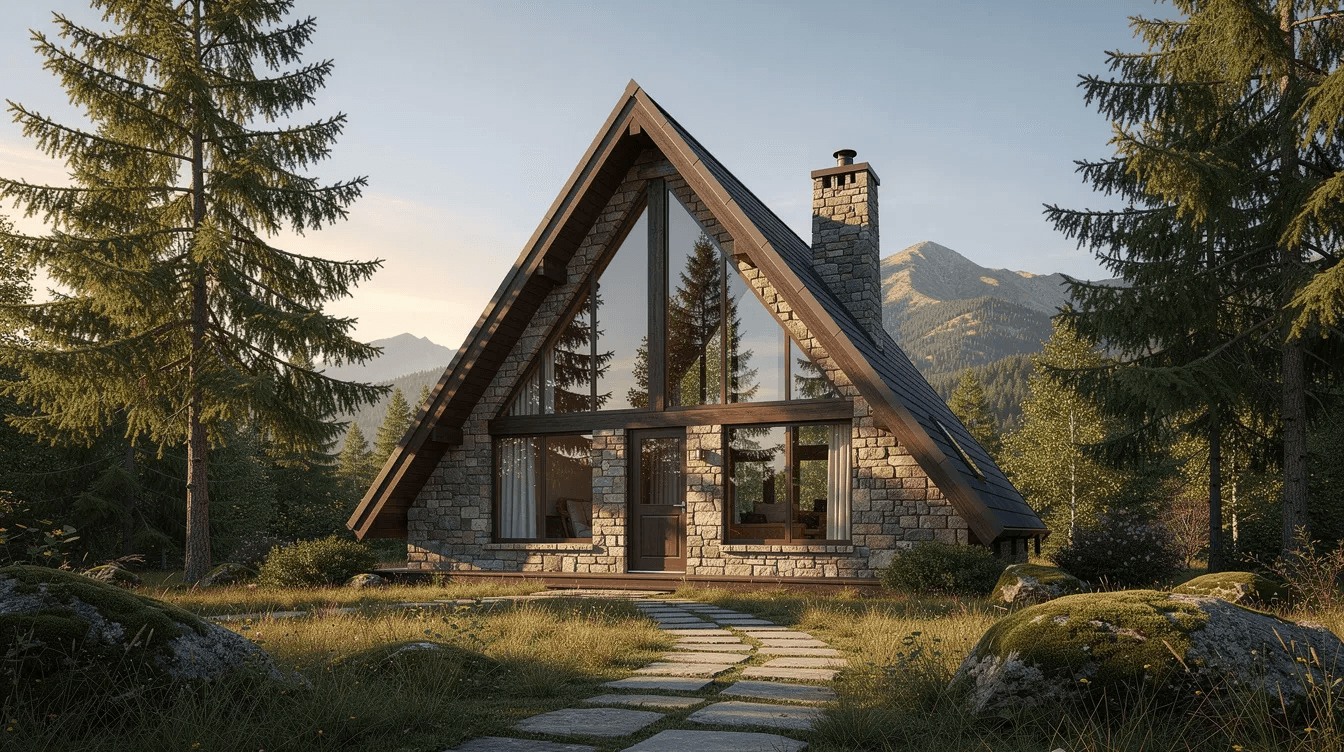
A stone a frame house combines the timeless appeal of natural stone with the iconic triangular silhouette of A-frame architecture. This article covers everything prospective home builders, renovators, and design enthusiasts need to know about stone A-frame houses—including their design, features, durability, maintenance, energy efficiency, construction complexity, cost, and sources of inspiration.
An A-frame house is characterized by its steeply pitched roofs and triangular shape. Stone A-frame houses often feature natural materials like stone and wood on their exteriors, blending seamlessly into forest, lakefront, or mountain settings. These homes are especially relevant for those seeking a durable, low-maintenance, and visually striking retreat that performs well in challenging climates. Whether you’re dreaming of a compact weekend cabin or a spacious family getaway, this guide will help you understand the unique benefits and considerations of building or renovating a stone A-frame house.
With this foundation, let’s dive into the key features that define a stone A-frame house.
- Key Features of a Stone A-Frame House
- Design Styles: From Rustic Cabin to Modern Retreat
- Interior Layouts and Atmosphere
- Exterior Concepts: Stone, Rooflines, and Outdoor Spaces
- Durability, Maintenance, Energy Efficiency, Construction Complexity, and Cost
- Finding Plans and Inspiration for Your Stone A-Frame
Key Features of a Stone A-Frame House
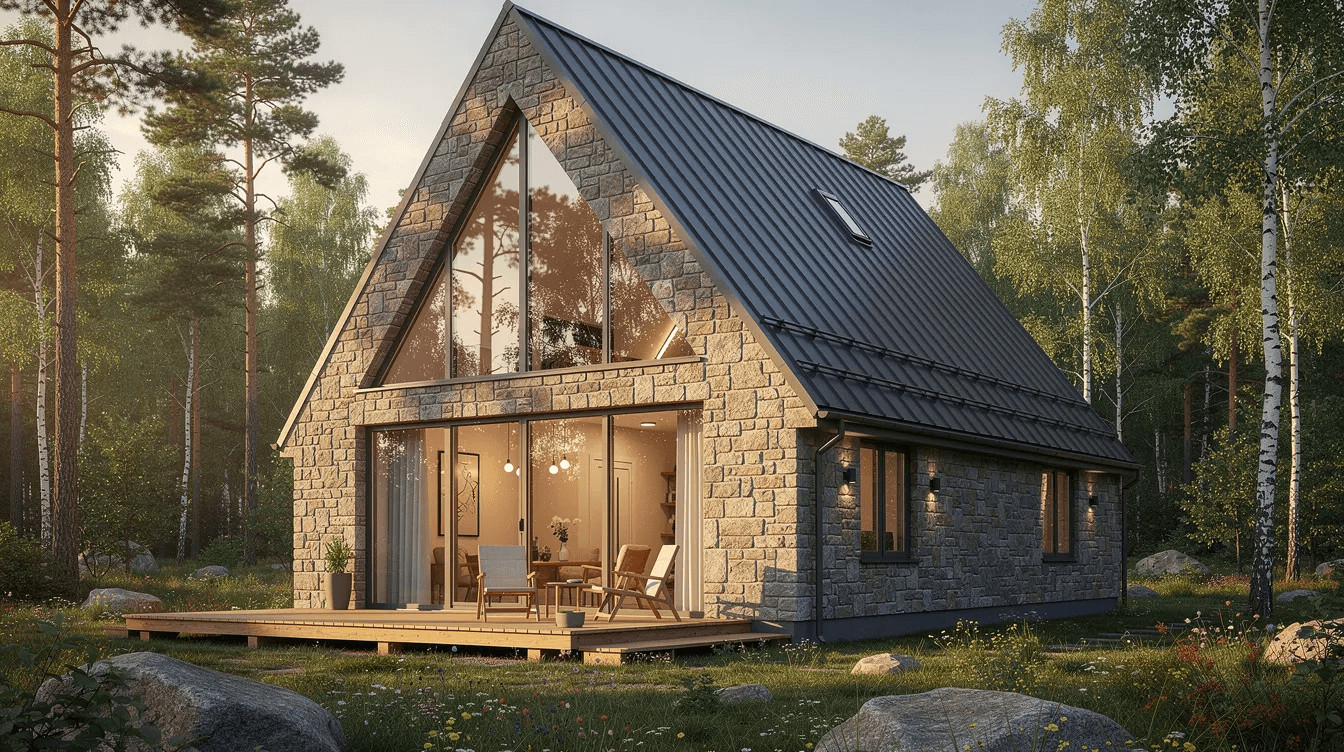
Roof Geometry
The signature A-frame geometry features steep 45–60° rooflines forming the primary façade, with minimal vertical walls at ground level where stone integrates naturally. This triangular silhouette relies on open rafters tied at the ridge, eliminating internal load-bearing walls for expansive interior layouts.
Stone Applications
Common stone applications in a stone a frame house include:
- Full-height end walls
- Bases rising to window-sill height
- Externally expressed chimneys
- Foundation cladding
The combination of steep roofs and stone bases offers structural advantages:
- Steep roofs shed snow efficiently, ideal for cold climates (the 60-degree angle allows heavy snow to slide off efficiently).
- Stone bases protect timber from moisture splashback.
- Stone, particularly when used in a solid mass wall, is incredibly durable and fire-resistant.
Interior Atmosphere
Inside, vaulted ceilings with exposed beams and a central stone fireplace create a modern a frame house atmosphere rather than a dark cottage feel. Floor-to-ceiling glazing on gable ends floods interiors with light, enhancing the sense of space and connection to the outdoors.
With these features in mind, let’s explore the range of design styles available.
Design Styles: From Rustic Cabin to Modern Retreat
Rustic Styles
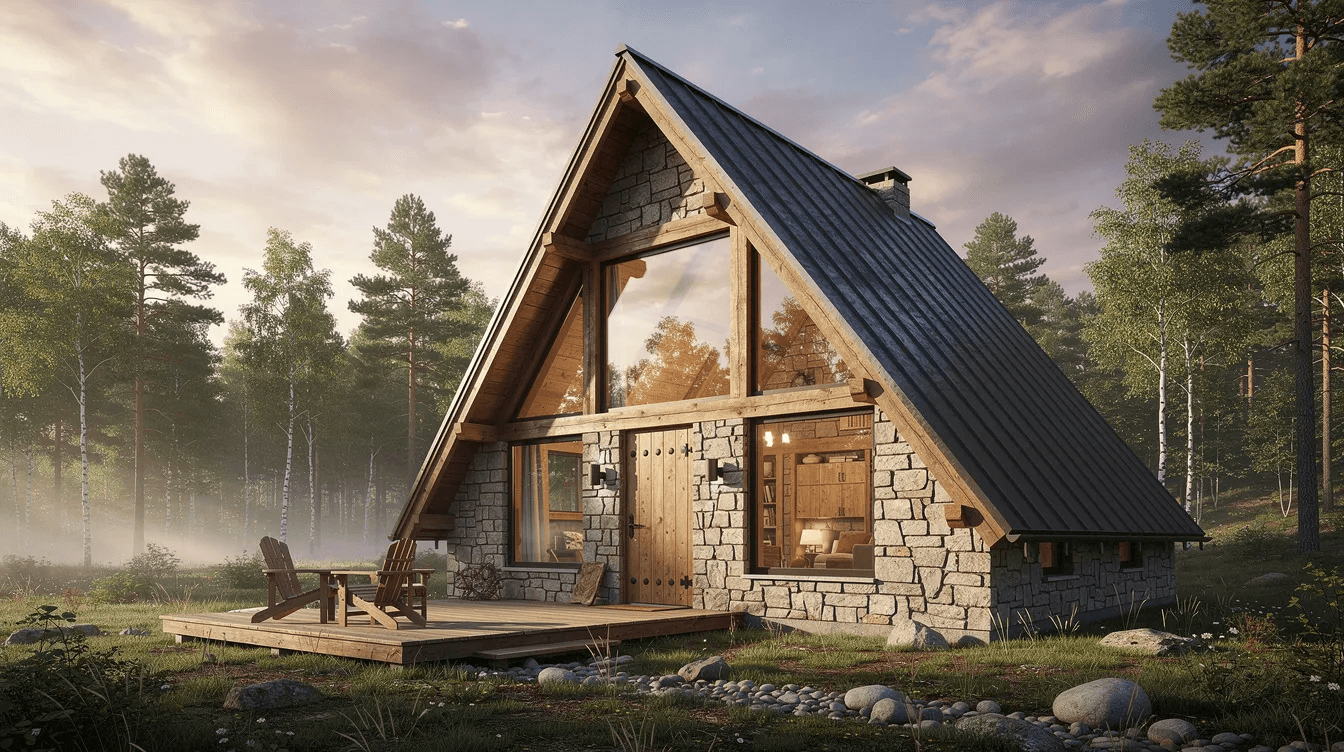
Rustic stone a frame homes evoke 1960s-style frame cabin aesthetics, similar to many of the top A-frame cabin getaways, featuring:
- Rough fieldstone
- Dark-stained timber
- Smaller windows
These are ideal for deep forest plots in Vermont or the Alps, much like compact chalet tiny house models for modern living that balance rustic charm with efficiency.
Modern and Scandinavian Styles
Modern minimalist versions offer:
- Honed limestone
- Black-framed glazing
- Standing-seam roofs
- Clean interior lines
Hybrid Scandinavian styles optimize small footprints with:
- Whitewashed boards
- Pale stone fireplaces
These are perfect for 700–1,100 sq ft builds and share many space-saving principles with crafting your dream Amish tiny house, where compact footprints and efficient layouts are essential.
No matter your style preference, the interior layout plays a crucial role in the overall atmosphere and functionality of your stone A-frame house.
Interior Layouts and Atmosphere
Open-Plan Living
Typical a frame house plans feature open-plan main levels with kitchen, dining, and living under shared vaulted space, plus loft mezzanines above—layouts that pair well with cozy log cabin interior design ideas focused on warmth and rustic comfort.
Stone Features
Stone appears as:
- Full-height fireplaces
- Feature walls
- Hearth benches
- Mudroom flooring
Cozy and Spacious Zones
- Central zones accommodate dramatic height.
- Lower eaves become cozy nooks.
- Expect 600–900 sq ft for simple cabins or 1,500–2,200 sq ft for family frame homes with multiple bedrooms.
With the interior atmosphere set, let’s move outside to see how stone A-frame houses make a statement with their exterior concepts.
Exterior Concepts: Stone, Rooflines, and Outdoor Spaces
Material Options
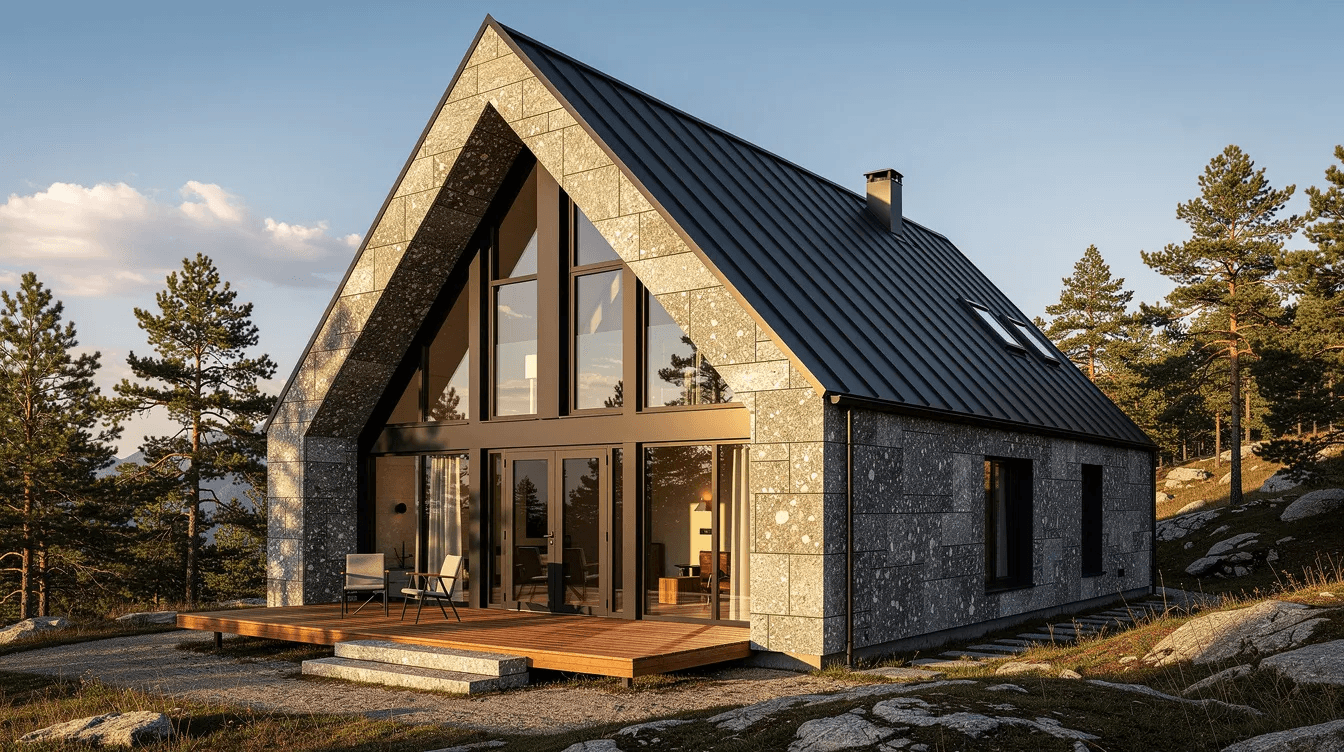
Material options for stone a frame house exteriors include:
- Granite
- Basalt
- Manufactured veneer (in gray or warm brown tones)
- Cedar or spruce for timber accents
Roofing Choices
- Dark metal roofs work best for snowy regions.
- Extended eaves visually meet stone walls, enhancing protection and style.
Outdoor Living Spaces
Outdoor living expands through:
- Stone terraces
- Decks projecting from gable ends
- Integrated firepits that tie the structure to sloped landscapes
Now that you have a sense of both the interior and exterior possibilities, let’s address the practical considerations that come with building and maintaining a stone A-frame house.
Durability, Maintenance, Energy Efficiency, Construction Complexity, and Cost
Durability and Maintenance
- Stone, especially in solid mass walls, is incredibly durable and fire-resistant.
- A stone exterior typically requires very little upkeep, only needing periodic cleaning or repointing of mortar joints every 10–15 years.
Energy Efficiency
- A-frame houses are highly energy efficient because their triangular shape reduces heat loss and improves insulation.
- Energy efficiency in a stone A-frame depends on added insulation and specialized sealing due to the unique geometry of the structure.
Construction Complexity
- The geometry of an A-frame can require precise angled cuts for construction, making it complex for builders.
- Construction of a stone A-frame house typically involves building a reinforced concrete pier foundation and covering it with durable materials like stone veneer and metal roofing.
Cost Breakdown
Item | Cost Range (per sq ft) |
|---|---|
Stone Materials | $25 – $90 |
Labor | $15 – $35 |
Stone Veneer (vs. masonry) | $15 – $30 |
Full Masonry | $40 – $80 |
- Using local stone can reduce costs.
- Stone veneers instead of solid stone can decrease both material and labor expenses.
- Building with stone is expensive, with materials and labor adding 20–40% over standard timber cladding.
Climate Performance
- Modern A-frame design offers strong structural stability, making these homes ideal for snowy, rainy, or windy climates.
- The 60-degree angle of an A-frame roof is ideal for cold climates, allowing heavy snow to slide off efficiently.
- A-frame houses are designed to shed heavy loads of snow due to their steeply pitched roofs.
With these practical considerations in mind, you’re ready to start planning your own stone A-frame house.
Finding Plans and Inspiration for Your Stone A-Frame
Where to Look
- Search architectural catalogs for a frame house plans featuring strong gable walls, exterior chimneys, and robust foundations suited for stone.
- Pinterest boards and Instagram hashtags showcase completed projects from Norway to British Columbia.
Working with Professionals
- Work with local architects to adapt plans for regional stone types and codes—whether Rocky Mountain snow loads or Pacific Northwest conditions.
- Define your size, style preference, and budget before commissioning drawings to bring your stone a frame house from outdoors inspiration to reality.
With the right planning and inspiration, your dream stone A-frame house can become a reality—combining durability, beauty, and modern comfort in one iconic package.