This article is for couples, DIY enthusiasts, and anyone interested in building a timber framed tiny house. If you’re considering embarking on a similar journey, you’ll find inspiration, practical advice, and real-world insights here. We’ll cover the journey of a newlywed couple, the construction process, design choices, and the benefits of timber framing. From the first spark of inspiration to the final touches on a handcrafted home, this guide will help you understand what it takes to build a timber framed tiny house from scratch.
- Introduction to Tiny Homes
- Timber Frame Tiny Homes: A Popular Choice
- The Newlywed Couple’s Story
- The Challenges and Rewards of Building as a Newlywed Couple
- Overcoming Prior Building Experience Limitations
- Timber Frame Construction
- Designing a Timber Frame Tiny House
- Customizing a Tiny House
- Building a Small Timber Frame Home
- Ethically-Sourced Materials
- The Benefits of Timber Framing
- Tiny Timbers and Sustainable Living
- Conclusion
Introduction to Tiny Homes
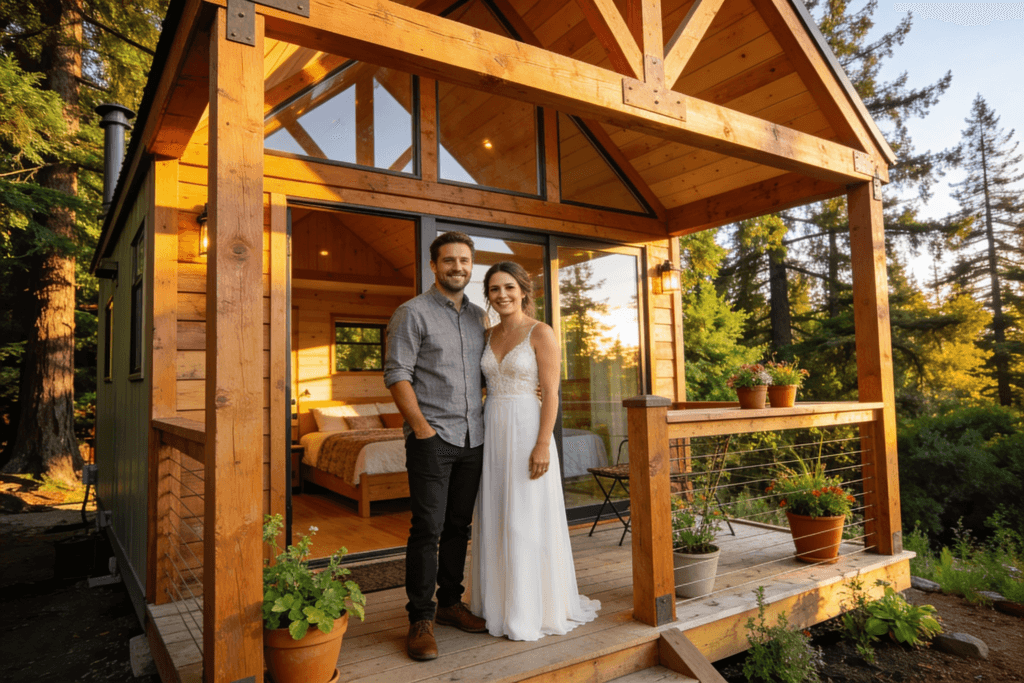
Tiny homes, like the timber framed tiny house built by the newlywed couple Edwin and Clara, have captured the imagination of people seeking a simpler, more intentional lifestyle. The tiny house movement is rooted in the idea of living with less—focusing on tiny house basics such as efficiency, sustainability, and financial freedom. For many, tiny home living is about more than just downsizing; it’s about creating a life that prioritizes experiences, relationships, and connection to the environment over material possessions. Whether you’re a newlywed couple starting your journey together or someone looking to embrace a new way of life, a tiny house offers the chance to live more fully with less. This lifestyle shift allows homeowners to reduce their ecological footprint, save money, and enjoy the freedom that comes with a smaller, more manageable space. Tiny homes are not just a trend—they represent a thoughtful approach to life and housing that continues to inspire people around the world.
Transitioning from the general appeal of tiny homes, let’s take a closer look at why timber frame construction has become a favorite among tiny house enthusiasts.
Timber Frame Tiny Homes: A Popular Choice
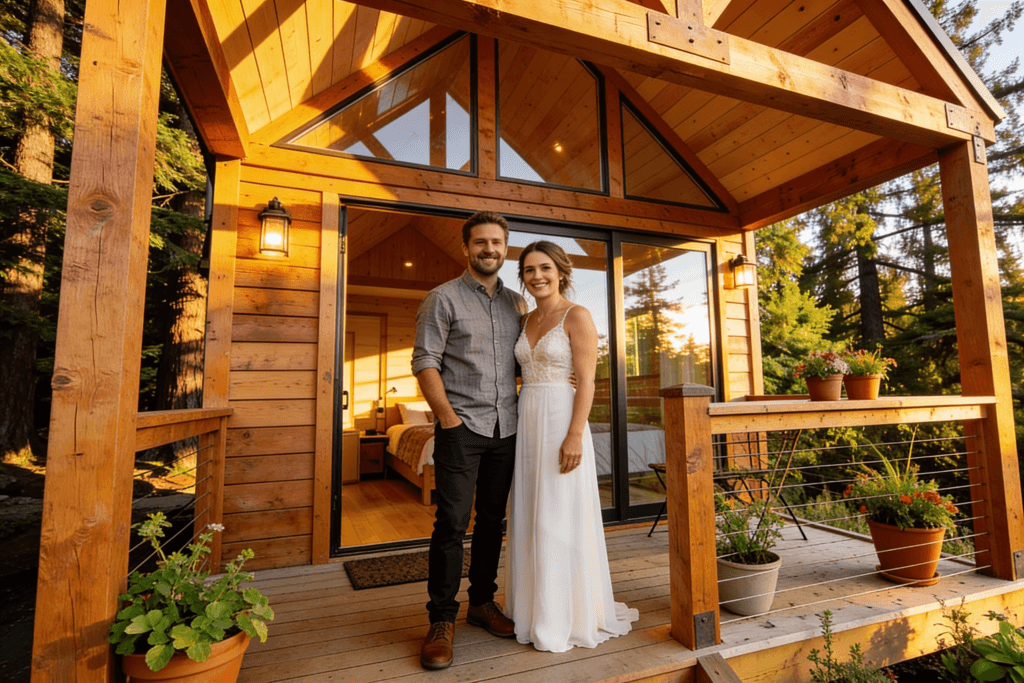
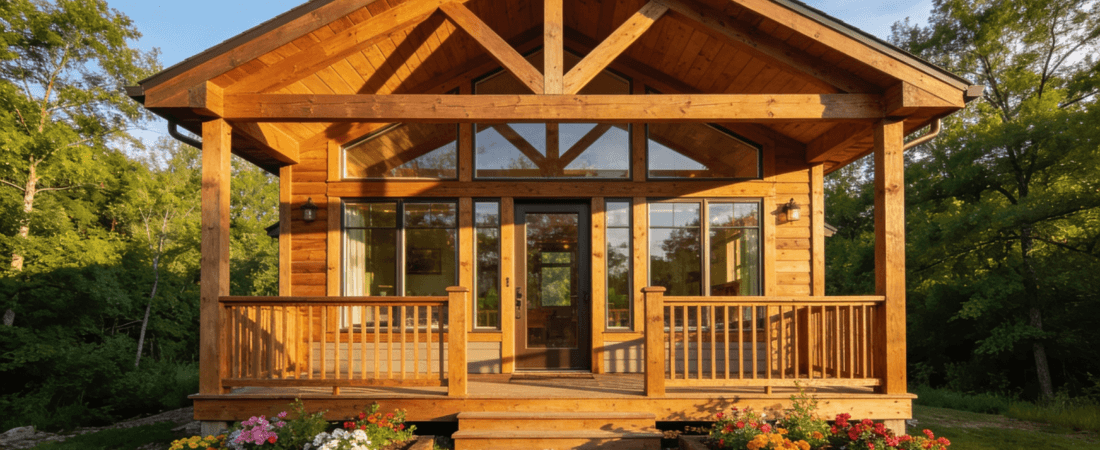
Small timber frame homes have emerged as a popular choice among tiny home enthusiasts. Combining traditional craftsmanship with modern needs, these homes are constructed using large, sturdy timbers that create both a durable structure and an inviting aesthetic. The natural wood accents and exposed beams lend warmth and character, making timber framed tiny homes perfect for those who appreciate quality materials and sustainable living. Attention to details in craftsmanship is crucial for ensuring the quality and durability of these unique homes.
- Definition: Small timber frame homes are typically single story homes with less than one thousand square feet.
- Aesthetic Appeal: Exposed beams and natural wood create a warm, inviting atmosphere.
- Durability: Timber frame construction techniques include mortise and tenon joints, which are known for their durability and aesthetic appeal.
Now, let’s meet the newlywed couple whose story brings these concepts to life.
The Newlywed Couple’s Story
Early Inspiration
Edwin and Clara, a newlywed couple from Northern California, embarked on an inspiring journey to build their own timber framed tiny house from scratch. Neither had prior building experience, but their shared dream of living simply and sustainably fueled their determination. The seeds for their project were planted in 2015, when they began questioning societal norms and their life goals. Living in San Diego at the time, Edwin was pursuing an Environmental Engineering degree at UCSD, and Clara was studying Natural Sciences at a community college. Both realized that the traditional route of education followed by a lifetime of debt and work wasn’t the life they wanted.
Facing Challenges
Their tiny house build began in June 2018. At the beginning of their journey, Edwin and Clara spent months gathering inspiration, planning their design, and researching the best ways to create a livable, family-friendly space. The support of friends and family played a crucial role, offering encouragement and celebrating milestones together. The couple chose to build their tiny home nestled in the woods of Northern California, surrounded by towering trees and scenic views.
Milestones and Progress
Over the three-year process, Edwin and Clara faced many ups and downs, including significant costs for tools and materials, and sacrificing weekends and social time with friends to keep the project moving forward. In May of 2019, they celebrated their wedding, which gave them a renewed push to advance their project. They moved their tiny home onto their own property at the beginning of 2020. Since moving in, Edwin and Clara have been making constant improvements to their tiny home, continuing to create a welcoming space for family and friends.
Their journey from inspiration to construction is a testament to what can be achieved with determination and teamwork. Next, we’ll explore how they overcame the challenge of limited building experience.
The Challenges and Rewards of Building as a Newlywed Couple
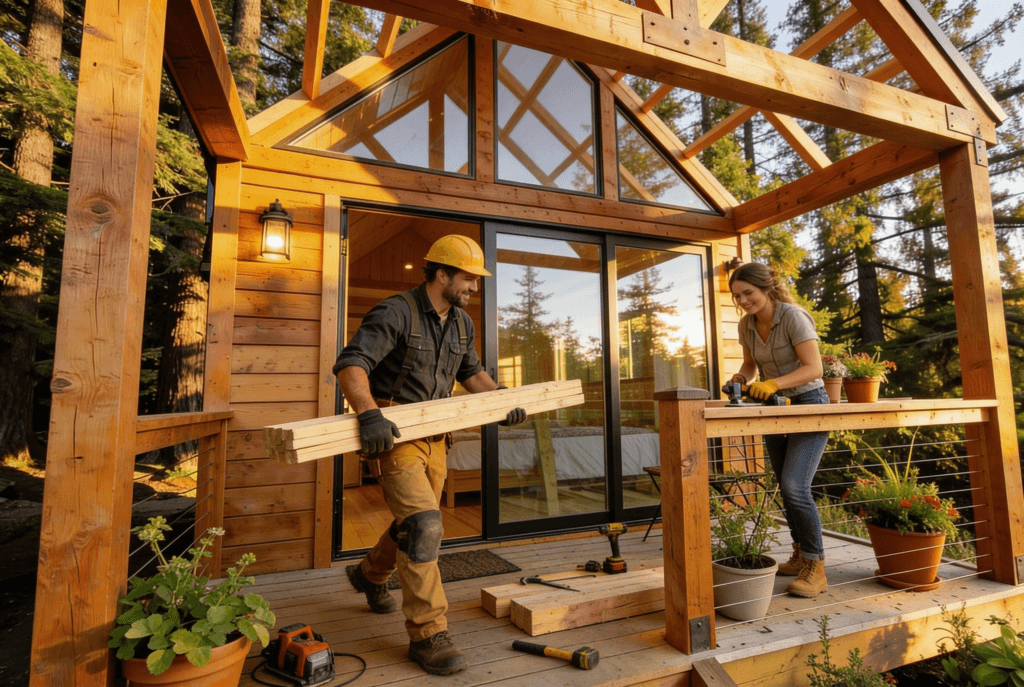
Building a timber-framed tiny house as a newlywed couple is a labor-intensive, multi-year journey that results in a deeply personalized home. The process often requires:
- Long Working Days: Expect to spend countless hours on construction, often leading to sacrifices in leisure time and social life.
- Financial Commitment: Couples may face significant costs for tools and materials, making budgeting and resourcefulness essential.
- Sacrifices in Social Life: Many weekends and social gatherings are set aside to keep the project moving forward.
- Strengthening the Bond: Working toward a shared goal during the construction process can strengthen a couple’s bond through shared dedication, communication, and problem-solving.
- Living in an Art Piece: The unique timber frame style creates a home that feels like a work of art, offering a sense of pride and accomplishment every day.
Despite the challenges, the rewards are profound. Couples often find that the experience brings them closer together, and the finished home is a reflection of their hard work, creativity, and shared vision.
With these challenges and rewards in mind, let’s look at how Edwin and Clara overcame their lack of building experience.
Overcoming Prior Building Experience Limitations
Most DIYers of timber-framed homes start with little to no prior building experience, leading to a steep learning curve. Edwin and Clara, a newlywed couple, faced this very challenge when they set out to create their dream home. With only a basic understanding of construction, they relied on their determination, willingness to learn, and the invaluable support of their friend Paul, who brought expertise in timber framing and woodworking to the project.
- Learning Curve: They knew very little about building before starting their tiny house project.
- Skill Development: The building process often begins with sourcing and milling timber, which can include cutting trees and reclaiming wood.
- Specialized Knowledge: Timber framing requires specialized knowledge to manage wood movement and prevent structural failure due to moisture.
Through hard work, countless hours of research, and hands-on practice, they transformed their initial idea into a beautiful, functional timber framed tiny home. Their journey is a testament to the power of perseverance and teamwork, showing that even without a background in building, it’s possible to create something extraordinary.
Next, let’s dive into the details of timber frame construction and what makes it so special.
Timber Frame Construction
What is Timber Frame Construction?
Timber frame construction is a centuries-old building method that emphasizes the use of large, carefully crafted wooden beams joined together with traditional mortise and tenon joints. Mortise and tenon joints are a woodworking technique where a projecting tenon (a tongue) fits snugly into a mortise (a cavity) to create a strong, seamless connection. This technique highlights natural materials and skilled craftsmanship, resulting in structures that are both beautiful and long-lasting.
- Durability: Mortise and tenon joints are known for their durability and aesthetic appeal.
- Home Size: Small timber frame homes are typically single story homes with less than one thousand square feet.
The Building Process
For Edwin and Clara’s tiny home, timber framing was the perfect choice. They milled their own wood from local trees, cutting and shaping beams to construct the frame themselves. This hands-on process was labor-intensive and required learning new skills such as felling trees, operating a drill, and mastering carpentry techniques. The collaborative effort of the team, including friends and family who assisted, was essential to the success of the build.
- Step 1: Sourcing and milling local wood.
- Step 2: Cutting and shaping beams for the frame.
- Step 3: Assembling the frame using mortise and tenon joints.
- Step 4: Installing Structural Insulated Panels (SIPs) for energy efficiency.
- Step 5: Completing interior finishes and ongoing improvements.
Despite the physical demands and the time commitment, the couple found the experience deeply rewarding.
The timber frame provides a sturdy skeleton for the home, with exposed beams that add character and warmth. High ceilings and large windows flood the interior with natural light, creating an open and airy atmosphere that belies the home’s compact dimensions.
With the construction process in mind, let’s look at the unique design choices that make a timber frame tiny house both functional and beautiful.
Designing a Timber Frame Tiny House
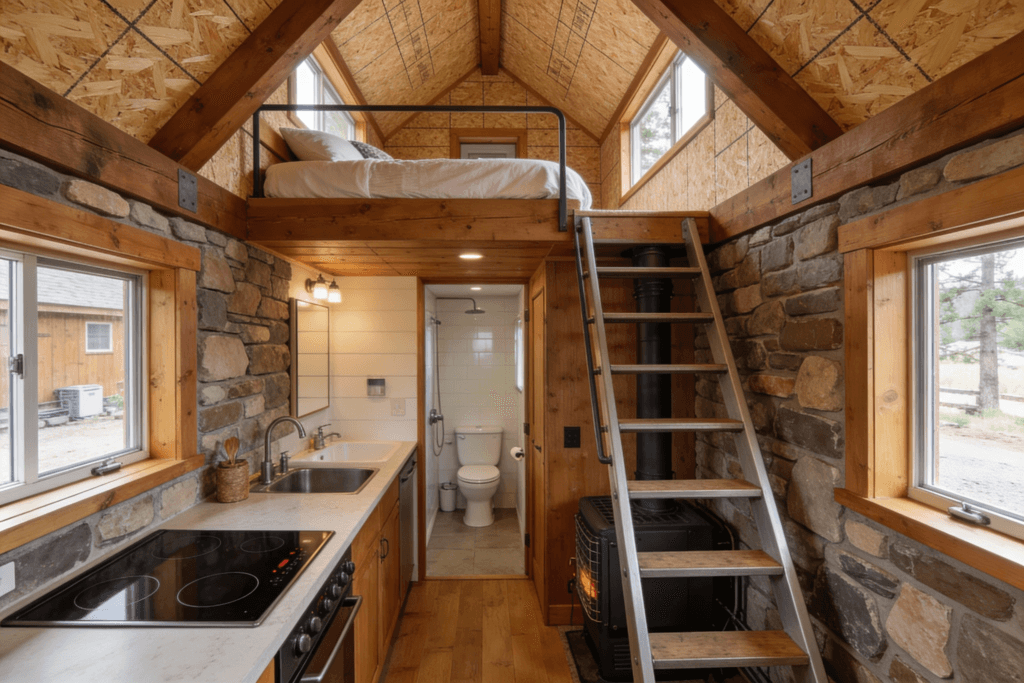
Designing a timber frame tiny house requires a careful balance between maximizing space and maintaining comfort and functionality. Edwin and Clara’s design features a master loft accessible by a ladder leading to the sleeping area, where a space-saving bed optimizes the room layout and creates a cozy, efficient environment.
Key Design Features:
- Master loft with ladder access and space-saving bed
- Compact living area and kitchen with induction cooktop
- Small bathroom with efficient layout
- Natural materials such as wood and stone for warmth
- Energy-efficient SIPs in walls and roof
- Heating and cooling solutions for off-grid living
Small timber frame homes are typically single story homes with less than one thousand square feet, and can serve as guest suites, weekend cabins, or beachfront cottages. The Micro Burke model features a covered porch and tall windows for natural light, while the Micro Kirsch offers a roomier kitchen and dining area.
The couple also incorporated practical elements like energy-efficient Structural Insulated Panels (SIPs) within the walls and roof to ensure comfort throughout the seasons. Heating and cooling solutions were carefully considered to maintain energy efficiency while living off-grid. These homes are designed to last for generations with minimal maintenance, ensuring they stand the test of time for the rest of the century and beyond.
With a well-thought-out design, the next step is to customize the tiny house to fit your unique needs and preferences.
Customizing a Tiny House
One of the greatest advantages of building a tiny house is the ability to tailor every detail to your unique needs and lifestyle. Whether you dream of a rustic retreat nestled in the woods or a sleek, modern tiny home on wheels, customization is key.
Customization Options:
- Select the type of wood for the frame
- Design interior spaces to maximize storage and comfort
- Add a master loft or optimize for single-level living
- Incorporate eco-friendly features and finishes
- Choose layouts and materials that reflect your style
Tiny Timbers specializes in creating tiny homes that reflect the individuality of their owners, offering a range of options for layout, materials, and finishes. By working closely with builders like Tiny Timbers, you can ensure your tiny house is not only functional but also a perfect fit for your lifestyle and dreams.
Once you have a vision for your customized home, it’s time to begin the building process.
Building a Small Timber Frame Home
Getting Started
Building a small timber frame home like Edwin and Clara’s is a journey that demands dedication, patience, and a willingness to learn. The process typically includes:
- Step 1: Building the foundation on a trailer for mobility and flexibility.
- Step 2: Sourcing and milling your own wood, connecting deeply with the materials and environment.
- Step 3: Assembling the timber frame and installing SIPs for energy efficiency.
- Step 4: Completing interior finishes and ongoing improvements.
Overcoming Obstacles
For most DIYers of timber-framed homes, there is a steep learning curve, as many start with little to no prior building experience. Taking the DIY approach also saves a significant amount of money in labor costs. However, acquiring suitable land is just as important, as finding a legal place to park or build a tiny home is a common challenge due to local zoning regulations.
- Challenges Faced:
- Managing costs of tools and materials
- Sacrificing social time and leisure activities
- Pushing through long working days
- Adapting to a simpler, more intentional lifestyle
Transitioning to tiny home living also meant embracing new ventures like growing food or exploring nature. Off-grid living brought its own set of challenges, such as trucking in water and managing limited power from solar arrays, which required ongoing upgrades to the site to address these initial hurdles.
Despite these challenges, the couple’s hard work paid off. Their tiny home stands as a testament to what can be achieved with commitment and a clear vision. The timber frame construction and use of natural materials ensure durability and sustainability, making their home a lasting sanctuary.
With the home built, the next consideration is the materials used and their impact on sustainability.
Ethically-Sourced Materials
Sustainability is at the heart of the tiny house movement, and choosing ethically-sourced materials is a crucial part of building a responsible tiny home. Tiny Timbers sets an example by using lumber that is carefully cut and milled from their own 40-acre property, ensuring that each house is built with local, high-quality wood.
Sustainable Material Choices:
- Locally sourced wood to reduce environmental impact
- Reclaimed or recycled materials to minimize waste
- Sustainable forestry practices for long-term resource management
By prioritizing ethical sourcing throughout the building process, you can create a tiny home that aligns with your values and stands as a testament to thoughtful, sustainable living. Every decision, from the frame to the finishes, contributes to a house that is both beautiful and environmentally conscious, supporting a lifestyle that respects both people and the planet.
Now, let’s explore the specific benefits of timber framing for tiny homes.
The Benefits of Timber Framing
Timber framing offers numerous benefits beyond its rustic aesthetic appeal. The use of natural wood creates a warm, inviting atmosphere and reduces the environmental impact compared to conventional building materials.
Key Benefits:
- Mortise and tenon joinery provides exceptional strength and longevity
- Open floor plans without interior load-bearing walls maximize usable space
- Natural movement of wood is expertly managed to prevent structural issues
- Minimal maintenance required for homes designed to last generations
Edwin and Clara’s timber framed tiny home showcases these advantages, combining beauty, strength, and sustainability in a compact living space.
With these benefits in mind, let’s see how Tiny Timbers supports sustainable living through their unique approach.
Tiny Timbers and Sustainable Living
Tiny Timbers, the company behind the couple’s timber framed tiny home, specializes in crafting sustainable, durable tiny homes using traditional timber frame construction. Their commitment to environmental responsibility is evident in their use of locally sourced wood and focus on energy efficiency.
Tiny Timbers Services:
- Variety of tiny home models to maximize space and functionality
- Fully customizable options for layout, materials, and finishes
- Consultations to discuss space needs, budget, and timeline
Edwin and Clara’s home embodies the spirit of Tiny Timbers’ mission, proving that with passion and perseverance, anyone can build a dream home that aligns with their values and lifestyle.
For more information about Tiny Timbers’ tiny house builds or to start your own journey, visit their website or contact them today.
Conclusion
The story of this newlywed couple building a timber framed tiny house from scratch is a powerful example of how dedication, creativity, and collaboration can turn dreams into reality. Edwin and Clara’s journey highlights the potential of tiny home living to provide financial freedom, sustainability, and a deeper connection to nature.
Their timber framed tiny home is not just a place to live but a work of art crafted with their own hands, symbolizing a new way of life focused on simplicity, purpose, and joy. For those inspired by their story, the path to tiny home living may be challenging, but it promises rich rewards and a lifestyle truly their own.