


Key Takeaways
- The smartest tiny house color schemes start with 2–3 light colors plus 1 bold accent to keep small spaces airy but interesting.
- Use light colors on walls and ceilings to visually expand your tiny home, reserving darker shades for accent walls and cabinetry.
- Natural materials like wood, stone, and linen warm up pale palettes and prevent a sterile “all-white box” effect.
- Different color schemes can define zones in open-plan living areas, lofts, and kitchens without building physical walls.
- Room-by-room examples with specific paint colors and finishes make planning your interior easier.
Introduction: Why Color Schemes Matter So Much in a Tiny House
In a tiny house, every wall color choice hits harder.
Your paint colors affect mood, sense of space, and daily comfort more than they would in a larger home. When you can see your entire living space from one spot, nothing hides.
This article focuses on interior design strategies for tiny homes between 150–400 sq ft, including tiny houses on wheels. You’ll learn the difference between overall color schemes (your whole-home palette) and individual paint decisions for specific surfaces.
Designing with an open floor plan can create a sense of spaciousness in tiny homes, allowing for better flow while maintaining functionality, especially when paired with tiny house floor plans that prioritize circulation and sightlines. The right colors amplify this effect.
Expect concrete examples combining light colors, bold accents, and natural materials. We’ll balance design theory with actionable tips for your next paint job.
- Foundations: How Color Affects Small Spaces
- Light Color Schemes That Make a Tiny Home Feel Bigger
- Using Bold Accents and Accent Walls Without Overwhelming the Space
- Color Schemes by Style: Modern, Scandinavian, Rustic, and Coastal Tiny Homes
- Room-by-Room Tiny House Color Ideas
- Working With Natural Materials and Textures in Tiny Homes
- Creating a Cohesive Whole-Home Palette for Tiny Homes
- Practical Tips: Finishes, Durability, and Maintenance in Tiny House Interiors
- FAQ
- What is the best single wall color for a very small studio-style tiny house?
- How many paint colors should I use inside a 200–300 sq ft tiny home?
- Can I use dark colors on ceilings in a tiny house?
- How do I coordinate interior color schemes with a tiny house exterior?
- What if my tiny house has very little natural light—should I still use white?
Foundations: How Color Affects Small Spaces
Color psychology matters in compact living areas.
Blues create calm. Greens bring balance. Warm neutrals add coziness. In a tiny house, these effects are magnified because sightlines span the entire interior.
Here’s the science: light colors reflect up to 80-90% of incident light. They visually expand walls. Darker tones absorb light and can add depth—but only when used sparingly.
Warm colors like soft browns, muted oranges, or earthy greens can create a cozy and inviting atmosphere in tiny homes. Cool tones like pale blues and grays recede visually, fostering calm.
Undertones matter more in small spaces. A cool gray might clash with warm oak floors when walls, trim, and furnishings sit close together. Warm greige harmonizes better.
Using large windows in tiny house designs can significantly open up the space, allowing natural light to create an illusion of a larger area, as shown in many tiny house interiors that maximize every square foot. But remember: morning sun warms cool tones, evening dims warm ones. Test swatches on two walls and observe them at morning, midday, and evening before committing.
Light Color Schemes That Make a Tiny Home Feel Bigger
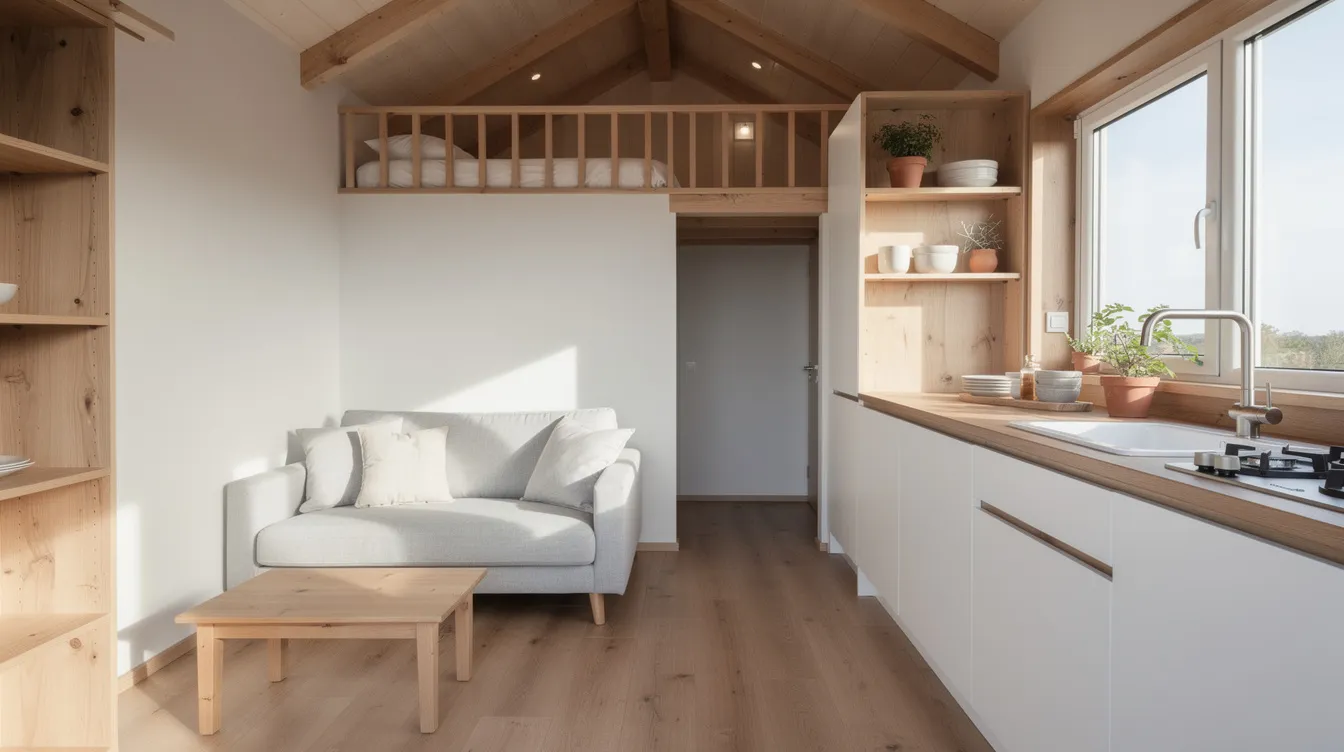
Most successful tiny house interiors lean on light, low-contrast palettes as a base.
Light shades such as whites, creams, and pale grays reflect natural light, giving the impression of more space in tiny homes. This isn’t just theory—it’s proven in real builds.
A classic scheme works like this:
Element | Color Choice |
|---|---|
Walls | Soft white or off-white |
Trim | Slightly warmer white |
Floors | Light oak or ash tones |
Cabinets | Pale gray or greige |
Consider a 220 sq ft tiny house interior using white walls, pale gray kitchen cabinets, and blond timber shelving. The light bounces around, and the room feels larger than its footprint, even if you prefer colorful tiny houses with bolder palettes. |
Color families that work in small spaces:
- Warm whites (like Sherwin-Williams Alabaster)
- Creams
- Pale greige
- Very light blue-gray for living areas and loft sleeping spaces
Paint ceilings a half-step lighter than walls—or pure white. This lifts the room height visually in tiny houses with standard 7–8 ft ceilings.
Using Bold Accents and Accent Walls Without Overwhelming the Space
You don’t have to avoid strong colors.
You just need to scale them carefully. Accent walls in bold colors can add personality to tiny home interiors without overwhelming the space, allowing for a focal point while keeping the rest neutral.
In tiny homes, accent smaller vertical surfaces rather than whole rooms:
- Bed headboard wall
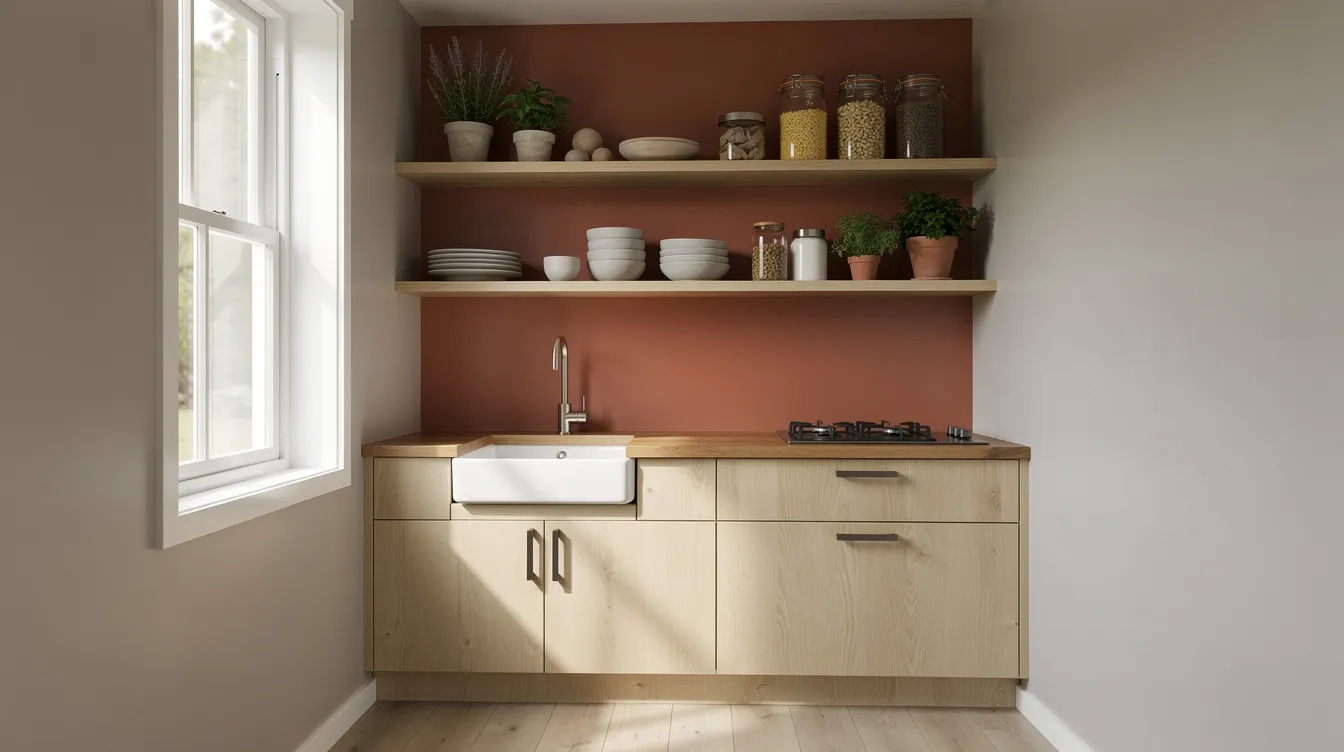
- Kitchen backsplash
- Behind open shelving
- Around the entry door
Minimalist design in tiny houses emphasizes clean lines and bold accents, focusing on functionality while maintaining an uncluttered aesthetic, similar to many of the best tiny house designs for modern living.
Bold accent colors that pair well with light schemes:
- Deep navy
- Charcoal
- Forest green
- Earthy terracotta
In a 250 sq ft build, a terracotta accent behind open shelving defined the kitchen zone in an open layout. Rust pillows echoed the color for cohesion.
Echo your accent color through textiles—pillows, throws, rugs—so the scheme feels unified rather than patchy. This creates focal points without visual chaos.
Color Schemes by Style: Modern, Scandinavian, Rustic, and Coastal Tiny Homes
Tiny house color schemes often follow a style language. This makes choosing consistent palettes easier.
Modern Minimalist:
- Crisp white walls
- Black or dark gray window frames
- One bold accent (deep teal) on cabinetry or sliding barn door
- Clean, organized flow works well in 300 sq ft studios
Scandinavian-Inspired: (for more layout and styling ideas, see these Scandinavian tiny home designs for modern living)
- Light pine floors
- Warm white or soft gray walls
- Muted pastels (dusty blue, sage) in textiles
- Airy, hygge-filled interior that enhances calm
Rustic Cabin:
- Warm taupes or soft brown walls
- Exposed timber beams
- Deep greens or brick reds as accent colors
- Incorporating natural materials and earthy tones creates a cozy retreat reminiscent of rustic cabins and many cute tiny house designs that favor cabin aesthetics
Coastal or Lakeside:
- White, sand, and pale blues
- Navy stripe or accent wall
- Relaxed, breezy living areas that connect to the outdoors
- Mirrored tiny houses can create a sense of camouflage, allowing them to blend into their surroundings and enhance the connection to nature, just like many great tiny homes that redefine small-space living
Room-by-Room Tiny House Color Ideas
Even in a 200–300 sq ft footprint, zoning by color helps each function feel intentional.
Living Areas:
- Light neutrals for walls
- One darker-toned rug for grounding
- Single accent color across cushions, art, and throws
- Keeps the living room unified and inviting
Kitchens:
- Clean, wipeable paint finishes
- White or very light upper cabinets
- Slightly darker lowers (soft green or blue-gray like Sherwin-Williams Evergreen Fog)
- Adds depth without shrinking the room
Bathrooms:
- Light colors plus one dark detail
- Navy vanity or black-framed mirror adds structure
- Creates sophisticated atmosphere in 20-30 sq ft bathroom spaces
Loft or Main Bedroom:
- Calm, desaturated colors (misty blue, sage, mushroom) behind the bed
- Lighter ceiling to prevent cramped feeling
- Perfect for relaxation and sleeping
Using a slightly darker shade in one area of an open layout can help define spaces without the need for physical walls, enhancing the functionality of tiny homes.
In tiny house design, maximizing vertical space is crucial. Utilizing tall shelving units and wall-mounted storage can significantly enhance storage capacity without consuming floor space, and many custom tiny homes use built-in solutions to achieve this.
Working With Natural Materials and Textures in Tiny Homes
Natural materials act as “quiet colors.”
Wood, stone, rattan, and linen balance both light palettes and bold accents. They add warmth without visual noise.
Here’s how they work:
- Exposed timber ceilings soften very white color schemes
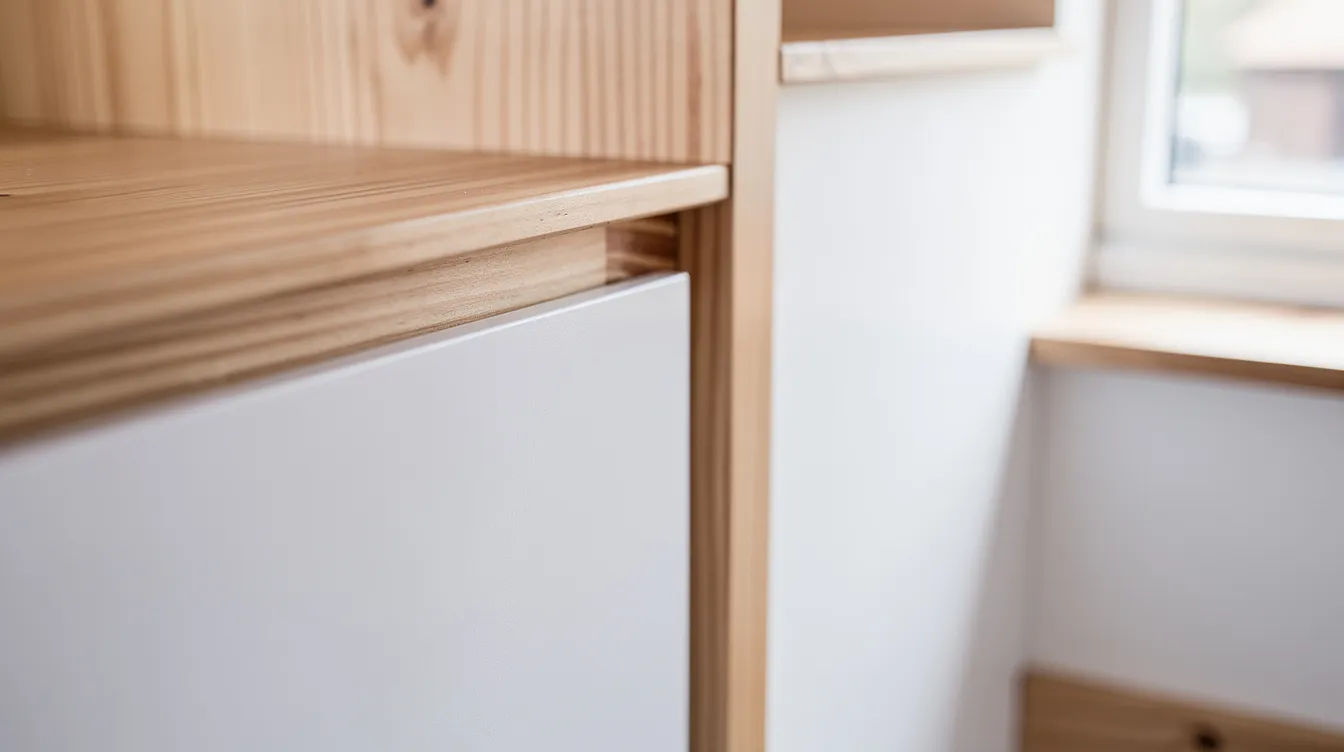
- Wood countertops add dimension
- Plywood cabinetry warms sterile spaces
Pair cool wall colors (soft gray or blue) with warm natural materials (oak, walnut, leather) in living areas for balance. The atmosphere feels elegant yet cozy.
Stick to two or three main material tones:
- Light oak
- Black metal
- White walls
This prevents visual clutter. Natural materials also show wear gracefully—important in high-traffic, multi-use tiny house interiors where every surface sees daily use.
Creating a Cohesive Whole-Home Palette for Tiny Homes
You can see most of a tiny house from one spot, which is why tiny house plans that fit your life should account for sightlines and color transitions.
The entire interior color scheme needs to feel consistent. No jarring transitions. No surprise colors around corners.
Follow the 60-30-10 rule:
- 60% light neutral on most walls
- 30% supporting neutral or natural wood (floors, cabinets)
- 10% bold accents repeated throughout
Select one main neutral base color for walls. Choose one secondary neutral for cabinetry. Pick one or two accent colors and repeat them.
Create a physical or digital palette board before starting. Include:
- Wall paint
- Trim color
- Flooring sample
- Tile options
- Textile swatches
For tiny homes on wheels, portable décor (pillows, curtains, art) is the easiest way to change accent colors seasonally without repainting. Cost effective and flexible.
Practical Tips: Finishes, Durability, and Maintenance in Tiny House Interiors
In tiny houses, walls get touched constantly.
Paint finish and durability matter as much as color. Incorporating multi-functional furniture, such as beds with built-in storage or tables that can be folded away, is an effective strategy for optimizing storage space in tiny homes—but your walls still need protection.
Finish recommendations:
Room | Finish Type | Why |
|---|---|---|
Living area | Matte or eggshell | Hides imperfections |
Kitchen | Satin or semi-gloss | Resists moisture, stains |
Bathroom | Satin or semi-gloss | Handles humidity |
Trim and doors | Satin or semi-gloss | Handles bumps, scuffs |
Use washable, low-VOC paints. In compact, well-sealed tiny homes, air quality suffers from off-gassing. ECOS paints emit less than 5g/L VOCs—much safer for indoor living. |
Paint trim in a tougher finish. White or a contrasting color handles narrow hallways and loft ladders better.
Keep touch-up paint in a small container. Label it clearly with color names and dates. Your interior stays fresh longer with minimal effort.
FAQ
These questions address common concerns about tiny house interior color schemes not fully covered above.
What is the best single wall color for a very small studio-style tiny house?
Choose a warm, soft white or very light greige. These work with both warm and cool furnishings, keeping your studio space bright and flexible.
This kind of color minimizes visual boundaries between living, sleeping, and kitchen zones. The tiny house will feel larger and more open.
Test two or three candidates on different walls. View them over at least 24 hours before painting the whole space. Don’t forget that lighting changes everything.
How many paint colors should I use inside a 200–300 sq ft tiny home?
Limit your main palette to 3–4 interior paint colors. One dominant neutral. One secondary neutral or soft color. One or two accent shades.
Too many colors make a tiny home feel chopped up and cluttered. The possibilities for variation come from textures and materials instead—wood, metal, textiles add interest without additional paint.
Can I use dark colors on ceilings in a tiny house?
Dark ceilings work best in tiny homes with higher or vaulted ceilings and excellent natural light. Otherwise, they compress the space.
If your ceiling height is modest, opt for a deep color only on a portion—like over a loft bed or small nook. In most standard tiny houses, lighter ceiling colors will do more to make the interior feel open and less cramped.
How do I coordinate interior color schemes with a tiny house exterior?
Repeat at least one accent color from the exterior somewhere inside. Your door color or trim could appear on an entry wall or kitchen details.
Keep exteriors and interiors in the same general temperature family (warm vs cool). This creates a seamless experience when stepping through your doors. Choose exterior cladding first, then build a complementary interior palette.
What if my tiny house has very little natural light—should I still use white?
In low-light tiny homes, very bright, cool whites look gray and dingy. Warmer off-whites or light taupes perform much better and feel more inviting.
Pair warmer wall colors with layered lighting—ceiling fixtures, wall sconces, and task lamps. Reserve darker shades for small accents only. Limited light gets absorbed by large dark surfaces, making rooms feel smaller.
Your tiny house. Your palette. Your style. Start with swatches, test in your actual light, and create a space that feels both fun and functional.