

Alaska’s vast wilderness is calling a new kind of resident. Tiny house communities in Alaska are reshaping how people live, combining affordable housing with adventure and close community bonds. Here’s what you need to know about joining this growing movement.
- Quick Overview: Tiny House Communities in Alaska
- Why Tiny House Communities Appeal to Alaskans
- Can You Live in a Tiny House Community Legally in Alaska?
- Where Tiny House Communities Are Emerging in Alaska
- Living in an Alaskan Tiny House Community: Everyday Realities
- Designing Tiny Homes for Community Life in Alaska
- Joining or Starting a Tiny House Community in Alaska
- Frequently Asked Questions About Tiny House Communities in Alaska
Quick Overview: Tiny House Communities in Alaska
Tiny house communities are intentional clusters of compact homes, typically under 400 square feet, designed for year-round living amid Alaska’s challenging climate. These communities include both tiny homes on foundations and tiny houses on wheels, often called THOWs. You’ll find them emerging in Juneau, Fairbanks, Anchorage, and along the Kenai Peninsula.
Why the growing interest? Tiny home living in Alaska offers a more affordable housing option, especially in areas like Juneau where the average rent is over $2,495 per month, which is more than 20% higher than the national average. Beyond money, residents seek nature access and neighborhood connections that counter isolation in remote areas.
This article covers zoning regulations, climate considerations, existing communities, and practical steps to join or create your own tiny house community in the Last Frontier.
Why Tiny House Communities Appeal to Alaskans
Housing costs in cities like Anchorage hit $450,000 median home prices in 2025. A tiny house? You’re looking at $50,000 to $100,000 built, plus $10,000 to $30,000 for a community pad with utilities. That’s a dream for many families priced out of traditional new homes.
Alaska hosts tiny house communities that emphasize sustainability, shared resources, and affordable living. Shared infrastructure like community wells, solar arrays, and bulk snow plowing keeps monthly costs under $200 for many residents. Off-grid capabilities in tiny communities may include solar arrays, composting toilets, and rainwater catchment systems, similar to what you’d find in many self-contained tiny homes for modern off-grid living.
The lifestyle fits Alaska perfectly. Living in a tiny home promotes sustainability and minimalism, much like minimalist tiny houses for sustainable living, encouraging residents to focus on what is truly important and reducing clutter in their lives. Your cozy space sits minutes from Denali trails, Kenai River fishing, or Girdwood skiing. Shared spaces in tiny house communities can foster social connectivity and support among residents, especially in remote areas. Neighbors share firewood, tools, and knowledge on winterizing pipes. It’s a community built for the location.
Can You Live in a Tiny House Community Legally in Alaska?
Alaska has mixed zoning regulations that allow for the placement of tiny homes on private land in many municipalities, including Anchorage and Fairbanks, provided that proper permits are obtained. There’s no single statewide law. Each borough sets its own rules, creating opportunity if you know where to look.
In the Municipality of Anchorage, foundation tiny homes must meet 400 square feet minimum under Title 21 zoning. Fairbanks North Star Borough allows foundation homes at 300 square feet or more in rural zones with proper snow-load engineering. Juneau permits THOWs in campground settings under recreational vehicle ordinances.
Tiny homes on wheels may be subject to stricter RV regulations, so it is essential to check local codes in your county for compliance before placement. Many communities classify THOWs as RVs or park models, requiring RVIA certification, which also affects prefabricated options such as Amazon tiny houses as an affordable living solution. Foundation homes must meet residential building codes.
Contact local planning offices before committing. The Municipality of Anchorage Planning Department, Fairbanks Borough at plandev@fairbanksalaska.us, and Juneau Community Development can provide specifics. Don’t cut corners on permits. Non-compliance risks fines up to $1,000 daily.
Where Tiny House Communities Are Emerging in Alaska
Alaska doesn’t yet have massive tiny house villages like Oregon’s 100-unit parks. But several regions show real progress.
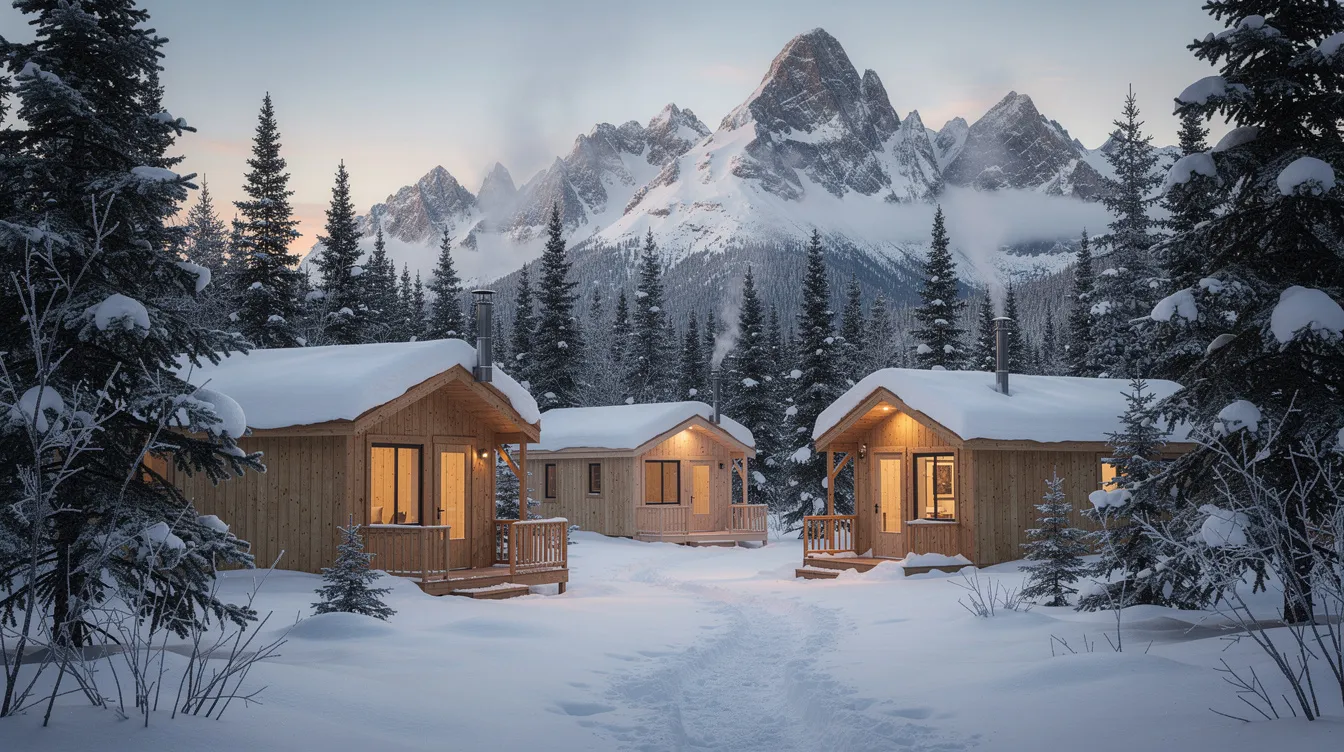
Southeast Alaska leads with creative design approaches. Glacier Nalu Campground near Juneau offers tiny home pads with other amenities like Wi-Fi, laundry, and fire pits. Similar setups in Auke Bay and Petersburg blend tourism with long-term residency. Tiny house communities in Alaska include options for recovery, cohousing, and vacation rentals.
The Mat-Su Valley around Palmer and Wasilla is booming. Rural lots of 1 to 5 acres host informal clusters sharing wells and driveways. Fish Lake Landing near Talkeetna offers subdivision lots with cabins like “Denali” featuring off-grid options, giving residents a feel similar to tiny house nature retreats that blend minimal living with the outdoors. Property prices average $140,000 to $159,000 for land packages.
Fairbanks and North Pole emphasize homesteading-style pockets. Residents share greenhouses, firewood storage, and the rest of communal resources. Coastal areas like Homer and Seward show how tourism-driven tiny home parks evolve into year-round communities. Builder surveys suggest 20 to 30 percent growth by 2026.
Living in an Alaskan Tiny House Community: Everyday Realities
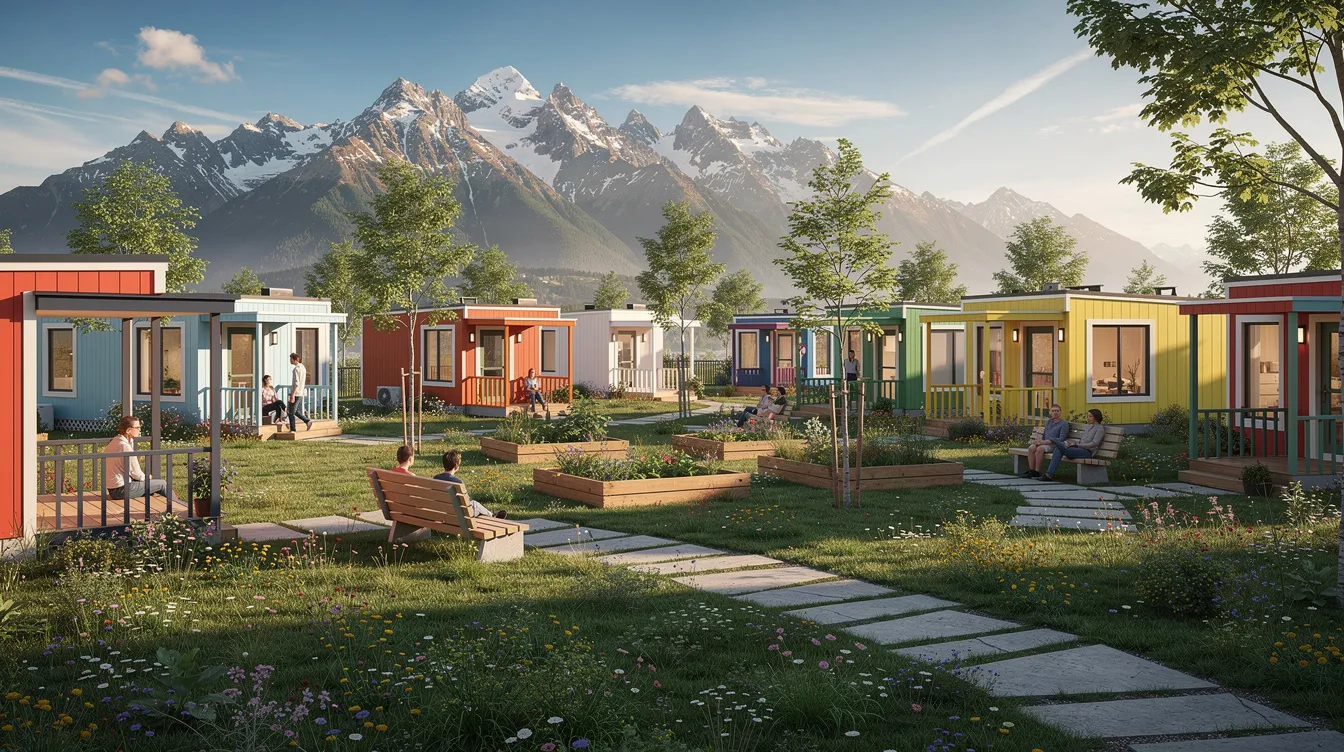
Daily life swings dramatically. Summer brings 19-hour July days with communal picnics and midnight sun gatherings. January in Fairbanks means -20°F temperatures and coordinated driveway plowing at $50 to $100 monthly per unit.
Many tiny house communities in Alaska offer shared amenities such as community kitchens, laundry facilities, and gardens. Infrastructure typically includes community wells serving 10 to 20 homes, septic systems, and Starlink internet split among residents. Tiny homes require less maintenance and cleaning time, allowing residents to spend more time enjoying their surroundings and engaging in activities they love, echoing the lifestyle showcased by great tiny homes that redefine small space living.
Winter challenges demand preparation. Roofs need engineering for 60 to 150 psf snow loads. THOWs require insulated skirting to R-30. Heat tape prevents frozen pipes when temperatures drop to -30°F.
Storage gets creative. Shared cargo containers or mini-barns hold snowmachines, skis, and fishing gear. Residents report 100 to 200 square feet of communal storage per household. Community culture thrives on trust with quiet hours, pet policies, and group coordination apps. You’ll hear about both the week’s parking situation and the next potluck through the same text thread.
Designing Tiny Homes for Community Life in Alaska
Standard Lower 48 designs fail in Alaska’s extreme conditions. Tiny house communities in Alaska are designed with features to withstand extreme cold and winter conditions.
Climate-specific infrastructure in tiny homes often includes R-50 insulation, snow-load roofs, and energy-efficient windows. Walls need 2×6 framing with 5.5-inch closed-cell spray foam reaching R-35 to R-40. Triple-pane low-E windows and heat recovery ventilation handle condensation in clustered homes.
Tiny home builders in Alaska often focus on creating homes that can withstand the state’s harsh weather conditions, utilizing materials and designs that enhance durability and insulation. Layouts prioritize mudrooms as arctic entries, compact kitchens for potlucks, and lofts optimized for storage, and some residents even explore tiny smart homes with efficient, tech-forward design to better manage energy use and comfort.
Exterior design matters in a community structure. Metal roofs at 12:12 pitch shed snow away from neighboring walkways. Cedar or fiber cement siding handles Southeast Alaska’s 100-plus inches of rain annually. A good builder will recommend mini-split heat pumps or Monitor heaters burning 1 to 2 gallons diesel daily.
Many tiny home builders in Alaska offer customization options to meet the unique needs and preferences of their clients, allowing for personalized custom designs and features inspired by top tiny house designs for modern living. The process typically costs $80,000 to $120,000 for a finished, climate-ready home.
Joining or Starting a Tiny House Community in Alaska
Two paths forward exist. You can join an existing community or create one from the beginning.
Finding existing opportunities means checking Facebook groups like “Alaska Tiny Houses” with 5,000-plus members. Contact campground owners in Palmer, Homer, or Talkeetna. Visit Glacier Nalu’s setups or similar parks accepting long-term tiny house residents.
Starting a community requires assembling a committed team of 5 to 10 interested buyers. Budget for land at $10,000 to $50,000 per acre in Mat-Su versus $100,000-plus in Southeast Alaska. Shared well installation runs $20,000 to $50,000 split across units. The project needs clear guidelines on pets, Airbnb limits, snow removal, and decision-making.
Alaska’s tiny home builders often provide delivery services across the state, ensuring that homes can be transported to remote locations accessible by road. This makes placement on remote lots possible.
Test the lifestyle first. Stay in a tiny home rental in 2026 to experience the situation before committing your budget; many people start with tiny house cabin retreats for a cozy getaway or explore cute tiny house designs for a dream home to narrow down what they like. You’ll learn whether the space and community life fit your hope for a simpler existence.
Frequently Asked Questions About Tiny House Communities in Alaska
Can I live year-round near Anchorage? Yes. RV parks and the city’s pilot program accept insulated THOWs handling 0°F temperatures. Pad rents run $600 to $1,200 monthly.
Do I need a foundation? No. THOWs work as RVs in most boroughs. Foundations unlock permanence in urban zones but aren’t required.
How much does a pad cost monthly? Expect $500 to $1,500 including utilities at established communities like Glacier Nalu.
Can I rent my tiny home on Airbnb? In some areas of Alaska, tiny homes can be utilized for short-term rentals, but it is crucial to ensure that the setup complies with local lodging laws and safety standards. Many communities limit rentals to 90 days annually, and prospective hosts often start by looking at tiny homes under $20K for sale to keep upfront costs low.
How do communities handle -30°F? With R-40 envelopes, diesel heaters, and heat tape. Interior residents live off-grid year-round successfully.
Is off-grid realistic? Yes in Interior Alaska with solar and wind systems producing 5 to 15 kW. Southeast’s rain makes it harder. Most communities run hybrid systems.
Can I get a mortgage? Rare for THOWs. RV loans at 7 to 12 percent APR or specialty lenders like Alaska USA work for foundation homes.
What insurance do I need? RV policies cost $800 to $1,500 yearly. Manufactured home policies run $1,200 to $2,500, covering snow collapse.
Laws and community offerings keep evolving. Step forward with local research in 2026. The world of Alaskan tiny living is finally ready for you to enjoy. Play it smart, stay excited about the perfect place you’ll create, and love the clean, simple life waiting in Alaska’s wilderness.