Tiny house communities in Maine offer significant financial relief, environmental sustainability, and social support. Whether you want to live close to Portland’s city energy or tucked away in the woods, Maine has options. The state’s LD 1881 law recognizes tiny homes as single-family dwellings statewide, making it easier to find your spot.
How We Chose the Best Tiny Homes and Tiny House Communities in Maine
We evaluated each community on practical criteria that matter for daily life:
- Zoning compliance and legal standing
- Community amenities and shared resources
- Location accessibility and nearby services
- Cost of living and entry requirements
- Infrastructure quality
- Long-term stability
Top 5 Tiny House Communities in Maine
1. Tiny Seed Village – Blue Hill
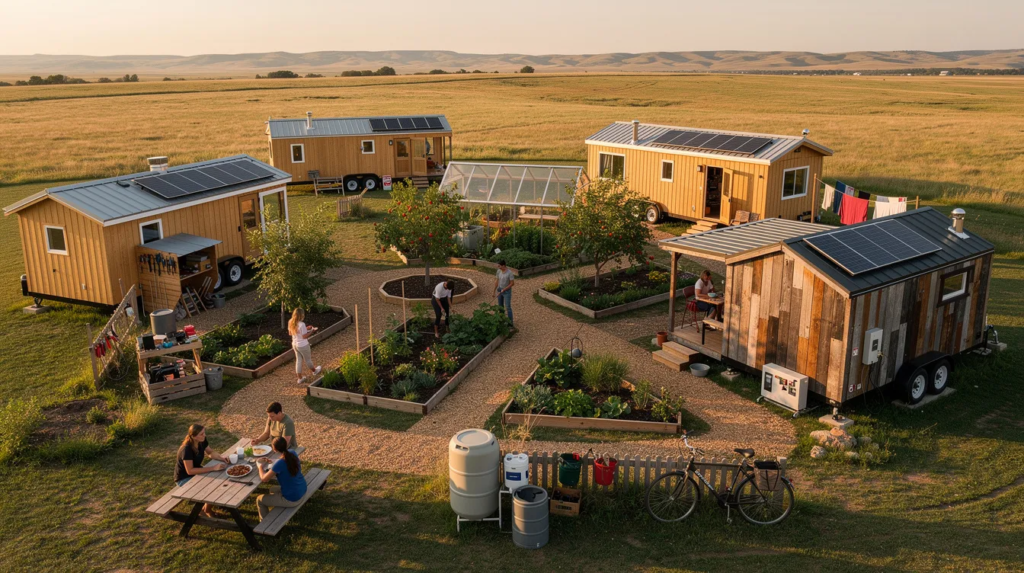
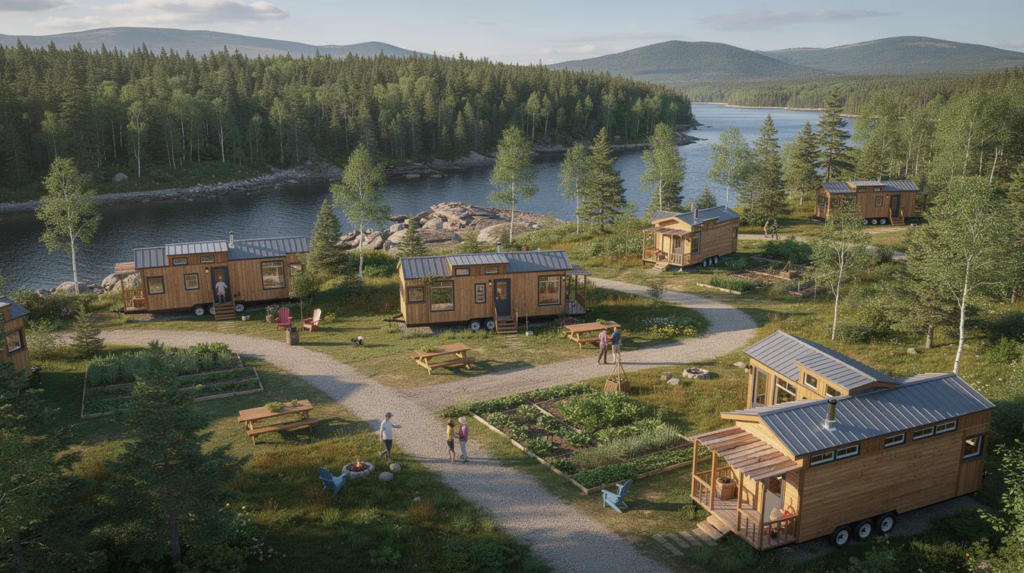
This 7-acre agrihood community emphasizes connection and shared purpose among residents. With 14 sites featuring independent water, solar power, and fiber internet, it’s built for year round living.
Why It Stands Out: The agrihood model combines tiny living with shared gardens and collaborative governance.
Best For: Community-minded people wanting sustainable coastal Maine living and those drawn to tiny house nature retreats that emphasize outdoor connection.
Key Strengths:
- Strong community connections
- Sustainable land use with composting systems
- Beautiful coastal location
Possible Limitations:
- Limited availability with potential waiting list
- Higher community involvement expectations
2. Randall Park – Bangor
Randall Park in Bangor offers a rental model for tiny homes, with 30 units at roughly 320 square feet each. If you’re still deciding whether buying a tiny house is right for you, renting first here can be a smart way to test the lifestyle, especially since tiny homes are a lower-cost option for homeownership than traditional houses. Bangor’s city council approved a 2022 ordinance that specifically permits tiny home parks, making this a legitimate development for people considering minimalist tiny houses for sustainable living.
Why It Stands Out: The rental model lets you explore tiny living without purchasing a home or land.
Best For: First-time tiny home dwellers testing the lifestyle who may want inspiration from modern tiny house designs before committing to a specific layout.
Key Strengths:
- No upfront purchase required
- City amenities nearby
- Progressive ordinance support
Possible Limitations:
- Rent doesn’t build equity
- Less customization freedom
3. Portland Metro ADU Communities
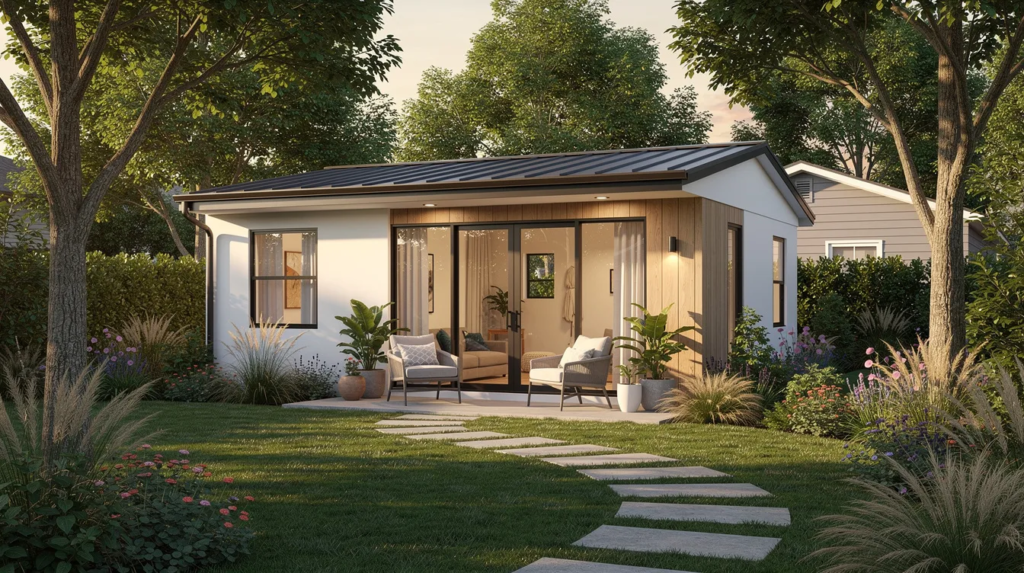
Portland and South Portland support Accessory Dwelling Units on residential lots. For many homeowners, Accessory Dwelling Units offer flexible options for multigenerational living or rental income. You can build up to two ADUs per lot at around 800 square feet each in southern Maine’s largest city.
Why It Stands Out: Urban convenience with walkable neighborhoods and cultural amenities.
Best For: Urban professionals wanting city lifestyle who benefit from carefully chosen tiny house plans that fit work and transit needs and who may want inspiration from top designs that redefine small living.
Key Strengths:
- Public transit access
- Vibrant dining and entertainment
- Employment opportunities
Possible Limitations:
- Higher land costs
- Stricter zoning requirements
4. Unorganized Territory Off-Grid Communities
Maine’s Unorganized Territories, which cover roughly half the state, provide opportunities for off-grid living. Understanding the set of access, utility, and permitting challenges is crucial before choosing this option. With minimal zoning rules and lower costs, this kind of place suits those ready to build their own foundation or invest in custom tiny homes tailored for self-sufficient living or consider turn key tiny home solutions for affordable living
Why It Stands Out: Complete freedom and minimal regulations for self-sufficient homesteaders.
Best For: Those seeking privacy and a quiet lifestyle who are inspired by tiny homes that redefine small-space living
Key Strengths:
- Maximum privacy
- Lower land acquisition costs
- Minimal restrictions
Possible Limitations:
- Limited infrastructure
- Requires self-sufficiency skills
5. Coastal Communities – Mid-Coast Region
Some places in this part of the country, including towns like Wiscasset and Wells, are more accommodating to tiny homes than others. For some buyers, the charm of storybook-inspired magic tiny homes pairs perfectly with these coastal settings, much like tropical tiny homes designed for cozy beachfront living do in warmer climates. Check local rules carefully—seasonal use park models differ from year round tiny homes. Mobile Tiny Houses on wheels are often treated as single-family homes, but local interpretation still matters. Maine winters require excellent insulation and efficient heating for year-round tiny homes, especially if you’re inspired by the coolest tiny homes with innovative designs.
Why It Stands Out: Stunning ocean views and charming New England atmosphere.
Best For: Those prioritizing scenic beauty and coastal lifestyle and drawn to cute tiny house designs for a dream home
Key Strengths:
- Salt air and ocean access
- Tourist economy opportunities
- RV and tiny home variety
Possible Limitations:
- Complex coastal zoning
- Seasonal economy fluctuations
Quick Comparison of the Best Tiny House Communities
Community | Best For | Entry Cost |
|---|---|---|
Sustainable community living | Land lease | |
Randall Park | Beginners wanting to rent | Monthly rent |
Portland ADUs | Urban professionals | Higher land costs |
Unorganized Territories | Off-grid homesteaders | Affordable |
Coastal Communities | Scenic lifestyle seekers | Premium pricing |
How to Choose the Right Tiny House or Small Houses Community
Choose Based on Lifestyle Preferences: Urban Portland suits those wanting plenty of room for entertainment options. Rural areas work for those seeking quiet.
Choose Based on Budget: Tiny homes in Maine can be a fraction of the cost of traditional homes, enabling debt-free living. Exploring affordable tiny house designs and financing tips can help you match your budget to realistic build or purchase options. Using a tiny home cost calculator to plan your budget can clarify what’s realistic for your situation. The average listing with land runs $265,307, but options vary widely, so compare more options before deciding.
Choose Based on Community Involvement: Agrihoods require participation. Rentals offer more independence.
Which Community Is Best for You?
- Choose Tiny Seed Village if you embrace sustainable, community-focused living
- Choose Randall Park if you want to start without major commitment
- Choose Portland ADUs if city amenities guide your search
- Choose Unorganized Territories if privacy leads your day-to-day priorities
- Choose Coastal Communities if scenic beauty verifies your happiness
Maine’s tiny home friendly laws mean local zoning requirements vary, but the state law requires municipalities to permit tiny homes wherever single-family homes are allowed.
Final Thoughts: Verification Successful
Tiny house communities in Maine are expanding, focusing on affordable, sustainable, and community-oriented living. Similar trends appear in other states, such as tiny home communities across Texas, and regional hubs like the best tiny house communities in Maryland and top tiny house communities in Massachusetts. Many communities prioritize eco-friendly approaches, incorporating solar power and composting systems. Living in a Maine tiny home community provides minimal utility bills—essential for harsh winters—and allows for a minimalist lifestyle with shared amenities.
Tiny homes encourage lower energy consumption and waste. Maine has established clear statewide standards through LD 1881, which simplifies the process of making your tiny house dream work.
The best community depends on your specific goals. Visit in person, check the rules, and find your place.