
Key Takeaways
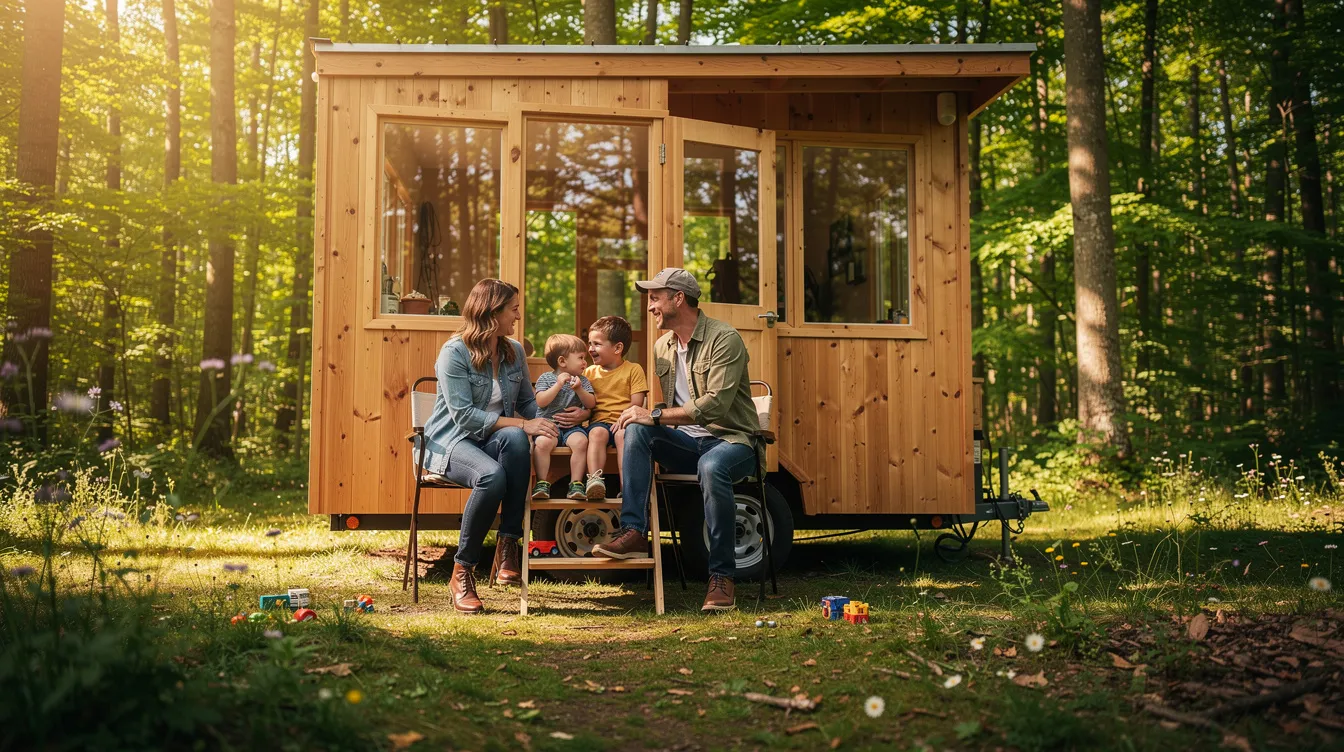
- Many families now raise kids in tiny houses ranging from 200 to 450 square feet, trading space for freedom, time together, and significantly lower costs.
- Tiny house living with kids is absolutely possible, but it requires intentional design, daily routines, and outdoor living to keep everyone sane.
- Privacy solutions like lofts, heavy curtains, and sliding doors become the best tool for making a small space functional for both parents and children.
- Real families make this work: a family of four thriving in roughly 400 square feet with a wraparound deck, or a 391 square foot custom tiny home designed for two children.
- The biggest benefits parents report are stronger family connection, less cleaning time, and lower financial stress. The toughest challenge remains lack of personal space.
Introduction: Can You Really Raise Kids in a Tiny House?
TV shows make tiny houses look like trendy retreats for minimalist couples. The reality for families is different.
A tiny house or tiny home typically measures between 200 and 450 square feet. Many sit on wheels for mobility. Others anchor to small plots of land or campground sites, where choosing the right foundation for a tiny house affects long-term stability, safety, and legality.
Families of 3 to 5 commonly live in a tiny home full-time. Some manage in just 25 square meters (about 270 square feet). Others stretch to 400 square feet. One custom 391 square foot build houses a family of four comfortably.
Why do parents choose living in a tiny? The reasons vary:
- Going mortgage-free
- Reducing clutter and stuff piled in every corner
- Traveling more with the whole family
- Homeschooling with flexibility
- Spending more time outdoors with their kids
Families who downsize to tiny houses often report improved quality of life and increased freedom, allowing them to spend more time together and travel more. This article gives practical, experience-based guidance on raising kids in such a small space—without glossing over the challenges.
- Why Families Choose Tiny House Living With Kids
- Designing a Tiny House for Raising Kids
- Making a Small Space Work Day-to-Day
- Family Dynamics, Privacy, and Emotional Health
- Maximizing Outdoor Living and Community
- Planning the Transition to a Tiny Home With Kids
- Is Tiny House Living With Kids Right for Your Family?
- FAQ
Why Families Choose Tiny House Living With Kids
People don’t just want a cute small house. They want to take life back from survival mode and chronic stress.
Financial Freedom
The money makes sense for many families. Consider selling a 2,500 square foot suburban home in 2024 for $600,000. Use that to pay cash for a $120,000 tiny home build. Eliminate a 30-year mortgage at 7% interest that could total $500,000 in payments.
Downsizing to a tiny house can lead to financial benefits, such as reduced living expenses and the ability to live mortgage-free, which can alleviate financial stress for families. The American Tiny House Association reports families saving $20,000 to $40,000 annually on housing after downsizing.
Lifestyle Goals
Parents chase these changes:
Traditional Home Life | Tiny House Life |
|---|---|
10-20 hours weekly housework | Under 30 minutes daily cleaning |
High utility bills ($300+ monthly) | $50-100 monthly utilities |
Weekend maintenance projects | Weekend adventures instead |
Commuting for bigger mortgage | Working less, living more |
Values-Based Living
Many parents see a tiny house as the best tool to simplify life. Fewer belongings. Lower bills. Fewer hours managing stuff.
Living in a tiny house encourages families to prioritize experiences over material possessions, leading to more time spent together and creating lasting memories. Kids grow up with less focus on possessions and more on relationships, nature, and experiences.
The tiny house movement gained momentum around 2012, but by 2024, the Tiny House Industry Association reported over 10,000 tiny homes built annually in North America. Surveys indicate 15-20% house families with children under 12.
Designing a Tiny House for Raising Kids
Layout matters more than raw square footage when you live in a tiny house with children, so family-friendly tiny house floor plans that work become the real foundation of comfort.
Size and Structure
Family-friendly builds typically range from 300 to 450 square feet. Height creates the illusion of more space, and thoughtful tiny house interiors that maximize every square foot help rooms feel open instead of cramped. Many families choose:
- 11-14 foot ceilings
- Skylights for natural light
- Open-plan designs
- Large windows to combat claustrophobia
Kid-Focused Sleeping Layouts
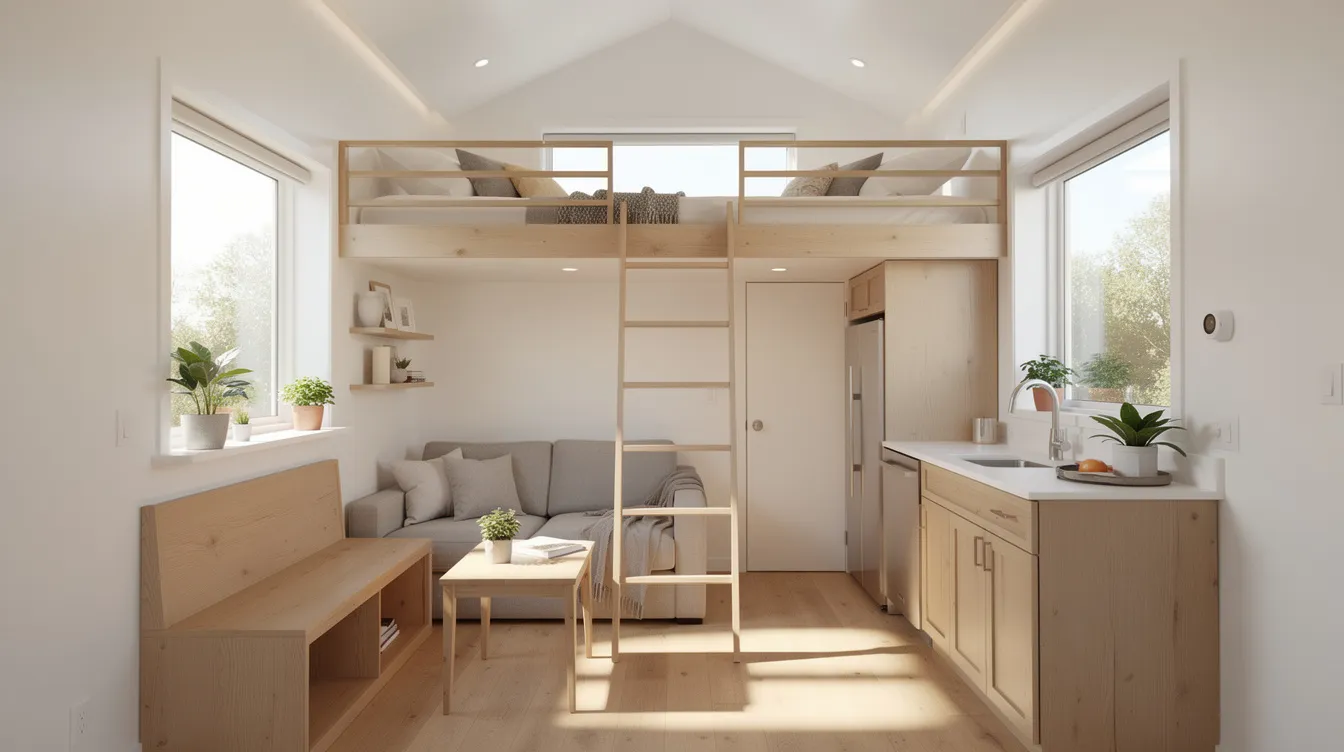
Many families in tiny homes utilize loft spaces for children’s bedrooms, allowing for more efficient use of vertical space and providing some privacy for the kids. Common configurations include:
- Bunk beds with curtains: Each child gets their own bedroom feel within one room
- Separate loft bedrooms: One sleeping loft for parents, one for kids
- Main floor bunks: Kids below, master bedroom loft above
A family featured in a 2023 YouTube video thrives in roughly 400 square feet with two upstairs lofts—one for parents, one for two kids, similar to many of the great tiny homes that redefine small-space living showcased online.
Privacy Strategies
Even in a tiny space, families create private space zones:
- Sliding barn doors (salvageable for around $200)
- Heavy thermal curtains with R-value 3-5 for soundproofing
- IKEA bookcase dividers forming zones
- Pocket doors for bathrooms
- Partial walls creating separation without closing off the house
Safe Access for Kids
Forget steep ladders. Families with young children install:
- Stairs with built-in drawers (7-8 inch risers)
- 36-inch guardrails per IRC Appendix Q tiny house codes
- Safety gates at loft entrances for toddlers
Flexible Features
The living area transforms throughout the day, especially in custom tiny homes designed for small-space living:
- Convertible dining areas become guest bed or homework zones
- Murphy beds double as desks
- Sofas with under-storage hide toys and gear
- Fold-down tables create floor space after dinner
Resource Furniture offers convertible units around $3,000. Budget options exist through IKEA and DIY builds.
Making a Small Space Work Day-to-Day
Living in a tiny home is less about minimalism perfection and more about embracing minimalist tiny houses for sustainable living as a framework for everyday systems and routines.
Toy and Clothing Limits
Families living in tiny homes often prioritize experiences over toys, which helps reduce clutter and makes it easier to manage the limited space available. Practical approaches include:
- 10-15 toys per child maximum
- Monthly toy rotation from stored bins
- One shared dresser plus under-bed bins for seasonal clothes
- Two closets total for the whole family
- Vacuum-sealed bags for out-of-season gear
Clear Storage Zones
Give kids their own rooms—in miniature:
- Wall-mounted baskets for daily items
- Steps-with-drawers for books and art supplies
- Labeled bins for schoolwork and outdoor gear
- Hooks at kid height for jackets and bags
Daily Reset Routines
A 10-15 minute evening tidy keeps chaos at bay. Each child owns a specific area to reset. Clutter never takes over the entire tiny house when everyone participates.
Living in a tiny home with children can be challenging due to limited space, but many families find creative solutions to manage their belongings and maintain organization.
Cooking and Meals
Tiny kitchens work with smart choices and the kind of multifunctional design highlighted in many guides to exploring the world of tiny houses:
- 24-inch fridges (around $800)
- Induction cooktops for efficiency
- One main “landing zone” counter for command central
- Collapsible tables to free floor space after meals
One parent noted that four dishes feel manageable. The kitchen becomes where family living happens—central to daily connection.
Cleaning Reality
Families living in tiny homes often report that the experience can be messy, similar to traditional homes, but they tend to prioritize experiences over material possessions, leading to more quality time together.
The difference? Cleaning time is much shorter. Most families report 20-30 minutes to fully clean the entire tiny home versus 2 hours in larger homes. Sarah Wooden from Australia emphasized that reduced clutter led to less cleaning stress.
Family Dynamics, Privacy, and Emotional Health
Constant proximity in a tiny house intensifies both the good and the hard parts of parenting.
The Connection Benefits
Living in a tiny house can lead to increased family closeness due to the proximity of family members, which encourages communication and interaction. Parents report:
- 2-3x more family interactions daily
- More conversation during meals
- More cuddles and story time
- Kids spending lot more time playing together instead of isolating in separate rooms
- Two boys or three boys actually engaging rather than disappearing to separate floors
A four year old and a toddler thrive tucked up in lofts, as one video transcript noted. The family relationship strengthens when there’s nowhere to hide.
The Challenge: Limited Separation
The main challenge surfaces clearly. A 2022 Tiny House Society poll found 30% of surveyed families cited lack of personal space as the top hurdle.
Parents in tiny homes often find that the lack of private space can create challenges, but it also forces families to address conflicts more directly than they might in larger homes.
Privacy Strategies That Work
- Quiet alone time zones in lofts (curtained “caves”)
- Noise-cancelling headphones ($50 pairs for older kids)
- Scheduled solo walks for parents
- Outdoor breaks when tension rises
- Agreed signals when someone needs space (red flag on bunk)
Communication Habits
Weekly family meetings around the tiny dining table help. Clear rules about noise at night matter. When kids hear everything and parents hear everything, intentional talking replaces accidental friction.
For many parents, less housework and less visual clutter reduces their mental load. Environmental psychology links clutter to stress. A cleaner space means parents feel more emotionally available to their children.
Maximizing Outdoor Living and Community
For most people living in tiny houses with kids, the real living room is outside, but thoughtful tiny house plans that fit your life still make every indoor square foot count.
Expanding Your Space
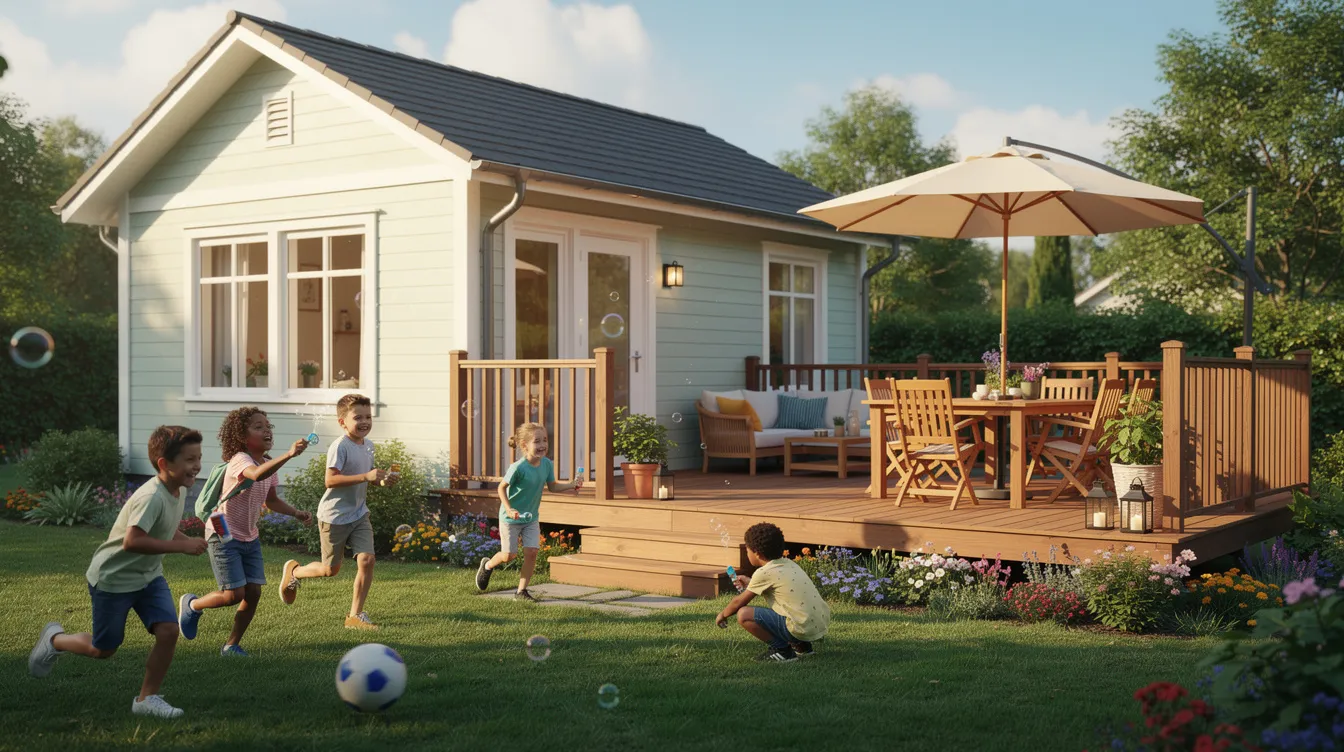
Wraparound decks effectively add 400-600 square feet of usable space. Covered porches host:
- Outdoor kitchens
- Play zones
- Reading nooks
- Dining areas
- Even saunas in some builds
The fresh air becomes part of daily life, not a weekend treat.
Choosing the Right Location
Location matters enormously for family living in a tiny, especially if you’re weighing whether a tiny house for sale is right for you. Good options include:
Location Type | Monthly Cost | Benefits |
|---|---|---|
RV Parks | $400-800 | Amenities, community |
Family Land | Often free | Privacy, space |
Small Farms | Varies | Nature, animals |
Tiny House Villages | $500-1000 | Like-minded neighbors |
The 2023 YouTube family with the wraparound deck used outdoor-direct bathroom access and a spacious lounge for game nights, proving that verticality and outdoor integration mitigate spatial constraints. |
Building Outdoor Routines
Daily structures offset limited time inside:
- Morning walks before breakfast
- Afternoon gardening (kids harvest their own food)
- Park meetups for socialization
- Creek exploration and nature study
- Evening deck time watching the sunset
Maintaining Friendships
Kids need friends. Families help children stay connected by:
- Inviting friends to play outside near the tiny house
- Using community centers and libraries
- Joining co-op classes and homeschool groups
- Attending park playdates regularly
Growing With Kids
Some families add a second tiny house or small studio on the same property as children grow, sometimes using tiny house kits from big-box stores to keep costs low. A $20,000 kid cabin provides teen privacy while staying close. Three kids eventually need their own rooms, and auxiliary structures solve this without abandoning the tiny living lifestyle.
Planning the Transition to a Tiny Home With Kids
The move itself—downsizing from a big house to a tiny house—is often the hardest emotional part.
Start Early
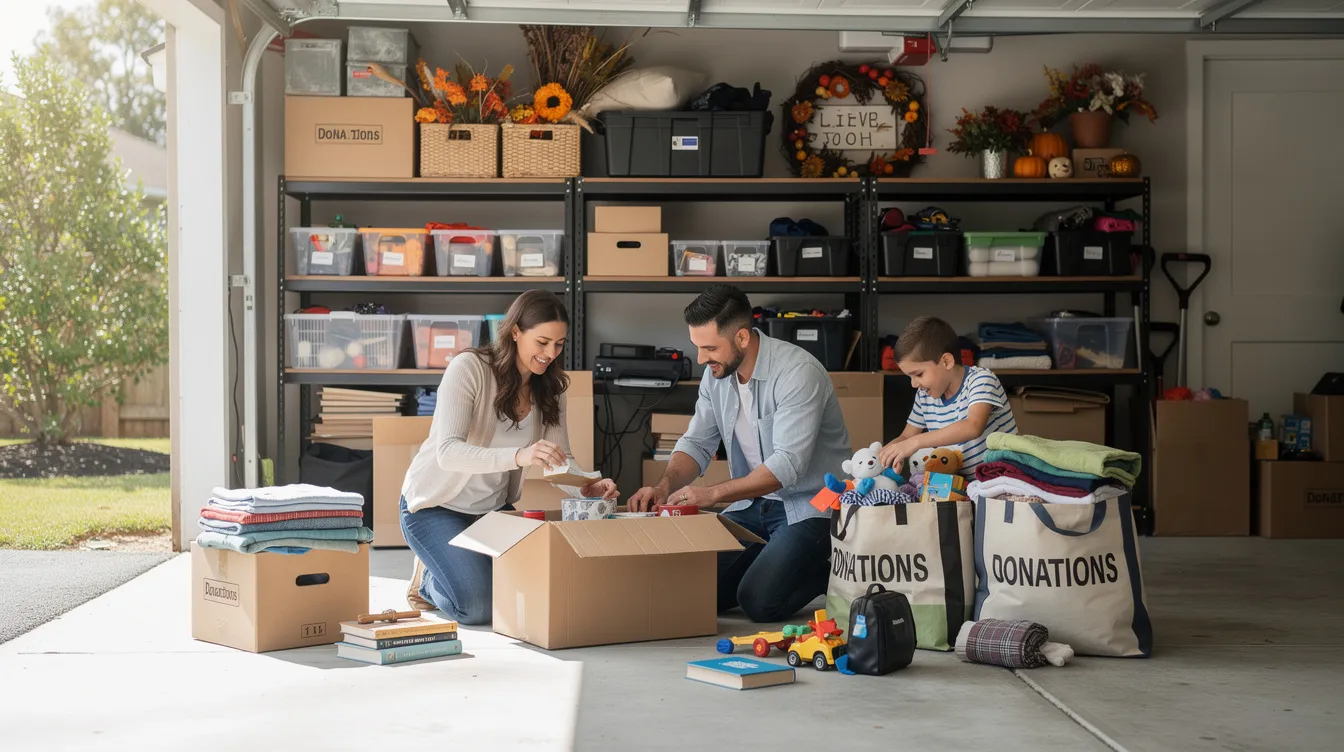
Begin the decluttering process 6-12 months before moving. Involve kids in choosing what to keep, donate, or store. The “three-box” method works:
- Keep (fits in the tiny)
- Donate (give to friends or charity)
- Store (basement, shipping container, or family storage)
Test Runs
Rent a 300-400 square foot tiny house for a long weekend with kids. AirDNA lists tiny rentals around $150 per night. Watch what works and what doesn’t:
- Can toddlers access lofts safely?
- Does the bathroom work for the whole family?
- Where do toys spread?
- How does everyone sleep?
Trial weekends reveal pain points before commitment.
Logistics to Handle
Task | Details |
|---|---|
Parking Location | Family land, long-term RV park, rural property |
Utility Hookups | Water, electric, septic or composting toilet |
Local Regulations | 40 U.S. states now permit tiny homes on foundations per 2025 HUD updates |
Zoning Checks | Wheels face RV limits in many areas |
Schooling Options
Homeschooling in a tiny house works with:
- Foldable desks ($300)
- Wall-mounted supply storage
- Libraries as extensions of the small apartment-sized space
- Outdoor classrooms when weather allows
Local schools and libraries become part of the home when square footage is limited.
The First Few Years
Check in regularly with kids during the first 3-6 months. Adjust storage, routines, and layouts as you learn what your family really needs. The same amount of flexibility applies throughout the first few years as kids grow and needs change.
Is Tiny House Living With Kids Right for Your Family?
Tiny houses are not a magic fix. But they can be the best tool for the right families and seasons of life.
Signs It Might Fit
Tiny living may work if your family:
- Enjoys being outdoors more than time inside watching screens
- Can live with fewer possessions and less stuff
- Values time together over private rooms and huge closets
- Wants more freedom from mortgage payments
- Dreams of travel or location flexibility
- Prefers experiences over accumulating more stuff
Potential Deal-Breakers
Consider carefully if you have:
- Strong needs for personal space and alone time
- Heavy indoor hobbies requiring lots of gear
- Complicated medical or mobility needs not easily met in a lofted or narrow layout
- Introverted family members who recharge only in isolation
- A husband or partner strongly opposed to the idea
Before Committing
Evaluate honestly:
- Your parenting style
- Each child’s personality (one child may adapt while another struggles)
- Your climate (bad weather days feel longer in a pretty small space)
- Work patterns (two parents working from home in one bedroom’s worth of space)
The Bottom Line
For many families, moving into a tiny home turns out to be less about living in a small space and more about expanding their freedom, time, and connection. The money saved creates opportunities. The closeness builds bonds. The simplicity reduces stress.
Start small. Rent a tiny house for a test weekend. See what your family discovers about themselves—and about what enough space really means.
FAQ
How many kids can realistically live in a tiny house?
Many families of 3-5 people live successfully in tiny houses between 300-450 square feet. Bunk beds, lofts, and generous outdoor space make larger families work. The Australian Wooden family managed two children under four in approximately 50 square meters. Another Permies.com family raised children who eventually preferred separate small buildings on the property for privacy as they grew older. With creativity and outdoor integration, even three boys or more can share a tiny house.
What is a comfortable size tiny house for a family with children?
While some families manage in around 25 square meters (about 270 square feet), most find 350-450 square feet more comfortable for long-term living with two or three kids. Builder consensus from companies like Teacup Tiny Homes and New Frontier suggests 300-450 square feet as optimal. Height matters as much as square footage—11-14 foot ceilings, skylights, and open plans create illusory spaciousness even in a tiny space.
Is it legal to live in a tiny house with kids full-time?
Legality varies significantly by country, state, and local code. As of 2025, 40 U.S. states permit tiny homes on foundations per HUD updates. However, tiny houses on wheels often face RV classification limits. Check zoning rules, minimum dwelling sizes (IRC Appendix Q requires minimum 190 square feet), and RV park or land-use regulations before moving. Your local planning department can clarify requirements for your specific situation.
How do tiny house families handle bad weather days with kids?
Bad weather requires preparation. Successful families stock craft supplies, board games, and indoor activities. Library visits become routine. Some families create indoor climbing areas by rearranging furniture. Modular play setups work when outdoor time disappears. One family noted that gyms, game nights, and library runs fill stormy days effectively. The key is accepting that some time inside will feel cramped—and planning escapes like indoor community centers.
Can tiny house living work if both parents work from home?
Yes, but it demands careful planning. Solutions include:
- Dedicated desk nooks with noise-cancelling headphones
- Outdoor office sheds ($2,000-5,000 for basic structures)
- Alternating work hours so one parent works while the other handles kids
- Clear noise and space agreements with children
- Libraries and coffee shops as secondary workspaces
Staggered schedules often prove more practical than simultaneous work in one small living area.