
Key Takeaways
- Top solar panel picks for tiny houses in 2026 include LG NeON R (22% efficiency), Panasonic HIT (excellent heat tolerance), and Jackery SolarSaga 100W portables for supplemental power.
- Most tiny houses need 2–5 kW systems with 6–12 panels to power essentials like a fridge, LED lights, laptop, and mini-split AC.
- Monocrystalline panels offer the best efficiency-to-space ratio for limited tiny house roofs, producing 400–450W from compact footprints.
- A complete solar power system pairs panels with LiFePO4 battery storage (10–20 kWh) for reliable off grid operation and battery backup during cloudy periods.
- Solar is an eco friendly way to slash utility bills, reduce environmental impact, and gain the freedom to park your tiny home anywhere.
Introduction: Why Solar Panels Make Sense for Tiny Houses
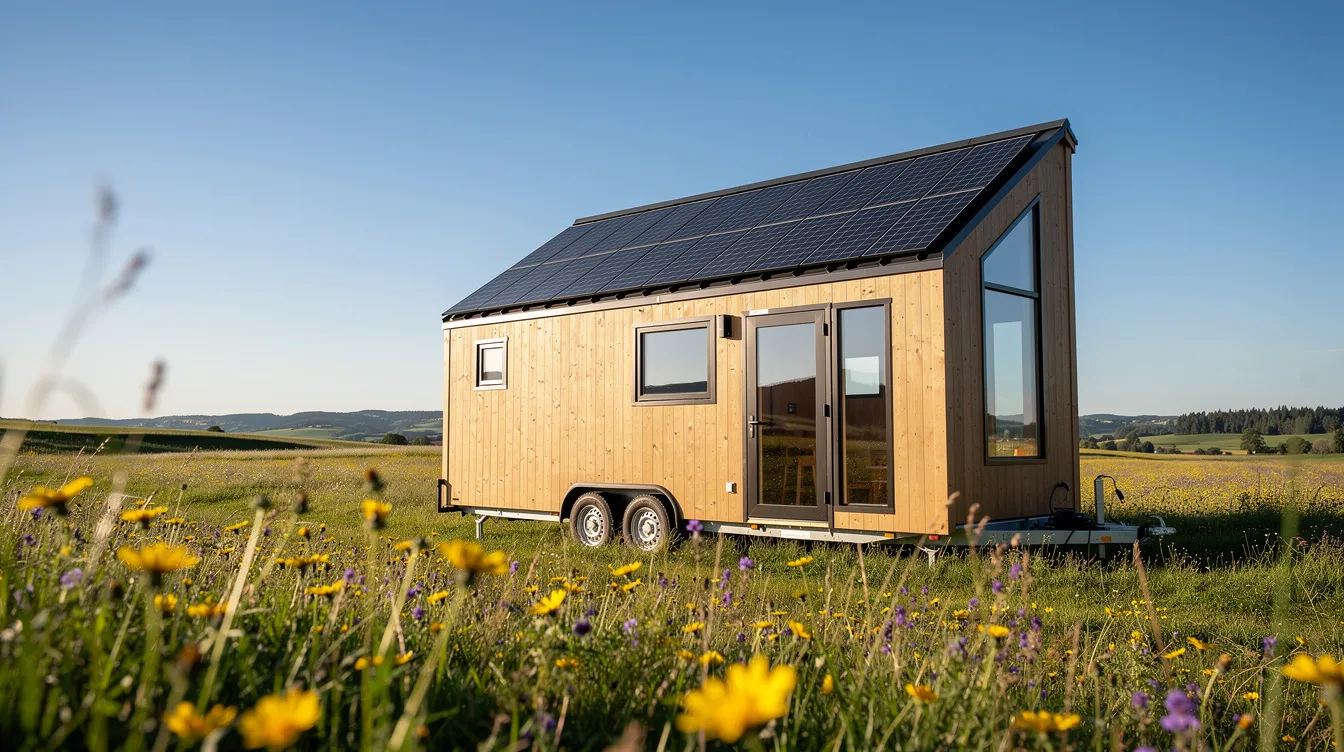
Tiny houses and solar power are a natural match. With energy consumption averaging just 2–10 kWh per day, tiny homes need far less electricity than standard houses. That modest power usage makes solar panels not just viable but often the smartest choice for energy independence.
This guide focuses on choosing the best solar panels and complete solar system setups for tiny homes in 2026. Panel efficiency has jumped to 22–24%, and battery technology has improved dramatically. Whether you’re planning an off grid cabin or a mobile tiny house on wheels, you’ll learn how much solar power you need, how many solar panels to buy, and which products deliver the best performance.
We’ll also cover practical issues like easy installation options, performing security verification on your equipment, and building a reliable battery backup system for round-the-clock power.
- Benefits and Drawbacks of Solar Panels for Tiny Houses
- How Much Solar Power Does a Tiny House Need?
- Best Types of Solar Panels for Tiny Houses
- Top Solar Panel & Kit Recommendations for Tiny Houses (2026)
- How Many Solar Panels for Your Tiny House? (Practical Scenarios)
- Designing a Tiny House Solar System: On-Grid vs Off-Grid
- Core Components of a Tiny House Solar System
- Where to Install Solar Panels on a Tiny House
- Cost, Incentives, and Long-Term Savings
- Safety, Maintenance, and Performing Security Verification
- DIY vs Professional Installation for Tiny House Solar
- Conclusion: Choosing the Best Solar Panels for Your Tiny Home
- FAQ
- Can a tiny house run completely off grid with just solar panels and batteries?
- Is it better to oversize my solar panels or my battery bank for a tiny house?
- Can I tow a tiny house on wheels with rooftop solar panels installed?
- Do solar panels work well in cold or cloudy climates for tiny homes?
- How long do solar panels and batteries last on a tiny house?
Benefits and Drawbacks of Solar Panels for Tiny Houses
Every tiny house owner should weigh the pros and cons before investing in a solar panel system, alongside broader considerations about tiny house living, inspiration, and resources. Here’s what you need to know.
Benefits:
- Installing solar panels can significantly reduce or even eliminate electricity bills, especially in sunny areas where net metering is available. A 3 kW system can save $1,500–$3,000 yearly compared to grid rates.
- Solar energy is a renewable resource that helps reduce greenhouse gas emissions and other pollutants, contributing to a healthier environment. Solar is an eco friendly way to power your lifestyle.
- Using solar panels can increase the resale value of a tiny house, as many buyers are willing to pay more for homes that utilize renewable energy sources—typically 5–10% higher resale values.
- Solar enables true off grid living. Park on remote land, use BLM permits, or travel freely without hunting for hookups.
- Solar systems run silent. No generator noise at 70–90dB disturbing your peaceful tiny home.
Drawbacks:
- High upfront cost remains the biggest barrier. A 3 kW tiny house system with battery backup can cost $7,000–$15,000 in 2026, depending on components and location.
- Limited roof space caps how many panels you can mount—typically 8–12 panels maximum on most tiny house roofs.
- Production drops 20–40% from shading, winter’s shorter days, or cloudy climates. Planning for these reductions is essential.
- Batteries add weight (100–300 lbs) that can strain trailer capacity and require basic monitoring of state of charge and system health.
- There’s a learning curve for apps and monitoring. Expect 10–20 hours to understand your system fully.
How Much Solar Power Does a Tiny House Need?
How much solar power you need depends on actual power consumption, not the size of your house alone. The first step is understanding how much energy your household appliances consume daily.
To determine how many solar panels you need for a tiny house, first calculate your daily energy consumption in watt-hours by listing all appliances and their usage times. Here’s a practical approach:
Step 1: List your appliances and calculate daily watt-hours
Use this format: item watts usage time = daily watt-hours.
- 12V fridge: 50W × 24h = 1,200 Wh (1.2 kWh)
- Induction cooktop: 1,500W × 1h = 1,500 Wh
- LED lights: 10W × 5h = 50 Wh
- Laptop: 60W × 4h = 240 Wh
- Water pump: 100W × 0.5h = 50 Wh
- Mini-split AC: 1,000W × 4h = 4,000 Wh
Step 2: Compare your profile
- Minimalist (3–5 kWh/day): Fridge, lights, laptop, small devices
- Standard (6–8 kWh/day): Add cooking, water heating, fan
- High-comfort (10–15 kWh/day): Add AC, electric water heater, EV charging
Step 3: Convert to array size
A typical solar panel can produce between 250 to 400 watts per hour. For a tiny house using 6–10 kWh daily, you’d need roughly 2–4 kW of panels to fully recharge your batteries in 5 peak sun hours.
- 2 kW array = 5 × 400W panels (minimalist off grid)
- 3–4 kW = 8–10 panels (average tiny house)
- 5 kW+ = 12–16 panels (all-electric with AC)
Always derate by 20% for real-world efficiency losses from inverters, dust, and wiring.
Best Types of Solar Panels for Tiny Houses
There are three main types of solar panels: monocrystalline, polycrystalline, and thin-film. Panel choice matters even more when roof space is limited.
Monocrystalline: Monocrystalline solar panels are the most efficient type, made from single silicon cells. In 2026, they hit 20–24.3% efficiency, packing 400–450W into panels measuring just 1.7m × 1m. The sleek black appearance looks great on tiny roofs. They cost slightly more ($0.60–$0.90/W) but deliver the best value when you need more power from less space.
Polycrystalline: Polycrystalline panels are less efficient and made from multiple silicon cells—typically 16–18% efficiency with a blue-speckled look. They cost less ($0.40–$0.60/W) but require 25% more panels to match monocrystalline output. Best if you have ground space near a stationary tiny home.
Thin-film: Thin-film solar panels are the least efficient type but are generally lower in cost compared to monocrystalline and polycrystalline panels. At 10–13% efficiency, they’re lightweight (2–4 kg/m²) and flexible—ideal for curved metal roofs or weight-sensitive applications. Good for supplemental power, not primary systems.
Durability matters: Look for 25-year power output warranties, wind ratings up to 5,400 Pa, and PID resistance under 2%. These specs are critical for tiny houses that may be towed at highway speeds.
Top Solar Panel & Kit Recommendations for Tiny Houses (2026)
This section highlights concrete solar panel models and ready-made kits well-suited for tiny houses, based on efficiency, reliability, and tiny-space practicality.
Roof-Mounted Panel Picks
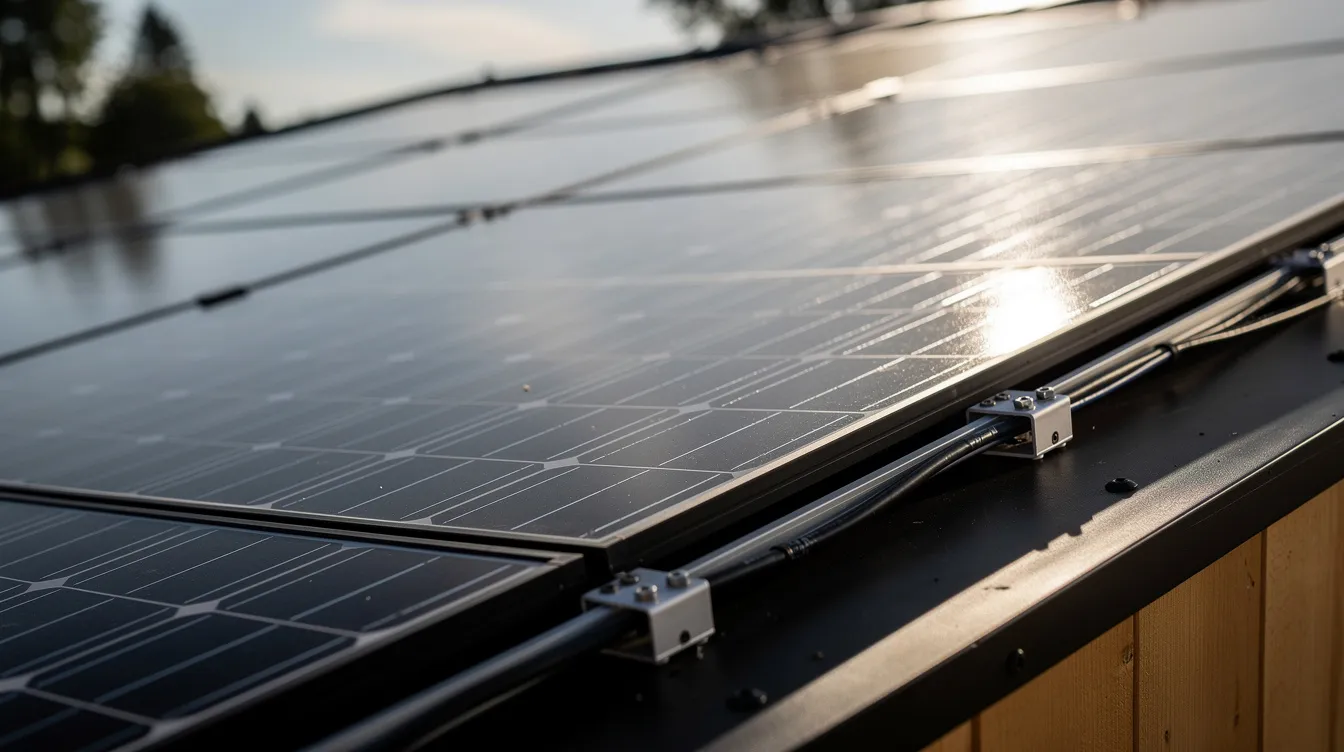
- LG NeON R 370-400W: 22% efficiency with 96 half-cut cells. Low temperature coefficient (-0.30%/°C) means better performance on hot days. 25-year warranty guaranteeing 90.6% output at year 25. Price: $250–$350 per panel.
- Panasonic HIT 325W: 22.2% efficiency with superior 0.26% annual degradation. Excellent in high temperatures (-0.24%/°C coefficient). Compact 1.7m × 1m footprint. Produces 700+ kWh/year. Price: ~$300.
- Canadian Solar HiHero 400-450W: 22% efficiency at a budget-friendly price. Performs well in low-light conditions (92% efficiency at 200W/m² irradiance). Great for cloudy climates.
Portable and Ground-Mounted Panels
- Jackery SolarSaga 100W: 24.3% efficiency in a foldable design. IP67-rated for weather resistance. Perfect for adding more panels when parked in partial shade. Price: ~$200.
- Bluetti PV350: Foldable 350W panel for serious portable power. Easy to deploy around a parked tiny house.
Off-Grid Cabin & Tiny Home Kits
- SunGoldPower 20kW Kit: 32 × 450W panels (14.4 kW array), 30.72 kWh LiFePO4 battery storage, dual 10kW split-phase inverters. Expandable and offers 24/7 off grid capability. Price: $15,000–$20,000.
- Eco-Worthy 10kW Kit: 12 × 410W panels, 20.48 kWh batteries. Solid mid-range option at ~$8,000.
- Rocksolar 3.5kW Starter Kit: Budget-friendly for weekend cabins. $4,000–$6,000.
Warranty lengths typically run 10–12 years product, 25 years performance for panels; 5–10 years for batteries and inverters.
How Many Solar Panels for Your Tiny House? (Practical Scenarios)
How many solar panels you need depends on your energy budget, climate, and whether you plan to live fully off grid or mostly grid-tied.
Scenario 1: Weekend Cabin (3–5 kWh/day) Basic lights, fridge, phone charging. About 4–6 × 200–250W panels. Total array: 1–1.5 kW.
Scenario 2: Full-Time Off Grid (7–10 kWh/day) Fridge, cooking, laptop, water pump, fans. About 8–12 × 350–450W panels. Total array: 3–4 kW.
Scenario 3: High-Use All-Electric (12–15+ kWh/day) Mini-split AC, electric water heating, multiple devices. About 12–16 × 400W panels. Total array: 5–6 kW.
Real-world factors to consider:
Most people should oversize their array by 20–30% above calculated needs. Winter brings only 2–3 sun hours versus 6 in summer. The location of your tiny house significantly affects solar panel efficiency; areas with more sunlight, like southwestern states, will require fewer panels compared to regions with less sunlight.
Roof area and orientation limit maximum panel count. An 8 × 10 ft roof might fit only 8 panels. Consider mixing rooftop with ground-mounted or portable panels.
Battery capacity should match 1–2 days of average use for serious off grid setups. A 10 kWh daily user needs 10–20 kWh of battery backup, which should be factored into tiny house plans that fit your life.
Designing a Tiny House Solar System: On-Grid vs Off-Grid
Two main approaches exist: grid-tied with or without battery backup versus fully off grid systems. Tiny house owners often lean toward off grid independence, especially when choosing self-contained tiny homes for modern off-grid living.
Grid-Tied Systems:
- Net metering lets you export excess power for credits at 1:1 rates in 20+ states
- Lower upfront cost—less battery storage needed
- Grid serves as backup during low-sun periods
- Requires utility access and permits
Off-Grid Systems:
- Total independence from utility companies
- Ideal for remote land or mobile tiny houses on wheels
- Requires larger battery bank (10–20 kWh minimum)
- Consider propane backup for 10+ cloudy days
Hybrid Systems: Many owners choose grid-tied with battery backup. Run critical loads (fridge, lights, Wi-Fi) during outages or when traveling. Inverter type matters here—hybrid inverters like Sol-Ark 12K offer seamless grid/off-grid switching.
Your decision affects inverter selection and wiring layout throughout the tiny house, and it should align with your overall plan for how to build a tiny house.
Core Components of a Tiny House Solar System
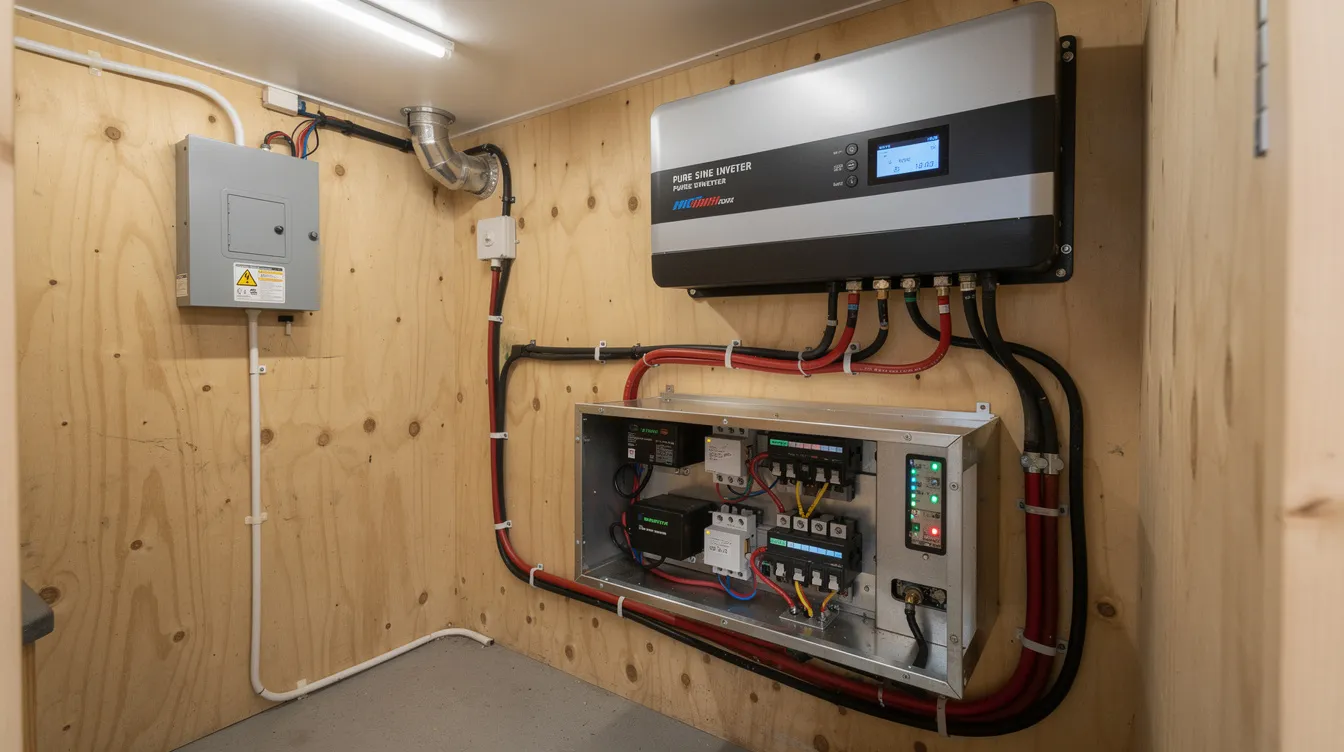
Solar panels are only one part of the solar power system. A solar panel installation typically requires components such as solar panels, a battery backup, an inverter, and a charge controller to manage power supply effectively.
Essential Components:
Component | Function | Recommendation |
|---|---|---|
Solar panels | Convert sun’s rays hit into electricity | 400W monocrystalline |
MPPT charge controller | Optimizes charging (98% vs PWM’s 70%) | Victron 150/60 |
Inverter | Converts DC to AC power | Pure sine wave, 3kW+ |
Stores energy for night/cloudy use | LiFePO4, 10–20 kWh | |
Combiner box/breakers | Safety and overcurrent protection | NEC 690 compliant |
Monitoring system | Tracks performance and alerts | VictronConnect app |
Battery Storage Guidance: Modern LiFePO4 batteries deliver 6,000+ cycles at 80% depth of discharge—versus only 500 cycles for lead-acid. They’re safer, lighter, and last 10–15 years with proper management. A 10–15 kWh bank suits most tiny homes. |
Safety Basics: Grounding, overcurrent protection, and disconnects are essential. Have a licensed electrician review your wiring for code compliance, especially if you’ll tow on public roads.
Where to Install Solar Panels on a Tiny House
Location choices involve trade-offs between rooftop, ground-mounted, and portable solar panels.
Rooftop Installation:
- Best for mobility—panels travel with you
- Limited by roof space (typically 50–150 sq ft)
- Watch for shading from vents, skylights, or trees
- Secure with Eternabond seals to prevent vibration damage during towing
Ground-Mounted Systems:
- Works well for stationary tiny houses
- Easier to tilt for seasonal optimization (30–45° increases yield 20–40%)
- Simpler maintenance and snow removal
- Requires secure racking and possibly fencing
Portable/Foldable Panels:
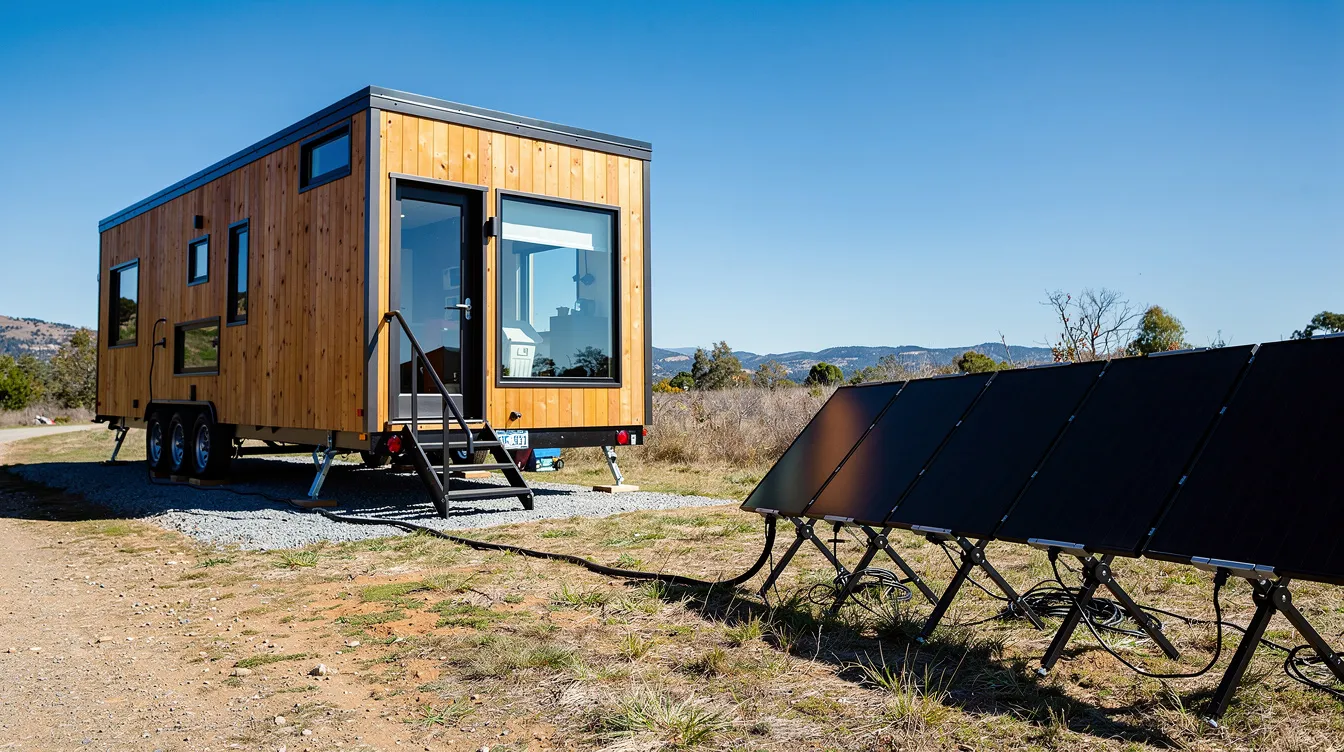
- Great for “chasing direct sunlight” while parked in shade
- Store safely inside when moving
- Add 1–2 kW flexibly to your system
When installing solar panels, consider the location and orientation to maximize sunlight exposure; panels should be tilted towards the true south in the Northern Hemisphere for optimal performance. Optimal tilt equals your latitude ±15° seasonally.
Cost, Incentives, and Long-Term Savings
While solar has significant upfront cost, the long-term savings are substantial for tiny houses with modest energy needs, and tools like a tiny home cost calculator help you plan both the house and the solar budget together.
2026 Cost Ranges:
System Type | Cost per Watt | Total System Cost |
|---|---|---|
2 kW grid-tied | $1.50–$3.00/W | $3,000–$6,000 |
3 kW with batteries | $3–$5/W | $9,000–$15,000 |
5 kW full off-grid | $3–$5/W | $15,000–$25,000 |
Incentives: The federal Investment Tax Credit (ITC) covers 30% of system costs through 2032. State rebates add 10–20% in many areas. A $15,000 system could net down to $10,000 after credits. |
Payback Period: Tiny houses see faster payback than larger homes—typically 4–7 years. If you were spending $200/month on generators or expensive grid connections, solar pays for itself quickly.
Beyond money, many owners value the eco friendly lifestyle, resilience during outages, and freedom to site their tiny home where grid hookups are impossible, especially those drawn to minimalist tiny houses for sustainable living.
Safety, Maintenance, and Performing Security Verification
Good installation practices and routine checks protect your investment and keep your system running efficiently.
Electrical Safety:
- Use correct wire sizing, breakers, and fuses per NEC 690 standards
- Ground all components to the trailer chassis
- Have a licensed electrician sign off before towing on public roads
Physical Security:
- Use tamper-proof fasteners and Starlock washers to deter theft (5–10% rural risk)
- Secure ground-mounted panels with locks or fencing
- Consider motion-sensing lights near your array
Performing Security Verification: Periodic system checks are essential. Review inverter and charge controller logs weekly. Monitoring apps show state of charge, production figures, and BMS alerts. Watch for abnormal temperatures, error codes, or sudden production drops. This verification successful approach catches problems early.
Security service for your system also means protecting against malicious bots if using cloud-connected monitoring—enable two-factor authentication.
- Clean panels quarterly for 5% yield improvement
- Inspect connections for corrosion or rodent damage
- Check firmware updates for smart inverters
- Respond ray id errors in monitoring apps promptly
DIY vs Professional Installation for Tiny House Solar
Many tiny house owners are DIY-minded, but solar involves high-voltage DC and AC that requires careful planning.
DIY Installation:
- Suitable for those comfortable with wiring and manuals
- Start with plug-and-play solar kits or portable systems
- Get designs reviewed by a professional even if doing work yourself
- Pre-wired kits show 80% success rates per DIY Solar Forum surveys
Professional Installation:
- Higher upfront labor cost but ensures code-compliant work
- Optimizes system design for more power and longevity
- Often required for grid-tied permits and inspections
- Essential if unfamiliar with electrical work
Hybrid Approach: Have an installer handle high-voltage wiring while you mount panels and run conduit under guidance. This saves money while maintaining safety and pairs well with affordable tiny house buildings and designs.
Document everything—schematics, labels, manuals—for future troubleshooting, resale, or inspections, whether you’re customizing a DIY build or assembling Home Depot tiny house kits.
Conclusion: Choosing the Best Solar Panels for Your Tiny Home
The best solar panels for a tiny house balance efficiency, available roof or ground space, budget, and lifestyle goals.
Key decisions to make:
- Calculate how much electricity you consume daily with a detailed appliance audit
- Determine how many watts you need and how many panels fit your space
- Decide on battery backup size for your off grid needs
- Choose between rooftop, ground-mounted, or portable panels
To meet a daily energy requirement of around 21,631 watt-hours (for a high-use setup), you may need approximately 11 to 12 panels. Most people need far less.
Start by mapping your energy needs, then compare 2–3 panel and kit options. Tiny house solar is a wise decision that delivers an eco friendly way to gain energy independence, eliminate electric bills, and enjoy the freedom to live wherever the sun shines, especially if you’re evaluating tiny houses for sale and whether they’re right for you.
The planet thanks you. Your budget will too.
FAQ
Can a tiny house run completely off grid with just solar panels and batteries?
Yes. A well-designed system with enough power capacity and a properly sized LiFePO4 battery bank can power a tiny house 24/7. You’ll need accurate load calculations—figure 4 kW of panels plus 20 kWh of storage for 95%+ success rates. Some lifestyle flexibility helps, and a backup generator covers extended cloudy periods lasting 10+ days, especially in tech-forward tiny smart homes for efficient living.
Is it better to oversize my solar panels or my battery bank for a tiny house?
Prioritize enough panel capacity first. More panels means faster battery recharging and more power on cloudy days. Size your battery bank to cover at least 1–2 days of typical use at 50% depth of discharge. If budget and space allow, oversize both for maximum resilience.
Can I tow a tiny house on wheels with rooftop solar panels installed?
Many owners do tow with panels mounted. The racking must be rated for highway wind loads (up to 5,400 Pa), wiring must be well-secured, and total height must stay under 13.5 ft in most regions. Some owners remove or fold portable panels for long-distance moves.
Do solar panels work well in cold or cloudy climates for tiny homes?
Panels actually operate more efficiently in cold temperatures—voltage increases 10–20% per 10°C drop. However, shorter winter days mean less total production. Angle panels correctly, add 50% more panel capacity than summer calculations suggest, and consider a backup heat source not fully dependent on solar.
How long do solar panels and batteries last on a tiny house?
Quality solar panels carry 25-year performance warranties and often last 30+ years. Modern LiFePO4 batteries retain most capacity after 10–15 years of daily cycling (6,000+ cycles) when properly managed with appropriate charge controllers and monitoring.