

Key Takeaways
- Every tiny house plumbing diagram shows three core systems: fresh water coming in through an inlet or tank, hot and cold PEX lines distributing to fixtures, and plastic drain lines carrying waste water to gray or black water handling.
- Main options include on grid setups with city water hookup, off grid systems with water storage tanks and a 12V pump, and hybrid layouts that switch between both.
- Use PEX plumbing for all water supply lines, PVC or ABS for your drainage system, and always include a clear plumbing vent plus a house shut off valve in your diagram.
- Planning your tiny house plumbing diagram carefully—fixture locations, slope drain lines, freeze protection—saves major time and money during the build.
- DIY materials typically run $400–$1,200 for a 20–28 foot tiny house in 2024–2026, while hiring a plumber adds $800–$2,000 in labor.
Introduction: How Tiny House Plumbing Works (and Why Your Diagram Matters)
Tiny houses still need all the plumbing of a regular home. Kitchen sink. Bathroom shower. Hot water for dishes. The difference? Everything fits in a 100–400 square foot footprint.
Planning a tiny house plumbing system requires careful consideration of space, water source, and the layout of pipes to ensure efficient water distribution and drainage. Every tiny house plumbing diagram must show three interconnected parts: fresh water supply entering the home, hot and cold distribution networks running to fixtures, and drain pipes carrying waste water out.
This guide walks through sample layouts, step-by-step diagrams, and practical tiny house plumbing tips for DIY builders working between 2024–2026. The focus is on tiny houses on wheels (THOW), but stationary tiny residences use nearly identical principles. You’ll see both on grid and off grid layouts, from a simple foot pump sink setup to complex systems with tankless hot water heaters.
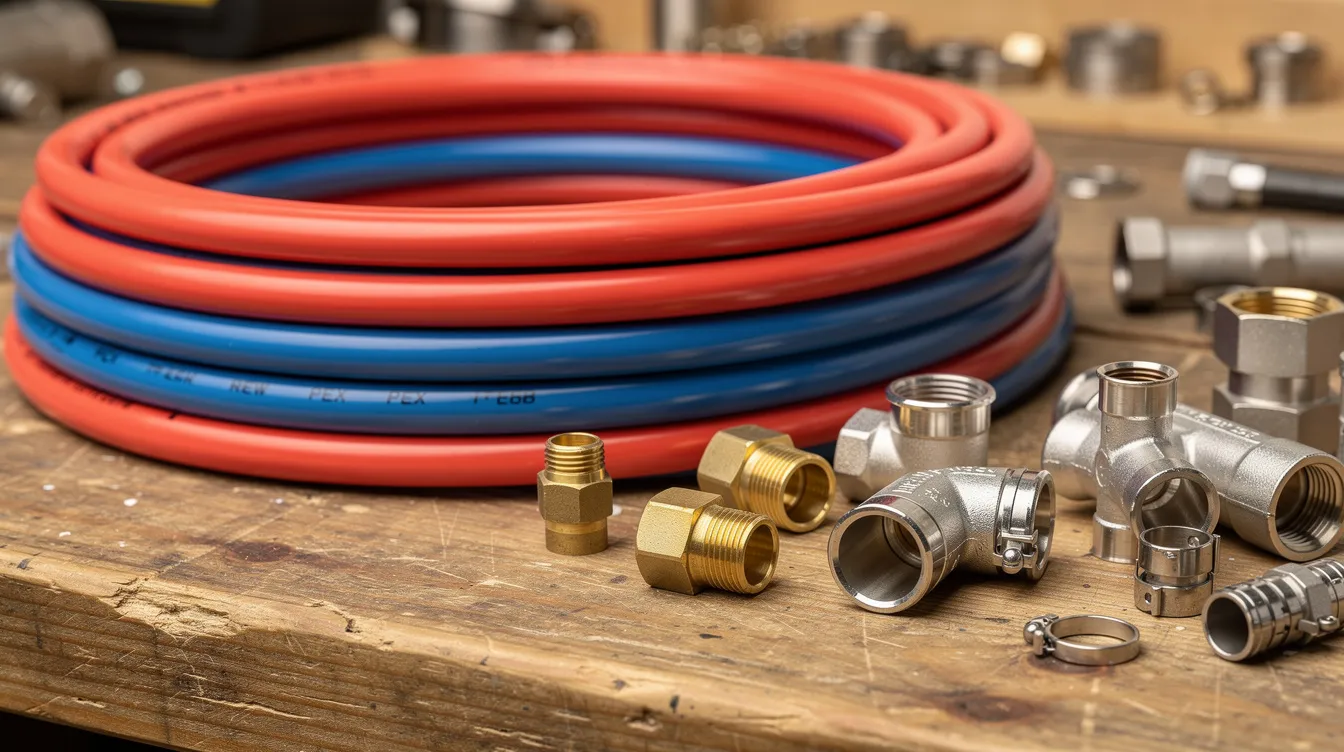
Core Tiny House Plumbing Diagram: From Water Source to Drain
A complete tiny house plumbing diagram shows everything in one view. Here’s what every diagram must include:
Components to label:
- Water inlet (RV water inlet or fresh water inlets) or onboard water tank
- ½” blue colored PEX cold water line
- ½” red PEX hot water line
- Water heater (tankless or small tank)
- Kitchen sink
- Bathroom sink
- Bathroom shower with shower drain
- Toilet (traditional toilet or composting toilet)
- Main plastic drain line
- Plumbing vent stack
How Cold Water Flows
The cold water line enters through your water inlet and immediately splits at a manifold. One branch feeds directly to the water heater. Other branches run to:
- Toilet supply (1–3 GPM)
- Cold side of kitchen and bathroom sinks
- Shower mixing valve
- Optional washer connection
- Outdoor faucet if included
How Hot Water Flows
Hot water leaves the water heater and feeds only the hot side of fixtures. This red PEX path connects to:
- Hot side of kitchen sink
- Hot side of bathroom sink
- Shower hot inlet
Keeping hot water runs short (10–20 feet) minimizes heat loss in your tiny home.
How Drains Combine
All fixture drains connect into a single main line under the subfloor. This PVC or ABS plastic drain slopes toward either:
- RV sewer line connection
- Septic system or septic tank
- Portable gray water tank
Typical pipe sizes for your diagram:
Component | Pipe Size |
|---|---|
Water supply lines | ½” PEX |
Sink drain branches | 1½” plastic |
Shower drain line | 2” plastic |
Main drain (with flush toilet) | 3” plastic |
Tiny House Water Systems: On Grid, Off Grid & Hybrid Layouts
Three main water sourcing strategies exist. Each shares the same internal house plumbing but differs in how water enters and waste exits.
Feature | On Grid | Off Grid | Hybrid |
|---|---|---|---|
Water source | City water via RV spigot | Storage tank (40–80 gal) | Both options |
Key components | Pressure regulator, inlet valve | 12V pump, filters, tank | Y-valves, dual inlets |
Typical cost | $400–$800 DIY | $900–$1,500 DIY | $1,000–$1,800 DIY |
Maintenance | Low | Medium-high | Medium |
On-Grid Tiny House Plumbing Diagram
On-grid plumbing systems connect directly to municipal water sources, making them easier to set up and maintain compared to off-grid systems. Most urban tiny houses (70–80% of builds) use this approach.
The diagram shows:
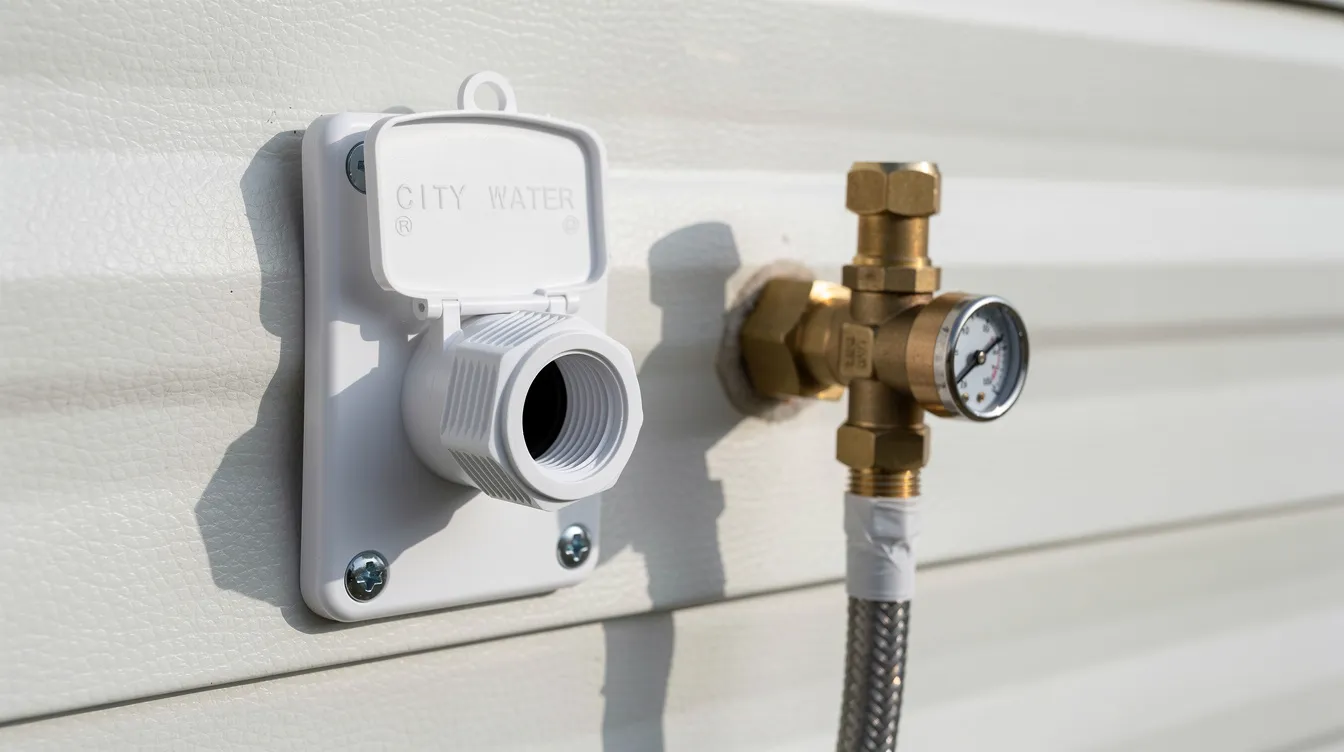
- White NSF-61 certified RV drinking hose connecting to an RV water inlet on the exterior wall
- Inline pressure regulator (drops 60–80 PSI city pressure to safe 40–55 PSI)
- Whole-house shut-off valve immediately inside
- ½” PEX manifold distributing cold water to all fixtures
- Water heater receiving cold inlet, outputting hot to fixtures
For winterizing, the diagram should show:
- Heated hose or heat tape on exposed sections
- Insulated spigot connection
- Blow-out valve for seasonal drainage
The drain side shows a 3” main drain with a standard RV sewer line connection to either a septic cleanout or municipal sewer.
Off-Grid Tiny House Plumbing Diagram
Off-grid plumbing systems require water storage tanks and pumps, which can complicate installation and maintenance, making them generally more expensive than on-grid systems. Living off-grid typically involves using a water tank that must be filled manually, while on-grid systems allow for continuous water supply from municipal sources.
The diagram shows:
- 40–80 gallon polyethylene water tank mounted over trailer axles (330–670 pounds when full)
- Fill port labeled “Fresh Water Fill” on the exterior
- 12V demand pump (Shurflo 2088 series: 3.5 GPM at 45 PSI, 4–6 amp draw)
- Small pressure tank and whole-house shut-off
- ½” cold PEX branching to all fixtures
For heating water, a propane tankless unit mounts on or through an exterior wall with proper exhaust venting. Cold inlet comes from the pump side; hot outlet feeds red PEX to fixtures.
Gray water handling options in the diagram:
- Portable gray tank (15–30 gallons) for manual disposal
- Gray water bed for irrigation where legal
Some areas allow for the use of greywater to water plants or to be dumped freely onto lawns, but it is important to check local laws first regarding greywater disposal. Greywater can be collected in an additional tank for non-potable uses, such as irrigation, which helps in recycling water.
Additional off-grid elements to annotate:
- Battery bank or solar for pump water and controls
- Sediment filter before pump
- Optional UV or carbon filters for tank water
Hybrid Tiny House Plumbing System
A hybrid tiny house plumbing system combines both approaches. The diagram shows:
- City water inlet tee’d into the fresh water line before the pump
- Onboard storage tank with 12V pump
- Ball valves to select which source is active
- Check valves preventing backflow
Two supply modes appear clearly:
- City mode: Hose → regulator → inlet → PEX manifold (pump bypassed)
- Tank mode: Tank → pump → manifold
Waste handling is similarly flexible:
- Direct 3” sewer connection when parked at RV parks
- Capped outlets for portable tanks when boondocking
Small callouts can describe scenarios: “Urban parking 2026: On grid only” vs. “Seasonal off-grid land: Tank + gray water irrigation where permitted.”
Designing Your Tiny House Plumbing Layout
Layout decisions must happen before framing and insulation. Your plumbing diagram should match the tiny house floor plan precisely, including:
- Kitchen location
- Bathroom position
- Water heater placement
- Tank locations (if off grid)
- Washer hookup (if included)
- Outdoor shower (if planned)
Space Planning in Tiny Houses
It is recommended to keep the kitchen sink and shower as close to each other as possible to minimize plumbing complexity and reduce the length of pipe runs. Group all wet areas along one central plumbing wall. This approach can save $300–500 in materials versus scattered layouts.
Key space planning rules:
- Keep water supply lines inside the insulated envelope
- Avoid running water lines in exterior walls (prevents freezing lines)
- Use compact fixtures:
- 24”–25” kitchen sink base cabinets
- 18” vanity for bathroom sink
- 32”–34” shower stalls
Your diagram should include both overhead and side views showing how pex pipes pass through or under 2×4 interior wall chases and the trailer frame without notching structural beams.
Budgeting the Tiny House Plumbing System
Plumbing a tiny house typically costs around $1,000 for a 24-foot home, but this can vary based on the complexity of the plumbing system and the types of fixtures used, and it should be evaluated as part of your overall tiny home cost budgeting.
2024–2026 cost ranges:
Item | DIY Cost |
|---|---|
Basic materials (20–28 ft house) | $400–$1,200 |
Licensed plumber labor | +$800–$2,000 |
Complex off-grid system | +$300–$500 |
If you hire a plumber for your tiny house plumbing, expect to pay between $100 and $200 per hour, with an estimated total of 5 to 10 hours of work required for the entire plumbing system. |
Major cost drivers to consider:
- Number of fixtures
- Composting toilet vs. traditional toilet
- Adding a washer
- Size and type of water heater
Line items to sketch and price on your diagram:
- PEX tubing (red and blue)
- Push fittings and tee style push fitting connections
- Manifolds
- Ball valves
- P-traps
- Water heater
- Pump (if off grid)
- Tanks (fresh water and gray)
Codes, Regulations & Tiny House Plumbing Diagrams
Even tiny houses must comply with plumbing codes. The 2021 NSPC Appendix L and IPC Appendix L specifically address tiny homes under 400 square feet.
Diagrams are often requested for permits, especially for:
- Stationary tiny homes
- Tiny house communities built after 2021
- Any connection to municipal sewer
Minimum fixture requirements typically include:
- One kitchen sink (1.5 GPM max aerator)
- One lavatory/bathroom sink (1.2 GPM)
- One water closet or approved composting system
- One shower or tub (2.5 GPM)
The cost to connect to city sewer and water lines can be significant, with some cities charging over $11,000 just for the tap fee to connect to the lines at the street, so it’s worth comparing different tiny house septic options early in your planning. Sketch a clear diagram showing pipe sizes, venting paths, and cleanouts to make conversations with inspectors smoother.
Drain Plumbing for Tiny Houses: Layout, Plastic Drains & Venting
While water supply lines are under pressure, drain pipes rely entirely on gravity. This makes slope, venting, and trap placement critical in any tiny house plumbing diagram.
Greywater is defined as all wastewater from a household except for the wastewater from toilets, including water from sinks, showers, baths, washing machines, and dishwashers. Your diagram should clearly differentiate gray water (sinks, shower) from black water (toilet).
Installing Plastic Drains for Sinks and Showers
When designing a plumbing system for a tiny house, it is crucial to ensure that drain lines are sloped properly at a minimum of ¼ inch per foot to prevent clogs and ensure proper drainage.
Your diagram should show:
- 1½” plastic drain from kitchen and bathroom sinks
- 2” drain from the shower drain
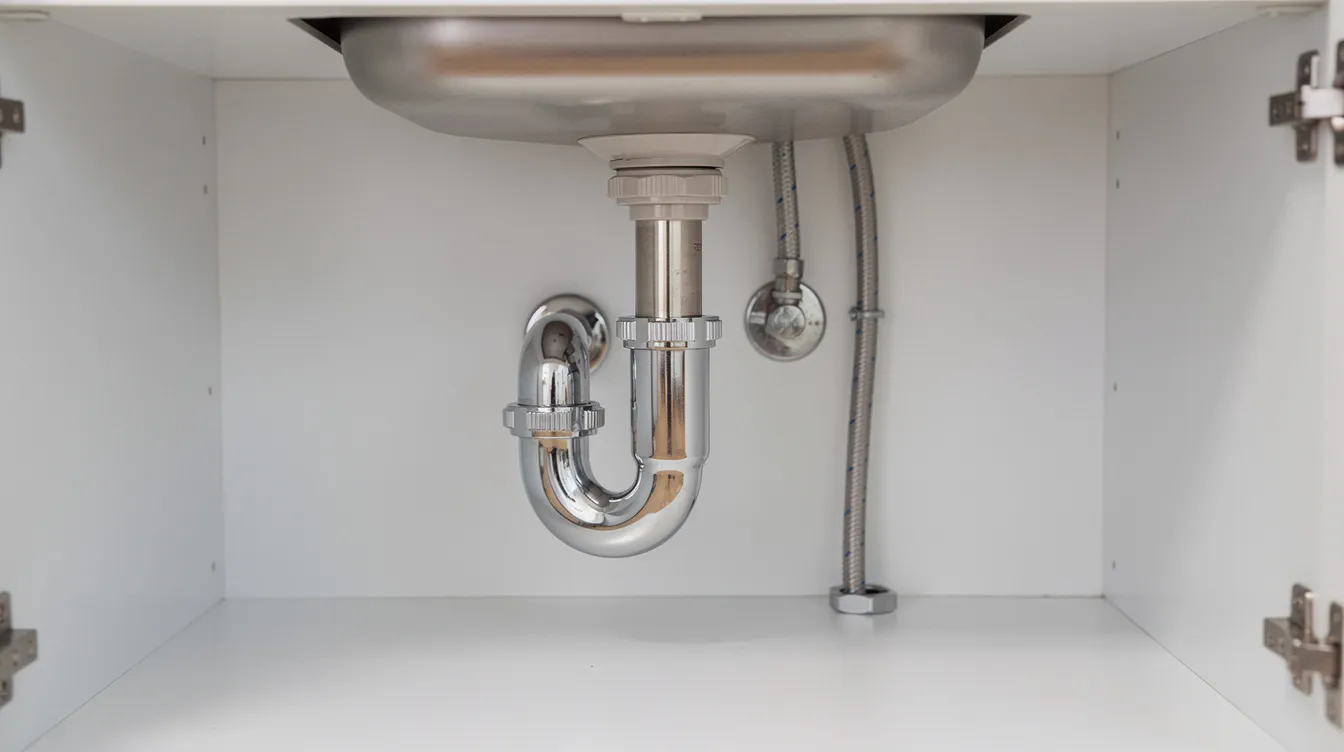
- P-trap under each fixture (retaining 2–4 inches of water seal)
- Main under-floor drain line (2” or 3” PVC)
- Slope labeled at ¼ inch per foot
For odor control:
- Show traps filled with water
- Include short vent lines
- Use plastic drain assemblies at sinks
When managing greywater, it is recommended to use environmentally safe soaps and to avoid draining anything harmful to the environment.
Install the subfloor and test-fit the shower base first. Then locate the exact position for the shower waste line before finalizing the diagram.
Combining All Drains into a Main Line
Use a trunk-and-branch diagram: individual branch drains from kitchen sink, bathroom sink, and shower feed into a single main drain line under the floor.
Drain combining guidelines:
- 1½” branches reduce into a 2” or 3” main
- Use long-sweep elbows instead of sharp 90s (reduces clog risk 20–30%)
- For flush toilets: straight, vertically aligned 3” drop into main
- Draw cleanout at the base of the stack for maintenance
Add a note in the diagram legend about future-proofing: include capped tees for later additions like an outdoor faucet or second sink.
Plumbing Vents in Tiny Houses
Every trap needs venting to avoid siphoning and gurgling, even in a compact tiny house plumbing system.
Two common vent strategies for your diagram:
- Conventional roof vent stack (2” pipe through roof)
- Air admittance valves (AAVs) under sinks where allowed by code
The diagram should show at least one main vent stack continuing above the roof line when connected to a sewer or septic tank.
Composting toilets may not require a traditional plumbing vent but often have their own small exhaust vent. Label this separately in the diagram from the drain plumbing vent system.
Plumbing Materials in Tiny Houses: PEX, Drains & Valves
Modern plumbing in tiny houses overwhelmingly uses PEX for water supply lines and pvc pipes or ABS for waste water. Here’s why, and how this fits into the broader steps of building a tiny house.
Diagram legend to include:
- Blue PEX = cold water
- Red PEX = hot water
- White PVC = drain
- Black ABS = drain (alternative)
- Dotted lines = vents
- Special icon = house shut off valve
PEX Plumbing for Tiny Houses
PEX, or Cross-Linked Polyethylene, is a popular plumbing material for tiny houses due to its affordability, flexibility, and resistance to freezing temperatures. Using PEX for plumbing in tiny houses is advantageous due to its flexibility, ease of installation, and ability to withstand freezing temperatures, making it ideal for small spaces.
Why PEX dominates tiny house plumbing:
- ½” PEX handles most water supply lines (2–5 GPM at 40–60 PSI)
- ¾” trunk lines reduce friction losses on longer runs
- Minimum bend radius of 5–6 inches for ½” tubing
- Freeze tolerance: expands 3x volume before bursting
Unlike traditional copper and PVC pipes, PEX can be easily connected using quick-connect fittings, which create watertight seals without the need for soldering or gluing. You can use pex push fittings or deburr pex push fittings for secure connections.
PEX tubing is available in various sizes, typically 1/2” or 3/4”, and can be color-coded (red for hot water and blue for cold water) to simplify installation and maintenance. One of the advantages of PEX is its ability to bend around corners, which reduces the number of joints and potential leak points in a plumbing system.
Installation tips:
- Maintain proper bend radius on every pex line
- Protect runs with nail plates in walls
- Don’t reuse fittings after disassembly
- Locate whole-house shut-off ball valve immediately inside the water inlet
Cost: $0.50–$1.00 per foot in 50-foot coils ($60–$80 for red/blue pair in 2026).
Drain, Vent & Fitting Choices
PVC and ABS both work for drain plumbing. Use one consistently throughout and glue with appropriate cement.
Standard components:
- P-traps for sink and shower
- Solvent-welded fittings for main line
- Slip-joint fittings under sinks (easy disassembly)
- Accessible cleanouts at base of main stack
- Cleanouts at strategic points under trailer
Use high-quality valves and unions near the water heater for easier removal. Draw these as distinct symbols in your plumbing diagram.
Water Heaters for Tiny Houses
Two main options appear in tiny house plumbing diagrams:
Type | Capacity | Best For |
|---|---|---|
Compact electric tank | 4–10 gallons | On grid, under cabinet |
Propane tankless | 1.5–2.5 GPM | Off grid, wall-mounted |
Tankless hot water heaters mount on or through an exterior wall to simplify exhaust venting. Tank units fit under a cabinet near kitchen or bath. |
Label in your diagram:
- Cold inlet
- Hot outlet
- Pressure relief valve discharge
- Dedicated shut-off valves for heating water unit
Tie water heater choice to power source (on grid 120V vs. off grid propane/solar) and to hot water demand based on shower length and occupants.
Simple & Advanced Tiny House Plumbing Examples
Three concrete examples show how different complexity levels look on a real tiny house plumbing diagram.
Example 1: Simple Foot Pump Sink Cabin
This minimal diagram works for weekend cabins:
- 5–10 gallon jerrycan of fresh water under counter
- Simple foot pump connected by flexible tubing to single small sink
- Short plastic drain and P-trap to 5–10 gallon gray water container
- Container emptied manually every day or two
No hot water line. No water heater. No pressurized system. Label this setup as “non-pressurized” and “no plumbing vent required.”
This simple foot pump sink arrangement is perfect for part-time tiny house life.
Example 2: 24 ft On-Grid Tiny House with Shower & Kitchen
A realistic 2024–2026 build:
Layout:
- Kitchen at tongue end
- 32” shower and toilet at rear under loft
- City water inlet near kitchen
Diagram shows:
- RV water inlet with pressure regulator
- ½” PEX manifold
- Red/blue PEX runs in central interior wall
- Single 3” plastic drain to RV sewer hose stub-out
Fixtures:
- Deep single-bowl kitchen sink
- Small bath vanity
- Standard shower valve
- Traditional toilet or macerating toilet
Include at least one roof vent, whole-house shut-off, and small electric or propane tankless water heater on bathroom wall. This covers all the plumbing for comfortable full-time living.
Example 3: Off-Grid Family Tiny House with Tanks & Hybrid Layout
A 28–30 ft self-contained off-grid tiny home build for a couple or small family:
Water supply:
- 60–80 gallon fresh water tank over axles
- 12V pump feeding full kitchen, shower, and bunk area sink
- Optional city water inlet with shut-off valves for on grid options in winter
Waste handling:
- Composting toilet (no black tank needed)
- 1½” gray drains from sinks and shower
- 2” drain line to either portable gray tank or gray water bed
Energy components to annotate:
- Solar array powering 12V pump
- Propane tank for tankless water heater
- Insulation wraps on all exposed lines
A family of two typically uses 25 gallons daily (10 shower, 10 cooking, 5 sinks).
Tiny House Plumbing Tips & Best Practices
These practical tiny house plumbing tips directly inform how your diagram should be drawn and built, and complement broader tiny house living inspiration and resources.
Planning & Layout Tips
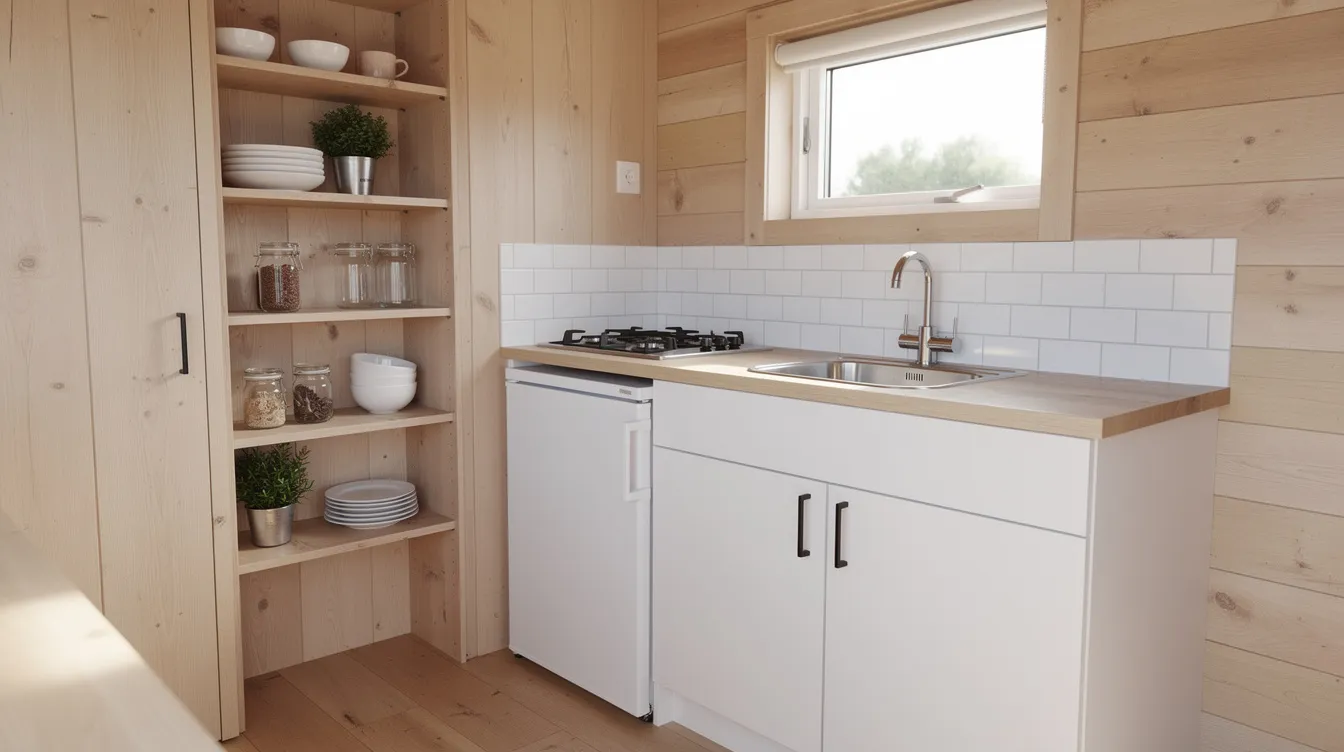
- Place kitchen sink and shower back-to-back to minimize pipe length and elbows
- Spend at least a few focused hours drawing your diagram to scale before ordering parts
- Add notes for clearances: keep pipes away from trailer flanges, wheel wells, and cabinet screw zones
- Plan vent and exhaust routing early, including space for water heater exhaust and bathroom fans
A well-planned plumbing system should include access points for maintenance, allowing homeowners to easily reach water lines and fixtures for repairs or adjustments.
Drain Slope, Freezing & Venting Considerations
- Slope every horizontal drain at ¼ inch per foot—label this explicitly in your diagram
- Run all water lines inside conditioned space where possible
- Use pipe insulation plus heat tape for short unavoidable exterior runs
- Show vent lines rising vertically; mark AAVs as mechanical vents needing periodic replacement
- Level your tiny house at parking spots so drain slopes actually work
Freezing temperatures can burst pipes. Protect against freezing lines with proper insulation and heat tape on any exposed sections, especially if you’re assembling shell structures from tiny house kits that may expose runs on exterior walls or skids.
Valves, Access & Maintenance
- Include a labeled whole-house shut-off valve in every diagram
- Add isolation valves at major fixtures (water heater, outdoor spigots)
- Mark access doors on the drawing (under shower, behind fridge, under kitchen sink)
- Label draw water points and drains under trailer with tags or paint
- Strap and support all pipes and tiny house water tanks securely for road vibration
Tiny houses move. Everything in your diagram must handle travel, especially in custom tiny homes on wheels designed for frequent relocation.
FAQ: Tiny House Plumbing Diagrams & Systems
How much does it cost to install plumbing in a tiny house in 2024–2026?
A basic DIY tiny house plumbing system using PEX supply and plastic drains typically costs $400–$1,200 in materials for a 20–28 ft house. This varies based on fixture count and water heater type. Hiring a licensed plumber adds roughly $800–$2,000 in labor, potentially more for complex off-grid systems with tanks, pumps, and filtration. Sketch a detailed plumbing diagram first and price each component line-by-line.
Do I need a plumbing vent in my tiny house if I use a composting toilet?
Yes. Even with a composting toilet, sink and shower traps still need venting to prevent siphoning and sewer-like odors. Your plumbing diagram should show at least one main vent stack or, where code allows, air admittance valves on individual fixtures. The composting toilet has its own small vent fan and duct—draw this separately from your drain plumbing vent system.
Can I use garden hose and flexible tubing instead of PEX in my tiny house?
Standard green garden hoses are not rated for permanent indoor potable water use and may contain nasty chemicals that leach into drinking water. Use ½” PEX for all permanent water supply lines as shown in diagrams. Limit hoses to external connections using drink-safe RV hoses only. Building inspectors and insurers expect PEX, copper, or cPVC—not improvised hose systems.
How big should my fresh water tank be for an off-grid tiny house?
A solo person living full-time off grid typically uses 8–15 gallons per day. Couples use 20–30 gallons daily with careful conservation. A 40–60 gallon tank works for weekend or part-time use. A 60–80 gallon storage tank is more comfortable for full-time off-grid living between fills. Indicate tank size and weight on your diagram and confirm placement over or near trailer axles for safe towing, and make sure your overall tiny house plan accounts for that weight distribution.
Is tiny house plumbing really something I can DIY from a diagram?
Many tiny house owners successfully install their own plumbing using PEX and PVC, guided by detailed diagrams, manufacturer instructions, and local code research. About 80% report success on DIY plumbing forums, particularly when working with straightforward, affordable tiny house designs. Still, have critical connections (water heater, main drain, vents) reviewed or tested by a professional—especially when tying into city sewer or gas appliances. Treat your plumbing diagram as a working document: refine it, mark revisions, and use it for both construction and later maintenance. Tiny house plumbing work is achievable with good planning.