
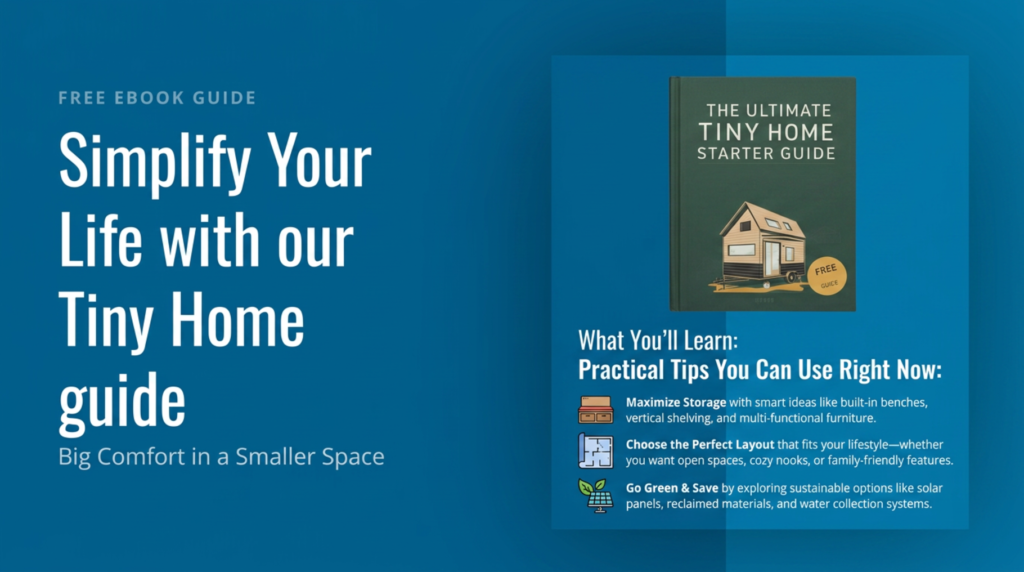
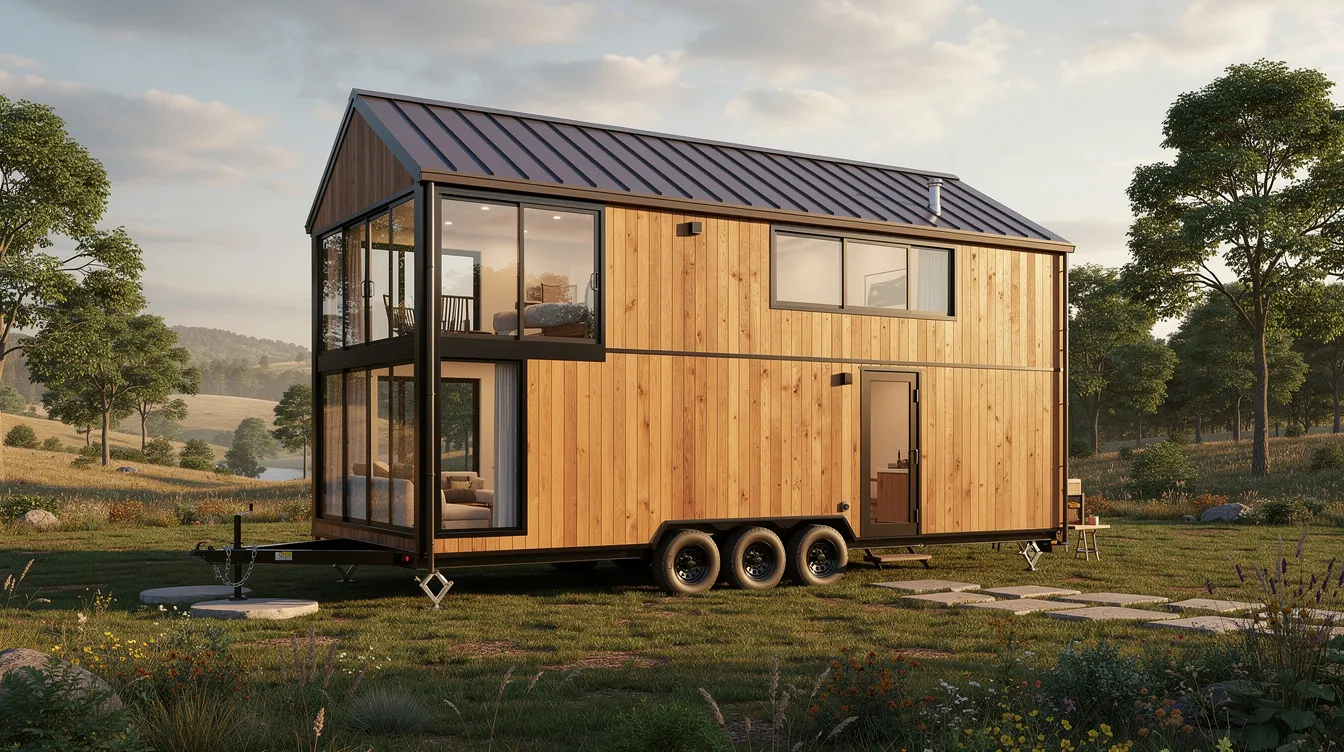
This isn’t your typical tiny house. At 720 square feet across two stories on a 43 ft triple-axle trailer, this build pushes the limits of what portable living can be. Designed for full-time family life, it accommodates up to four true bedrooms—not cramped sleeping lofts you can barely sit up in. The key selling points read like a small cottage checklist: a main floor king bedroom, two spacious lofts, a spa-style bathroom, a full kitchen with real counter space, and a fireplace-centered living room flooded with natural light. While road-legal for transport, the size makes this a dream home best suited for semi-permanent placement on a rural lot, as an ADU, or a vacation rental rather than constant nomadic travel.
- Quick Overview: What Makes This the Ultimate Tiny House
- Design & Dimensions: Pushing the Limits of Tiny Living
- Main Floor Layout: Everyday Living on One Level
- Kitchen That Works Like a Full-Size Home
- Upper Lofts: Two Flexible Spaces, Up to Three Extra Bedrooms
- Comfort Systems, Insulation & Off-Grid Options
- Who the Ultimate Tiny House Is For (and How Much It Costs)
Quick Overview: What Makes This the Ultimate Tiny House
What separates this from typical tiny homes is simple: no compromises. Most towable builds cap out around 400 sq ft with ladder-access lofts and apartment-size appliances. This model stretches to nearly double that living space while remaining under the 800 sq ft threshold that defines a small home.
The configuration works for families of four, couples who frequently host friends, remote workers needing a dedicated office, or multi-generational households sharing a compact footprint, echoing many of the ideas found in tiny homes that redefine small space living. Every room serves multiple functions without feeling cramped. The fireplace anchors a cozy living area. The kitchen handles real meal prep. The bathroom rivals what you’d find in a beach cabin.
Design & Dimensions: Pushing the Limits of Tiny Living
Traditional tiny house definitions cap at around 400 sq ft—often on 28-30 ft trailers with a single loft. This build intentionally stretches those boundaries while staying under 800 sq ft to maintain the efficiency and intimacy that draws people to affordable tiny house living in the first place.
Concrete specifications:
- Interior living space: approximately 720 sq ft
- Trailer length: 43 ft (triple-axle gooseneck)
- Road-legal height: 13.5 ft
- Width: 8.5 ft (standard RV width)
- Estimated dry weight: 12,000-16,000 lbs
The two-story configuration stacks a full-height main level (8-9 ft ceiling) beneath dual lofts that function as genuine bedrooms, a home office, or creative studio. Cedar siding provides 50-year durability with natural insulation properties. A standing-seam metal roof protects the structure while large Low-E windows on three walls deliver 20-30% more natural light than comparable builds.
Walking the layout from hitch to rear: a glass door foyer opens to a 12×15 ft living room, galley kitchen runs along one wall, spa bathroom and king bedroom occupy the rear, and a compact staircase with integrated storage leads to the upper lofts spanning 21 ft and 12 ft respectively—an example of tiny house floor plans that maximize livability.
Main Floor Layout: Everyday Living on One Level
The main floor prioritizes accessibility and long-term comfort. Unlike designs that force daily loft climbing, this layout keeps bedroom, bathroom, and primary living space on a single level—ideal for aging in place or households with young children.
Entry through the front door reveals a generous foyer with coat hooks and a built-in bench, providing a direct sightline through the living area to windows beyond. Circulation flows in a straight shot: living room centered, kitchen on one side, bathroom and bedroom zone on the opposite side.
Wide-plank engineered oak flooring unifies the entire main level, making the space feel larger and more cohesive. The staircase to the lofts is positioned against one wall with 36 cubic feet of integrated storage drawers—avoiding the common mistake of central stairs that fragment tiny floor plans, a detail that’s useful to remember if you plan to build a tiny house yourself.
Living Room & Fireplace-Centered Entertainment
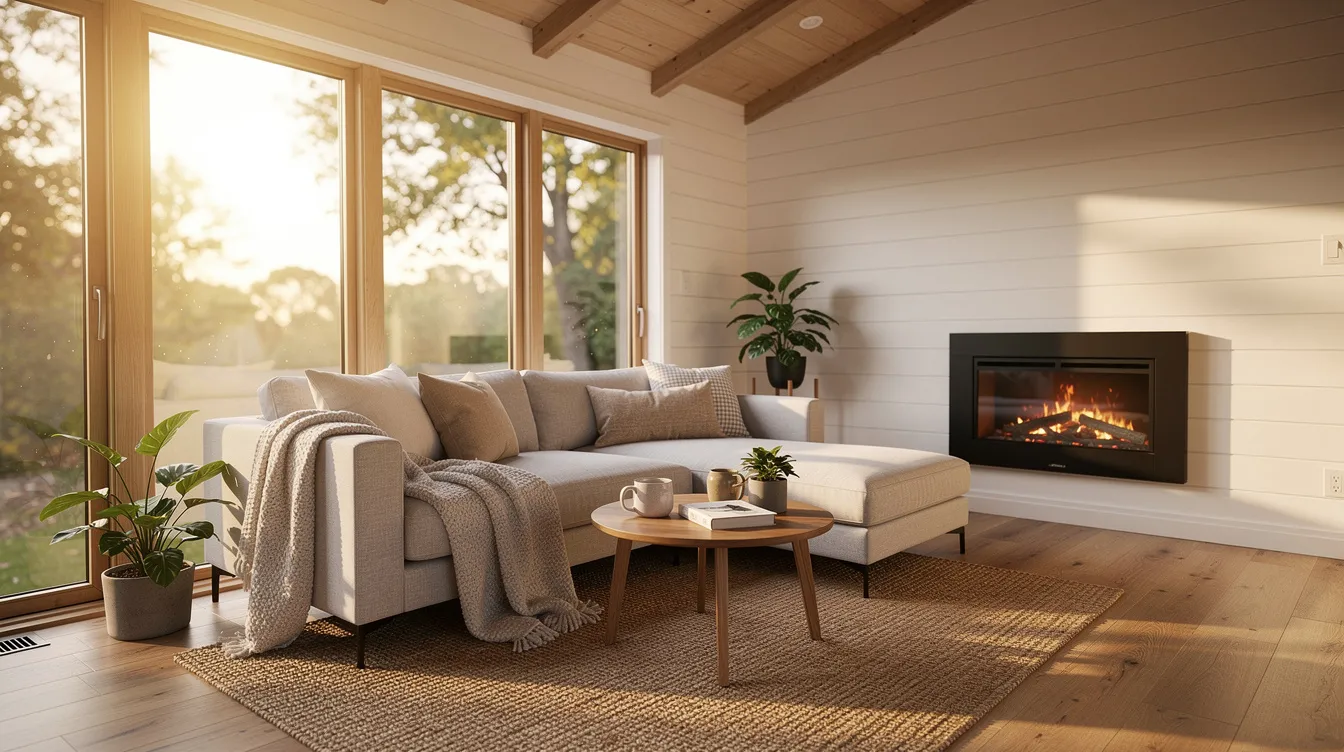
The living room serves as the social heart of this house, designed to fit a full sectional sofa rather than a compact loveseat. At roughly 200 sq ft, the space hosts 6-8 guests comfortably using nesting tables and flexible furniture arrangements.
The built-in entertainment center features:
- Electric or propane fireplace (5-10k BTU for zoned heat)
- Space for a 50-55” smart tv
- Shelving for 100+ books and media
- Concealed cable management
Windows on at least two walls plus sliding glass doors create a bright, open feel despite the compact footprint. Furniture guidance leans toward standard-depth sofas, nesting coffee tables for flexible arrangements, and a wall-mounted drop-leaf desk for laptop work when the dining table is occupied.
Picture movie nights with the fireplace glowing, or game evenings where friends spread across the sectional while snacks cover the coffee table. This isn’t a cramped lounge—it’s a legitimate living area, similar in comfort to many cute tiny house designs for dream homes.
Main-Floor King Bedroom: A Rare Tiny-House Luxury
Here’s a statistic that surprises most people: fewer than 5% of towable tiny homes offer a true walk-around king bed on the main level. Most rely on queen murphy beds or loft sleeping arrangements. This private bedroom changes everything about tiny house livability.
Bedroom specifications:
- King-size bed: 76” x 80”
- Walkway clearance: 18-24” on at least one side
- Full-height ceiling throughout
- Built-in wardrobe wall or closet system
Storage includes under-bed drawers (40 cubic feet), overhead cabinets, and wardrobe space—eliminating the need for off-site storage units. Privacy features include a solid sliding pocket door with STC 45+ sound insulation, buffering the room from living area noise. Dual reading lights (CRI 90+) flank each side of the bed, showcasing the kind of thoughtful details common in top custom tiny homes.
For shift workers sleeping odd hours or couples wanting a relaxing retreat, this setup delivers genuine bedroom privacy. For those considering aging in place, the zero-loft-access requirement makes this a practical long-term dwelling.
Spa-Inspired Bathroom with Full-Size Comfort
Forget RV wet baths measuring 30×30 inches. This bathroom is intentionally designed to feel like what you’d find in a small home rather than a camper.
Key fixtures:
- Walk in tile shower: 36” x 48” with glass door
- Standard flushing toilet (composting upgrade available)
- 48” vanity with real counter space
- Tall linen cabinet for towels and supplies
The tile shower uses large-format porcelain (slip-rated), paired with brushed nickel fixtures and a back-lit defog mirror. A frosted clerestory window provides natural light while maintaining privacy.
Total storage reaches 30 cubic feet between the medicine cabinet, under-sink drawers, and linen tower. Design touches—matte finishes, warm lighting, quality tile—transform daily routines into something closer to spa experience than cramped compromise.
Kitchen That Works Like a Full-Size Home
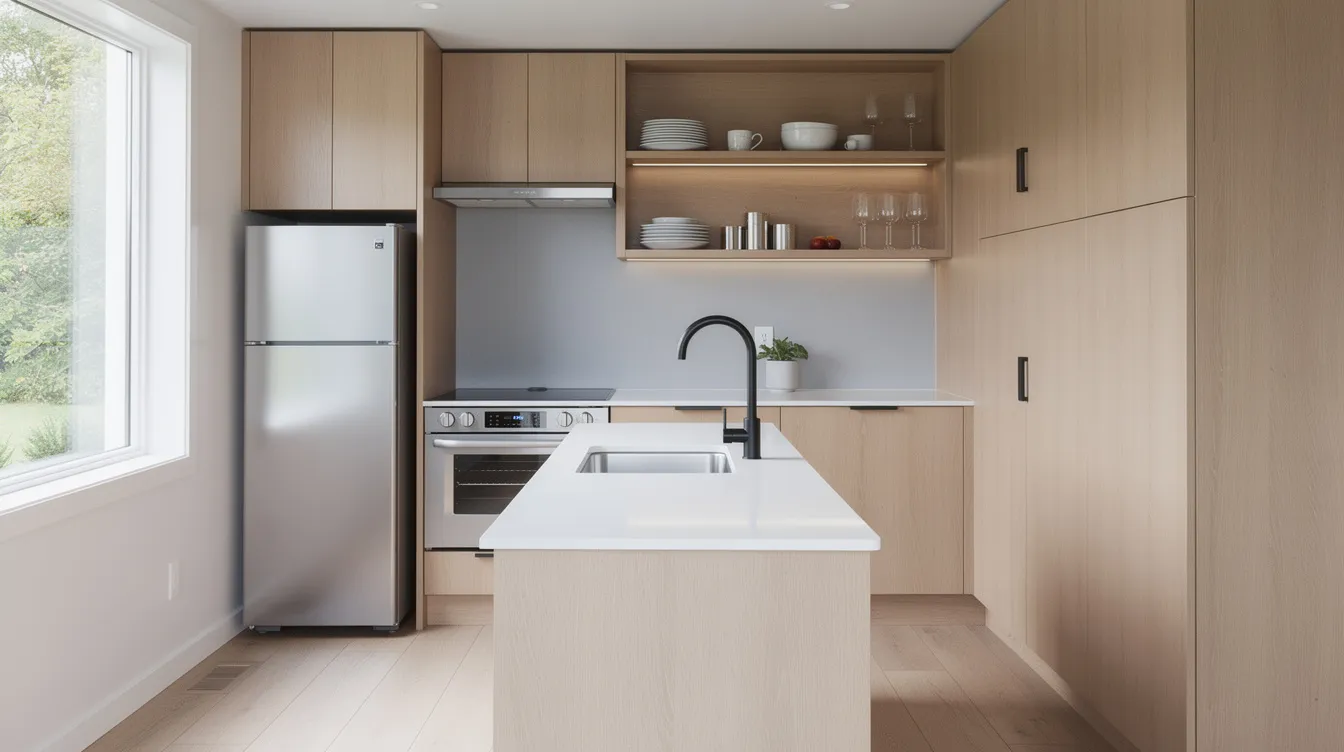
This kitchen exists for daily cooking, not weekend reheating. The layout accommodates two people prepping simultaneously—a rarity in compact builds and a hallmark of many modern tiny house designs.
Appliance lineup:
- 30” slide-in range with 5-burner induction cooktop and 3.5 cu ft oven
- 18 cu ft counter-depth refrigerator
- Deep farm sink (16 gauge stainless)
- 18” drawer dishwasher
- Under-counter microwave
The L-shaped layout delivers 12 ft of quartz counter space, including a dedicated prep zone. Soft-close shaker cabinets maximize storage with 80% capacity utilization. Built-in trash and recycling pull-outs keep bins hidden. A compact laundry zone with a ventless washer/dryer combo (2.4 cu ft) hides behind a cabinet door near the kitchen.
Dining & Multi-Use Workspace
Every tiny house needs a dining area that moonlights as a home office. This space solves that challenge without sacrificing functionality.
Primary options:
- Wall-mounted fold-down dining table (seats 4, 200 lb rating)
- 10 ft dining bar along a window with tuck-under stools
Ergonomic details matter: standard 30” table height for comfortable meals, 24” stools for counter bars. The zone handles laptop work, homeschooling, crafts, and family meals in the same footprint. Pendant lighting frames the nook while windows on the wall provide natural light throughout the day.
Upper Lofts: Two Flexible Spaces, Up to Three Extra Bedrooms
The upper level transforms this from spacious tiny house to genuine small home. Depending on configuration, the lofts provide up to three additional sleeping spaces or dedicate square footage to office and creative uses, illustrating how tiny house plans can fit your life.
Loft dimensions:
- Primary loft: 21 ft span (divisible into two 10×10 ft rooms)
- Secondary loft: 10-12 ft (single bedroom or reading nook)
- Access: Full staircase with storage and safety handrail
The raised roofline with dormers creates 5-6 ft headroom at center—dramatically more usable than traditional 3 ft ladder-access lofts. These function as real rooms, not just sleeping spaces you crawl into.
Family-Friendly Loft Configurations
A typical family layout puts parents in the main floor king bedroom while children claim the upstairs lofts. The 21 ft loft divides into two separate rooms using half-walls, bookcase dividers, or sliding panels—giving each child a sense of their own space.
Built-in storage ideas:
- Under-mattress drawers
- Wall cubbies at railing height
- Shelves that keep floors clear
Safety features include solid railings at loft edges (36” high, 4” gaps per IRC R317.3), low furniture positioning, and integrated night-lights in stair treads. At least one skylight above a bed provides stargazing opportunities and natural ventilation.
Loft as Office, Studio, or Retreat
Remote work has transformed what buyers need from any house—tiny included. Converting one loft into a dedicated office creates separation between living space and work life that kitchen tables can’t provide.
Office setup example:
- Built-in desk along the low wall
- Task lighting with acoustic panels
- Storage cabinets in knee wall space
- Window for natural light and views
Alternative uses include yoga/meditation retreats, craft studios, music rooms, or libraries with floor cushions. One 2026 remote-worker couple uses their 21 ft loft as a side-business studio with dual monitors, printer shelf, and reported 20% productivity gains from the view and dedicated space—similar to how owners adapt tiny house kits into studios or retreats.
Comfort Systems, Insulation & Off-Grid Options
This model is engineered for real-world climates—snowy northern winters and hot southern summers alike. Full climate control isn’t optional when you’re living full-time.
Insulation package:
- Roof: R-30 closed-cell spray foam
- Walls: R-20 high-density insulation
- Floor: R-25 spray foam
- Windows: Low-E triple-pane (U-factor 0.15-0.20)
Comfort systems include a ductless mini-split (12-18k BTU, SEER 25+) for heating and cooling, electric fireplace as supplemental heat, and tankless water heater (6 GPM propane). Airtight construction hits 1 ACH50 for 50% energy savings.
Off-grid upgrades (2026 pricing):
- Roof or ground solar array: 5-10kW ($3/watt)
- Lithium battery storage: 20-40kWh
- Composting toilet: $1,000 (80% water savings)
- Rainwater collection with filtration
Standard hookups include 50A RV electrical, fresh water, and sewer inlets for park or foundation installations.
Energy Efficiency & Year-Round Livability
Good insulation plus airtight construction keeps operating costs low. In mild climates, the mini-split runs at roughly $1.50/day. The small home achieves HERS index below 50—significantly better than most new construction.
Natural light does heavy lifting: large windows on multiple walls plus strategic placement in bedroom and lofts reduce artificial lighting needs by 30%. Low-VOC paints meet Greenguard certification. Durable cedar provides 50-year exterior life.
This isn’t a fair-weather cabin or weekend retreat. It’s a genuine year-round dwelling handling four-season conditions while using 70% less material than a 2,000 sq ft conventional house.
Who the Ultimate Tiny House Is For (and How Much It Costs)
The ideal buyers fall into clear categories: families of four seeking affordable alternatives, couples with frequent guests, remote workers needing home office space, or multi-generational households combining resources—anyone seriously considering whether a tiny house for sale is right for them.
Primary use cases:
- Primary residence on a rural lot
- Accessory dwelling unit (ADU) behind an existing house
- Vacation rental property
- Multigenerational backyard home for aging parents
Realistic 2026 pricing:
- Base cost: $150,000-$170,000 (approximately $220/sq ft including trailer and appliances)
- Customizations: +20% for solar ($20k), upgraded windows ($15k), premium finishes
- Factor $5,000 for delivery and site prep
The tiny home market projects 15% compound annual growth through 2030, driven by average U.S. home prices hitting $400k. At roughly one-third that cost, the ultimate tiny house delivers genuine family-scale living without mortgage stress.
Ready to explore further? Request floor plans, book a virtual or in-person tour, and start designing your own ultimate tiny house tailored to your family’s unique style and lifestyle needs.