
If you’ve been searching for a home that blends dramatic architecture with practical mountain living, a frame house plans 1500 sq ft options deserve your attention. This size hits a sweet spot for couples, small families, and vacation rental investors who want character without excessive square footage.
- Quick Overview of a 1500 Sq Ft A-Frame House Plan
- What Defines a 1500 Sq Ft A-Frame House Plan?
- First Floor Features in a 1500 Sq Ft A-Frame
- Cost to Build a 1500 Sq Ft A-Frame House
- Is a 1500 Sq Ft A-Frame Cheaper Than Other Homes?
- Pros and Cons of a 1500 Sq Ft A-Frame House
- Strength, Safety, and Durability of A-Frame Structures
- Insulation, Energy Efficiency, and Comfort in A-Frame Homes
- Customization and Smart Design Possibilities
- Do 1500 Sq Ft A-Frame Houses Have Basements or Bonus Space?
- Unique Site Considerations for A-Frame Homes
- Is a 1500 Sq Ft A-Frame House Right for You?
Quick Overview of a 1500 Sq Ft A-Frame House Plan
A typical 1500 sq ft a frame house plan offers 2-3 bedrooms, open-concept living, and year-round functionality in snowy or forested locations like the Colorado Rockies, Lake Tahoe, or Vermont. These designs balance cozy interior space with the iconic triangular silhouette that sheds heavy snowfall effortlessly.
Consider a specific example built to 2025 standards: a home with a vaulted great room featuring 24-foot ceilings, a loft primary suite, covered deck, and optional walk-out basement media room. The first floor houses the main living area, kitchen, and a bedroom, while the second floor loft maximizes the dramatic roof shape.
Key features in this size range include:
- Large windows on the gable end (often 20-30 ft high) creating views of nature
- Open-concept kitchen and living room totaling 500-600 sq ft
- Mudroom for ski gear or outdoor equipment (80 sq ft)
- Optional home theater with wet bar in the lower level
- Covered entry protecting against snow and rain
The rest of this article covers cost ranges, pros and cons, structural strength, insulation strategies, and how to decide if this style fits your life.
What Defines a 1500 Sq Ft A-Frame House Plan?
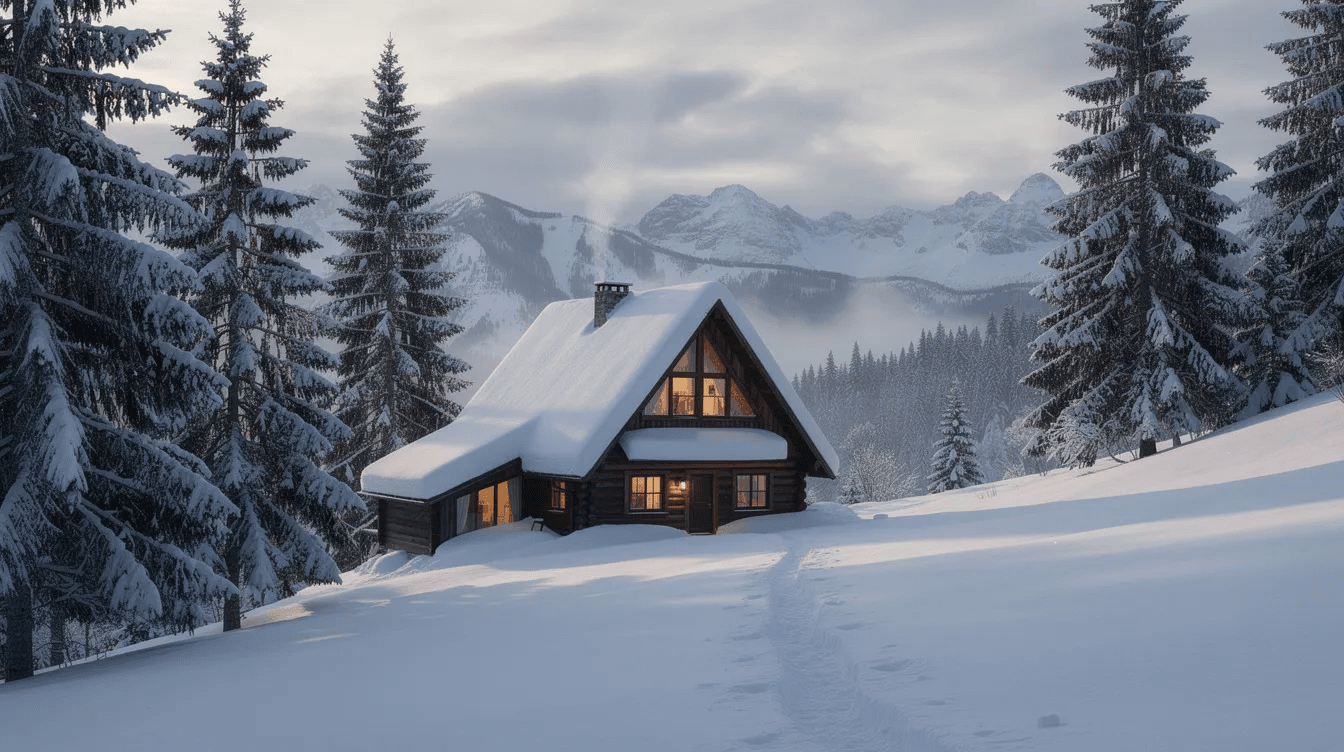
The steeply pitched roof forms the iconic “A” silhouette, with sides extending from the ridge to the foundation walls. This shape eliminates traditional walls on upper levels, creating a unique interior where the roof is the wall.
For house plans in this size, the 1500 sq ft typically spreads across a main floor plus loft or partial second floor:
- Main level (900-1,000 sq ft): Living room, dining area, kitchen, 1-2 bedrooms, and 1 full bath
- Loft (500-600 sq ft): Primary suite, office nook, or bunk sleeping area
- Optional lower level (700-900 sq ft): Media room, guest bedroom, storage
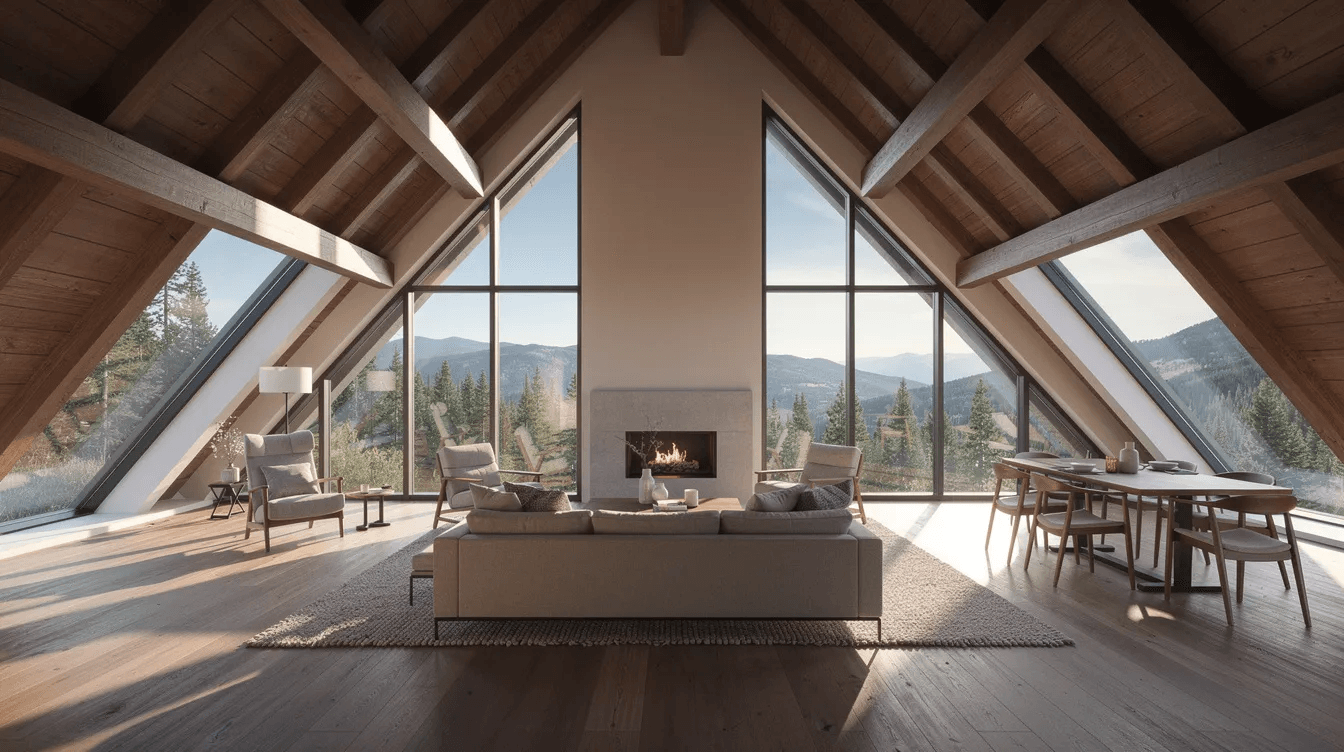
Ceiling heights in the great room reach 18-24 ft, with open trusses and a glass wall creating dramatic central space. The shape verifies that every square foot feels larger than it is.
Concrete design elements in 2024-2026 plans include:
- Energy-efficient triple-pane low-E glazing
- Covered entry to protect from drifting snow
- Compact mechanical room tucked under stairs (50-80 sq ft)
- Built-in storage along sloped walls where headroom drops below 7 ft
Most 1500 sq ft A-frames use a rectangular footprint of 26-32 ft wide by 34-42 ft deep, optimized for narrow mountain lots. Roof pitch typically runs 45-60 degrees, sometimes expressed as 12-on-12 to 21-on-12 slopes.
First Floor Features in a 1500 Sq Ft A-Frame
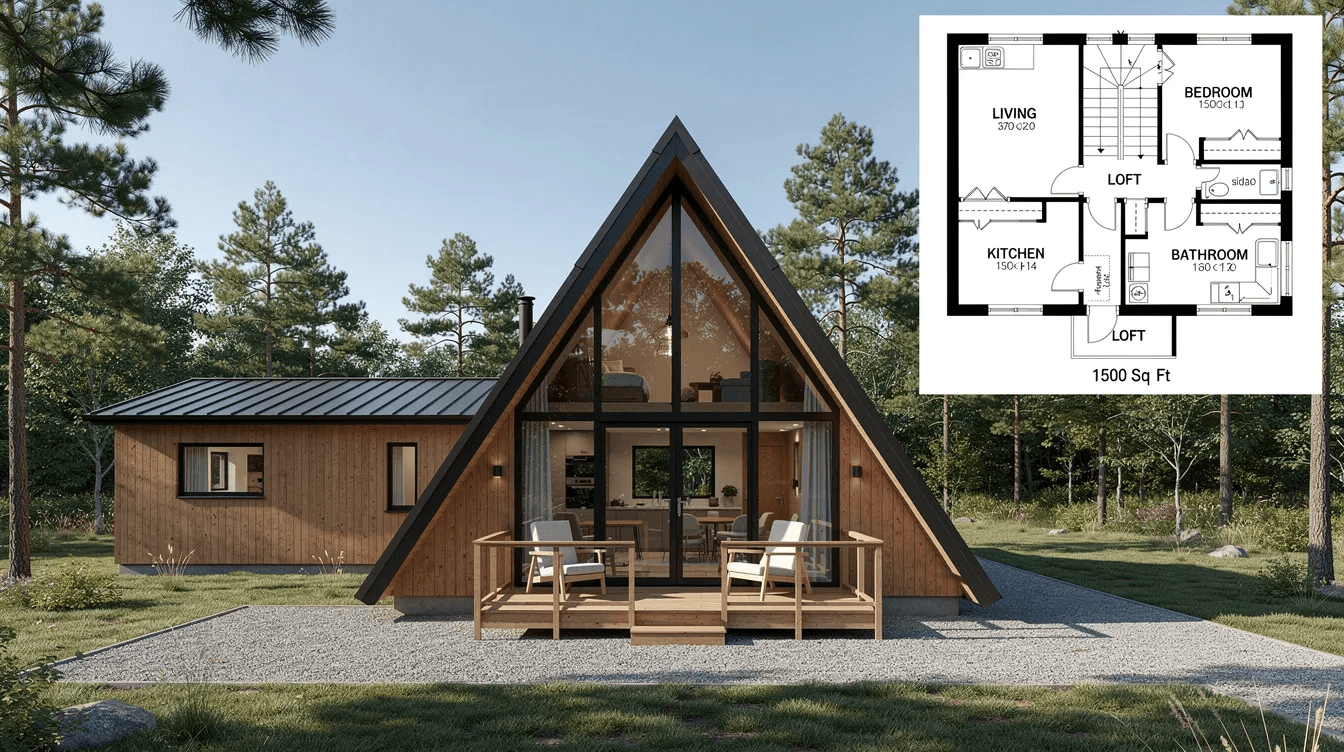
The first floor of a 1500 sq ft a frame house plan is designed to make the most of every inch, blending comfort, style, and a strong connection to nature. Step inside, and you’re greeted by an open living area where large windows stretch from floor to ceiling, flooding the space with natural light and framing breathtaking views of the outdoors. This seamless integration of the living area with the surrounding landscape is a hallmark of frame house plans, making the interior feel expansive and inviting.
A cozy fireplace often anchors the main room, providing warmth and a perfect gathering spot after a day spent exploring the mountains or relaxing by the lake. The kitchen, typically open to the living and dining areas, becomes the heart of the home—ideal for cooking, entertaining, and sharing meals with family and friends. The dining area, positioned to take advantage of the views through the large windows, is perfect for memorable dinners or casual breakfasts as the sun rises.
Depending on the specific frame house plan, the first floor may include one or two bedrooms, offering privacy and convenience for guests or family members. Thoughtful use of space ensures that every room feels comfortable and functional, with clever storage solutions tucked beneath stairs or along walls. Natural materials like stone and cedar are often used throughout, enhancing the home’s rustic charm and creating a sense of harmony with the surrounding environment.
Whether you’re unwinding by the fire, hosting friends, or simply soaking in the views, the first floor of an A-frame house is perfectly suited for both relaxation and entertaining—making it an ideal choice for those who want to live close to nature without sacrificing comfort or style, much like the top A-frame cabin getaways designed for nature escapes.
Cost to Build a 1500 Sq Ft A-Frame House
Building costs vary significantly by location, materials, and whether the frame house serves as a primary residence or vacation retreat. Regional labor rates and site accessibility create the biggest swings.
2025-2026 cost-per-square-foot ranges in the U.S.:
- Upper Midwest (Minnesota, Wisconsin): $150-$225/sq ft
- Mountain towns (Colorado, Montana): $250-$300/sq ft
- Premium destinations (Aspen, Jackson Hole): $300-$350/sq ft
For a 1500 sq ft build, expect total costs of $225,000-$525,000 for basic to high-end finishes, excluding land and major site work. Shipping materials to remote locations adds another 10-15%.
Key cost drivers specific to A-frames:
- Custom gable-end glazing: $20,000-$40,000 for impact-resistant units
- Structural engineering for 60-100 psf snow loads: $5,000-$10,000
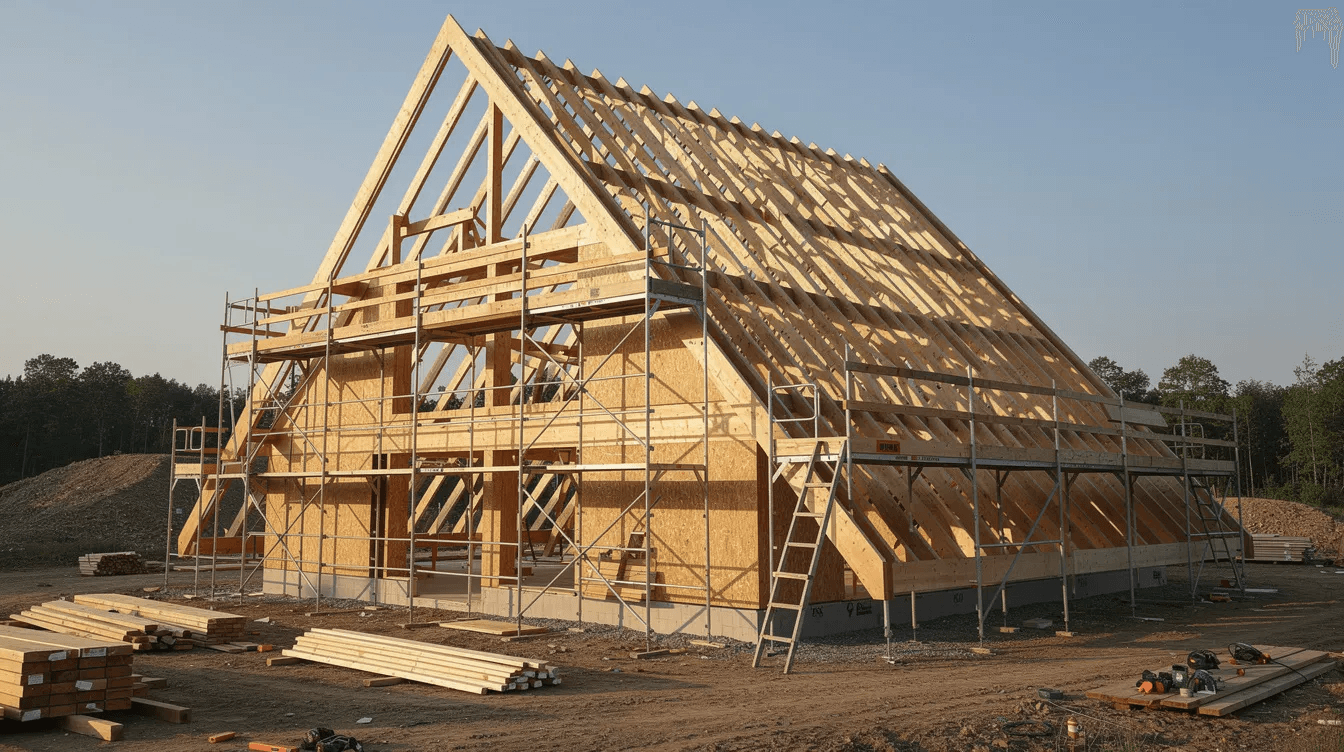
- Steep-roof framing requiring specialized scaffolding: 10-20% labor premium
- Insulated roof assemblies (R-40 to R-60): 15% higher than standard roofs
- Standing-seam metal roofing: $15-$25/sq ft vs $5-$10 for asphalt
Request a detailed cost-to-build estimate from your designer or local builder after selecting your home plan. A sloped lakefront lot in Tahoe might add $50,000-$100,000 for excavation and retaining walls, while flat rural acreage typically runs $20,000 for site prep.
Is a 1500 Sq Ft A-Frame Cheaper Than Other Homes?
A 1500 sq ft A-frame is not automatically cheaper than a conventional ranch or two-story of the same size. The simple shape creates trade-offs that roughly balance out.
Cost-saving aspects:
- Compact foundation perimeter (140-160 linear ft vs 200+ for a ranch with bump-outs)
- Simplified roof-to-wall structure reducing framing lumber by 20-30%
- Reduced exterior wall area compared to other designs
- DIY-friendly interiors with exposed ceilings
Potential extra costs:
- Premium glazing on the front wall (30-40% of south-wall budget)
- Complex scaffolding for roof work on high structures
- Custom loft stairs ($3,000-$6,000)
- Vaulted ceiling insulation meeting R-49 minimum (adds $10,000)
In a 2026 build scenario, a rectangular ranch might hit $250/sq ft with standard windows and a gable roof, while the A-frame reaches $275/sq ft with view-oriented glass. Final costs typically land within 5-15% of each other.
For many owners, the value of dramatic views, architectural character, and vacation-rental appeal—commanding 20-50% premiums on platforms like Airbnb—justifies any small cost difference over simpler box-style homes. The website you use to search for plans often displays complete pricing details for comparison.
Pros and Cons of a 1500 Sq Ft A-Frame House
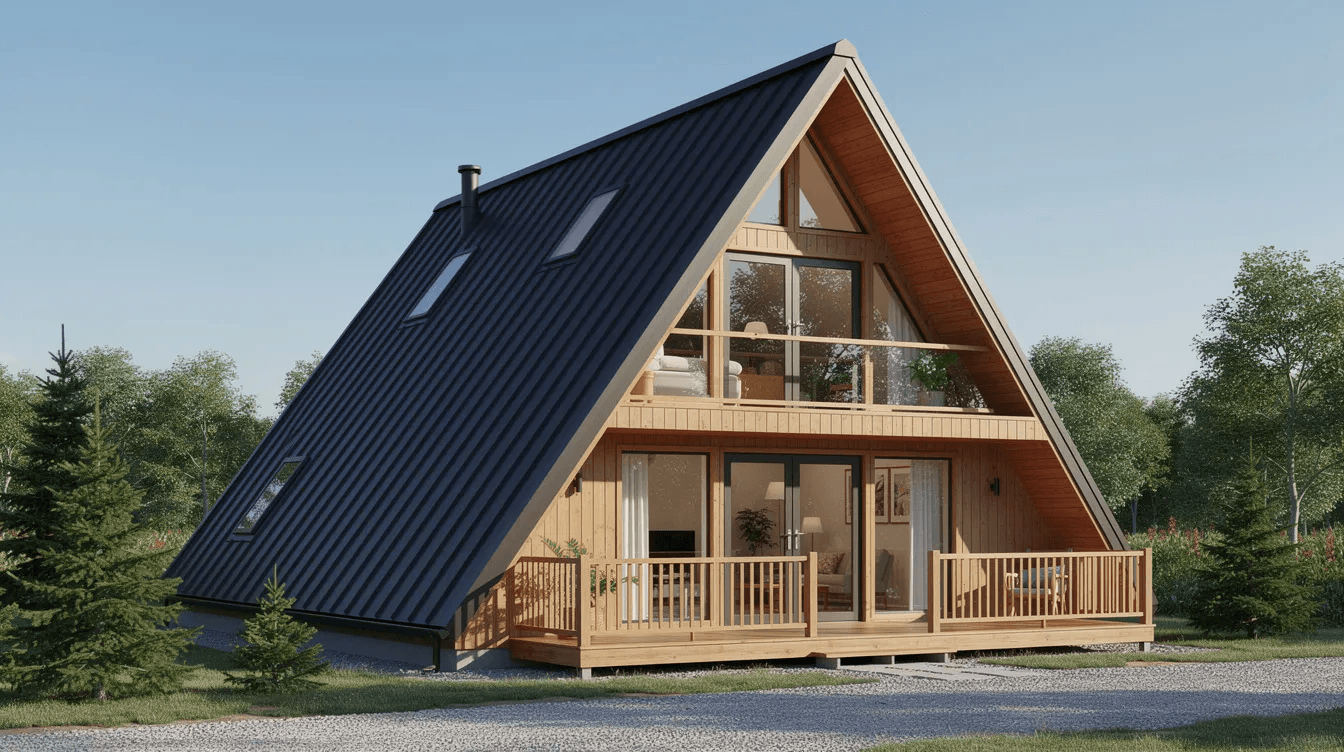
at 1500 sq ft, a frame homes deliver cozy living with distinctive character. This size works well for couples, small families, or short-term rentals, though the shape affects daily life differently than standard homes.
Pros:
- Dramatic vaulted great room (400-500 sq ft) with 18-24 ft ceilings
- Abundant natural light through full-height glass walls
- Strong visual connection to forest, lake, or mountain views
- Efficient central heating where warm air pools at the peak
- Steep roof sheds snow quickly in climates with heavy snowfall (100+ inches annually in Colorado, Montana, Vermont)
- Superior wind resistance from triangular geometry
- Low maintenance exterior with reduced wall surface area
Cons:
- Sloping upper walls limit furniture placement and closet space
- Headroom below 5 ft over 30-40% of loft floor area
- Requires thoughtful mechanical and storage planning
- Custom stairs to loft add complexity, much like selecting the best ladder or stair solution for a tiny house loft
- In humid or rainy climates (Pacific Northwest), careful detailing of roof overhangs and ground drainage is essential
The benefits of sun-filled rooms and snow-shedding roofs make this style perfect for mountain cabins and forested retreats. However, those needing multiple enclosed bedrooms or fully accessible single-floor living should consider other designs, such as ranch-style tiny house layouts optimized for single-level living.
Strength, Safety, and Durability of A-Frame Structures
The triangular geometry of an A-frame naturally distributes loads, making it inherently strong when engineered correctly. This isn’t just aesthetic—the shape has real structural benefits.
Structural advantages:
- Continuous rafters channel snow loads (up to 100 psf) and wind (120 mph) directly to foundation
- Steep roof and triangulation resist racking better than conventional wall systems
- Metal-plate trusses or glu-lam beams can span 30+ ft unsupported
Safety requirements per 2024-2025 IRC standards:
- Engineered connections (hurricane ties every 2 ft)
- Frost-depth footings (48-60 inches in northern states)
- Code-compliant bedroom windows (E90-rated, min 5.7 sq ft operable area)
- Hardwired smoke/CO detectors on each level
- Safe stair design to loft (36” width, 80” headroom minimum)
Durability considerations:
- Treated lumber at the base where ground moisture is a factor
- Galvanized or stainless fasteners in coastal regions
- Standing-seam metal roofing rated for 30-50 years
- Proper venting to prevent ice dams from insulation gaps
The security of your investment depends on performing security verification of all engineering details before construction. Work with a structural engineer familiar with your region’s snow and wind loads.
Insulation, Energy Efficiency, and Comfort in A-Frame Homes
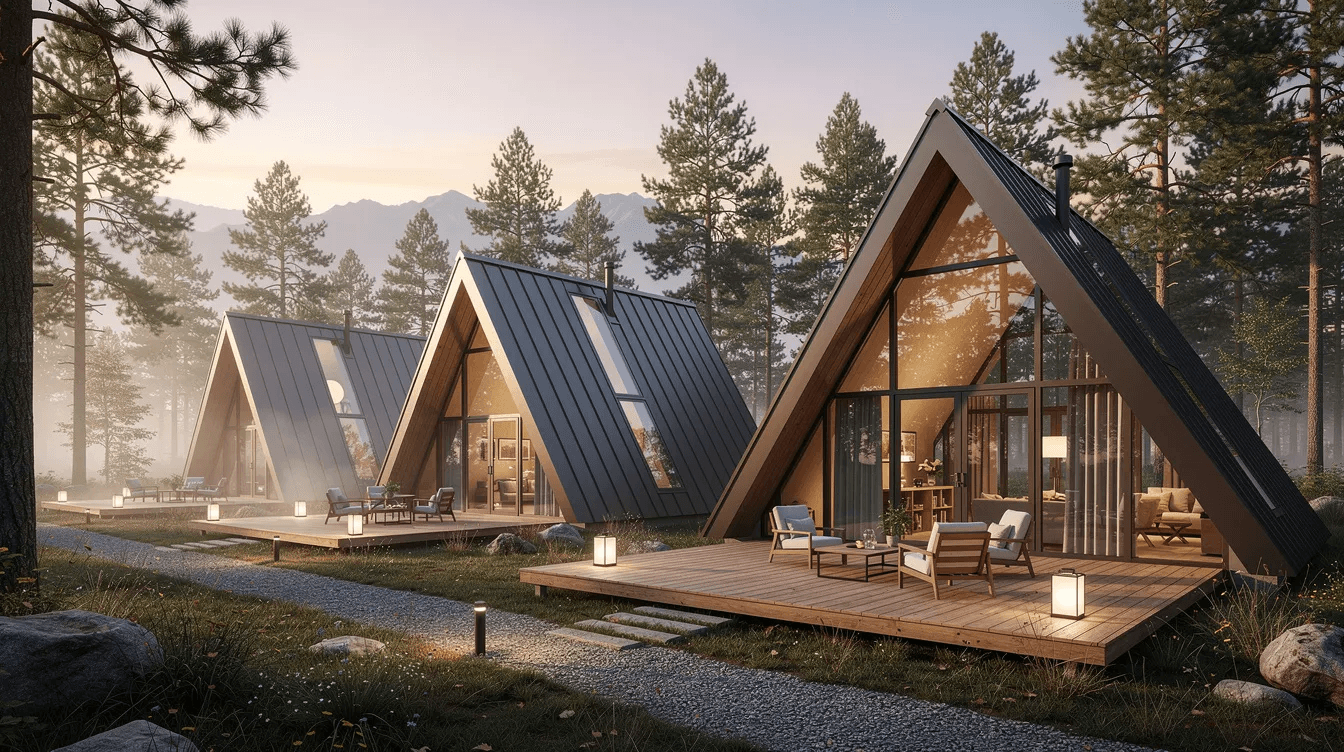
Energy performance is a major concern in tall, open spaces. The high volume-to-floor ratio in a 1500 sq ft A-frame demands strategic insulation and mechanical systems.
Roof/ceiling insulation strategies:
- 2-4” rigid polyiso (R-6/inch) above sheathing to eliminate thermal bridging
- Spray foam (R-6.5/inch) or dense-pack cellulose (R-3.7/inch) between rafters
- Continuous air barriers at eaves for R-49 to R-60 ceiling performance
Glazing choices for large windows:
- Triple-pane low-E glass (U-0.15, SHGC 0.25 for solar control)
- Thermally broken aluminum or fiberglass frames
- Motorized exterior shades for south-facing glass in sunny Colorado or Utah
Mechanical systems for this home size:
- Ductless mini-split heat pumps (18-24k BTU, SEER 25+)
- In-floor radiant heating on the main level
- Ceiling fans to recirculate warm air from the peak
- HRV (heat recovery ventilator) at 80 CFM for 2020s airtight construction
Comfort considerations:
- 4-6 ft roof overhangs can shade 80% of glass in summer, reducing solar gain
- Exterior window coverings eliminate overheating in afternoon sun
- Proper ventilation prevents moisture buildup and maintains air quality
Passive solar design in climate zones 5-6 can cut heating bills by 30-50%, making these factors essential to the complete home plan.
Customization and Smart Design Possibilities
One of the standout benefits of choosing a frame house plan is the incredible flexibility it offers for customization and smart design. Homeowners can collaborate with architects and builders to tailor every detail, ensuring the finished house reflects their unique lifestyle, needs, and dreams.
Large windows are a signature feature of a frame homes, but customization doesn’t stop there. You can add skylights or solar tubes to bring even more natural light into the space, reducing reliance on artificial lighting and creating a bright, uplifting atmosphere. Smart design also means integrating energy-efficient appliances, advanced insulation, and sustainable building materials—choices that help lower energy costs and make your home more environmentally friendly.
The distinctive shape of an A-frame opens up creative possibilities, such as adding a loft for extra sleeping space, a balcony for morning coffee with a view, or built-in shelving that maximizes every nook. Modern technology can be seamlessly woven into the plans, with smart home systems that control lighting, temperature, and security from your phone or voice assistant, making daily life more convenient and comfortable.
Whether you’re dreaming of a cozy mountain retreat or a modern lakeside getaway, the ability to personalize your frame house plan ensures your home is as functional as it is beautiful. With thoughtful planning and the right materials, you can build a space that’s perfectly suited to your needs—now and for years to come.
Do 1500 Sq Ft A-Frame Houses Have Basements or Bonus Space?
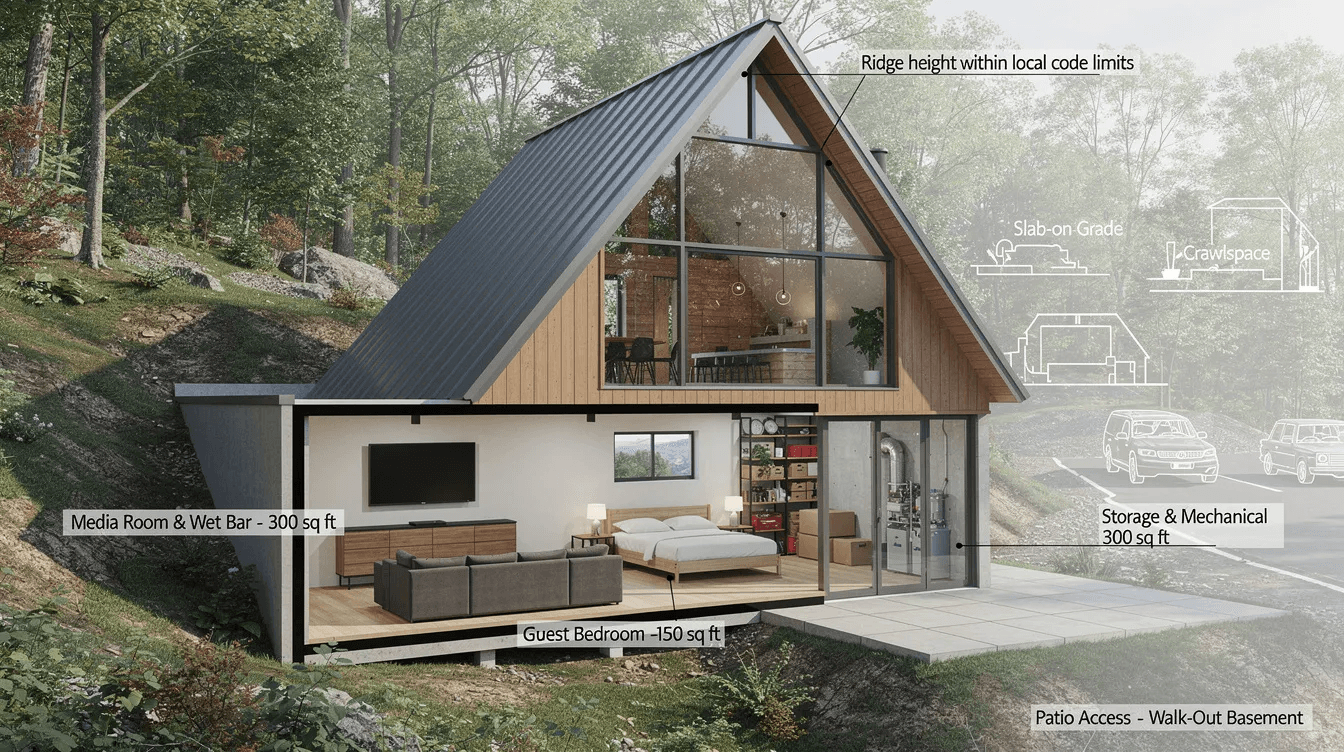
Many 1500 sq ft A-frame plans offer foundation options: slab-on-grade, crawlspace, or full basement, depending on site slope and soil conditions. Your choice affects both costs and usable space.
Walk-out basement example: When planning additional lower-level space, be sure local zoning and building codes on overall structure and ridge heights align with your design, similar to how tiny house maximum height guidelines shape compact-home planning.
A typical walk-out basement adds 700-900 sq ft below ground level, including:
- Media room with wet bar (300 sq ft)
- Guest bedroom (150 sq ft)
- Storage and mechanical room (200 sq ft)
- Patio access through side or rear entry
Regional differences: For smaller builds or accessory dwellings, many of the same site and soil factors apply when choosing the best foundation for a tiny house.
- Northern climates (Minnesota, Wisconsin, upstate New York): Basements common and affordable at $50-$80/sq ft added
- High water-table coastal areas: Slab or pier foundations more typical
- Sloped mountain lots: Walk-out designs maximize usable square footage
Zoning considerations:
Some municipalities limit total ridge height to 35-45 ft, affecting how much habitable room can be added below grade or in the loft. Check local codes before finalizing plans.
Storage strategies without a basement:
- Built-in cabinets along sloped walls recover 20-30% more capacity
- Under-stair lockers for gear and equipment
- Detached shed for skis, kayaks, or stone masonry tools, or even a compact circular retreat based on modern prefab yurt designs, or even a compact outbuilding based on tiny house kits from major retailers
- Interior storage benches with lift-top lids
Unique Site Considerations for A-Frame Homes
Building a frame house in a unique location—whether it’s a rugged mountain slope or a serene coastal lot—requires careful planning and attention to site-specific factors. A frame homes are often chosen for their ability to thrive in challenging environments, but success starts with a solid foundation.
The first step is evaluating the land itself. The slope, soil stability, and drainage all influence the type of foundation walls or support system needed. In areas prone to heavy snowfall, strong winds, or even earthquakes, specialized foundation solutions—such as reinforced concrete walls, pilings, or deep footings—may be necessary to ensure the house stands strong for generations.
A well-designed frame house plan will also take full advantage of the site’s natural features. Positioning the house to capture the best views, preserve mature trees, and work with the contours of the land not only enhances the beauty of the home but also minimizes environmental impact. Careful placement of windows and outdoor living spaces can maximize sunlight and shelter the house from harsh weather, while thoughtful landscaping helps manage runoff and erosion—much like the siting strategies used in mountain tiny house getaway retreats.
Every site presents its own set of challenges and opportunities, from rocky outcrops to proximity to water. That’s why working with experienced professionals who understand the unique demands of building a frame house in your chosen location is essential. With the right planning and expertise, your A-frame can become a secure, comfortable, and inspiring retreat—perfectly adapted to its environment and ready to provide a lifetime of enjoyment, similar in spirit to thoughtfully designed eco yurt retreats for sustainable living close to nature.
Is a 1500 Sq Ft A-Frame House Right for You?
Before waiting to break ground, consider how you’ll actually use the space. Will this be a full-time residence, weekend retreat, or short-term rental in a destination like Lake Tahoe or the Smoky Mountains?
This style fits best for:
- Small families, couples, or retirees valuing open spaces and views
- Those who agree that architectural character matters more than maximum room count
- Owners seeking vacation homes with strong rental appeal
- Buyers with snowy, forested, or lakefront properties
This style may not fit if:
- You need 4+ full-height bedrooms for a large family
- Stairs to a loft primary suite present accessibility challenges
- You prefer many separate, enclosed rooms over open-concept living
- Your site is in a hot, humid climate without mountain elevation
Evaluate your specific needs:
- Remote work area in the loft (100 sq ft)
- Gear storage for skiing, hiking, or kayaking
- Date of construction affecting code requirements
- Budget for premium materials versus affordable finishes
The dream of cozy mountain living inside a dramatic A-frame is achievable with careful planning. Compact alternatives like chalet-style tiny house models show how much character and function can be packed into a smaller footprint as well. Your next step: select a specific 1500 sq ft plan from a reputable collection, review it with a local architect or engineer, and request a location-specific cost estimate.
A security service that malicious bots can’t access protects your plans once you’re performing security verification on any website. After verification successful, you’ll see respond ray id confirmations and full plan details displayed for sale.
Build the easy, perfect retreat that connects you to nature—an A-frame simply makes it affordable and great for modern life.