Key Takeaways
- Well-built tiny houses can safely withstand most storms when properly anchored and designed to building codes
- Like mobile homes and camper vans, tiny homes are not safe shelter during direct tornado impacts or major hurricanes—evacuation is often necessary
- Hurricane ties, tie downs, ground anchors, and sealed roofs provide critical protection against high winds and heavy rain
- Tiny homes on wheels offer a unique safety advantage: you can relocate before extreme weather arrives
- Insurance options for tiny homes are now available in all 50 states, making financial protection accessible
How Safe Is a Tiny Home in Storms, Really?
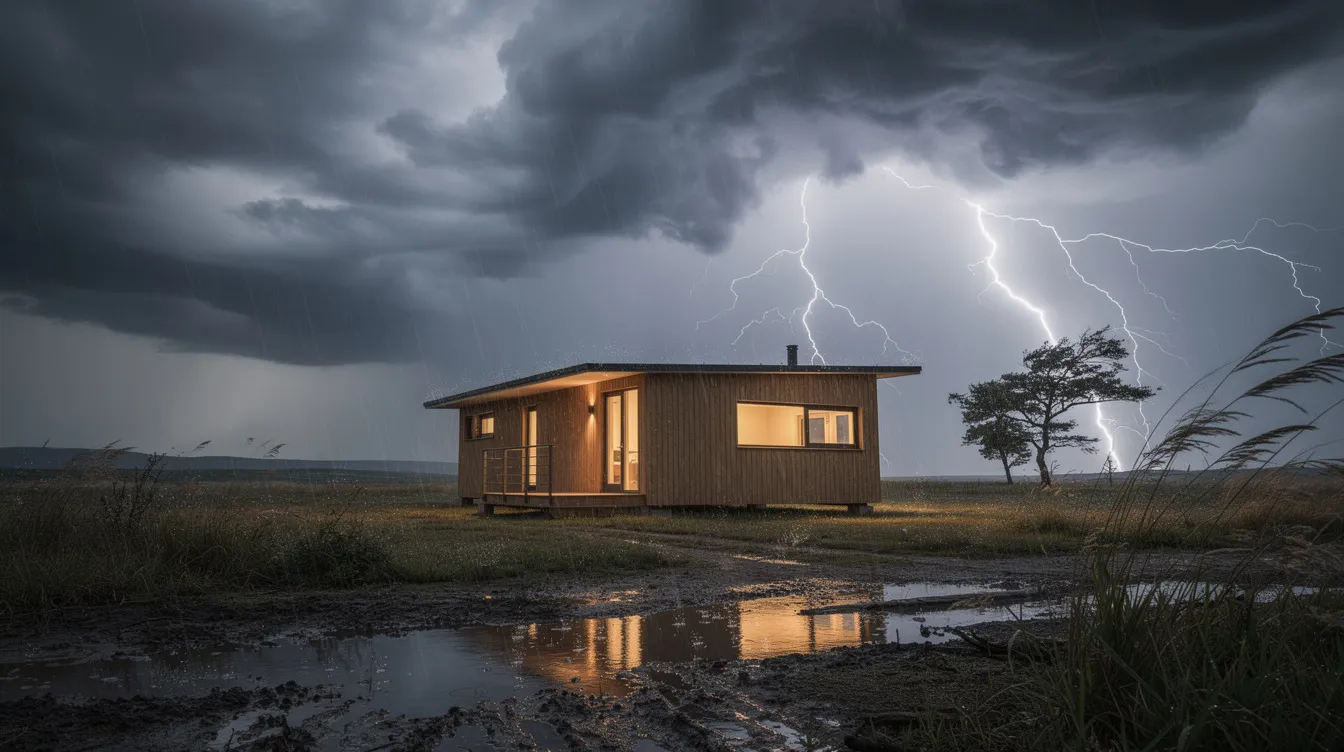
Here’s the honest answer: a properly built and anchored tiny home can handle most storms just fine.
During Hurricane Ian in 2022, a tiny house on wheels in Fort Myers survived 130 mph gusts. The secret? Eight screw augers and hurricane ties. Meanwhile, neighboring mobile homes flipped. Hurricane Idalia in 2023 told a different story—several unanchored tiny homes in Georgia got displaced.
The difference comes down to preparation.
Tiny homes on foundations typically achieve wind ratings of 130-150 mph. Choosing the best foundation for a tiny house also affects long-term stability and storm performance. Tiny houses on wheels can withstand strong winds when secured properly. But no lightweight structure—tiny home, manufactured home, or camper van—is safe in a direct tornado path or Category 4-5 hurricane eyewall.
The good news? Mobility is a safety feature. Unlike traditional homes, you can often hitch up and relocate to safer ground before a storm hits.
- How Tiny Homes Are Built to Handle Extreme Weather
- Real-World Tiny Home Performance in Storms
- Designing a Tiny Home Specifically for Storm Safety
- Preparing Your Tiny House for an Approaching Storm
- Location, Codes, and Legal Considerations for Storm-Safe Tiny Living
- When You Should Not Stay in a Tiny Home During a Storm
- FAQ: Tiny Homes and Storm Safety
- Can I retrofit an existing tiny home to be safer in storms?
- Are tiny homes more or less safe than traditional homes in storms?
- How much extra does it cost to make a tiny house storm-resistant?
- Is it safe to stay in a tiny home with children or pets during storms?
- Do off-grid tiny homes have special storm risks?
How Tiny Homes Are Built to Handle Extreme Weather
Storm safety starts with good building—not last-minute preparations.
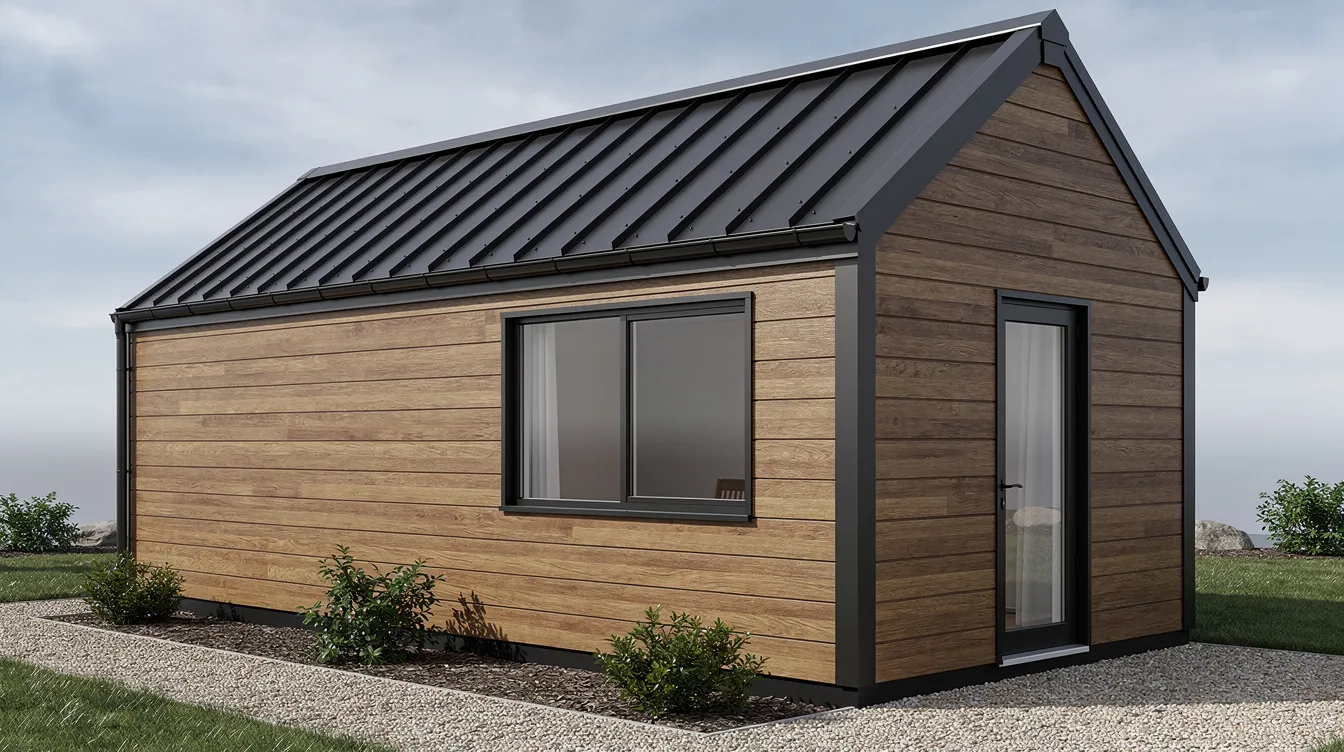
Tiny homes share engineering principles with mobile homes and small site-built houses. Their compact footprints actually help resist racking and uplift when properly fastened. Many builders design to IRC building codes and state requirements, even when not strictly required.
Materials and Structural Techniques That Help Tiny Homes Withstand Storms
Tiny homes can withstand extreme weather conditions thanks to sturdy construction and materials similar to those used in standard homes:
Material | Storm Benefit |
|---|---|
Kiln-dried Douglas fir | 20-30% more deflection resistance |
Steel framing | Superior rigidity in high winds |
Structural insulated panels (SIPs) | 2x shear strength vs. stick framing |
Metal or composite siding | Impact resistant |
Structural details matter too. Sheathing with plywood or OSB creates a diaphragm effect. Continuous load paths from roof to foundation distribute forces. Sealed roof underlayments prevent 95% of wind-driven rain intrusion. |
In hurricane-prone regions, impact-rated windows and storm doors provide protection from flying debris.
Anchoring, Tie Downs, and Hurricane Ties
Anchoring systems help tiny homes remain stable in windy zones, preventing shifting and tipping. This is the single biggest factor in whether your tiny home survives.
Hurricane ties are hardware pieces that connect the joists to cantilevered beams to reduce uplift forces caused by high winds, making them a good precaution in areas prone to hurricanes and tornadoes. These inexpensive clips ($2-5 each) boost roof hold-down by 50-100%.
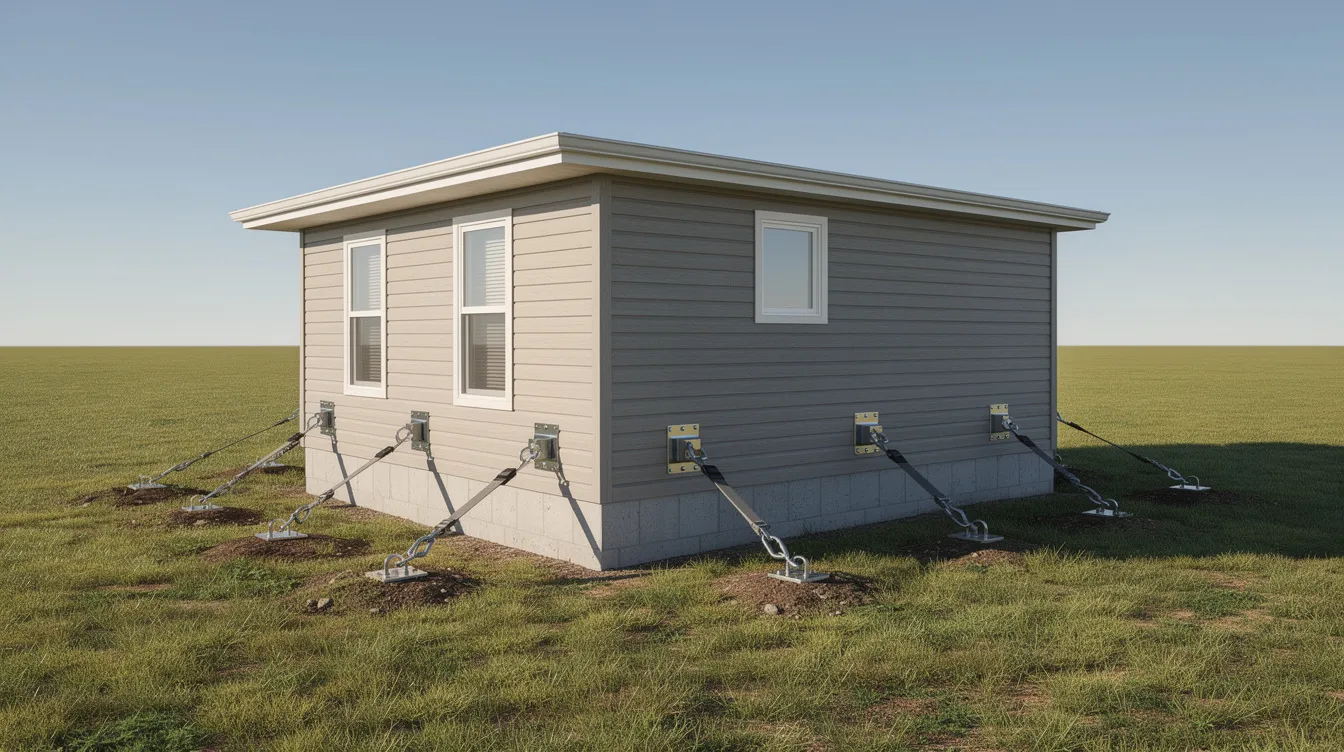
Using tie-downs, which are heavy-duty straps and anchors, can help keep tiny homes stable during storms, especially if they are equipped with D-Rings for secure attachment. Ground screw augers provide 5,000 lb pullout strength in clay soils—40% faster to install than concrete deadmen.
Key anchoring checklist:
- Over-the-top straps (2-4 per side)
- Ground anchors at 6-8 foot intervals
- D-rings welded to trailer frame
- Minimum 4-6 foot anchor depth in loose soil
Check and tighten anchors before hurricane season and after any ground settling.
Insulation, Sealing, and Water Management
Staying structurally intact isn’t enough. Water intrusion during heavy rain can make your living space uninhabitable—60% of post-storm insurance claims involve water damage.
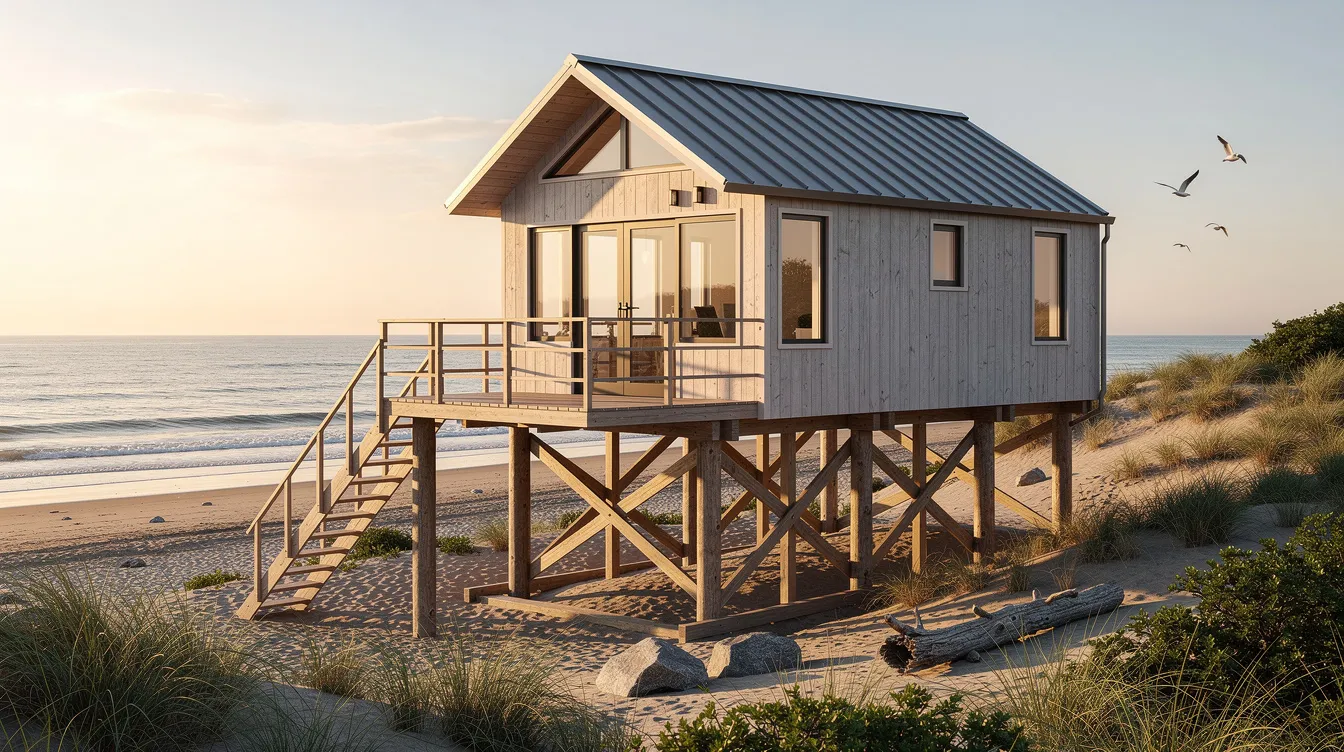
Tiny homes are often elevated off the ground to prevent water damage from flooding, and they typically include water-resistant barriers and sealed underbellies to protect against moisture. Closed-cell spray foam provides R-6.5 per inch and is impermeable to air pressure.
Water management essentials:
- Continuous air and water barriers
- Proper flashing around windows and doors
- Sealed roof penetrations
- Gutters handling 5-inch/hour rainfall
- Site grading at 5% slope away from structure
Real-World Tiny Home Performance in Storms
Tiny homes have proven themselves across hurricanes, blizzards, and severe thunderstorms. The data supports what owners already know: proper construction and siting work.
Tiny Homes in Snow, Ice, and Cold Climates
Colorado tiny home communities report roofs engineered for 60 psf snow loads. Steep 12/12 pitch metal roofs shrug off 5-foot drifts without issue.
Key cold-weather features:
- Strong rafters at 16” spacing
- Insulated skirting (R-10 rigid foam)
- Sealed underbellies preventing pipe bursts at -20°F
- Compact interior volume for efficient heating
Handling Heavy Rain and Localized Flooding
During 2023 Vermont floods, elevated tiny houses on wheels escaped damage while slab homes flooded. Elevation is your friend.
Avoid these locations:
- Low-lying sites and dry creek beds
- Known floodplains (check FEMA NFIP maps)
- Areas with poor drainage
Separate storage room structures and small sheds need anchoring too—otherwise they become projectiles.
High Winds, Hurricanes, and Tornadoes
High winds are the most dangerous conditions for tiny living. In Category 1-2 hurricanes and severe thunderstorms, tiny homes with proper tie downs, hurricane ties, and ground anchors stay upright when unsecured structures fail.
But here’s the reality: no above-ground lightweight structure is safe inside an EF3-EF5 tornado path or major hurricane core. Evacuation to hardened shelter is necessary.
Strategies that help:
- Park behind larger buildings as windbreaks
- Add robust skirting to reduce uplift
- Use 48-72 hour hurricane forecasts to relocate
Designing a Tiny Home Specifically for Storm Safety
If you’re still planning your build, you can bake in storm resilience from day one. A step-by-step guide on how to build a tiny house can help you integrate structural safety, anchoring, and weatherproofing from the start. Work with designers familiar with hurricane-prone or tornado-prone regions—generic plans won’t cut it.
Aerodynamic Shapes and Low-Profile Designs
Boxy, tall structures catch more wind. Consider:
- Lower overall height
- Rounded rooflines
- Minimal large overhangs
- Low center of gravity (place storage and batteries at chassis level)
- Careful solar panels placement to avoid sail effects
Foundation-Based Tiny Homes vs. THOWs in Storm Zones
Fixed foundations offer higher wind ratings (130-150 mph under IRC tables). Mobile units offer evacuation options, and some self-contained tiny homes for modern off-grid living are designed to combine mobility with independent power and water systems that must also be secured for storms.
In very high-risk areas like the Florida Keys, a tiny home on permanent foundation may be safer than a towable unit left in place, and tropical tiny homes for cozy beachfront living illustrate how designs can balance coastal charm with resilience. Even the strongest winds require robust hurricane ties and continuous strapping regardless of foundation type.
Container-Style and Steel-Framed Tiny Homes
Container-based and steel-framed tiny homes prioritize storm resistance. Resources on the best shipping container tiny house designs show how their inherent rigidity and detailing handle racking forces from even the strongest winds.
Some models meet Florida’s 180 mph wind code. Trade-offs include greater weight affecting mobility and higher upfront costs. But a super secure tiny house doesn’t have to look industrial—great tiny homes that redefine small-space living prove that modern designs can be both resilient and beautiful.
Preparing Your Tiny House for an Approaching Storm
Preparation differs based on weather conditions. Here’s your timeline:
Securing the Structure: Tie Downs, Skirting, and Add-Ons
72 hours before:
- Check and tighten all tie downs and anchor point connections
- Reinforce skirting to reduce wind getting underneath
- Remove or lower solar panels, awnings, and satellite dishes
24 hours before:
- Secure porches, stairs, and storage rooms
- Disconnect propane tanks
- Move all your hard work protecting exterior items
Unsecured outbuildings become dangerous flying debris projectiles.
Protecting Windows, Doors, and Openings
Broken windows significantly increase internal pressure and roof failure risk.
Reinforcing windows with plywood before a storm can help prevent them from breaking or shattering during high winds, which is crucial for maintaining the integrity of a tiny home. Cut and label plywood in advance for quick installation.
Additional protection:
- Hurricane shutters for homes in such an area as coastal regions
- Additional deadbolts on exterior doors
- Seal vents, hose bibs, and cable entries
- Keep window film patches for cracks
Power, Water, and Emergency Supplies in a Tiny Space
Even short outages stress compact homes without a plan.
In your small space, store:
- 1 gallon water per person per day (3-day minimum)
- Compact freeze-dried foods in loft or bench storage
- Battery banks or small solar generators
- First-aid supplies, medications, flashlights
- Weather radio with NOAA alerts
If you have an outdoor toilet or composting system, know how it handles flooding and power outages.
Location, Codes, and Legal Considerations for Storm-Safe Tiny Living
Where you place your tiny home matters as much as construction quality. Regional guides, like those on the best small homes in Washington State, highlight how climate and local codes shape siting decisions. Avoid wind funnels, tree-heavy sites, and flood zones.
Using Mobile Home and RV Guidelines for Tiny Homes
Decades of mobile home storm damage data have created well-documented safety practices. Adopt them.
Many RV parks and mobile home parks already provide anchor point locations or concrete pads. Reference mobile home wind-zone maps when choosing locations. The same standards apply to camper vans and travel trailers.
Local Codes, Setbacks, and Storm-Zone Requirements
Wind, snow, and seismic design values vary regionally. Check whether IRC Appendix Q or local tiny home ordinances apply. Some coastal areas require elevated foundations and specific hurricane clips for any wall and structure in flood zones.
Contact building officials early—dig deeper into requirements before costly rework.
Insurance and Financial Protection Against Storm Damage
Taking out insurance is considered the best way to mitigate the impact of any damage resulting from severe weather conditions for tiny homes, especially if you choose budget-friendly options like tiny homes under $20K where repair or replacement costs still add up.
Insurance options for tiny homes are becoming more available, with coverage options now offered in all 50 states of the US as they gain popularity. It is important to specifically request storm protection coverage when insuring a tiny home, as many insurance companies require additional payments for such coverage.
Coverage types homeowners need:
- Dwelling coverage
- Personal property
- Liability
- Flood insurance (separate policy)
Keep photographic documentation of your home, anchoring system, and contents for easier claims.
When You Should Not Stay in a Tiny Home During a Storm
No house is worth your life. Sometimes evacuation is the only answer.
Leave your tiny home when:
- Tornado coming warnings are issued
- Category 3+ hurricane hits your area
- Rapidly rising floodwaters threaten your site
The next best thing to a basement shelter is a sturdy concrete building on higher ground.
Tornadoes, Derechos, and Extreme Wind Events
Small, lightweight structures—including tiny homes and manufactured homes—are not safe during tornadoes. NWS data shows 50% overturn rate for mobile homes in EF2 events without shelters.
Leave immediately when tornado warnings are issued. If caught towing near a tornado, abandon the vehicle and seek low ground. Keep NOAA weather alerts enabled overnight.
Major Hurricanes and Coastal Flooding
Storm surge and prolonged high winds make coastal natural disasters particularly deadly. For Category 3-5 storms, official evacuation orders apply to all non-hardened structures.
Imagine planning where you’d relocate your tiny home during evacuations—friends’ land, inland RV parks, or storage lots. Hope for the best, plan for the worst. Flying debris from neighboring buildings impacts even well-anchored units.
FAQ: Tiny Homes and Storm Safety
Can I retrofit an existing tiny home to be safer in storms?
Yes. Ground anchors, tie downs, hurricane ties, and upgraded window protection can all be added later. Prioritize anchoring and windows first, then upgrade roofing and sealing as budget allows. Hire a structural engineer if the original build quality is uncertain. Retrofits are most cost-effective when coordinated with scheduled maintenance like re-roofing.
Are tiny homes more or less safe than traditional homes in storms?
A properly built, well-anchored tiny home can be roughly comparable to a small site-built house outside tornado cores and major hurricane eyewalls. Advantages include smaller wind surface area and mobility. Disadvantages include lower mass and fewer internal safe rooms. Focus on build quality and anchoring rather than size alone.
How much extra does it cost to make a tiny house storm-resistant?
Upgrades typically add 5-15% to build cost ($5k-15k on a $100k build). Hurricane straps cost $2-5 each. Ground anchors run about $1,000. Costs rise in coastal high-wind zones where codes require specialized foundations. Budget for ongoing maintenance to keep storm features working.
Is it safe to stay in a tiny home with children or pets during storms?
For routine thunderstorms and moderate weather, well-built tiny homes work fine for families with basic precautions. For tornado warnings or major hurricanes, evacuate to sturdier shelter. Create a small interior safe spot away from windows. Prepare child-friendly and pet-friendly emergency kits with food, water, and comfort items. Your family’s safety comes first.
Do off-grid tiny homes have special storm risks?
Off-grid systems don’t weaken the structure but add components requiring securing. Design solar racks and propane tanks with high-wind anchoring. Plan redundancy for power and water since utilities won’t restore service. Pay extra attention to site selection—remote locations may delay emergency response after severe weather. Electricity backup matters more when you can’t rely on the grid.