

Living tiny means living smart.
But smart living needs power.
About 70% of tiny house owners choose to live off grid, according to a 2023 Tiny House Expedition survey. That means no connection to the electrical grid. No utility bills. But also no guaranteed electricity unless you plan ahead, especially in self-contained tiny homes designed for off-grid living.
Gas generators are the most common type of off-grid generator, providing ample electricity as long as there is access to gas, but they can be noisy and expensive to operate. Solar generators charge an internal battery using solar panels, allowing for quiet operation and no emissions, making them an eco-friendly option for powering tiny houses.
Tiny houses face unique power challenges, and different modern tiny house designs can influence how much roof space and storage you have for power systems:
- Limited roof space for solar panels (often under 200 square feet)
- Concentrated appliances drawing 1500W or more running load
- Noise restrictions in RV parks and tiny house villages
- Portability needs for those who relocate quarterly
Inverter generators are particularly popular for tiny houses due to their compact design, lightweight construction, and quiet operation, typically running at lower decibel levels than traditional generators. You’ll also find dual fuel options running on gasoline or propane, plus portable power station units that convert sunlight into stored energy.
Finding the best generator for tiny house living comes down to power output, portability, noise level, and fuel efficiency. Let’s break down your options.
How We Chose the Best Generators for Tiny Houses
Not every generator works for tiny living.
Here’s what matters:
Power Output and Capacity
The power requirements for a tiny house can vary significantly, typically ranging from under 1,000 watts for minimal setups to over 5,000 watts for fully equipped homes. Most tiny houses need 2000W running power with peaks to 4000W for air conditioning.
Noise Levels
Nobody wants a generator drowning out conversation. Inverter generators are known for their quiet operation, typically running at around 50-60 decibels, which is comparable to a normal conversation. Traditional portable generators can be louder, with noise levels ranging from 65 to 85 decibels, which can be disruptive in a tiny house living environment.
Portability and Size
Space is precious. The best generators weigh under 60 pounds with handles or wheels for easy movement, especially in great tiny homes that maximize small-space living.
Fuel Efficiency
Fuel efficiency is a critical factor when selecting a generator for tiny houses, as generators that offer longer runtime with less fuel consumption are more cost effective and environmentally friendly. Choosing a generator with lower emissions can help minimize your environmental footprint, making fuel efficiency an important consideration for sustainable living.
Reliability and Durability
The durability of a generator is crucial, as it needs to withstand various weather conditions and frequent use, which can save you from frequent repairs and replacements. Regular maintenance is essential to keep your generator in optimal condition, which includes checking oil levels, cleaning air filters, and ensuring proper ventilation—especially when paired with elegant tiny homes that redefine modern living.
Safety Features
Generators should have built-in safety features such as low-oil shutoff, overload protection, and ground fault circuit interrupters (GFCI) outlets to prevent accidents and ensure safe operation. Choosing generators with certifications from recognized organizations like the Environmental Protection Agency (EPA) and the California Air Resources Board (CARB) ensures compliance with emission standards and safety for use in various environments.
Value for Money
We considered total ownership cost: fuel expenses, maintenance needs, and longevity over 10+ years.
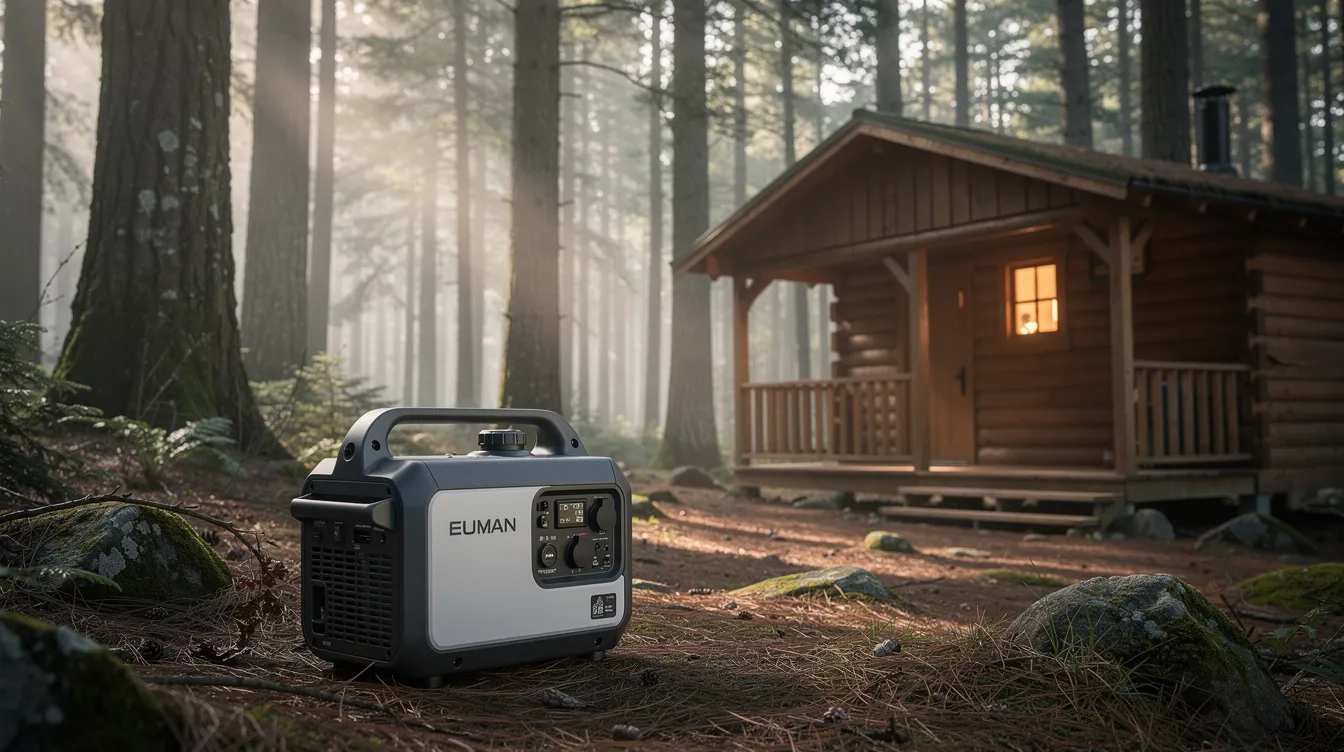
Top 7 Generators for Tiny Houses
1. Honda EU2200i Inverter Generator
This gas inverter generator tops every list for good reason. It’s the gold standard for reliable power in compact form.
Why It Stands Out
Honda’s reputation spans decades of engineering excellence. Consumer Reports scored it 92/100 in 2026 testing. The unit operates at just 48-57 decibels—quieter than a dishwasher.
Best For
Tiny house owners who need dependable power with excellent fuel efficiency and low noise. Perfect for tiny house villages with noise ordinances capping at 55 dB.
Key Strengths
- 2200 watts starting power, 1800 watts running power
- Super quiet operation ideal for close neighbors
- 8.1 hours runtime at 25% load on 0.95-gallon tank
- Parallel capability doubles output to 4400W with link kit
- Pure sine wave output (THD under 3%) safe for sensitive electronics
Inverter generators are known for their fuel efficiency, as they adjust the engine speed to match the load, resulting in better fuel consumption and longer runtime. Honda’s Eco-Throttle system delivers 40% better fuel economy than conventional models.
Possible Limitations
- Higher upfront cost ($1100-1300) compared to budget options
- Requires gasoline storage and regular maintenance
- Gas-only operation (no propane option)
2. Goal Zero Yeti 1500X Solar Generator
This solar generator represents the cleanest power solution for eco-conscious tiny home dwellers.
Why It Stands Out
Zero emissions. Silent operation. Solar generators are a popular eco-friendly option for tiny houses, as they rely on renewable energy and produce no emissions. The Yeti 1500X uses LiFePO4 batteries lasting 4000 cycles to 80% capacity.
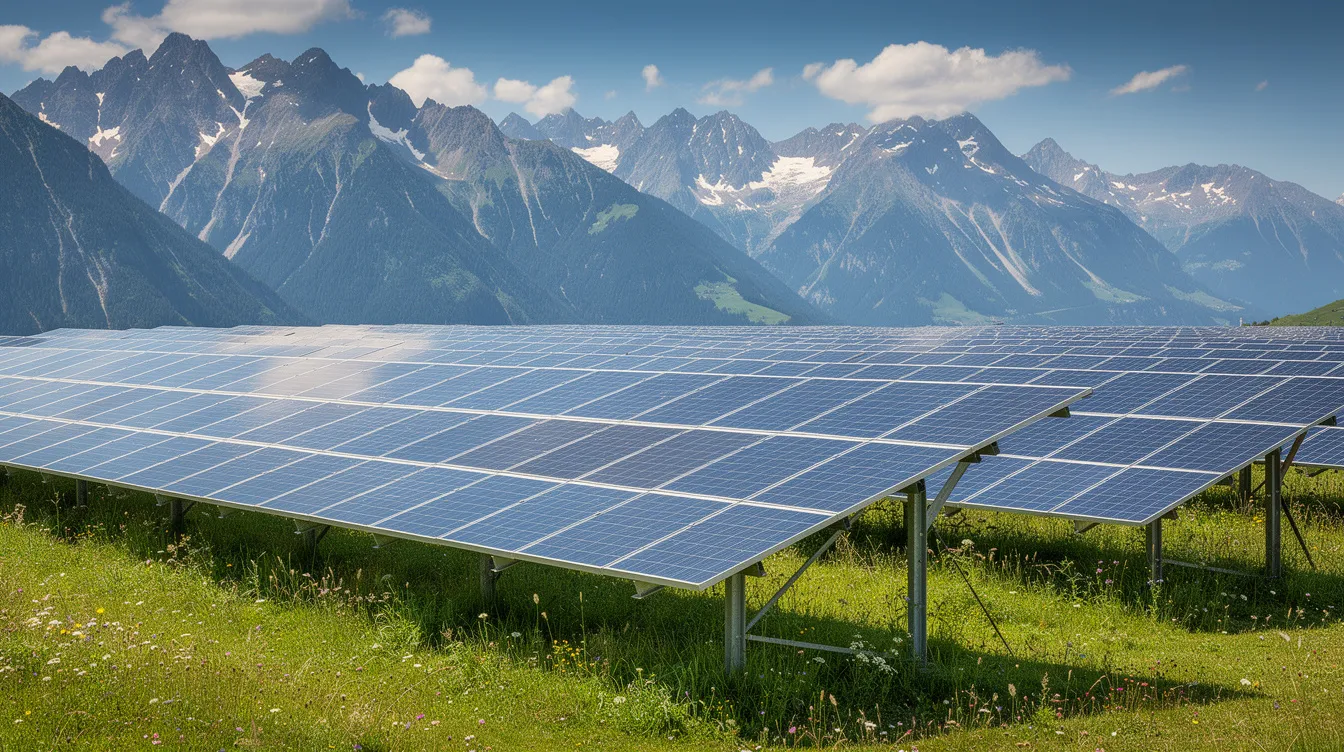
A solar generator typically consists of solar panels, batteries for energy storage, and an inverter to convert DC power to AC power, making it a versatile solution for tiny homes.
Best For
Eco-conscious tiny house owners prioritizing sustainable living and quiet operation. Ideal for those wanting to generate their own electricity without fossil fuels or pairing with Earthship tiny homes for sustainable living.
Key Strengths
- 1516Wh battery capacity with 1500W continuous power
- Completely silent operation with no carbon footprint
- Can be recharged via solar panels, AC outlets, or 12V
- 8 outlets including USB A ports and USB-C 100W
- App monitoring for battery system health
Possible Limitations
- High initial investment ($1800)
- Limited runtime for high-draw electrical appliances like a space heater
- Solar panels sold separately ($500+)
3. Champion 3400W Dual Fuel Inverter Generator
The best dual fuel generator for tiny house owners wanting fuel flexibility.
Why It Stands Out
Dual fuel generators can operate on both gasoline and propane, providing flexibility and convenience for tiny house owners who may not always have access to one type of fuel. Propane generators are known for being quieter and more efficient than gasoline generators, making them a popular choice for tiny house dwellers who prioritize noise reduction.
Dual fuel generators that can run on propane are considered more environmentally friendly than gasoline generators, producing fewer emissions and being quieter.
Best For
Tiny house owners who want fuel options and higher power output. Great for rural areas where propane may be more accessible.
Key Strengths
- 3400 starting watts, 3100 running watts (gas)
- Runs on gasoline or propane for fuel flexibility
- 14 hours gas runtime, 21 hours propane at 25% load
- Relatively quiet at 59 decibels
- Cold Start technology ignites propane down to -10°F
This fuel efficient design handles a coffee maker, mini-fridge, and even small home appliances simultaneously.
Possible Limitations
- Heavier at 96 pounds (though wheeled)
- Higher noise level than premium quiet generators
- Propane adapter costs extra ($50)
4. WEN 56203i Super Quiet Inverter Generator
The best budget-friendly small generator for basic power needs.
Why It Stands Out
Excellent value at $450-550. That’s 50% cheaper than premium brands with 90% of the performance according to Consumer Reports testing.
Best For
Budget-conscious tiny house owners needing basic reliable power for household essentials in cute tiny house designs for dream homes.
Key Strengths
- 2000 starting watts, 1700 running watts
- Quiet 51-decibel operation (like rainfall)
- 11-hour runtime at 50% load
- Lightweight at 51 pounds
- Eco-mode throttle for better fuel efficiency
This portable generator powers essential appliances including lights, fans, and refrigerators without breaking the bank.
Possible Limitations
- May require more frequent maintenance than premium models
- Shorter 2-year warranty versus Honda’s 3-5 years
- Less expensive compared to rivals but requires more attention
5. Jackery Explorer 1500 Pro Solar Generator
The best portable solar generators option for mobile tiny house dwellers.
Why It Stands Out
At just 37 pounds, this portable power station offers ultimate portability with powerful solar input capability. Fast solar charging reaches full capacity in 2 hours with compatible 400W panels.
Best For
Mobile tiny house owners who frequently relocate and prioritize portable power. Perfect for those wondering how much solar power they need or dreaming of tiny house nature retreats that blend minimal living with the outdoors.
Key Strengths
- 1534Wh storage capacity with 1800W continuous output
- Lightweight at 37.7 pounds for easy transport
- LiFePO4 battery lasts 4000 cycles
- 95% efficiency with app monitoring
- Fast solar charging with compatible panels
Using a combination of solar panels and a generator allows tiny home dwellers to reduce their reliance on fossil fuels and lower their overall energy costs.
Possible Limitations
- Premium pricing ($1700)
- Solar panels sold separately ($600)
- No native 240V output
6. Yamaha EF2400iSHC Inverter Generator
Best for high power needs in a compact single unit.
Why It Stands Out
Yamaha’s industrial heritage from motorsport-derived engines delivers 15,000+ hour lifespan. Boost technology provides 25% more surge capacity for starting high-draw appliances.
Some generators come with built-in mufflers or noise-reducing features, which can help minimize the impact of noise on comfort in tiny house living.
Best For
Tiny house owners with higher electrical demands who still need portability and may be integrating tiny smart home technology for efficient living. Handles a water heater, well pump, or air conditioning unit.
Key Strengths
- 2400 starting watts, 2000 running watts
- Exceptionally quiet at 47.5-60 decibels
- 8-18 hour runtime depending on load
- Proven reliability and weather protection
- Clean power for sensitive electronics
Investing in a generator with a robust build and reliable performance can significantly enhance its longevity and reduce maintenance needs over time.
Possible Limitations
- Higher price point ($1300)
- Heavier at 67 pounds
- Gas-only operation
7. EcoFlow DELTA Pro 3 Solar Generator
Best whole-home backup power source with expansion capability.
Why It Stands Out
Massive battery storage expandable from 4096Wh to 48kWh. The X-Boost feature runs appliances up to 6000W. Smart app integration enables 20ms auto-switchover during power outage situations.
Integrating solar power with generators can optimize energy efficiency in tiny houses, reducing reliance on fossil fuels and minimizing environmental impact.
Best For
Tiny house owners wanting comprehensive backup power with expansion capability. Ideal for extended periods off grid and for those who have carefully budgeted with a tiny home cost calculator.
Key Strengths
- 4096Wh base capacity expandable to 12kWh+
- 4000W continuous output with 120V and 240V AC outlets
- Advanced app control and monitoring
- Works as complete battery system for tiny cabin
- Integrates with home panels for renewable energy source
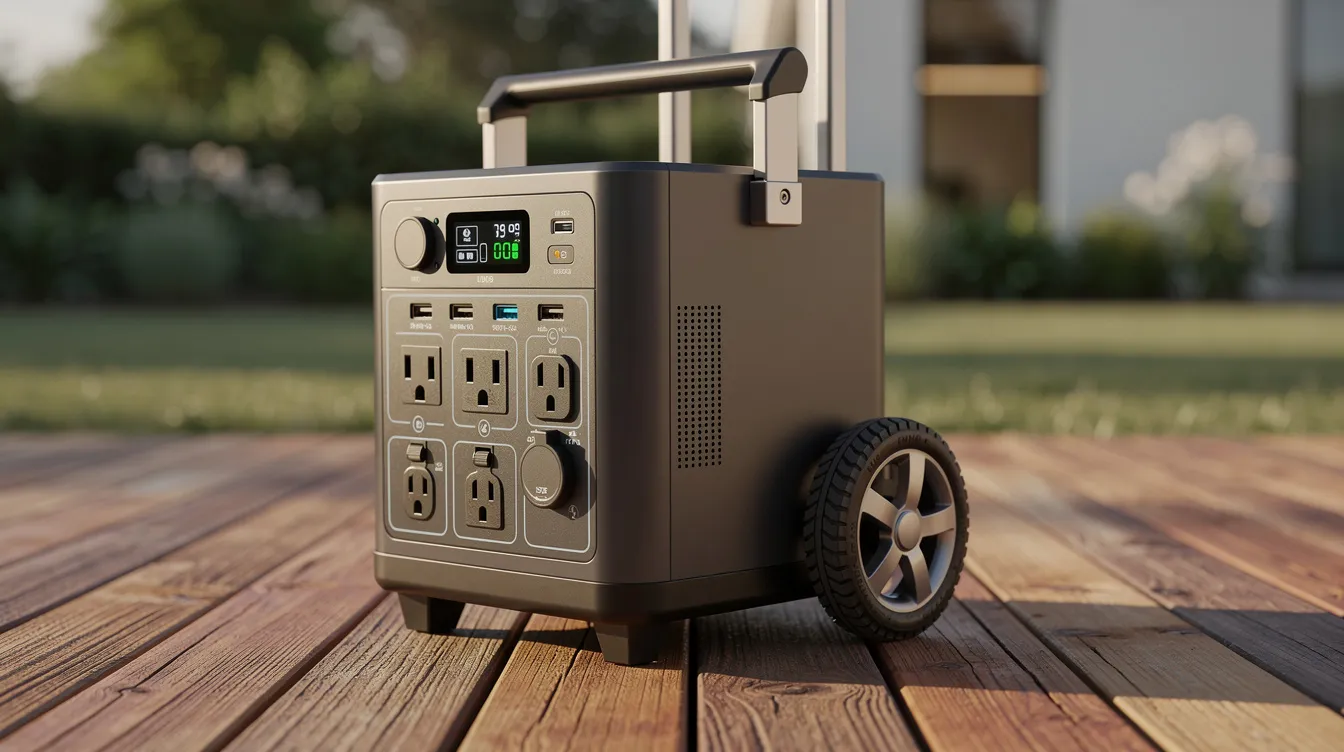
This power station can provide electricity for an entire tiny home during cloudy days or at night when paired with solar.
Possible Limitations
- High initial cost ($3700+)
- Heavy at 114 pounds despite wheels
- Expansion batteries are expensive compared to base unit
Quick Comparison of the Best Generators for Tiny Houses
Generator | Type | Running Watts | Noise Level | Runtime | Price |
|---|---|---|---|---|---|
Honda EU2200i | Gas Inverter | 1800W | 48-57 dB | 8+ hours | $1,100-1,300 |
Goal Zero Yeti 1500X | Solar | 1500W | Silent | 8-24 hours | $1,800 |
Champion 3400W | Dual Fuel | 3100W | 59 dB | 14-21 hours | $900 |
WEN 56203i | Gas Inverter | 1700W | 51 dB | 11 hours | $450-550 |
Jackery 1500 Pro | Solar | 1800W | Silent | Varies | $1,700 |
Yamaha EF2400iSHC | Gas Inverter | 2000W | 47.5-60 dB | 8-18 hours | $1,300 |
EcoFlow DELTA Pro 3 | Solar | 4000W | Silent | Varies | $3,700+ |
Quick picks: |
- Honda EU2200i – Best overall for reliability and quiet gas power
- Goal Zero Yeti 1500X – Best for silent, eco-friendly solar power
- Champion 3400W Dual Fuel – Best for fuel flexibility and higher output
- WEN 56203i – Best budget option with quiet operation
- Jackery Explorer 1500 Pro – Best portable solar solution
- Yamaha EF2400iSHC – Best for premium gas power with high output
- EcoFlow DELTA Pro 3 – Best for whole-home backup and expansion
How to Choose the Right Generator for Your Tiny House
Choose Based on Power Requirements
To determine the total wattage needed for a tiny house, you should calculate the wattage of each appliance and device you plan to use simultaneously, including both running and starting wattages.
Here’s a simple approach:
- List all electrical appliances you’ll run
- Note running watts and starting watts (surge)
- Add 20% buffer for safety
Common tiny house power usage:
Appliance | Running Watts | Starting Watts |
|---|---|---|
Mini-fridge | 700W | 2100W |
LED lights (10) | 100W | 100W |
Fans | 200W | 200W |
Induction cooktop | 1800W | 1800W |
Space heater | 1500W | 1500W |
Microwave | 1000W | 1500W |
On average, daily energy consumption in a tiny home ranges from 1-8 kWh, depending on the number and type of appliances being powered. A traditional house uses far more. |
How much power do you actually need? Most tiny houses require enough power for 1500-2000W running with 3000-4000W surge capacity for wattage requirements.
Choose Based on Fuel Type and Availability
Consider your energy needs and lifestyle, as well as whether you’re in a stationary build or one of many cozy Swedish-style tiny houses:
Gasoline:
- Widely available
- Higher energy consumption per dollar
- Requires storage (volatile, 3-month shelf life)
- Produces emissions and carbon monoxide
Propane:
- Cleaner burning than gasoline
- Stores indefinitely
- Less environmental impact
- May cost 30% less in rural areas
Solar:
- Renewable energy with zero emissions
- No fuel costs after initial investment
- Depends on sunlight (5 sun-hours average)
- Higher upfront cost
How much solar power works for your location? Check local sun-hours. Integrating solar power with generators can enhance energy efficiency in tiny homes by providing a renewable energy source while ensuring backup power during cloudy days or at night. Natural gas connections aren’t practical for mobile tiny homes.
Choose Based on Noise and Space Constraints
Tiny house living means close quarters.
Many tiny house villages enforce 55 dB noise limits. That’s quieter than conversation level.
Consider these factors:
- Inverter models: 48-60 dB (recommended)
- Conventional generators: 70-90 dB (problematic)
- Solar generators: Silent (ideal)
For noise level concerns in a tiny cabin or RV park setting, prioritize inverter or solar units. They offer cleaner power without disturbing neighbors.
It is crucial to place generators outdoors and away from windows, doors, and vents to prevent carbon monoxide poisoning, as generators produce this deadly gas during operation. All this matters for safety and comfort.
Which Generator Is Best for You?
Here’s the simple breakdown:
Choose Honda EU2200i if:
- You need proven reliability
- Quiet gas operation matters
- You want minimal maintenance headaches
- Budget allows premium investment
Choose Goal Zero Yeti 1500X if:
- You prioritize silent, emission-free power
- Sustainability drives your decisions
- Solar charging fits your lifestyle
- You run moderate loads only
Choose Champion 3400W Dual Fuel if:
- You want fuel flexibility
- Higher power output is necessary
- Propane generators appeal to you
- Cost effectiveness matters more than noise
Choose WEN 56203i if:
- Budget is your primary concern
- Basic power needs suffice
- You don’t mind extra maintenance
- You need reliable power without premium pricing
Choose EcoFlow DELTA Pro 3 if:
- You need comprehensive backup power
- Expansion capability appeals to you
- Solar integration is planned
- You want whole-home coverage
Final Thoughts
The best generator for tiny house living depends on your specific needs.
Power needs vary. Budget varies. Lifestyle varies.
Solar generators are gaining popularity for sustainability, but gas generators still offer better power-to-cost ratios for a few hours of heavy use. The cleaner power from solar comes with higher upfront costs but zero fuel expenses long-term.
Match your generator to your actual electrical appliances and energy storage needs. A 1500W solar unit handles most household essentials. A 3400W dual fuel generator tackles demanding loads and serves as a true backup power source.
Proper installation matters regardless of type. Follow manufacturer guidelines. Ensure ventilation. Respect carbon monoxide safety protocols.
Your tiny home deserves reliable power.
Calculate your power requirements. Consider fuel availability. Factor in noise restrictions.
Then make your choice.
The right power solution makes off grid living comfortable, sustainable, and worry-free.