

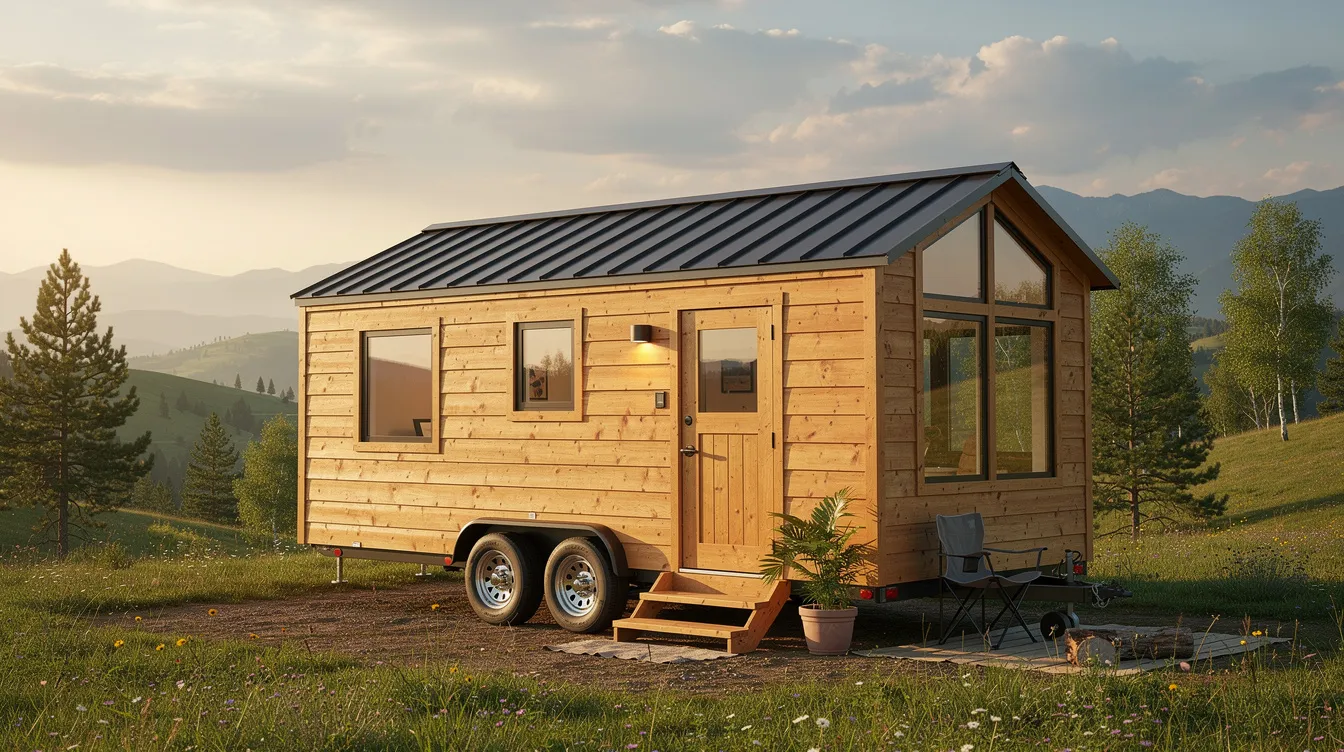
Living tiny doesn’t mean living without comfort.
Hot water matters. It’s essential for a hot shower, washing dishes, and everyday use. But in a tiny house, you can’t just install any water heater you want.
Space is limited. Floor space is precious. Every appliance must earn its place.
Tankless water heaters heat water on demand as it passes through the unit, eliminating the need for bulky tanks, making them ideal for tiny homes where space is at a premium. They’re also more energy-efficient than traditional tank water heaters because they only use energy when hot water is needed, rather than constantly heating a tank of water.
Most tiny homeowners choose tankless models for this reason. They save space. They save energy. They deliver endless hot water when you need it.
But which one is right for your tiny home?
This guide covers the top 6 water heaters for tiny houses. We’ll look at propane models, electric models, and even a tank option. You’ll learn what works for off grid living, grid-connected setups, and everything in between, and how these choices fit into innovative tiny homes that redefine small-space living.
- How We Chose the Best Tiny House Water Heaters
- Top 6 Water Heaters for Tiny Houses
- Quick Comparison of the Best Tiny House Water Heaters
- How to Choose the Right Water Heater for Your Tiny House
- Which Water Heater Is Best for You?
- Final Thoughts
How We Chose the Best Tiny House Water Heaters
Finding the best water heater for tiny house living requires specific criteria.
Here’s what we evaluated:
Space Efficiency
- Units under 12x12x4 inches work best
- Wall mounted designs save floor space
- Space saving design is essential in a small space
Heating Capacity
- Flow rate measured in GPM (gallons per minute)
- Temperature rise at 77°F standard test
- Ability to handle shower plus kitchen sink simultaneously
Energy Source Compatibility
- Propane for off grid capability
- Electric for grid-connected homes
- Natural gas where available
- Solar power integration options
Installation Requirements
- Indoor units vs outdoor unit options
- Venting needs for propane appliances
- DIY installation potential
- Outdoor installations for simpler setup
Reliability and Durability
- Warranty coverage (5-15 years)
- Heat exchanger materials (copper vs aluminum)
- Performance in freezing temps
Value and Safety
- Initial cost vs operating costs
- Freeze protection features
- Auto-shutoff and flame sensors
- Prevention of CO risks
Top 6 Water Heaters for Tiny Houses
Here are the best options for heating water in your tiny home, which should be planned alongside tiny house floor plans that maximize comfort and functionality.
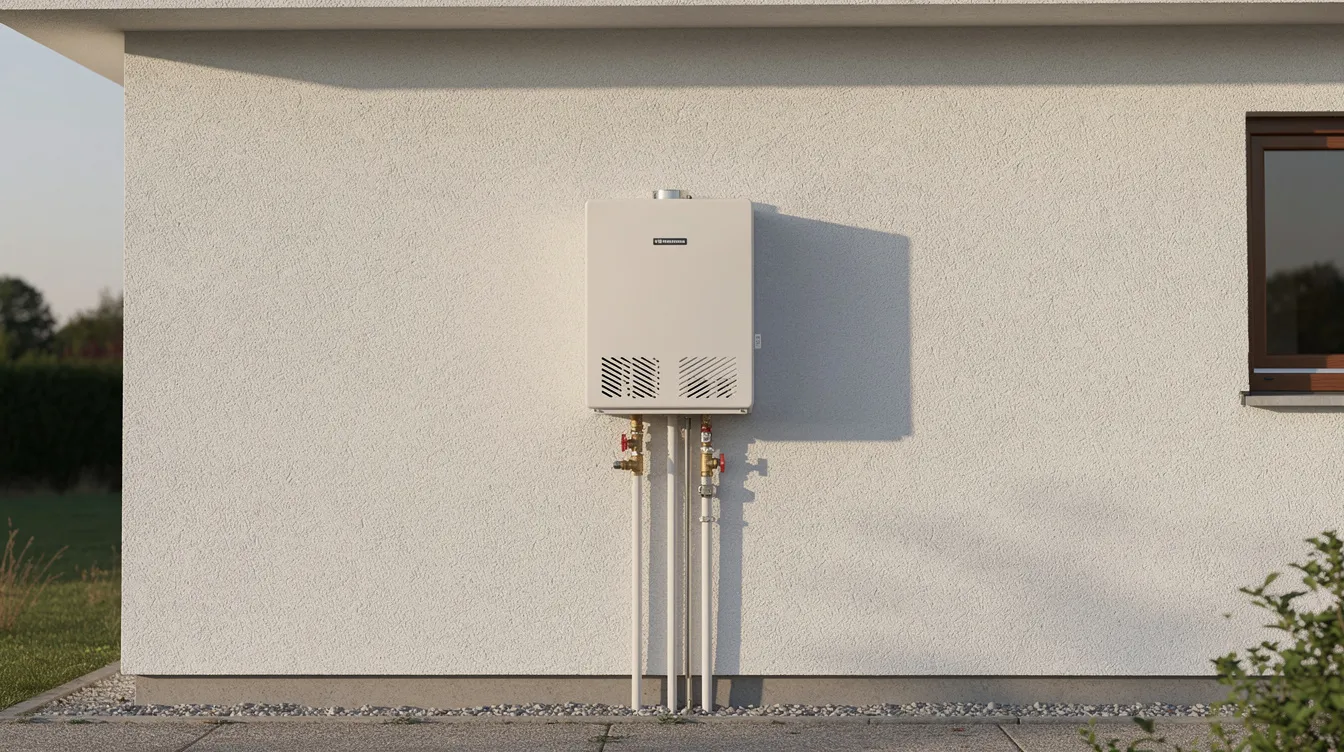
1. Rinnai V53DeP Outdoor Tankless Water Heater
The Rinnai V53DeP is the premium choice for tiny house owners who want serious hot water capacity without compromise, especially in self-contained tiny homes designed for modern off-grid living.
Why It Stands Out
This unit delivers 5.3 GPM at 35°F temperature rise. In real-world tiny house conditions, expect 2-3 GPM at 77°F rise. That’s enough for a shower plus sink running simultaneously.
Best For
Tiny house owners wanting premium performance and endless hot water. Ideal for couples or small families who won’t compromise on water pressure.
Key Strengths
- Highest heating capacity at 136,000 BTU
- Many propane water heaters are designed to be installed outdoors, which simplifies venting and installation compared to indoor units
- Available in propane and natural gas versions
- Built-in freeze protection down to -22°F prevents freezing damage
- 15-year heat exchanger warranty
- 99% energy efficiency
- Recirculation compatible for instant hot water
Possible Limitations
- Higher upfront cost around $500-600
- Requires outdoor mounting space with 12-inch clearance
- Higher propane use at 1-2 gallons per week with heavy use
- Wind screens recommended for outdoor unit protection
2. Rheem RTEX-11 Electric Tankless Water Heater
The Rheem RTEX-11 is the go-to electric water heater for grid-connected tiny homes, particularly those evolving into tiny smart homes with efficient, tech-enabled living.
Why It Stands Out
At just 9.24 x 13.19 x 3.62 inches, this unit fits under counters or in small cabinets. It’s one of the most compact electric water heaters available.
Best For
Grid-connected tiny houses prioritizing indoor installation and space savings. Perfect for urban tiny homes or those parked at RV sites with electricity hookups.
Key Strengths
- No venting required for indoor installation
- Extremely compact—fits near kitchen counter or under sink
- Affordable at $250-300
- 2.68 GPM flow rate handles most tiny house needs
- Digital temperature control (80-140°F)
- 99% efficiency with modulating power
- Copper heating element for durability
Possible Limitations
- Requires 13kW draw (dedicated 60A circuit)
- Not suitable for off grid living without significant solar panels investment
- Struggles with cold water below 50°F (drops to 0.5 GPM)
- May trip breakers in 20A panels
3. Eccotemp L10 Portable Tankless Water Heater
The Eccotemp L10 hits the sweet spot between price and daily-use reliability.
Why It Stands Out
At $300-350, it offers 2.9 GPM—enough for a comfortable shower plus sink use. Propane RV water heaters are compact and designed for small living spaces like tiny homes and RVs, making them ideal for off-grid living.
Best For
Budget-conscious tiny house owners needing reliable propane hot water for everyday use, including those building with affordable Home Depot tiny house kits.
Key Strengths
- Affordable at $349 price point
- 2.95 GPM flow rate covers daily needs
- Propane-powered for off grid capability
- Outdoor mounting simplifies installation
- Battery ignition (D-cell powered)—almost no electricity needed
- Lightweight at 11 lbs
- CSA certified
Possible Limitations
- Thinner heat exchanger than premium brands (less copper)
- Expected lifespan of 5-10 years vs 15+ for Rinnai
- Wind-sensitive pilot flame
- No built-in freeze protection for extreme cold
4. Precision Temp RV-550 Tankless Water Heater
The Precision Temp RV-550 is purpose-built for RV and tiny house applications, and pairs well with tiny house camper setups for ultimate adventure living.
Why It Stands Out
This unit handles extremely low flow rates—starting at just 0.2 GPM. Most tankless models heat water only above 0.5 GPM, leaving you with cold water at lower flow rates.
Best For
Tiny house owners with low flow rate needs and single fixture use. Great for solo dwellers using a low flow shower head.
Key Strengths
- Handles very low flow rates (0.2 GPM startup)
- Compact design for tight spaces
- Transparent heating specifications
- 10-second heat-up time
- Freeze protection to 0°F
- Works with solar battery systems
- Indoor or outdoor installation with direct vent kit
Possible Limitations
- Expensive at $1,195 price point
- Lower BTU output (42,500) limits max temperature to 120°F
- Reported workmanship concerns (leaks on some units)
- Direct vent kit costs extra ($200)
- Some safety recalls for CO risks without proper venting
5. Eccotemp L5 Portable Tankless Water Heater
The Eccotemp L5 is the budget king for seasonal or temporary use.
Why It Stands Out
At just $120-150, it’s the most affordable propane tankless water heater on the market.
Best For
Seasonal tiny house use, camping, or temporary outdoor showers. Perfect for remote locations, cabin getaways, or experimenting with modern tiny house designs for compact living.
Key Strengths
- Very affordable at $129
- Portable at only 8 lbs
- Quick hot water in 2 minutes
- Simple outdoor installation
- Runs 3-4 hours on 20lb propane tank
- 1.5 GPM handles single fixture use
Possible Limitations
- Not suitable for daily year-round use
- Flame can be extinguished by wind (needs shelter)
- Plastic components fail in -10°F incoming temps
- Limited durability (3-5 year lifespan)
- Lower flow rates than daily-use models
6. Suburban SW6DE RV Water Heater
The Suburban SW6DE is the only tank water heater option that works well in tiny houses.
Why It Stands Out
Unlike tankless models, this unit stores 6 gallons of hot water. Traditional water heaters typically hold between 20 to 50 gallons of water, ensuring hot water is always available for everyday use. The Suburban’s smaller tank is sized right for tiny home living.
Best For
Tiny house owners preferring stored hot water over on-demand heating. Good for those who want water hot and ready without waiting, especially in cute tiny house designs focused on cozy, efficient living.
Key Strengths
- 6-gallon capacity suits tiny house needs
- Runs on propane or electricity (dual fuel)
- Reliable hot water storage
- Designed for mobile applications (RVIA certified)
- Suburban dominates RV market (80% market share)
- 120-140°F stored water ready for 2 showers
Possible Limitations
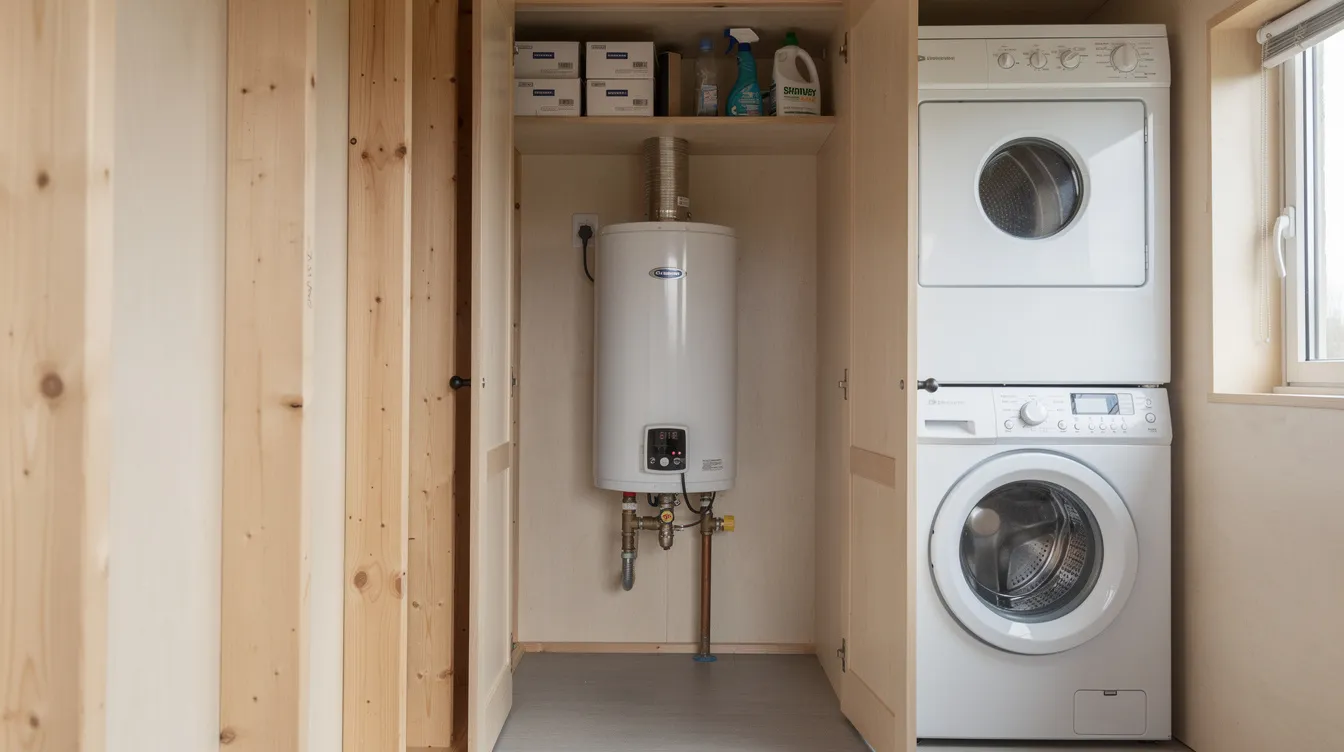
- While traditional tank water heaters are reliable, they are bulkier and take up more space, which can be a drawback in a tiny house
- Traditional water heaters are generally less energy-efficient compared to tankless models, as they heat water continuously even when not in use
- Heavier at 42 lbs
- 12x12x20 inches takes up more space than tankless
- 60-70% efficiency vs 80-99% for tankless
Quick Comparison of the Best Tiny House Water Heaters
Here’s how each unit stacks up:
- Rinnai V53DeP – Best for high-capacity endless hot water (5.3 GPM, $550, propane)
- Rheem RTEX-11 – Best for compact grid-connected installations (2.68 GPM, $275, electric)
- Eccotemp L10 – Best value for everyday off-grid use (2.9 GPM, $349, propane)
- Precision Temp RV-550 – Best for low flow rate applications (1.5 GPM, $1,195, propane)
- Eccotemp L5 – Best budget option for seasonal use (1.5 GPM, $129, propane)
- Suburban SW6DE – Best tank option for stored hot water (6 gal, $800-1,000, dual fuel)
Model | GPM | Price | Fuel | Best Use |
|---|---|---|---|---|
Rinnai V53DeP | 5.3 | $550 | Propane/NG | Premium performance |
Rheem RTEX-11 | 2.68 | $275 | Electric | Grid-connected |
Eccotemp L10 | 2.9 | $349 | Propane | Off-grid daily |
Precision Temp | 1.5 | $1,195 | Propane | Low flow needs |
Eccotemp L5 | 1.5 | $129 | Propane | Seasonal/budget |
Suburban SW6DE | N/A | $900 | Dual | Stored hot water |
How to Choose the Right Water Heater for Your Tiny House
When choosing a water heater for a tiny house, consider factors like available space, energy source, and whether you are living off-grid or connected to utilities, as well as how it fits into custom tiny homes tailored to your lifestyle.
Choose Based on Energy Source
Your energy source determines your options.
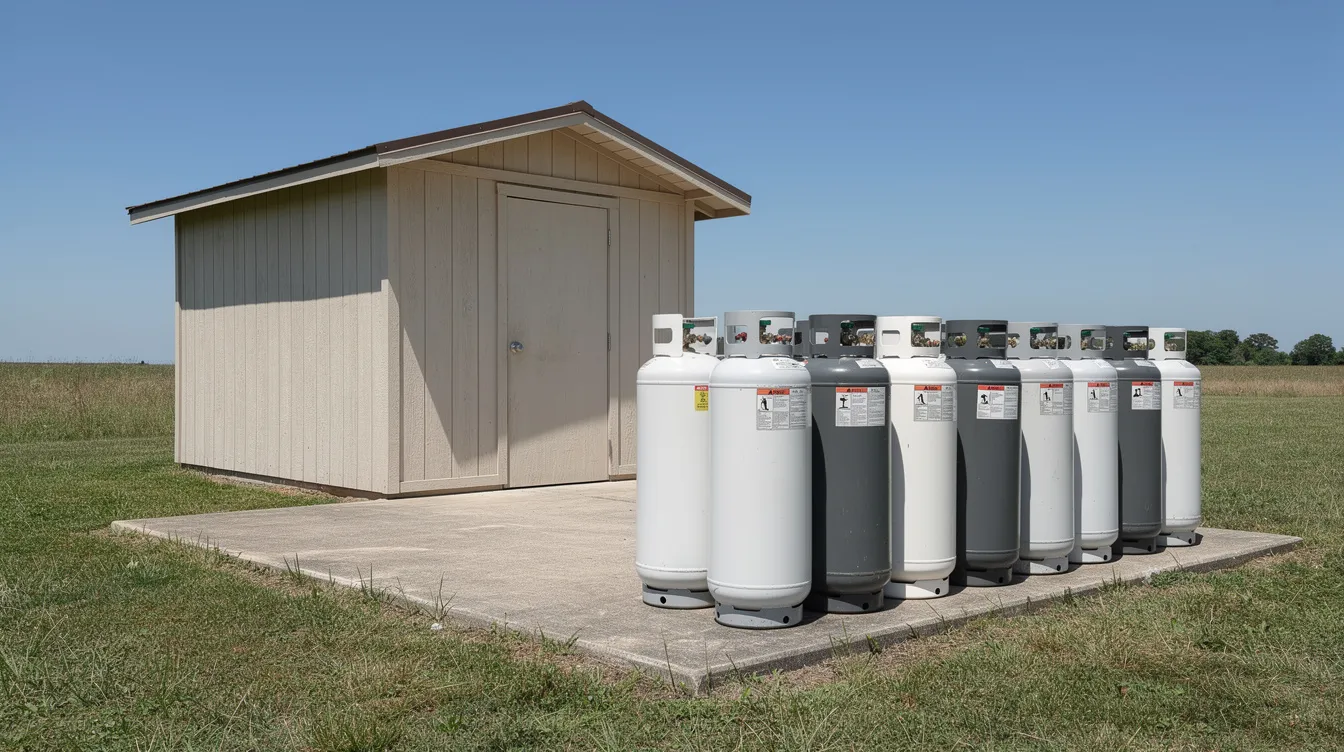
Propane
- Best for off grid living
- Propane water heaters provide hot water without relying on electricity, making them a practical choice for off-grid living
- If you plan to live off the grid, a gas water heater (propane or natural gas) is generally the best option for heating water
- Uses 0.4-1 lb propane per hour
- 20lb propane tank refill costs about $20
- Refill stations are everywhere
Electric
- Requires grid connection or significant solar system
- Electric models may require significant investment in solar panels for off-grid use
- Lower installation complexity
- Needs 20-50A electrical panel
Solar Water Heaters
- Solar water heaters are eco-friendly and cost-efficient over time, utilizing solar panels to heat water for residential use
- The performance of solar water heaters can depend heavily on location and climate, making them less effective in areas with limited sunlight or cold climates
- Many homeowners using solar water heaters may require a backup system, such as a propane or electric heater, to ensure hot water availability during less sunny periods
Dual Fuel
- Hedges your bets
- Suburban-style units run on either propane heater mode or electricity, making them a good fit for micro houses built for affordable, modern living
- More flexibility for different situations
Choose Based on Installation Location
Where you install matters.
Outdoor Installations
- Simplest for propane appliances
- No venting complications
- Needs weather protection
- Requires freeze protection in cold climates
Indoor Units
- Electric models need no venting
- Propane requires direct vent pipes ($200-500 extra)
- Code requires 24-inch clearance
- GFCI outlets mandatory for electric
Climate Considerations
- Freezing temps demand freeze-proof units
- Rinnai protects to -22°F
- Precision Temp to 0°F
- Eccotemp L5 fails below -10°F
- Consider pipe insulation to prevent freezing
Choose Based on Hot Water Demand
How much hot water do you actually need?
For Singles
- 1.5 GPM handles single fixture
- Low flow shower head (1.5 GPM) stretches capacity
- Budget options work fine
For Couples
- For tiny homes with one or two people, tankless water heaters with a flow rate of 2 to 5 gallons per minute (GPM) are sufficient to provide continuous hot water
- For tiny homes with one or two people, a water heater with a flow rate of 2 to 5 GPM is typically sufficient
- Consider simultaneous use (shower + dishes)
Tankless vs Tank
- Tankless models heat water on demand—endless supply
- Tank water heater stores preset amount
- Tankless saves more space
- Traditional hot water heaters need recovery time between uses
Which Water Heater Is Best for You?
Here’s your decision framework:
Choose Rinnai V53DeP if:
- You want maximum performance
- Multiple people need hot shower access
- You have outdoor mounting space
- Budget isn’t the primary concern
Choose Rheem RTEX-11 if:
- You’re connected to the grid
- Indoor installation is preferred
- Compact size matters most
- You want affordable electric
Choose Eccotemp L10 if:
- You need off-grid capability
- Value matters
- You want reliable daily use
- Outdoor installation works
Choose Eccotemp L5 if:
- Budget is tight
- Use is seasonal
- You need portability
- Permanent installation isn’t required
Choose Precision Temp RV-550 if:
- You have very low flow rates
- Single fixture use is typical
- You’re on solar power
- RV-specific design appeals
Choose Suburban SW6DE if:
- You prefer stored tank water
- Dual fuel flexibility matters
- Reliability trumps efficiency
- You’re comfortable with the size
Final Thoughts
Tiny house water heater options have come a long way since the tiny house movement began.
Tankless water heaters are highly recommended for tiny houses due to their space-saving design and efficiency, as they heat water on demand and do not require bulky tanks. Most tiny homeowners will find that an on demand heater serves them better than traditional hot water heaters.
Your choice depends on three things:
- Energy source – Propane for off-grid, electric for grid-tied
- Installation location – Outdoor for simplicity, indoor for protection
- Hot water needs – Lower flow rates work for singles, higher GPM for couples
Proper installation and maintenance are crucial for safety. Propane units need adequate venting. Electric units need proper circuits. All units need regular inspection.
The good news? Multiple good options exist across budgets and requirements. Whether you spend $129 on an Eccotemp L5 or $550 on a Rinnai V53DeP, you can enjoy a comfortable hot shower in your tiny home.
Start by measuring your space. Check your energy source. Calculate your hot water demand. Then pick the heater that fits.
Tiny home living doesn’t mean sacrificing comfort. The right water heater makes all the difference.