
The tiny house movement continues gaining momentum, and for good reason. A well-designed compact home can slash your energy bills, minimize maintenance, and let you live large without the burden of excess space. But what actually makes the most efficient tiny house in 2024?
- Answer First: What Makes the Most Efficient Tiny House in 2024?
- Preliminary Planning for an Ultra-Efficient Tiny House
- Learn from Existing High-Performance Tiny Houses
- Designing the Most Efficient Tiny House Layout
- Structure & Materials for Maximum Energy Efficiency
- The Trailer or Foundation: Efficient Starting Point
- Roof, Windows & Doors: High-Impact Efficiency Choices
- Electrical System & Lighting in an Efficient Tiny House
- Heating, Cooling & Ventilation: Comfort with Minimal Energy
- Insulation Strategy & Thermal Performance
- Water, Plumbing & Efficient Fixtures
- Toilets & Waste Systems: Efficient, Low-Impact Options
- Interior Finishes, Storage & Space Optimization
- Appliances, Cooking & Everyday Efficiency
- Off-Grid Power: Solar, Batteries & Backup
- Budget, Cost Breakdown & Long-Term Savings
- Real-World Example: A High-Efficiency Tiny House Profile
- Conclusion: Defining “Most Efficient Tiny House” for Your Life
Answer First: What Makes the Most Efficient Tiny House in 2024?
Efficiency in a tiny house isn’t a single metric. It’s a combination of energy performance measured in annual kWh consumption, space use quantified as storage volume per square foot, construction cost per square foot, and maintenance requirements over the structure’s lifespan. The efficiency of a tiny house is achieved through a combination of reduced scale and intentional design choices that maximize every inch.
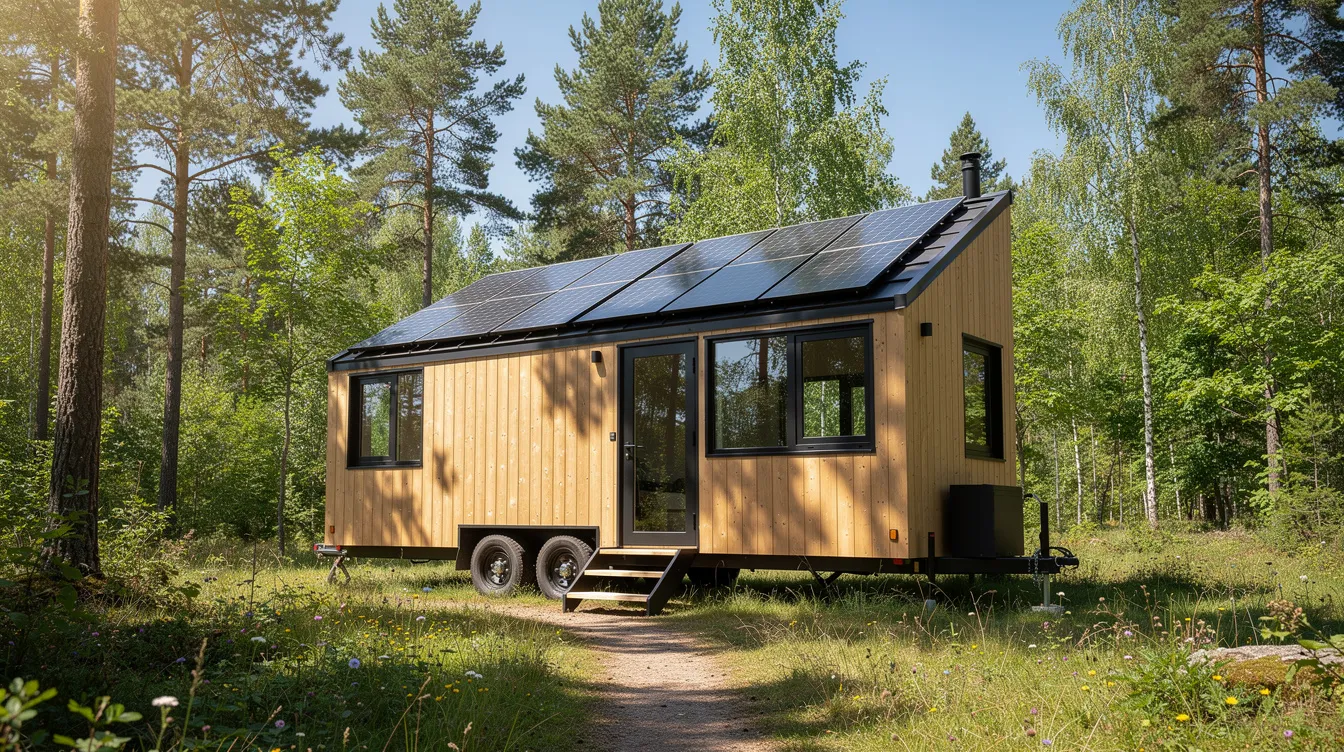
Consider a concrete example: a 24-foot by 8.5-foot tiny house on wheels totaling approximately 204 square feet. With R-30+ walls using mineral wool batts plus exterior rigid foam, an R-40+ cathedralized roof with dense-pack cellulose, a 2 kW south-facing solar array paired with 10 kWh lithium batteries, and a heat recovery ventilation system recovering 75-85% of exhaust heat, this build achieves utility bills under $40 monthly—even in Minnesota’s Zone 6 where heating degree days exceed 8,000. Tiny homes require up to 93% less energy for heating and cooling compared to average American houses, making this dramatic reduction achievable.
For 2024, the most efficient designs typically combine structural insulated panels or advanced framed shells, triple-pane windows with U-factors below 0.20, all-LED lighting drawing under 200 watts total, Energy Star appliances, and passive solar orientation that can offset 20-30% of winter heating loads. Tiny houses enhance sustainability with excellent insulation, LED lighting, solar power, and composting toilets.
Comparing mobile versus foundation tiny homes reveals trade-offs. Foundation-based tiny homes can hit R-40 floors and R-50 roofs without weight constraints, achieving blower-door results under 0.6 ACH50. Meanwhile, THOWs typically reach 1.5-2.0 ACH50 due to trailer flexure but leverage lightweight aerogel blankets and aluminum-skinned SIPs to maintain performance while keeping total weight under 10,000 pounds for single-truck towing.
This guide covers everything you need to create your own tiny house: preliminary planning and layout design, structure and building materials for maximum thermal performance, systems including power, water, and HVAC, and interior optimization for year round comfort.
Preliminary Planning for an Ultra-Efficient Tiny House
The most efficient tiny houses are designed on paper first, then built. Rushing into construction without thorough planning leads to costly rework and compromised performance. Modular design is a key principle of the tiny house movement, allowing for flexibility and customization in a small space and enabling you to adapt your living area to suit changing needs.
Start by defining your non-negotiables:
- Full-time vs. weekend use: Year-round residency in Climate Zone 5 demands 50% more insulation than Zone 2
- Climate zone: Minnesota versus Arizona requires completely different envelope strategies
- Grid-tied vs. off-grid: Off-grid viability requires daily load audits under 5 kWh
- Legal parking options: Zoning-compliant sites in 2024 often limit trailer lengths to 28 feet
Size directly impacts efficiency. A 28-foot trailer maximizes 238 square feet per US DOT rules while minimizing surface-to-volume ratios for 15% lower heat loss than 20-foot models. Consider 20 ft, 24 ft, or 28 ft trailers for THOWs, or 250-400 square foot park models for foundation builds.
Make a scaled floor plan on graph paper at 1/4-inch scale, then transfer to free software like SketchUp or Sweet Home 3D. Use digital furniture blocks to test layouts before cutting a single board, drawing on tiny house floor plans that work for you to refine circulation and storage. List all major loads upfront: cooktop type (induction at 1,800W peaks versus propane), heating method, water heater fuel, laundry requirements, dedicated workspace dimensions, and pet space needs.
Learn from Existing High-Performance Tiny Houses
Visiting or virtually touring real tiny homes reveals what efficient actually feels like day to day. YouTube compilations and Instagram tours from companies like Baluchon, Acorn Tiny Homes, and custom builders showcase cold-climate successes and warm-weather tiny house designs for modern living that maximize cross-breezes.
Aim to study at least 3-5 different builds:
- One off grid solar cabin demonstrating complete self-reliance
- One high-R tiny house on wheels in a cold climate
- One warm-climate design prioritizing shade and natural ventilation
Take measurements during visits or note dimensions from videos: loft clearance (aim for 6’8” in main lofts), stair width (28-30 inches ideal), and counter depth. Note bottlenecks like 24-inch stair widths causing fatigue in multi-level use or tight bathroom doors.
A well-known efficient layout to study: Baluchon’s 19-foot Ellébore THOW with red cedar cladding features an end-kitchen layout where storage-integrated stairs access a full-width loft. Pocket doors save 10 square feet over hinged swings, and under-sofa bins yield 15 cubic feet of storage without impeding 36-inch central circulation. Borrow proven ideas like flip-up tables (25% more dining flexibility than fixed), pocket doors, under-sofa storage, and integrated desk solutions.
Designing the Most Efficient Tiny House Layout
Layout efficiency balances circulation, storage space, and daylight. Every step saved per task matters in 200 square feet of living space. Efficient tiny houses maximize space through multi functional furniture, vertical storage, and open layouts, similar to the strategies used in tiny house interiors that maximize every square foot.
Apply the work triangle concept to kitchen, bathroom, and sleeping areas:
- Minimum 24-inch walkways to preserve 20% more usable floor area
- 28-30 inch stair width with 7-inch risers for ergonomic ascent
- 6’6” minimum headroom in main circulation zones
High ceilings in tiny houses allow for lofts used as sleeping areas or additional storage, freeing up the main floor. Loft bedrooms are a popular feature, and clever ladder designs for tiny house lofts maximize vertical space while creating cozy sleeping areas without taking up valuable floor space.
Efficient layouts for different needs:
Lifestyle | Key Features |
|---|---|
Solo digital nomad | 4×8-foot desk loft with south glazing for 500 lux daylight, single sleeping loft |
Couple with pet | Storage stairs, first-floor queen murphy bed, toe-kick cabinets accessing 8 cubic feet |
Small family | Dual 80-square-foot lofts, storage stairs with 20 cubic feet, 60-second convertible sofa bed |
Fold-down tables are a practical space-saving solution that can be tucked away when not in use. Examples of multi-functional furniture include beds that fold up into walls and tables that double as storage units. Sliding walls are a game-changer in tiny house design, allowing rooms to be opened up or closed off as needed, creating openness while providing privacy when desired. |
Avoid design mistakes: too many interior doors instead of pocket or barn doors, oversized 24-inch fridges claiming 10% of floor area, and dead corners without storage. The use of multi functional furniture not only saves space but enhances functionality.
Structure & Materials for Maximum Energy Efficiency
The building envelope—floor, walls, roof, windows, doors—has the biggest impact on heating and cooling loads. Traditional construction is wasteful and carbon-heavy, releasing an estimated 26-39 million tons of CO₂e annually, while greener alternatives and minimalist tiny houses for sustainable living reduce both environmental impact and indoor toxins.
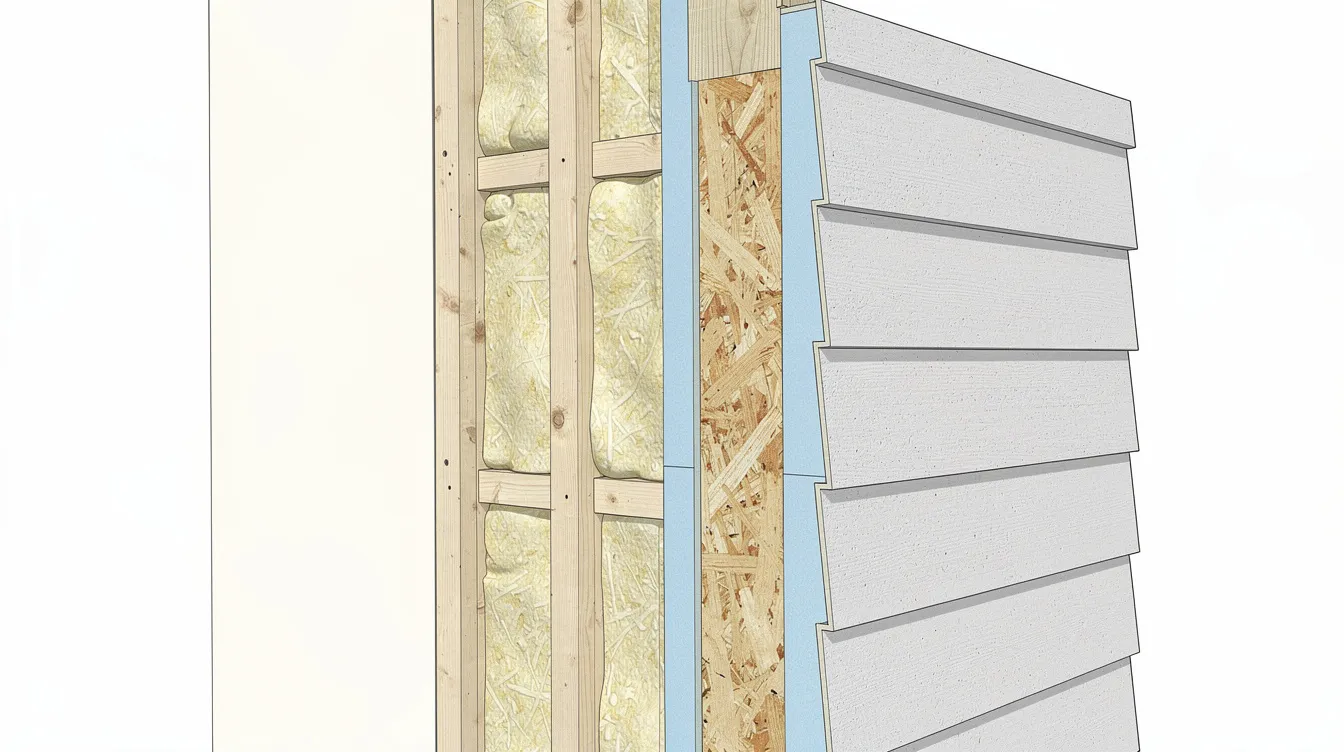
Three efficient wall systems compared:
System | Total R-Value | Pros | Cons |
|---|---|---|---|
Advanced 2×6 framing + 2” exterior EPS | R-26 | Cost-effective, familiar techniques | 10% thermal bridging at headers |
SIPs (5” thickness) | R-30 | 40% faster install, superior air sealing | $15/sq ft premium |
Double-stud walls + dense-pack cellulose | R-35 | 20% better airtightness, highest R-value | Labor-intensive |
Target R-values for cold climates: walls R-25 to R-30 (U-0.04-0.033), roof R-40+ (U-0.025), floor R-30+, and windows with U-factor ≤ 0.25. |
Choosing high quality materials and furnishings from the outset ensures your tiny home remains comfortable, functional, and sustainable for years, avoiding expensive repairs later. Use durable materials like mineral wool for its vapor permeability preventing interstitial condensation. Air sealing details matter: taped sheathing, gaskets at outlets, spray foam at penetrations, and continuous air barrier from floor to roof achieving 1.0 ACH50 or better.
The Trailer or Foundation: Efficient Starting Point
A stable, well-designed base prevents structural issues that sabotage long-term efficiency through air leaks, sagging, and thermal bridges.
For trailers:
- Dual 7,000-pound axles rated 25% above your projected 9,000-pound gross weight
- Electric-over-hydraulic brakes with breakaway system
- 8.5 ft legal towing width in North America
Insulate trailer floors efficiently with 3.5-4 inches of XPS (R-20) between crossmembers, 1-inch polyiso above, then subfloor. Protect with 22-gauge galvanized skirts. Seal gaps with spray foam baffles.
For foundation builds, consider insulated slabs with 6-inch concrete over 2-inch vertical XPS perimeter insulation (R-15 effective), minimizing 40% thermal bridging losses. Pier foundations work well with continuous perimeter insulation.
Apply corrosion protection to steel trailers: galvanizing plus epoxy primers rated for 50-year corrosion resistance per ASTM B117 salt-spray tests. This protection matters for a structure expected to last 30+ years.
Roof, Windows & Doors: High-Impact Efficiency Choices
Roofs and openings are the most exposed surfaces, making them critical to both energy and moisture performance.
Roof build-up specification:
- 2×10 rafters at 24-inch OC sized for 40 psf snow loads
- Dense insulation to R-40+ (12-inch heels for full insulation at eaves)
- Vented 1-inch air channels preventing ice dams
- Underlayment and lightweight aluminum standing-seam (sheds snow 20% faster than asphalt)
High-performance insulation and triple-pane windows minimize energy loss. Large, strategically placed windows maximize natural light and passive solar heating in winter. Recommend triple-pane units like Pella Impervia achieving U-0.18 with argon fill.
Window placement strategy:
- 40% of glazing on south side for 15-20 kBtu/day passive gain
- Higher SHGC (0.4-0.6) on south-facing glass for cold climates
- Lower SHGC on east/west to reduce summer overheating
- Smaller, fewer windows on north walls
- Deciduous overhangs at 30-degree latitude-specific slopes for summer shading
Installation details for THOWs: self-adhesive flashing around openings, sloped sill pan or backdam, corrosion-resistant fasteners, and flexible sealants handling 1-inch differential movement.
Electrical System & Lighting in an Efficient Tiny House
Efficient electrical design starts with accurate load calculations, especially for off grid setups or limited-amp connections like a 30A RV hookup (3,600W continuous maximum).
Plan circuits before insulation goes in:
- Dedicated circuits for high-draw devices: mini-split (900W peak), induction cooktop (1,800W), water heater
- Separate low-draw lighting circuits
- 14 AWG for 15A lighting circuits
- 12 AWG for 20A outlets
- Compliance with NEC 2023-2024 code updates
Specify all-LED lighting: 4-inch recessed LED cans or surface-mount pucks at 5W each, under-cabinet strips in kitchen, 2700K-3000K color temperature for warm light. Total house-wide lighting should draw under 100-200W.
Use a plug-in energy monitor like Kill-A-Watt to test appliances during planning. This prevents overloading a small panel or inverter and confirms that DC fridges drawing 40W slash inverter losses from 15% to 5%.
Heating, Cooling & Ventilation: Comfort with Minimal Energy
In an ultra-efficient tiny house, HVAC loads are small, so right-sizing equipment prevents short-cycling and wasted money. A 9,000-12,000 BTU mini-split can easily handle a well-insulated 200 square foot space.
The typical high-efficiency 2024 combo:
- Small ductless mini-split heat pump (9,000-12,000 BTU, 20+ SEER) providing COP 4.0 at 5°F
- Balanced heat recovery ventilator recovering 75-85% of exhaust heat
- Target: 0.35 ACH continuous ventilation maintaining good ventilation
For ultra-cold climates, pair a mini wood stove (around 18,000 BTU, 8 hours on 2.5 lbs wood) with thick insulation and HRV. Thermal mass benches can store 20 kWh of sensible heat for overnight comfort at -30°C to -40°C.
Proper ventilation prevents mold in tightly sealed envelopes. HRV units like Zehnder’s 60 CFM recover 82% energy even at -13°F. ERVs trade some efficiency for humidity control in humid climates. Maintain indoor air quality goals: 45-55% relative humidity and continuous fresh air exchange.
Passive strategies save energy: south-facing glazing, roof overhangs sized for latitude, operable windows on opposite walls for cross-ventilation, and light-colored roofing reflecting heat in hot regions.
Insulation Strategy & Thermal Performance
Understanding the difference between R-value, air sealing, and thermal bridging is essential. All three must be addressed for the most efficient tiny house claim to be meaningful.
Example high-performance assemblies:
Assembly | Components | Total R-Value |
|---|---|---|
Floor | 5.5” EPS-XPS hybrid over trailer | R-28+ |
Walls | 5.5” Rockwool Comfortboard + 1.5” exterior polyiso | R-30 (U-0.033) |
Ceiling | 16” net blown-in cellulose | R-45+ |
Insulation is a critical component in tiny homes, with materials like mineral wool batts providing R-14 thermal insulation per batt, which helps maintain temperature and reduce energy costs. Eco-friendly insulation options are available that are non-toxic, recycled, and naturally insulating, helping maintain air quality. |
Climate-specific tweaks:
- Northern regions: raised-heel rafters maintaining full insulation at eaves
- Hot climates: radiant barriers reflecting 95% NIR
- All climates: insulated headers, continuous exterior insulation, advanced framing around openings
Verify performance with blower-door testing. Aim for ≤ 1.5 ACH50—achieving 1.0 ACH50 cuts heating and cooling loads by 40% versus code-minimum 7 ACH50 builds.
Water, Plumbing & Efficient Fixtures
An efficient tiny house minimizes both water use and energy for heating water while protecting systems from freezing and leaks, which is a core part of learning how to build a tiny house that performs well in real-world conditions.
Design a compact plumbing layout with bathroom and kitchen back-to-back, shortening hot-water runs to 20-foot maximum at 1 gpm flow. Use PEX tubing with home-run manifold system: 1/2-inch lines to fixtures, 3/4-inch main feed.
Off-grid water system example:
- 50-65 gallon fresh water tank under bench
- 12V Shurflo pump (3 gpm at 55 psi)
- Small accumulator tank reducing pump cycling
- Propane Navien tankless heater (80% efficient, 120,000 BTU)
Install water-saving fixtures: 1.25 gpm lavatory faucets, 1.5-1.75 gpm shower heads, and dual-flush (1.28 gpf) or composting toilets. These reduce grey and black water volumes, halving typical 40 gpcd use.
Insulate supply lines with 1/2-inch Armaflex. Use self-regulating 5W/ft heat trace on exposed lines activated below 35°F for freeze protection.
Toilets & Waste Systems: Efficient, Low-Impact Options
Three main toilet options affect water and energy differently:
Type | Water Use | Energy Use | Infrastructure Needed |
|---|---|---|---|
Traditional flush | 1.6 gpf | Minimal | Septic/municipal, 100-foot field |
Composting | Zero | 1W 12V fan | Ventilation only |
Cassette/dry | Minimal | None | Emptying access |
A urine-diverting composting toilet like Nature’s Head dramatically reduces water consumption and eliminates septic field requirements. These units use a constant 12V fan exhausting odors to roof vents, 1 quart peat or hemp chips weekly for 2 occupants, with bi-monthly emptying. |
Solar power generation, composting toilets, and rainwater harvesting allow tiny houses to achieve complete self-reliance when combined.
Check 2024 local codes and RV park rules before committing. Composting systems are legal in 40+ US states but banned in some urban RV parks.
Maintenance involves regular carbon material additions and proper ventilation. Long-term environmental impact is positive: reduced water treatment loads and nutrient recycling.
Interior Finishes, Storage & Space Optimization
Interior choices affect cleaning time, durability, and real-world usability. Efficient designs in tiny houses utilize overlooked areas for storage, such as under-stair drawers and hidden floor compartments, and should tie back to tiny house plans that fit your life so the layout supports daily routines.
Recommended finishes:
- Walls and ceiling: 1×6 tongue-and-groove pine (3/8-inch thick, 5 lbs/sq sheet) over brittle drywall for THOWs
- Flooring: 5mm vinyl plank (R-1, 0.1% water swell) resisting 10,000 psi and pet wear
- Bathroom: tile or waterproof vinyl in wet areas
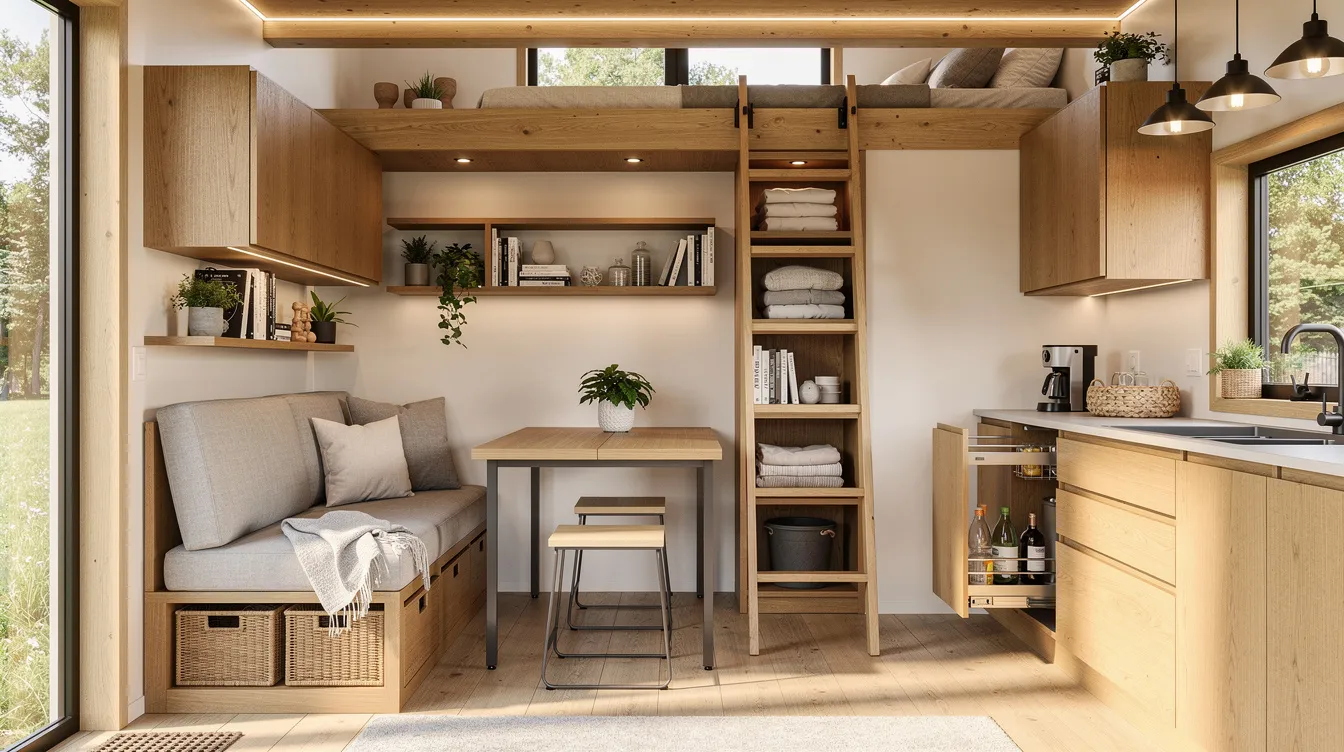
Hidden storage solutions like built-in cabinets and under-stair storage are essential to keep space clutter-free. Efficient designs focus on eliminating wasted space, ensuring every square inch serves a function.
Storage solutions:
- Full-height 24-inch deep pantry towers (15 cubic feet) beside fridge
- Overhead soffits above 72-inch sofas
- 6-inch toe-kick drawers in kitchen accessing 8+ cubic feet
- Storage stairs with 12 cubic foot drawers
Configure two-loft systems: one 8×7-foot sleeping loft (32 square feet, 6’8” headroom) plus a shorter 6×5-foot storage or office loft (4’6” headroom at edges). Vertical gardens utilize wall space for plants, allowing gardening without sacrificing floor space.
Use leftover construction lumber for small built-ins—benches, coat racks, shelves—reducing waste while adding functionality.
Appliances, Cooking & Everyday Efficiency
Appliance choices define daily energy use, especially in all-electric or off grid tiny homes. Energy-efficient appliances and fixtures are essential in compact homes to cut waste and conserve resources while maintaining comfort.
Cooking options compared:
Option | Efficiency | Best For |
|---|---|---|
24” propane range | 40% | Off-grid with limited solar |
1,800W induction + countertop oven | 85% | Grid-tied or robust solar system |
Recommend compact, Energy Star appliances: 10-15 cubic foot fridge (12V Everchill at 240 kWh/year versus 15 cubic foot AC models at 450 kWh), 18-inch Bosch dishwasher at 3.2 gal/cycle if grid-tied, and combo ventless Splendide washer-dryer at 0.5 kWh/load. |
Multi-functional furniture is essential for maximizing space in tiny homes, and the same principle applies to appliances. Choose a fully equipped kitchen with right-sized equipment rather than oversized residential models.
Keep phantom loads low: use 8-outlet smart power strips idling at 0.5W total, turn off inverters when not in use, and select devices with true off switches. LED lighting and efficient ventilation hoods contribute to lower system requirements.
Off-Grid Power: Solar, Batteries & Backup
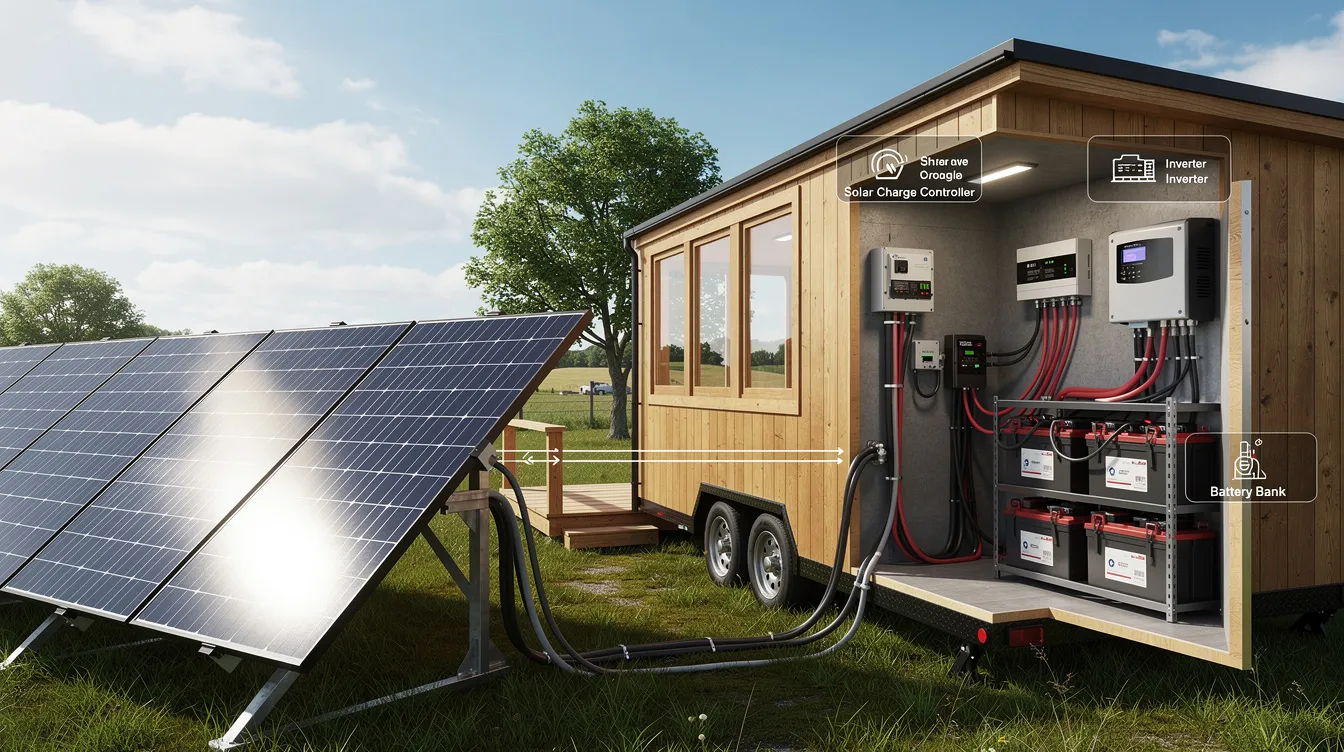
For many people, the most efficient tiny house means one that operates comfortably off-grid with a modest solar array. Tiny homes require less energy, making them ideal candidates for off grid and renewable power systems, especially in self contained tiny homes for modern off-grid living.
Sample off-grid system:
- 2.5-4 kW fixed-tilt solar panels at 18% efficiency (10 kWh/day in 4 sun-hour zones)
- 7.2-10 kWh SOK lithium batteries (6,000 cycles to 80% DOD)
- 3-5 kW Victron inverter/charger at 96% efficiency
- 2,000W Honda eu2200i backup generator for extended cloudy periods
Daily load estimate example:
Device | Hours/Day | Watts | Daily Wh |
|---|---|---|---|
Laptop | 8 | 45 | 360 |
12V fridge | 24 | 40 | 960 |
LED lights | 6 | 50 | 300 |
Water pump | 0.5 | 60 | 30 |
Mini-split | 4 | 300 | 1,200 |
Total | 2,850 Wh | ||
Efficiency tips: |
- Use DC loads where practical, saving 200W daily
- MPPT controllers optimize 25% over PWM
- Orient panels for maximum annual production at actual latitude
- Maintain with snow removal, periodic battery health checks, and accessible wiring
Budget, Cost Breakdown & Long-Term Savings
An efficient tiny house aims for lifecycle cost efficiency, not just low upfront price. Living in a tiny house offers financial, environmental, and lifestyle advantages driven by efficiency in resource consumption.
Realistic 2024 DIY cost range: $45,000-$75,000 USD for a well-insulated 20-28 ft build ($225-$375/sq ft), with professional builds costing significantly more.
Budget allocation:
Category | Percentage | Approximate Cost |
|---|---|---|
Trailer/foundation | 25% | $12,000 |
Shell (framing, roofing, windows, doors) | 30% | $18,000 |
Insulation & envelope upgrades | 15% | $7,000 |
Interiors (plywood, appliances, finishes) | 20% | $11,000 |
Systems (electrical, plumbing, HVAC, solar) | 10% | $6,000 |
Investing extra in insulation, air sealing, and high-performance glass pays back through lower utility bills. Expect $20-40/month electric in moderate climates versus typical house bills of $150-300. High-R upgrades recoup approximately $1,500/year savings, projecting 7-year ROI at 5% discount rate. |
Track all expenses in a spreadsheet and build a 5-10 year cost projection including maintenance, fuel, and potential parking fees or land lease to save money long-term, using tools like a tiny home cost calculator to refine your budget assumptions.
Real-World Example: A High-Efficiency Tiny House Profile
Consider this realistic 2023-2024 build: a 26-foot by 8.5-foot tiny house on wheels (221 square feet) located in Minnesota’s Climate Zone 6, designed for full-time off-grid living. This amazing build demonstrates what’s possible with smart design and quality construction.
Key specifications:
- Custom dual-axle steel trailer with galvanized coating
- R-28 walls (2×6 framing + 2” exterior EPS)
- R-45 roof (dense-pack cellulose)
- R-32 floor (4” polyiso between I-beams)
- Triple-pane Andersen windows (U-0.22)
- 12,000 BTU Mitsubishi mini-split (15 SEER)
- 3 kW solar array with 10 kWh Battleborn batteries
Performance data:
- Average net energy use: 1.2 kWh/day
- Monthly propane cost: $15
- Heating maintained at -30°F without auxiliary backup
Layout highlights:
- Dual lofts accessed via storage stairs (12 cubic feet of drawers)
- Murphy desk-bed combination freeing 30 square feet daytime
- Full bathroom with composting toilet
- End kitchen with induction cooktop
Total build cost: $62,000, saving approximately $24,000/year compared to 1,200 square foot apartment rents in the area. This custom build embodies envelope-first efficiency, halving loads from code baselines while providing inspiration for others building their dream home.
Conclusion: Defining “Most Efficient Tiny House” for Your Life
The most efficient tiny house is ultimately one that matches its owner’s climate, lifestyle, and budget while minimizing energy, water, and maintenance demands. Whether you’re drawn to the natural world, seeking financial freedom, or simply wanting to reduce your environmental footprint, the principles remain consistent.
The core pillars of efficiency are: thoughtful planning before construction begins, a high-performance envelope with proper insulation and air sealing, right-sized systems that don’t waste capacity, intelligent layout maximizing every square foot, and durable, low-maintenance finishes that stand up to tiny house living.
Prioritize envelope and systems first—insulation, air sealing, windows, and ventilation. View aesthetics as the final layer rather than the starting point. A beautiful tiny home that’s poorly insulated will never be truly efficient, while a well-built shell can always be finished with great ideas for the interior.
Your next steps:
- Visit 3-5 existing builds in person or through virtual tours
- Sketch your floor plan with furniture blocks at scale
- Create a prioritized feature list ranking efficiency versus budget
- Consult with designers or builders experienced in high-performance tiny homes
- Check your company’s website and local resources for financing options
In 2024 and beyond, tiny houses can deliver comfort, resilience, and connection to nature with a fraction of the resources of conventional homes. Whether you envision a guest house, a mobile retreat, or a permanent residence—perhaps even in San Diego or Minnesota—the path to your own tiny house starts with understanding what efficiency truly means for your world, including how tiny smart homes deliver efficient living anywhere.