
Key Takeaways
- In most U.S. cities and counties, you need a building permit to construct a tiny house on a foundation used as a dwelling—regardless of its small size.
- Tiny houses on wheels are typically regulated as recreational vehicles, but you still need zoning approval and often permits for utility hookups or long-term parking.
- Building codes (like the International Residential Code and Appendix Q) govern how a tiny home is built, while zoning codes govern where it can go and what minimum size it must be.
- Permit requirements vary widely by location—one town may welcome tiny homes while a neighboring county bans them entirely.
- Always contact your specific local planning and zoning department before spending money on tiny home plans or materials, as rules have changed significantly since 2020.
Introduction: Why Tiny Houses Usually Need Permits
The tiny house movement has exploded in popularity. People love the idea of simple living, lower costs, and a smaller footprint. But here’s a common misconception: many assume that because their proposed tiny house is small—maybe only 200 square feet—they can skip the permitting process entirely.
That’s almost never true.
In 2026, most U.S. jurisdictions require a building permit for any structure used as a full-time residence, including tiny homes ranging from roughly 80 to 400 square feet. A 2023 survey by the Tiny House Industry Association found that 85% of tiny home builders reported client projects delayed or derailed by unaddressed permit issues.
Consider the difference: A permitted tiny home on a foundation in a city neighborhood is legal, insurable, and valuable. An unpermitted backyard shed conversion? That can trigger fines up to $1,000 per day in places like California counties—or worse, demolition orders. In 2024, a 200-square-foot backyard tiny house in Sonoma County was razed after neighbor complaints triggered code enforcement.
Two main legal pillars determine whether you need permits: local building codes (covering safety and construction standards) and zoning codes (controlling use, location, and minimum size). The rest of this article walks you through how to check your tiny home laws before spending money on plans or materials.
- Do You Need a Permit to Build a Tiny House? (Short Answer)
- Understanding Tiny House Types and How They’re Regulated
- Building Codes vs. Zoning Codes: What Really Controls Your Tiny Home
- When a Building Permit Is Typically Required for Tiny Houses
- Do Tiny Houses on Wheels Need Permits?
- Local Planning and Zoning: How to Check If Your Tiny House Is Allowed
- Minimum Size Rules and Other Common Tiny House Code Issues
- Permits for Utilities and Hookups in Tiny Homes
- Working With Professionals to Navigate Tiny Home Permits
- Costs, Timelines, and Risks Around Tiny House Permits
- Frequently Asked Questions About Tiny House Permits
- Can I avoid a building permit if I call my tiny home a “shed” or “studio”?
- Are there states where I can build a tiny house with no building code at all?
- If I buy a prebuilt or prefab tiny home, do I still need local permits?
- Do I need a permit to live off-grid in a tiny home with composting toilets and solar?
- Can I make my existing tiny house legal if I built it without permits?
- Additional FAQs
- What are tiny home communities and why are they becoming popular?
- How do different requirements affect where I can place my tiny home?
- What’s the difference between a tiny home and a manufactured home for permit purposes?
- Do I need permits for a tiny house on my existing home’s property as a guest house?
Do You Need a Permit to Build a Tiny House? (Short Answer)
In most parts of the United States in 2026, yes, you do need a permit to build a tiny house you plan to live in full-time.
The key variables that determine your permit requirements include:
- Foundation type: Whether your tiny house sits on a permanent foundation (slab, piers, crawlspace) or on wheels
- Intended use: Whether it’s a primary residence, guest house, accessory dwelling unit, or rental property
- Local zoning allowances: Whether your parcel permits tiny homes or ADUs at all
- Code adoption: Whether your state or city has adopted IRC Appendix Q for homes under 400 square feet
In Arkansas, you need a permit to build a tiny house, as all structures must meet local building regulations and zoning ordinances. The permit requirements for tiny homes depend on the city or county where you want to locate your tiny house, with building permits typically required for houses built on a foundation.
Even states without statewide residential building codes—like parts of Colorado, Mississippi, or Montana—often have individual counties and towns that still require permits and inspections. In Arkansas, the legality of tiny homes is determined by local zoning laws, which can include restrictions on size, foundation type, and whether they can be used as permanent residences.
The only common exceptions are truly temporary, non-habitable structures (like storage sheds under 120 square feet with no plumbing or electricity) or very rural areas with no enforced building code. But you must verify this locally—never assume.
Later sections break down how to check these requirements step by step.
Understanding Tiny House Types and How They’re Regulated
Permit rules change depending on how your tiny house is classified in law. Understanding these distinctions is essential before you start building a tiny home.
Tiny House on a Foundation
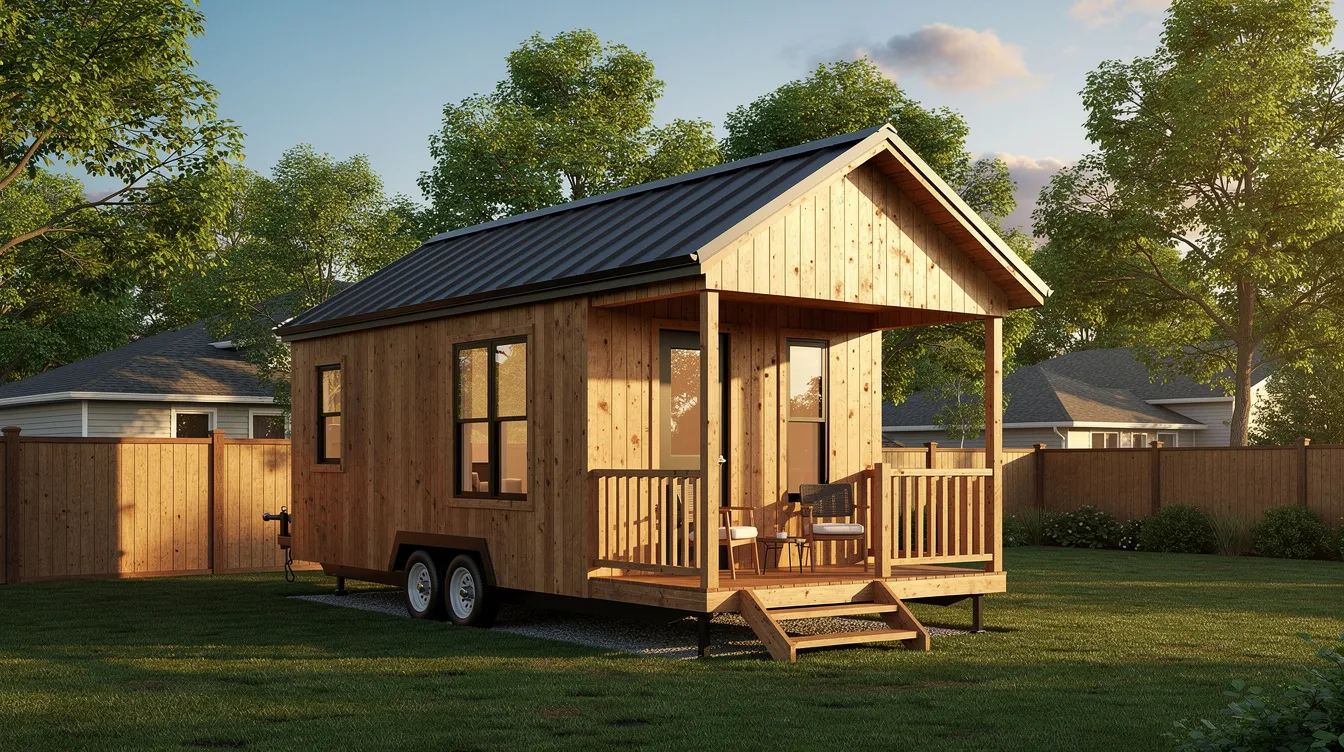
A tiny house on a foundation is a permanent structure built on a concrete slab, crawlspace, or piers. Local governments typically treat these as standard dwellings under building codes. They require full plan review, inspections, compliance with the International Residential Code or local equivalents, and attention to factors like maximum allowed tiny house height.
Tiny House on Wheels (THOW)
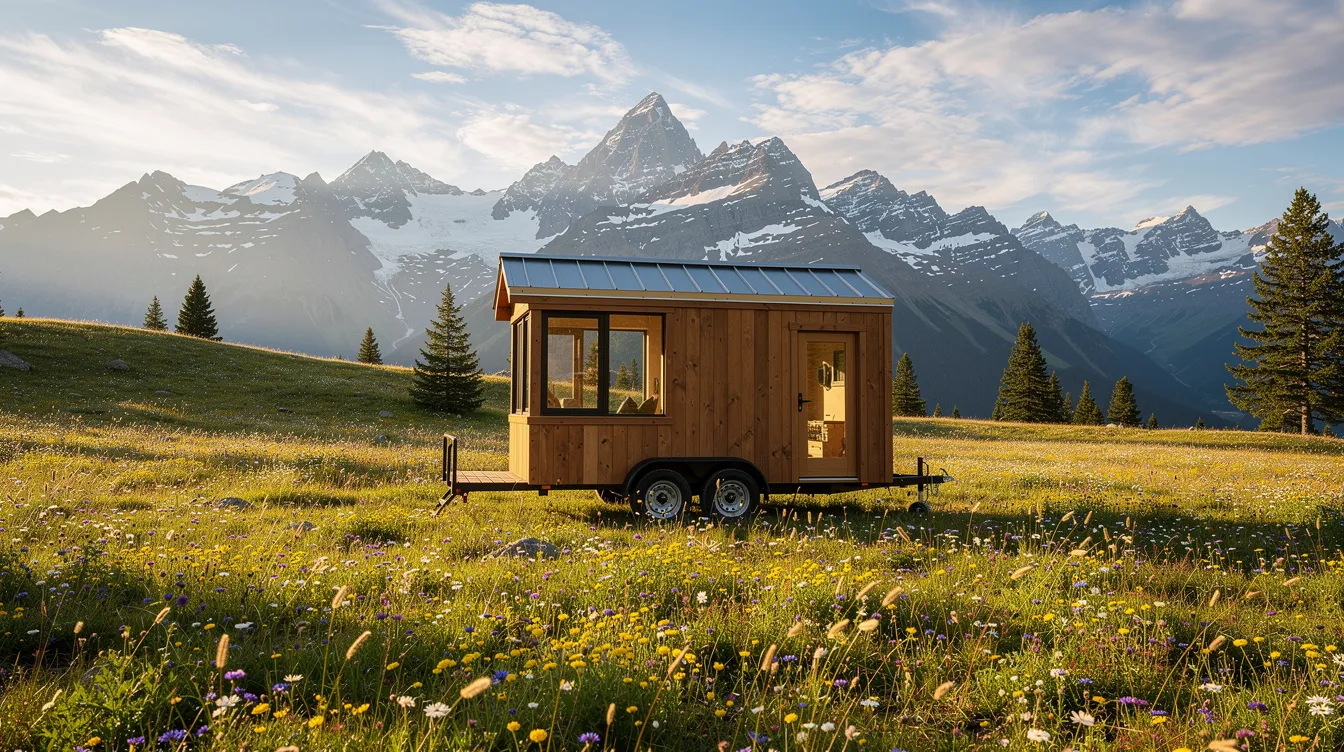
A tiny house on wheels sits on a trailer chassis. Most are 8.5 feet wide and up to 13.5 feet tall, built to ANSI A119.5 or RVIA standards. These are commonly regulated as recreational vehicles rather than conventional houses. Tiny homes on wheels may require special approvals, particularly if they are considered a type of recreational vehicle, which can affect their permit requirements.
Different Uses, Different Rules
The way you use your tiny home triggers different requirements:
Use Type | Typical Permit Path |
|---|---|
Primary dwelling | Full building permit, zoning compliance |
Accessory dwelling unit (ADU) | ADU-specific permits, often with owner-occupancy rules |
Short-term rental (Airbnb) | Building permit plus hospitality/transient occupancy permits |
Seasonal cabin | May qualify under lighter agricultural zoning |
Some municipalities may allow tiny homes as accessory dwelling units, but this is subject to local zoning laws that can vary widely. Some cities—for example, Fayetteville, Arkansas since adopting the 2021 IRC in 2022—have explicit tiny home ordinances spelling out where small homes are allowed and how permits work. |
Building Codes vs. Zoning Codes: What Really Controls Your Tiny Home
Building codes and zoning codes are separate systems, but both matter when building a tiny home. Understanding the difference saves headaches and should factor into how you choose tiny house plans that fit your life.
Building Codes: How You Build
Building codes, usually based on the International Residential Code, set minimum standards for construction safety:
- Structural integrity (framing, foundations, wind/snow loads)
- Insulation and energy efficiency
- Electrical systems (GFCI outlets, proper wiring)
- Plumbing and sanitation
- Stairs, ladders, and ceiling heights
- Emergency egress windows in sleeping areas
Many municipalities have adopted the International Residential Code Appendix Q, which provides specific standards for tiny homes under 400 square feet. This appendix allows:
- Reduced ceiling heights (6 feet 8 inches in habitable spaces; 6 feet 4 inches in lofts)
- Ladders instead of stairs to access lofts
- Smaller room dimensions than traditional codes require
Building codes for tiny homes often include requirements for minimum square footage, ceiling height, and safety standards for electrical and plumbing systems. Local building codes impose certain safety and construction standards to ensure that tiny houses are safe for occupancy, which may include minimum standards for electrical components and other safety measures.
Zoning Codes: Where You Build
Zoning codes control different things entirely:
- Where tiny homes can be placed (single-family zones, multifamily, rural, agricultural)
- Whether tiny homes are allowed as ADUs, primary dwellings, or only as RVs
- Minimum lot sizes and setbacks from property lines
- Minimum dwelling size requirements (some towns still require 600-800 square feet)
- Parking requirements and density limits
Local building codes dictate how tiny homes are constructed, including requirements for foundation types, utility hookups, and safety measures to ensure the structure is safe for occupancy.
Here’s the critical point: A project often fails not because of building codes (which can be met with good design) but because zoning in that neighborhood doesn’t allow small detached dwellings or year-round tiny home living. In Lawrence County, Arkansas, for example, local ordinances enforce a 600-square-foot minimum dwelling size despite no state code—blocking many tiny houses unless the property is zoned agricultural.
When a Building Permit Is Typically Required for Tiny Houses
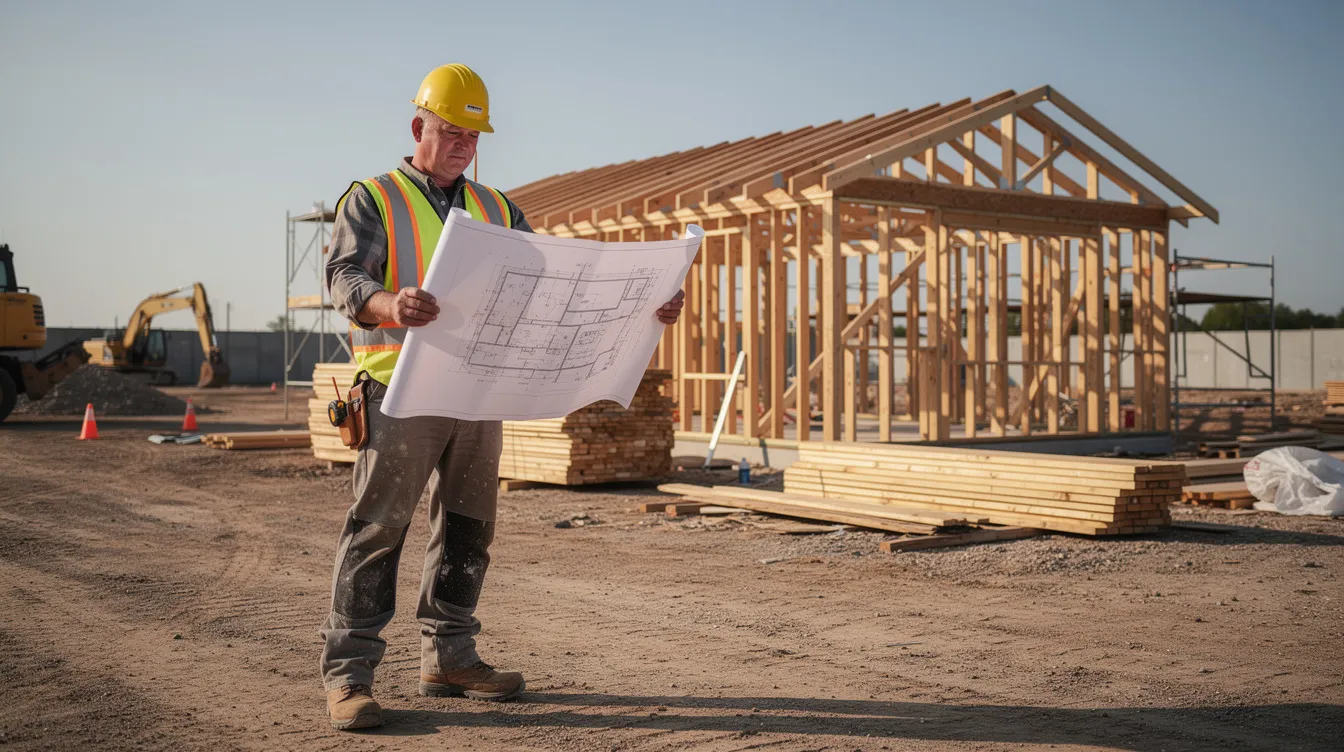
A building permit is formal approval from your city or county to construct or significantly alter a structure. For property owners considering tiny house living, here’s when you’ll almost certainly need one.
Common Scenarios Requiring Building Permits:
- Building a tiny house on a permanent foundation as a primary home
- Constructing a detached ADU or guest tiny home in your backyard
- Converting a garage, shed, or other structure into a habitable tiny unit with plumbing and heating
- Adding dormers, lofts, or major structural changes to an existing small cabin
What Gets Reviewed During Permitting:
Element | What Inspectors Check |
|---|---|
Structural plans | Foundation design, framing layout, load calculations |
Electrical | Panel size, circuit layout, GFCI placement |
Plumbing | Water supply, drain-waste-vent system, fixtures |
Energy code | Insulation values, window efficiency, mechanical systems |
Site plan | Setbacks from property lines, parking, lot coverage |
Permits are typically required even if your tiny home is prefabricated or factory-built. The local authority still wants to approve the foundation, tie-downs, and utility connections when it’s placed on a specific parcel. |
Consequences of Skipping Permits:
Failing to obtain proper permits can lead to:
- Stop-work orders halting your tiny home project
- Daily fines (California’s SB 922 imposes $500-$5,000 fines plus 1.5x mitigation costs)
- Difficulty obtaining insurance or financing
- Orders to vacate or remove the non-permitted structure
- Reduced resale value (roughly 10% loss according to industry data)
Do Tiny Houses on Wheels Need Permits?
Tiny homes on wheels sit in a legal gray zone. They’re usually not considered buildings under building codes, but they still face zoning, vehicle registration, and utility rules.
Most states treat THOWs like RVs or park model homes, built to ANSI or RVIA standards rather than the IRC. In many areas, tiny homes on wheels are classified as park model homes, which are subject to recreational vehicle laws and may not be allowed as permanent residences.
What You Still Need for a THOW:
While building permits may not be required to construct the THOW itself if it’s classified as a vehicle, approvals are often needed to:
- Place it on land long-term (especially outside RV parks)
- Connect utility hookups (permanent electrical service, sewer/septic)
- Build decks, porches, or roof structures around it
- Use it as a full time residence in residential zones
Tiny homes on wheels are often classified as recreational vehicles, which means they may not be subject to the same building codes as permanent structures, but must still comply with local regulations.
Example: Arkansas Rules in 2024-2026
Many cities—including Little Rock and Pine Bluff in Arkansas—allow tiny homes on wheels only in mobile home or RV parks. They’re prohibited as permanent dwellings on standard residential lots.
A 2024 THIA zoning analysis found that 70% of U.S. counties prohibit THOWs as permanent residences outside designated areas.
What to Check:
- Your state’s motor vehicle department (registration, inspection, weight rules)
- Your local planning department (where RV-type tiny homes can be parked or occupied year-round)
- Whether your area classifies THOWs as considered RVs or as manufactured homes
Local Planning and Zoning: How to Check If Your Tiny House Is Allowed
Even “tiny home friendly” states delegate most decisions to local governments. You must check your specific city or county before designing or buying a tiny home.
To determine the specific permit requirements for a tiny home, it is essential to contact your local planning or zoning department, as they can provide guidance on applicable regulations and the permitting process.
Steps for Researching Local Zoning:
- Search online first: Google “[Your City] zoning code tiny home ADU” or use “site:.gov tiny home laws” to find official sources
- Look for key terms: “accessory dwelling unit,” “secondary unit,” “park model,” “manufactured home,” and “minimum dwelling size”
- Find your property’s zoning: Use your city’s interactive GIS map or zoning map PDF to identify your zone (R-1, R-2, agricultural, etc.)
- Read what’s allowed: Check what dwelling types, ADUs, or structures are permitted in your zone
Zoning laws for tiny homes vary significantly from one municipality to another, meaning that local regulations can dictate where tiny homes can be placed and what size they must be. Zoning regulations can vary significantly between municipalities, affecting where tiny homes can be placed and what minimum size requirements must be met.
Calling Your Local Planning Department
Prepare a specific script before calling or emailing. Good questions include:
- “Can I build a 300-square-foot detached ADU on a foundation behind my existing home in R-1 zoning?”
- “Where in this county can I legally live full-time in a tiny house on wheels?”
- “Has this jurisdiction adopted IRC Appendix Q for tiny homes?”
Write down ordinance numbers or code sections mentioned by staff. Verify the text yourself rather than relying solely on verbal guidance—studies suggest about 20% of casual verbal advice contains inaccuracies.
Some cities, like Rogers and Bentonville in Arkansas, have embraced tiny home communities, allowing for innovative housing solutions and zoning classifications that support tiny living.
Minimum Size Rules and Other Common Tiny House Code Issues
Minimum size is one of the biggest obstacles for tiny house living, especially in older zoning codes written for conventional homes.
Minimum Square Footage Requirements
Local zoning ordinances often include specific requirements for minimum square footage, foundation types, and utility connections, which can impact the feasibility of placing a tiny home. Some local codes still require:
- 600-800 square feet minimum for single-family dwellings
- 70-120 square feet minimum per habitable room
- Specific room dimensions (often 7 feet minimum in one direction)
About 25% of U.S. jurisdictions retain 600+ square foot dwelling minimums, according to a 2025 ICC zoning compendium. This can block typical tiny houses in the 200-400 square feet range unless the code is updated or a variance is granted, so thoughtful tiny house floor plans that work for you become even more important.
Where Appendix Q Helps
Where the IRC (2018, 2021, or later) plus Appendix Q is adopted—now in over 40 states—tiny homes on foundations under 400 square feet have clearer rules:
Feature | |
|---|---|
Minimum ceiling height (habitable) | 6 feet 8 inches |
Minimum ceiling height (lofts) | 6 feet 4 inches |
Loft ladder width | 17 inches minimum |
Minimum loft floor area | 3 feet by 5 feet |
Emergency egress | 5.7 square feet window opening |
Other Frequent Code Issues
Beyond total square footage, watch for:
- Emergency egress requirements (20-inch openable width in sleeping areas)
- Stair or ladder safety standards for lofts (guardrails at 30 inches)
- Insulation and energy code compliance
- Required clearances for toilets, showers, and kitchen work areas
A designer or tiny home builders with experience can often tweak layouts to meet minimums without significantly increasing footprint—for instance, combining living and sleeping space or carefully sizing a loft.
Permits for Utilities and Hookups in Tiny Homes
Even if a tiny house itself might avoid building permits in rare cases, separate permits are almost always required for utilities.
Typical Utility Permits:
Utility | Typical Permit Cost | Notes |
|---|---|---|
Electrical service | $300-$800 | 200-amp service, subpanel for ADU |
Plumbing | $400-$1,200 | Sewer connection or septic tie-in |
Septic system | $15,000-$30,000 | Engineered design, health dept approval |
Gas | Varies | Propane systems, appliance certifications |
Connecting electricity to a tiny home can cost between $250 to $5,000, and solar panels average about $25,000, according to HomeAdvisor, so it’s wise to pair permitting research with broader tiny house living inspiration and resources. |
Permanent vs. RV-Style Hookups
The distinction matters:
- Permanent hookups (buried lines, hard-wired connections) require full electrical and plumbing permits
- RV-style hookups (hoses, quick-disconnect sewer, 30/50-amp shore power) may be regulated differently but still often need permits
Example: A backyard ADU tiny home project in Orlando needed a separate sewer tap, electrical panel, and inspection schedule—adding several thousand dollars in permit and impact fees beyond construction costs.
Off-Grid Considerations
Ask your building and health departments early about:
- Off-grid electrical systems and solar permits (NEC 690 compliance)
- Composting toilets (often require NSF-41 certification and health department approval)
- Rainwater collection systems
- Alternative wastewater treatment
A 2025 Mississippi Delta case saw an off-grid tiny home condemned for unpermitted wastewater discharge—even on rural land.
Working With Professionals to Navigate Tiny Home Permits
Tiny house laws are complex enough that most property owners benefit from professional help.
Key Professionals to Consider:
Professional | What They Provide |
|---|---|
Architect/Designer | Small-space design, Appendix Q compliance, stamped plans |
General Contractor | Building experience, inspection management, code knowledge |
Civil Engineer | Foundation design, site plans, septic engineering |
Land Use Attorney | Variance applications, zoning appeals, complex cases |
Choosing Tiny Home Builders
Choose tiny home builders or prefab manufacturers who can provide:
- Stamped plans (where required by your jurisdiction)
- Documentation showing which building code or RV standard the home meets
- References from projects in your state or similar jurisdictions
Professionals often know local plan reviewers personally and can anticipate red flags, saving weeks or months of revisions during the permitting process.
Questions to Ask Any Builder in 2026:
- Which codes are your tiny homes built to? (IRC, Appendix Q, ANSI A119.5, NFPA 1192)
- In which states or cities do you have approved projects?
- What documentation do you provide for local permits?
- Do you offer foundation engineering for permanent installations?
Costs, Timelines, and Risks Around Tiny House Permits
Permits add time and money—but they’re critical for safety, financing, and resale value, especially if you’re evaluating whether a tiny house for sale is right for you.
Permit Cost Guidance
The average cost for a tiny home ranges from $30,000 to $60,000, significantly lower than the average price for an existing home, which was $384,800 in September 2022. But permits add to that total, and the specific costs can vary depending on the tiny house design for modern living you choose.
Cost Category | Typical Range |
|---|---|
Building permit fees | $500-$5,000 (higher in metros) |
Impact/utility fees | $2,000-$12,000 in some cities |
Plan review fees | Included or $200-$500 additional |
Inspection fees | Usually included in permit |
Permits average $1,380 nationally, according to HomeAdvisor, and insurance for a tiny home typically costs $100 per month. Building a tiny home on wheels could cost $4,500 to $9,000 for the trailer, according to HomeAdvisor. |
Typical Permit Timeline
Phase | Duration |
|---|---|
Initial research | 1-2 weeks |
Plan preparation | 2-8 weeks |
Plan review and corrections | 2-12 weeks |
Construction with inspections | Varies (7-12 inspection stages) |
A Seattle ADU permit might cost $12,000 total with impact fees, while a rural Arkansas county might charge under $500. |
Risks of Skipping Permits
Building without proper permits creates serious problems:
- Insurance companies refuse coverage or deny claims
- Lenders won’t finance the property
- Neighbor complaints trigger code enforcement investigations
- Daily fines accumulate (up to $1,000/day in some jurisdictions)
- Orders to demolish or vacate the structure
- 10-20% reduction in resale value
Recommendation: Build a 10-15% contingency into your project budget specifically for fees, code-driven design tweaks, and permit-related delays.

Frequently Asked Questions About Tiny House Permits
Can I avoid a building permit if I call my tiny home a “shed” or “studio”?
Most building departments base permit decisions on actual use—not what you call the structure. As soon as a “shed” has plumbing, permanent electrical wiring, or regular overnight occupancy, it’s classified as a dwelling or accessory unit requiring permits.
Local officials look for:
- Sleeping areas (beds, lofts)
- Kitchen facilities (stoves, refrigerators)
- Bathroom fixtures (toilets, showers)
- Regular habitation patterns
Mislabeling a tiny home creates serious problems during resale, appraisal, insurance claims, or future inspections. One court case established that egress windows and plumbing automatically reclassify a structure regardless of owner intent.
Are there states where I can build a tiny house with no building code at all?
Several states—parts of West Virginia, Colorado, Montana, and Mississippi—and many rural counties historically had no adopted residential building code. This made it easier to build without formal plan review.
However, even in those places:
- Zoning laws still apply
- Health department rules govern septic and wells
- Environmental regulations may require permits
- Flood plain rules affect construction
State and local rules have changed quickly between 2020 and 2026. Many previously “code-free” areas have adopted regulations. Check the most recent county and city specific ordinances rather than relying on outdated lists.
If I buy a prebuilt or prefab tiny home, do I still need local permits?
Buying a factory-built tiny house doesn’t replace local permitting. Your city or county still cares about:
- Where it’s placed on the property
- How it’s anchored to a foundation
- How it connects to utilities (electrical, water, sewer)
- Whether zoning allows that use on your parcel
Some modular or manufactured home units come with state certifications that simplify local permitting—but rarely eliminate it entirely. Ask prefab manufacturers for documentation showing code compliance and a list of jurisdictions where their units have passed inspection.
Do I need a permit to live off-grid in a tiny home with composting toilets and solar?
“Off-grid” living is highly regulated in many regions. You may still need permits for:
- The structure itself (building permit)
- Septic alternatives (health department approval)
- Electrical systems (even solar requires permits under NEC 690)
Some health departments restrict or prohibit composting toilets as a primary sanitation solution, requiring NSF-41 certified units and engineered designs. Others have more permissive rules.
Ask your building and health departments specifically about off-grid systems before purchasing equipment. Getting verbal approval in writing can prevent costly surprises later.
Can I make my existing tiny house legal if I built it without permits?
Many jurisdictions allow “as-built” or retroactive permits. An inspector reviews existing work, may require opening walls to verify construction quality, and orders corrections before issuing final approval.
The process typically involves:
- Submitting as-built plans (often requiring an engineer’s inspection)
- Paying permit fees (sometimes with penalties)
- Making required corrections
- Passing all inspections
Retroactive permitting costs more—often 1.5 times the original permit cost—and causes stress. But it’s usually preferable to facing enforcement actions or being unable to sell the property. Consult both your local building department and, if needed, a land use attorney to develop a compliance plan.
Additional FAQs
What are tiny home communities and why are they becoming popular?
Tiny home communities are becoming increasingly popular, offering a minimalist lifestyle and a sense of community among residents. Many communities provide shared amenities such as gardens, walking trails, and communal spaces, enhancing the living experience. These communities often focus on sustainability and eco-friendly living, appealing to those looking to reduce their carbon footprint, similar to tiny house nature retreats that immerse residents in the outdoors. However, tiny home communities can vary significantly in their regulations and acceptance based on local zoning laws.
How do different requirements affect where I can place my tiny home?
Most areas have different requirements based on location. What’s allowed in one county might be prohibited in another. Other cities may have embraced tiny homes while your town hasn’t updated its codes. Size requirements, setback rules, and permitted uses vary by jurisdiction. You might be able to buy land in a rural area with fewer restrictions, or you might need to locate your tiny home in a designated community or RV parks. Always verify specific guidelines with local authorities.
What’s the difference between a tiny home and a manufactured home for permit purposes?
A manufactured home is built entirely in a factory to HUD code standards and transported to the site. Tiny homes can be site-built, modular, or built on wheels, ranging from simple shells to cute tiny house designs for your dream home. Local codes may classify tiny homes as manufactured homes if they meet certain criteria, or they may have separate categories. The classification affects which codes apply and what permits you need. Some jurisdictions have specific ordinances covering each type differently.
Do I need permits for a tiny house on my existing home’s property as a guest house?
Adding a tiny home to your backyard as a guest house typically requires permits for an accessory dwelling unit. You’ll need to verify that your zone allows ADUs, meet setback requirements, and possibly comply with owner-occupancy rules. The plan must show how the unit connects to utilities and meets building codes. This is true whether you’re building from scratch or placing a prefab unit—your local authority still reviews the installation.