The idea of tiny living has evolved from a fringe concept to a practical housing solution. In 2026, an essential tiny house represents more than minimalism—it’s about creating a functional home where every square foot earns its place. This guide walks you through what truly matters when planning, building, or buying a tiny home that supports your daily life without excess.
- Quick Answer: What Makes an “Essential Tiny House” in 2026?
- Personally Essential: Defining Your Own Tiny House Must-Haves
- Essential Tiny House Kitchen
- Essential Tiny House Bathroom
- Essential Tiny House Sleeping Area
- Essential Workspace and Living Area
- Essential Storage and Organization Strategies
- Essential Outdoor & Site Features for Tiny Living
- Planning and Budgeting Your Essential Tiny House
- Is an Essential Tiny House Right for You?
Quick Answer: What Makes an “Essential Tiny House” in 2026?
An essential tiny house is a compact dwelling typically ranging from 150 to 400 square feet that includes only the spaces, systems, and features you actually use every week. Unlike bare-minimum survival shelters, these homes prioritize comfort and functionality customized to your habits.
In 2026, an essential tiny house usually includes:
- A functional kitchen with real counter space
- A comfortable sleeping area accessible without gymnastics
- A private bathroom (not a curtained corner)
- A dedicated workspace or desk zone
- Minimal but effective storage solutions
- Some form of outdoor extension space
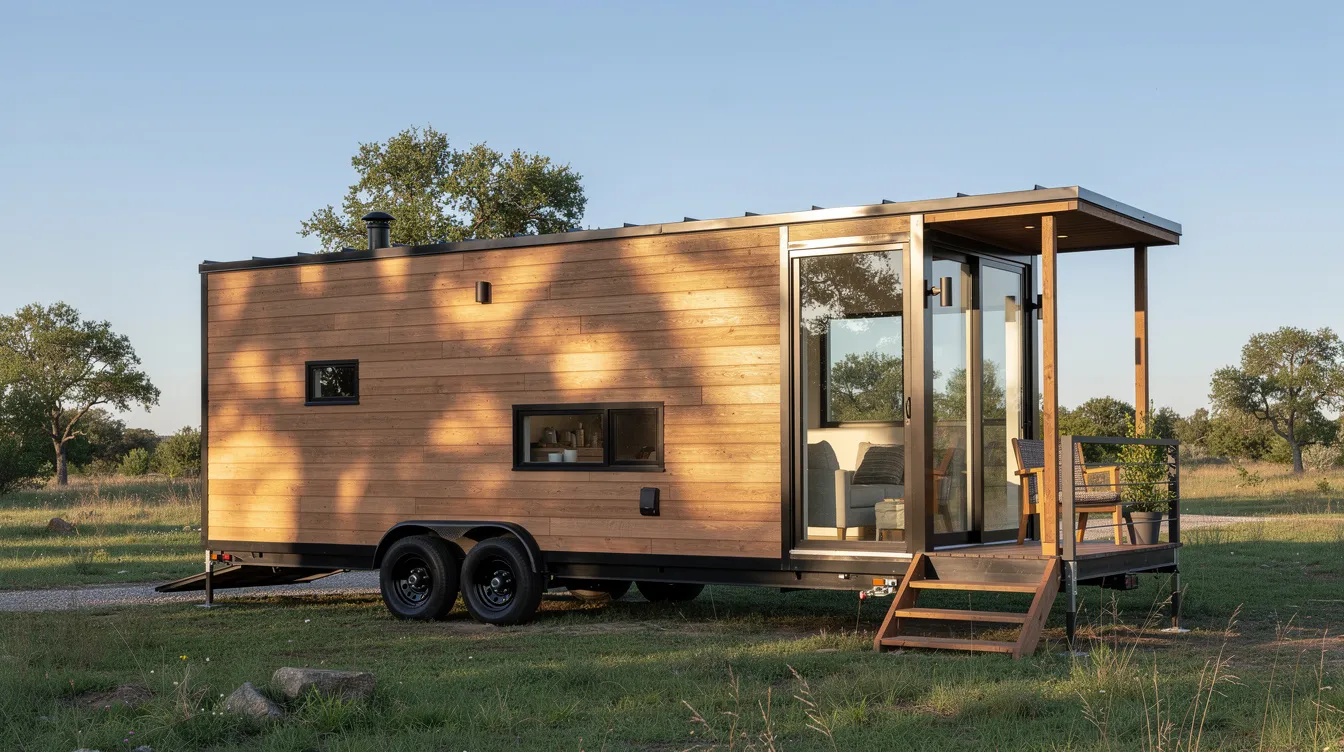
Concrete examples include 24–28 ft tiny houses on wheels using RVIA-certified trailers, equipped with post-2022 mini-split HVAC systems and 40–60 amp electrical service sized for induction cooking. The focus centers on what you use daily—whether that’s cooking full meals, working from home, or accommodating pets.
Personally Essential: Defining Your Own Tiny House Must-Haves
Before you design or buy a tiny home, you need to decide what “essential” means for your life. This matters because tiny spaces force prioritization—there’s no room for “maybe I’ll use it someday.”
Core zones most people need:
- Cooking area with proper prep space
- Bathroom with real privacy
- Sleeping zone that’s easy to access
- Workspace or large desk
- Sitting and relaxation area
- Storage that hides clutter from sight
Write down your non-negotiables using these categories:
Category | Questions to Ask |
|---|---|
Daily habits | Do you cook full meals 5+ nights/week? |
Health needs | Can you climb a ladder safely after age 55? |
Work demands | Do you need dual monitors or a stand for equipment? |
Hobbies | Do you store bikes, instruments, or crafting tools? |
A remote worker spending 40+ hours weekly at a computer should treat their desk as essential as a daily cook needs extra fridge capacity. Choose a target size—200–260 sq ft for solo residents, 260–320 sq ft for couples—then prioritize until features fit that footprint, using tiny house floor plans that work for you as a reality check on circulation and furniture placement. |
Essential Tiny House Kitchen
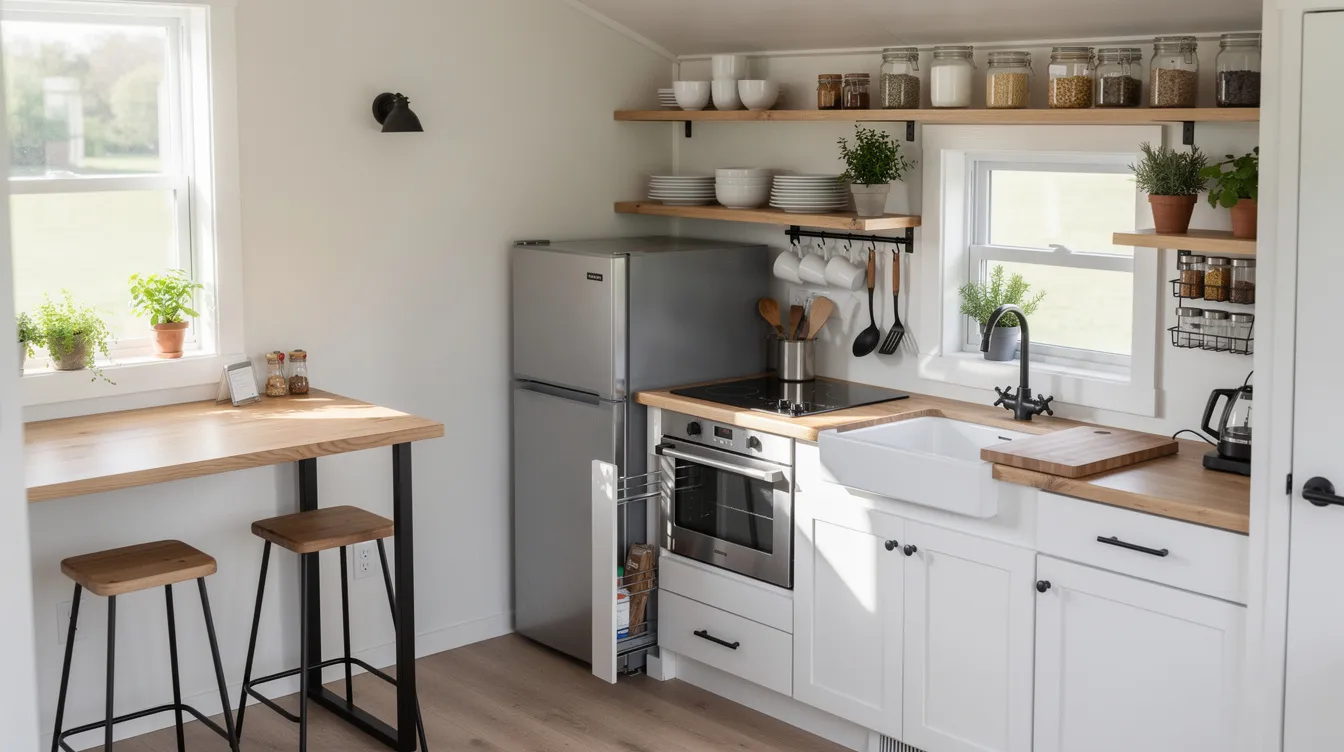
For most tiny house occupants, the kitchen is either the heart of the home or the first place they compromise. Your tiny house kitchen should reflect how you actually cook, not some minimalist tiny house fantasy focused only on aesthetics instead of daily function.
Key functional elements:
- 4–6 linear feet of usable counter space (including fold-down sections)
- Two-burner propane or induction cooktop
- Kitchen sink large enough to wash 10–12 inch pots and pans
- Refrigerator sized to habits: 10–12 cu ft for frequent cooking, 4–7 cu ft for minimalists
Space-saving solutions that work: many of the smartest ideas come from tiny house interiors that maximize every square foot, where storage and seating do double duty.
- Pull-out cutting boards positioned to avoid blocking doors
- Cover boards over the sink for extra prep space
- Magnetic knife strips and under-cabinet rails for mugs and dishes
- Shallow wall shelves only one item deep for plates and bowls
The most essential appliances in 2026 include a multifunctional device like an Instant Pot, a compact convection toaster oven instead of a full oven, and possibly one specialty item you truly use weekly—whether that’s a food processor, rice cooker, or espresso machine.
Skip built-in dishwashers in builds under 260 sq ft. A deep single-bowl sink with an over-sink drying rack handles dishes efficiently. For those with mobility issues, a 2023+ countertop dishwasher can accommodate your needs without major cabinet sacrifice.
Essential Tiny House Bathroom
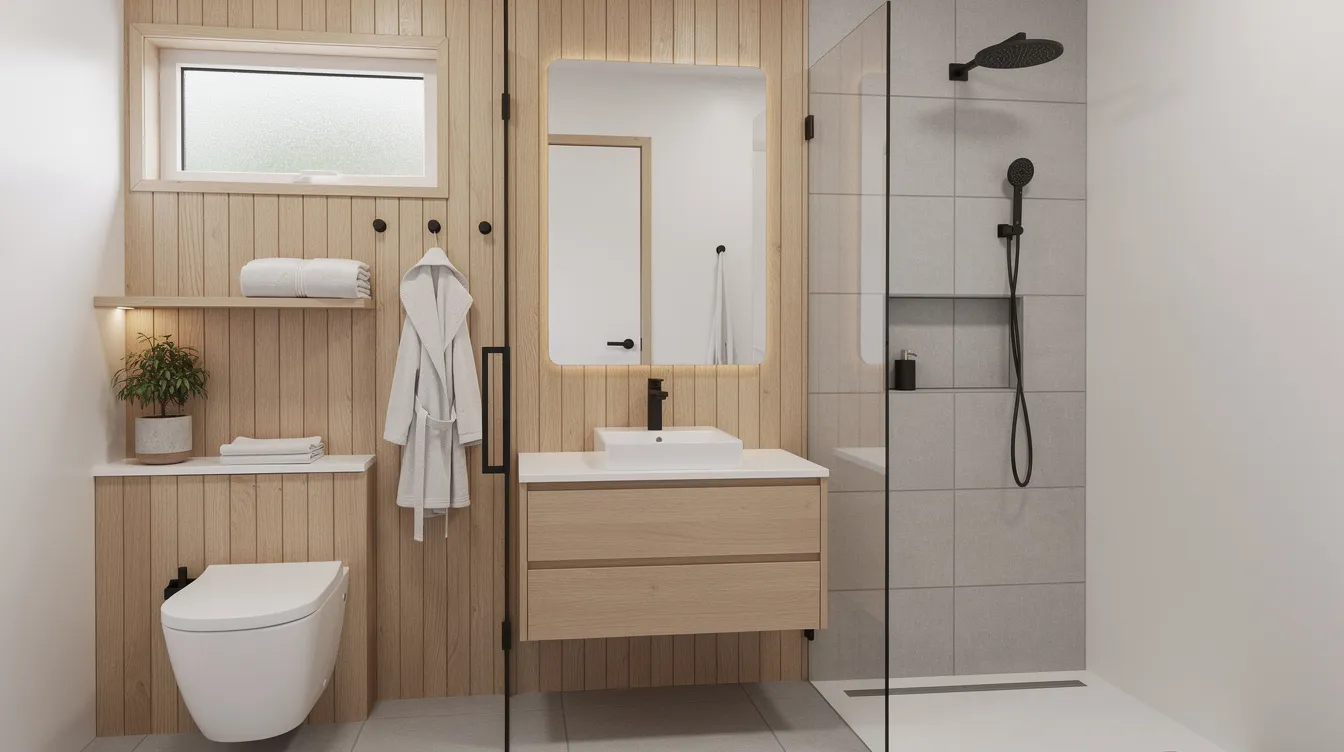
A truly essential tiny house includes a real bathroom—not a curtain separating a toilet from everything else. Long-term comfort and hygiene make this non-negotiable for full-time tiny living.
Typical minimum footprints:
- 24–30 sq ft total
- 32” x 32” shower plus separate toilets
- Compact wet-room combining shower and toilet with full waterproofing
Toilet options for 2026:
Type | Best For |
|---|---|
Urine-diverting composting | Off-grid living, water conservation |
Compact flush | Foundation builds with septic/sewer |
Cassette/RV tanks | Tiny houses on wheels that travel often |
Real privacy means a solid door with a proper latch—pocket doors save swing clearance while maintaining sound and sight separation. A separate 10–12 inch wall-mounted sink beats relying solely on the kitchen for hygiene routines. |
Ventilation prevents moisture damage: install a 2022+ low-noise exhaust fan vented outside, include an operable window where code allows, and use moisture-resistant finishes like fiberglass shower units or PVC panels. Getting rid of excess humidity protects your small house from mold.
Essential Tiny House Sleeping Area
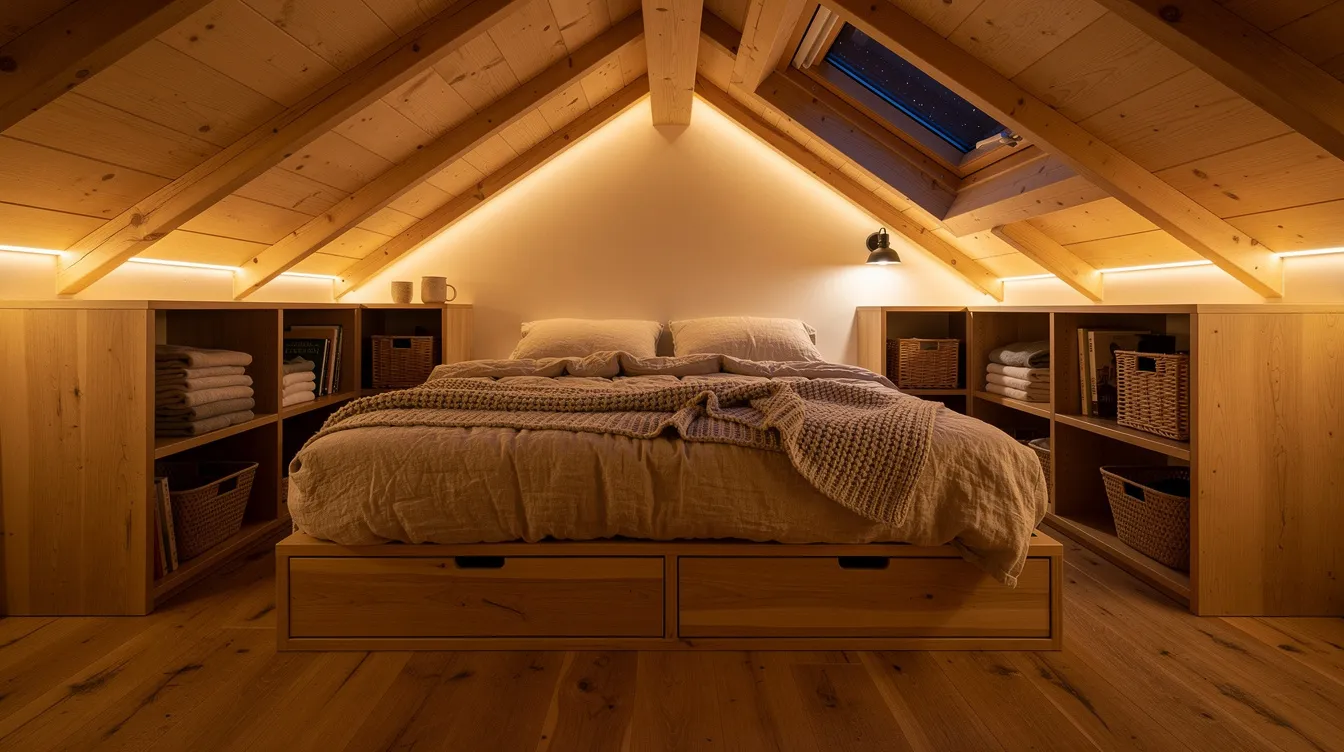
Your bed setup depends on age, mobility, and whether this is full-time or occasional use, and studying tiny house interiors that maximize every square foot can help you see what really works in practice. The essential question: can you access your sleeping area safely and comfortably every single day?
Main-floor vs. loft considerations:
- Anyone planning to live in their tiny home beyond age 50 should consider ground-floor sleeping
- Lofts work for younger residents comfortable with ladders or steep stairs
- Convertible options (sofa-beds, dinettes) suit occasional-use builds
For couples, a true essential tiny house fits at least a full or queen mattress (54” x 75” or 60” x 80”). Solo residents can opt for twin XL to create extra space for other priorities.
Access matters: At least one long side plus the foot of the bed should be accessible for making the bed and getting in/out. Many people dislike lifting bed platforms daily for storage underneath.
- Bed in a drawer that slides from under a raised platform
- Murphy beds with integrated shelves
- Daybeds with built-in drawer storage
Include practical details: integrated reading lights, small niches for phones and glasses, and at least one 120V outlet or USB-C charging port within arm’s reach.
Essential Workspace and Living Area
In 2026, many tiny house owners work remotely, making a dedicated workspace as essential as the bathroom. This isn’t optional for the 40% of workers now operating from home, and many of the great tiny homes that redefine small space living showcase how to integrate work zones without sacrificing comfort.
Essential desk setup:
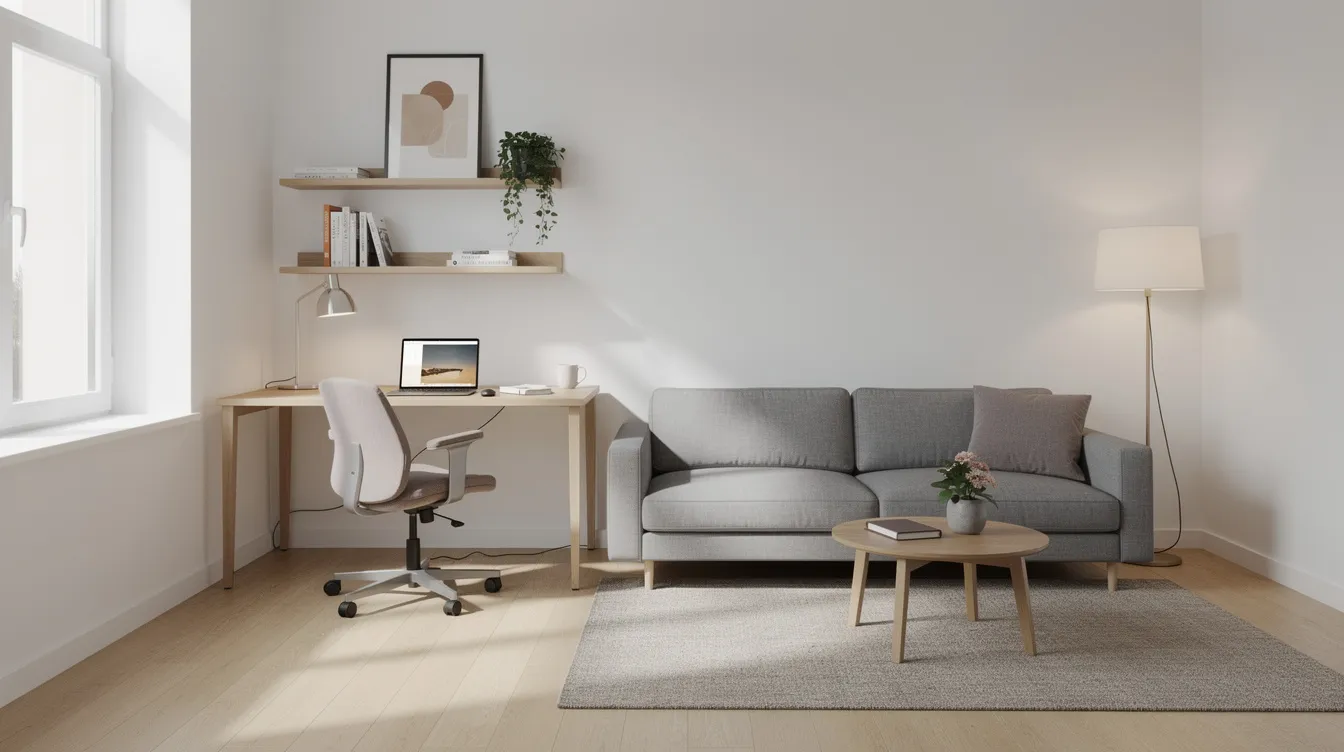
- Sturdy surface at least 48–60 inches wide
- Space for laptop plus one or two 24–27 inch monitors
- Cable management and storage for notebooks and office tools
- Proper ergonomic seating for 6–8 hour workdays
Integrate the desk into a multi-use zone—along a window wall, under a TV shelf, or sharing the living area with dining. The concept of multifunctional furniture becomes your best friend here.
Your living area needs at least one comfortable non-desk seating option: a compact loveseat that can double as guest sleeping, floor cushions, or nesting stools that tuck away. This creates a cozy center for relaxation after work.
Lighting makes these tiny spaces functional: dimmable overhead lights, a task lamp for the desk, and LED strips for evening ambiance. One effective layout places the living area opposite the kitchen in a 24–28 ft tiny house, with a couch, fold-out table, and long desk under a picture window.
Essential Storage and Organization Strategies
An essential tiny house isn’t defined by having as little as possible—it’s about having exactly enough storage space for what you deliberately keep, much like the best tiny house interiors that maximize every square foot demonstrate with hidden cabinets and built-in seating. The goal is clutter free surfaces by default.
Priority storage categories:
- Clothing for at least one full season
- Daily dishes and cookware
- Cleaning supplies and tools
- Important documents stored safely
- One or two hobby categories (books, art supplies, gear)
Solutions that maximize every inch:
- Floor-to-ceiling cabinets at one end of the house
- Stair drawers leading to a loft
- Toe-kick drawers under kitchen cabinets
- Shallow shelves sized for a single row of items
Keep visible walls and surfaces mostly clear using closed cabinets and under-seat storage. This approach makes your home feel 20–30% larger and easier to clean.
Schedule an annual declutter cycle—a spring 2026 donation run or swap with your local community keeps possessions aligned with your space. External storage like a small 4×8 shed can hold seasonal stuff, sports gear, or tools, but keep it intentional to avoid shifting clutter outside.
Essential Outdoor & Site Features for Tiny Living
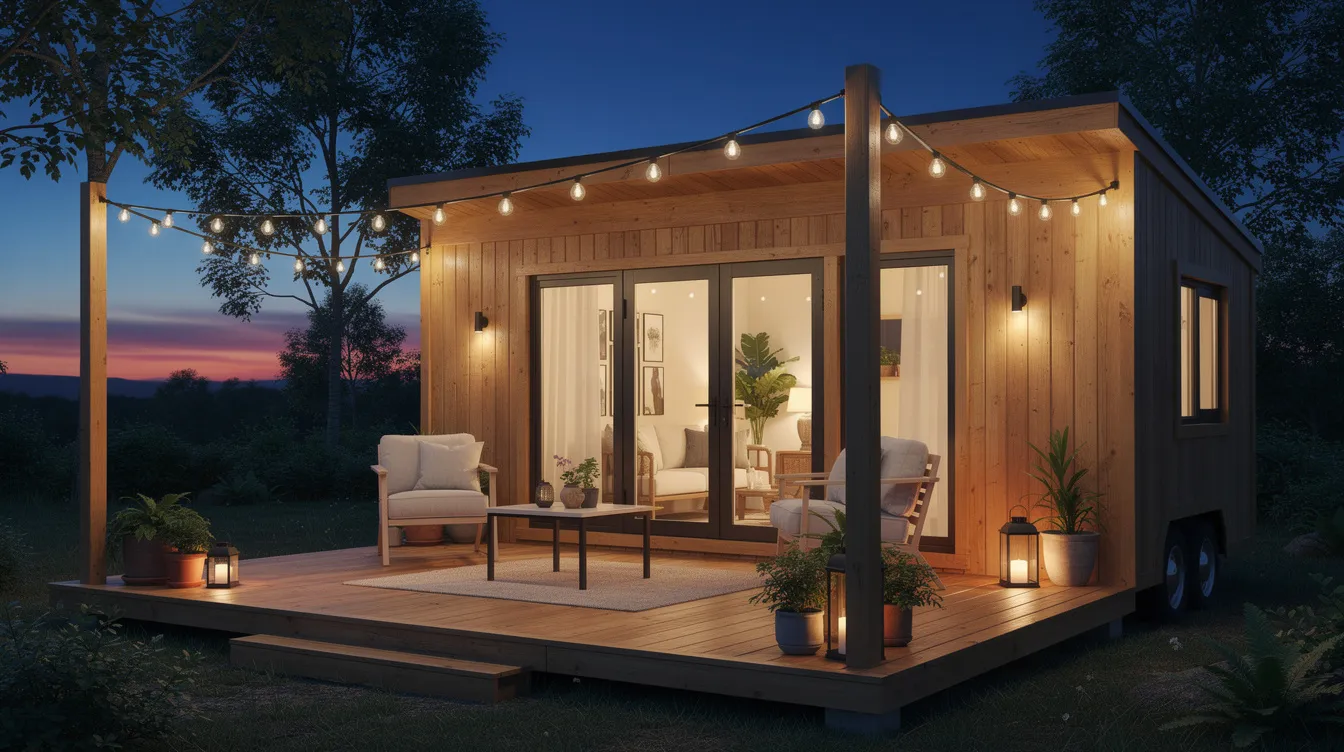
Outdoor space effectively expands a tiny house by 30–100%, making porches and decks feel essential even though they’re outside the interior square footage. This matters for your well being and sense of spaciousness.
Porch essentials:
- Covered entry at least 4–6 feet deep
- Space for removing muddy boots
- Storage for frequently used outdoor furniture and items
Integrate seating with a compact porch swing, two folding chairs, or a built-in bench with storage underneath. This creates room for guests and relaxation without crowding your interior.
Site placement priorities:
- Position windows and porch to face pleasant views
- Consider solar gain and 2023–2025 solar array placement for off-grid
- Install exterior outlets for laptops or string lights
- Add simple upgrades: hooks for plants, outdoor table for dining
Site services are part of essentials: clear access for water, power, and septic/sewer where applicable. For off-grid, plan realistic rainwater catchment and battery storage for year-round living on your land, taking cues from self contained tiny homes for modern off-grid living that integrate water, power, and waste systems into a compact footprint.
Planning and Budgeting Your Essential Tiny House
Early proper planning prevents expensive redesigns. In 2026, materials, trailer prices, and labor costs have risen 20–30% compared with 2020–2022. Using a tiny home cost calculator as part of a realistic plan keeps your project on track.
Budget ranges:
Build Type | Cost Range |
|---|---|
DIY build | $40,000–$80,000+ |
Professional RVIA-certified | $90,000–$150,000 |
Allocation priorities: |
- Quality trailer or foundation
- Insulation appropriate to climate
- Reliable windows and doors
- Core systems (electrical $3k–$6k, plumbing $2k–$5k, HVAC $2k–$5k)
Save 10–20% contingency for unforeseen costs—lumber fluctuations, electrical upgrades at your site, or zoning changes introduced after 2024.
Secure a legal parking spot early. Check local ADU rules, RV classification, or tiny house village regulations. Many municipalities updated codes in 2023–2025 to allow more tiny dwellings. Custom builds typically take 4–9 months from deposit to delivery, so plan your move-in date accordingly. If you intend to build a tiny house yourself, timelines can stretch even further, so this may fall outside initial expectations—build generous buffer time.
Is an Essential Tiny House Right for You?
An essential tiny house is one where every square inch serves a clear purpose—cooking, sleeping, hygiene, working, relaxing, and storing what you truly use. It’s a functional life in a small footprint.
Good fit indicators:
- Desire to reduce housing costs and debt
- Willingness to own less stuff
- Enjoyment of small, cozy spaces
- Interest in sustainability and lower energy use
- Joy in intentional, simplified living
Potential deal-breakers:
- Strong need for large private studios or workshops
- Frequent large family gatherings
- Reluctance to part with collections that won’t accommodate your space
One thing to consider: test tiny living before committing. Rent a 200–300 sq ft tiny house or studio for 2–4 weeks. Browse tiny house plans that fit your life and top tiny house designs for modern living to see which layouts match what you learned, and if you prefer a faster path, explore whether a tiny house for sale is right for you instead of a custom build. Take notes on what felt essential, what felt cramped, and what was missing. This inspiration from real experience beats any floor plan.
With careful planning, honest assessment of habits, and focus on the truly essential, a tiny house built or purchased in 2026 can provide lasting comfort, freedom, and a home that feels larger than its square footage suggests. The importance of knowing yourself—your daily rhythms, your work, your hobbies—determines whether tiny living brings the affordable, intentional life you’re seeking.