

Key Takeaways
Most tiny house moves in the U.S. cost between $500 and $12,000. The final price depends mainly on distance, size and weight, and whether your home is road-ready when the move begins.
- Local moves under 50–100 miles typically cost $500–$2,000, while long distance moves over several states commonly run $3,000–$12,000+ once you factor in state permits, escort vehicles, and mechanical prep work.
- Staying at or below 8.5 ft wide and under 13.5 ft tall helps you avoid the most expensive oversize permits and pilot cars in most states. Exceeding these limits can add $1.50–$2.50 per mile per escort vehicle to your total.
- Flatbed transport is often the safest choice for long distance hauls and non-road-ready homes, though it costs more per mile than simple towing and may require cranes or forklifts for loading.
- DIY moving can make sense only for shorter local moves when you own a properly rated heavy duty truck, have a legal trailer, and understand state legal requirements. Otherwise, professional movers are usually cheaper and safer overall.
Introduction: What Goes Into the Cost to Move a Tiny House?
Picture this: You’re a tiny house owner in 2026, staring at a job offer across the country or a perfect piece of land three states away. The question hits you fast—does it make sense to move your tiny home, or should you sell and start fresh?
The average cost to move a tiny house within the United States falls between $1,000 and $10,000, influenced by factors such as distance, size, and additional services required. That’s a wide range, and understanding what drives it can save you thousands.
Tiny house moving covers both tiny homes on wheels and small houses on permanent foundations. Each type has very different price levels. A tiny house on trailers designed for mobility might cost $2,000 to relocate 300 miles, while compact prefab options like many Amazon tiny house models can also be delivered to a site rather than moved later. A foundation-built structure? Expect $10,000–$30,000+ for the same distance.
This guide breaks down local moves vs. long distance moves, towing vs. flatbed transport, DIY move vs. hiring a moving company, plus all the additional costs that surprise most homeowners. The three biggest cost drivers are simple: distance, dimensions and weight, and whether your house is legally road-ready.
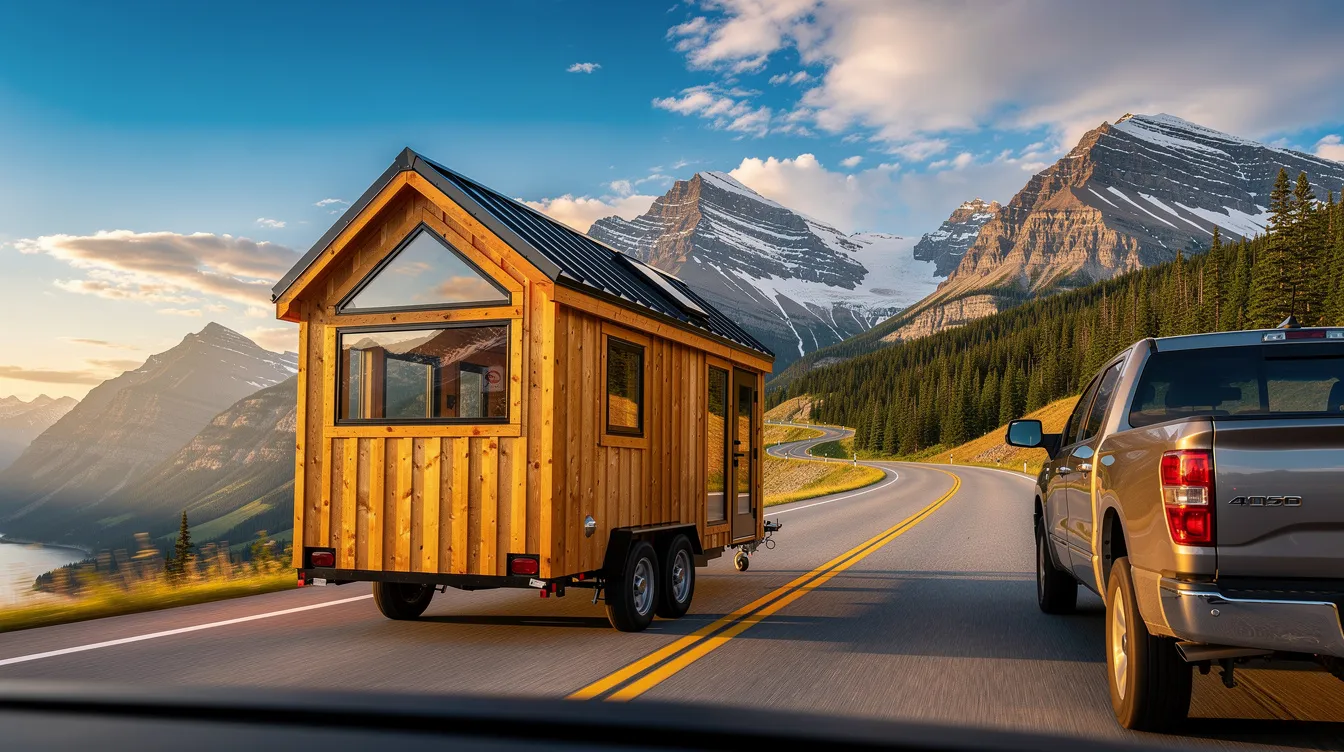
- Types of Tiny House Moves (And Their Typical Cost Ranges)
- Cost to Move a Tiny House on Wheels
- Additional Costs to Move a Tiny House You Should Expect
- Cost to Move a Tiny House That’s Not Road-Ready
- DIY Moving vs. Hiring Professional Tiny House Moving Companies
- How to Calculate Your Own Tiny House Moving Estimate
- How to Reduce the Cost to Move a Tiny House
- FAQ: Cost and Logistics of Moving a Tiny House
Types of Tiny House Moves (And Their Typical Cost Ranges)
Before estimating your total cost, you need to define what kind of move you’re planning. Are you staying local or going cross country? Is your tiny home on wheels or on a foundation? Will you handle it yourself or hire professionals?
These categories are exactly what most professional movers use when building quotes. Understanding them helps you compare apples to apples when shopping around.
Local Moves (Under 50–100 Miles)
Local moves usually cover up to 50–100 miles within the same state. They rarely cross major permit boundaries, which keeps costs down.
For a standard tiny house on wheels that’s 8.5 ft wide and under 10,000–12,000 lbs, expect to pay roughly $500–$2,000 in 2026.
Costs on the lower end—around $500–$800—apply to simple drive-on, drive-off towing jobs with no escort vehicles or special permits required.
Common local move scenarios include:
- Moving from one RV park to another across town
- Relocating from storage to a nearby plot of land
- Shifting to a friend’s property while you buy land
Labor time and site access difficulty affect the quote significantly. A straightforward driveway? Cheaper. A narrow road with tight turns? More expensive.
Long Distance Moves (250–2,000+ Miles)
Long distance moves start at about 250 miles, especially when crossing multiple state lines and time zones.
Moving a tiny house over 250 miles typically incurs costs ranging from $1,000 to $5,000, with professional movers charging between $1 and $4 per mile depending on the type of transport used. For truly cross country moves, expect $3,000–$12,000+ once permits, pilot cars, fuel, and overnight parking fees are included.
Real example: A 900-mile move from Texas to Colorado in 2025–2026 typically costs $4,000–$7,000. That includes multi-state permits, escort vehicles for oversize loads, fuel surcharges, and driver lodging along the route.
Long distance hauls almost always require detailed route planning and compliance with different state legal requirements. This adds planning fees and admin time to your bill.
DIY Hauls (When a DIY Move Makes Sense)
A DIY move means you provide your own tow vehicle and handle the transport yourself—no specialist tiny house carrier involved.
DIY moving can save homeowners between $600 to $2,000 depending on distance, especially for local moves. But it only makes financial sense when:
- You already own a 1-ton truck (Ford F-350, Ram 3500, or similar)
- Your tiny home fits within standard legal dimensions
- You’re comfortable with towing equipment and trailer hitch setup
- The route avoids mountain passes and complex logistics
Typical DIY costs include:
- Truck rental: $150–$300 per day (if needed)
- Fuel: Several hundred dollars depending on distance
- State permits: $30–$150 per state
Warning: DIY moves carry high risk. Trailer sway, tire blowouts, and road vibrations can cause structural damage. While DIY moving may appear cheaper, a single mistake during transport can lead to thousands of dollars in damage, making professional movers a safer option.
On-Wheels vs. On-Foundation Moves
Many tiny houses are built on wheels and designed for towing. These are almost always cheaper to move than houses built on permanent foundations.
Move Type | Typical Cost Range |
|---|---|
Tiny house on wheels | $500–$12,000 |
Small house on foundation | $10,000–$30,000+ |
On-foundation moves involve hydraulic jacking, cribbing, possible partial disassembly, and heavy cranes. This massively increases labor and permit costs. Think of it like moving a mobile home—complex logistics and specialized services are required, which is why choosing the best foundation for a tiny house upfront has such a big long-term impact on both stability and relocation costs. |
For very short moves (10–20 miles), a foundation move can make sense if the structure has high custom value. But for longer distances, rebuilding at the new site is often cheaper than relocating, especially if you were already considering learning how to build a tiny house from the ground up.
Cost to Move a Tiny House on Wheels
Most tiny houses are built on wheels, and most readers fall into this category. This section focuses on the most common scenarios for towing or transporting a THOW, assuming you stay within typical road-legal limits like the maximum height for tiny houses.
On-wheels moves avoid foundation work, but they still require careful mechanical checks on the trailer. Budget several hundred dollars for this even before the mover arrives.
Typical Price Range for THOW Moves
The cost to move a tiny house typically ranges from $1,000 to $10,000, influenced by factors such as distance, size, and additional services required.
Here’s how it breaks down:
Distance | Cost Range |
|---|---|
Under 100 miles (local) | $500–$2,000 |
100–400 miles (regional) | $1,000–$4,000 |
400–2,000+ miles (cross country) | $3,000–$12,000 |
Professional tiny house movers often quote $1–$4 per mile for towing and $2.50–$4 per mile for flatbed transport. Most charge minimum fees even for short local jobs. |
Quick example: A 200-mile move at $2.25 per mile equals $450 base, plus $150 in permits and $200 in loading fees. Total: around $800.

Key Cost Factors: Distance, Size, Weight, and Route
Four main factors drive your quote:
- Total mileage: The primary multiplier
- Width and height: Tiny house dimensions matter significantly
- Overall weight: Most tiny houses weigh between 8,000 and 14,000 lbs, with some larger ones exceeding 20,000 lbs, which can classify them as oversized and increase moving costs
- Route difficulty: Mountain passes, narrow roads, and low bridges require route surveys and sometimes flatbed transport
Each extra 1,000 pounds and each extra foot of width can bump the quote into a higher pricing tier. Proper weight distribution is critical for safe transport.
Pro tip: Measure accurately and gather exact trailer weight before requesting quotes. Estimates without this data are rarely accurate.
Permits, Legal Requirements, and Escort Vehicles
Most U.S. states require oversize load permits if the tiny house exceeds 8.5 feet in width, with permit fees ranging from $30 to $150 per state. Each state sets its own limits on trailer dimensions, and many tiny houses exceed standard vehicle limits, necessitating special transport permits.
When do you need escort vehicles?
Pilot cars become mandatory when your tiny house exceeds 10–12 ft wide. They typically cost $1.50–$2.50 per mile each. Some states require two escort vehicles for wide loads, which can turn a $3,000 move into a $6,000+ move for the same distance.
Skipping necessary permits can lead to fines or denied highway access, making it crucial to obtain all required documentation before moving. DOT regulations vary by state, so check before crossing state lines.
Case Study: Real-World Example Cost Breakdown
Scenario: Moving a 24-foot, 11,000-lb tiny house from Denver, CO to Santa Fe, NM (about 320 miles) in 2024–2025.
Line Item | Cost |
|---|---|
Base mileage (320 mi × $5/mi) | $1,600 |
CO and NM permits | $150 |
One escort vehicle (if 10+ ft wide) | $400 |
Mechanical inspection | $250 |
Loading/unloading fees | $300 |
Estimated Total | $2,500–$3,000 |
One tiny house owner in this scenario saw costs climb another $400 due to weather delays requiring overnight parking. This example helps you gut-check your own quotes—but remember, actual pricing varies by region and season. |
Additional Costs to Move a Tiny House You Should Expect
Many owners underestimate the total cost because they focus only on the per-mile rate. Hidden costs can add 30–50% to your initial estimate, so it’s wise to start with well-thought-out tiny house plans that fit your life and factor in future moves while you’re still on paper.
Main categories of additional costs include:
- Preparation and mechanical checks
- Loading and setup costs
- Cargo insurance and liability coverage
- Storage, weather delays, and terrain surcharges
Ask moving companies to spell these out upfront so you can compare quotes accurately and avoid unpleasant surprises.
Preparation and Mechanical Checks
Tiny house trailers often sit in one place for months or years. Professional movers typically require a mechanical safety check before any long distance move.
Common prep tasks include:
- Inspecting and replacing tires (check tire pressure!)
- Checking brakes and wheel bearings
- Verifying lights and wiring
- Tightening frame bolts
Additional costs can arise from mechanical prep, which may include repairs to the trailer before the move, typically costing between $200 and $1,000. A simple inspection might run $150–$300, while replacing tires and brakes can push prep costs into the $500–$1,200 range.
If the trailer fails inspection, some movers will refuse the job unless you use flatbed transport instead.
Loading, Unloading, and Site Setup Fees
Most per-mile quotes assume basic drive-on/drive-off access. Anything involving cranes, winches, or difficult driveways triggers extra labor and proper equipment fees.
Hidden costs for moving a tiny house can include loading and setup fees, which typically range from $150 to $800 depending on the complexity of the move. Higher charges apply if hydraulic jacks, skid steers, or cranes are involved.
Setup costs at the destination—reconnecting utility connections, skirting, and decks—are usually not included in transport quotes. Budget another $500–$2,000 depending on complexity.
Secure all loose items before transport. Road vibrations and sudden stops can cause interior damage.
Insurance and Liability Protection
Standard homeowner’s insurance often doesn’t cover transit. You need to understand the difference:
- Liability insurance: Covers damage the mover causes to others
- Cargo insurance: Covers damage to your tiny house during transit
Insurance for moving a tiny house often requires additional coverage beyond standard policies, costing between $150 and $500 to protect against potential damage during transit. Verify whether your existing RV or homeowner’s policy covers transport, and request a written certificate of insurance from your mover covering damage during the relocation process.
Skipping insurance is one of the most expensive mistakes owners make, especially on moves over 500 miles.
Storage, Delays, and Environmental Surcharges
Storage fees can accumulate if the new location isn’t ready, costing between $50 and $200 per day for short-term storage of the tiny house.
Weather conditions—winter ice, high winds, heavy rain—can cause weather delays and rerouting. These sometimes come with daily truck and driver charges of $300–$500.
Environmental and terrain adjustment costs can add $100 to $500 or more if the property is difficult to access, requiring special equipment or additional labor. Think steep gravel drives, muddy fields, or tight forest roads.
Tip: Booking in shoulder seasons (spring and fall) can reduce both weather risks and price surcharges.
Cost to Move a Tiny House That’s Not Road-Ready
A “not road-ready” tiny house has trailer, tire, brake, or structural issues that make it unsafe or illegal for highway towing. These homes require either significant repairs or flatbed transport, which sharply increases total cost.
When a Tiny House Is Considered “Not Road-Ready”
Signs your house isn’t road-ready:
- Dry-rotted tires
- Seized or worn brakes
- Rusted or cracked trailer frame
- Sagging axles
- Significant water damage affecting structural stability
Houses built before 2015 or left parked in wet climates for years are especially likely to have hidden problems. Most reputable movers will conduct a visual inspection and may request photos before accepting a long distance move.
Ignoring these red flags can lead to roadside breakdowns, structural damage, or being turned back by state inspectors—all of which raise overall costs.
Repair and Preparation Costs Before Moving
Typical repair costs:
Repair Type | Cost Range |
|---|---|
Full set of trailer tires | $600–$1,200 |
Brake work and bearings | $300–$800 |
Welding or structural reinforcement | $500–$2,000+ |
Repairs are usually cheaper than risking catastrophic failure mid-route. Good movers may insist on these upgrades before scheduling a long haul, especially for heavier or more elaborate affordable tiny house builds that push trailer capacities. |
Budget a contingency of at least several hundred dollars for unexpected mechanical prep if your trailer is more than five years old.
Flatbed Transport and Crane or Forklift Costs
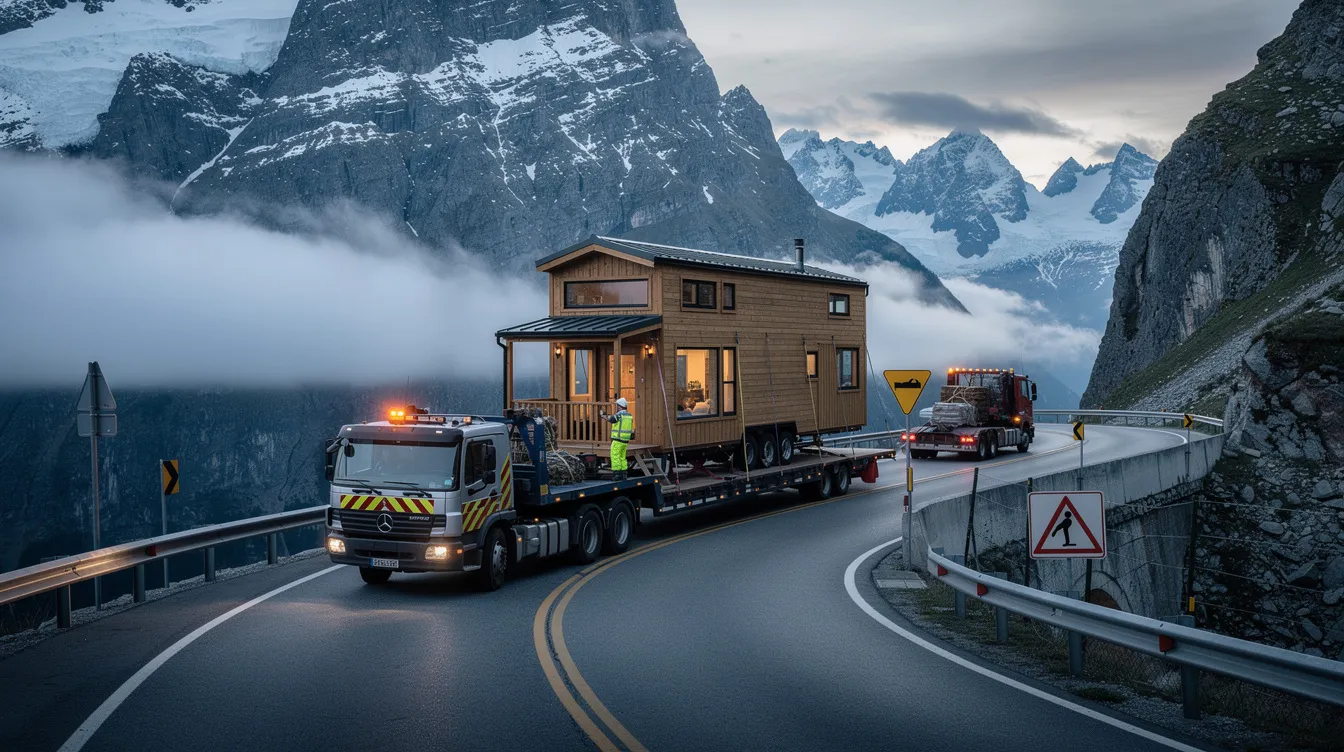
Flatbed transport is the common solution when the trailer can’t safely roll on the highway. Your tiny house becomes oversized loads cargo, similar in some ways to moving shipping container tiny house designs that are treated as modular freight.
Flatbed transport typically costs $2,000–$8,000 depending on distance, oversize status, and whether specialized step-deck or lowboy trailers are required. Per-mile rates run $2.50–$4.
Cranes or heavy forklifts are often needed to lift the house on and off the flatbed, commonly costing $200–$500 per hour with minimum call-out times.
Example: An Oregon owner paid around $1,800 for crane time plus several thousand dollars for flatbed transport to move a non-road-ready 30-ft tiny home.
DIY Moving vs. Hiring Professional Tiny House Moving Companies
Both approaches can work, but the total cost and risk profile are very different. Legal requirements, towing experience, and liability coverage should matter just as much as upfront price.
True Cost of a DIY Move
DIY costs you must cover:
- Truck rental or ownership costs
- Fuel (budget $0.20–$0.40 per mile)
- Permits ($30–$150 per state)
- Possible escort vehicles
- Extra insurance
- Campsite or hotel stays on multi-day routes
Realistic scenario: A 400-mile DIY move costs $1,200–$2,000 after rental days, diesel, and permits—before accounting for wear, tear, or emergencies.
You also invest significant time in route planning, permit research, and mechanical checks. A trailer hitch failure or severe trailer sway could lead to $5,000–$10,000 in repairs, quickly erasing any DIY savings.
What Professional Movers Include (and What They Charge)
Specialized professional movers typically bundle services:
- Route planning and route surveys
- Permit handling across state lines
- Coordination of escort vehicles
- Secure strapping and weight distribution
- Cautious low-speed driving through mountain passes
Professional movers provide peace of mind by handling permits, route surveys, and secure loading, which reduces liability and stress for the homeowner—and that can be especially important if you’ve just purchased a tiny house for sale and are moving it to your first piece of land.
Pricing runs $1–$4 per mile for towing, $2.50–$4 per mile for flatbed transport, with minimum trip charges. Many companies offer transparent pricing with detailed written estimates.
DIY vs. Professional: When Each Option Makes Sense
Factor | DIY Move | Professional Movers |
|---|---|---|
Best for | Local moves under 100 miles | Long distance, oversize, complex routes |
Risk level | High | Low |
Time investment | Significant | Minimal |
Insurance | You arrange | Usually included |
Professional movers are recommended for transporting tiny houses that exceed standard road limits, as DIY moving can lead to legal issues and costly damage. |
Hiring a professional mover is often the better choice for long-distance moves due to the complexities involved, such as navigating legal regulations and ensuring safe transport.
Bottom line: Even if you’re leaning toward DIY, get a professional quote as a benchmark. You might be surprised how close the prices are once you factor in all DIY costs.
How to Calculate Your Own Tiny House Moving Estimate
Before contacting movers, build a ballpark estimate yourself. This helps you recognize realistic quotes and avoid overpaying.
Use this simple formula: (distance × per-mile rate) + permits + escorts + additional costs
Step-by-Step Cost Formula
- Determine total distance in miles
- Choose approximate per-mile rate: $2.00/mile for towing standard-width THOW, $3.25/mile for flatbed transport
- Add permit costs: $30–$150 per state you’ll cross
- Add escort vehicle costs if needed: $1.50–$2.50 per mile per vehicle
- Add prep, loading, and insurance: typically $500–$1,500 combined
This is a planning tool, not a quote. Refine your estimate after speaking with at least two or three moving companies.
Example: Moving a 10,500-lb Tiny House 600 Miles
Scenario: 10,500-lb tiny house, 8.5 ft wide, good trailer, traveling through three states.
Line Item | Cost |
|---|---|
Base mileage (600 mi × $2.25) | $1,350 |
State permits (3 states) | $300 |
Minimal loading fees | $500 |
Cargo insurance | $200 |
Total | ~$2,350 |
If the house is 10 ft wide and needs escort vehicles? Add $900–$1,500. If oversize permits are required in all three states? Add another $200–$400. |
This example shows how escort vehicles and legal requirements can affect the final cost far more than distance alone.
How to Reduce the Cost to Move a Tiny House
You can’t change the distance to an existing destination. But you can control several other factors that significantly affect your moving quote. Smart planning often saves 15–30% off the initial estimate.
Practical Ways to Cut Costs
Preparing your tiny house yourself by disconnecting utilities, removing skirting, and securing furniture can save you significant costs, as movers often charge extra for these tasks.
More money-saving strategies:
- Move during off-peak seasons: Moving during off-peak seasons, such as late fall or winter, can lead to lower rates from moving companies, as demand is typically reduced during these times
- Get multiple quotes: Getting multiple quotes from different moving companies can help you find the best price, as rates can vary significantly for the same move
- Choose closer destinations when possible: Each extra mile has direct cost impact, especially under 300 miles
Control Size, Weight, and Permits
Accurately measuring your tiny house to ensure it does not exceed legal width or height limits can prevent additional costs associated with permits and escort vehicles, which are required for oversized loads.
Key thresholds:
- Keep at or under 8.5 ft wide
- Stay below 13.5 ft tall
- Aim for under 10,000 lbs if possible
Lighten your load by removing heavy items like wood stoves, tile, or large furniture. Transport these separately to lower quoted weight tiers. If you have solar panels or external attachments, consider whether they can travel safely or need removal—this is particularly relevant for very compact, budget-focused tiny homes under $20K where every pound and inch matters.
For those who move frequently, consider these limits during design and build. It can save thousands over the home’s lifetime.
Handle Some Tasks and Permits Yourself
Handling your own permits instead of having the moving company do it can save you $200 to $500, as companies often charge a service fee for obtaining permits. Many state permits can be obtained online for less than movers charge.
Only attempt DIY permit handling if you’re comfortable reading DOT regulations and state-specific legal requirements. Errors can result in fines.
Easy tasks you can handle:
- Route research
- Photographing access points at both locations
- Clearing obstacles on site
Anything affecting safety—strapping, hitching, weight distribution—should be left to professionals unless you’re truly experienced.
FAQ: Cost and Logistics of Moving a Tiny House
These answers cover common questions not fully addressed above, including timing, international moves, and special situations.
Is it cheaper to build a new tiny house than to move an existing one?
For very long-distance foundation moves costing $20,000–$30,000+, building new at the destination can be more cost-effective. However, for typical on-wheels tiny houses, even cross country moves usually cost far less than building from scratch ($40,000–$100,000+). Compare your expected move quote against current 2025–2026 build prices in your destination region before deciding.
How long does it take to move a tiny house long distance?
Most long distance tiny house moves (1,000–2,500 miles) take about 5–14 days door-to-door. This includes time for permits, weather delays, and required daylight-only travel for oversized loads. The actual driving hours are only part of the schedule—permit approvals and escort vehicle coordination often control the real timeline. Book moves at least 4–8 weeks in advance for cross country routes, especially during peak moving months.
Can I live in my tiny house while it’s being moved?
No. You cannot and should not live in or ride inside a tiny house while it’s being towed or transported. This is unsafe and generally illegal. All reputable movers and insurance policies require the house to be empty of people during transport. Make separate travel arrangements for yourself and pets. Travel safely by car or plane while your home is on the road.
Do I need a special license to tow my own tiny house?
Licensing rules depend on the combined weight rating of your tow vehicle and trailer. Some states require a special endorsement or commercial license once certain thresholds are exceeded (typically 26,000 lbs combined). Check both your state DMV and every state you’ll pass through, as legal requirements for DIY moving can differ significantly. Many owners hire professional tiny house movers specifically to avoid licensing and compliance issues on interstate routes.
Can a tiny house be shipped overseas, and how much does that cost?
Tiny house shipping internationally is possible using roll-on/roll-off (RORO), flat-rack, or container methods, depending on size and destination. Costs are substantial—often tens of thousands of dollars once ocean freight, port handling, customs, and inland transport at both ends are included. Overseas moves involve strict additional legal requirements and should always be handled by logistics specialists familiar with tiny house or modular building transport.