

Building a tiny home that lasts generations while keeping energy bills minimal sounds ambitious—until you discover insulated concrete forms. An ICF tiny house combines the durability of reinforced concrete with continuous foam insulation, creating a structure that outperforms traditional building materials in nearly every measure. This guide walks you through the essentials of ICF tiny home construction, from design principles to practical costs.
- ICF Tiny House Basics: What It Is and Why It Matters
- Why More Homeowners Are Downsizing to Tiny and Small ICF Homes
- Top Design Principles for Comfortable ICF Tiny Houses
- Step-by-Step: How to Design a Small or Tiny ICF Home
- ICF vs. SIPs and Wood Framing for Tiny Homes
- 3 Core Advantages of ICF for Tiny House Construction
- Envelope, Roof, and Energy Systems for ICF Tiny Homes
- Planning Interiors: Making a Tiny ICF Home Feel Spacious
- Costs, Timelines, and Practical Considerations
- Getting Started with Your Own ICF Tiny House Project
ICF Tiny House Basics: What It Is and Why It Matters
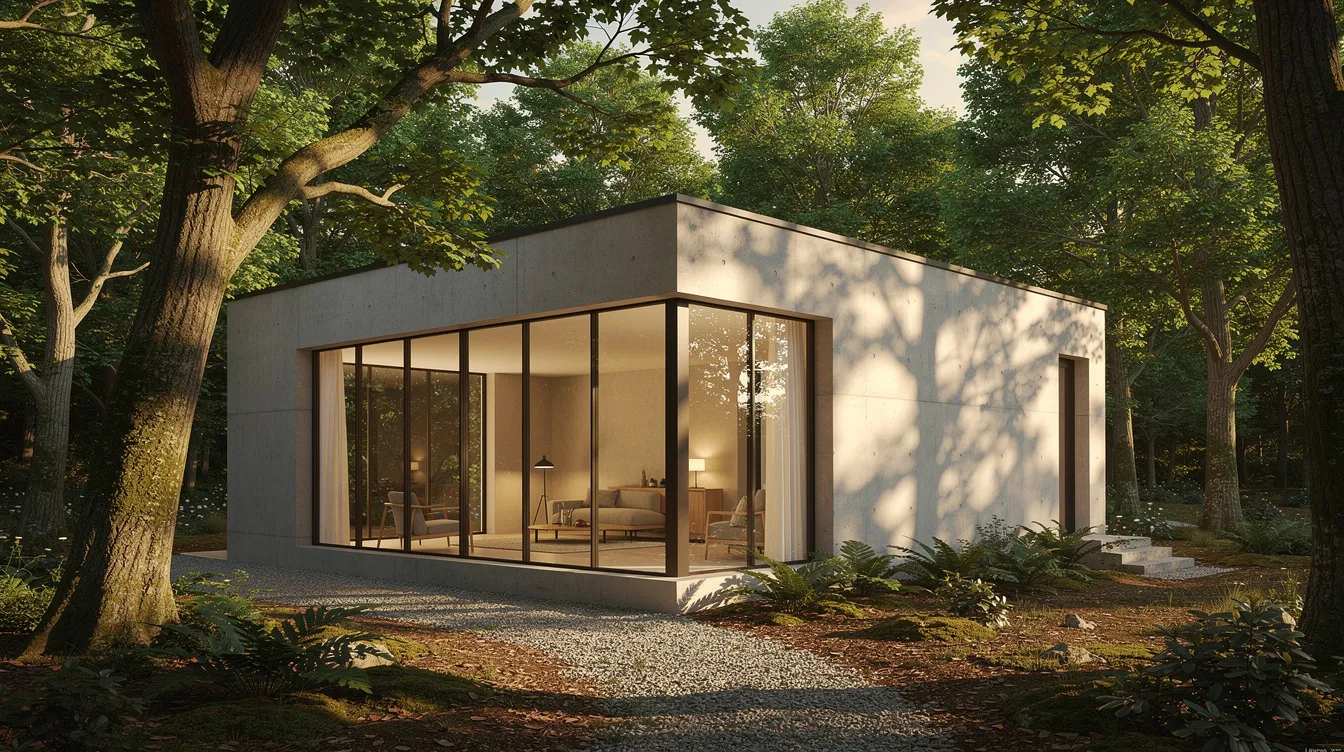
An ICF tiny house uses interlocking foam blocks or panels that stack together to form walls, then get filled with reinforced concrete. The result is a monolithic structure with a concrete core (typically 4-6 inches thick) sandwiched between foam insulation layers of about 2.5 inches per side.
For tiny homes under 400 square feet and small homes under 1,000 square feet, this system creates a high-performance building envelope where every inch counts. The concrete core absorbs and releases heat slowly, stabilizing indoor temperatures without oversized HVAC systems.
Key benefits for tiny houses:
- Energy efficiency: 44% less energy for heating, 32% less for cooling versus wood framing
- Quiet interiors from mass-loaded walls blocking external noise
- Disaster resistance against severe winds over 200 mph, fire, and earthquakes
- Low maintenance with no wood to rot, warp, or attract pests
- Lifespan exceeding 50-100+ years
ICF tiny homes serve diverse purposes: primary residences on foundations, backyard ADUs for aging parents, artist studios, or retirement cottages. A 320 square foot ICF lake cabin in the Appalachians built for retirement demonstrates the approach, as does a 600 square foot city infill home designed for urban development density.
While upfront costs run 10-25% higher than wood framing, lifetime operating costs drop significantly through reduced energy bills and negligible repairs.
Why More Homeowners Are Downsizing to Tiny and Small ICF Homes
Rising housing costs have fueled a surge in tiny living interest. The median new U.S. single-family home averages 2,200-2,400 square feet—far larger than many homeowners need or can afford. Meanwhile, housing often consumes close to 30% of household expenditures, pushing many toward compact, efficient dwellings at 300-900 square feet.
Downsizing to a smaller ICF home cuts mortgage payments through reduced build costs, utilities by up to 44% via superior insulation, and maintenance through durable, rot-proof building materials, especially when you understand these numbers using a tiny home cost calculator.
Typical ICF tiny house adopters: Many are also drawn to the variety of modern tiny house designs available today.
- Retirees seeking low-bill havens for pure living simplicity, often with a rustic feel similar to an Amish tiny house
- Young professionals chasing financial independence
- Families adding backyard cottages for multigenerational living
A 480 square foot ICF guest house built in 2024 in the Midwest exemplifies this trend—a permanent structure for relatives that costs less to operate than most apartments, similar in spirit to many affordable tiny house designs aimed at budget-conscious downsizers.
Main motivations: cost reduction, lifestyle simplicity, resilience against natural disasters, and sustainability through lower material use.
Top Design Principles for Comfortable ICF Tiny Houses
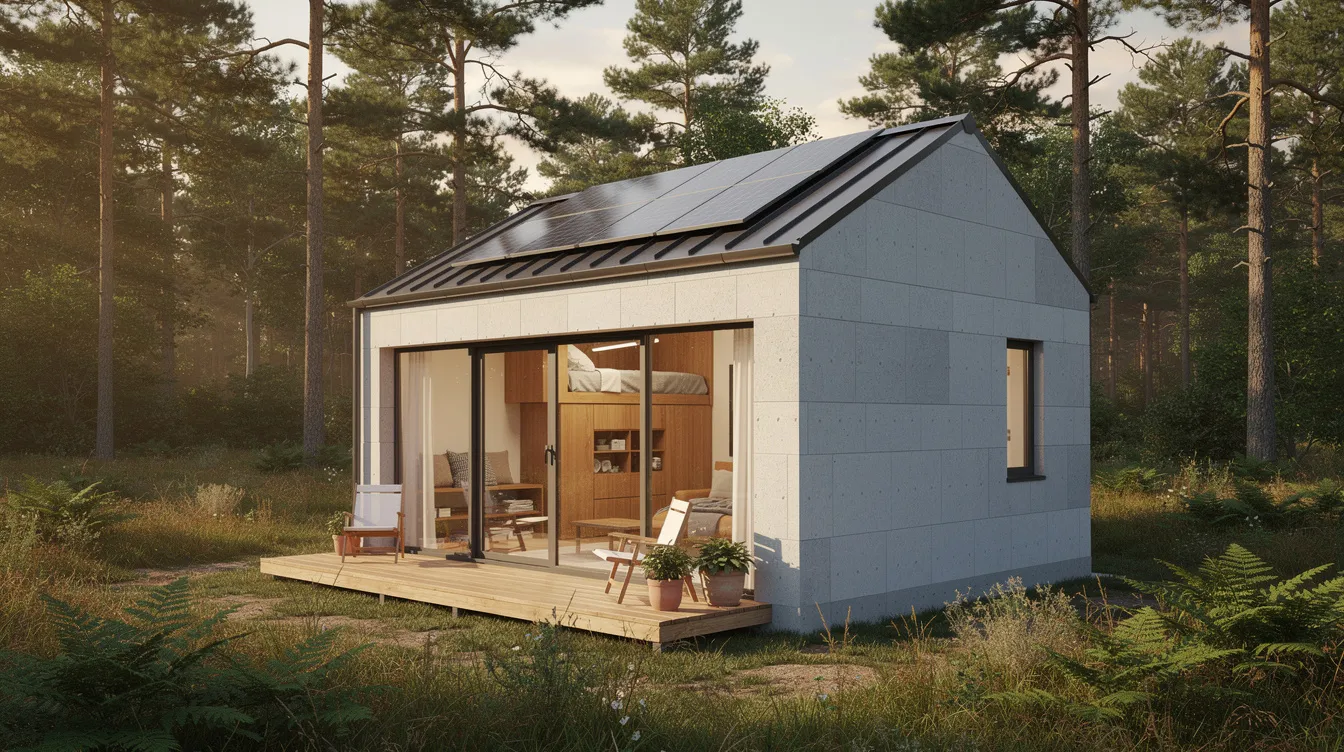
Good design matters more when you only have 300-600 square feet to work with. A tight building envelope—continuous insulation, air and moisture barriers, and thermal mass from the concrete core—forms the foundation of comfort.
Layout strategies that work:
- Open floor plans with multi-use areas (living room/office combos, Murphy beds, fold-down tables)
- Prioritize larger daytime spaces: a 10×12-foot kitchen-living area beats an oversized bedroom
- High ceilings of 10-12 feet where zoning permits, plus skylights and tall windows
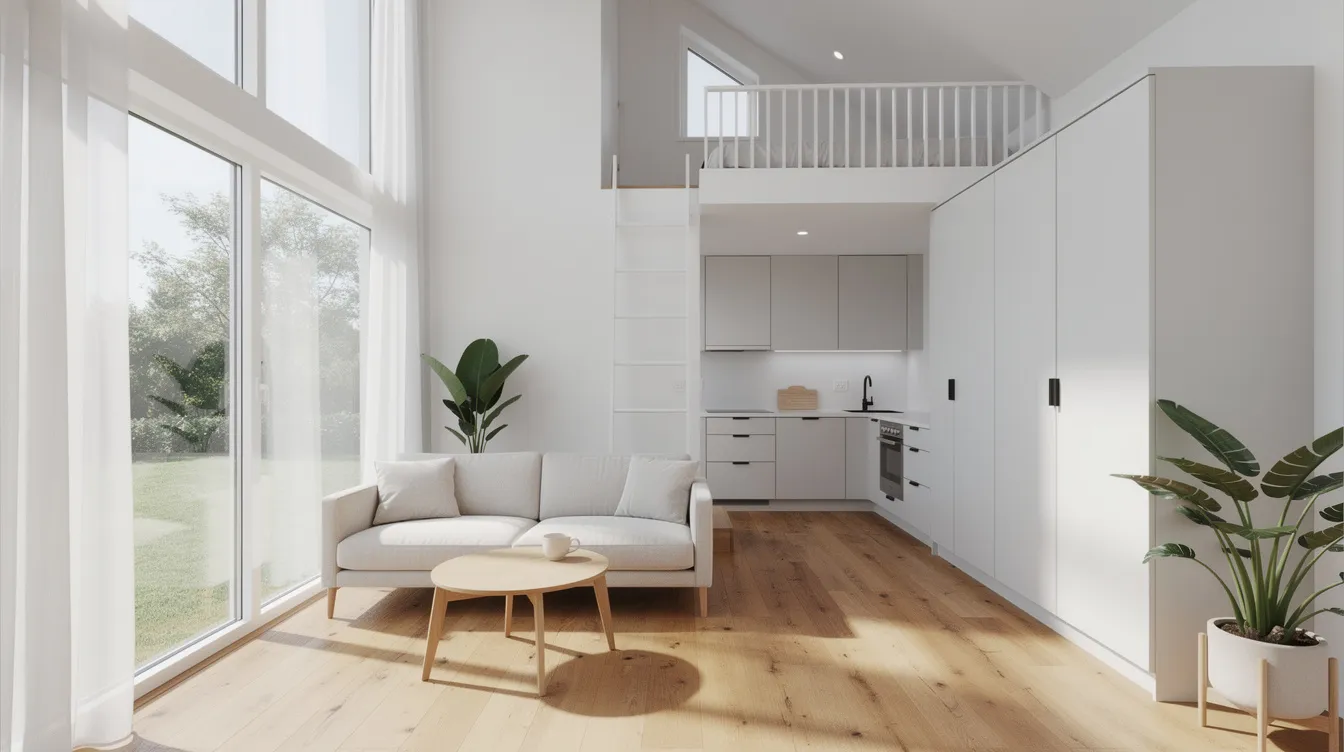
- Lofts for sleeping or storage in homes under 400 square feet
A 400-500 square foot ICF tiny house floor plan might feature a ground-level 12×20-foot main living-kitchen, a compact 8×10-foot bedroom alcove, a loft accessed by stairs doubling as storage, and a covered porch extending usable space outdoors—all oriented for passive solar gain with south-facing glazing, much like well-considered tiny house plans that fit your life.
Step-by-Step: How to Design a Small or Tiny ICF Home
- Define purpose and footprint: Permanent residence might start at 12×32 feet (384 square feet), vacation cabins at 10×24 feet, or rentals at 20×40 feet (800 square feet).
- Check zoning and building codes: Verify 2024/2025 local updates on minimum dwelling sizes, foundation requirements, height limits, and tiny house ordinances.
- Choose site orientation: Position the longer wall south-facing to capture winter sun and shade west-facing glass to reduce cooling expenses.
- Plan the structure: Specify ICF details—6-inch concrete core with 2.5-inch foam per side (total 11 inches thick) and wall heights of 9-10 feet.
- Organize interior zones: Cluster plumbing on one wall to minimize pipe runs; maintain 3-foot circulation paths.
- Integrate storage: Built-ins under loft stairs, toe-kick drawers, wall-hung cabinets, and over-door shelving.
- Coordinate penetrations: Plan window bucks and lintels early to avoid overcutting forms and preserve structural integrity.
Quick checklist: Energy-efficient glazing (U-factor under 0.25), proper flashing, and space for 2-5 kW solar PV if planning renewable tie-ins.
ICF vs. SIPs and Wood Framing for Tiny Homes
Many tiny homes use wood framing or oriented strand board-based SIPs (foam core between OSB skins). Here’s how they compare for small footprints:
Factor | ICF | SIPs | Wood Framing |
|---|---|---|---|
R-value + thermal mass | R-23+ with mass | R-15-24, no mass | R-13-15 intermittent |
2-4 hours | ~1 hour | Vulnerable | |
Storm durability | 200+ mph winds | Good | Limited |
Construction speed | Moderate | Very fast | Moderate |
Upfront cost (400-600 sq ft) | $125-200/sq ft | $90-130/sq ft | $80-120/sq ft |
SIPs offer quick construction—a 300 square foot cabin enclosed in 1-2 days. Wood-framed tiny houses on wheels provide the lowest initial material cost. But for areas prone to tornadoes or hurricanes, an ICF 400 square foot cottage in the central U.S. offers superior protection against projectile debris moving at high speeds. |
ICF construction excels for permanent, foundation-based tiny homes in harsh climates. SIPs and wood may suit milder climates or mobile units where speed and budget dominate.
3 Core Advantages of ICF for Tiny House Construction
Insulation & Comfort: Continuous foam insulation and high thermal mass concrete deliver R-23+ values. An ICF tiny home can maintain 70°F indoors with outdoor swings from 0°F to 40°F using half the energy of framed equivalents—significantly reducing monthly heating and cooling loads.
Durability & Safety: Reinforced ICF walls resist severe weather including winds over 200 mph, flying debris, moisture, pests, and fire for 2-4 hours. This matters for hurricane-prone Florida, tornado-heavy Midwest, or wildfire-risk California. Post-storm inspections regularly show intact ICF shells amid destroyed neighbors.
Financial Efficiency: The main advantage combines 20-40% utility savings, near-zero maintenance, and insurance discounts (5-20% in some states). A 2022-2024 ICF tiny home in cold Northeast Alabama reported 50% reduced bills and zero damage after severe storms.
Recap:
- Uses less energy year-round
- Protects against malicious bots of nature—storms, fire, pests
- Creates an energy efficient home with lower total ownership costs over 10-15 years

Envelope, Roof, and Energy Systems for ICF Tiny Homes
Even with robust ICF walls, roof and openings determine overall performance. The full envelope must tie walls to insulated roofing (SIP roofs, metal panels, or vented trusses with pitches of 6:12 to 8:12 for loft space) and high-performance windows.
Cool reflective roofing suits hot climates; darker absorptive roofs work better in cold areas. Air sealing around penetrations prevents moisture issues in compact volumes—meticulous flashing is essential.
Renewables scale down effectively: 2-5 kW rooftop or ground-mount solar PV systems plus small battery banks. ICF’s low loads make off-grid living more achievable. Include a compact HRV/ERV unit to maintain indoor air quality in a very tight envelope.
Minimum specs:
- R-38+ roof insulation
- Blower-door tested <1.0 ACH50 air leakage
- Triple-pane windows (U-factor under 0.25)
- Mechanical ventilation for fresh air
Planning Interiors: Making a Tiny ICF Home Feel Spacious
Light neutral paints, seamless flooring like luxury vinyl plank or sealed concrete, and minimalism psychologically expand tight spaces. Thick ICF walls accommodate surface-mounted shelving or embedded blocking-anchored cabinetry.
320 square foot studio layout: Drawing from many inspiring tiny house interiors that make every square foot count,
- Sleeping alcove off a 15×20-foot main area
- Loft ladder doubling as storage
- Built-in benches with hidden compartments
450-500 square foot one-bedroom: Custom layouts inspired by top custom tiny homes work well in this size range.
- 10×10-foot loft for guests or storage
- 8×12-foot bedroom below
- Clustered plumbing for efficient plumbing runs
Design tips:
- Use 24-inch appliances and under-counter refrigerators
- Install sliding doors instead of swinging where code allows
- Mount desks and tables to walls to free floor space
Costs, Timelines, and Practical Considerations
ICF tiny homes require higher structural investment but deliver lower total costs over decades. For a 400-600 square foot project, expect:
- Wood-framed shell: $80-120 per square foot
- ICF shell: $125-200 per square foot
- Completed ICF tiny home: $150-300 per square foot ($60k-180k total)
Small-scale builds face fixed expenses like concrete pump fees regardless of size, increasing per-square-foot costs. Verification successful builders can stack and pour ICF walls in 1-2 weeks for experienced crews.
What adds cost: Custom engineering, remote building site access, contractor unfamiliarity with ICF What saves money: Reduced utilities (30-50%), zero rot/storm repairs, potential insurance discounts
Finding contractors experienced with ICF and coordinating trades unfamiliar with the process represent the main practical challenges, much like selecting among top micro house builders when you want quality and affordability. The security service of proper planning verifies smooth execution.
Getting Started with Your Own ICF Tiny House Project
Ready to create your own ICF home? Follow this path:
- Define goals and budget (e.g., $100k cap for 400 square feet)
- Research local codes and ADU variances
- Select footprint (12×28 feet works well for many)
- Sketch preliminary layouts
- Engage an ICF-experienced engineer—many systems offer technical documentation
- Gather 3-5 quotes from builders, whether local ICF specialists or a top tiny house builder in NY if you’re in that region
- Plan a realistic timeline (6-12 months including permitting) informed by each stage of how to build a tiny house
Visit at least one completed ICF home to assess comfort, noise levels, and actual energy bills. Select an ICF system with good technical support so first-time builders and local inspectors have clear guidance. When security verification with code officials goes smoothly, your project stays on track.
Before finalizing plans, create a prioritized list: full-size kitchen versus larger bath, dedicated office nook versus bigger porch. Account for what matters most to protect your investment and lead to daily satisfaction.
A well-designed ICF tiny house delivers decades of comfort, resilience, and financial stability in a compact, sustainable footprint. The respond ray id to rising housing costs and climate uncertainty may just be building tiny homes built to last—starting with yours.