
Key Takeaways
- Moving from an average 2,000–2,500 square foot home into a 200–400 square foot tiny house or camper van requires intentional decluttering, mindset shifts, and smart storage solutions. Taking small, manageable steps towards minimalism can make the transition easier, allowing you to focus on one area or item at a time rather than feeling overwhelmed by the entire process.
- Start downsizing at least 6–12 months before your tiny home move-in day to avoid rushed, stressful decisions.
- Three core strategies drive success: declutter by clear rules (KonMari Method, one item a day, one-in-one-out), test living in a smaller home or single room, and plan specific storage for every item entering the tiny home.
- Successful tiny house living is less about “fitting everything in” and more about defining what really matters—experiences, community, and quality time—then letting the rest go.
- This article walks you step-by-step from first mental prep, through whole-house decluttering, to final packing lists for a tiny house or camper van.
Why Downsizing For Tiny House Living Feels So Hard (And Why It’s Worth It)
Picture your current house. Multiple bedrooms. A garage stuffed with boxes. An attic you haven’t opened in years. Now imagine compressing all of that into 250–350 square feet. That’s the challenge of tiny living.
A typical American home averages 2,300 square feet. A tiny house? Under 400. The math is stark, but so is the emotional weight. Those “just in case” items, childhood memorabilia, and status symbols from your large home clash with what a smaller house can hold.
Many people find that the emotional weight of their possessions can be overwhelming, and letting go of items can lead to a sense of relief and freedom, enabling them to prioritize what truly matters in life. Downsizing can lead to increased happiness as individuals often report feeling lighter and more liberated after shedding excess belongings.
The concrete benefits make the discomfort worthwhile:
- Lower costs: Utility bills drop 50-70% in a tiny home
- Less maintenance: From 10 hours weekly to 5
- Easier relocation: Move costs under $5,000 versus $20,000+
- More time: For relationships, hobbies, and adventures with loved ones
Consider Bob and Linda, featured in Tiny House Blog (2023). They moved from a 2,400 square foot suburban house to an 800 square foot cottage first, then finally to a 320 square foot tiny home on wheels. Result? They save $1,800 monthly and spend more quality time traveling.
Feeling overwhelmed at the start is normal. Small, structured steps make this process manageable.
- Step 1: Get Real About Your Space Needs
- Step 2: Choose Your Downsizing Rules Before You Start
- Step 3: Declutter Room By Room (With Category Checkpoints)
- Step 4: Tackle Big Categories That Make Or Break Tiny House Living
- Step 5: Test-Drive Small Space Living Before You Commit
- Step 6: Plan Storage Systems That Match Your New Life
- Step 7: Decide What Stays Out Of The Tiny House
- Step 8: Make It Stick After You Move In
- FAQ
- How long does it realistically take to downsize for a tiny house?
- How much stuff actually fits in a 300-square-foot tiny house?
- Is it better to sell or donate most of my belongings when downsizing?
- Can families with kids really live in tiny houses or camper vans?
- What if I regret getting rid of something important?
Step 1: Get Real About Your Space Needs
Before touching any belongings, do the math. Calculate your current living space and compare it to your planned tiny house. Going from 2,000 to 320 square feet means reducing possessions by roughly 85%.
Here’s how to understand the scale:
- Try the sticky note method: For 2–4 weeks, place a Post-It on each room door. Jot down why you enter (sleep, work, storage). Most people discover 60% of home visits are for storage, not active use.
- Run a 30-day trial: Live only in one or two rooms—bedroom plus kitchen. Close off the rest. Studies show 80% of participants adapt within two weeks, identifying redundancies they never noticed.
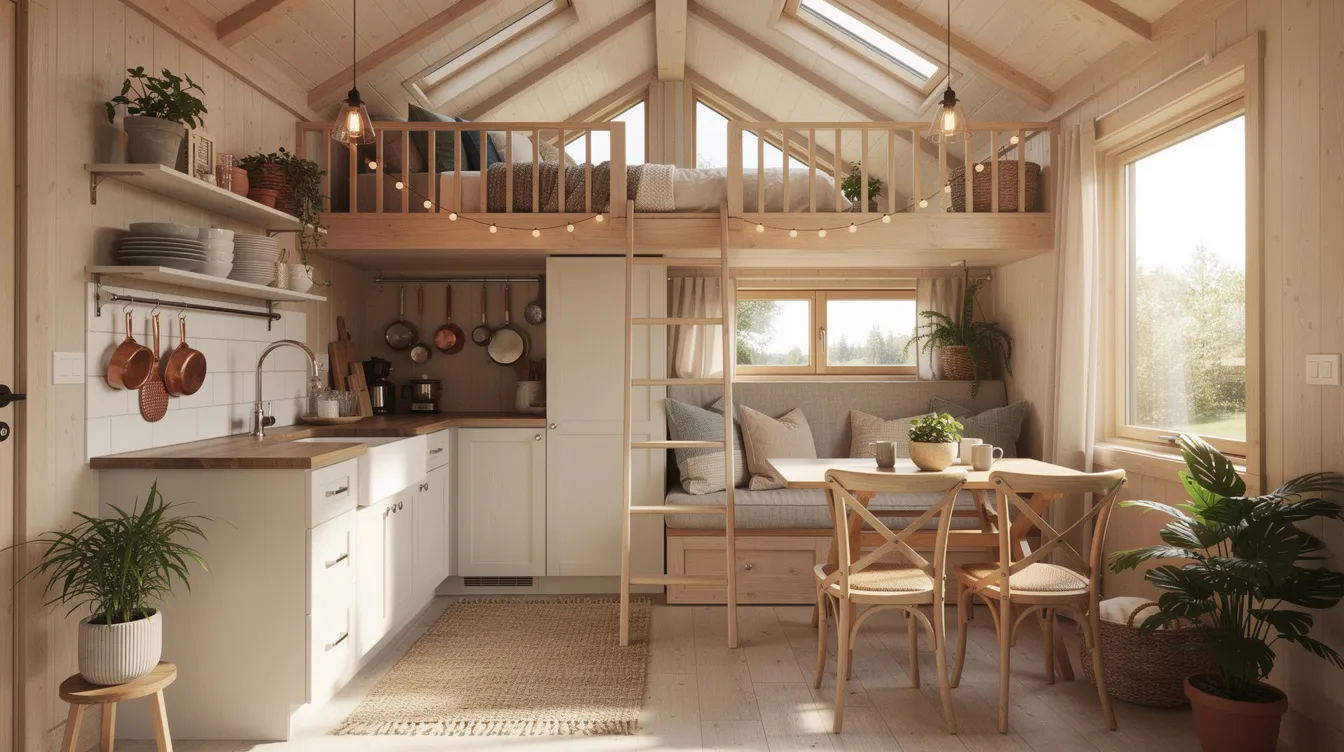
- Sketch your future floor plan: Label zones (sleeping loft, galley kitchen, fold-down table, gear storage). Exploring tiny house floor plans that match your lifestyle can help ensure every item has a future “home” before it enters the tiny home.
- Measure everything: A 28-foot tiny house might offer 120 square feet on the main floor and 80 in the loft. Looking at tiny house interiors that maximize every square foot shows how that small space demands precision.
This prep reveals which stuff actually serves your life versus what just occupies space, and it clarifies whether buying a tiny house for sale is really for you.
Step 2: Choose Your Downsizing Rules Before You Start
Written rules prevent decision fatigue when sorting thousands of objects. Without them, you’ll get stuck on every item, wondering if you might need it someday. Create your framework first.
The one-in-one-out rule: Implementing a “one-in-one-out” rule can help maintain a clutter-free environment by ensuring that for every new item brought into the home, an old item is removed. Start practicing months before moving so it becomes automatic.
One item a day method: One effective method for gradual downsizing is to get rid of one item each day, starting with easier items and progressively tackling more challenging ones. Over 6 months, that’s 180 items gone—with minimal stress.
The KonMari Method: Using the KonMari Method involves decluttering by category, where you assess each item to determine if it “sparks joy” before deciding to keep or discard it. Categories flow from easy to hard: clothes, books, papers, komono (miscellaneous), then sentimental items.
Numeric limits: Set specific caps that match tiny house realities:
- 50 clothing items per adult per season
- 2 storage bins of toys per child
- 4-6 pairs of shoes total
- One drawer for jeans and casual wear
These rules continue after move-in. Implementing a “new in, old out” rule can help maintain a manageable number of possessions by ensuring that for every new item acquired, an old item is removed.
Step 3: Declutter Room By Room (With Category Checkpoints)
This is the main physical work. Block 1–2 weeks for an apartment, at least a month for a full-sized house.
Starting with one room or one category at a time can make the decluttering process more manageable and less overwhelming, allowing for a clearer view of progress.
Start easy: Hit the bathroom, linen closet, and kitchen gadgets first. Bathrooms alone yield 40-50% trash/recycle (expired meds, worn towels). Avoid sentimental boxes until you’ve built momentum.
The packing party approach: Using a packing party, where you pack all your belongings and only unpack what you need over a few weeks, can help identify unnecessary items and facilitate gradual downsizing. Most participants discard 60-70% of untouched items.
Use labeled containers: Large cardboard boxes or color-coded bags for keep, donate, sell, recycle, and trash. Don’t let sorted items drift back into the house.
Run category checkpoints: Gather every book from the whole house into one place. Apply KonMari decisions. Duplicates and rarely-read titles become obvious when you see everything together.
Address furniture early: 90% of standard furniture won’t fit through tiny house doors. Consider replacing bulky pieces with affordable tiny house designs and furnishings. Sell large items via estate sales—mid-sized homes average $5,000-$15,000 revenue.
Step 4: Tackle Big Categories That Make Or Break Tiny House Living
Certain categories overwhelm new tiny house owners: clothing, kitchen gear, paper, hobbies, and sentimental items. Looking at great tiny homes that redefine small-space living can give you realistic examples of how others have edited these categories. Surrounding yourself with fewer, high-quality possessions can create a calming environment, as opposed to being overwhelmed by numerous low-quality items that may not serve a purpose.
Each section below guides what to keep, release, and store in your small space.
Clothing And Capsule Wardrobes
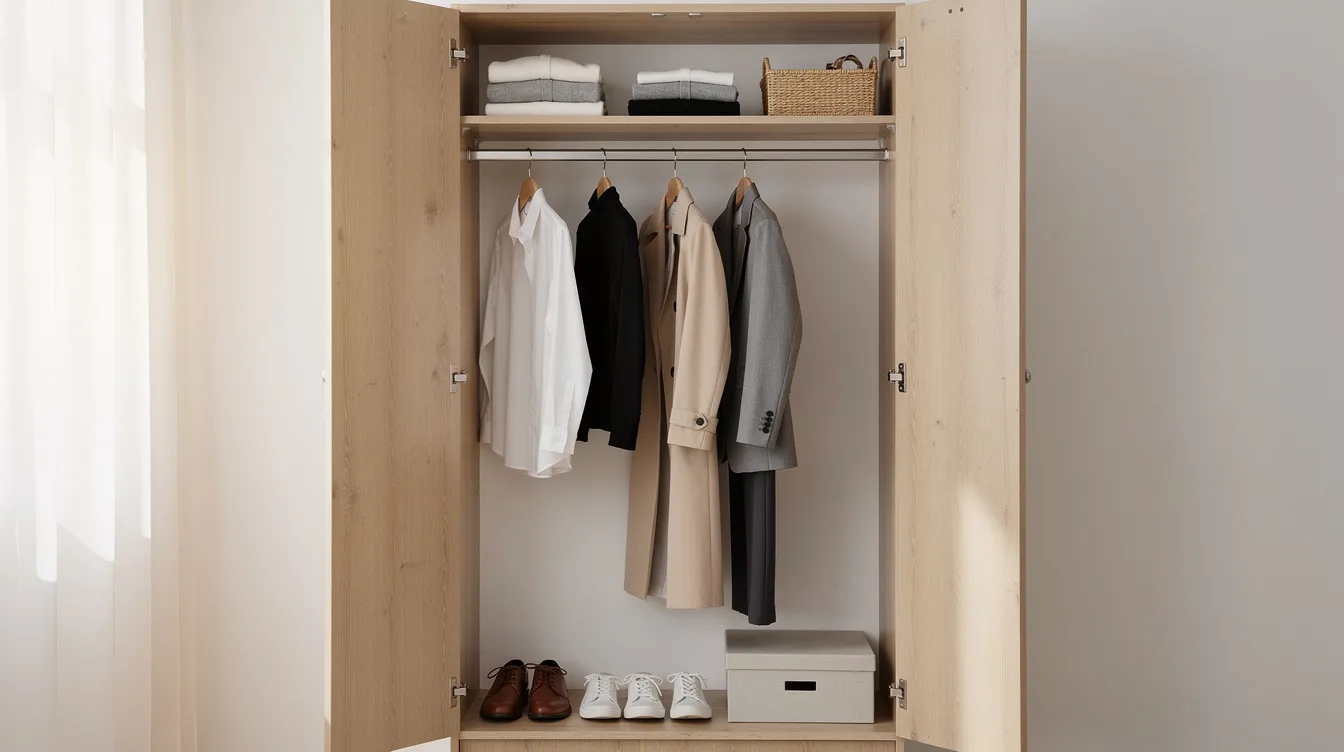
Pull every piece of clothing from closets and drawers at once. Most wardrobes contain 150+ pieces per adult—you need 30-40.
- Test a capsule wardrobe (like Project 333’s 33 items for 3 months) for one season before moving
- Choosing to prioritize quality over quantity can lead to a more meaningful and joyful living experience, as it encourages conscious purchasing and reduces clutter
- Invest in durable, neutral basics: jeans, merino tops, layering pieces that mix and match
- Reduce duplicate shoes and outerwear to multipurpose items for your climate
- Store off-season clothes in vacuum bags under the bed platform or one labeled tote
Kitchen, Dishes, And Appliances
Spread all kitchen items on a table. Keep only what you use weekly.
- Par down to one main set of dishes (household plus 1-2 guests)
- Keep a single good chef’s knife, one cutting board, and a few multi-use pots
- Investing in high-quality items, such as stainless steel appliances, can lead to greater satisfaction and longevity compared to cheaper alternatives that may not last as long
- Ditch single-purpose gadgets—80% of kitchen gadgets go unused
- Use vertical storage ideas: magnetic knife strips, hooks for mugs, nesting bowls
Compact, energy-efficient appliances work best: combination microwave-convection ovens, induction cooktops, under-counter fridges. Pairing these with a custom tiny home designed around your routines can dramatically improve day-to-day livability.
Paper, Books, And Digital Alternatives
Go paperless before move-in:
- Switch bills and bank statements to digital
- Use cloud storage (Dropbox, Google Drive) for scanned documents and photographs
- Forget keeping stacks of magazines and old mail—they’re unsuited to tiny houses
- Downsize physical books to 20-40 favorites; move the rest to e-readers or library loans
- Keep one fireproof envelope for original essential documents (passports, birth certificates)
Hobbies, Gear, And Sentimental Items
Sports equipment, craft supplies, and collections can swallow a 300 square foot tiny home.
- Choose 1-2 primary hobbies matching tiny house or camper van life (hiking, photography, knitting)
- Release gear for activities rarely done
- Use community resources—libraries, tool lending programs—instead of storing larger items
- Photograph bulky memorabilia, keep a slim memory box, gift heirlooms to relatives
- For example, one family cut holiday décor down to a single under-bed tub stored with relatives between seasons, similar to how cozy Swedish tiny houses prioritize simple, seasonal living
Step 5: Test-Drive Small Space Living Before You Commit
Tiny house success depends on habits as much as square footage. Short trials reveal friction points early, and exploring the broader world of tiny houses and resources can give you ideas for what to test.
Many tiny house owners gradually cut down on the number of items they own by moving from larger homes to smaller ones, reducing their possessions each time they downsize.
Rent a tiny space: Try an Airbnb tiny house or camper van for at least a weekend—ideally a full week. Over 50,000 listings exist, averaging $100-200 per night.
Home-based experiment: Live for 30 days with only what fits in one bedroom, one bathroom, and a kitchen corner. Treat the rest of the house as off-limits.
Keep a notebook: Track which items you miss, which never get used, and any routines (work, cooking, laundry) that feel cramped.
Experiencing new adventures and challenges can counteract feelings of downsizing depression, as studies show that those who regularly engage in new experiences tend to report higher levels of happiness.
Some people step down gradually—moving from a big house to an 800 square foot home, then to 400, and finally into 250 square feet—over 1-3 years, sometimes using tiny house kits as an intermediate step.

Step 6: Plan Storage Systems That Match Your New Life
In tiny houses and camper vans, every object needs a clearly defined home. Planning this as you build a tiny house from the ground up prevents visual clutter the moment you set something down.
- Measure actual items: Bins, baskets, folded clothes piles. Use those measurements to design built-in storage like stairs with drawers (4 cubic feet each), loft cubbies, and toe-kick pull-outs.
- Use bins as physical limits: Each child gets two toy bins. Camping gear gets one bin. If something new comes in, something must exit through the door.
- Maximize vertical space: Wall hooks, ceiling-mounted racks, overhead cabinets. Multi-use furniture like lift-up bed platforms and storage ottomans double function.
- Leave 15-20% empty: Keep some storage space unused on purpose. Daily living should never feel crammed even in a very tiny floor plan.
Step 7: Decide What Stays Out Of The Tiny House
Not everything must squeeze into 200-400 square feet. Some items can live elsewhere.
Criteria for off-site storage:
- Time-limited use (seasonal sports gear)
- Irreplaceable heirlooms
- Items needed for a known future stage (baby gear arriving soon)
Avoid “delayed decision” zones: If you rent a storage unit or shed, revisit every 6-12 months. Aim to reduce contents by at least one item each visit.
Embracing community can aid in maintaining minimalism, as sharing resources with neighbors reduces the need for personal ownership of items. Replace ownership with access—borrow party supplies, rent tools, use coworking spaces instead of a home office.
One practical idea: Hold an estate sale before parking your tiny house. Use the money to fund your build or future adventures with friends and family.
Step 8: Make It Stick After You Move In
The risk of slowly re-accumulating stuff exists even in tiny houses. Once life feels normal, shopping temptations return.
The “one-in-one-out” rule helps maintain minimalism by ensuring that for every new item purchased, an old item is removed, preventing clutter from accumulating.
Ongoing habits:
- Keep using one-in-one-out for clothing, kitchen tools, and décor
- Schedule a 15-30 minute weekly reset to put everything back in its place
- Run a seasonal review four times yearly to reassess clothes, gear, and pantry items
- Remove anything unused for 3-6 months
Prioritize experiences: Weekend hikes, community events, classes with your husband or kids. The desire to shop for material possessions naturally diminishes when your lifestyle fills with memories instead.
Tiny house living is an evolving practice of choosing freedom—not a one-time purge. The dream isn’t about sacrifice. It’s about creating space for what matters.
FAQ
How long does it realistically take to downsize for a tiny house?
A small apartment (under 800 square feet) can often be downsized in 2–4 weeks of focused effort. An average 2,000–2,500 square foot family house typically takes 2–6 months without professional help. Set your target move-in date and work backward, scheduling specific decluttering weekends on a calendar. Using structured methods (KonMari, one item a day, or 30-day minimalism challenges) keeps the process on track. Bit by bit, progress compounds.
How much stuff actually fits in a 300-square-foot tiny house?
A 250–300 square foot tiny house comfortably holds essentials for one or two adults: a capsule wardrobe per person, compact kitchen setup, a few bins of hobby gear, and one small bookshelf. Bulky items like sectional sofas or multiple full-size dressers won’t fit without making the space cramped. Use painter’s tape on a garage floor to mark out a 300 square foot footprint and test-arrange furniture before committing. This simple method removes guesswork.
Is it better to sell or donate most of my belongings when downsizing?
High-value items in good condition (quality furniture, electronics, designer clothing) are worth listing on local marketplaces or holding an estate sale to fund your tiny house build. Donate mid- and low-value items to charities, shelters, or community groups to save time. Set a firm deadline: try selling for 2–3 weeks, then donate remaining items. Don’t let things linger in the garage becoming a source of stress.
Can families with kids really live in tiny houses or camper vans?
Many families do live successfully in tiny houses and camper vans. They rely on strict limits (a set number of toy bins, 50 clothing items per child per season) and strong daily routines. Involve kids in the downsizing process by giving them ownership over which toys and books fit their allotted space. Explain the trade-off: fewer things but more travel, outdoor play, or family time. Using outdoor areas—porches, decks, nearby parks—as “bonus rooms” is especially key.
What if I regret getting rid of something important?
Occasional regret is normal, but most people report missing only a tiny fraction of what they release compared to the freedom they gain. Start with a “quarantine box” of items you’re unsure about, stored out of sight for 3–6 months. If you never retrieve anything, it’s safe to let them go. Photograph sentimental items before donating so the memory is preserved even if the physical object no longer lives in your tiny home. In the matter of possessions versus freedom, freedom usually wins.