Tiny houses offer freedom, simplicity, and lower costs. But paying for one? That’s where things get tricky.
Traditional mortgages are often not available for tiny homes due to their non-traditional nature and lack of a permanent foundation, leading buyers to explore alternative financing options such as personal loans, RV loans, and chattel mortgages. This guide walks you through every option so you can secure financing that fits your budget.
Key Takeaways
- Most buyers finance a tiny house with personal loans, RV loans, home equity, or builder financing rather than a traditional mortgage
- Tiny homes typically cost around $82,500, but buyers must also consider additional costs such as land, utility connections, and property taxes when financing
- Your credit score, down payment size, and whether the home is on wheels or a permanent foundation determine which financing options you can use
- Tiny houses usually depreciate like vehicles, so prioritize shorter loan terms and fixed rate products to limit interest costs
- You’ll learn step-by-step how to choose a financing option, prepare documents, and avoid common pitfalls unique to tiny homes
- What Is a Tiny House (and Why It’s Hard to Finance)?
- How Much Does a Tiny House Really Cost in 2026?
- Step 1: Decide Where Your Tiny House Will Sit (Land, Parking & Zoning)
- Step 2: Check Your Budget, Credit Score, and Down Payment
- Financing Options for Tiny Houses in 2026
- Understanding Loan Terms, Rates, and Total Cost
- Preparing Your Application: Documents and Timeline
- Risks, Resale Value, and When Tiny House Financing Makes Sense
- FAQ
What Is a Tiny House (and Why It’s Hard to Finance)?
A tiny house is a compact dwelling typically between 100 and 400 square feet. Compare that to the average U.S. home in 2026, which measures around 1,950 square feet. These small homes pack efficient living into a fraction of the space through lofts, multi-function furniture, and smart storage.
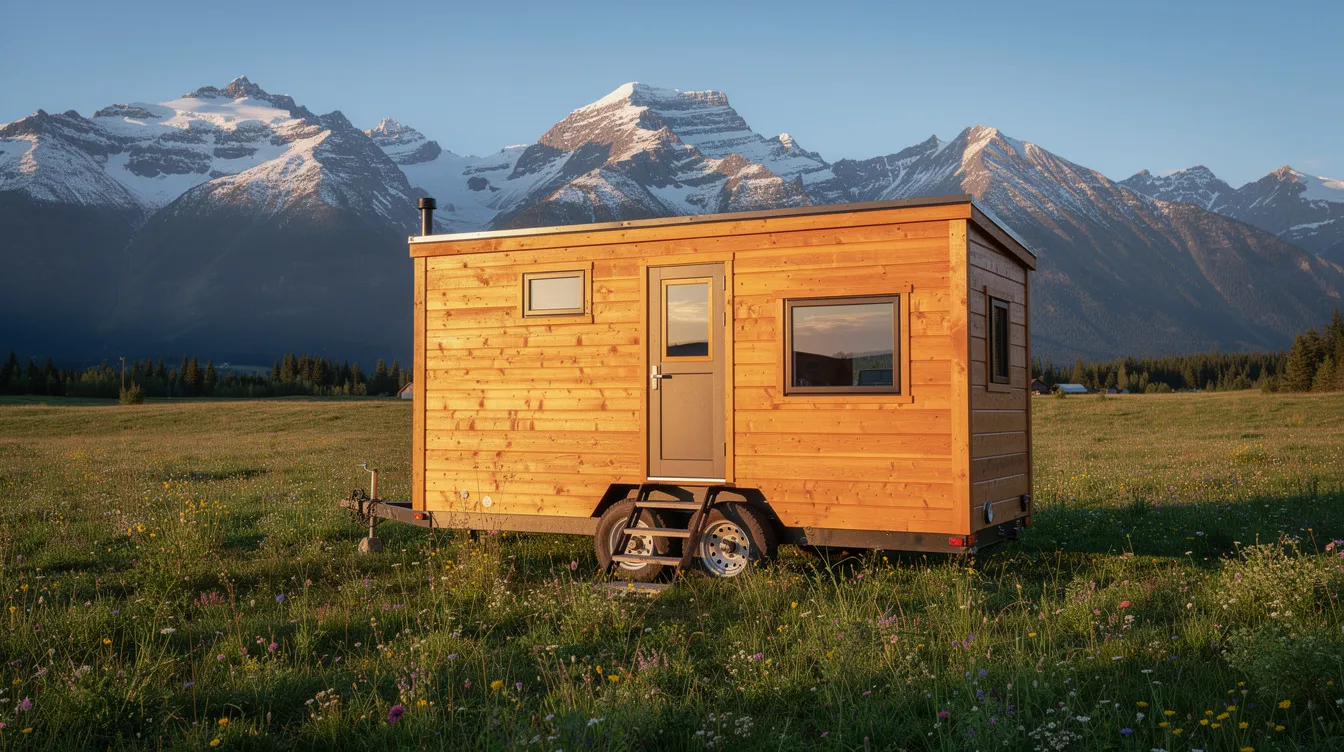
Two main categories exist. Tiny houses on wheels (THOWs) sit on a trailer chassis and are often classified as RVs or movable personal property. Tiny homes on permanent foundations function more like traditional real estate and may qualify for different loan types, especially when designed as minimalist tiny houses for sustainable living.
Common uses include:
- Full-time primary residence
- Short-term Airbnb-style rentals
- Backyard accessory dwelling units (ADUs)
- Vacation cabins or off-grid retreats
Why can’t you just get a regular mortgage? Most tiny homes don’t meet traditional lender requirements. They’re often too small, lack a permanent foundation, or don’t satisfy local building code and appraisal standards. Buyers typically need to combine a land solution with separate financing for the structure itself.
How Much Does a Tiny House Really Cost in 2026?
Headlines claim tiny homes start at $30,000. Reality is different. Most fully livable, code-compliant units in 2026 fall closer to $80,000–$90,000 before land costs, which makes using a tiny home cost calculator to budget your project especially important.
Typical price ranges include:
- DIY shell: $30,000–$50,000 — a range that aligns with many guides on how to build a tiny house from scratch
- Custom THOW: $60,000–$100,000
- High-end luxury models: $120,000+
Costs buyers often forget:
- Land purchase or community lease ($20,000–$50,000 or $300–$800/month)
- Permits ($1,000–$4,000 depending on state)
- Delivery and setup ($2,000–$5,000), which can be even more nuanced for Amazon tiny house packages that ship to your door
- Utility hookups ($5,000–$15,000)
- Parking pads ($3,000)
- Insurance ($800–$1,500/year)
- Furnishings ($5,000)
Tiny homes on foundations may trigger property taxes like any small house. Movable units are often taxed more like vehicles. Your total project budget—home plus setup plus land—should drive how much you borrow and the loan terms you choose.
Step 1: Decide Where Your Tiny House Will Sit (Land, Parking & Zoning)
Tiny homes often require land to be purchased or leased, which is an additional cost not included in the price of the home itself. Lenders typically want to know where your unit will sit before approving financing.
Three main land approaches exist:
- Buy a small lot using a land loan (expect 12–15% rates, 20–50% down)
- Join a tiny-house or RV community (often $400–$500/month plus buy-in fees), making sure your tiny house plans fit local zoning rules
- Park on family land with a written agreement that satisfies underwriters
Zoning laws and permit issues can restrict where tiny homes can be placed or lived in, making it essential to research local regulations before purchasing. Some areas require minimum square footage (often 400+ square feet), classify units as ADUs, or only allow tiny houses in RV parks.
Land loans come in three types: raw (no utilities, highest rates), unimproved (road access only), and improved (utilities ready, lowest rates). Check local rules and get at least a ballpark quote on land before locking in financing for the tiny home.
Step 2: Check Your Budget, Credit Score, and Down Payment
Lenders for tiny homes still evaluate the basics: income, debt-to-income ratio, credit score, and cash available for a down payment.
Calculate a monthly payment you can handle by comparing with current rent, then add utilities, parking fees, and insurance. Keep housing costs under 28% of gross income.
Credit score requirements vary by loan type:
Loan Type | Minimum Score | Best Rates At |
|---|---|---|
Personal loan | 620+ | 700+ |
RV loan | 660+ | 720+ |
Builder financing | 550+ | 680+ |
Home equity | 680+ | 740+ |
A larger down payment (10–20%) can unlock better loan terms, lower interest rates, or shorter repayment periods. Pull your credit reports through AnnualCreditReport.com, pay down high-interest debt, and avoid new credit inquiries before applying. |
Financing Options for Tiny Houses in 2026
There’s no single “tiny house loan.” Instead, financing options for tiny homes can include home equity loans, personal loans, RV loans, and chattel mortgages, which are specifically designed for movable personal property.
Many buyers combine methods—savings for the down payment, a personal loan for the shell, and a credit union loan for upgrades. Here’s how each option works:

Using a Personal Loan to Finance a Tiny House
Personal loans can be used to finance tiny homes, with amounts typically ranging from a few thousand dollars to $100,000, depending on the lender and the borrower’s creditworthiness. These unsecured loans come from banks, credit unions, or online lenders.
Typical terms run 2–7 years, which works well for mid-priced tiny homes. Unsecured loans carry higher interest rates than mortgages (often 8–18%) but offer faster approvals and no appraisal required.
Interest rate and loan amount depend heavily on your credit history and existing debts. Compare offers from multiple lenders and prioritize fixed rate personal loans so your monthly payments stay predictable.
Financing a Tiny House on Wheels with an RV Loan
RV loans may be an option for financing tiny homes that are built on wheels and certified as RVs, with the tiny home serving as collateral for the loan. Certification by organizations like RVIA is typically required.
Because the tiny home serves as collateral, these secured loans often allow larger amounts and longer terms than unsecured personal loans—typically 10–20 years at 6–10% interest rates.
Banks, credit unions, and specialized lenders offer RV loans. Most require the unit to be roadworthy, which can affect where and how long you can park full-time. Compare total interest costs over the whole term, not just monthly payments—longer terms dramatically increase total interest paid.
Using Home Equity: Home Equity Loan or HELOC
Current homeowners can finance a tiny house by borrowing against existing home equity. Lenders typically allow borrowing up to 80–85% of combined loan-to-value.
A home equity loan works like a second mortgage with a fixed rate and fixed term—ideal for predictable payments. A HELOC functions as a revolving credit line you can draw on during construction.
Warning: Both products use your primary residence as collateral. Missed payments could eventually lead to foreclosure, even if the tiny house itself is mobile.
Builder Financing and Tiny House–Specific Lenders
Some tiny house builders partner with lenders or offer in-house financing for new custom units. Typical structures include:
- Down payment at contract signing (often 5–10%)
- Progress payments during construction
- Final disbursement at delivery
Builder financing may offer promotional interest rates or bundled services, but compare total costs with independent lenders. Many small regional credit unions are more flexible about tiny homes, especially foundation units within their lending area.
Ask builders which lenders they work with, what credit score they require, and whether prepayment penalties apply.
Chattel Loans and Small Real-Estate Loans for Tiny Homes on Foundations
Tiny homes may qualify for a chattel mortgage, which is a loan secured by movable personal property, allowing the lender to take ownership of the tiny home until the loan is paid off. These loans typically carry shorter terms and higher interest rates than traditional mortgages.
For foundation-built units meeting local codes, some lenders offer small traditional mortgages. Qualifying typically requires minimum square footage, permanent foundation, and classification as real property.
Talk with local banks and credit unions first—they’re most likely to have flexible programs for small loan amounts. Even with real-estate financing, tiny houses may not appreciate like traditional homes, so avoid over-leveraging.
Understanding Loan Terms, Rates, and Total Cost
The “best” financing isn’t just the lowest monthly payment. Balance interest rate, loan term, and total cost over time.
Key terms to understand:
- Fixed rate vs. variable: Fixed keeps payments stable; variable can increase
- Repayment term: Longer terms mean lower payments but more total interest
- Fees: Origination fees typically run 1–5%
- Prepayment penalties: Check if paying early costs extra
Example: An $80,000 loan at 8% over 7 years costs about $25,000 in interest. Stretch that to 15 years, and interest exceeds $45,000. Ask each lender for an amortization schedule to compare offers accurately.
Preparing Your Application: Documents and Timeline
Having documents ready can shave weeks off your tiny house financing process.
Most lenders require you to submit various documents during the loan application process, including proof of income, credit history, and details about the tiny home. Typical requirements include:
- Recent pay stubs (2 months)
- W-2s or tax returns (2 years)
- Bank statements (2 months)
- Government ID
- Builder contract or purchase agreement
- Land or parking documentation
Self-employed borrowers may need profit-and-loss statements or 1099s.
The loan application process typically involves submitting a loan application with a quote from the builder, which usually results in an approval or denial within 1 to 3 business days. Once all required documents are approved, the lender will create the loan documents for signature and notarization, which usually takes about one week to complete.
The loan application process can take several weeks, with most borrowers experiencing 1-2 weeks between each round of document requests from the lender. Clarify exactly when your first payment will be due.
Risks, Resale Value, and When Tiny House Financing Makes Sense
Tiny houses are primarily a lifestyle choice. Tiny homes typically have lower resale values compared to traditional homes, which can affect financing options and long-term investment considerations. Expect 5–10% annual depreciation, similar to RVs.
Risks to consider:
- Zoning changes could restrict future use
- Community rules may evolve
- Limited options for resale compared to manufactured homes
Think about your exit strategy. Could you move the unit, convert it to a rental, or sell within a specific timeframe?
Financing a tiny house makes sense when:
- Monthly payments stay under 25% of income
- Your location is legally secure
- You’re comfortable with lower long-term resale value
- Loan terms are shorter than your expected ownership period
Shorter terms, modest borrowing, and meaningful down payments keep risk manageable and help you avoid being underwater on a depreciating asset.
FAQ
Can I get a traditional mortgage for a tiny house?
Some buyers qualify for small traditional mortgages if the tiny home is built on a permanent foundation, meets local building codes, satisfies lender minimum square footage requirements (typically 400+ sq ft), and is classified as real property along with the land. Only about 5% of tiny houses for sale are financed with traditional mortgages.
Is it cheaper to build a tiny house myself instead of financing one?
DIY builds can cost $30,000–$50,000 in materials compared to $80,000+ for turnkey units. However, self-builds often take 6–12 months of labor, require specialized skills, and may still need financing through a personal loan if savings are limited. Looking at affordable tiny house designs and build tips can help you avoid common mistakes. Code compliance failures can add 20% to costs.
Do credit unions really offer better rates for tiny house loans?
Many local credit unions offer competitive rates and more flexible underwriting for niche housing. Some accept credit scores as low as 550 and charge 1–3% lower rates than national banks. However, terms vary widely, so compare offers from at least three credit unions and banks, especially if you’re hoping to qualify for tiny homes under $20K as a low-cost option.
How big of a down payment do I need for a tiny house?
Some unsecured personal loans and RV loans require no down payment. Builder financing programs typically require 5–10% down, while land loans may require 20–50% depending on land type. A low down payment is possible, but larger down payments unlock better loan terms.
Can I refinance my tiny house loan later?
Refinancing is sometimes possible if the tiny home holds value, your credit score improves, or you convert the unit to real property on a foundation. However, limited options exist compared to refinancing traditional homes. About 20% of tiny home owners successfully refinance.