
Winter hits tiny homes hard. The small size means heat escapes fast, and choosing the wrong heating system can mean frozen pipes, hefty energy bills, or worse—shivering through the night. But with the right setup, your tiny house can stay warm and cozy even when temperatures drop below zero.
This guide covers everything tiny homeowners need to know about effectively heating their small space in cold climates.
Key Takeaways
- Most tiny homes in cold climates need at least two heating sources—a primary system like ductless mini split systems plus a backup electric space heater or wood stove for outages and extreme cold
- Good insulation and air sealing can cut winter energy use by 20–40%, making them just as important as the heater itself
- Ductless mini splits work best for stationary tiny homes needing both winter heat and summer cooling options
- Pellet stoves and wood burning stove options provide off-grid backup and reliable heat in very cold climates
- Always install carbon monoxide detectors and maintain proper ventilation when using combustion appliances in tight spaces
- How Tiny Homes Stay Warm in Real Winters
- Assessing Your Tiny Home and Climate Before You Choose Heat
- Main Heating Options for Tiny Homes
- Ductless Mini Split Systems for Heating (and Cooling) Tiny Homes
- Electric Heaters and Electric Space Heaters
- Pellet Stoves and Other Solid-Fuel Options
- Propane and Gas Heating Options
- Radiant Floor Heat and Other Supplemental Options
- Boosting Energy Efficiency and Temperature Regulation in Tiny Homes
- Planning Safe, Redundant Heat for Winter
- FAQ: Tiny House Heating in Winter
How Tiny Homes Stay Warm in Real Winters
“Winter” means different things depending on where you live. In Minnesota, you’re dealing with -10°F nights and wind chills to -30°F. In the Pacific Northwest, it’s more like 30–40°F with constant dampness. Both create challenges for tiny home heating.
Tiny homes often struggle with inadequate insulation, which makes it difficult to retain heat or cool air, leading to inefficient heating and cooling systems. Due to their high surface-area-to-volume ratio, tiny homes lose heat 2–3 times faster per square foot than a traditional home. Every wall, window, and gap matters.
That’s why smart tiny homeowners use a “primary” and “backup” heat strategy:
- Primary heat: Handles 70–80% of your heating load continuously (like a ductless mini split)
- Backup heat: Kicks in during extreme cold or power outages (like a portable space heater or pellet stove)
This article covers the main categories: electric heaters, ductless mini split systems, pellet stoves and wood burning options, propane/gas heaters, and radiant floor heat. Many of these also handle cooling tiny homes in summer.
Assessing Your Tiny Home and Climate Before You Choose Heat
Before buying equipment, whether you’re retrofitting or following a step-by-step guide on how to build a tiny house, profile your situation:
Mobility:
- Tiny home on wheels (THOW)? Permanent installs like hydronic radiant are tricky
- Foundation-built? More flexibility for outdoor unit placement and venting
Square Footage and BTU Needs:
- Under 160 sq ft: 3,000–5,000 BTU
- 160–260 sq ft: 5,000–8,000 BTU
- 260–400 sq ft: 8,000–12,000 BTU
- Add 20% for high ceilings or loft bedrooms
Climate Band:
- Mild (rarely below 32°F): Electric heaters work well
- Cold climates (10–32°F): Cold-climate mini splits excel
- Very cold (0°F and below): Pellet stoves or wood stoves provide necessary backup
- Shore power enables 240V baseboards and mini splits
- Solar power with batteries can run smaller heaters in mild climates
- Off-grid? Budget for propane or pellet fuel storage
Regulations:
- Check local codes—many parks and HOAs ban unvented gas heaters or wood stoves in small dwellings
Main Heating Options for Tiny Homes
The limited space in tiny homes makes it challenging to install traditional HVAC units, which often require space consuming ductwork and bulky equipment, so your tiny house floor plans that work for you should reserve wall and mechanical space for compact systems. Here’s what actually works:
Option | Best For | Primary or Backup? |
|---|---|---|
Ductless mini splits | Year-round heat/cool, on-grid | Primary |
Electric space heaters | Supplemental warmth, low cost | Backup |
Pellet stoves | Off-grid, cold climates | Primary or backup |
Propane heaters | Quick heat, outage backup | Backup |
Radiant floor heat | Comfort upgrade | Supplemental |
Ductless mini split systems are considered one of the most efficient options for heating and cooling tiny homes, as they do not require ductwork and can create multiple heating and cooling zones, optimizing energy use. |
Ductless Mini Split Systems for Heating (and Cooling) Tiny Homes
A ductless mini split connects a singular outdoor unit to a single indoor unit (or multiple units) via small refrigerant lines—no space consuming ductwork needed. This makes them a space saving choice for tiny homes with little room for traditional HVAC systems.
Why they work for tiny houses:
Ductless mini-split systems are recommended for tiny homes as they do not require ductwork and can efficiently provide both heating and cooling. Modern cold-climate models maintain 100% heating capacity down to -5°F and 70% capacity at -15°F.
Sizing your system:
- 200 sq ft well-insulated: 6,000 BTU
- 400 sq ft: 12,000 BTU
- Oversizing causes short cycling and 15–20% efficiency loss
Energy efficiency matters: Mini splits achieve a coefficient of performance (COP) of 3–4, meaning 1kW of electricity produces 3–4kW of heat. Compare that to electric space heaters where 1kW in equals only 1kW out. High SEER2 and HSPF2 ratings translate to lower energy costs.
Installation basics:
- Wall mounted indoor head goes 7 feet high in the main living space
- Outdoor unit sits on a pad (foundation homes) or trailer-mounted platform (THOW)
- 3-inch wall penetration for electrical wires and refrigerant lines
Bonus: These units handle both heating and cooling system needs, eliminating the need for separate window unit air conditioners and preserving more interior space.
Operational tips: In tech-forward tiny smart homes designed for efficient living, pairing mini splits with sensors and smart controls can further cut energy use.
- Use smart thermostat modes to maintain a comfortable temperature
- Run ceiling fans in reverse to push hot and cold air where needed
- Continuous fan mode reduces hot or cold spots in loft bedrooms
Electric Heaters and Electric Space Heaters
Electric heaters come in several types:
- Ceramic heaters: Fast heat, 1,500W outputs about 5,100 BTU
- Oil-filled radiators: Steady radiant heat, quiet operation
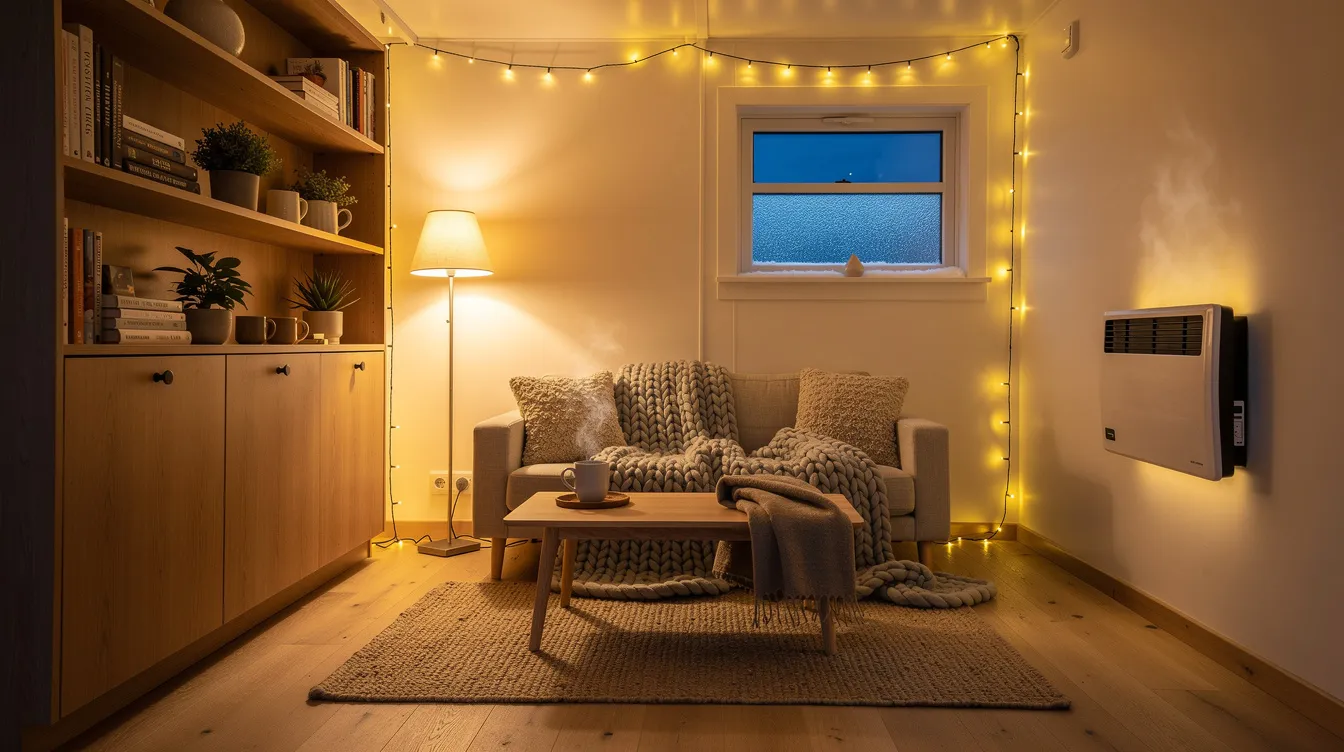
- Wall mounted panel heaters: Permanent, low-profile
- Toe-kick units: Fit under cabinets or stairs
Electric space heaters are a common choice for heating tiny homes, as they are portable and can be used to heat specific areas, but they are not suitable as a primary heating source. In very cold climates, relying solely on portable space heaters leads to highly inefficient heating and excessive energy consumption, no matter how cleverly you’ve optimized tiny house interiors to maximize every square foot.
Placement for even heat:
- Central wall locations work best
- Point toward the coldest exterior wall
- Multiple small 750W units beat one oversized heater for safety
Safety in tight spaces:
- Maintain clearances from bedding and curtains
- Use units with tip-over protection and overheat shutoffs
- Avoid extension cords with high-wattage electric heaters
When to hardwire: For permanent tiny homes with dedicated 240V circuits, hard-wired baseboards or panel heaters offer more reliable electric heat than plug-in options.
Utilizing renewable energy sources, such as solar power, can help tiny homeowners reduce their carbon footprint and energy bills. However, in cloudy winters, solar-powered electric heat alone usually falls short without a very large (and expensive) battery system.
Pellet Stoves and Other Solid-Fuel Options
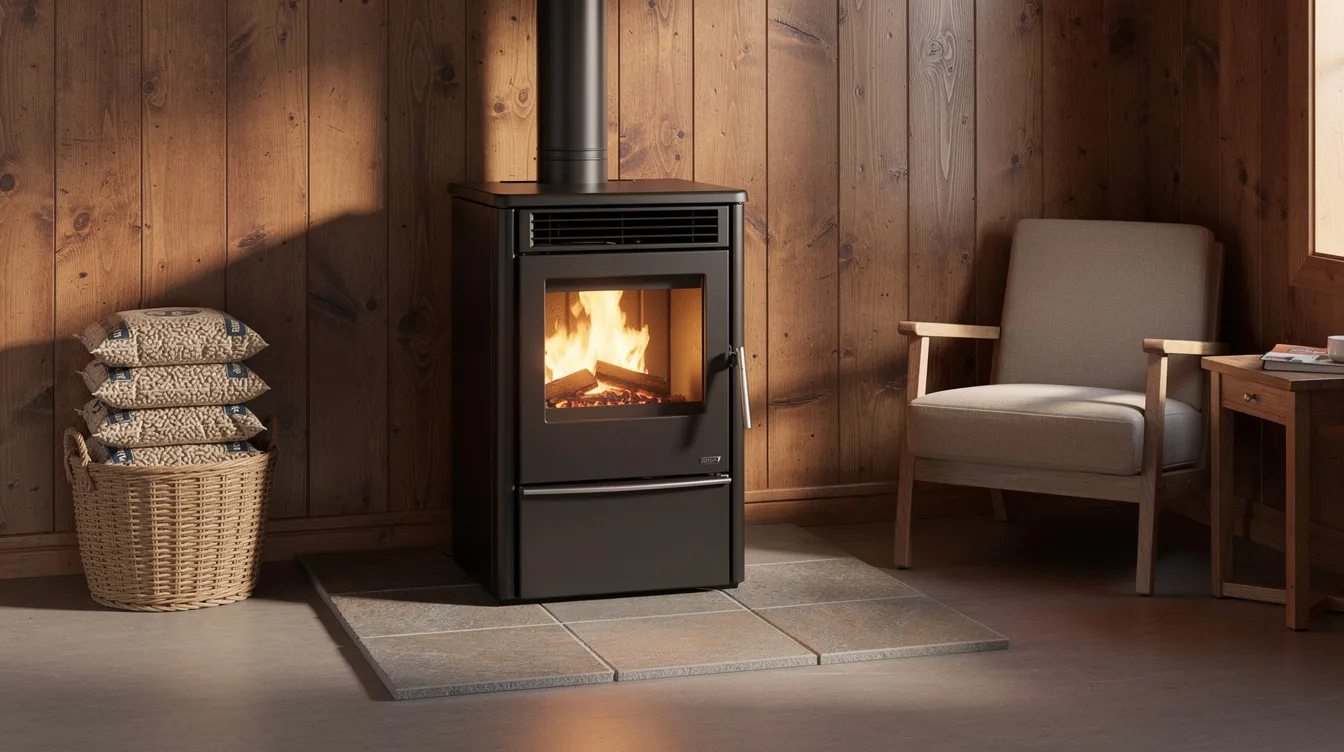
Pellet stoves burn compressed wood pellets at 75–85% efficiency, making them excellent for cold climates with limited grid access, especially in well-designed tiny homes that redefine small space living.
Installation requirements:
- 28×36-inch non-combustible hearth pad
- 6–12 inch side and rear clearances
- 3–4 inch direct vent through wall or roof
- Outside combustion air kit for sealed tiny homes
Why tiny homeowners like pellets:
- A 40lb bag ($10–15) burns for 20–40 hours
- Thermostat-controlled auger feeds pellets automatically
- Stores more compactly than cordwood
- Runs on small inverter power (1.5–3A for auger and fans)
Wood-burning stoves are a traditional heating method for tiny homes, providing reliable heat and serving as a backup during power outages, especially in colder climates. Traditional wood stoves offer 70–80% efficiency with soapstone models but require loading every 4 hours and more storage space downstairs for firewood.
Maintenance:
- Empty ash bin daily
- Clean glass weekly
- Annual chimney/vent inspection
Positioning tips: Position mid-wall with a ceiling fan in reverse mode to push natural heat into loft spaces, reducing the 10–15°F temperature difference between floor and ceiling.
Propane and Gas Heating Options
Propane packs serious BTUs into small appliances—perfect when you have less space for equipment or are designing custom tiny homes for personalized small-space living.
Types of propane heaters:
- Direct-vent units (recommended): Draw combustion air from outside, exhaust outdoors via coaxial pipe
- Vent-free units (avoid): Produce 50–100ppm CO and excess moisture—dangerous in tight spaces
Propane options include wall mounted direct-vent heaters (6,000–30,000 BTU) and small gas fireplaces. Some foundation-built tiny homes use gas furnaces in adjacent utility sheds.
Safety essentials:
- Carbon monoxide detectors (required by NFPA 307 for tiny structures)
- Propane leak sensors
- Regular line inspections
- Manufacturer-specified clearances
Fuel logistics:
- 20lb tank (4.7 gallons, 430,000 BTU total) costs about $20 to fill
- Lasts 20–40 hours at half load
- Store cylinders safely outside
- Protect exterior lines with heat tape in cold air
Propane makes an excellent backup heat source during grid outages—it ignites instantly when the power goes out.
Radiant Floor Heat and Other Supplemental Options
Radiant floor heat turns your floor into a low-temperature heat emitter using electric mats or hydronic tubes under the finished floor, and it’s worth planning into tiny house plans that fit your life if you’re building new.
Best as supplemental heat:
- Pairs well with mini splits or stoves
- Not powerful enough alone for very cold climates
- Slow warmup (30–60 minutes)
Installation notes:
- Best installed during construction before flooring
- Tile and engineered wood conduct heat better than thick carpet
- 100 sq ft electric mat draws about 1,500W
Other simple helpers:
- Ceiling fans: Reverse mode pushes warm air down from lofts
- Heated mattress pads: 500W keeps you warm overnight for pennies
- Thermal curtains: R-5 rated blinds cut window heat loss by 30%
These adaptable heating helpers improve temperature regulation but don’t replace a properly sized primary heating system.
Boosting Energy Efficiency and Temperature Regulation in Tiny Homes
The small size of a tiny home means that there is often inadequate insulation, which can lead to inefficient heating and cooling systems that cause excessive energy consumption and high energy bills, even in the most stylish modern tiny house designs for contemporary living.
Improving the insulation of a tiny home can significantly enhance energy efficiency by reducing the loss of conditioned air, which in turn lowers energy consumption and costs. Real-world data shows 20–40% energy savings from envelope improvements alone, which matters whether you live in a northern climate or are exploring little houses in Texas and other warm regions.
Practical upgrades: Thoughtful envelope upgrades complement cute tiny house designs for your dream home, keeping charming spaces just as comfortable as they are attractive.
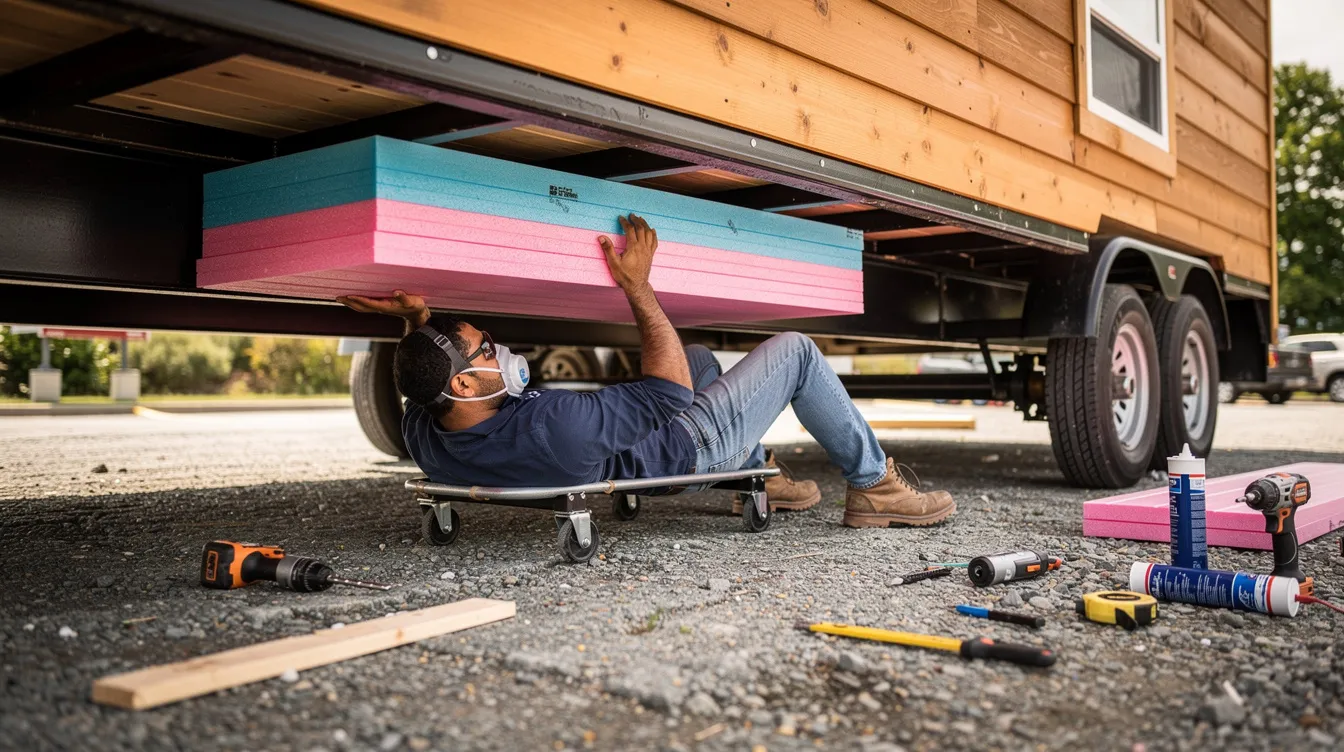
- Add rigid foam under trailer or skirt the base (R-10 gains 15% efficiency)
- Use dense-pack cellulose in walls (target R-25+)
- Install low-E dual-pane windows (U-0.25 vs. 0.9 for single-pane)
Air-sealing priorities:
- Wheel-well areas
- Door thresholds
- Loft floor penetrations
- Utility inlets
Temperature regulation in tiny homes can be problematic, as portable heating and cooling methods often create hot or cold spots, making it hard to maintain a consistent temperature throughout the interior space.
Window strategies:
- Thermal curtains for nighttime
- Cellular blinds (R-4.7)
- Removable interior storm panels for RV-style windows
Smart controls: Use programmable thermostats with mini splits to maintain steady temperatures rather than big swings—this makes a big difference in both comfort and energy bills.
Improving insulation in a tiny home can significantly enhance indoor temperature regulation and reduce the workload on heating and cooling systems, leading to lower energy costs.
Planning Safe, Redundant Heat for Winter
A winter-ready tiny home in a cold climate needs at least two independent heating sources. There’s no such thing as being over-prepared when temperatures hit -20°F.
Good combinations:
- Ductless mini + electric space heater (grid-tied)
- Pellet stove + small propane backup (off-grid)
- Mini split + wood stove (very cold climates)
Create a simple “heat plan”:
- Normal operation: Which system runs daily?
- Power outage: What’s your backup?
- Extended cold snap: How much fuel do you need for 3+ days?
Pre-season safety checks:
- Test smoke and carbon monoxide alarms
- Clean filters and fans
- Inspect vents and flues
- Check vent terminations for blockages
For very cold climates, schedule a pre-season inspection from a qualified HVAC professional familiar with critical systems in small dwellings.
Choosing efficient heating now also simplifies summer—many systems handle both, making your living space comfortable year-round. An affordable option today becomes cost effective across seasons.
FAQ: Tiny House Heating in Winter
How many BTUs do I need to heat a tiny home in a cold climate?
Use 20–35 BTU per square foot depending on insulation and climate:
- 200 sq ft well-insulated: 4,000–7,000 BTU
- 200 sq ft poor insulation: 6,000–10,000 BTU
- 300 sq ft well-insulated: 6,000–10,500 BTU
Very well-insulated tiny homes use the low end. Older builds in very cold regions should size toward the high end. Confirm final sizing with a contractor using Manual J calculations, especially for ductless mini systems.
Can I heat my tiny home with solar power alone?
Technically possible, but usually impractical. Full electric heat in cloudy winters requires a very large system—typically 3kW panels plus 20kWh batteries ($10,000+). A more realistic approach: use solar primarily for lights and appliances while relying on propane, pellets, or high-efficiency mini splits for heating. Budget for backup fuel during extended storms.
Is a wood or pellet stove safe in such a small space?
Yes, when correctly sized and installed per manufacturer instructions and local codes. Requirements include:
- Required clearances (6–36 inches depending on model)
- Proper floor protection
- Outside combustion air kits for proper ventilation
- Regular chimney cleaning (annually for pellets, more often for wood)
Always install and test smoke alarms and carbon monoxide detectors.
Do I really need a second heat source in my tiny home?
In cold climates, absolutely. Power outages affect 10% of northern winters. A simple solution: keep a small electric heater for grid-tied homes or a direct-vent propane heater for off-grid locations. Redundancy also provides daily flexibility—a quiet, efficient main system plus a robust backup for emergencies.
How do I prevent condensation and moisture problems when heating my tiny home?
Warm indoor air hitting cold surfaces creates condensation on windows and metal framing. Solutions include:
- Running a small HRV/ERV or exhaust fan
- Cracking windows slightly when cooking or showering
- Using a dehumidifier if needed
- Choosing vented combustion appliances over unvented options
Good ventilation and steady heat protect your structure from mold and moisture damage over multiple winters.