Tennessee has quietly become one of the most attractive destinations for tiny home living in America. The state combines stunning Appalachian Mountain views, some of the lowest property taxes in the country (averaging just 0.66%), and increasingly flexible building codes that welcome smaller dwellings. Post-pandemic migration trends have fueled a surge in tiny home communities, and counties across the state are adapting their regulations to meet demand.
If you’re considering a new tiny home in Tennessee, here’s what you need to know right now:
- Legality: Tiny homes are broadly legal under the 2018 International Residential Code (IRC) with Appendix Q, which Tennessee adopted statewide for homes under 400 sq ft
- Cost range: Expect to spend $30,000 for basic DIY shells up to $150,000+ for luxury finished models, with most mid-range builds landing at $70,000–$120,000
- Common placement options: Rural acreage, dedicated tiny home communities near lakes and mountains, accessory dwelling units (ADUs) in cities like Nashville and Knoxville, and RV parks for wheeled models
Here’s the catch: laws vary dramatically across Tennessee’s 95 counties and incorporated cities. Some counties have fully embraced Appendix Q, while others enforce minimum square footage rules that effectively ban true tiny houses. You must verify current rules with your local planning and zoning office before committing to any purchase or build.
This article covers everything you need to begin your tiny home journey in Tennessee—regulations, top builders, realistic pricing, the best counties and communities, and practical next steps to turn your dream into reality.
- What Counts as a Tiny Home in Tennessee?
- Are Tiny Homes Legal in Tennessee?
- County-by-County Overview: Where Tennessee Tiny Homes Work Best
- Can You Put a Tiny Home on Your Tennessee Property?
- Best Tennessee Tiny Home Builders & Styles
- Luxury Tennessee Tiny Homes: Black Metal, Mountain Cabins & More
- Tennessee Tiny Home Regulations: Key Rules You Must Know
- Tiny Home Communities in Tennessee
- Costs: How Much Do Tennessee Tiny Homes Really Cost?
- Planning Your Tennessee Tiny Home: Step-by-Step
- Conclusion: Is a Tennessee Tiny Home Your Next Move?
What Counts as a Tiny Home in Tennessee?
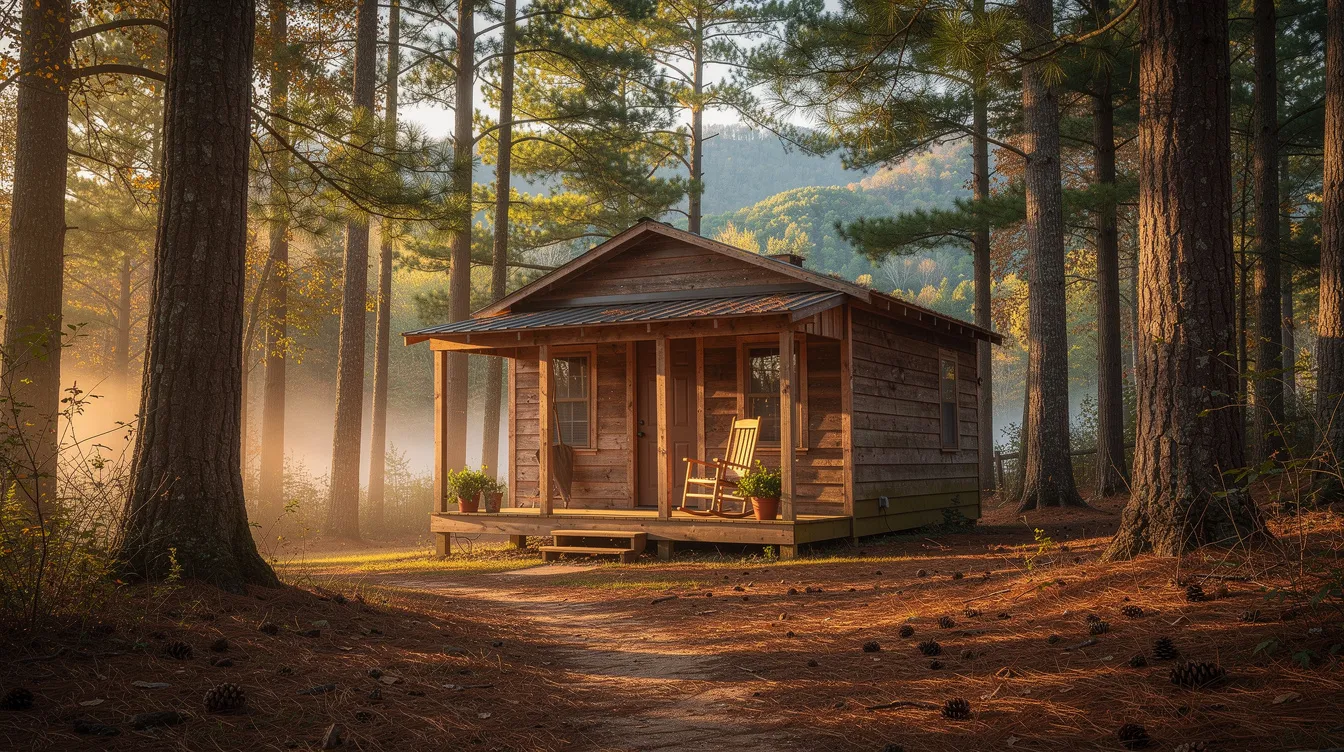
Tennessee recognizes several categories of small dwellings, including park model tiny house homes, and understanding the distinctions matters for legal placement and financing.
Common Tennessee tiny home categories:
- Site-built tiny houses on foundations: IRC-compliant structures under 400 sq ft, built to Appendix Q standards with reduced ceiling heights and loft allowances. These qualify as permanent residences when properly permitted.
- Tiny homes on wheels (THOWs): Mobile structures typically 120–400 sq ft built to RVIA standards. Tennessee generally treats these as recreational vehicles, restricting placement to RV parks, mobile home parks, or designated tiny communities.
- Park model RVs: Built to ANSI A119.5 standards, capped at around 400 sq ft interior space. These include full amenities like washer-dryer hookups and ductless HVAC, inspected with RVIA seals. They classify as RVs rather than dwellings, which can help bypass some zoning restrictions.
- Small cabins and log homes: Rustic structures up to 700 sq ft that still feel tiny. Builders like Southland Log Homes have offered customizable plans since 1978, and these often qualify as ADUs.
Tennessee lacks a unified statewide tiny house statute. Instead, the state relies on building codes (IRC plus Appendix Q) for construction standards and local zoning ordinances for placement rules. The key legal distinction: wheels enable mobility but limit permanence, while foundations allow full residency if the property is zoned residential.
Are Tiny Homes Legal in Tennessee?
Yes, tiny homes are broadly legal in Tennessee—but subject to IRC/Appendix Q construction rules, local zoning districts, and permit requirements.
Baseline Appendix Q rules for homes under 400 sq ft:
Requirement | Minimum Standard |
|---|---|
Maximum footprint | 400 sq ft |
Primary habitable room | 120 sq ft |
Other habitable rooms | 70 sq ft each |
Ceiling height | 6 ft 8 in (some counties require 7 ft) |
Loft floor area | 35 sq ft minimum |
Loft headroom | 30 inches minimum |
Egress windows (sleeping areas) | 5.7 sq ft |
Smoke detectors and safe stair or ladder access are required in all tiny homes with lofts. |
Tiny homes on wheels face different rules. Tennessee typically treats THOWs as RVs under ANSI 119.2 standards. Full-time residency in a THOW is feasible in zoning districts that permit RVs, but cities like Nashville restrict them outside designated areas. Some counties allow conversion to permanent residence via foundation installation and proper permitting.
Adoption varies significantly by county:
- Progressive: Knox, Wilson, and Putnam counties have explicitly adopted Appendix Q and issue permits for qualifying tiny homes
- Restrictive: Gibson County enforces a 960 sq ft minimum; Obion requires at least 401 sq ft; Crockett County halted new tiny home permits in late 2023
Nearly all placements require building or placement permits, plus separate electrical, septic, and sometimes floodplain approvals. If you plan to handle construction yourself, follow a detailed guide on how to build a tiny house and contact your county building department or the state fire marshal’s office to confirm requirements.
County-by-County Overview: Where Tennessee Tiny Homes Work Best
Tennessee’s 95 counties handle tiny homes differently. Rural eastern and middle Tennessee counties are generally more permissive due to agricultural zoning, while western and urban-adjacent areas tend toward stricter rules.
Tiny home-friendly counties:
- Knox County (Knoxville area): Fully adopted Appendix Q. Permits required for foundation tiny homes with inspections for lofts, stairs, and egress. Allows placement on residential lots over 1 acre.
- Putnam County (Cookeville): Follows Appendix Q but mandates stricter 7-foot ceilings and detailed loft plans.
- Loudon County (near Knoxville): Embraces Appendix Q with utility connection mandates including grid-tied power and approved septic systems.
- Wilson County (near Nashville): Permits tiny homes as primary dwellings or ADUs on larger parcels.
Flexible or no-code counties:
Hancock, Overton, and Perry counties lack enforced building departments. This offers freedom for owner-builds, provided you meet state fire and health codes for septic and electrical. The trade-off: without inspections, you may face insurance challenges.
Restrictive counties to verify before planning:
- Crockett County: Permit moratorium enacted late 2023
- Gibson County: 960 sq ft minimum dwelling size
- Obion County: 401 sq ft minimum threshold
Incorporated cities add another layer. Nashville (Davidson County) allows tiny homes mainly as ADUs up to 700 sq ft on lots with primary residences, subject to 5–10 foot setbacks and parking requirements. Knoxville permits them in rural zones but not downtown. Chattanooga favors park models in designated areas.
Rules evolve constantly—contact county planning offices directly for current regulations before making any commitment.
Can You Put a Tiny Home on Your Tennessee Property?
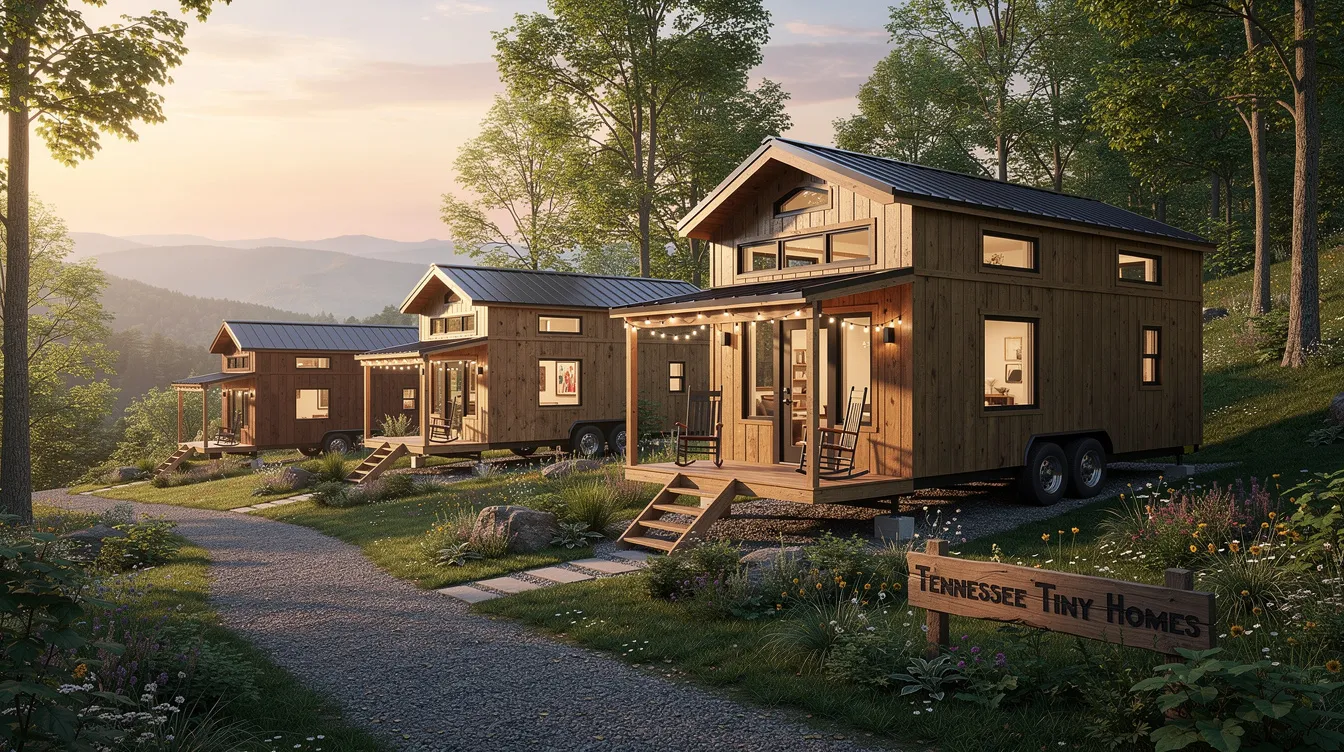
Often yes, but it depends on zoning classification, utility availability, and whether your home is on wheels or a foundation.
Primary scenarios for placement:
Scenario | Typical Requirements |
|---|---|
Stand-alone on rural acreage | 1–5+ acres, Appendix Q compliance, foundation required, septic/well permits |
ADU in cities | Primary residence required, often capped at 700 sq ft or 50% of main house, setbacks 5–15 ft, dedicated parking |
Pad lease or deeded lot, community HOA rules, shared utilities | |
RV park (for THOWs) | RVIA certification, RV zoning district |
Important limitations: |
Converted sheds or outbuildings are illegal as residences under state fire marshal guidelines. The construction standards for storage buildings don’t meet habitation requirements for fire safety, egress, and insulation. Despite online popularity, avoid this route.
Pre-placement checklist:
- Verify your zoning district via county GIS maps
- Confirm minimum dwelling size requirements
- Check foundation vs. wheels rules for your zone
- Assess utility feasibility (septic permits via TDEC, well drilling, or sewer hookups)
- Review HOA covenants if you’re in a subdivision
- Check floodplain designations—riverine areas may require elevated foundations
Best Tennessee Tiny Home Builders & Styles
Tennessee hosts a robust ecosystem of tiny home builders, from affordable custom THOWs to luxury park model homes and rustic log cabins. Finding the right builder means matching certifications and construction styles to your placement plans.
Incredible Tiny Homes stands out as a premier tiny home builder. Founded in 2014 by Randy Jones in Newport, TN, they specialize in energy-efficient custom builds using space-saving designs and off-grid options. Their team has developed communities like Tennessee’s Mountain Shire and maintains a strong YouTube presence that helps customers understand the build process. You can reach them at 850 Industrial Road, Newport, TN (phone: 423-438-0111).
Other notable Tennessee builders:
- Wind River Built (Apison/Chattanooga): Luxury park models and modular ADUs from founder Travis Pyke, emphasizing craftsmanship from his personal tiny living experience
- Southland Log Homes (Gatlinburg): Award-winning since 1978, offering 370+ customizable log cabin plans using precision-milled materials
- Hilltop Structures: Amish-built park models around 400 sq ft, RVIA-certified with ANSI A119.5 compliance and full amenities
- Providence Building Group (White House): Veteran-operated, NOAH-certified modulars and container homes built in a 36,000 sq ft factory
- The Retreat by Oakstone: Communities with pet-friendly layouts designed for both living and investment
What to look for in any builder:
- Relevant certifications (IRC for foundation builds, RVIA for park models, NOAH for THOWs)
- Experience navigating county inspections in your target area
- Portfolio matching your desired style (modern metal-clad, cabin, farmhouse)
- Transparent written quotes separating build cost, delivery, setup, and add-ons
- Clear build timelines (typically 2–6 months)
- References from past customers you can contact
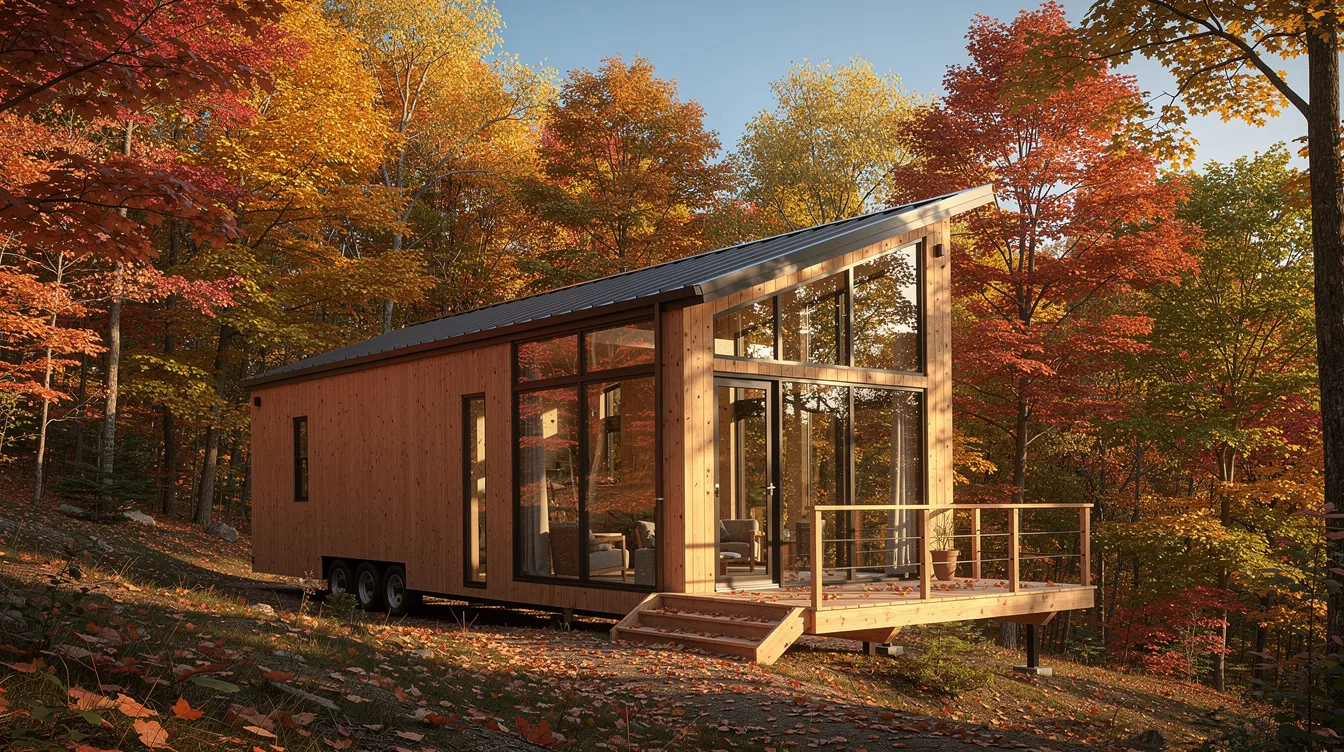
How to Choose the Right Tennessee Tiny Home Builder
Selecting the right builder requires looking beyond glossy photos. Here’s what separates excellent customer service from frustrating experiences:
Critical attributes to evaluate:
- Passion and experience: Builders who live tiny or have years dedicated to this niche understand the unique challenges of compact design
- Climate-appropriate construction: Tennessee’s humidity demands proper moisture management—look for metal roofs, adequate ventilation, and R-30+ insulation
- Transparent pricing: Request itemized quotes that clearly separate the base home, appliances, porches, skirting, delivery, and setup
- Communication quality: The best experience comes from builders who respond promptly and keep you informed throughout construction
- Verifiable code compliance: Ask how they handle inspections in your specific county
Case study contrast:
A 280 sq ft mountain retreat in Sevier County required careful navigation of steep-slope building codes and enhanced wind resistance. The builder coordinated directly with county inspectors on loft egress and stair specifications.
Meanwhile, a 380 sq ft ADU in Knoxville faced different challenges—setback requirements, utility connection mandates, and homeowner association review. The builder’s familiarity with Knox County’s Appendix Q implementation streamlined the permit process.
The foundation vs. wheels distinction matters significantly. THOW builders specialize in mobility and RVIA certification, while site-built IRC home builders focus on permanence and residential zoning compliance. Understand which type suits your location before selecting a company.
Luxury Tennessee Tiny Homes: Black Metal, Mountain Cabins & More
The luxury tiny home segment in Tennessee is thriving, particularly near the Smoky Mountains, Nashville, and lake areas. These elegant tiny homes that redefine modern living blur the line between compact living and high-end design.
The “Black Ace” style exemplifies this trend:
- Bold black standing-seam metal exterior
- Warm tongue-and-groove pine interior
- 14×40 footprint (approximately 560 sq ft)
- Floor-to-ceiling windows overlooking the Cumberland Plateau
- Quartz counters, tile showers, premium appliances
- Built-in furniture maximizing every inch
- Superior insulation (R-30 or better) for year-round comfort
- Price point under $150,000 in prototype form
What sets luxury tiny homes apart:
Feature | Basic Model | Luxury Model |
|---|---|---|
Countertops | Laminate | Quartz or granite |
Flooring | Vinyl | Hardwood or tile |
Insulation | R-13 | R-30+ |
Appliances | Standard | Premium stainless |
Windows | Double-pane | Floor-to-ceiling |
Off-grid capability | None | Solar-ready |
Investment appeal: Luxury tiny homes near Gatlinburg and Pigeon Forge can command $200–$500 nightly rates at 60–80% occupancy, potentially covering $800–$1,200 monthly mortgage payments. Some Tennessee sellers bundle homes with full setup on leased pads or deeded lots, marketing directly to investors seeking vacation property income through Airbnb or VRBO. |
The attractive combination of stunning mountain location, lower purchase price than traditional cabins, and strong rental demand makes these properties compelling for both adventure seekers and investors, especially when you run the numbers with a dedicated tiny home cost calculator.
Financing & Investing in Tennessee Tiny Homes
Financing options for tiny homes differ from traditional mortgages, but several pathways exist:
Common financing routes:
- RV loans (for THOWs and park models): 7–12% interest rates, terms up to 15–20 years
- Personal loans: Faster approval, higher rates, shorter terms
- Construction mortgages: For foundation-built units, may require land ownership
- Land-home packages: Specialty lenders partner with builders like Incredible Tiny Homes to bundle property and construction
Some Tennessee tiny home companies work directly with banks and specialty lenders to offer financing programs for both homeowners and investors.
Investment return example:
A luxury 14×40 tiny home in Sevier County purchased at $140,000:
- Estimated nightly rate: $250
- Target occupancy: 70% (255 nights annually)
- Gross rental income: ~$63,750/year
- Monthly mortgage (15-year, 8%): ~$1,340
- Potential annual ROI: 10–15% after expenses
Risks include seasonal occupancy dips, evolving short-term rental regulations (Davidson County requires 90-day minimums for non-owner-occupied properties), and maintenance demands in humid Tennessee climates.
Tennessee Tiny Home Regulations: Key Rules You Must Know
Understanding Tennessee’s regulatory framework helps you comply with codes and avoid costly mistakes.
Statewide framework:
Tennessee adopted the 2018 International Residential Code, with Appendix Q providing the baseline for tiny homes under 400 sq ft. This establishes minimum standards that counties can adopt, modify, or exceed.
Technical requirements to remember: Tiny homes with lofts must also consider safe, code-compliant access, making the choice of the best ladder for a tiny house loft an important design decision.
- One habitable room must be at least 120 sq ft
- Additional habitable rooms: minimum 70 sq ft each
- Ceiling heights: 6 ft 8 in minimum (7 ft in some counties)
- Emergency egress windows in all sleeping areas: minimum 5.7 sq ft
- Smoke and CO detectors required throughout
- Loft access via stairs (30+ inches wide) or code-compliant ladder
- Heating and plumbing must meet standard residential codes
Park model vs. tiny home distinctions:
Park models built to ANSI A119.5/RVIA standards are legally treated as RVs, not dwellings. This can be advantageous—they bypass some building codes—but limits where you can place them for full-time living. Generally, park models require RV or mobile home zoning, while IRC tiny homes can sit on residentially-zoned lots.
What’s explicitly prohibited:
Converted storage sheds cannot legally become residences in Tennessee. The state fire marshal’s guidelines classify them as non-habitable structures lacking proper structural integrity, egress, and fire safety features. Despite videos showing beautiful shed conversions, this route creates legal and insurance problems.
Permits & Inspections for Tennessee Tiny Homes
Almost every tiny home placement in Tennessee requires permits. Here’s the process:
Typical permit requirements:
Permit Type | Issuing Authority | Approximate Cost |
|---|---|---|
Building/placement | County or city building department | $500–$2,000 |
Electrical | Licensed inspector or county | $150–$500 |
Septic | TDEC or county health department | $5,000–$15,000 (system + permit) |
Well | County or state | $8,000–$20,000 (drilling + permit) |
Driveway/access | County roads department | Varies |
Floodplain | County planning | Varies |
Step-by-step permit checklist: |
- Contact local planning/zoning to confirm tiny home legality in your zone
- Submit building permit application with construction plans
- Schedule foundation inspection (if applicable)
- Obtain electrical permit and schedule rough-in inspection
- Apply for septic permit through TDEC or county health department
- Complete final inspections for occupancy approval
Ask your builder how they handle the permit process. Some coordinate inspections directly; others leave everything to the owner. Understanding this detail before you purchase saves headaches later.
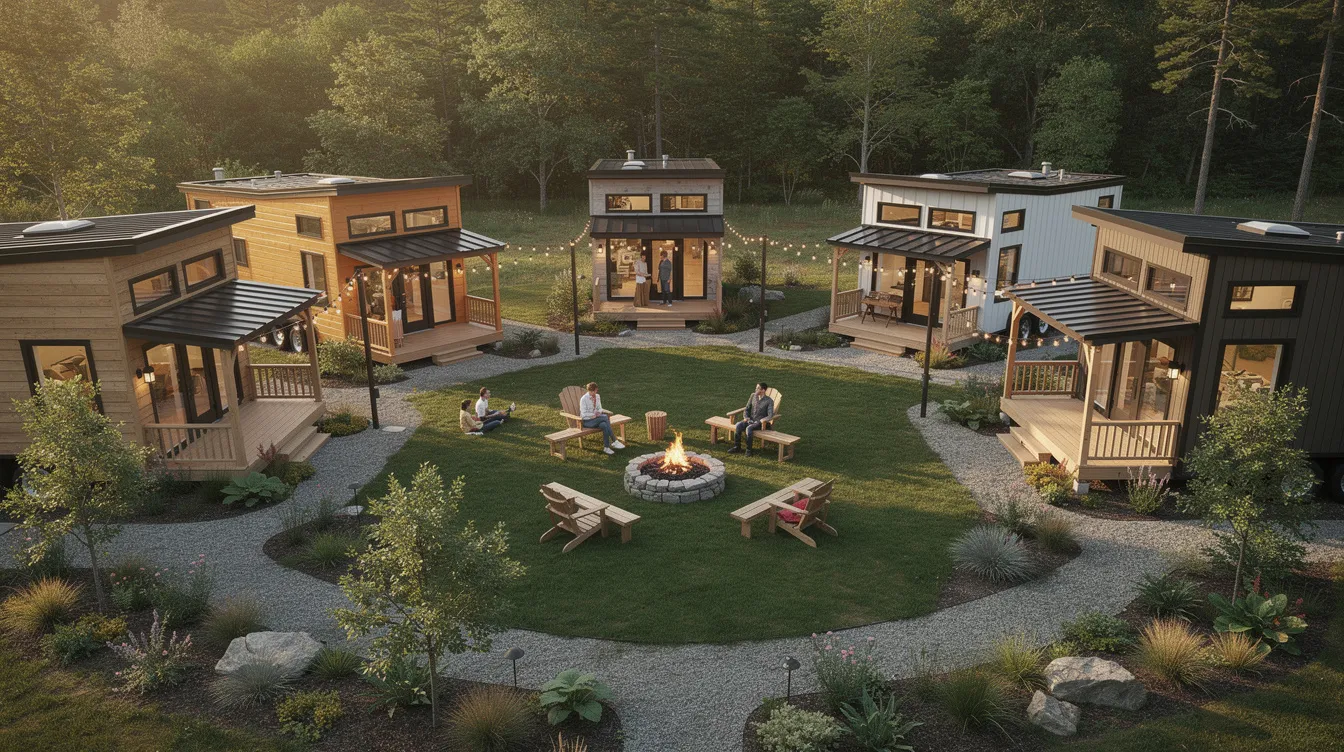
Tiny Home Communities in Tennessee
Tennessee’s tiny home communities continue to grow, clustered around lakes, rivers, and mountain resort areas. These communities showcase great tiny homes that redefine small-space living and offer turnkey solutions for those who want tiny home living without navigating land purchase and utility installation independently.
Notable Tennessee communities to explore:
- Piney River Resort: Mountain setting with hiking trails and river access
- The Retreat at Deer Lick Falls: Waterfall views, pet-friendly, investor-friendly for STRs
- The Retreat at Water’s Edge: Lake-focused community with water recreation
- Tiny Homes Village at Rock Island: Near Rock Island State Park
- Lakeland Ridge RV & Tiny Home Community: Combines RV and tiny home sites
Common community amenities:
- Hiking and biking trails
- River, lake, or pool access
- Pavilions and community fire pits
- Dog parks
- Shared laundry facilities
- Fiber internet (increasingly standard)
- On-site management
Community models vary:
Model | What You Own | Monthly Costs |
|---|---|---|
Nightly/weekly rental | Nothing | Nightly rate |
Long-term pad lease | Your home only | $300–$800/month |
Deeded lot | Land and home | HOA fees only |
Before committing to any community, visit in person. Walk the grounds, talk to current residents, and carefully review HOA rules, rental restrictions, and utility arrangements. Some communities welcome short-term rentals; others prohibit them entirely. |
Costs: How Much Do Tennessee Tiny Homes Really Cost?
Realistic 2024–2026 pricing breaks down as follows:
Base home costs: Many buyers opt for top custom tiny homes for personalized small-space living to match their exact layout and finish preferences.
Category | Price Range |
|---|---|
DIY shell (owner finish) | $30,000–$60,000 |
Mid-range finished | $70,000–$120,000 |
Luxury 14×40 models | $120,000–$180,000+ |
Additional costs beyond base price: |
- Land: $20,000–$100,000+ per acre (location dependent)
- Site preparation: $5,000–$20,000
- Permits: $1,000–$5,000
- Septic system: $5,000–$15,000
- Well drilling: $8,000–$20,000
- Transportation: $2–$5 per mile
- Setup and utility connection: $5,000–$15,000
Total all-in cost: $100,000–$250,000 for a turnkey tiny home on your own land
Main price factors: Working with top micro house builders focused on affordability and modern living can also influence your final budget.
- Square footage (120–400 sq ft)
- Type (THOW vs. park model vs. site-built)
- Finish level (standard vs. luxury)
- Off-grid features (solar adds $10,000+)
- Custom design vs. stock model
- Site access difficulty
Always request itemized quotes from builders that separate construction, appliances, porches, skirting, delivery, and setup costs. This transparency helps you compare builders accurately and budget realistically.
Planning Your Tennessee Tiny Home: Step-by-Step
Turning your tiny home dream into reality requires a clear process. Here’s the sequence most successful buyers follow:
Planning sequence:
- Define your goal: Primary residence, vacation home, or rental investment?
- Choose location: Which county? Rural land or community? You might also compare options in neighboring states, such as exploring the best little houses in Texas if your plans are flexible.
- Verify regulations: Contact county planning/zoning for current rules
- Decide foundation vs. wheels: This affects where you can legally place your home
- Select your builder: Match certifications and style to your plans
- Arrange financing: Explore RV loans, personal loans, or construction mortgages
- Handle permits: Work with your builder or manage independently
- Schedule delivery and setup: Coordinate utility connections and inspections
Realistic timeline:
Phase | Duration |
|---|---|
Research and design | 2–4 months |
Permits | 2–4 weeks |
Construction | 2–6 months |
Delivery and setup | 2–4 weeks |
Total | 6–12 months |
Practical tips: |
- Join the “Tennessee Tiny Homes” Facebook group for real-world experiences and local insights
- Keep written records of all conversations with county officials, including emails and permit documents
- Watch video tours from builders to understand layout options and cute tiny house designs for your dream home before visiting in person
- Learn about the specific form requirements your county uses for permit applications
Conclusion: Is a Tennessee Tiny Home Your Next Move?
Tennessee offers a compelling combination for tiny home enthusiasts: breathtaking mountain and lake settings, comparatively friendly regulations in many counties, a growing base of experienced builders, and strong potential as both affordable housing and investment property.
Remember these key points:
- Local rules vary dramatically—always verify with county planning before committing
- Permits and proper construction aren’t optional; they protect your investment and safety
- The distinction between foundation and wheels determines where you can legally live
Your next steps:
- Clarify your intended use (primary home, vacation retreat, or rental)
- Shortlist 2–3 Tennessee regions that match your lifestyle and budget
- Contact county planning offices to confirm current tiny home rules
- Schedule conversations with reputable tiny home builders
- Tour a tiny home community or visit a model unit in person
Whether you’re seeking an affordable path to homeownership, a mountain family retreat, or a rental investment near Gatlinburg, Tennessee tiny homes offer a realistic path forward. The world of tiny living awaits—and Tennessee might just be the perfect state to begin your adventure.