
Discover Tiny Homes for Sale in Wichita, KS
Wichita and Sedgwick County have quietly become one of the Midwest’s most welcoming areas for tiny home buyers. With a cost of living well below the national average, RV-friendly zoning, and a growing community of minimalist-minded residents, finding a tiny home for sale in Wichita KS is more attainable than ever. Sedgwick County has adopted IRC/IBC Appendix Q, which means tiny houses under 400 square feet can be permitted more easily than in many other Kansas cities.
In this guide, you’ll find:
- Realistic tiny home listings and price ranges in the Wichita area ($35,000–$80,000)
- Sedgwick County zoning rules and what they mean for buyers
- Local tiny home communities and parking options within 30–45 minutes of downtown
- A step-by-step process to buy and place your tiny home legally
- Cost breakdowns, style comparisons, and lifestyle considerations
- Why Wichita, KS Is Ideal for Tiny Home Living
- Tiny Homes for Sale in Wichita & Nearby (Realistic Examples)
- Wichita & Sedgwick County Tiny Home Regulations (What You Must Know)
- Best Tiny Home Communities & Parking Options Near Wichita, KS
- Costs of Buying & Living in a Wichita Tiny Home
- Choosing the Right Tiny Home Style in Wichita
- How to Buy a Tiny Home in Wichita, KS: Step-by-Step
- Is a Wichita Tiny Home Right for You?
- Next Steps: Start Your Tiny Home Journey in Wichita
Why Wichita, KS Is Ideal for Tiny Home Living
Wichita stands as the largest city in Kansas, with a metropolitan population exceeding 640,000 and a median home price that remains significantly lower than coastal cities. For buyers exploring affordable housing alternatives, tiny homes offer a realistic path to homeownership without decades of mortgage debt.
Affordability that makes sense
The traditional home median price in Wichita hovers around $220,000–$250,000 in 2024, while a quality tiny home typically costs $30,000–$70,000. This gap means first-time buyers, downsizers, and budget-conscious families can invest in a home they actually own, often within a year or two of saving. The fact that monthly living costs in a tiny home can run under $500—compared to $1,500 or more for a conventional Wichita home—makes the math even more compelling.
Employment and lifestyle fit
Wichita’s economy runs on aerospace, healthcare, and higher education. Major employers like Spirit AeroSystems, Textron Aviation, and Wesley Medical Center draw traveling nurses, contract workers, and young professionals who value flexibility over square footage. Students at Wichita State University and remote workers have also embraced tiny living as a way to reduce overhead and live closer to campus or downtown. A tiny home on wheels lets you reposition as life changes without losing your housing investment.
Outdoor and community amenities
Living small doesn’t mean living without recreation. The Arkansas River path offers miles of walking and biking through the heart of the city. The Sedgwick County Zoo, Botanica gardens, and weekend trips to Lake Afton for fishing or hiking are all within easy reach from a tiny home parked in the Wichita area. These amenities make the trade-off of less indoor space easier to accept when your backyard is effectively the entire region.
Tiny Homes for Sale in Wichita & Nearby (Realistic Examples)
Listings change weekly, so rather than pointing you to links that may expire, this section describes the types of tiny houses currently available near Wichita and the price ranges you can realistically expect. These profiles are based on actual market offerings and local builder inventory, similar to what you’ll see when exploring top custom tiny homes for your perfect small-space living.
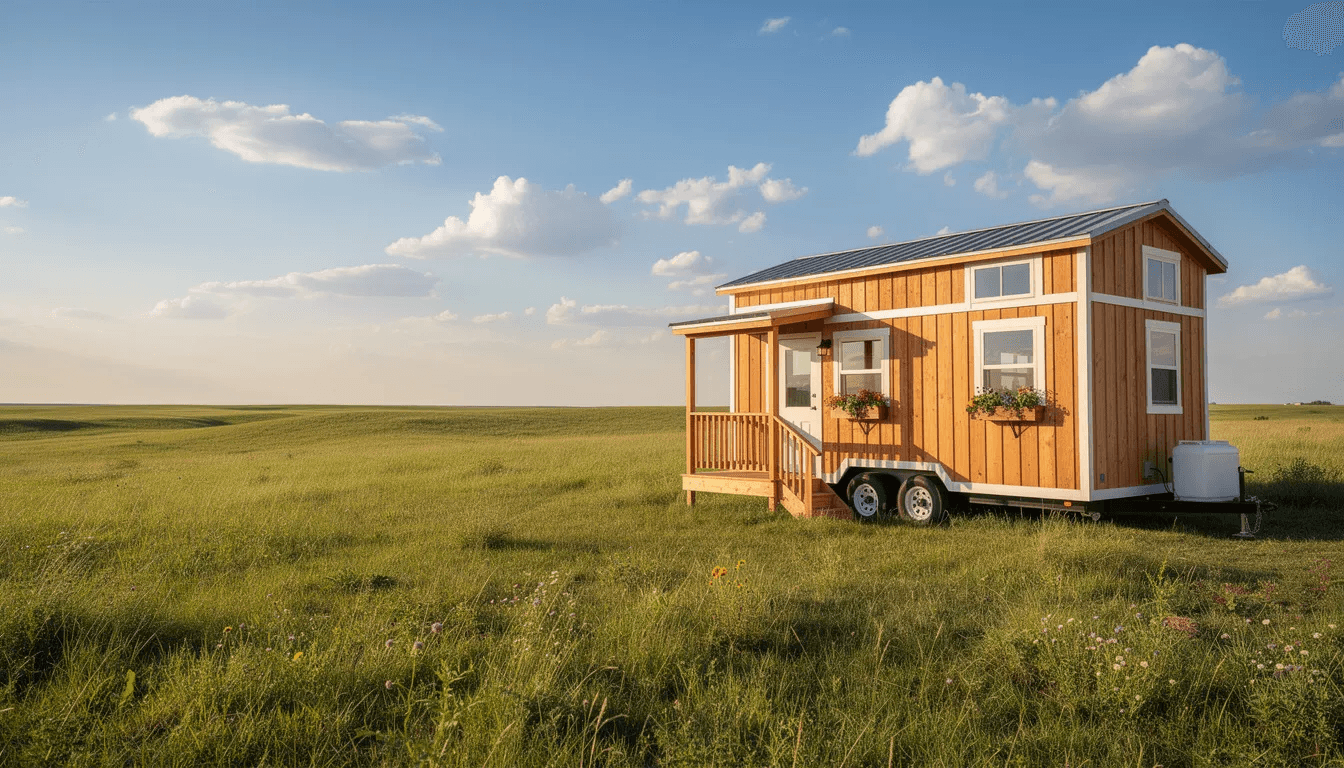
Example 1: Custom THOW, West Wichita Area
- 2023 build, approximately 240 sq ft on an 8.5’ x 24’ trailer
- One loft bedroom accessed via a lit staircase with built-in storage
- Full kitchen with propane range, under-counter refrigerator, and butcher-block counters
- Composting toilet and compact shower stall in bathroom
- Asking price around $52,000
- Currently parked on private land with option to relocate to a tiny home community
Example 2: Park-Model Style, Sedgwick County RV Community
- 2022 construction, roughly 400 sq ft with one main-floor bedroom plus loft
- Residential-style interior with full-size appliances, washer hookup, and walk-in shower
- Located in an RV/tiny house park approximately 25 minutes from downtown Wichita
- Priced around $68,000 with lot rent near $450/month including water and trash
- Suitable for full-time residency with skirting and deck already installed
Example 3: Shell-Only DIY Project, Wichita Metro — a good starting point if you’re considering how to build a tiny house yourself
- 18-foot trailer-based unit with exterior framing, roofing, and windows complete
- No interior finishes—ideal for buyers who want to customize everything inside
- Approximate asking price $25,000–$30,000
- Seller willing to deliver within 50 miles of Wichita for nominal fee
- Great entry point for handy buyers looking to build sweat equity
Features that appeal to Wichita buyers
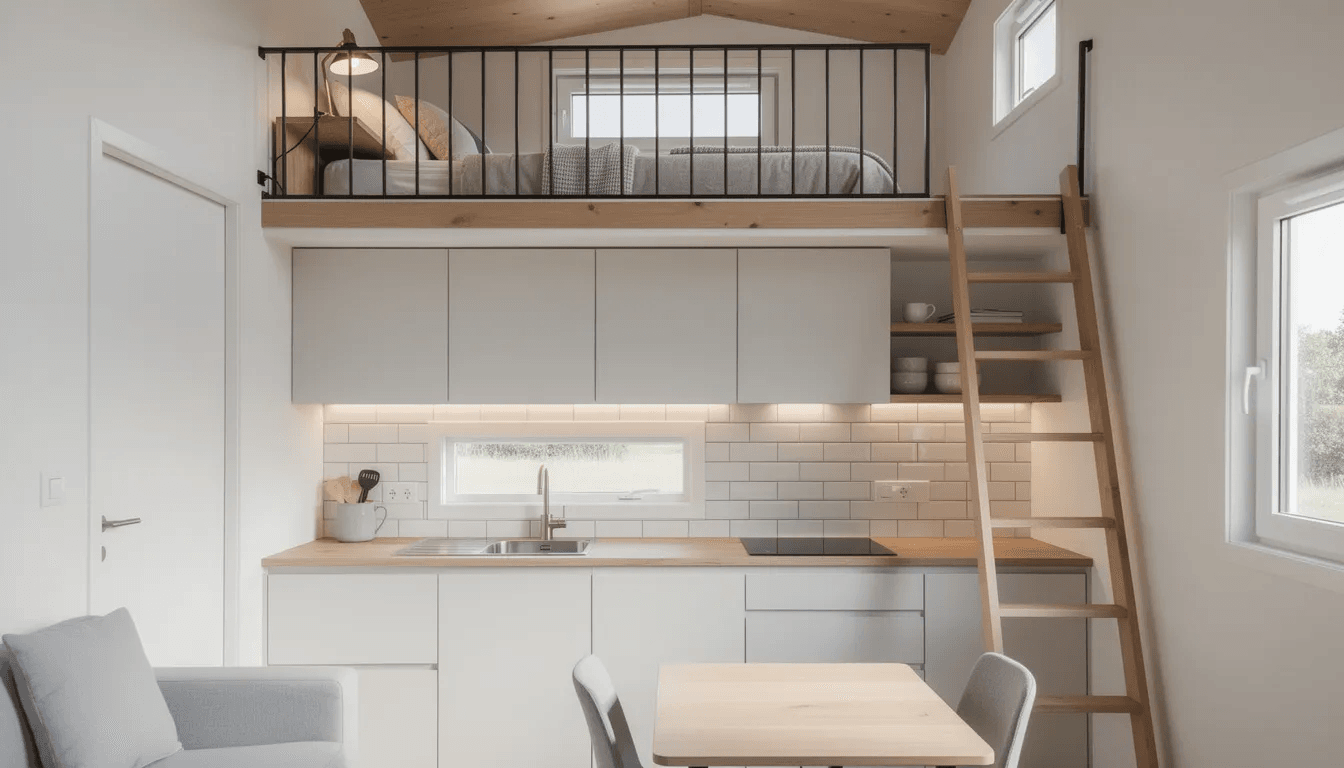
Many of these design elements mirror those found in great tiny homes that redefine small space living.
Local listings frequently highlight energy-efficient mini-split HVAC systems (critical for Kansas summers and winters), on-demand tankless water heaters, full-size showers with residential fixtures, and pet-friendly floor plans with durable vinyl or laminate flooring. Buyers also look for thoughtful storage solutions like floating shelves, under-stair drawers, and ceiling-height cabinets to maximize every inch of space.
Where to find listings
- Local tiny home builders (search for Wichita-area custom builders and park-model dealers)
- Facebook Marketplace and local buy/sell groups focused on RVs and tiny homes
- Specialized tiny house listing platforms with Kansas filters
- RV dealerships that carry RVIA-certified park models
Wichita & Sedgwick County Tiny Home Regulations (What You Must Know)
Wichita sits within Sedgwick County, which has officially adopted IRC/IBC Appendix Q. This code addition specifically addresses tiny houses under 400 square feet, making it easier to permit and place a legal tiny home here than in many other parts of the state.
Appendix Q requirements relevant to Wichita buyers
- Maximum floor area: 400 sq ft to qualify as a “tiny house” under Appendix Q standards
- Minimum ceiling heights: Approximately 6’8” in main living areas; lofts may have reduced ceiling height (often around 5’ at the lowest point)
- Loft access and egress: Must include a ladder, stairs, or alternating-tread stairway meeting specific safety specifications; at least one emergency escape opening required in sleeping lofts
Foundation-based tiny homes in Wichita city limits
- A tiny home used as a primary residence within Wichita typically must sit on a permanent foundation
- The structure must meet standard residential building codes, including electrical, plumbing, and structural requirements
- Utilities must connect to approved municipal water, sewer, or septic systems
- Setbacks, parking requirements, and minimum lot sizes still apply and vary by zoning district—confirm with the Wichita planning office before purchasing land
Tiny homes on wheels (THOWs) in Sedgwick County
- Most THOWs are classified as RVs or park models under Kansas law
- Full-time residency in a THOW is generally permitted only in RV parks, campgrounds, or designated tiny home villages—not in typical residential neighborhoods
- THOWs must meet DOT road-worthiness standards: under 13.5 ft tall, 8.5 ft wide, and properly registered for towing
- Require RVIA certification for many parks and financing options
Before you buy, contact the professionals
Reach out to Wichita or Sedgwick County planning and zoning before placing a deposit on land or a tiny home. Specifically ask:
- Will this tiny home be considered an accessory dwelling unit (ADU) or primary dwelling?
- Are there neighborhood covenants or HOA rules that restrict tiny homes in this location?
- What permits are required for placement, foundation work, and utility connections?
This simple step can save thousands of dollars and months of frustration.
Best Tiny Home Communities & Parking Options Near Wichita, KS
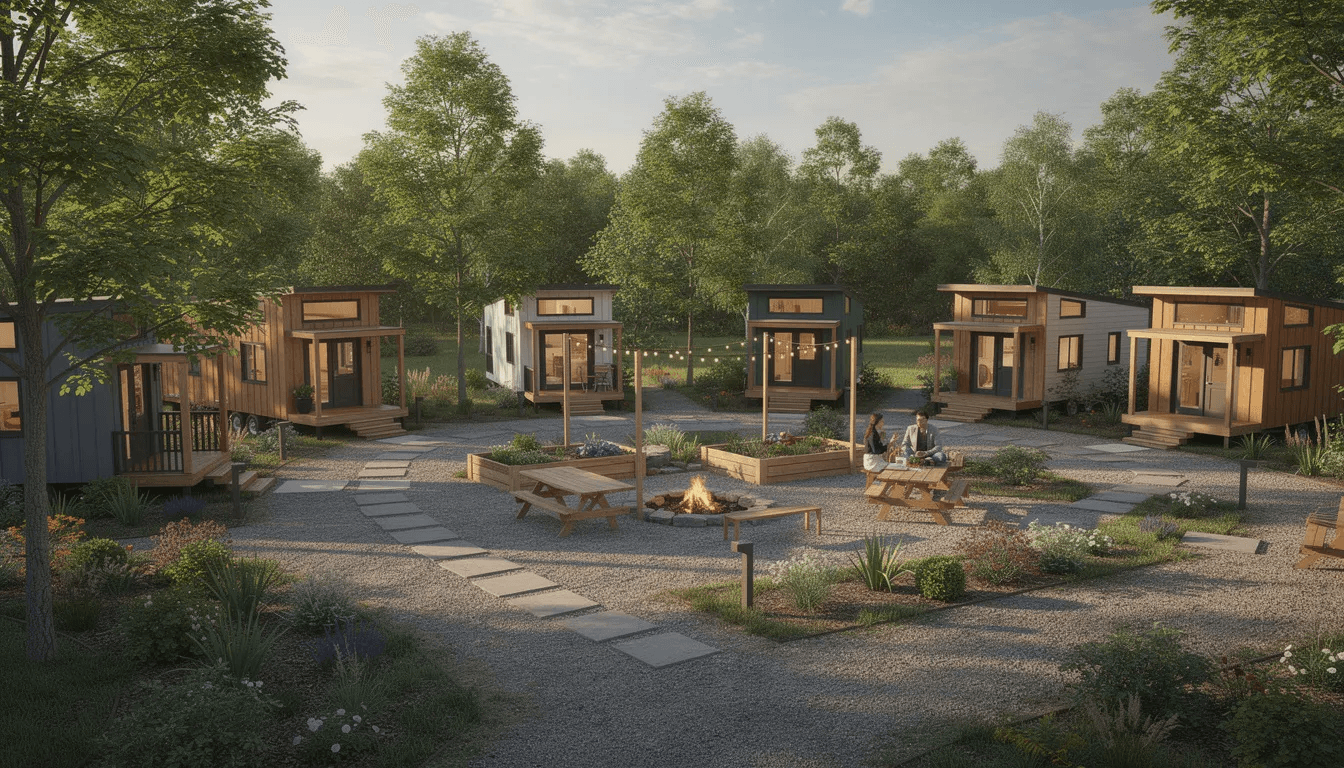
While Wichita doesn’t yet have dozens of branded “tiny villages,” practical community-style options exist within a 30–45 minute drive of downtown. For many buyers, these communities offer the infrastructure, social connection, and legal clarity that make tiny living easier.
Lake Afton Tiny Home Village area (Goddard, KS)
- Located approximately 20–25 minutes west of downtown Wichita near Lake Afton
- Offers full hookups (30/50-amp electric, water, sewer), Wi-Fi, and outdoor amenities
- Common features include picnic areas, fire pits, and access to the lake for fishing, hiking, and biking
- Suitable for tiny homes on wheels and park models meeting size requirements
- Approximate lot rent ranges from mid-$400s to mid-$500s per month depending on services—verify current rates directly with management
RV parks and mobile home communities around Wichita
- Several parks along US-54/400 toward Goddard and south of town near Derby and Haysville accept modern tiny homes
- Typical requirements include RVIA certification for THOWs, 30/50-amp electrical capability, sewer hookup, and length restrictions (usually under 40 feet)
- Monthly rates often range from $350–$600 depending on location and amenities
- Some parks cater specifically to long-term residents rather than seasonal travelers—ask about residency policies before signing
Rural Sedgwick County and neighboring counties
- In unincorporated areas of Sedgwick, Sumner, Butler, and Harvey counties, zoning codes may be more flexible
- Buyers wanting their own land can sometimes place THOWs or foundation-based tiny homes with fewer restrictions
- However, permits and utility connections (septic, well, or rural water district) are still typically required
- Confirm county-specific minimum lot sizes and whether THOWs are restricted to designated parks
Prioritize places that work for your reality
When evaluating any community or parking option, look for:
- Written rules explicitly welcoming tiny homes for long-term residency
- Clear monthly cost breakdown including lot rent, utilities, storage fees, and pet policies
- Proximity to your workplace, schools, or other priorities
- A community culture that matches your lifestyle—some parks are quiet and family-oriented, others cater to remote workers or retirees
Costs of Buying & Living in a Wichita Tiny Home
The average one-bedroom apartment in Wichita runs approximately $900–$1,200 per month in 2024. Compare that to a tiny home payment plus lot rent, and the savings become clear—especially over a 5–10 year horizon.
Purchase cost ranges
Type | Typical Price Range |
|---|---|
New custom tiny home (Kansas builders) | $45,000–$90,000 |
Used tiny home near Wichita | $30,000–$60,000 |
Shell-only or DIY build | Under $35,000 |
Premium park model with upgrades | $65,000–$100,000 |
Prices depend on size (100–400 sq ft is common), materials (shiplap interior, upgraded appliances), and level of customization (loft configurations, smart home features). |
Recurring monthly expenses and overall budget planning are easier when you use tools like an ultimate tiny home cost calculator.
- Financing payment: Approximately $550–$800/month on a $60,000 loan at 6–8% interest over 10–15 years
- Lot rent or land costs: Roughly $350–$600/month for a serviced spot near Wichita; raw land payments vary widely
- Utilities: Electric, water, trash, and internet typically run $100–$200/month combined; propane for heating/cooking may add $50–$100 in winter months
- Total monthly outlay: Many tiny home owners report all-in costs of $800–$1,400/month—often 30–50% less than traditional housing
Property taxes and registration
- Own-land scenario: A tiny home on a permanent foundation is taxed like a small residential dwelling based on Sedgwick County mill levies. Expect annual property taxes in the $500–$1,500 range depending on assessed value.
- THOW in a park: If your home is titled as a vehicle or RV, property taxes are often embedded in lot rent. However, you’ll pay annual registration and tag fees instead (typically $50–$150 in Kansas).
Insurance and maintenance
- THOWs typically require RV-style insurance policies, which run $500–$1,200 annually depending on coverage
- Foundation-based tiny homes may qualify for homeowners or manufactured home policies
- Annual maintenance should include roof inspection, resealing windows, checking trailer/tires if mobile, and HVAC servicing
- Budget approximately 1–2% of home value annually for upkeep
Choosing the Right Tiny Home Style in Wichita
Wichita buyers generally choose between three main types of tiny homes, each with distinct advantages for different lifestyles. Understanding these options helps you narrow your search and avoid costly mismatches.
Tiny house on wheels (THOW)
- Ideal for people who want flexibility to reposition within Kansas or travel seasonally
- Typically 8.5’ wide and 20–30’ long, with 150–300 sq ft of living space plus loft areas
- Must meet DOT standards for road travel (under 13.5’ tall, proper trailer rating)
- Best suited for RV-park or tiny-village living within Sedgwick County; generally cannot serve as permanent residence in standard residential neighborhoods
- Offers mobility but requires ongoing trailer maintenance and road-worthy condition
Park-model style tiny home
- Slightly larger format, up to 400 sq ft, with residential-style interiors and more headroom
- Features full kitchens with standard appliances, comfortable bathrooms, and room for furniture
- Often placed semi-permanently in tiny home communities with skirting, decks, and landscaping
- Good fit for buyers who want “home” feeling without true mobility
- Easier financing through RV lenders when RVIA-certified
Foundation-based tiny home or ADU (often designed as an accessory dwelling unit)
- Built like a small conventional house on concrete slab, crawl space, or pier foundation
- Typically 300–600+ sq ft, meeting all local building codes
- Good fit for homeowners adding a backyard rental unit, in-law suite, or guest house in established Wichita neighborhoods where zoning allows ADUs
- Qualifies for traditional mortgage financing and homeowners insurance
- Cannot be moved, but offers long-term value and appreciation potential
Kansas climate considerations
- Wichita experiences hot summers (regularly above 95°F) and cold winters (occasional sub-zero temps), making insulation critical
- Recommend walls with R-13 or higher, roofs with R-30+, and double- or triple-pane windows
- Mini-split HVAC systems provide efficient heating and cooling in compact spaces
- Wind load and tornado-season considerations make proper anchoring, foundation ties, or safe-room access important
- Many builders include upgraded weather sealing as standard for Kansas deliveries
How to Buy a Tiny Home in Wichita, KS: Step-by-Step
Buying a tiny home near Wichita follows similar steps as purchasing an RV or modular home, but zoning and placement planning must come first. Work through these steps in order to avoid expensive surprises.
Step 1: Clarify your goal — including whether a tiny house for sale is right for you
- Decide whether the tiny home will serve as your primary residence, an Airbnb or short-term rental, a backyard ADU, or a seasonal cabin
- This decision determines whether you need a THOW or foundation-based design and where you can legally place it in Sedgwick County
- Be honest about your priorities: mobility, rental income, simplicity, or long-term equity building
Step 2: Choose your location
- Pick between a tiny home community or RV park (like the Lake Afton area), a rural lot outside Wichita city limits, or an in-town backyard lot
- Verify zoning, setbacks, and utility access with Wichita or Sedgwick County planners before paying any deposits
- Visit potential locations in person to assess road access, neighbor proximity, and overall feel
- Contact community managers or landowners to confirm they accept your type of tiny home
Step 3: Set a realistic budget
- Define a total project budget that includes: home purchase price, land or lot rent, foundation or setup costs, delivery fees (often $1,500–$5,000 within Kansas), permits, and utility hookup expenses
- Don’t forget ongoing costs: financing payments, insurance, utilities, and maintenance
- Build in a 10–15% contingency for unexpected expenses
Step 4: Decide on builder vs. used home and whether you should start from existing tiny house plans that fit your life
- New from builder: Offers customization, warranty protection, and code-compliant design; Kingdom Tiny Home and other dedicated builders can guide customers through RVIA certification and local inspections
- Pre-owned unit: Often available at lower prices with faster move-in timeline; requires careful inspection of structure, electrical, plumbing, and trailer condition
- Certified builders with a strong team can help navigate financing, specifications, and placement logistics
Step 5: Arrange financing and paperwork
- Buyers may use RV loans (for THOWs), personal loans, or specialty tiny-home lenders; traditional mortgages apply more often to foundation-based units
- Prepare income verification, credit documentation, and details about how the unit will be titled (vehicle vs. real property)
- Explore financing options with lenders who specialize in tiny homes—rates typically run 5–8%, higher than conventional mortgages but often with shorter terms
- Confirm insurance requirements with your lender before closing
Step 6: Delivery, setup, and inspection
- Once the home is built or purchased, arrange transport by a qualified hauler familiar with oversized loads
- Professional setup includes leveling, anchoring to foundation or blocks, and connecting to utilities (electric, water, sewer/septic)
- Schedule a third-party inspection, especially for used homes, to verify structural integrity, wiring, plumbing, and trailer condition
- Obtain final permits and certificates of occupancy where required
Is a Wichita Tiny Home Right for You?
Tiny home living isn’t for everyone, but certain people thrive in compact spaces. Single professionals, couples, retirees, traveling workers, and small families who value low overhead and flexibility often find Wichita-area tiny homes to be their dream solution.
Lifestyle advantages
- Lower housing costs and a faster path to living debt-free—many owners pay off their homes in 5–7 years
- Less time spent cleaning and maintaining your place means more time for work, hobbies, and exploring Wichita attractions
- Potential to live closer to work, in a walkable area, or near nature (like Lake Afton) instead of commuting from distant suburbs
- Environmental sustainability benefits: tiny homes consume 30–50% less energy and produce a smaller carbon footprint than traditional houses
- Simpler life with fewer possessions often leads to less stress and more intentional living
Common challenges
- Reduced storage and privacy compared to a traditional house—couples and families must be comfortable with closeness
- Requires genuine comfort with minimalist living and thoughtful organization of belongings
- Navigating zoning and community rules, especially for THOWs, can be time-consuming and occasionally frustrating
- Resale market is growing but still niche—your buyer pool will be smaller than for conventional homes
- Kansas weather demands quality construction; a poorly insulated tiny home becomes miserable in July heat or January cold
Self-assessment questions
Before committing, honestly ask yourself:
- Can I downsize my belongings by 50–70%?
- Am I comfortable living in 250–350 sq ft with the people (and pets) I love?
- Do I prefer mobility and flexibility, or do I want a permanent neighborhood in Wichita?
- Am I ready to handle my own maintenance, or do I expect turnkey living?
- Is affordability my primary driver, or am I equally motivated by sustainability and simplicity?
If your answers lean toward excitement rather than hesitation, exploring tiny homes for sale in Wichita KS over the next 30–60 days is a practical next step toward making your dream home a reality, and you can also compare options with little houses in Texas to see how different regions approach tiny living.
Next Steps: Start Your Tiny Home Journey in Wichita
Wichita and Sedgwick County offer a realistic path to legal, affordable tiny home living. Real communities exist, inventory is available, and the regulatory framework supports buyers who do their homework. Your journey from renter or traditional homeowner to tiny home resident can begin today.
Immediate actions to take
- Make a shortlist of must-have features: loft vs. main-floor bedroom, full-size kitchen, office nook, pet space, outdoor living area
- Contact Sedgwick County or Wichita zoning to verify exactly where a tiny home can legally go and what permits you’ll need
- Start touring local tiny homes for sale and visiting nearby communities like the Lake Afton Tiny Home Village area
- Connect with local builders online to explore custom options and get realistic quotes
Track your numbers
- Calculate your total monthly budget: payment + lot/land cost + utilities + insurance + maintenance
- Compare that figure to your current rent or mortgage to confirm actual savings
- Factor in moving costs, setup expenses, and any storage needs during transition
Set a target timeline
- Establish a realistic move-in goal—many buyers can complete the process within 6–12 months
- Work backward to schedule financing approval, builder selection (or used home purchase), delivery, and permitting
- Allow time for decluttering and downsizing possessions before move-in day
The tiny home movement in Kansas continues to grow, driven by housing affordability concerns, sustainability values, and a desire for simpler living. Whether you’re a first-time buyer looking to bypass decades of mortgage payments, a retiree ready to downsize, or a remote worker who values flexibility, Wichita offers the location, community, and quality of life to support your goals, especially if you’re considering spacious tiny house park model homes for semi-permanent living. Find your next tiny home, turn your vision into reality, and discover what it means to live with less—and love it more.