

Key Takeaways
- Most modern tiny homes pair a lithium battery bank with a solar array sized to at least 2–3 times average daily energy needs for reliable off grid power.
- Choosing 24V or 48V battery voltage over 12V reduces current flow, allowing thinner copper wire and more efficient inverters and charge controllers.
- Accurate energy needs calculation (in watt hours per day) is essential before purchasing batteries, solar panels, or any system components.
- Lithium batteries can utilize most of their stated capacity, while lead-acid batteries can only use about 50% of their capacity without damage.
- Safe installation requires proper fusing, disconnects, grounding, and adherence to the National Electrical Code (NEC) and local regulations.
Introduction: How a Tiny House Battery Bank Fits Into Your Off-Grid Power System
A battery bank stores electricity for your tiny house when the sun isn’t shining.
It works alongside your solar array, charge controller, and inverter to create a complete off grid solar system. The solar panels capture energy from direct sunlight. The solar charge controller regulates the charging process. The inverter converts stored DC power into AC for standard household devices.
There’s a key difference between a grid solar system and fully off grid power. Grid-tied systems feed excess energy back to the power company and draw from the grid when needed. An off grid system relies entirely on your battery bank to bridge gaps between solar production and energy consumption.
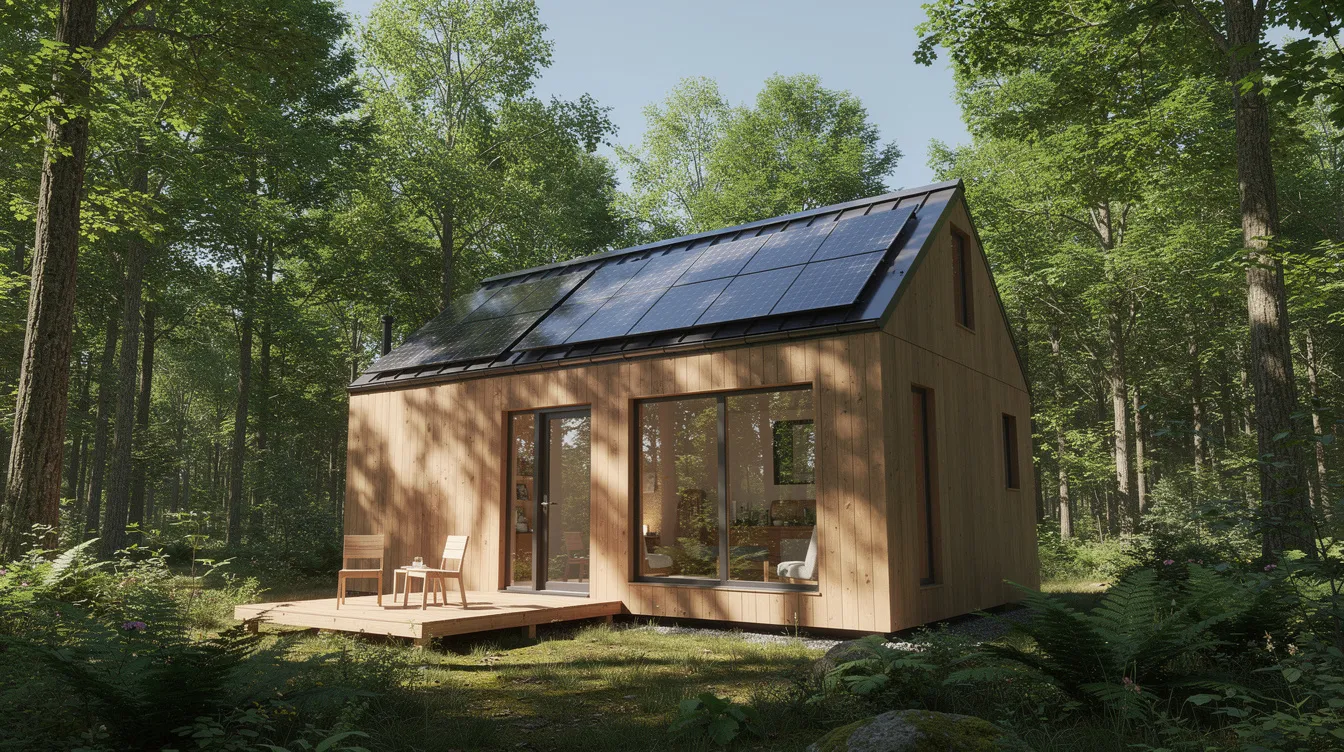
Here’s a concrete example: A 200-300 square foot tiny house in 2026 running LED lights, a laptop, small fridge, water pump, and mini-split can operate comfortably on a 5-10kWh battery bank paired with a properly sized solar array.
This guide walks through planning, sizing, choosing components, and installation concepts. While DIY is possible for much of this work, complex or code-critical wiring should be checked by a licensed electrician familiar with tiny homes.
- Step 1: Assess Your Tiny House Energy Needs
- Step 2: Choosing Battery Voltage and System Architecture
- Step 3: Sizing Your Tiny House Battery Bank
- Step 4: Choosing the Right Battery Type (Why Lithium Shines in Tiny Homes)
- Step 5: Matching Your Battery Bank to a Solar Array and Charge Controller
- Step 6: Designing the Physical Layout of Your Battery Bank
- Step 7: Wiring, Protection, and Safety for Tiny House Battery Banks
- Step 8: Working With Inverters and Hybrid/Backup Power Options
- Step 9: Smart Monitoring and Battery Management
- Step 10: Efficiency Upgrades to Right-Size Your Battery Bank
- Regulations, Codes, and When to Hire a Professional
- Real-World Example Tiny House Battery Bank Configurations (2026)
- Maintenance, Troubleshooting, and Long-Term Care
- FAQ: Tiny House Battery Bank Setup
- How many kWh of battery storage does a typical full-time tiny house need?
- Is 12V, 24V, or 48V best for a tiny house battery bank?
- Can I start small and expand my tiny house battery bank later?
- Do I need a generator if I have a large solar array and lithium battery bank?
- How often should I replace a lithium battery bank in a tiny house?
Step 1: Assess Your Tiny House Energy Needs
Before buying a single battery or solar panel, you need to know exactly how much energy your tiny home will consume daily, and how that fits into your overall budget using tools like a tiny home cost calculator.
Conducting a full energy use assessment will help you determine how much energy you need to produce each day to power your tiny home effectively. This calculation drives every other decision about your power system.
Many tiny homes typically operate on a 120-volt circuit, which is important to consider when calculating energy needs and selecting the appropriate solar and battery systems.
Here’s how to calculate your daily energy needs:
List every appliance with wattage and daily use time:
- LED bulbs: 10W × 4 hours = 40Wh
- 12V water pump: 60W × 0.5 hours = 30Wh
- 120V fridge: 50W × 12 hours = 600Wh
- Laptop: 60W × 6 hours = 360Wh
- Router: 10W × 24 hours = 240Wh
- Mini-split: 500W × 4 hours = 2,000Wh
- Coffee maker: 1,000W × 0.2 hours = 200Wh
Convert to daily totals: To assess your energy needs, start by calculating the daily wattage requirements of your appliances, such as a TV that uses 30 watts for 5 hours, resulting in 150 watt-hours per day.
Add all your watt hours together. Divide by 1,000 to get kWh per day.
For our example above: 3,470Wh ÷ 1,000 = 3.47 kWh/day
Plan for extra capacity:
- Add 10-20% above calculated needs for standby loads
- Account for future devices you might add
- Consider seasonal variations in heating or air conditioning use
A moderate-use tiny house in a temperate climate typically falls between 3-5 kWh per day. Heavy users with mini-splits, induction cooking, and home offices often hit 8-12 kWh daily.
Step 2: Choosing Battery Voltage and System Architecture
Your battery voltage choice affects every other component in your system.
Common options are 12V, 24V, and 48V. Here’s the critical insight: the same watt size electric loads at 120 volts AC require 10 times the amp current at 12 volts DC. This matters enormously for wire sizing and system efficiency.
When to use each voltage:
Voltage | Best For | Battery Bank Size | Typical Inverter |
|---|---|---|---|
12V | Very small loads, portable systems, RV-style setups | Under 2 kWh | 500-1,500W |
24V | Mid-size tiny homes | 2-5 kWh | 1,500-3,000W |
48V | Full-time homes with high loads | 5-20+ kWh | 3,000-8,000W |
Higher battery voltage reduces current, which allows smaller wire sizes, lower losses, and more efficient inverters. A 3,000W load at 12V requires 250 amps of current. That same load at 48V needs only 62.5 amps. |
Example layout for a modern full-time tiny home:
- 48V lithium battery bank (10-12 kWh)
- MPPT solar charge controller (60-100A)
- 5kW pure sine wave inverter/charger
- 3-4kW solar array
The chosen battery voltage must match or be supported by the inverter, charge controllers, and any pre-built lithium battery modules. You cannot mix voltages—all this equipment must be compatible.
Step 3: Sizing Your Tiny House Battery Bank
Battery capacity is measured in amp-hours (Ah) at a specific voltage, which converts to kilowatt-hours (kWh) for easy comparison, and self-contained tiny homes designed for modern off-grid living typically integrate this storage with water and waste systems for true independence, as seen in many self contained tiny homes for modern off-grid living.
Not all stated capacity is usable. Lead-acid batteries can only use about 50% of their capacity without damaging them, while lithium batteries can utilize most of their stated capacity. A deep-cycle 6-volt golf-cart battery or a 12-volt RV battery typically stores about 1 kWh of electricity when discharged to 50%.
Simple sizing formula:
Battery Capacity (kWh) = Daily Energy Needs (kWh) × Days of Autonomy ÷ Usable DoD
- Lithium DoD: 0.8-0.9 (80-90% usable)
- Lead-acid DoD: 0.5 (50% usable)
Sizing example:
A tiny home using 4 kWh/day wanting 2 days of autonomy with lithium batteries: 4 kWh × 2 days ÷ 0.8 = 10 kWh nominal battery capacity
Balancing budget vs autonomy:
Use Case | Days of Autonomy | Notes |
|---|---|---|
Weekend cabin | 1 day | Accept occasional generator use |
Full-time off grid | 2-3 days | Survives most cloudy periods |
Northern climates | 3-5 days | Minimizes winter generator runs |
When sizing a battery bank, it is crucial to consider the total daily energy consumption of all appliances, as this will dictate the required capacity of the battery bank to ensure sufficient power supply during periods of low sunlight. |
For a small off-grid application, one or two 12-volt batteries may suffice for powering a few lights, while two to four 6-volt batteries are recommended for additional appliances like a small DC freezer or well pump.
Cold-climate tiny homes should consider insulated battery enclosures or self-heating lithium units, as temperature extremes affect usable capacity significantly.
Step 4: Choosing the Right Battery Type (Why Lithium Shines in Tiny Homes)
Battery chemistry dramatically impacts performance, maintenance, and long-term value in your off grid system, just as good tiny house plans that fit your life influence how much power you’ll realistically need day to day.
Chemistry comparison:
Feature | Flooded Lead-Acid | AGM/GEL | Lithium (LiFePO₄) |
|---|---|---|---|
Usable DoD | 50% | 60-80% | 80-90% |
Cycle Life | 500-1,000 | 1,000-2,000 | 6,000-10,000+ |
Maintenance | High (water checks) | Low | None |
Off-gassing | Yes (venting required) | Minimal | None |
Weight | Heavy | Heavy | Light |
Upfront Cost | Low | Medium | Higher |
Sealed GEL or AGM batteries significantly reduce the risk of vented explosive gases and require less maintenance compared to traditional open-cap batteries. However, lithium still outperforms them significantly. |
Why lithium battery technology wins for tiny homes:
Lithium batteries offer the best performance and longest lifespan of any battery on the market, making them a popular choice for solar power systems. They are smaller, lighter, and have a longer lifespan compared to lead-acid or AGM batteries.
Lithium batteries can be discharged deeply without damaging the battery, which is a significant advantage over traditional lead-acid batteries that can only use about half of their capacity. The lifespan of lithium batteries can range from 2,000 to 3,000 cycles, which can translate to 15-20 years of use if properly maintained.
Realistic system sizes:
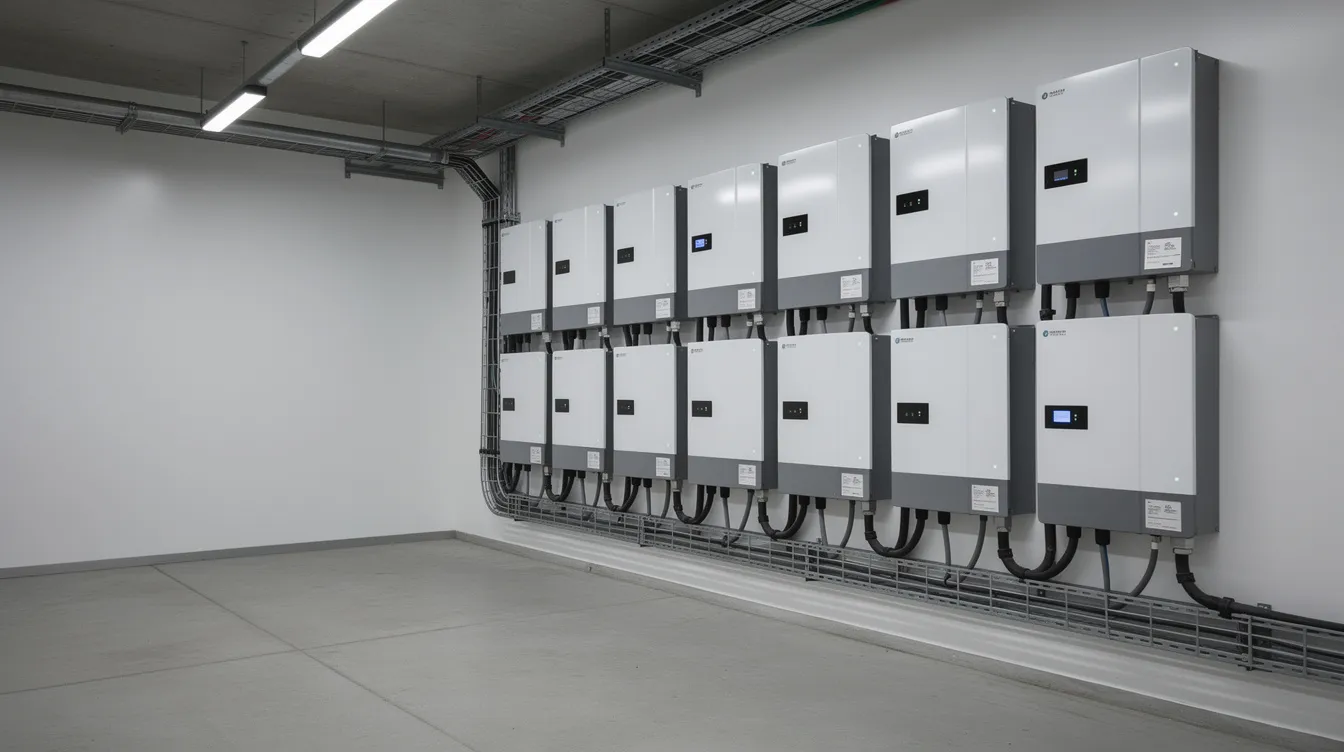
- 5-15 kWh wall-mounted LiFePO₄ modules fit in a small utility closet
- Equivalent lead-acid capacity requires multiple heavy 6V golf-cart batteries
- Space and weight savings are critical in a tiny house
Special considerations:
- Cold-weather charging limits for lithium (most have low-temp cutoffs)
- Self-heating batteries available for cold climates
- Ensure BMS compatibility with your inverters and charge controllers
Step 5: Matching Your Battery Bank to a Solar Array and Charge Controller
Your solar array must support both daily consumption and battery bank recharging within available sun hours, and it should be planned alongside the broader steps of how to build a tiny house so structure, roof area, and orientation work with your solar design.
A deep-cycle 6-volt golf-cart battery or a 12-volt RV battery typically stores about 1 kWh of electricity when discharged to 50%, necessitating approximately 200 watts of solar array to recharge it in one day under optimal conditions.
Basic rule of thumb:
Solar Array Size = Daily Energy Needs ÷ Peak Sun Hours ÷ System Efficiency
For a 4 kWh/day tiny house with 4 peak sun hours: 4 kWh ÷ 4 hours ÷ 0.78 = 1.3 kW minimum
Most designers add 50-100% buffer, resulting in 2-2.5 kW installed capacity.
MPPT charge controllers:
Modern MPPT (Maximum Power Point Tracking) charge controllers efficiently convert higher array voltage down to battery voltage. They’re essential for any serious off grid solar system.
When wiring solar modules in a 12-volt battery system, they should be connected in parallel, and a charge controller must be used to prevent overcharging the batteries.
Selecting charge controllers:
- Match PV input voltage/current ratings to your array
- Match battery voltage (24V or 48V)
- Leave room for more panels later
- Consider dual controllers for larger arrays
Optimal panel positioning:
The solar array should ideally face south and be tilted at an angle equal to the latitude of the installation site for optimal performance throughout the year. Positioning solar panels to face south and adjusting the tilt angle to match your latitude can significantly enhance energy production.
Array configurations for tiny houses:
- Roof-mounted: Most common, saves ground space
- Ground-mounted: Better angles, easier cleaning
- Series-parallel strings: Depends on inverter and charge controller specs
Your battery capacity can limit or enable larger solar arrays. More storage means you can capture more energy on sunny days for use later.
Step 6: Designing the Physical Layout of Your Battery Bank
Where you place batteries in a tiny house matters for safety, efficiency, and longevity, especially in custom tiny homes designed for small-space living where every cubic inch of storage, utility space, and access needs to be intentional.
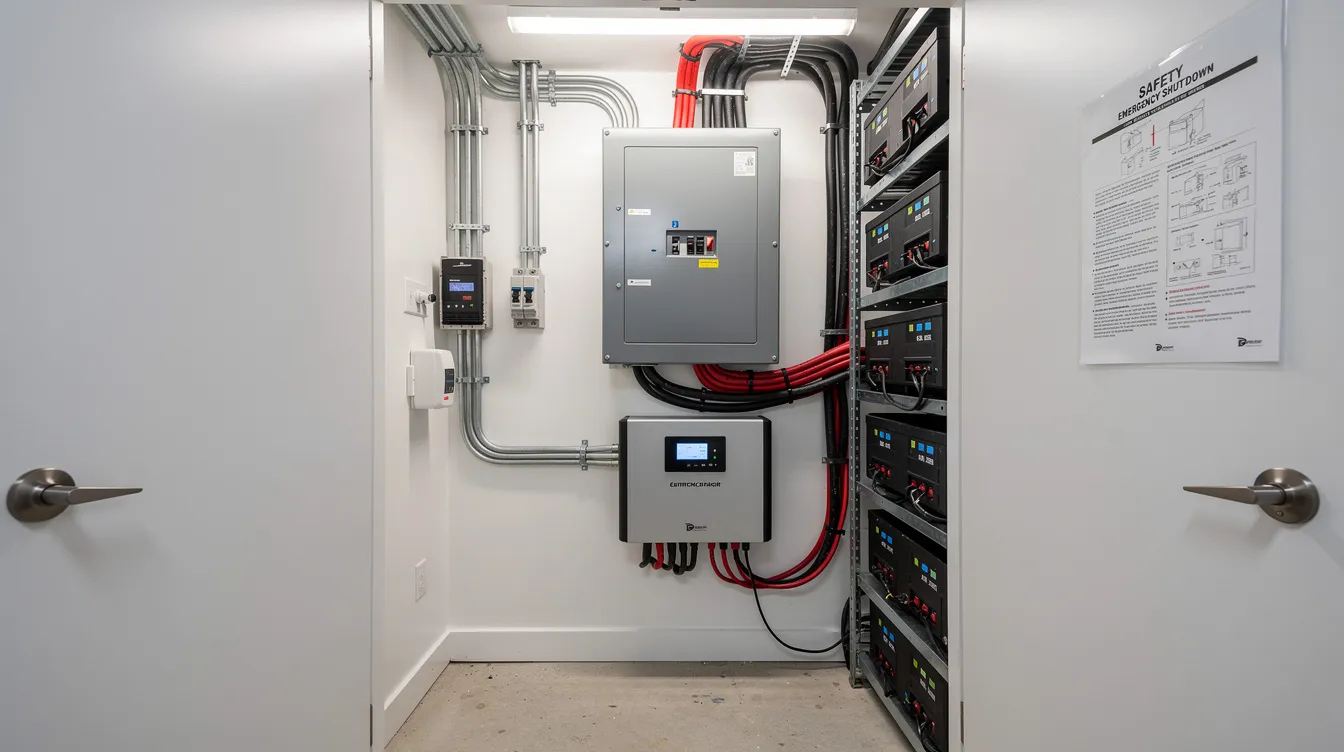
Good locations include a dedicated utility closet, under-floor compartment, or insulated exterior locker. Each has trade-offs for access, temperature control, and weight distribution.
Ventilation and clearance:
Lithium battery banks do not require venting like flooded lead-acid but still need:
- Clearance for heat dissipation (6-12 inches around terminals)
- Access for service and wiring connections
- Protection from direct sunlight and heat sources
Securing batteries:
Towable tiny homes need robust mounting systems:
- Stainless steel brackets and hardware
- Vibration isolation mounts
- Protected cable routing to prevent abrasion
Temperature management:
LiFePO₄ batteries perform best at 65-75°F. Avoid:
- Freezing conditions (damages cells during charging)
- Extreme heat above 105°F
- Locations above a wood stove or space heater
- Uninsulated exterior compartments in cold climates
Plan space for associated equipment:
- Main DC disconnect
- Fuses/circuit breakers
- Shunt for battery monitor
- Busbars for clean connections
Keep all this close to the battery bank to minimize cable length and voltage drop.
Step 7: Wiring, Protection, and Safety for Tiny House Battery Banks
Proper wiring and protection aren’t optional. They’re essential for safety and code compliance, and they become even more important in tiny smart homes with integrated technology where connected devices depend on clean, reliable power.
The National Electrical Code (NEC) provides guidelines for safe electrical installations, including those for DIY solar and battery systems, to prevent hazards such as electrical fires. All wiring in a DIY solar system must be properly sized and protected with fuses or circuit breakers to prevent overload and potential fire hazards.
Key protection components:
It is recommended to use a fuse in the positive wire between the solar array and the charge controller, as well as between the charge controller and the battery, to protect the system from overload.
Each wire supplying a load in a solar power system must have a properly sized fuse or circuit breaker to prevent overload and possible fire hazards. DC rated fuses or circuit breakers are typically larger and more expensive than their AC counterparts, but are necessary for safe operation in low voltage systems.
Cable sizing based on voltage:
System Voltage | Current for 3,000W | Typical Wire Size |
|---|---|---|
12V | 250A | 4/0 AWG |
24V | 125A | 2/0 AWG |
48V | 62.5A | 1/0 AWG |
Higher voltage means smaller wire. This saves money and makes installation easier. Using only copper wire is recommended for solar power systems, as aluminum wire has a lower amp rating and requires special anti-corrosion joint compounds. |
Best practices:
- Proper color coding (red/black for positive, white/black for negative)
- Quality crimped lugs appropriate for conductor size
- Strain relief at all connection points
- Torque all connections to specification
- Double-check polarity before connecting to the battery
Grounding and bonding:
Grounding is essential in solar installations to reduce the risk of electrical shock and to protect against lightning strikes, as required by safety regulations. Grounding is essential in solar power systems to reduce the risk of lightning damage and ensure safety, even in low voltage systems.
Key grounding points:
- Negative bus (where applicable)
- Inverter chassis
- Solar array frames
- Ground rod (8 feet into earth)
- Consider a lightning arrestor for additional protection
Step 8: Working With Inverters and Hybrid/Backup Power Options
The inverter converts battery DC into 120V AC for standard household outlets and appliances in your tiny home, whether it’s a fully custom build or one based on Home Depot tiny house kits adapted for off-grid use.
Pure sine wave vs modified sine wave:
Pure sine wave inverters are recommended for any modern off grid system. They:
- Safely power sensitive electronics
- Run mini-split compressors efficiently
- Don’t cause interference or buzzing
- Match utility power quality
Modified sine wave inverters are cheaper but can damage equipment and reduce motor efficiency by 20-30%.
Choosing inverter size:
Consider both continuous and surge ratings:
Appliance | Surge Watts | |
|---|---|---|
Mini-split | 500-1,500 | 3,000-5,000 |
Well pump | 1,000 | 2,500 |
Induction cooktop | 1,800 | 2,000 |
Hair dryer | 1,500 | 1,800 |
Clothes dryer (electric) | 3,000 | 4,500 |
A 3-5kW inverter handles most tiny home needs. Don’t forget that some appliances like a coffee pot or coffee maker draw significant power briefly. |
Hybrid inverter/charger options:
These combine multiple functions:
- Inverter (DC to AC)
- Battery charger (AC to DC)
- Sometimes integrated charge controller
- Automatic generator start capability
Backup power configuration:
A 3-5kW inverter/charger paired with a 48V lithium battery bank and a small propane generator provides excellent backup power for winter storms or extended cloudy periods. The generator can easily pull the system back to full power when solar isn’t producing.
Step 9: Smart Monitoring and Battery Management
Accurate monitoring of state of charge level, voltage, current, and power flow is critical in off grid tiny homes, including many of the best tiny house designs for modern living that prioritize integrated, unobtrusive tech.
Without good data, you’re flying blind. You won’t know when to reduce loads, whether your system is performing properly, or when maintenance is needed.
Integrated BMS features in modern lithium batteries:
- Over/under voltage protection
- Current limits
- Temperature protection
- Cell balancing
- Communication with inverters/charge controllers
External monitoring options:
A battery monitor with shunt tracks:
- State of charge percentage
- Current flow (in and out)
- Voltage
- Historical data
Many systems offer app-based or web-based dashboards via Wi-Fi, Bluetooth, or CAN bus connections.
Benefits of data logging:
- Fine-tune solar array size
- Optimize battery capacity needs
- Identify inefficient appliances
- Track degradation over time
Set alert thresholds:
- Low state of charge warnings
- High temperature alarms
- Abnormal voltage conditions
These alerts protect your whole system and help prioritize essential loads during low-power periods.
Step 10: Efficiency Upgrades to Right-Size Your Battery Bank
Every watt saved through efficiency reduces required battery capacity and solar array size. This is often the most cost effective way to improve your system, especially if you’re aiming for affordable tiny house buildings with efficient designs.
Using energy-efficient appliances, such as LED lighting and induction cooktops, can greatly reduce overall energy consumption in off-grid systems, as shown in many great tiny homes that redefine small space living where smart appliance choices keep power needs low.
Practical efficiency upgrades:
Upgrade | Energy Savings | Impact on Battery Sizing |
|---|---|---|
All LED bulbs | 80-85% vs incandescent | Significant |
Energy Star fridge | 50-70% vs old models | Major |
Efficient mini-split | 60-70% vs space heater | Major |
Low-flow water heater (propane) | Eliminates electric load | Significant |
Well-insulated envelope | Reduces HVAC runtime | Moderate |
Before/after example: |
Swapping an old 1,000Wh/day fridge for a 300Wh/day efficient model saves 700Wh daily. That’s roughly 1.8 kWh less battery capacity needed and 150-200W fewer solar panels required.
Alternative fuel strategies:
Many off grid tiny homes use propane or wood for:
- Space heating (instead of electric space heater)
- Water heater
- Cooking
This keeps electrical demand within reasonable battery bank size while maintaining comfort.
Load shifting habits:
Plan energy-intensive activities for peak solar production:
- Do laundry mid-day
- Run dishwasher when sun is brightest
- Charge devices during full sun hours
This keeps battery cycling shallow and extends lifespan. You don’t need more storage if you use power strategically.
To optimize solar power systems, it is recommended to conduct a thorough energy needs assessment to determine the daily energy requirements and size the solar array accordingly.
Regulations, Codes, and When to Hire a Professional
Tiny houses often fall into a gray area between RV, mobile home, and residential code. Local guidance is essential.
The National Electrical Code (NEC) serves as the baseline standard, with specific sections addressing:
- PV systems (Article 690)
- Energy storage (Articles 480 and 706)
- Load calculations (Article 220)
- Grounding and bonding (Article 250)
However, actual enforcement comes through local amendments and your authority having jurisdiction.
When to hire an electrician:
- Main AC panel wiring
- Load calculations for permitting
- Service disconnects
- Pre-inspection for insurance
- Any work you’re uncomfortable doing
Documentation to keep:
- Complete wiring diagrams
- Equipment datasheets
- Battery spec sheets and serial numbers
- Warranty information
- Inspection records
Planning for the future:
- Label all circuits and disconnects clearly
- Use neat, accessible cable management
- Document system configuration
- This helps with inspections, resale, or future service
Real-World Example Tiny House Battery Bank Configurations (2026)
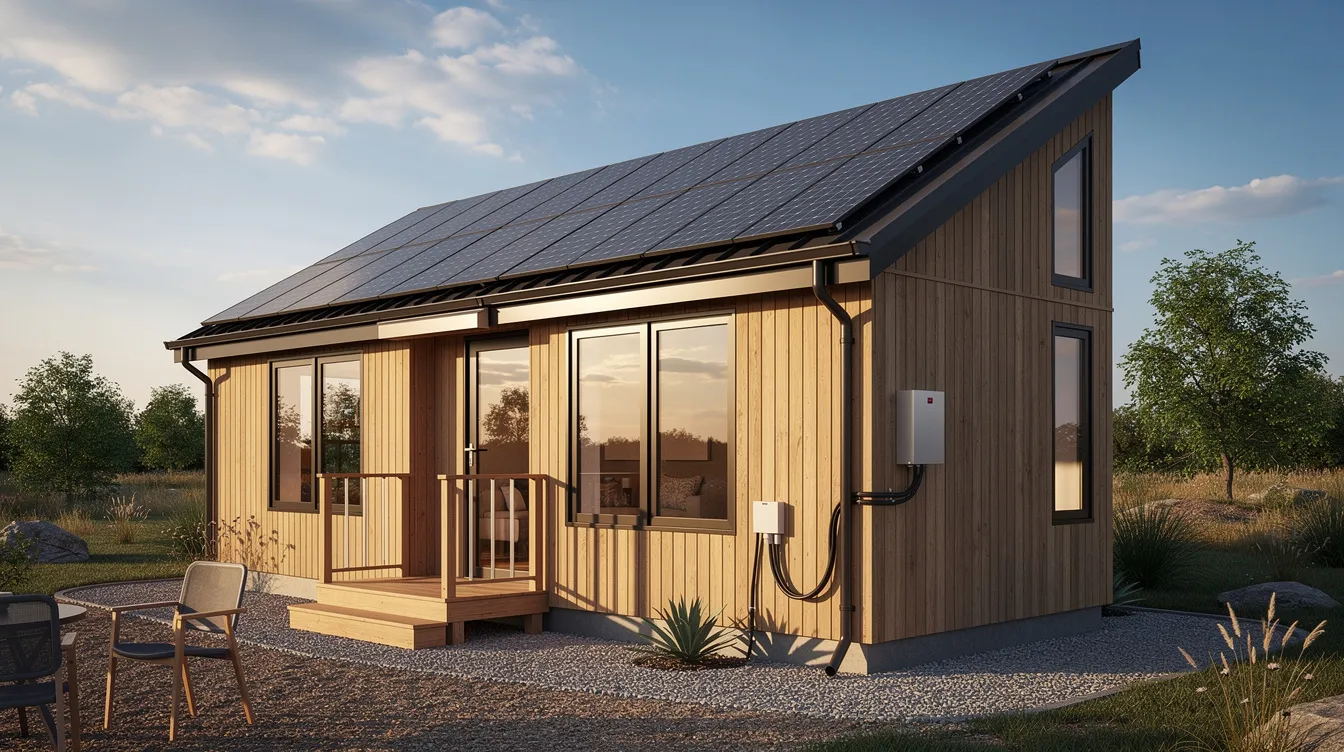
These sample configurations help visualize concrete system sizes and components for different use cases.
Weekend cabin configuration:
Component | Specification |
|---|---|
Battery Bank | 2-3 kWh lithium at 24V |
Solar Array | 800-1,200W (3-4 panels) |
Inverter | 1-2kW pure sine wave |
Loads Supported | Lights, USB charging, small DC fridge |
Autonomy | 1 day |
This system runs on a single panel or a few panels. Most systems at this scale handle basic needs well. |
Full-time tiny home configuration:
Component | Specification |
|---|---|
Battery Bank | 8-12 kWh 48V LiFePO₄ |
Solar Array | 3-5kW (10-15 panels) |
Inverter/Charger | 3-5kW pure sine wave |
Charge Controller | 60-100A MPPT |
Loads Supported | Mini-split, efficient fridge, induction hob, office electronics |
Autonomy | 2-3 days |
High-performance configuration: |
Component | Specification |
|---|---|
Battery Bank | 15-20 kWh 48V lithium (scalable modules) |
Solar Array | 6-8kW |
Charge Controllers | Dual MPPT |
Inverter | 5-8kW with generator backup |
Special Features | Generator auto-start, remote monitoring |
These examples are starting points. Actual designs must be tailored to your climate, roof area, shading, and personal energy habits. You might need more energy or less depending on lifestyle. |
Maintenance, Troubleshooting, and Long-Term Care
Lithium battery banks require far less maintenance than lead-acid but still benefit from periodic attention.
Routine maintenance tasks:
- Annually: Inspect cables and lugs for corrosion or looseness
- Quarterly: Check BMS and inverter logs for anomalies
- Seasonally: Verify charge parameters match conditions
- Yearly: Test breakers and disconnects
Common issues to watch for:
- Unbalanced battery modules (visible in BMS data)
- Incorrect charge controller settings
- Phantom loads draining banked power overnight
- Loose connections causing voltage drop
Seasonal adjustments:
- Optimize solar array tilt if adjustable
- Adjust low-temperature charge limits for winter
- Plan generator fuel storage for storm seasons
- Consider temporary heater pads for battery enclosures in extreme cold
Expected lifespan:
Quality LiFePO₄ batteries often last 10+ years with 80% capacity remaining after 6,000+ cycles. Gentle cycling at partial depth of discharge extends usable life even further. One battery managed well outlasts two batteries treated poorly.
Monitoring degradation:
Modern BMS systems track capacity automatically. Plan for gradual fade rather than sudden failure. After 10 years, expect 80-90% of original capacity—still very functional for most users.
FAQ: Tiny House Battery Bank Setup
How many kWh of battery storage does a typical full-time tiny house need?
Many full-time off grid tiny houses fall in the 6-12 kWh usable storage range. Exact capacity depends on climate, appliance efficiency, and lifestyle.
Heavy users with mini-splits, induction cooking, and home offices often target 10-15 kWh to maintain comfort through cloudy days without generator use.
Weekend or seasonal use cabins can operate comfortably on much smaller 2-5 kWh systems if loads are modest. A few LED lights and basic electronics don’t need massive storage.
Is 12V, 24V, or 48V best for a tiny house battery bank?
12V is usually reserved for very small, RV-style systems with limited loads. The high current requirements make larger systems impractical with heavy gauge wire needs.
24V works well for modest loads under roughly 2-3kW inverter size and battery banks in the 2-5 kWh range.
48V is recommended for larger systems, homes with high-demand appliances, or anyone wanting future expansion flexibility. All major components (batteries, inverters, charge controllers) must be compatible with your chosen voltage.
Can I start small and expand my tiny house battery bank later?
Expansion is possible but easiest when planned from day one. Use modular lithium batteries and appropriately sized busbars, fuses, and charge controllers rated for your target maximum capacity.
Mixing old and new batteries or different brands/chemistries in one bank can shorten lifespan or cause imbalance issues. Adding matching modules within the first year or two works better than waiting five years.
Plan a target maximum capacity (e.g., up to 15kWh) and choose hardware rated to support that future expansion safely from the start.
Do I need a generator if I have a large solar array and lithium battery bank?
In sunny climates with oversized arrays, some tiny houses run purely on solar and batteries year-round. However, many off grid living enthusiasts keep a small inverter generator for emergencies.
Generators are especially useful in winter, heavily shaded sites, or extended bad-weather periods when solar input drops to near zero for days.
Hybrid inverter/chargers can automatically use generator or limited grid input to recharge batteries while protecting against overload. This provides peace of mind without daily generator dependence.
How often should I replace a lithium battery bank in a tiny house?
Quality LiFePO₄ batteries rated for 6,000-10,000 cycles at 80% depth of discharge can easily last 10-15 years in typical tiny home use.
Actual replacement timing depends on daily cycle depth, temperature conditions, and whether charge settings were optimized from day one. Batteries kept within their comfort zone last longer.
Monitor capacity over time through your BMS or battery monitor to plan for gradual capacity fade rather than sudden failure. Most owners find their batteries still perform well long after the original investment pays off.