Looking for a tiny house community in South Dakota that feels like home? Discover established communities, RV parks, and intentional living spaces designed for tiny home residents. From temporary stays to permanent living arrangements, this guide covers locations that welcome tiny houses on wheels, foundation-built homes, and everything in between.
Find your ideal community and start your tiny living journey in South Dakota today.
Tiny House Communities for Every Lifestyle
South Dakota offers several popular tiny house communities, particularly concentrated in the scenic Black Hills region and major urban centers like Sioux Falls and Rapid City. Whether you’re seeking a nomadic lifestyle, permanent residence, or transitional support, there’s a community that reflects your preferences and needs.
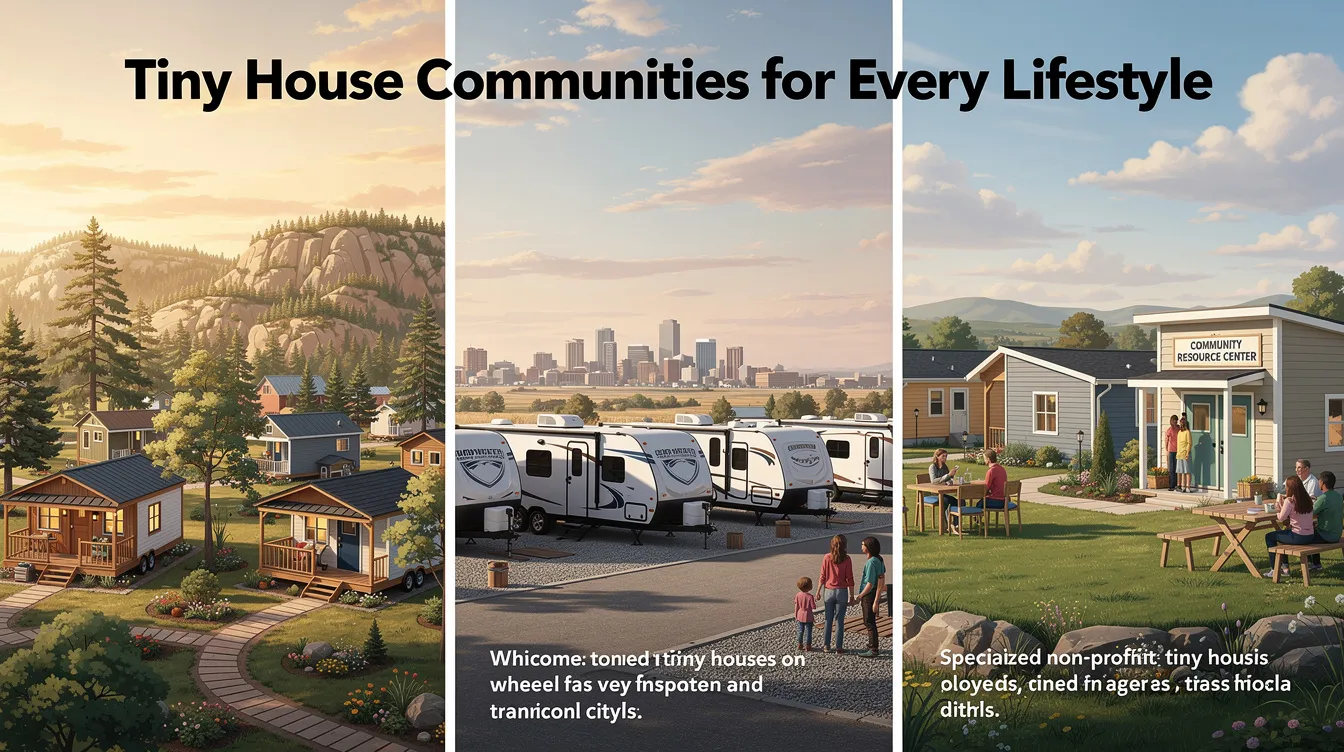
Tiny living in South Dakota typically falls into three categories: dedicated villages, RV parks that welcome tiny houses on wheels, and specialized non-profit housing projects. Each option presents unique benefits depending on your lifestyle goals, budget, and timeline.
Extended Stay Campgrounds and RV Parks
For those with a tiny house on wheels, extended stay campgrounds provide flexible living arrangements with essential amenities. These parks cater to residents seeking month-to-month options without the hassle of permanent land ownership.
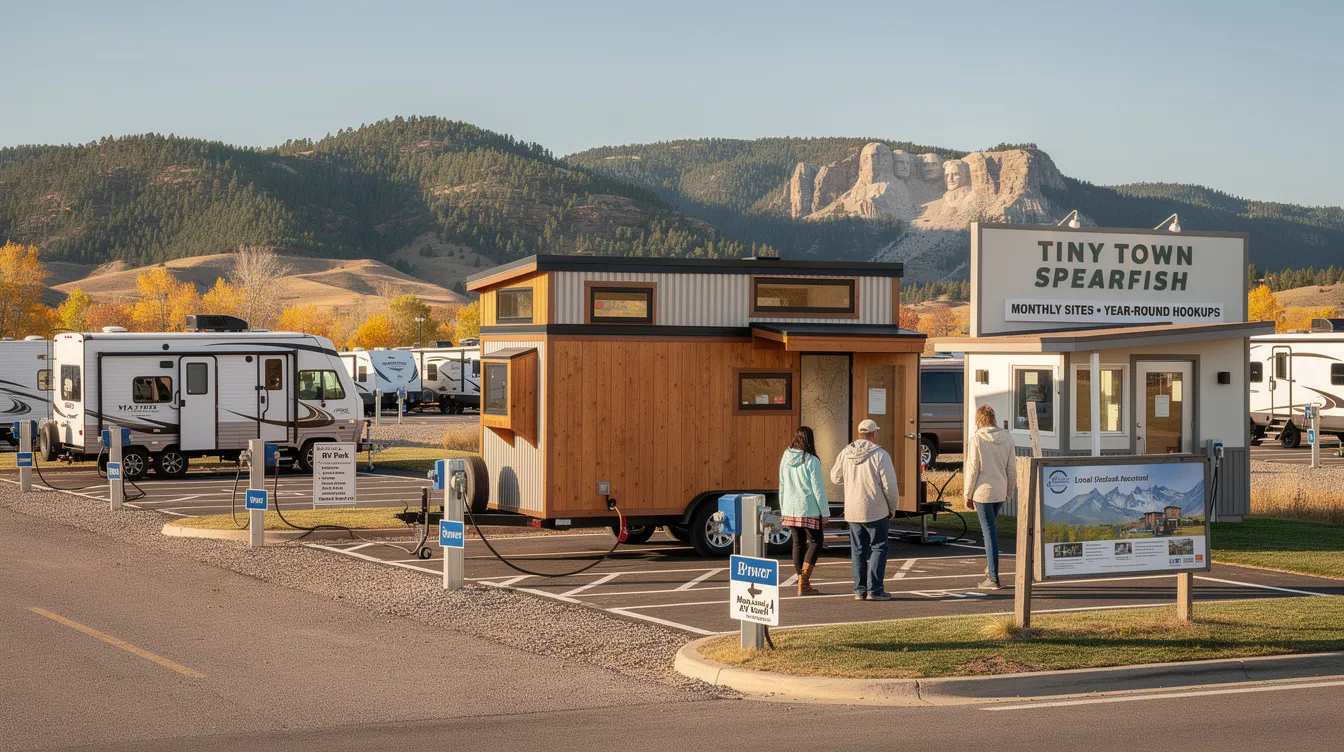
Tiny Town Extended Stay Campground in Spearfish, South Dakota, offers both long-term and monthly camping options for tiny house residents, providing amenities such as electrical, water, laundry, and Wi-Fi. With 26 full-service sites, residents pay approximately $750 per month, which includes utilities, garbage service, and access to shared facilities. The location sits just 10 miles from Deadwood, offering proximity to Black Hills attractions while maintaining a quiet community atmosphere.
Black Hills Tiny Resort near Rapid City provides another excellent option, featuring full hookups with 20/30/50 amp electrical service, water, and sewer connections. This resort welcomes long stays of 28 days or more, making it suitable for seasonal residents or those exploring permanent tiny house living in the area.
Additional campgrounds like Bearded Buffalo Resort in Custer and Dry Lake Park & Rec in Florence accept RVs and tiny homes on wheels, with year-round sites available at select locations. These parks typically offer level sites, multiple vehicle parking, and infrastructure for slide-outs—essential features for comfortable tiny house placement.
Intentional Living Communities
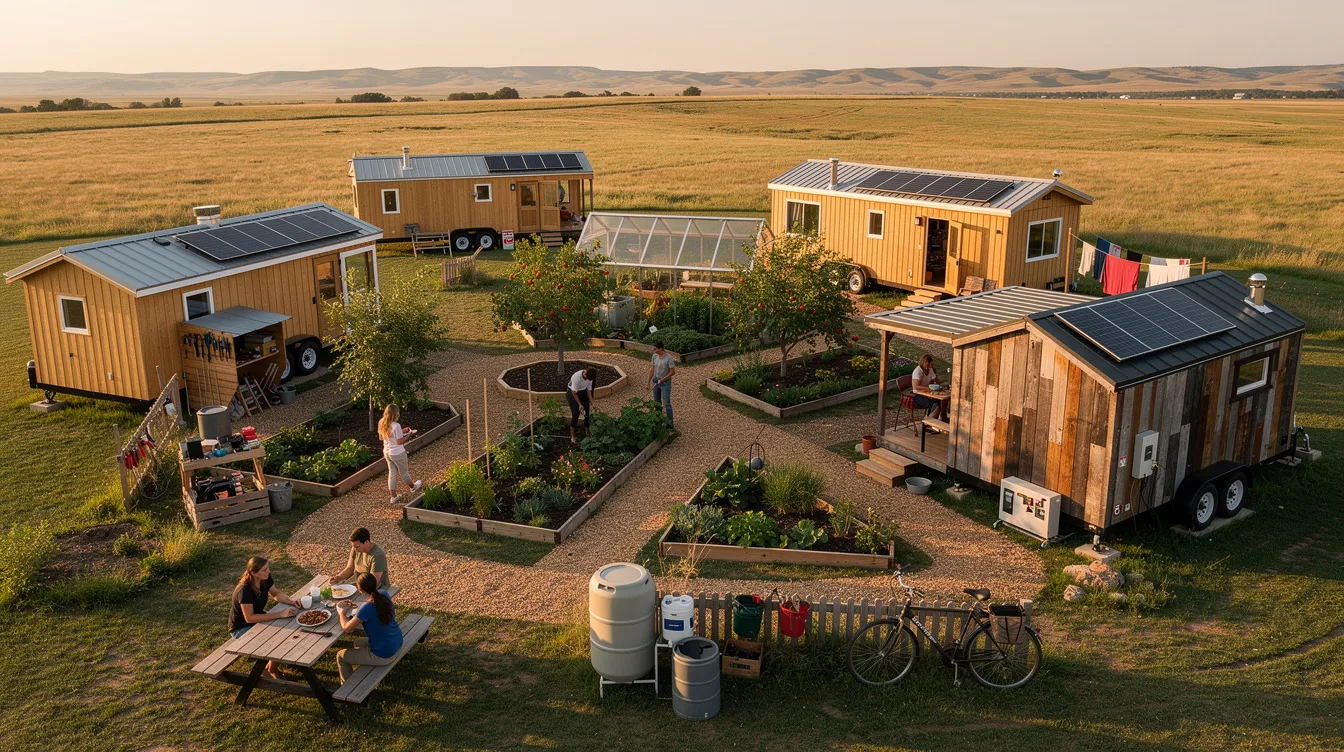
Communities focused on sustainable and simple living are emerging across South Dakota, bringing together residents who share values of minimalism, self-sufficiency, and environmental stewardship. These intentional communities often feature shared resources, community gardens, and collaborative decision-making structures.
Living in a minimalist tiny house focused on sustainable living can lead to a simpler lifestyle, allowing individuals to focus on what truly matters to them, such as experiences and relationships, rather than material possessions. Intentional communities amplify this benefit by creating spaces where residents support one another through shared meals, skill exchanges, and collective projects.
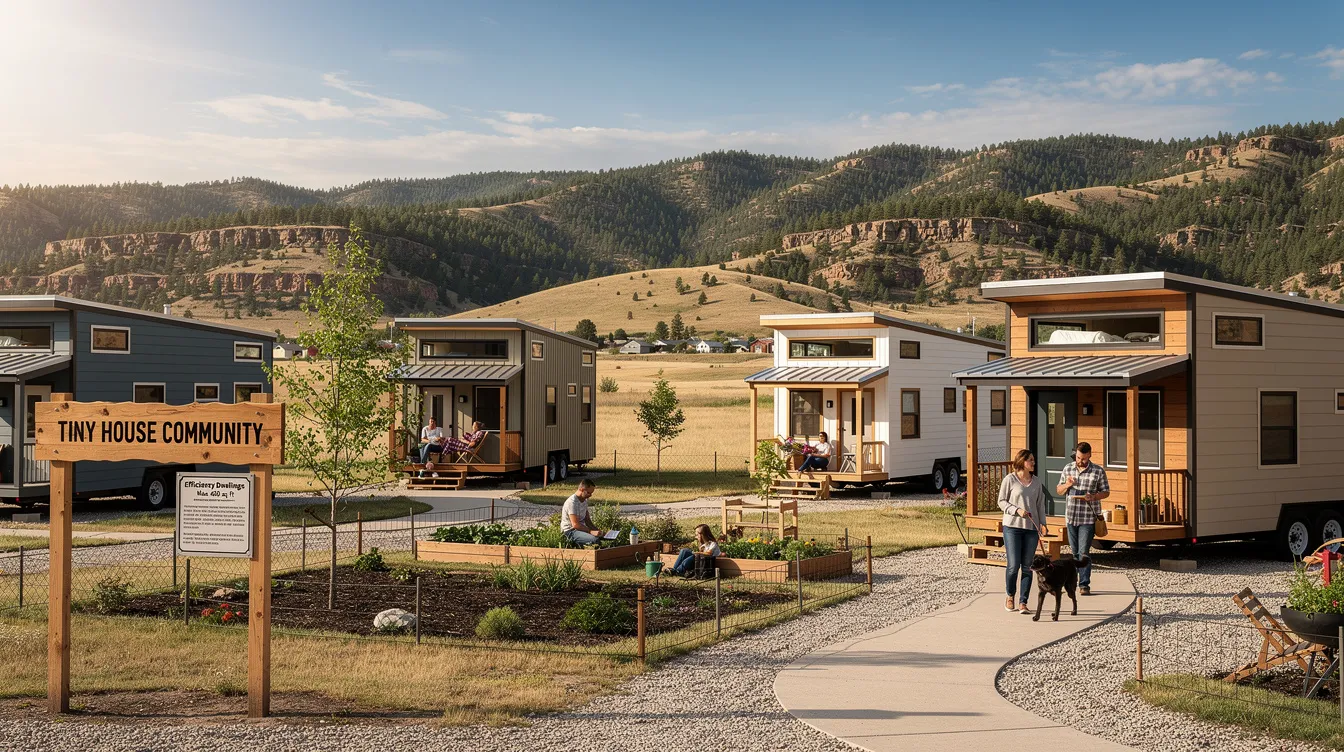
Communities that support tiny living foster social ties through shared spaces like gardens, picnic areas, and common buildings. Some groups specialize in permaculture principles, while others emphasize off-grid living or homesteading practices suited to South Dakota’s rural landscapes.
Specialized Support Communities
The Veterans Community Project in Sioux Falls is a specialized community of 25 tiny homes designed to aid homeless veterans, providing them with resources to help them transition to independent living. Located on a 2-acre site in northwest Sioux Falls, this village began housing residents in 2023 and offers fully furnished homes at no cost to eligible veterans.
Single homes measure approximately 240 square feet, while family homes reach about 320 square feet. Residents receive wraparound services including case management, job training, health support, and financial literacy education. The average stay spans 10 to 14 months, with approximately 85% of veterans successfully transitioning to stable permanent housing.
This model demonstrates how tiny house communities can address specific social needs while building genuine neighborhood connections. The village center provides shared space for community programs, creating opportunities for residents to support one another through their transitions.
Choose the Right Community for Your Needs
Selecting the right tiny house community requires careful consideration of your living preferences, budget, and long-term goals. Visiting communities in person and speaking with current residents provides invaluable insight that online research alone cannot offer.
For Temporary and Nomadic Living
If flexibility matters most, campgrounds and RV parks with month-to-month arrangements provide ideal solutions. In South Dakota, tiny houses on wheels (THOWs) are treated like recreational vehicles (RVs) and must typically be placed in RV parks, mobile home zones, or campgrounds.
Properties like Tiny Town Spearfish offer full hookups year-round, including winter service—a critical feature given South Dakota’s cold winters and fluctuating temperatures. When evaluating parks, confirm utility costs, maximum vehicle dimensions, and seasonal availability before committing.
Many of these communities are located near major attractions like Mount Rushmore and Badlands National Park, making them attractive bases for those who want to explore South Dakota while maintaining a home site.
For Permanent Tiny House Living
Those seeking to settle permanently should explore foundation-based tiny home options or communities allowing long-term residence, especially if they are considering purchasing a tiny house for sale as a long-term housing solution. Local zoning and building codes for tiny houses vary widely across South Dakota, with some communities like Spearfish and Beresford having specific regulations addressing tiny homes.
Spearfish, South Dakota, is known for being tiny house friendly, allowing families to comfortably live in tiny houses while adhering to local building codes. The Black Hills region offers spacious areas for tiny houses, with less strict building codes and a variety of rental options available.
Beresford, South Dakota, has become increasingly popular for tiny houses, with specific building requirements that allow homes on wheels to be secured on foundations, making it appealing for those interested in affordable tiny house buildings and designs. This flexibility enables residents to own their tiny house while meeting local code requirements.
Pennington County has established clear definitions for “Efficiency Dwellings,” requiring permanent dwellings with living, cooking, sleeping, and sanitation facilities in no more than 400 square feet excluding lofts. Communities of four or more such homes require Planned Unit Development overlay approval.
For Social Connection and Support
Some residents prioritize community over independence. Tiny house communities with active social programs, shared activities, and mentorship opportunities provide rich environments for those seeking connection.
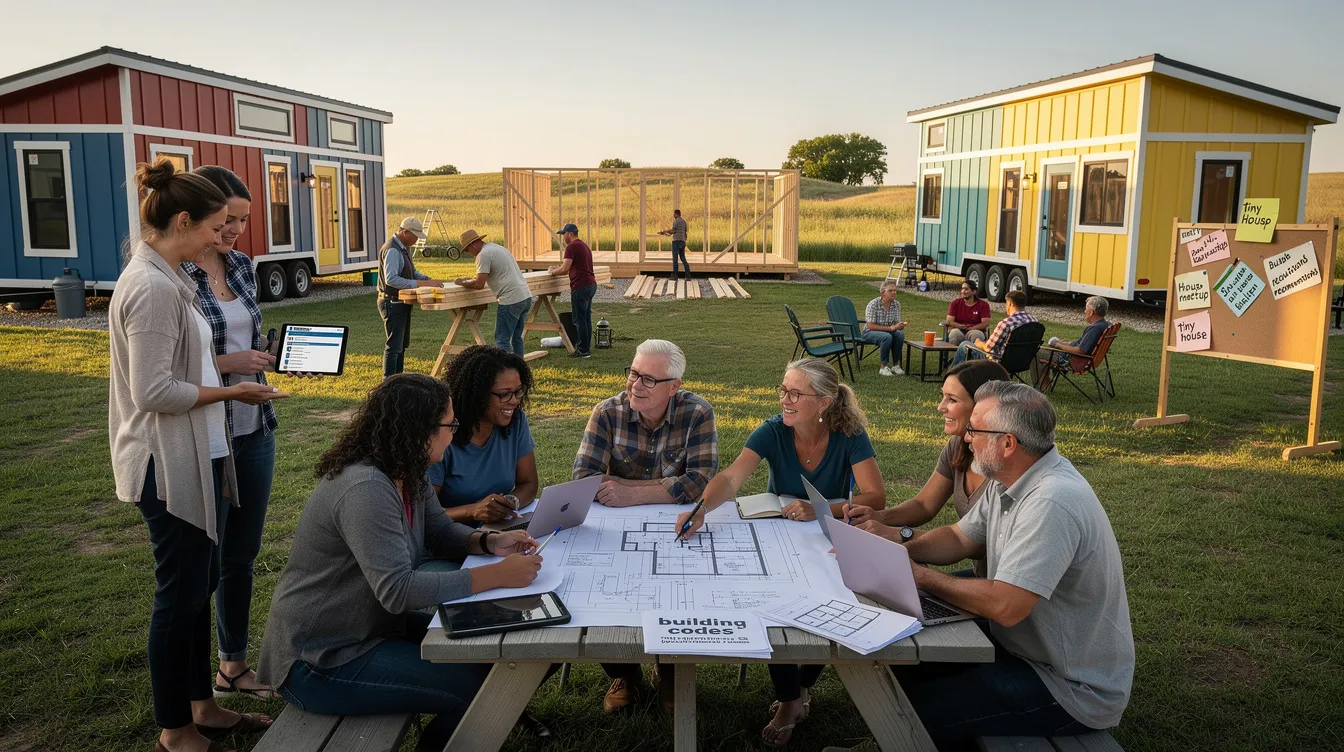
Tiny house communities in South Dakota are growing, with groups forming to support residents in building their homes and navigating local building codes and regulations. These networks assist newcomers with everything from selecting builders to understanding placement rules.
Online forums and local meetups connect tiny house enthusiasts across the state, creating support systems that extend beyond physical community boundaries.
Community Features and Amenities
Understanding what amenities communities provide helps you plan your tiny house setup and budget accordingly. Infrastructure varies significantly between RV parks, intentional communities, and specialized housing projects.
Essential Infrastructure and Utilities
Most established communities offer full hookups including 30/50 amp electrical service, municipal water, and sewer connections. These utilities eliminate the need for off-grid systems, though some remote communities require residents to manage their own waste and water.
Weatherization is a significant consideration for tiny homes in South Dakota, requiring high levels of insulation to manage cold winters. Efficiency in tiny homes can be achieved through building techniques like spray foam insulation, leading to lower utility costs in extreme winters.
Internet connectivity varies by location. Urban-adjacent communities near Sioux Falls or Rapid City typically offer reliable Wi-Fi, while rural sites may require satellite or cellular solutions.
Shared Facilities and Common Areas
Community centers, workshop areas, and gathering spaces enhance tiny living by compensating for limited personal square footage. Many parks include laundry facilities, shared kitchens, shower houses, and recreational amenities like fire pits or picnic grounds.
Some communities feature dog parks, fishing access, or hiking trails on site. Black Hills Tiny Resort, for example, includes outdoor recreational spaces suited to families and pet owners.
Maintenance responsibilities differ between communities. RV parks typically handle common area upkeep, while intentional communities may require resident participation in landscaping, snow removal, or facility maintenance.
Location-Specific Benefits
Proximity to South Dakota cities provides access to employment, healthcare, and shopping. Communities near Sioux Falls offer urban conveniences, while Black Hills locations deliver natural beauty and tourism industry job opportunities.
The state’s climate demands attention. Cold winters mean residents must plan for frozen pipes, snow removal, and heating costs. Properties offering winterized hookups and year-round accessibility—like Tiny Town Spearfish—eliminate weather-related concerns that affect seasonal campgrounds.
Recreational access to fishing, hiking, and national parks adds lifestyle value that many tiny house residents prioritize when selecting their community.
How to Join a Tiny House Community
Finding and securing a spot in a tiny house community requires research, preparation, and sometimes patience. Understanding local regulations and community expectations streamlines the process.
Research and Application Process
Begin by contacting communities directly to request information about availability, rates, and requirements. Many RV parks accept reservations online or by phone, while intentional communities may have more involved application processes.
Some communities require references, background checks, or proof of financial stability. Waiting lists exist at popular locations, particularly during peak tourism seasons in the Black Hills region.
Before committing, schedule a site visit to assess the ground conditions, neighbor proximity, and overall atmosphere. Speaking with current residents provides honest perspectives that marketing materials cannot capture.
Legal and Regulatory Compliance
South Dakota has not yet adopted Appendix Q from the 2018 International Residential Code, which would provide a centralized legalization framework for tiny homes, leaving regulations to individual counties and cities. This means rules vary significantly between municipalities.
Zoning regulations for tiny homes vary by municipality in South Dakota, which can affect their classification. Tiny houses on wheels (THOWs) are often treated as RVs under zoning laws, leading to restrictions on where they can be placed.
Regulations may require compliance with Appendix Q of the International Residential Code for tiny houses with foundations in jurisdictions that have adopted updated building codes. Some areas have favorable zoning for tiny homes, making it beneficial to research local regulations before purchasing land or a tiny home.
Tiny houses can be categorized into various types based on their construction and purpose, including Skoolies, remote cabins, backyard tiny homes, shipping container tiny house designs, and tiny homes on wheels. A Skoolie is a type of tiny house that is converted from a school bus, allowing for unique interior designs and mobility. Shipping container homes are a popular option for tiny houses, utilizing the durable structure of containers to create livable spaces with innovative designs. Even yurts—traditionally used by nomadic groups—appear in South Dakota’s alternative housing landscape.
Connect with South Dakota’s Tiny House Communities
There is a growing trend of tiny house living in South Dakota, with options ranging from specialized communities to Accessory Dwelling Units (ADUs), and even ready‑made options like Amazon tiny houses as an affordable entry point. Whether you dream of parking your tiny house on wheels at a Black Hills campground, exploring tiny home opportunities in nearby Idaho, or building a foundation-based home in a tiny-friendly municipality, communities exist to welcome you.
Tiny homes are often more affordable than traditional homes, especially when you look at innovative tiny homes that redefine small space living, making them an attractive option for those looking to reduce their living expenses and financial burden. Downsizing to a tiny house can free up more time for leisure activities, as homeowners spend less time on maintenance and cleaning, allowing them to pursue hobbies and interests or even explore whimsical magic tiny home designs that reflect their personalities.
Reach out to communities directly, join local social groups, and connect with builders and designers who specialize in South Dakota’s climate requirements, especially if you plan to build a tiny house from the ground up. The support network continues expanding as more residents choose thoughtful floor plans, space‑saving tiny house design ideas, and low maintenance living over conventional housing.
Your tiny house future in South Dakota starts with a single step—contact a community today and explore what this lifestyle offers.