
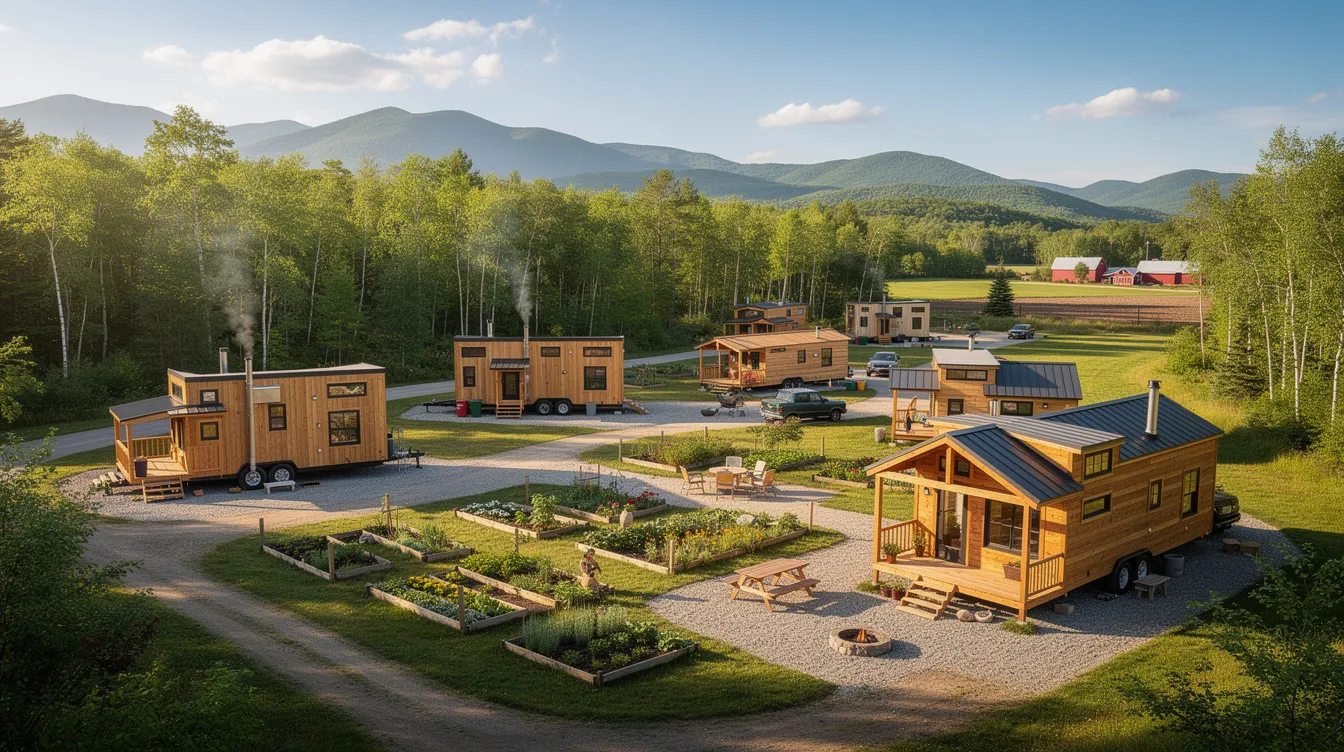
Tiny house communities in Vermont are growing fast. These villages offer more than small homes—they provide shared spaces, support systems, and a path to affordable living surrounded by the Green Mountains.
Vermont’s appeal is clear: world-class hiking, skiing, and breweries paired with progressive towns open to alternative housing. But here’s the catch—zoning regulations for tiny homes depend heavily on individual town laws and can vary significantly across the state. Vermont has not passed a statewide law for tiny homes, allowing each town to set its own rules.
The legal placement of tiny homes often requires approved and professional septic and utility connections, which can be costly; exploring top tiny house septic options for sustainable living can help you plan ahead. Still, these communities emphasize affordability, sustainability, and community-oriented living.
How We Chose the Best Tiny House Communities
We evaluated communities based on:
- Legal compliance and zoning clarity
- Location and accessibility
- Community amenities and shared facilities
- Cost structure and lot fees
- Environmental sustainability practices
- Proximity to employment opportunities
Top 5 Tiny House Communities in Vermont
1. Wheel Pad Community – Wilmington
This established community sits near Mount Snow, giving residents year-round outdoor recreation access.
Why It Stands Out: Prime location for skiing and water sports. Many Vermont tiny homes are custom-built to be highly efficient, and homes here feature modern tiny house designs with superior insulation and specialized heating to withstand harsh winter conditions.
Best For: Outdoor enthusiasts, retirees, seasonal visitors
Key Strengths:
- Full utility hookups and infrastructure
- Ski resort proximity
- Clear regulations and permit process
Possible Limitations:
- Higher costs due to tourist area location
- Seasonal crowding during peak times
2. Tiny Fern Forest Community – Lincoln
Located deep in a private forest setting, this community prioritizes self-contained tiny homes for modern off-grid living and eco-conscious off-grid lifestyles.
Why It Stands Out: Communities often integrate green practices like shared solar panels, composting systems, and community gardens. Vermont’s tiny house communities focus on sustainability, shared resources, and overcoming complex local zoning laws, making it essential to understand how to build a tiny house that meets both lifestyle goals and regulations.
Best For: Environmental enthusiasts, remote workers interested in nature, families seeking space
Key Strengths:
- Renewable energy and sustainable design
- Hiking trails on property
- Strong community garden and group activities
Possible Limitations:
- Remote place with limited internet connectivity
- Strict environmental guidelines
3. Vermont Tiny Homes Village – Montpelier
This community offers urban convenience while maintaining a small-town feel near the state capital.
Why It Stands Out: Walking distance to downtown Montpelier. Many tiny house rentals offer free Wi-Fi, and residents here stay connected for work. Foundation-built tiny homes in Vermont must comply with the International Residential Code (IRC), so choosing the best foundation for a tiny house is a key early decision.
Best For: Young professionals, government workers, individuals who love city access
Key Strengths:
- Public transportation and job opportunities
- Pet-friendly policies
- Modern facilities with private entrance units
Possible Limitations:
- Less natural setting
- Higher population density reduces privacy
4. Jamaica Cottage Village – South Londonderry
An established cottage community blending traditional VT charm with cozy tiny house cabin-style living.
Why It Stands Out: Located just 5 minutes from Magic Mountain and 25 minutes to Manchester’s shops and dining. Common features include outdoor amenities like BBQ grills, patios, and picnic areas. Tiny houses include essential amenities such as heating, air conditioning, and private bathrooms.
Best For: Families, vacation home owners, people thinking long-term
Key Strengths:
- Family-friendly recreation facilities
- Flexible seasonal and year-round residency
- Lots of established residents creating community
Possible Limitations:
- May require HOA dues
- Limited availability—waiting lists possible
5. Tiny House Freedom Village – Stowe
Premium living near Stowe Mountain Resort with luxury amenities, ideal for fans of mountain tiny house getaways.
Why It Stands Out: Park model tiny homes are often treated as recreational vehicles in Vermont, which can simplify registration. This community offers professional property management and high-end services.
Best For: Affluent retirees, luxury seekers, ski enthusiasts
Key Strengths:
- Prime location with big resort access
- Professional maintenance
- High-end kitchen and bathroom finishes
Possible Limitations:
- Premium pricing
- Strict community standards
Quick Comparison
Community | Best For |
|---|---|
Wheel Pad | Outdoor recreation |
Tiny Fern Forest | Eco-conscious living |
Vermont Tiny Homes Village | Urban convenience |
Jamaica Cottage Village | Traditional community feel |
Tiny House Freedom Village | Luxury resort living |
How to Choose the Right Tiny House Community
Location: Consider whether you meet your needs in rural versus urban settings. Proximity to work matters—understand commute times.
Budget: Depending on your experience and lifestyle, ongoing costs vary. Learn about lot fees, utilities, and land expenses before committing, and consider how working with top micro house builders might affect your overall budget.
Community Culture: Living in close proximity in tiny house communities fosters better relationships. Make sure values align, whether you’re drawn to tiny house living in Texas communities or prefer small home communities in Washington State. Some communities allow flexible living arrangements, with certain areas more welcoming to smaller dwellings on wheels and trailer-style homes.
Which Option Is Best for You?
- Wheel Pad if outdoor recreation drives your way of life
- Tiny Fern Forest if sustainability is your priority
- Vermont Tiny Homes Village if you need employment access
- Jamaica Cottage Village if you want established, family-friendly community
- Tiny House Freedom Village if luxury appeals to you
Final Thoughts
Vermont offers something for every tiny house dreamer. Living in a tiny house offers a path to affordable, eco-conscious homeownership, but it requires navigating complex local zoning laws and adapting to harsh winters.
Financing options typically exclude traditional mortgages—expect personal loans or RV loans instead. Set time to research building permit requirements in your target town. Email communities directly for details on availability and costs.
Most importantly, continue your search by visiting in order to create the right fit. Give yourself time, keep an open mind, and you’ll find your place among Vermont’s tiny home communities.