
Living in a tiny home means rethinking everything—including how you stay comfortable. A ductless mini split system offers tiny homeowners a compact, efficient way to handle both heating and cooling without eating up precious floor space. This guide covers everything you need to know about choosing, sizing, and installing a mini split in your tiny house.
Key Takeaways
- A ductless mini split heat pump is usually the best primary heating and cooling solution for tiny houses under 400–500 sq ft, combining both functions in one space saving choice
- Single-zone ductless mini splits outperform electric space heaters and window unit air conditioners in energy efficiency, with SEER ratings often ranging from 18 to 42
- Modern cold-climate heat pumps deliver reliable heat down to about -13°F (-25°C), making them viable for most U.S. and Canadian climates
- Correct sizing (typically 6,000–12,000 BTU), placement for good air circulation, and basic insulation upgrades matter more than brand selection
- Mini splits pair well with supplemental options like a ceiling fan or small electric heater for loft bedrooms and extreme cold snaps
- Why Tiny Houses Need a Different Heating and Cooling Approach
- How a Ductless Mini Split Heat Pump Works in a Tiny Home
- Pros and Cons of Mini Split Systems for Tiny Houses
- Sizing and Positioning Your Tiny House Mini Split
- Comparing Mini Splits to Other Tiny House Heating and Cooling Options
- Designing for Energy Efficiency in a Tiny House with a Mini Split
- Installation, Operation, and Maintenance Basics
- FAQ: Tiny House Heating with Mini Splits
- How much does it cost to install a mini split in a tiny home?
- Can a mini split fully heat a tiny house in very cold climates?
- Will a single indoor mini split unit reach my loft bedroom?
- Is a ductless mini split better than a window AC plus electric space heater?
- Can I use a mini split if my tiny house is frequently moved?
Why Tiny Houses Need a Different Heating and Cooling Approach
A minimalist tiny house typically ranges from 120 to 400 square feet, with some pushing toward 500 sq ft. Traditional hvac units simply don’t scale down well for these compact spaces.
Consider the numbers:
Home Type | Average Size | Typical HVAC |
|---|---|---|
Average U.S. Home | 2,301 sq ft | 3-ton central system (36,000 BTU) |
Typical Tiny Home | 120-400 sq ft | 6,000-12,000 BTU |
Standard forced-air furnaces require space consuming ductwork—often 10-20 linear feet per zone. That’s impractical when every square inch matters. Large outdoor condensers (typically 3×3 feet) overwhelm tiny house exteriors. High power draws of 20-40 amps strain RV-style 30A services common in mobile setups. |
The limited space in tiny homes restricts the installation of traditional hvac systems, necessitating the use of more compact and flexible heating and cooling solutions. Plus, tiny homes often lack adequate insulation, making it difficult to maintain comfortable indoor temperatures.
Mobility changes everything too. A self-contained tiny home on wheels faces road vibrations and frequent relocation. Climate matters—Minnesota’s -20°F winters demand different solutions than Florida’s humid summers.
Common older approaches have serious drawbacks:
- Portable space heaters: Create hot or cold spots, high energy costs
- Window unit air conditioners: Block light, poor insulation, EER around 10
- Wood burning stove: Requires 6-inch venting pipes, fire risks in 8-ft ceilings
- Electric fireplaces: Expensive to run, uneven heat distribution
How a Ductless Mini Split Heat Pump Works in a Tiny Home
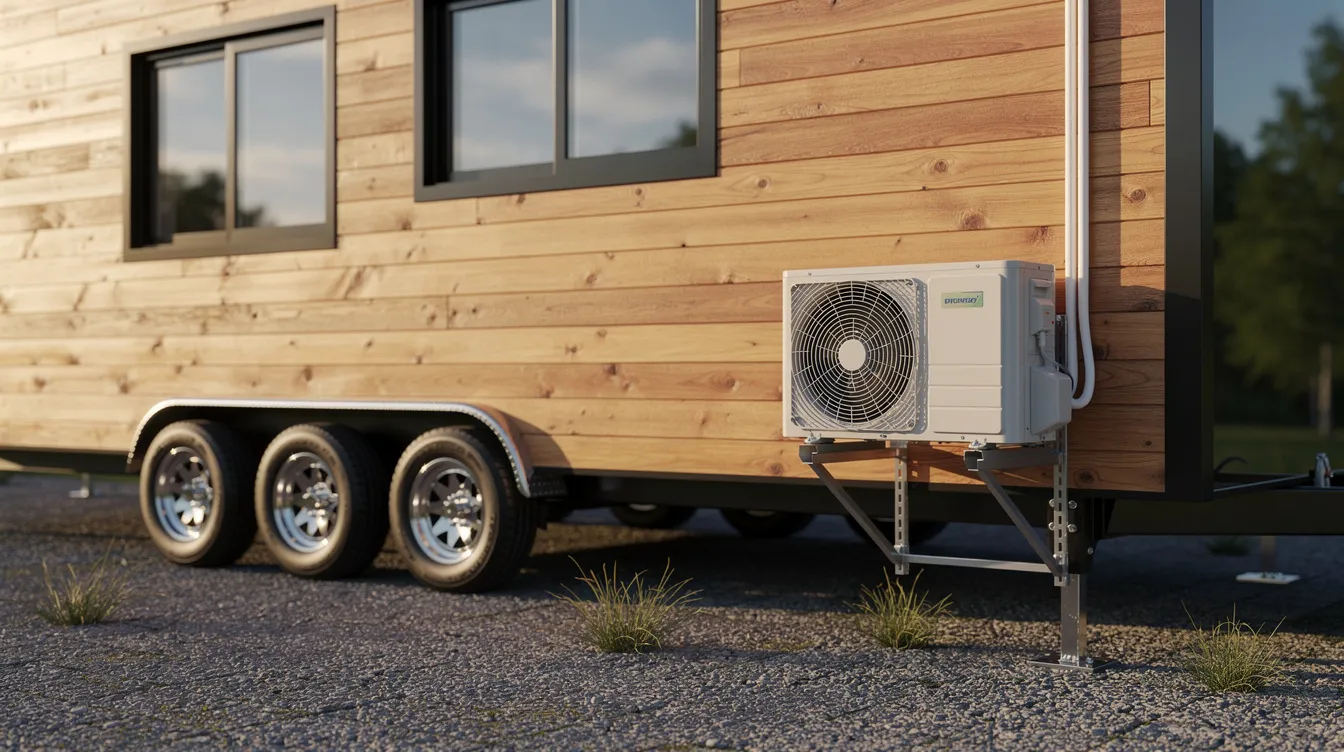
A ductless mini split system consists of one outdoor unit and one or more indoor air handlers, connected by small refrigerant lines and electrical wires through a wall. Mini-split systems are ductless and consist of one or more indoor units connected to a single outdoor unit, allowing for efficient heating and cooling without the need for ductwork.
Here’s the clever part: a heat pump moves heat instead of creating it.
- Heating mode: The system pulls natural heat from outdoor air (even in cold temperatures) and transfers it inside as warm air
- Cooling mode: Works like air conditioning, moving hot and cold air out of your space
Most tiny homes use a single indoor unit paired with a singular outdoor unit. This single-zone configuration handles spaces up to 400-500 sq ft when tiny house floor plans and insulation are reasonable.
Inverter-driven compressors and smart controls make tiny smart homes especially efficient for heating small spaces. Instead of cycling on and off, they ramp speed up or down to match demand. This maintains temperatures within 1°F and boosts efficiency dramatically.
Heat pumps, which can both heat and cool a space, are a suitable choice for tiny homes as they do not require ductwork and can be installed in various configurations to save space.
Modern cold-climate models like Mitsubishi’s Hyper-Heating INVERTER (H2i) systems maintain 100% heating capacity at 5°F and operate down to -13°F. That means reliable tiny home heating even in harsh winters.
Pros and Cons of Mini Split Systems for Tiny Houses
While ductless mini splits are often the best solution for tiny house heating and cooling, they’re not perfect. Understanding the tradeoffs helps you decide.
Advantages
- Combined heating and cooling: One system, year-round comfort
- High energy efficiency: Mini splits can reduce energy usage by up to 60% compared to standard electric heating systems
- No ductwork needed: Avoids 20-30% energy losses common with ducted systems
- Quiet operation: Mini splits operate at whisper-quiet levels because the noisy compressor is located outside (indoor units run at 20-35 dB)
- Precise temperature control: Mini-split systems can create single or multiple heating and cooling zones, allowing for individual temperature control in different areas
Space-Saving Benefits
- Wall-mounted or ceiling cassette indoor units preserve floor space
- Small outdoor units mount on stands or wall brackets
- These systems can be installed quickly, often within a day, and are available in various styles including wall-mounted, floor-mounted, and ceiling cassette options
Cost Considerations
Higher upfront cost than a couple of portable space heaters. But lower energy bills over time—especially in regions with long heating seasons. Expect ROI in 3-5 years through $200-400 annual savings.
Potential Downsides
- Professional installation required in most jurisdictions (EPA 608 certification for refrigerant handling)
- Upfront investment of $2,000-4,500 installed
- Need suitable mounting locations for indoor units and outdoor unit
- Visible indoor heads may affect aesthetics
For very cold off-grid locations, consider backup options like a small wood stove or propane heater during extended outages. At extreme temperatures below -13°F, heat pump efficiency drops significantly.
Sizing and Positioning Your Tiny House Mini Split
Correct BTU sizing is critical in a tiny home. Sizing is critical for mini-splits; an oversized unit will short-cycle while an undersized one won’t reach the target temperature. Short cycling spikes humidity 20-30% and halves equipment lifespan.
Sizing Guidelines
Tiny Home Size | Recommended BTU | Notes |
|---|---|---|
150-300 sq ft | 6,000-9,000 BTU | Well-insulated spaces |
300-400 sq ft | 9,000 BTU | Standard insulation |
400-500 sq ft | 9,000-12,000 BTU | May need larger for poor insulation |
Proper system sizing based on square footage and insulation quality is critical to prevent energy waste in mini-splits. |
Don’t rely on square-foot rules alone when designing tiny house plans that fit your life. Consider:
- Insulation quality (R-values)
- Window area and orientation
- Climate zone (typical winter lows)
- Sun exposure and shading
A Manual J load calculation provides accurate sizing.
Indoor Unit Placement
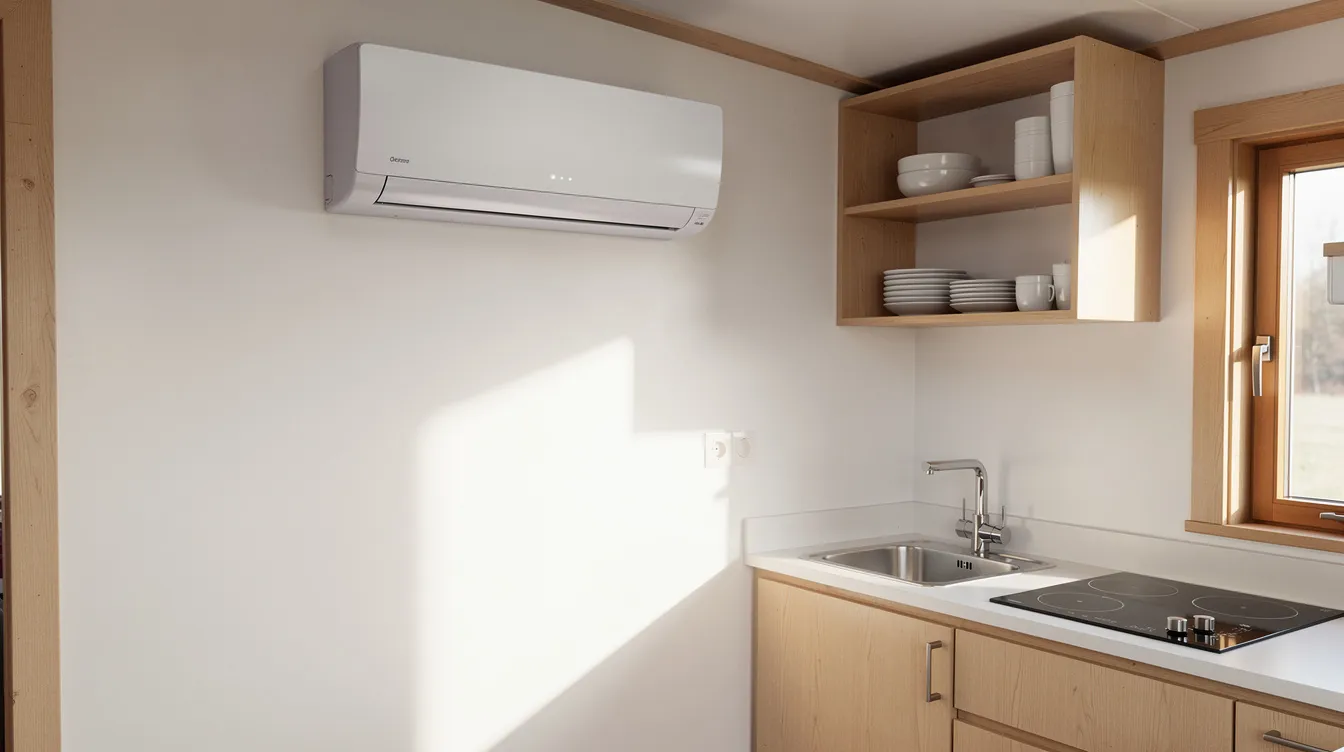
- Mount 6-8 feet high on an interior wall
- Position near living/kitchen area in open layouts
- Aim so air circulation reaches the sleeping loft
- Keep 10 feet from beds to avoid direct airflow when heating
Lofts trap heat—they can run 10-15°F hotter than space downstairs. A ceiling fan with reverse function helps destratify air and distribute temperatures more evenly.
Outdoor Unit Placement
- Elevate 12-18 inches above expected snowline
- Maintain 24-inch clearance on sides
- Avoid road spray on trailer-mounted tiny homes
- Use vibration isolators (rubber pads) for mobile setups
- Secure with shock-mount kits that endure 5g vibrations
Comparing Mini Splits to Other Tiny House Heating and Cooling Options
Tiny homeowners often consider multiple heating units and cooling options before settling on a solution, especially if they are still learning how to build a tiny house from the ground up.
Mini Split vs. Electric Space Heaters
Electric heaters run about 1,500 watts continuously, costing $0.20-0.50/hour. They’re cheap to buy but create highly inefficient heating with hot surfaces dangerous in compact spaces. Portable air conditioning units and electric space heaters are common alternatives, but they may not provide consistent temperature regulation throughout the space. Temperature regulation can be challenging due to the tendency for hot or cold spots to develop.
Mini Split vs. Window AC Units
Mini split ac units offer better long-term energy efficiency, run quieter, don’t block windows, and provide superior air circulation when cooling tiny homes. Many mini-split systems have high SEER ratings, often ranging from 18 to 42, which indicates their efficiency and potential for significant energy savings compared to traditional hvac systems.
Mini Split vs. PTAC Units
PTAC units combine heating and cooling like a mini split system but typically have:
- Lower efficiency (HSPF around 8 vs. mini split’s 12)
- More noise
- Large wall openings unsuitable for many tiny house builds
Supplemental Solutions
Option | Best Use | Power Draw |
|---|---|---|
Ceiling fan | Air circulation, destratifying lofts | 50W |
Small dehumidifier | Humidity control in humid climates | 200-500W |
Radiant floor mats | Supplemental floor warmth | 12W/sq ft |
Pellet stoves | Off-grid backup, ambiance | N/A |
Wood heat from a wood stove provides excellent off-grid backup but requires proper ventilation and poses fire risks in tight spaces. |
Consumer Reports’ 2026 tests show mini splits maintaining 75°F over 12 hours with 30% less energy loss than ducted alternatives. Most full-time tiny homeowners choose a mini split as the primary cooling system and heat source, using other options only as backup.
Designing for Energy Efficiency in a Tiny House with a Mini Split
The best mini split heat pump will perform poorly if your tiny home leaks air or has minimal insulation. Ductless mini-split systems are considered one of the best options for heating and cooling tiny homes due to their compact size and lack of ductwork, but the building envelope must support them.
Insulation Priorities
Improving insulation in tiny homes can significantly enhance energy efficiency by reducing the loss of conditioned air, leading to lower energy consumption and costs.
- Floor: R-21 (4” spray foam for trailer builds)
- Roof: R-38 minimum over sleeping lofts
- Walls: R-19 typical
- Windows: Triple-pane with U-0.15 or better
Air Sealing
- Caulk and weatherstrip all windows and doors
- Seal penetrations for plumbing and electrical
- Use quality gaskets on loft hatches
- Target 1 ACH50 for minimal infiltration losses
Smart Design Choices
- Orient large windows south with 2-ft overhangs for shading
- Use exterior shades on west-facing glass
- Park mobile tiny homes under deciduous trees in hot summers
- Install insulated skirting in cold climates (+15% floor heat retention)
Energy-Efficient Pairings
- LED lighting (80% savings over incandescent)
- ENERGY STAR appliances
- Thermal curtains for nighttime insulation
- 12V DC appliances for off-grid setups
Utilizing renewable energy sources, such as a solar array, can help tiny homeowners reduce their carbon footprint and energy bills, making adaptable heating and cooling more sustainable.
Mini-splits are rated by their HSPF (Heating Seasonal Performance Factor) for high efficiency, ensuring lower energy bills over the long term.
Installation, Operation, and Maintenance Basics
Proper installation is critical for performance and longevity of any ductless mini split system, whether you’re retrofitting an existing build or starting from a Home Depot tiny house kit. An improperly installed unit wastes energy and fails prematurely.
Professional Installation
Typical professional installation takes 4-8 hours and involves:
- Mounting indoor and outdoor units
- Running refrigerant lines through a 3-inch wall hole
- Vacuuming and charging the system
- Setting up condensate drains with proper slope
Because mini splits are ductless, they only require a small 3-inch hole for installation, preserving limited interior space. You don’t need to install ductwork that would eat up valuable room.
DIY Options
Some manufacturers like MRCOOL offer DIY-friendly kits with pre-charged lines. However:
- Follow local codes strictly
- Ensure proper electrical requirements
- Understand warranty implications
Electrical Considerations
Most mini-splits require a 220V/240V circuit, which is more efficient than 110V models. Ensure your panel has:
- Appropriately sized dedicated breaker (15-20A typical)
- Correct wire gauge (#10 AWG common)
- Sufficient overall service (30A or 50A for mobile setups)
Maintenance Tasks
Task | Frequency | Time |
|---|---|---|
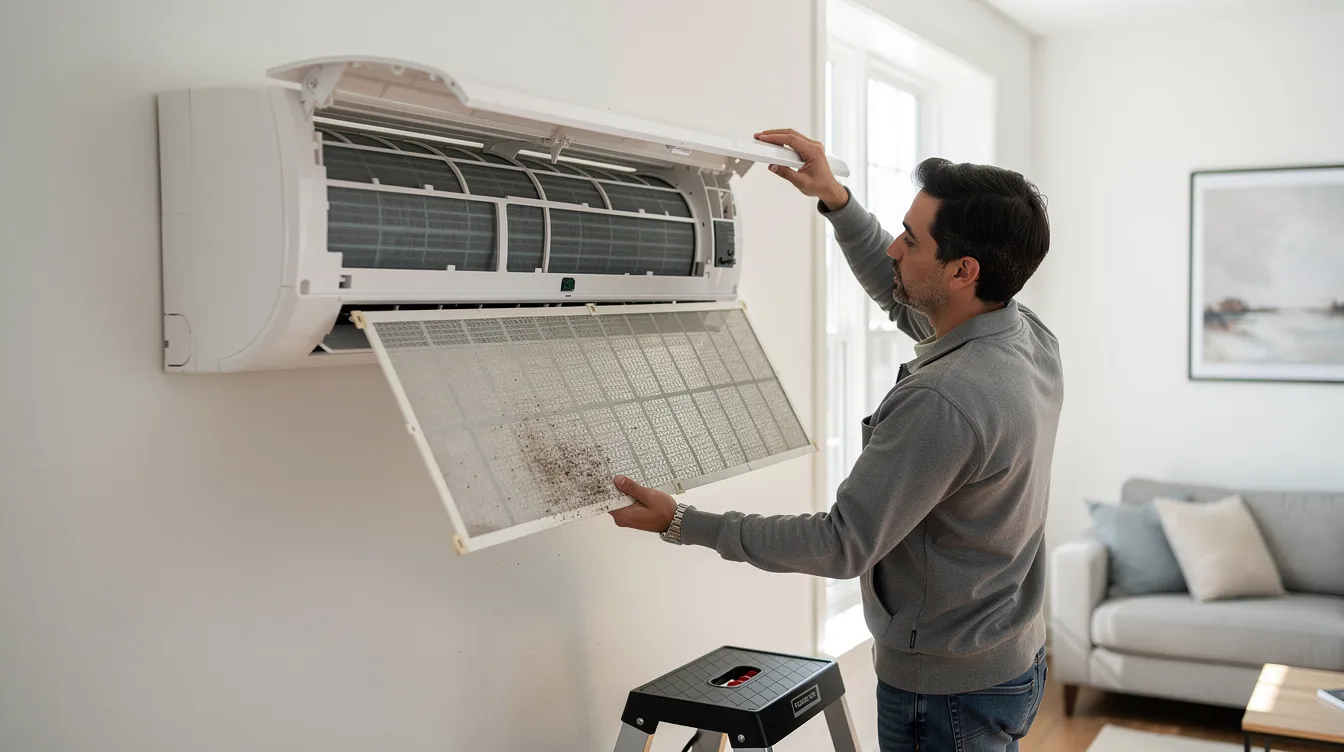
Clean/replace indoor filters | Every 4-8 weeks | 5 minutes |
Wash indoor coils and louvers | Annually | 30 minutes |
Clear debris from outdoor unit | Monthly (seasonal) | 10 minutes |
 |
Smart Controls
Wi-Fi thermostats and app-based controls let you:
- Pre-condition the home before arrival
- Monitor energy use in real-time
- Adjust settings remotely via remote control
- Track kWh consumption for saving energy
Smart controls prove especially useful for part-time or vacation custom tiny homes.
FAQ: Tiny House Heating with Mini Splits
How much does it cost to install a mini split in a tiny home?
As of 2025-2026, a typical 6,000-12,000 BTU single-zone ductless mini split system runs roughly $1,200-$2,500 for equipment. Professional installation adds $800-$2,000 depending on region and complexity. Rural areas may see a 20% premium. Federal IRA rebates can cut costs by 30% (up to $2,000) for qualifying systems.
Can a mini split fully heat a tiny house in very cold climates?
Modern cold-climate heat pumps deliver reliable heating down to around -13°F. However, in places with sustained colder temperatures or frequent outages, most tiny homeowners add a backup heat source. Options include a small electric heater (1.5 kW), propane heater, or wood stove. At -20°F, expect about 20% supplemental runtime.
Will a single indoor mini split unit reach my loft bedroom?
In most open-plan tiny homes, a properly placed wall-mounted indoor unit can effectively heating and cooling the loft. Position the unit high on the wall, angled toward the loft opening. Owners often need a ceiling fan or small circulation fan to move cold air up and warm air down through the ladder or stair opening for more even temperatures.
Is a ductless mini split better than a window AC plus electric space heater?
For year-round living, a mini split heat pump is typically more energy efficient, quieter, and better at humidity control than combining window air conditioning with electric space heaters. Consumer Reports data shows mini splits using 45% less energy than this combination. The mini split costs more initially but delivers lower energy bills and avoids excessive energy consumption that leads to hefty energy bills.
Can I use a mini split if my tiny house is frequently moved?
Yes, but with precautions. Mount the outdoor unit securely on the trailer or a removable rack. Protect refrigerant lines with flexible sleeving. Use shock-mount kits (like DiversiTech) rated for 5g vibrations. For tiny houses that move very frequently, some owners still consider portable cooling solutions as a simpler alternative—though they sacrifice the cooling capabilities and energy efficiency of properly installed multiple units or a single dedicated system.