If you’ve ever dreamed of living like Bilbo Baggins, you’re not alone. A tiny house hobbit is a compact, earth-inspired dwelling modeled after the cozy homes from Lord of the Rings, featuring hallmark elements like a circular door, curved windows, earth-bermed walls, and interiors emphasizing rustic warmth over modern minimalism.
This guide covers real rental experiences across the U.S., design ideas for your own backyard, floor plans ranging from 140 to 336 square feet, step-by-step DIY building guidance, and common questions from both travelers and aspiring builders. You’ll find concrete examples from Maine, Colorado, Texas, and the Smoky Mountains to help you decide whether to book a night or break ground on your own hobbit hole.
- Storybook-Inspired Hobbit Tiny Houses In The U.S.
- Guest Experiences: Why Tiny Hobbit Houses Feel So Magical
- What Makes A Hobbit Tiny House Different From A Regular Tiny House?
- Design Inspiration: Inside A Tiny House Hobbit
- Hobbit Tiny House Floor Plans And Layout Ideas
- How To Build A Tiny House Hobbit: Step-By-Step Overview
- FAQ: Tiny House Hobbit Questions Answered
Storybook-Inspired Hobbit Tiny Houses In The U.S.
Hobbit-style tiny homes have surged in popularity since around 2017, capitalizing on Tolkien fandom and the growing tiny house movement. Within the broader world of great tiny homes that redefine small-space living, these thoughtfully designed retreats function as vacation rentals, backyard guest houses, and even primary off-grid residences.
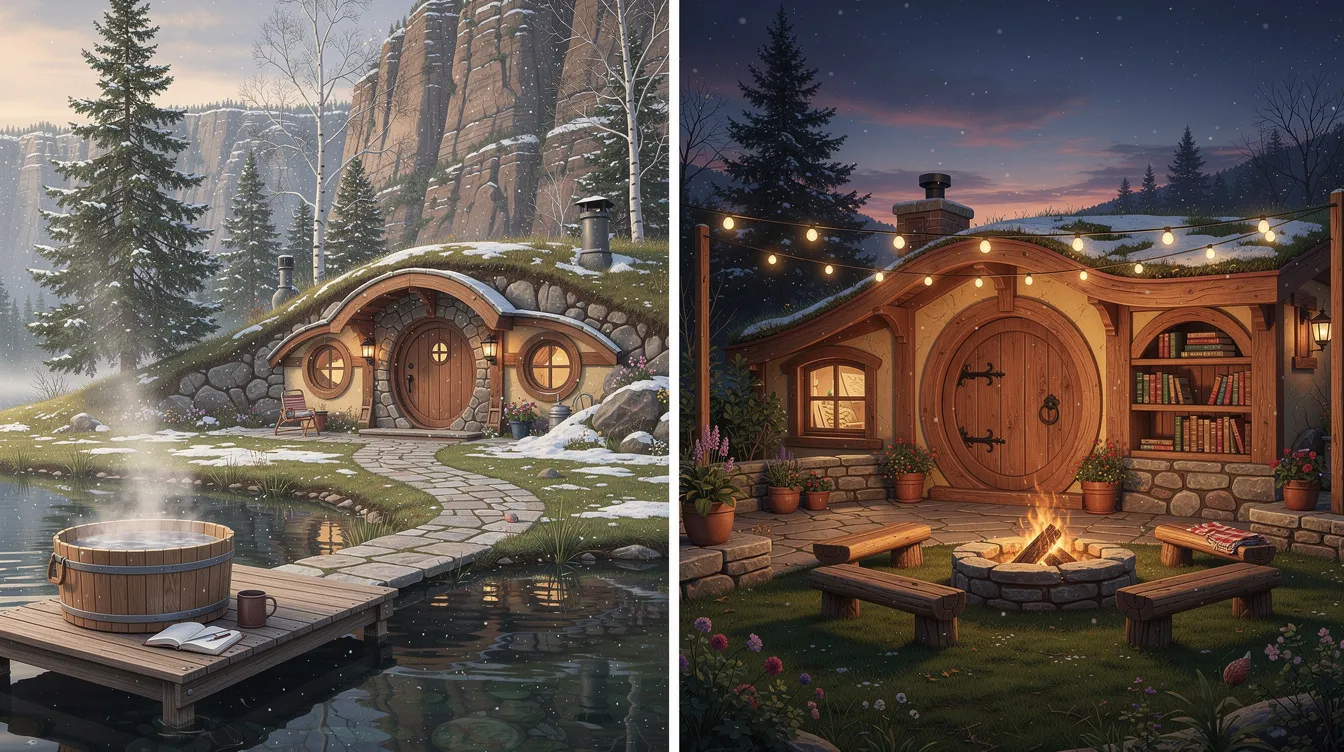
Consider a lakeside hobbit tiny house in Maine, built in 2021 on a 1-acre lot beside a spring-fed pond. The property echoes many of the charms found in the best tiny houses by the lake, featuring a stone patio, cedar hot tub, and private rowing dock where guests can spend mornings journaling or fishing. The structure uses earth-sheltering for thermal stability, keeping the living space comfortable through harsh New England winters.
Near Lyons, Colorado, a resort offers year-round stays in a 180 sq ft hobbit home with panoramic views of St. Vrain Canyon. The property includes a firepit circle, community lawn, and underfloor heating for winter visits. Guests can sit outside watching snow dust the curved stone path leading to the round front door.
A Texas-style hobbit tiny home near Houston delivers 200 sq ft of authenticity through a handcrafted circular oak door, reading loft with built-in bookshelves, and a small courtyard strung with lights. Couples hoping for an anniversary retreat consistently rate it among their favorite stays.
In the Smoky Mountains near Gatlinburg, Tennessee, you’ll find a 160 sq ft micro-cabin partially earth-sheltered with a mossy roof and trail access to a nearby creek. It’s a great spot for families seeking both outdoor adventure and cozy indoor evenings with board games.
Guest Experiences: Why Tiny Hobbit Houses Feel So Magical
Guest satisfaction at hobbit tiny houses runs remarkably high, with ratings typically landing between 4.8 and 4.95 out of 5 on major rental platforms. Out of 250 recent stays at several U.S. hobbit tiny homes, roughly 92% of reviews are five-star, 6% are four-star, and only 2% are three-star or below.
Common praise centers on craftsmanship, extreme coziness, quiet locations nestled in natural settings, and Middle Earth details that transport guests into another world. Visitors consistently mention hand-carved trim, round windows, low warm lighting, and well-stocked game or book nooks as standout features.
Couples use these spaces for anniversaries, Valentine’s Day, or surprise birthday weekends. The sense of wonder comes from details like warm knotty pine evoking Shire hearths, built-in daybeds for reading fantasy novels, and immersive simplicity aligning with “hobbit-core” ideals of comfort and good food.
Real-Life Style Reviews From Hobbit Tiny House Guests
The following are representative, anonymized stories capturing common themes from reviews across multiple platforms.
Nora from Denver (2-night stay in a Colorado hobbit home, March 2025): She selected the property as a surprise for her partner, enchanted by the snow-dusted stone path leading to the 5-foot round door. The underfloor radiant heating maintained 68°F amid mountain chill, and the private hot tub overlooking the canyon made it feel like a perfect escape into winter Shire magic.
James and Priya from Dallas (1-night stay near Houston, October 2024): Celebrating their 5th anniversary, they adored the circular oak door’s creak, the locally roasted coffee bar, and a Middle Earth welcome basket with hobbit loaves and herbal teas. “Every curve felt handcrafted for romance, far cozier than any hotel,” they noted.
Lena from Portland, Maine (3-night solo retreat, September 2023): She cherished the quiet rowing dock for morning journaling, the built-in daybed with fantasy novel shelves, and spring-fed pond views through porthole windows. She described it as “pure solitude, like Bag End by water.”
Miguel’s family from Atlanta (weekend in Smoky Mountains, June 2025): The kids were obsessed with tiny bunks and hidden cubby storage for toys, while parents valued the compact kitchenette’s efficiency and the board games shelf. “Trails to the creek plus indoor coziness made it family paradise.”
What Makes A Hobbit Tiny House Different From A Regular Tiny House?
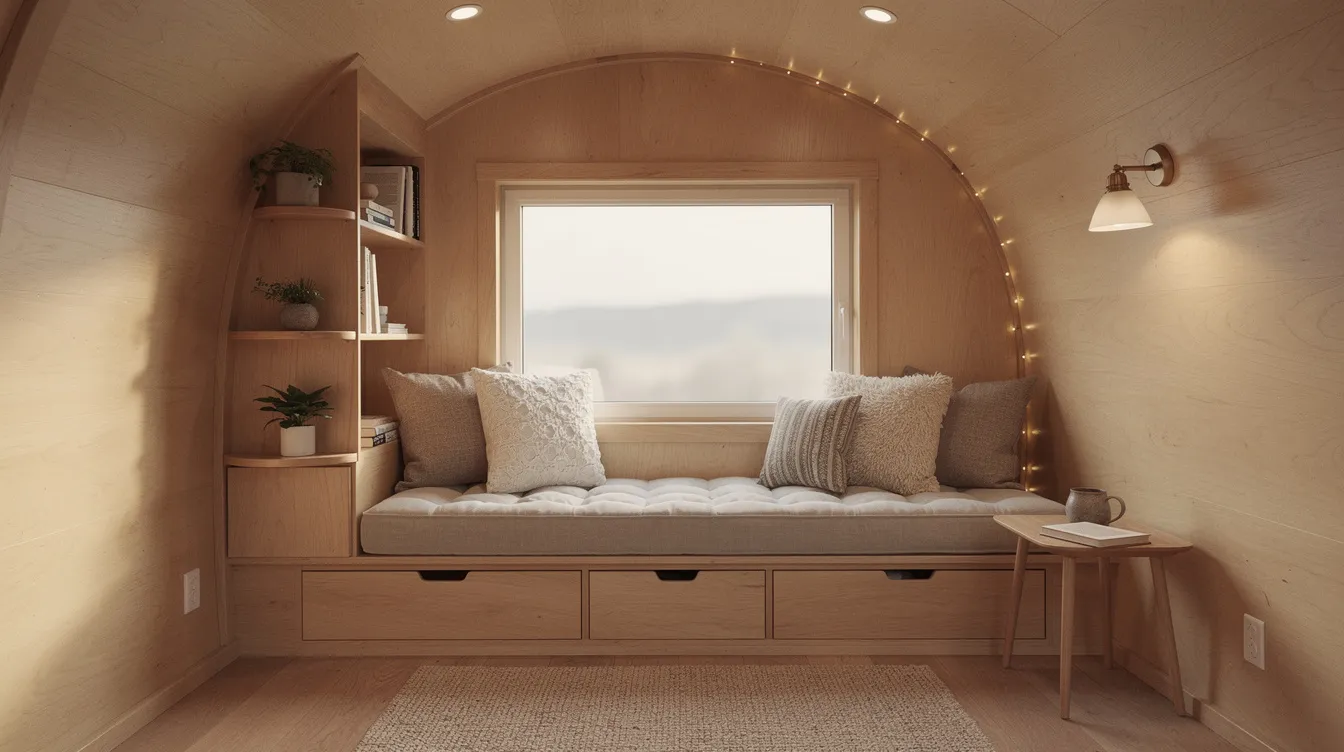
Unlike standard rectangular tiny homes on wheels prioritizing mobility and code compliance, a hobbit house employs stationary, earth-bermed designs partially sunk into hillsides. The architecture draws directly from Tolkien’s low, burrow-like Shire homes, emphasizing lived-in comfort over stark minimalism.
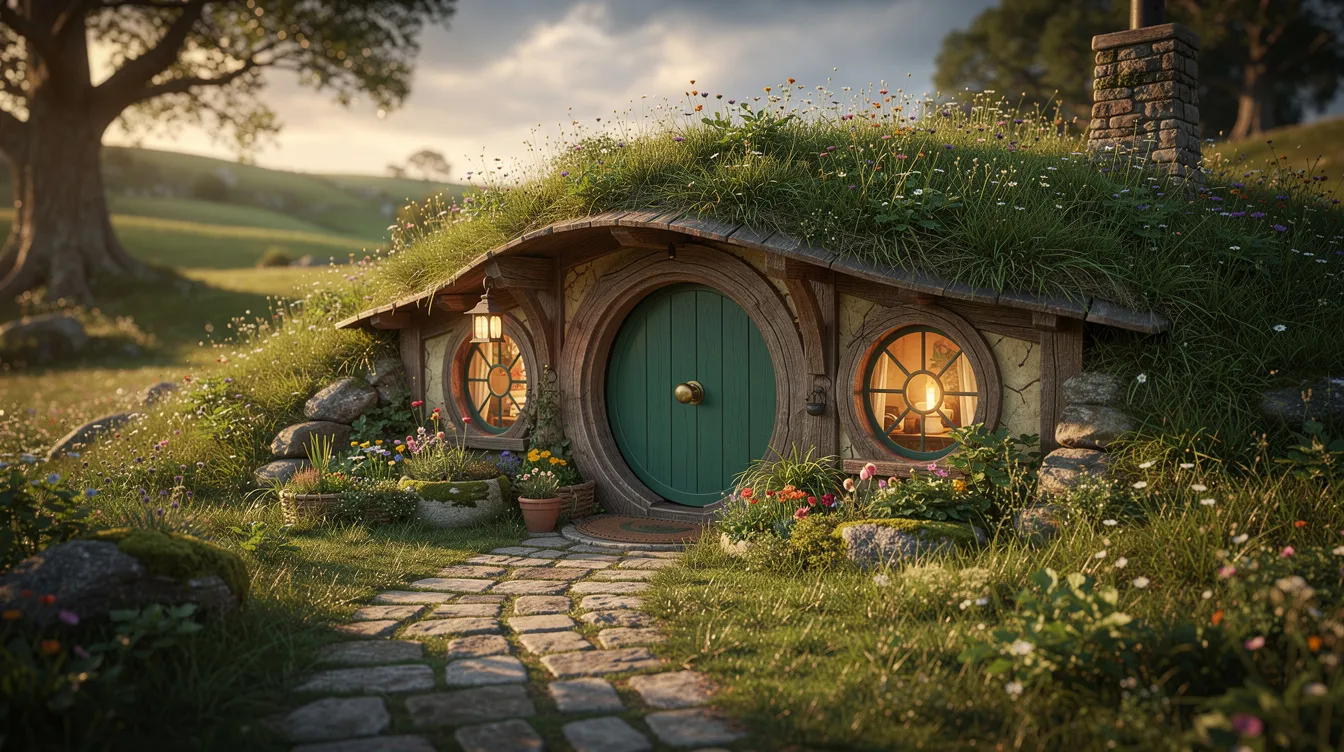
Key design traits include partial earth-berming, green or mossy roofs, circular or arched doors (often 5 feet in diameter with iron hardware), rounded interior lines, and warm rustic materials like knotty pine, reclaimed oak, and stone. The aesthetic creates low ceilings of 6.5-7.5 feet, built-in shelving, cozy hearths, and an overall feel that prioritizes rest and comfort.
Sizes typically cluster between 140-260 sq ft with open-plan living, sleeping, and kitchenette areas plus a compact bath. Eco-features include soil insulation providing R-20+ equivalent from berms, energy-efficient LED lighting, porthole windows, off-grid solar options, and composting toilets. These features can reduce heating and cooling bills by 30-50% compared to above-ground structures through passive temperature stability.
Pros And Cons Of Living In A Hobbit Tiny House
Hobbit-style tiny homes have unique strengths and trade-offs compared to other houses and standard small cabins.
Advantages include exceptional energy stability from earth-bermed walls providing natural R-30+ insulation and wind protection, yielding heating and cooling bills 40-60% lower than above-ground tiny homes. You’ll enjoy profound privacy via hillside blending, immersive storybook charm fostering well-being reminiscent of enchanting magic tiny homes, efficient layouts with built-ins minimizing clutter, and strong rental potential with 92%+ five-star rates.
Disadvantages encompass complex waterproofing engineering requiring multi-layer membranes and drainage mats, adding 20-30% build time. Limited natural light is possible without strategic portholes and skylights. Initial DIY costs run $120-250 per sq ft versus $100-200 per sq ft for trailers. For concrete comparison: a 200 sq ft hobbit house in 2025 might run $30,000-$55,000 DIY, versus $25,000-$45,000 for a comparably sized above-ground trailer tiny home. Some U.S. counties also restrict earth-sheltered ADUs, requiring engineering stamps and special permits.
Design Inspiration: Inside A Tiny House Hobbit
Interior design is what makes these spaces feel truly Shire-like. Common color palettes include warm creams, sage greens, deep wood tones, and brass or copper accents that catch lamplight in the evenings.
Typical materials include reclaimed oak beams, live-edge shelving, stone or brick hearth areas, wool or linen textiles, and handmade ceramic mugs sitting on open shelves. The idea is to create a living area where everything feels worn-in and welcoming rather than sterile or ordinary.
Space-saving features are essential in any tiny home, and hobbit houses excel here: built-in benches with storage underneath, loft or alcove beds accessed by ship-style ladders, fold-out tables, and curved cabinetry that follows the rounded walls. These storybook spaces sit comfortably alongside other cute tiny house designs for your dream home. Think in terms of curves rather than straight lines—arched doorways, rounded cabinet fronts, and circular windows overlooking garden views.
Walking in, you might open a round front door into a living nook with a built-in bench and hearth. A galley kitchen with 2-burner cooktop, spice jars, and copper pot racks transitions to a rear sleeping alcove or loft, all under warm LED lighting creating intimacy.
Interior Details: Cozy Hobbit Nooks And Clever Storage
Good hobbit tiny houses feel both whimsical and highly functional. Every inch serves a purpose while maintaining the magic.
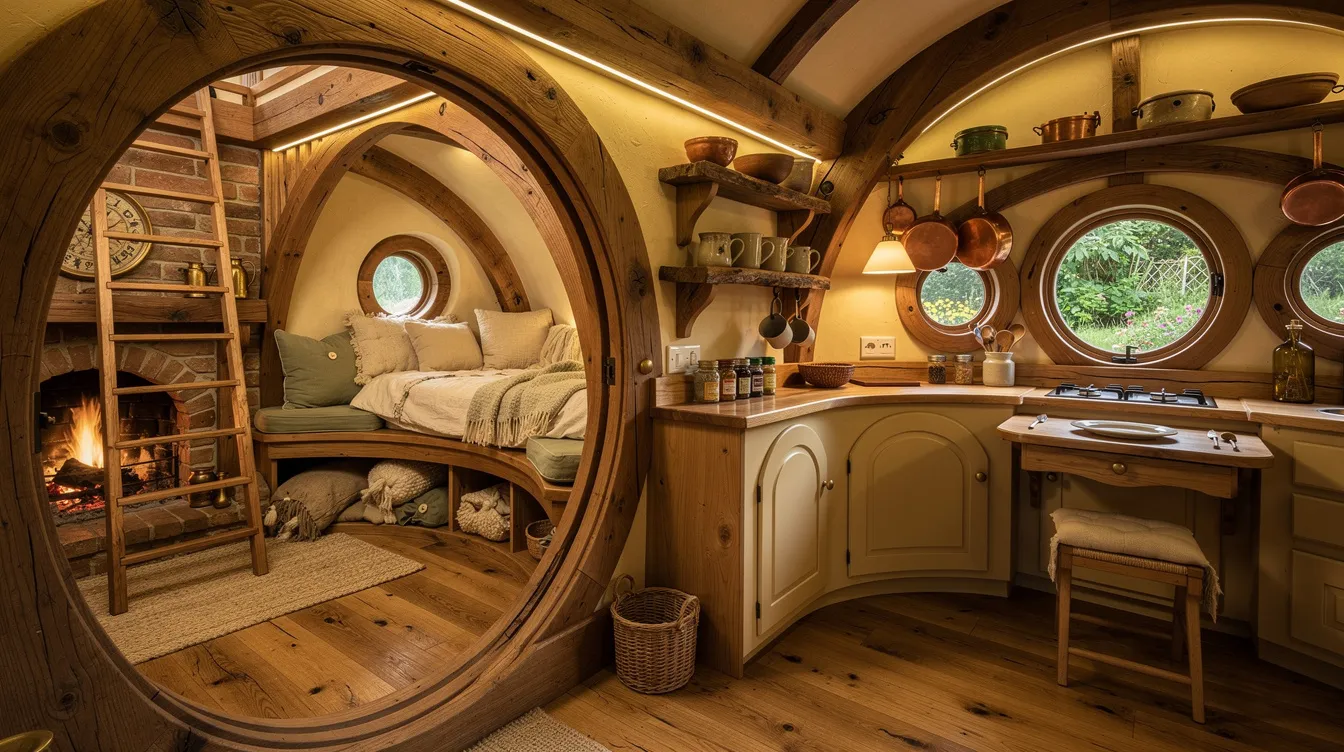
A reading nook built into a rounded wall might feature a deep window seat, overhead sconces, wool cushions, and a small built-in bookshelf stocked with fantasy novels. Under-stair and under-bench storage includes pull-out drawers for shoes, board games, extra blankets, and kitchen essentials.
Kitchen touches include open spice shelves with labeled glass jars, small copper pot racks, compact 2-burner cooktops, and bar sinks set into butcher-block counters. The bathroom might have a rounded shower stall with stone-style tile, a tiny stained glass window, a wall-mounted sink to save room, and a pocket door that disappears when you need the space.
Exterior Character: From Round Doors To Garden Paths
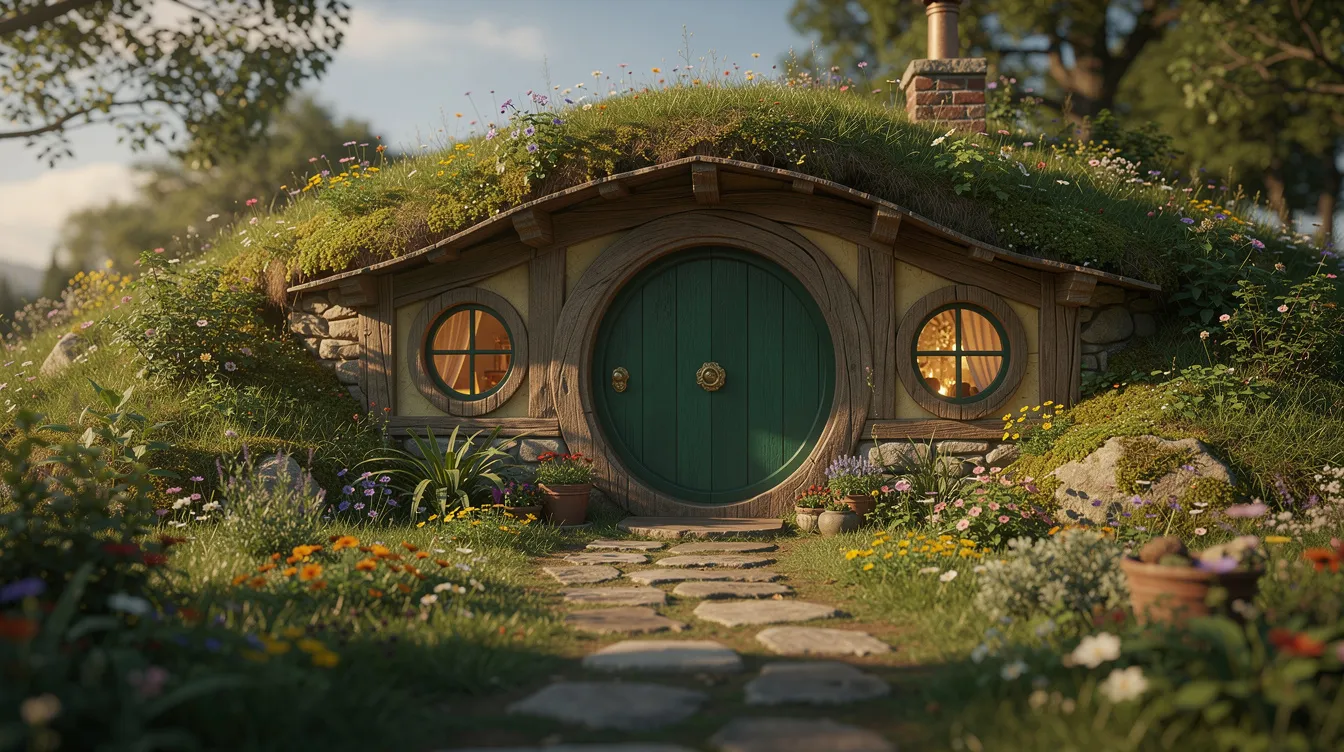
Stepping outside connects you to the sense of a storybook illustration. The signature front elevation features a semi-buried facade with a big circular wooden door painted deep green, red, or blue, equipped with iron hardware and lantern-style lighting.
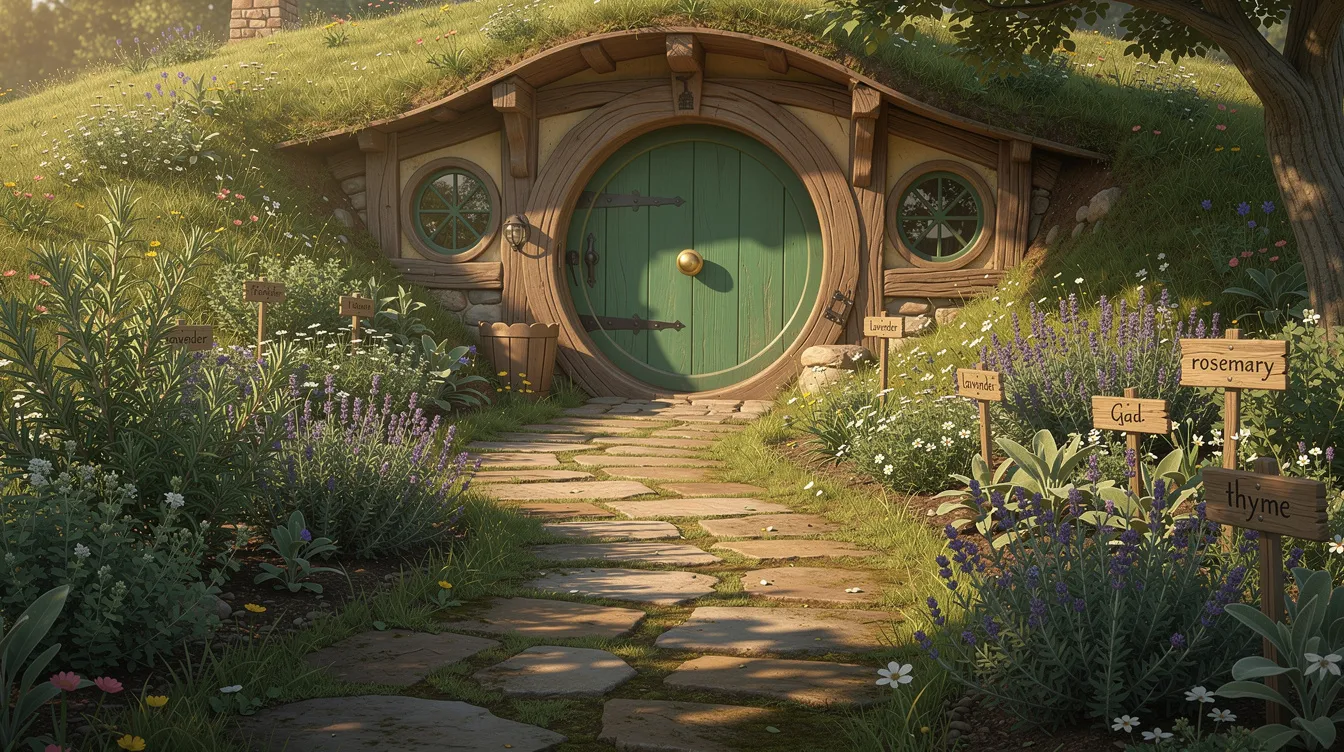
Roofing approaches include sod or sedum-planted roofs for earth-bermed models, or shingle and metal roofs with thick mossy landscaping for above-ground versions. The structure should blend into hills and surrounding landscape within 1-2 growing seasons.
Landscaping ideas include curved stone paths bordered by herb beds with rosemary, thyme, and lavender, plus dwarf fruit trees and native wildflowers around the entrance. Simple accessories like a carved wooden house sign reading “Oakroot Cottage, Est. 2022,” a wooden mailbox, and rustic bench complete the dream. These elements work across climates—New England moss thrives on berms, Rockies scrub oak suits dry slopes, Southeast hydrangeas frame Tennessee cabins.
Hobbit Tiny House Floor Plans And Layout Ideas
Clever floor plans make 140-260 sq ft feel surprisingly generous. Planning priorities include clear division between sleeping and living space, enough ceiling height (7-8 feet) at main circulation paths, and window placement for both light and views, much like the principles behind tiny house floor plans that work for you.
Some designs are fully earth-bermed on three sides with only the front exposed, while others use partial berms with daylight on two or three sides. Many modern plans place the kitchen and seating near the front round window, with the bathroom tucked to one side and the sleeping area in a rear alcove or loft, similar to how tiny house plans that fit your life prioritize daily routines and comfort.
Approx. 24’ x 14’ Hobbit Tiny House Layout (About 336 sq ft)
This compact but comfortable plan suits couples or small families, built on a slab or concrete stem wall. An arched front door opens into a combined living and dining area with built-in bench seating. A galley kitchen runs along one side with floor-to-ceiling pantry and overhead cabinets following the wall’s curve.
The rear bedroom holds a queen bed, and a small bathroom includes a shower and composting or low-flow toilet. Expect to spend $55,000-$75,000 for a DIY build using mid-range materials in 2025-2026, depending on finishes and level of earth-berming.
Approx. 18’ x 12’ Hobbit Micro-Cabin (About 216 sq ft)
This minimalist option works well as a guest house, vacation rental, or backyard office with semi-earth-sheltered back and sides. One main room features a convertible sofa or built-in daybed, with a compact kitchenette along the back wall and a corner bathroom with sliding door.
A small loft above the entry provides storage. A large circular front window and skylight toward the rear keep the space feeling open despite the compact footprint. Budget $35,000-$55,000 for a basic-but-charming DIY build in 2025, depending on excavation and roof complexity.
How To Build A Tiny House Hobbit: Step-By-Step Overview
A hobbit-style tiny house can be a DIY project for determined builders, though you may need professional help for structural engineering, drainage, and permitting. The process shares elements with building a tiny house step by step for standard cabins but adds unique steps for earth-berming, curved framing, and waterproofing.
The five main stages are: choosing site and design, preparing the land, building the structure, insulating and waterproofing, and finishing details. Many owner-builders spend 6-18 months working part-time from first shovel to move-in ready.
1. Choose And Prepare Your Hobbit House Site
Look for land with natural slopes, good drainage, and sun exposure—ideally facing south or southeast. Before buying property or starting excavation, verify zoning and building codes in your county. Some areas classify these structures as accessory dwelling units, while others require special permits.
Site prep tasks include clearing brush, marking the building footprint with stakes and string, and planning for driveway, water access, and septic or alternative waste systems. Site selection and permitting might take 2-6 months depending on your U.S. location.
2. Excavate And Create The Basic Structure
For earth-bermed designs, excavate a shallow cut into a hillside or create a partial berm with imported soil and rock. Form a slab or footing using compacted gravel base, moisture barrier, then reinforced concrete poured to support walls.
Two common structural strategies exist: curved timber or laminated beams supporting an arched roof, or a stick-framed shell with curved facade and conventional roof behind. Work with a structural engineer if using heavy green roofs or deep soil cover.
3. Frame, Insulate, And Waterproof Your Hobbit Tiny House
Keeping an earth-contact structure dry over decades requires careful attention to the process. Frame the round doorway and windows using laminated arcs or bent plywood, then enclose walls and roof with sheathing.
Insulation choices include rigid foam or mineral wool against exterior earth-contact walls, spray foam or batts in roof cavities—aim for roughly R-20 walls and R-40 to R-50 roof. Apply self-adhered waterproof membranes, drainage mats, and perforated drain pipes at footing level. Backfill carefully with gravel and soil after waterproofing, ensuring water flows away from the house.
4. Finish The Interior: Woodwork, Utilities, And Details
Start with rough-in: running electrical circuits for LED lighting and outlets, plumbing lines for sink, shower, and toilet, and any mini-split or radiant floor heating. Interior finishes include tongue-and-groove pine or cedar on walls and ceilings, stone or tile for hearth areas, and durable vinyl plank or hardwood floors.
Built-in furniture might include curved kitchen counters, window seat benches, loft ladders, and recessed shelving following the curve of the wall. Character details like forged iron hardware, round interior porthole mirrors, hand-painted signs, and a compact woodstove or electric fireplace bring the shire inspiration to life.
5. Landscape And Bring The Shire To Life
Build a curved stone or brick path from parking to the round front door, bordered by thyme or creeping groundcovers. Plant native shrubs and perennials suited to your region—blueberries and birch in Maine, scrub oak and wildflowers in Colorado, hydrangeas and dogwoods in Tennessee.
Simple outdoor amenities include a circular stone patio with fire ring, rustic benches, and lantern posts for safe nighttime access. Let the berm vegetation naturalize over 1-2 growing seasons to achieve that settled, “always-been-here” look that makes visitors forget they’re in the ordinary world.
FAQ: Tiny House Hobbit Questions Answered
This section addresses common concerns from renters and aspiring builders focusing on the U.S. context in 2025-2026.
Is It Legal To Build A Tiny House Hobbit Where I Live?
Legality depends on local zoning, building, and fire codes. Hobbit tiny houses may be treated as ADUs, cabins, or unconventional dwellings. Contact your city or county planning office before design finalization, bringing a sketch and explaining the earth-bermed approach.
Rural counties in states like Maine, Tennessee, Colorado, and Oregon tend to be more flexible than dense suburbs. Some owners initially register their hobbit tiny house as a “studio” and later pursue full dwelling approval as codes evolve—but always follow local law and document structural safety details.
Are Hobbit Tiny Houses Comfortable Year-Round?
Well-designed hobbit tiny houses feel very comfortable in four-season climates due to thermal mass and shelter from wind. Earth contact helps stabilize temperatures but doesn’t replace proper insulation and controlled ventilation.
In a New England climate, interior temps may hover in the 50s°F without heating mid-winter, but a small electric heater or mini-split can easily raise that to 68-70°F. Humidity control through exhaust fans and optional HRV systems keeps the air fresh. Don’t wait to address ventilation planning—it’s essential for long-term comfort.
How Much Does It Cost To Build A Tiny House Hobbit?
Realistic 2025-2026 DIY costs range from $120-$250 per square foot depending on earthworks, roof complexity, and finishes. Total budgets run around $30,000-$45,000 for a simple 180-220 sq ft micro-cabin with modest berming, or $60,000-$90,000+ for a highly detailed, fully earth-bermed 250-320 sq ft home, which compares favorably to offerings from top micro house builders focused on affordability and quality.
Doing most work yourself and sourcing reclaimed materials cuts costs but lengthens build time. Budget for hidden items: permits, engineering, excavation, drainage, utilities hookup, and landscaping. This isn’t about saving money alone—it’s about investing in a unique living experience.
Can I Buy A Hobbit Tiny House Kit Instead Of Building From Scratch?
Several U.S. and international companies sell curved-shell structures, modular arches, or pre-cut panels suitable for hobbit-like homes, including mainstream options like Home Depot tiny house kits. Kits typically include structural shell, hardware, doors and windows, and assembly instructions—but often not site work, foundation, utilities, or interior finishes.
Smaller dome or arched kits for 150-250 sq ft can start in the $20,000-$40,000 range before site and finishing costs as of mid-2025. Check shipping costs, warranty, and whether the kit has engineering stamps acceptable to your local building department. Compare kit costs against full custom builds, considering other options based on your skill level.
Is Building Or Owning A Hobbit Tiny House Worth It?
Key benefits include unique charm that creates an unforgettable experience, potential for rental income with high guest ratings, reduced environmental footprint through eco friendly homes design principles, and a deeply personalized space, similar to what custom tiny homes for small-space living aim to deliver. The intangible rewards matter too: sense of craft, storytelling value, and daily life feeling like stepping into a favorite book.
Balance this with realities: significant upfront planning, careful budgeting, and longer construction timelines than a simple shed or basic cabin. As more people seek smaller, character-rich homes, hobbit-style tiny houses remain a niche but absolutely enduring part of the tiny living movement. If the Shire calls to you, the fun is in answering.