Key Takeaways
- Traditional mortgages rarely work for tiny houses because most banks require minimum square footage and permanent foundations; buyers typically rely on personal loans, RV loans, park model financing, credit unions, or home equity loans instead.
- Many tiny house loans lenders want a solid credit score of 660–700+ for the lowest rates, but some credit unions and online lenders are more flexible with scores in the mid-500s and offer low down payment options.
- Loan terms vary widely: unsecured loans may run 2–7 years with higher interest rates, while specialized manufactured home and RV lenders offer fixed rate terms up to 20–25 years.
- How your tiny home is classified—RV, park model, manufactured home, or real property on a permanent foundation—determines which financing options and lenders are available.
- Working with builders and lenders who already know how to finance a tiny home greatly speeds up approval and avoids last-minute surprises at closing.
Introduction: How Tiny House Loans Work Today
Tiny houses have surged in popularity amid 2026’s housing affordability crisis. With the average cost of a tiny home around $82,500 and finished units ranging from $60,000 to $120,000, these compact dwellings offer a path to homeownership that traditional homes simply can’t match. Tiny homes typically cost between $20,000 and $100,000, and using a tiny home cost calculator can help you model how different sizes, finishes, and locations affect your overall budget, making them far more affordable than traditional homes, which average around $534,100.
Here’s the challenge: most banks will not issue a standard 30-year mortgage unless your tiny home sits on a permanent foundation and meets local building codes. Traditional banks are often hesitant to offer mortgages for tiny homes due to their non-traditional nature, potential zoning issues, and the relatively small loan size, which can be unattractive to lenders.
The good news? Approximately 68% of tiny home owners have the financial stability to purchase their homes outright, compared to about 30% of traditional homeowners. For everyone else, a growing ecosystem of credit unions, online lenders, tiny house builders offering in-house financing, and manufactured home lenders now provide financing options. This guide compares those options and explains how to get approved.
What Type Of Tiny Home Are You Financing?
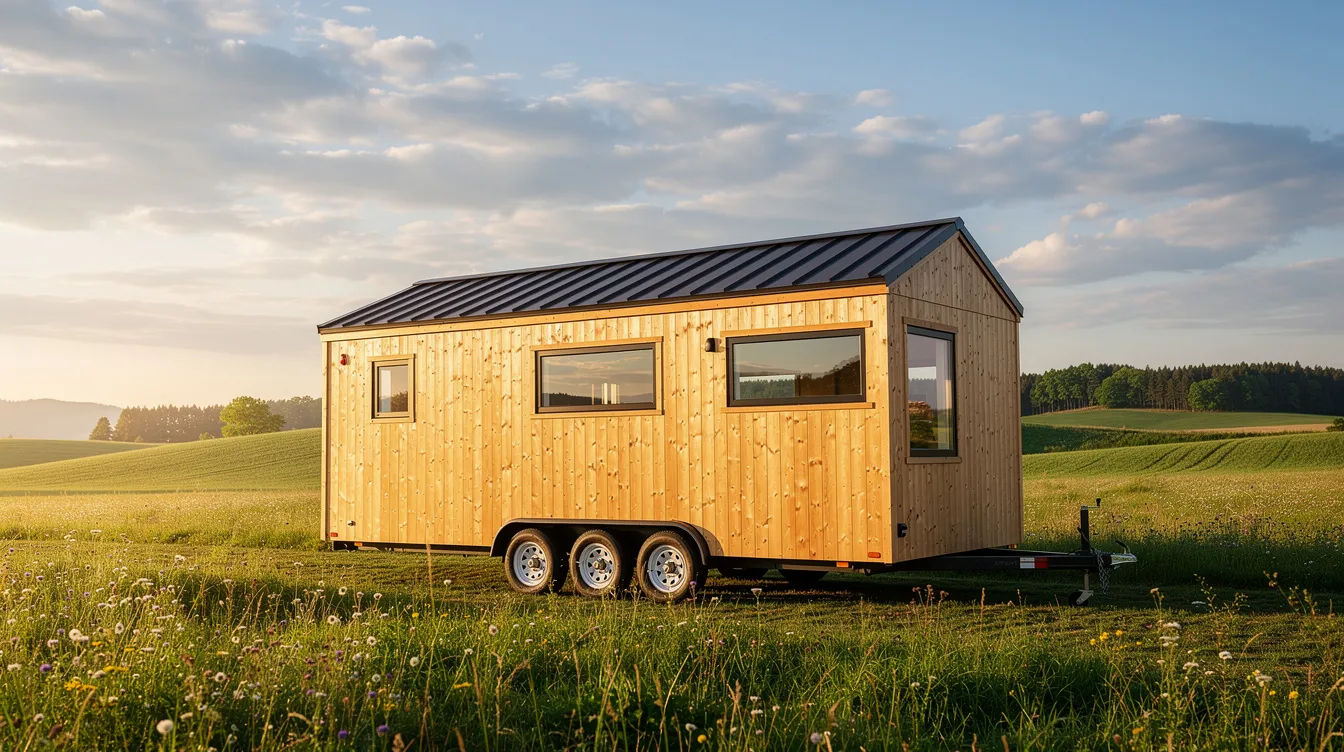
Lenders look first at how your tiny home is classified before deciding what loan products they can offer. Many lenders classify tiny homes on wheels as personal property rather than real estate, making it difficult to secure traditional mortgage financing.
Main categories include:
- Tiny house on wheels (THOW): Financed as personal property, similar to RVs, alongside tiny house park model homes that are often treated similarly by lenders
- Park model RV: RVIA certified units up to 400 sq ft, treated as recreational vehicles
- Tiny house on permanent foundation: May qualify for real estate loans if IRC-compliant
- HUD-code manufactured home: Units with a HUD tag built after June 1976
Your home’s classification affects available loan terms, maximum loan amount, interest rate type, and whether land can be bundled into the same financing. THOWs and park model units typically require RV loans or chattel loans, while foundation homes may qualify for home equity loans or traditional home loans.
Core Tiny House Financing Options
There is no single “tiny house mortgage.” Borrowers choose among several practical options based on their credit score, savings, and whether they already own land.
Tiny homes can be financed through various types of loans, including personal loans, home equity loans, RV loans, and chattel mortgages, and many affordable tiny house buildings are specifically designed to work with these products. Alternative financing options for tiny homes include these same products, which are specifically designed for movable properties and non-traditional dwellings.
Each option has trade-offs in down payment size, monthly payments, and total interest cost. Compare APR and total cost over the life of the loan before committing.
Personal Loans From Banks, Credit Unions, And Online Lenders
Unsecured personal loans are one of the fastest ways to secure financing for a tiny home purchase. They often fund in 1–3 business days.
Key features:
- Loan amounts: $5,000 to $100,000
- Typical terms: 24 to 84 months
- No collateral required
- Rates heavily credit-score dependent
Online lenders like LightStream offer rates from 6.49% to 24.89% with no fees. Credit unions often provide competitive fixed rate offers for members. Most banks are more conservative, typically capping loans at $50,000.
Example: A $75,000 loan over 7 years at 7% APR costs about $1,165/month. At 15% APR, that jumps to roughly $1,500/month—adding $23,000+ in extra interest.
RV Loans And Park Model Tiny House Loans
Tiny homes on wheels and park model units often qualify as RVs when they’re RVIA certified. These secured loans use the home as collateral, allowing better rates or longer terms than unsecured loans.
Typical terms:
- 5–20 year repayment periods (some lenders offer 25 years)
- 10%–20% down payment expected
- Fixed rate structures standard
- Maximum loan amount usually $75,000–$150,000
Some lenders like Triad Financial Services specialize in this space. Always verify your chosen tiny house builder can deliver a unit that qualifies under the lender’s RV or park model rules.
Home Equity Loans And HELOCs To Finance A Tiny
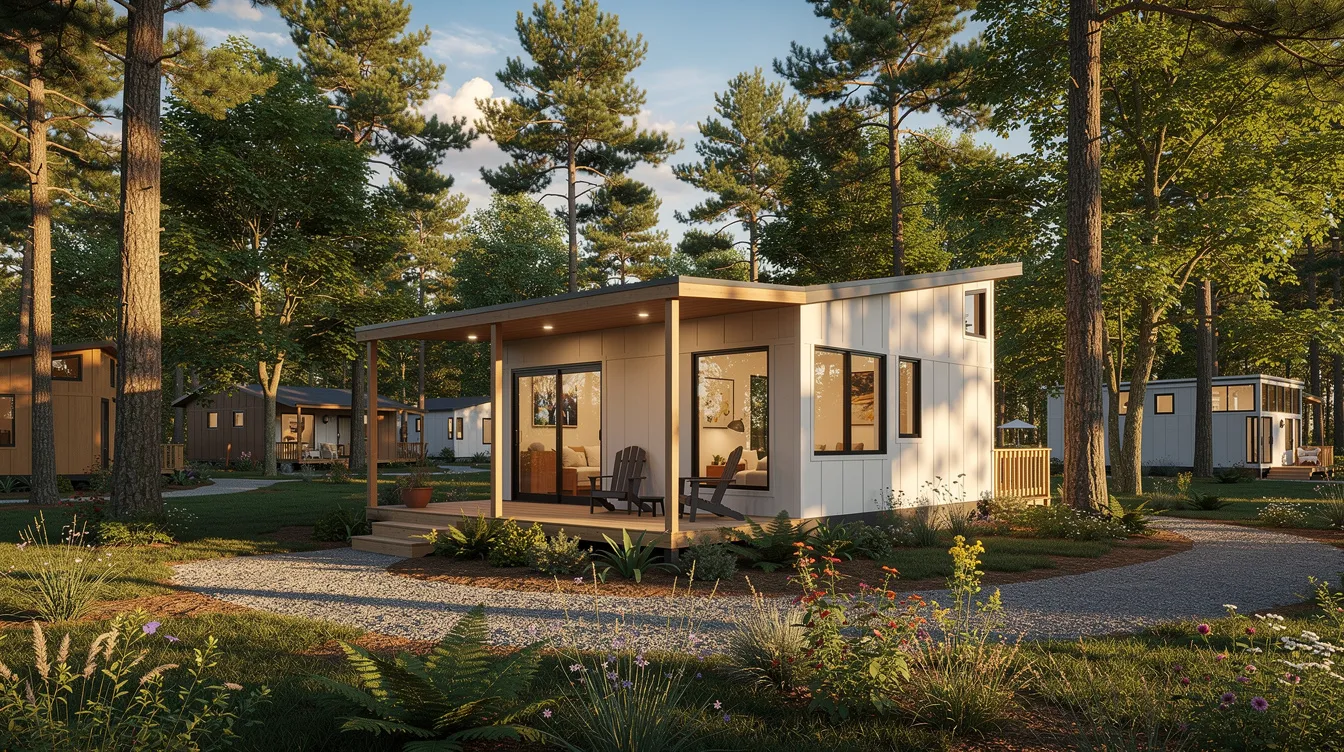
Homeowners can tap existing equity in a primary residence to finance a tiny house for use as a guest house, ADU, or downsizing option, especially when they start with well-thought-out tiny house plans that fit their life.
Product | Rate Type | Term | Best For |
|---|---|---|---|
Home equity loan | Fixed rate | 10–30 years | Lump-sum purchase |
HELOC | Variable/hybrid | Draw period + repayment | Construction draws |
Both options use your main home as collateral. Missed payments can lead to foreclosure even though the funds purchased a tiny home. |
Example: Using a $60,000 home equity loan to buy a $90,000 tiny house with a $30,000 cash down payment keeps leverage manageable.
Manufactured Homes And Chattel Loans
Tiny homes built to HUD standards can qualify for traditional mortgage financing when placed on a permanent foundation, allowing access to lower interest rates and longer terms.
For homes without land, chattel mortgages are specifically designed for movable personal property, such as tiny homes on wheels. They typically have shorter terms and higher interest rates compared to traditional mortgages—usually 7–12% over 10–20 years.
FHA Title I Loans can be used to finance the construction of a tiny home, allowing borrowers to access up to $25,000 for site improvements, provided they already own a home. Borrowers who choose to build a tiny house themselves should be especially mindful of lenders’ installation and code requirements. Some manufactured home lenders require specific installation standards and may not finance homes under certain square footage thresholds.
Builder Financing And In‑House Tiny Home Loan Programs
Some established tiny house builders partner directly with credit unions, regional banks, or specialty finance companies to provide financing as part of turnkey packages.
Benefits of builder financing:
- Covers construction draws and final delivery
- Lender pays builder according to milestones
- Often requires 5%–20% down payment
- May accept credit scores as low as 550
Always compare APR, fees, and loan terms from builder-recommended lenders against independent options. Getting 24-hour pre-approvals through builder programs can speed up the process significantly.
What Tiny House Lenders Look At: Approval Basics
Tiny house loans lenders still use traditional underwriting principles—credit history, income, debt levels, and collateral—even for small, alternative homes.
Main approval factors:
- Credit score ranges
- Income and employment stability
- Total debt-to-income ratio
- Type and value of the tiny home
Lenders may also consider whether land is owned, leased, or part of a tiny house community. Stronger applications can sometimes negotiate better loan terms or lower interest rates.
Credit Score, Income, And Debt‑To‑Income Ratio
Minimum credit score expectations vary by loan type:
Loan Type | Minimum Score | Prime Rate Score |
|---|---|---|
Personal loan | 600–660 | 720+ |
RV/Park model | 600–660 | 700+ |
Credit union programs | 550+ | 680+ |
Lenders verify income via pay stubs, W-2s, or tax returns. They want to see you can handle the new payment plus existing obligations. Keeping your debt-to-income ratio under 40%–45% improves approval odds. |
Self-employed borrowers should prepare at least two years of tax returns and year-to-date profit-and-loss statements.
Down Payment Expectations And Loan‑To‑Value
Down payment requirements differ across products:
- Personal loans: Often 0% down
- RV/park model loans: 10%–20% typical
- Manufactured home loans: 5%–20%
A higher down payment reduces the loan amount and can lead to better rates. Some credit unions and specialized lenders advertise low down payment programs under 10%.
Example: On a $90,000 park model:
- 5% down = $85,500 loan ≈ $815/month at 8%/15 years
- 20% down = $72,000 loan ≈ $685/month at 8%/15 years
Budget for closing costs, delivery fees, site prep, and utility hookups beyond just the down payment.
Choosing The Right Kind Of Tiny House Lender
The “best” lender depends on where you live, your tiny home type, and whether you prioritize speed, low down payment, or lowest rates.
Compare these lender types:
- Local credit unions
- Community banks
- National online lenders
- Specialized tiny home and park model lenders
- Nonprofit CDFI organizations
Get multiple quotes the same day to compare fixed rate offers, fees, and total cost—not just the advertised APR.

Local Credit Unions And Community Banks
Credit unions are often more flexible with unconventional collateral like tiny homes, especially for long-time members. They may offer loans for tiny house financing when larger banks won’t.
Advantages:
- Competitive fixed rate personal and RV loans
- Low down payment options for qualified members
- Personal underwriting reviews for borderline credit
- Possible green-building or affordable housing programs
Ask about membership requirements and whether they’ve funded park model or tiny house loans in the past 12–24 months.
Online Lenders And National Tiny House Finance Specialists
Online lenders offer fast, application-friendly options where borrowers can pre-qualify without visiting a branch. Some national platforms now advertise tiny home or park model financing specifically.
What to look for:
- Fixed rate with no prepayment penalty
- Clear loan terms and transparent policies
- BBB ratings and independent reviews
- Explicit statement they offer loans for tiny homes
Not all online offers are equal. Some carry higher APRs or large origination fees. Read full disclosures before signing.
Lenders Focused On Manufactured Homes, Park Models, And ADUs
Some lenders specialize in manufactured homes and park models. They understand zoning, titling, and appraisal issues far better than generic personal loan providers.
Certain nonprofit CDFIs target affordable housing and ADU projects, sometimes offering below-market loan terms. This can be especially helpful if you’re still deciding whether a tiny house for sale is right for you. Contact your builder or local housing organizations for a current list of tiny house-friendly lenders in your state.
Some can combine a land loan, site work, and the structure into a single construction-to-permanent loan when the tiny house sits on a foundation.
How To Prepare Before Applying For A Tiny House Loan
Careful preparation speeds up approval and minimizes documentation requests.
The financing process for tiny homes often requires a unique set of documents, including proof of income, credit history, and details about the home and land.
Key preparation steps:
- Gather all the documents lenders require
- Clarify your budget and target loan terms, including whether you’re shopping strictly for tiny homes under $20K or considering higher-priced builds
- Coordinate with your builder
- Check zoning and land issues early
Pre-qualification letters help when scheduling a build slot or negotiating with a tiny home manufacturer.
Documents And Information Tiny House Lenders Usually Require
Income documents:
- Most recent pay stubs
- Last two years of W-2s or tax returns
- Proof of additional income (bonuses, freelance)
Asset statements:
- Recent bank and investment account statements
- Evidence of funds for down payment and reserves
Property documents:
- Signed purchase agreement or builder quote
- Specs for the custom tiny home or park model
- Certifications (RV, RVIA certified, or manufactured home classification)
Write a short letter of explanation for any credit report anomalies or past delinquencies.
Coordinating With Your Builder And Planning The Timeline
Many lenders fund in stages, so your builder and lender must agree on payment timing.
The financing process for tiny homes can take several weeks, often involving multiple rounds of document requests and approvals before finalizing the loan. Construction builds typically take 4–12 weeks, depending on whether you’re choosing from standard models or more design-intensive options like the cutest tiny house designs.
Timeline tips:
- Ask builders which lenders they’ve successfully worked with recently
- Clarify when loan payments begin—some start immediately, others after delivery
- Allow several weeks for underwriting and final approval
- Have a backup financing plan in case a lender backs out late
When buyers must also consider additional costs such as land, utilities, and property taxes when financing, coordinate these expenses early.
Legal, Zoning, And Resale Considerations Tiny House Lenders Care About
Legal placement and future resale value are major reasons some banks hesitate to offer mortgages for tiny homes and park models.
Lenders consider whether the home is allowed under local zoning and building codes, where it will be parked, and how easily it could be sold in a default situation, especially in markets with booming interest in tiny homes like little houses in Texas.
Placement, Zoning, And Community Rules
Some municipalities limit where tiny homes on wheels, park model units, or manufactured homes can be placed. Restrictions on full-time living in RV-classified units are common.
Lenders may require:
- Proof of land ownership
- Long-term lease documentation
- Written approval from a tiny house community
HOA and park rules can restrict appearance, parking, and use. Consult local planning offices early and obtain written approvals when possible. Zoning compliance is the borrower’s responsibility.
Resale Value And Long‑Term Exit Strategies
Many tiny homes, especially on wheels, may depreciate more like RVs than traditional houses. Tiny homes typically have a higher resale risk, which can lead to less favorable loan terms and impact financing options.
Low or uncertain resale value causes some lenders to shorten loan terms or require higher down payments.
Plan ahead for:
- Selling the tiny home later
- Moving it to another location
- Converting to a rental or guest unit
Buyers wanting traditional appreciation might consider a small foundation home or manufactured home classified as real estate for easier refinancing options later.
Frequently Asked Questions About Tiny House Loans Lenders
Here are answers to common questions about financing your tiny home.
Can I get a tiny house loan with bad or fair credit?
- Some lenders consider borrowers with scores in the mid-500s to low-600s, though interest rates will be higher
- Local credit unions and nonprofit CDFI lenders are often more flexible than big banks
- Paying down revolving debt or adding a co-borrower improves approval odds
- For very low scores, saving a larger down payment makes financing more realistic
Do I need to own land before a tiny house lender will approve me?
- For THOW and park model loans, many lenders don’t require land ownership since financing treats the home as personal property
- Mortgages and home equity loans typically require owned or financed land
- Tiny house communities with long-term site leases can satisfy certain lenders
- Discuss your placement plan with both builder and lender early
Are tiny house loan rates fixed or variable?
- Most personal loans, manufactured home loans, and RV loans are fixed rate
- Some HELOCs use variable or hybrid rates that adjust over time
- Prioritize fixed rate options if you prefer stable monthly payments
- Ask lenders to show total interest cost over the loan’s life, not just initial APR
How long does it usually take to get approved and funded?
- Simple unsecured personal loans from online lenders can fund same day to 3 business days
- RV, park model, and manufactured home loans typically take 1–3 weeks
- Construction-to-permanent loans may take 30–45 days
- Align loan timing with your builder’s production schedule to avoid paying interest before delivery
Is a tiny house always cheaper to finance than a traditional home?
- While tiny houses cost less upfront, shorter loan terms and higher interest rates can make monthly payments close to small traditional home payments
- Long-term fixed rate financing on a manufactured home may actually yield lower payments
- Total cost includes land, hookups, insurance, and ongoing site fees beyond sticker price
- Compare several scenarios—tiny home vs. small cottage vs. manufactured home—to find your best fit