
If you’re interested in building an a frame cabin, understanding the real costs before you order is essential. The popularity of A-frame homes has surged in recent years, with their unique design and efficient construction appealing to a wide range of homeowners and builders.
A-frame home kits range dramatically—from about $10,000 for a tiny weekend shell to over $150,000 for a large family home kit. But here’s what many homeowners discover too late: the kit price is often just 30-60% of your total project budget. This post breaks down actual kit costs, what’s included, and what you’ll need to budget beyond the materials that arrive on a delivery truck.
- Quick cost overview: how much do A-frame home kits really cost?
- What’s included in an A-frame home kit (and what isn’t)?
- Key price ranges by A-frame size and use
- Design and floor plan options for A-frame kits
- Factors that change A-frame kit prices
- Total build cost vs kit price: what to budget beyond the kit
- Energy efficiency and sustainability of A-frame kits
- Ways to save on A-frame kit and build costs
- Warranty and support: what to expect from kit providers
- Maintenance and repair considerations for A-frame homes
- Resale value: how A-frame homes hold up over time
- Is an A-frame kit right for you? Cost vs benefits
Quick cost overview: how much do A-frame home kits really cost?
Most a frame homes kits cost between $125 and $200 per square foot for materials and the basic shell. This excludes land, foundation work, and interior finishes—factors that can double or triple your total investment.
Here’s what real kit pricing looks like across different sizes:
- Small 120-200 sq ft weekend shells: $10,000-$25,000 for basic structures ideal for saunas, bunkies, or backyard offices and studios
- Compact 400-500 sq ft cabins: $25,000-$60,000 depending on window packages and loft options
- Mid-size 500-900 sq ft kits: $45,000-$90,000—a 901 sq ft metal panel kit sells for around $74,900 on sale
- Larger 1,000-1,500+ sq ft family designs: $90,000-$150,000+ for full kits with multiple bedrooms
- Turnkey prefab example: Mighty Small Homes offers a SIP-based kit at $44,550 base, escalating to $111,375 for DIY-finished or $178,200-$222,750 when contractor-built
Thanks to their straightforward design and efficient construction, A-frame home kits are accessible to a wider range of homeowners looking for affordable and easy-to-build living spaces.
The key distinction: “kit cost” covers your structural shell and exterior components. Total finished home construction costs—including foundation, utilities, and interior—typically run 1.5x to 3x the kit price, sometimes reaching $100-$300 per square foot for a complete build.
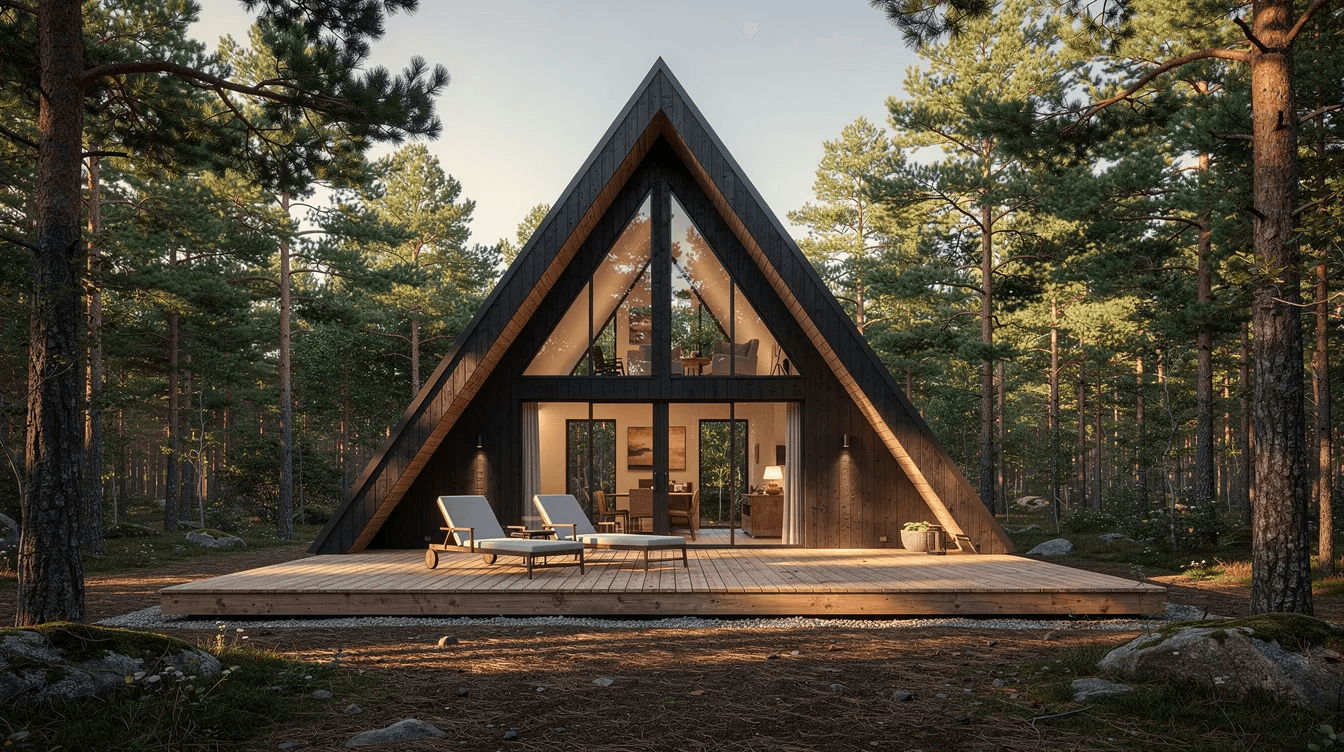
What’s included in an A-frame home kit (and what isn’t)?
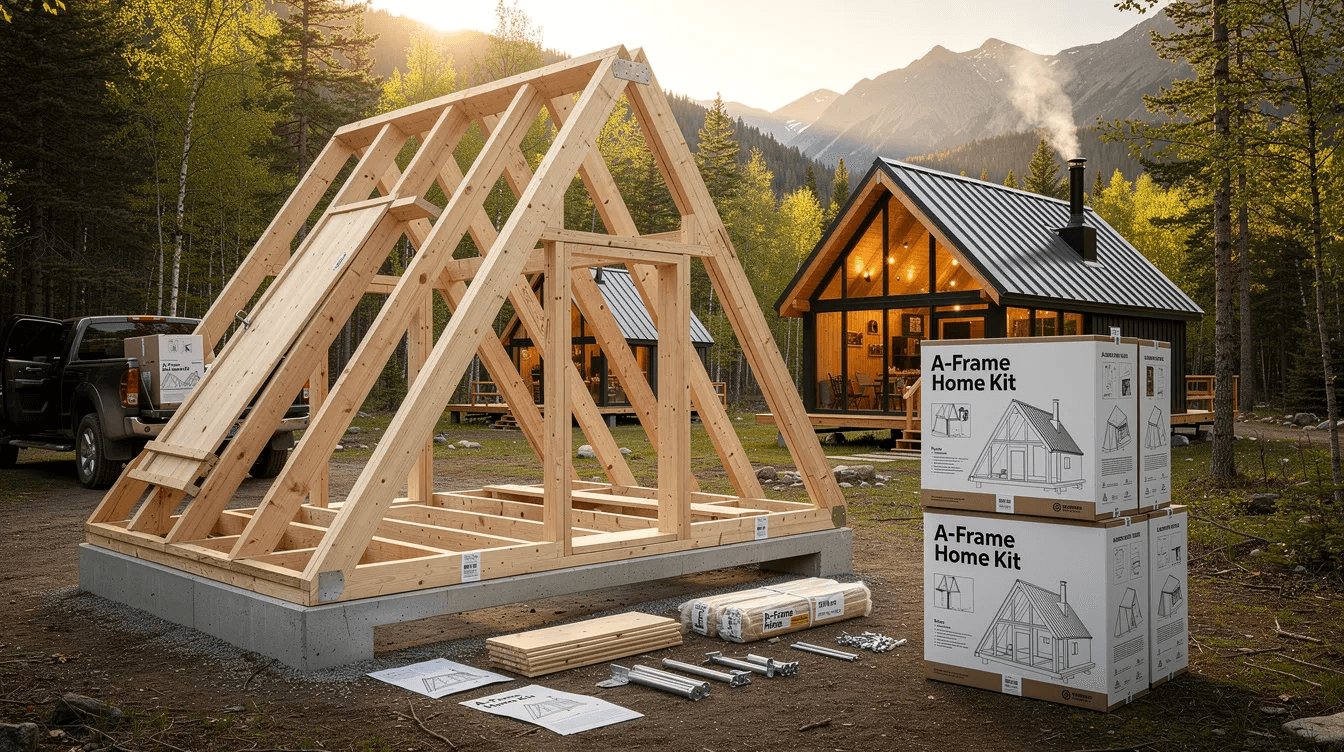
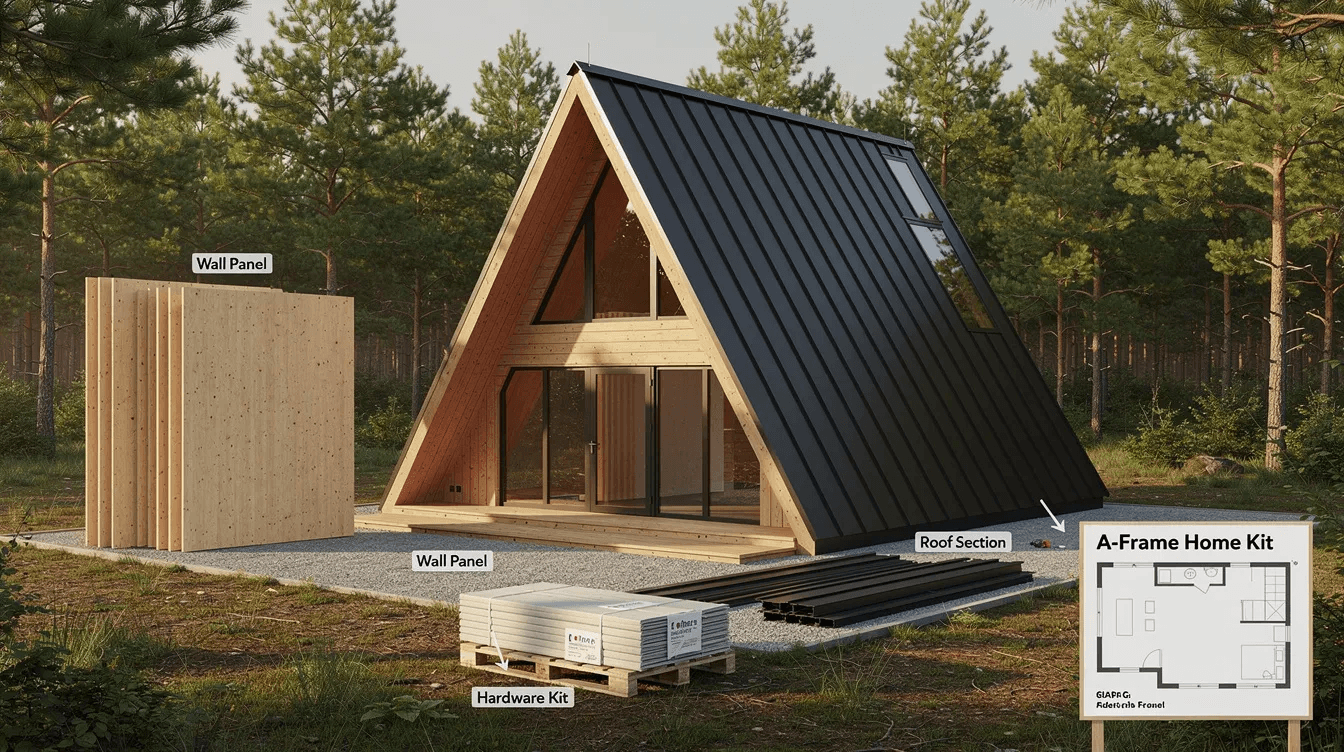
A typical A-frame kit functions as a pre-cut or panelized system—often using structural insulated panels (SIPs) or metal panels—designed to form the steep pitch roof and main structure with steeply angled rooflines that define the style.
Common kit inclusions:
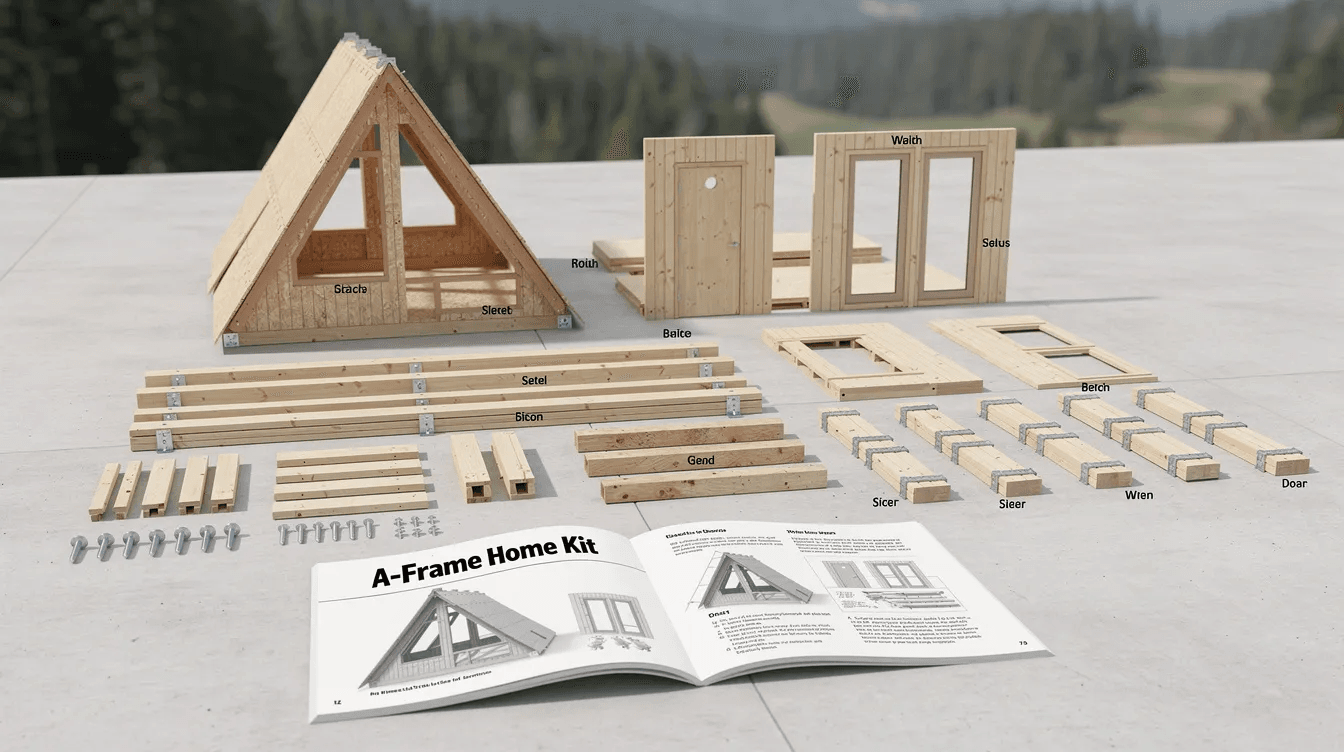
- Structural shell: roof panels, wall panels or framing, beams, trusses, and fasteners
- Exterior finishes: metal roofing (often standing-seam with 50+ year durability), siding or cladding, trim, and weatherproofing
- Plans and documentation: construction drawings, assembly manual, and engineering stamps for local building codes
- Optional upgrades: larger window packages, dormers, loft structures, porch framing, and deck kits
What’s typically NOT included (and heavily affects total cost):
- Foundation: concrete slab, crawl space, or helical piles ($5,000-$20,000+)
- MEP systems: wiring, plumbing rough-in, HVAC like mini-splits ($3,000-$25,000)
- Interior finishes: insulation (if not integrated), drywall, interior walls, flooring, built in cabinets, appliances ($50-$150 per sq ft)
- Site work: driveway, grading, septic, well drilling, utility trenching, permits, and inspections ($10,000-$50,000+)
For example, a 12’ x 18’ (216 sq ft) frame cabin kit ships as a basic shell for $25,000-$80,000, with optional interior packages available separately.
To get started, contact your preferred provider to discuss available options and use a tiny home cost calculator to plan your budget before you place an order for your A-frame kit.
Key price ranges by A-frame size and use
Size, purpose, and design complexity drive kit pricing after material choice. The geometric scaling of the A-frame’s triangular volume means larger footprints amplify materials exponentially.
- Tiny A-frame shells (100-200 sq ft): $10,000-$30,000 kit-only for saunas, home offices, or bunk cabins—perfect for a weekend project
- Compact cabins (250-450 sq ft): $25,000-$60,000 as weekender or rental units; window area, lofts, and space-efficient floor plans with lofts and porch additions shift costs within this range
- Mid-size homes (500-900 sq ft): $45,000-$90,000, suitable as a primary residence or full-time vacation home
- Larger family A-frames (1,000-1,500+ sq ft): $90,000-$150,000+ for full kits with multiple bedrooms and large windows capturing natural light
- Premium custom designs: Total build costs can exceed $250,000, especially in remote or high-labor areas
Panelized metal kits and high-efficiency SIP systems may run higher per square foot in materials but can reduce labor time by 20-30% and lower energy bills through superior insulation (R-values up to 40+). Some providers also sell downloadable A-frame house plans starting at $299—separate from kit materials—for owner-builds, much like other tiny house plans that fit your life.
Design and floor plan options for A-frame kits
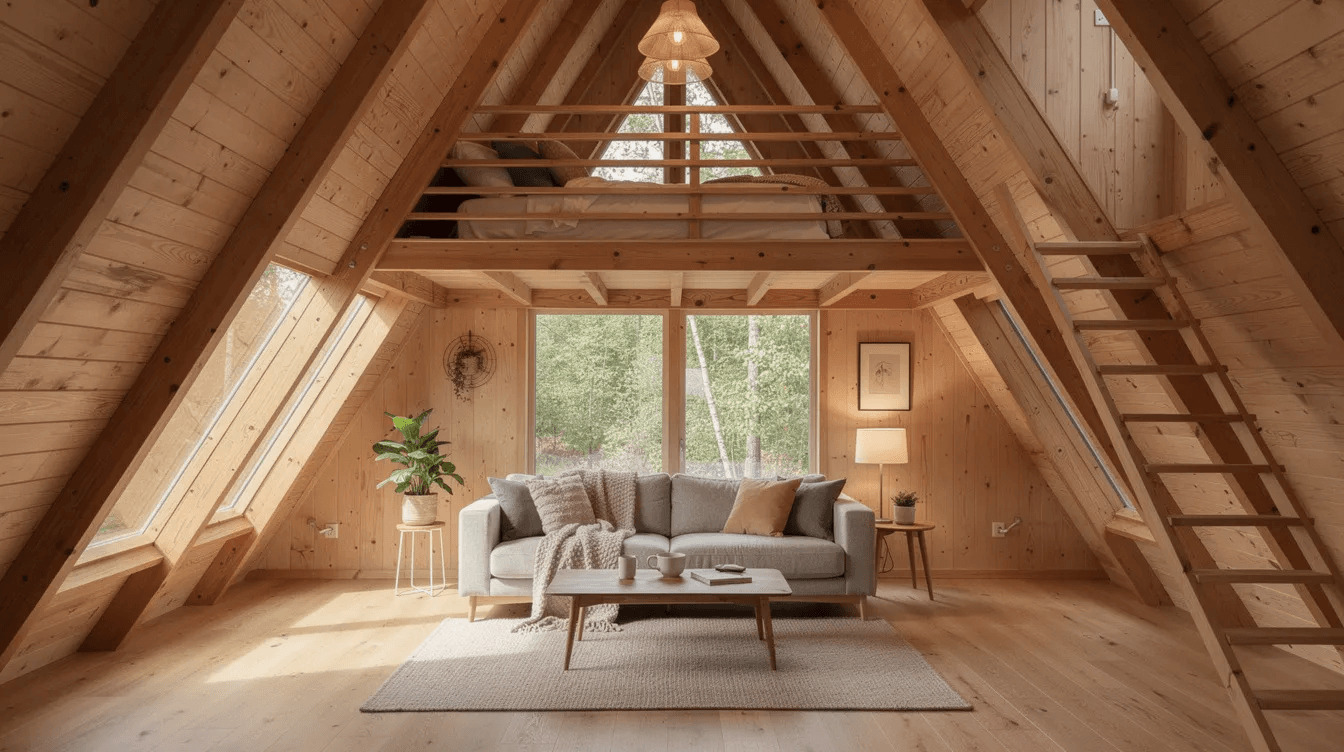
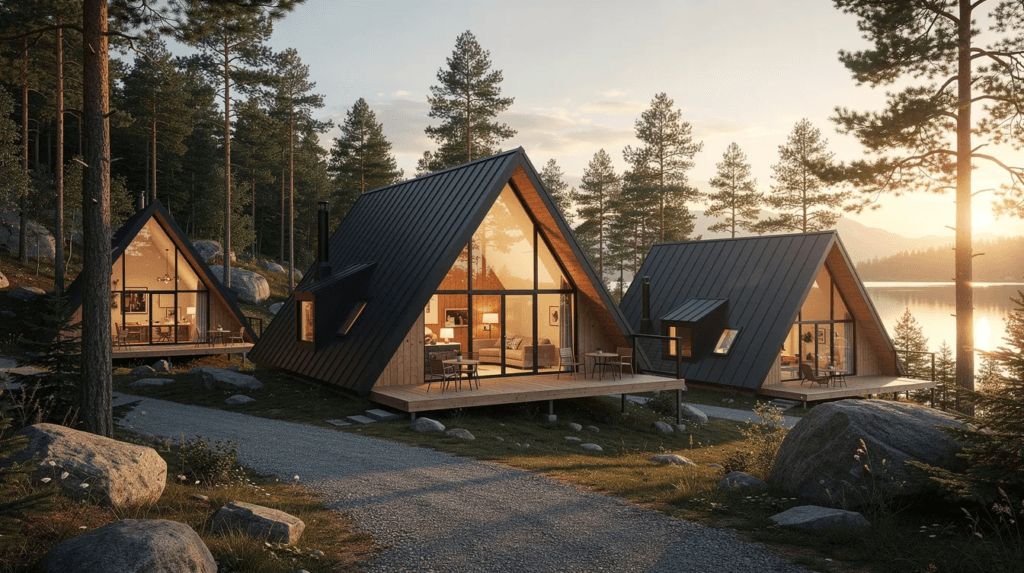
A-frame kits are celebrated for their remarkable flexibility in both design and floor plan, making them a favorite among many homeowners seeking a unique living space. Whether your goal is a cozy vacation home, a stylish rental, or a full-time primary residence, A-frame homes can be tailored to fit your lifestyle and budget, much like the cabins featured in top A-frame cabin getaways. The signature steeply angled rooflines and expansive large windows not only create a striking aesthetic but also flood the interior with natural light, enhancing the sense of openness and connection to nature.
When it comes to floor plans, A-frame kits offer a surprising amount of versatility. Compact designs often feature a sleeping loft to maximize square footage, while larger models can include multiple bedrooms, built-in cabinets, and open-concept living areas that may require choosing the best ladder for a loft to maintain safety and accessibility. Many homeowners are drawn to the charm and efficiency of these layouts, which make clever use of every inch of space, similar to tiny house interiors that maximize every square foot. Custom features like integrated storage, modern or rustic finishes, and even wraparound porches can be added to suit your personal taste and needs.
Popular design options range from sleek, modern interpretations with minimalist interiors to traditional or rustic styles that emphasize wood finishes and cozy built-in features. With the right plan and proper tools, you can create a home that balances construction costs with lasting value and comfort, similar to well-designed chalet tiny house models that combine rustic charm with modern living. Ultimately, the flexibility of A-frame kits allows you to design a home that’s as unique as you are—whether you’re building a compact retreat or a spacious family getaway.
Factors that change A-frame kit prices
Beyond size, several practical factors can shift kit cost up or down by $10,000-$50,000. Understanding these helps you plan a realistic budget before finalizing your order.
- Material type: Wood framing ($80-$120/sq ft) costs less but requires more labor; SIPs ($150-$250/sq ft) offer superior energy efficiency and faster assembly; metal panelized systems ($125-$200/sq ft) provide durability in harsh climates
- Window and door packages: Large glass walls with high-performance low-E glazing can add $5,000-$15,000 to a mid-size cabin kit
- Loft and layout complexity: Multiple lofts, dormers, and integrated spiral stairs add engineering and materials cost (+10-20%)
- Roof pitch and span: Steeper roofs and long clear spans require stronger glu-lam beams for 40+ ft spans, increasing structural costs
- Climate and code requirements: Snow loads up to 150 psf, wind ratings to 140 mph, and seismic bracing trigger required upgrades
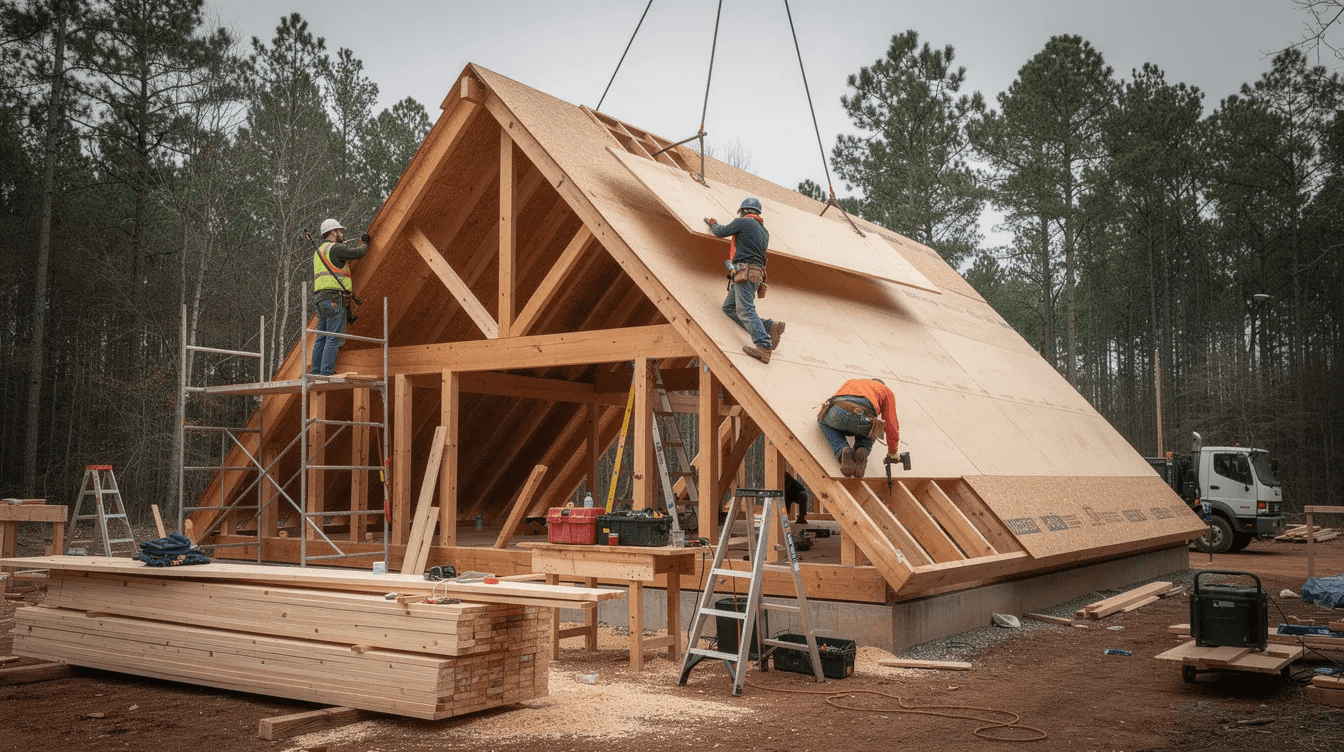
- Level of prefabrication: True panelized kits cost more upfront but can cut on-site labor time by 50%. Hiring a builder to assemble your kit increases labor costs but can simplify the process, while DIY assembly saves money but requires more effort and skill.
- Customization: The ability to customize your kit—such as adjusting dimensions, repositioning windows, or adding unique features—adds $5,000+ in design and engineering fees.
Total build cost vs kit price: what to budget beyond the kit
The kit often represents only 30-60% of your total finished home cost. Planning for the full budget prevents costly surprises mid-project.
- Foundation and structural support: 10-20% of total project cost; helical piles for uneven sites or concrete slabs run $6,000-$20,000
- Site work: Driveway, grading, clearing, septic, well drilling, and utility trenching easily add $10,000-$50,000+ depending on location and accessibility
- Interior build-out: Insulation, drywall, flooring, partitions, kitchen, bath, and appliances often match or exceed kit price—budget $50-$150 per sq ft
- MEP systems: Electrical panel, wiring, plumbing rough-in, fixtures, and HVAC ($2,500-$25,000)
- Labor: GC and subcontractor fees vary 20-40% by region; DIY builds reduce cash outlay but demand proper tools, time, and skill
Example budget scenario: A $75,000 mid-size kit might become a $150,000-$225,000 finished house depending on finishes and local labor rates. Permits, design reviews, and inspections add another $500-$3,000.
Energy efficiency and sustainability of A-frame kits
A-frame kits are engineered with energy efficiency and sustainability at their core, making them an excellent choice for eco-conscious homeowners. The use of eco friendly materials, such as durable metal roofing and high-performance roof panels, not only ensures longevity but also reduces the environmental impact of your home. The steep pitch of the roof is more than just an iconic design element—it promotes efficient water runoff, minimizing maintenance and the need for extensive gutter systems.
Many A-frame homes are designed to take advantage of passive solar heating, with large windows strategically placed to capture sunlight and naturally warm the living space. This reduces reliance on traditional heating systems and helps lower energy costs. High-quality insulation in the interior walls and roof panels further boosts energy efficiency, keeping your home comfortable year-round while minimizing heat loss.
By choosing an A-frame kit with these energy-efficient features, homeowners can enjoy a comfortable, sustainable home that’s both cost-effective and environmentally responsible. The combination of thoughtful design, quality materials, and modern building techniques means your A-frame home will not only look great but also perform efficiently for years to come.
Ways to save on A-frame kit and build costs
Strategic choices on size, design, and finishes have the biggest impact on maintaining an affordable build while preserving quality and lasting value, just as with crafting your dream Amish tiny house where thoughtful design keeps costs in check.
- Choose standardized kit sizes: Stock dimensions avoid custom engineering fees of $5,000+
- Simplify glazing: Limit oversized glass walls while still capturing views with well-placed standard windows that bring in natural light
- Optimize square footage: A compact 400-800 sq ft floor plan with a sleeping loft beats expanding to a large multi-story design
- Phase interior finishes: Start with durable but budget-conscious materials (plywood floors, basic fixtures) and upgrade over time
- DIY where realistic: Self-perform interior painting, flooring installation, or deck building if you have skills and time, or consider pre-built log homes and cabins if you prefer to reduce on-site construction effort
- Build near existing infrastructure: Land closer to power, water, and road access substantially reduces site work costs
Cautions to consider:
- Cutting corners on structure or building envelope (insulation, weatherproofing) increases long-term energy and maintenance costs—maintaining efficiency matters
- Get at least two quotes for foundation, septic, and well work before finalizing your kit budget
Warranty and support: what to expect from kit providers
When investing in an A-frame kit, understanding the warranty and support offered by your provider is crucial for a smooth building process. Most reputable kit companies include a comprehensive warranty that covers materials and workmanship for a set period, giving homeowners peace of mind as they embark on their project. This warranty typically addresses any defects or issues that may arise with the included materials, ensuring your investment is protected.
Beyond the warranty, many kit providers offer robust support throughout the building process. This can include detailed assembly manuals, technical assistance, and responsive customer service to help you navigate any challenges. Some companies even provide on-site support or training sessions to ensure you’re equipped to tackle your project with confidence.
Before you begin building, it’s wise to review the terms and conditions of your kit’s warranty and support program. Knowing what’s included—and what isn’t—will help you plan your project more effectively and avoid unexpected hurdles. With the right support, homeowners can feel empowered to complete their A-frame home successfully, knowing help is available when needed.
Maintenance and repair considerations for A-frame homes
Owning an A-frame home comes with its own set of maintenance and repair considerations, distinct from those of traditional homes. The steeply pitched roof, while excellent for shedding snow and rain, should be inspected regularly for signs of wear or damage, especially after severe weather. Prompt attention to the roof and exterior features, such as the porch, helps prevent minor issues from becoming costly repairs.
Inside, it’s important to keep an eye on the interior walls and floors for any signs of moisture, wear, or pest activity—particularly if your home is nestled close to nature. Regular upkeep of these features not only preserves the aesthetic appeal of your A-frame but also ensures the structural integrity of your home. Because of their unique design, A-frame homes may require more frequent checks and maintenance than traditional homes, especially in regions with harsh climates.
By staying proactive with maintenance and addressing repairs as soon as they arise, homeowners can extend the lifespan of their A-frame home and maintain its charm and functionality for years to come.
Resale value: how A-frame homes hold up over time
A-frame homes are known for their lasting value and enduring appeal in the real estate market. Their distinctive design, abundant natural light, and energy efficiency make them attractive to a wide range of buyers, from those seeking a unique primary residence to others looking for a stylish vacation home. Many homeowners find that the charm and quality features of A-frame homes—such as open floor plans, eco friendly materials, and efficient layouts—help these properties stand out.
The resale value of an A-frame home is influenced by factors like construction quality, the materials used, and how well the home has been maintained. Homes that showcase thoughtful design, energy-efficient upgrades, and a functional floor plan tend to command higher prices and attract more interest. Highlighting features such as large windows, modern amenities, and sustainable materials can further boost your home’s marketability.
With proper care and occasional updates, A-frame homes can appreciate in value over time, making them a smart investment for many homeowners. Their flexibility and timeless aesthetic ensure that, with the right approach, your A-frame home will continue to offer both enjoyment and strong resale potential for years to come.
Is an A-frame kit right for you? Cost vs benefits
A-frame kits can be both affordable and high-performance when planned correctly. Whether you’re building a vacation home or year-round dwelling, understanding the full cost picture is essential.
Key benefits in context of cost:
- Simple structural form reduces engineering complexity and can construct faster than traditional homes—often 30-50% faster
- High-efficiency SIP or panelized systems achieve 60-70% energy savings compared to conventional construction, supporting passive solar heating potential
- Flexible interiors with few load-bearing walls allow future reconfiguration without major structural changes, adding lasting flexibility
Potential trade-offs:
- Steep roofs and limited wall height along edges make furniture layout tricky and may push some owners to build larger than needed, affecting living space efficiency
- Snow load design, wind ratings, and large glass areas raise kit prices in certain climates
- Resale and financing may depend on meeting local code and appraisal expectations for aesthetic and structural standards
Next steps:
- Request detailed, itemized quotes for at least one small, mid-size, and larger kit to compare total expected project costs and connect with providers
- Contact kit providers early to confirm what’s included, approximate delivery times (typically 16-20 weeks lead time on popular models), and any seasonal pricing or promotions
With proper planning and realistic budgeting, an A-frame kit offers a compelling path to a home that blends charm, efficiency, and eco friendly materials in a design that stands out from conventional structures.