
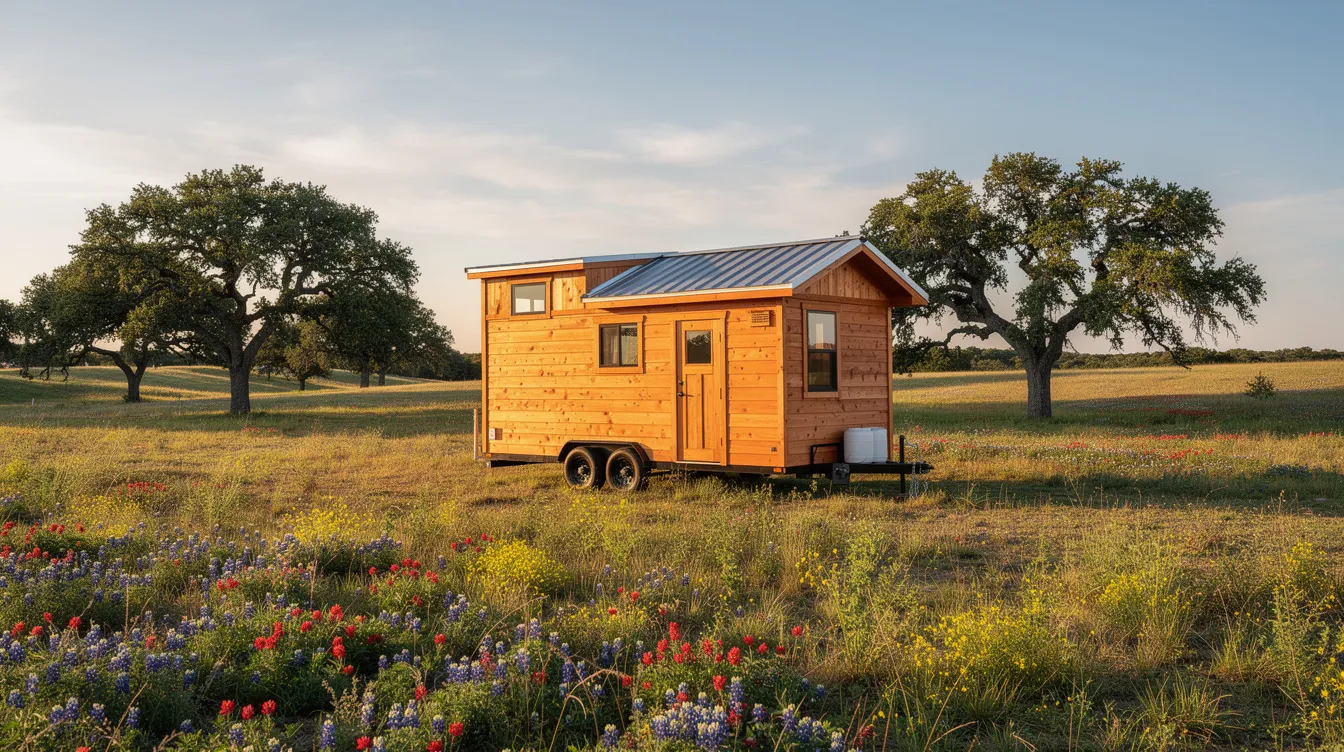
Tiny houses are popular in Texas.
The space. The freedom. The lower costs.
But where can you actually park one?
That’s the tricky part.
Texas doesn’t have one simple rule. Each city and county decides its own regulations. Your options depend on your tiny house type, your location, and local zoning laws.
This guide breaks down everything you need to know about parking a tiny house in the Lone Star State in 2026.
Key Takeaways
Texas generally allows tiny houses, but where you can park depends on local zoning, how your home is classified (RV versus permanent structure), and utility requirements. Texas does not have a statewide law regulating tiny homes, meaning that the rules vary by city and county, with some areas allowing tiny homes as permanent residences while others impose strict zoning restrictions.
Here’s what you need to know:
- Tiny houses on wheels are usually treated as RVs. Most cities in Texas restrict THOWs to licensed RV parks, mobile home parks, or specific tiny home communities. Full-time living on a standard residential lot is typically prohibited.
- Foundation tiny homes must meet building codes. In Texas, tiny homes must not exceed 400 square feet and must have a minimum ceiling height of 6 feet 8 inches according to the International Residential Code (IRC). These permanent structures are easier to keep inside city limits than THOWs.
- Rules differ significantly between metro and rural areas. Large counties like Harris County, Bexar County, Tarrant County, and Travis County apply stricter building codes and zoning regulations. Rural areas often have fewer restrictions and more flexibility for tiny home placement.
- Established tiny home communities offer the simplest legal option. Places like Village Farm in East Austin operate with pre-approved zoning for tiny living. RV parks across Texas increasingly welcome tiny houses and park models for year-round stays.
- Always check local zoning laws before moving your home. Contact your local zoning office and county development department to verify what’s allowed on any specific parcel.
- Can I Park a Tiny House in Texas at All?
- Understanding How Texas Classifies Tiny Houses (RV vs Permanent Structure)
- Where Can You Park a Tiny House on Wheels in Texas?
- Parking a Foundation Tiny House on Your Land in Texas
- County-Level Reality: How Rules Differ Across Texas
- Examples: Parking Rules in Key Texas Counties & Cities
- Tiny House Communities and RV Parks in Texas
- How Local Zoning Laws Affect Where You Can Park
- Utilities, Permits, and Inspections for Tiny House Parking
- Costs of Parking a Tiny House in Texas
- Step-by-Step: How to Find a Legal Place to Park Your Tiny House in Texas
- FAQ
- Final Thoughts
Can I Park a Tiny House in Texas at All?
Yes, you can park a tiny house in Texas.
But there’s no single statewide “tiny house parking” law. Decisions are made locally by cities and counties.
This means your legal options depend on a few key factors:
- Is your tiny home on wheels or on a permanent foundation? This classification changes everything about where you can legally stay.
- Is your location inside city limits or in an unincorporated area? City ordinances tend to be stricter than county rules.
- Are you planning short-term stays or full-time living? Temporary camping has different rules than establishing a permanent dwelling.
- What do local zoning codes allow? Even within the same county, rules can vary between residential zones, agricultural land, and commercial areas.
Rural Texas counties often have more flexible rules for tiny home owners. Many lack extensive zoning authority, allowing more flexibility in what type of home can be placed on land.
Urban areas like Houston, Dallas, Austin, San Antonio, and Fort Worth apply stricter zoning and building codes. Most require compliance with the International Residential Code and local ordinances before you can legally occupy a tiny home.
The good news? Texas has fewer restrictions on minimum square footage compared to other states, making it friendlier to tiny homeowners. But some areas still impose minimum size requirements for homes, typically ranging from 600 to 1,200 square feet.
Legally parking a tiny house in Texas is best accomplished in unincorporated county areas, licensed RV parks, or as backyard ADUs in city-zoned areas.
Understanding How Texas Classifies Tiny Houses (RV vs Permanent Structure)
How your tiny house is classified in Texas largely determines where you’re allowed to park and how long you can stay. This single factor shapes your legal options more than almost anything else.
Tiny House on Wheels (THOW)
A tiny house on wheels is built on a trailer chassis. It’s movable.
Under Texas law, THOWs are commonly treated as recreational vehicles when ANSI/RVIA certified. Texas Transportation Code Chapter 541 classifies these units as travel trailers, not houses.
Key characteristics:
- Built on a trailer with gross vehicle weight typically under 10,000 pounds
- Often certified to RVIA (RV Industry Association) standards
- Can be moved from location to location
- Treated as personal property, not real property
Tiny homes on wheels are classified as recreational vehicles in many jurisdictions, which affects where they can be parked and lived in full-time. Many cities and counties in Texas restrict THOWs, often requiring them to be placed in licensed RV parks or manufactured home parks.
Park Models
Park models are a specific type of RV, typically built to ANSI A119.5 standards with maximum 400 square feet including lofts.
They bridge the gap between RVs and residential structures. But legally, they still follow RV rules in most Texas jurisdictions.
Park models work well for:
- Placement in RV parks that welcome long-term residents
- Seasonal living in campgrounds
- Tiny house communities zoned as RV parks
Permanent Tiny Home on a Foundation
A tiny home on a permanent foundation is anchored to the ground. It’s fixed in place.
These structures must comply with building codes—usually the IRC with Appendix Q for homes under 400 square feet. Texas treats them as dwellings, not vehicles.
Permanent tiny homes must be built on a foundation and comply with the International Residential Code, which includes requirements for plumbing, electrical work, and structural integrity. In many Texas counties, tiny homes must be built on a foundation and comply with building safety standards to be classified as permanent residences.
Why Classification Matters
This classification affects several important areas:
- Property taxes: Foundation homes are taxed as real property (averaging 1.8% of appraised value in Texas). THOWs register as personal property with annual fees around $100-300.
- Insurance: THOW policies average $800-1,500/year for full-time use. Foundation homes require homeowners policies ranging $1,200-2,500/year.
- Zoning treatment: Cities may view your home as an RV, a single-family house, or an accessory dwelling unit depending on its classification.
- Long-term living options: Many cities prohibit full-time living in RVs on standard residential lots, even if the lot is privately owned. This pushes THOWs into RV parks or tiny house communities.
Where Can You Park a Tiny House on Wheels in Texas?
Tiny houses on wheels and park models generally follow RV rules in Texas. Your long-term parking options are tied to RV zoning and park regulations.
Here are your main options:
RV Parks and Modern RV Resorts
Many Texas RV parks—especially near metro areas—now welcome tiny houses and park models for seasonal or year-round stays.
The state hosts over 600 RV facilities according to Texas Parks & Wildlife Department’s 2025 directory. Many are evolving into “tiny-friendly” enclaves.
Example parks in the DFW area:
- Lake Dallas Tiny Home Village: Operates under a 2023 city ordinance for owner-occupied THOWs up to 500 square feet. Lot rents run $600-900/month including 50-amp service, septic, and communal Wi-Fi.
- The Retreat at Bluebonnet Ridge in Terrell: Enforces RVIA certification and skirting requirements. Accommodates 100+ units with amenities like infinity pools.
- Hidden Valley in Wylie: Allows DIY THOWs after inspection for around $550/month.
Many RV parks require:
- RVIA or ANSI certification
- Skirting for appearance standards
- Age limits on units (often 10-15 years)
- No subletting
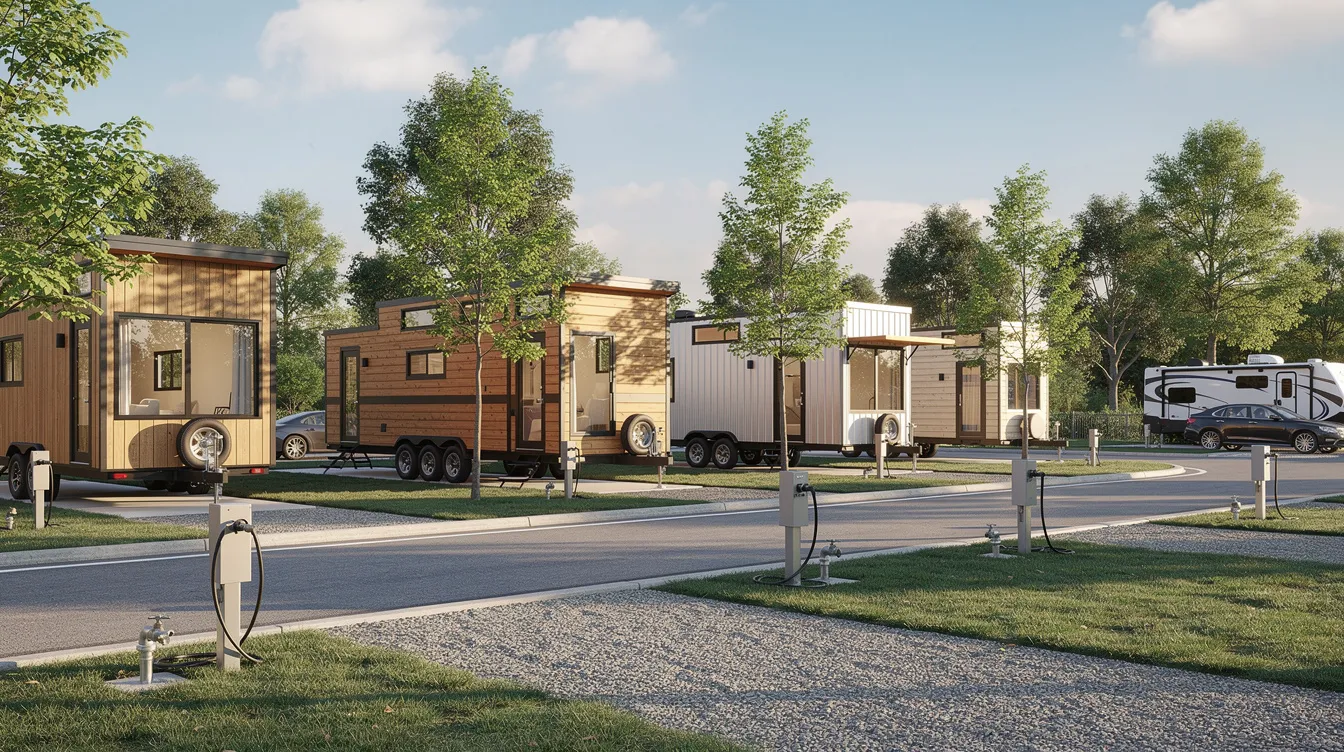
Tiny House Communities
Many tiny home communities operate legally as licensed RV parks, providing a safe and beautiful environment specifically for tiny living.
These communities offer a “plug-and-play” solution, allowing residents to start living their tiny dream faster with access to utilities and shared amenities.
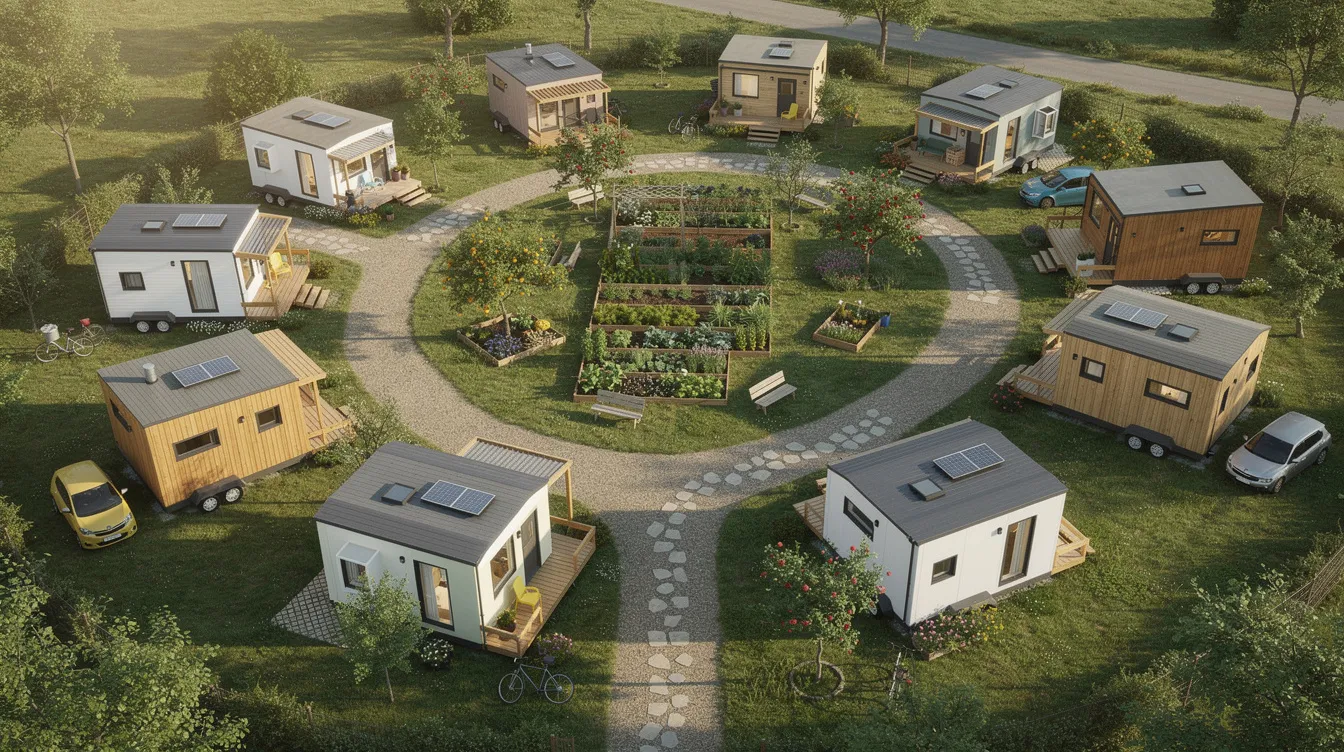
Tiny home communities in Texas often feature shared amenities like pools, community gardens, and dog parks, fostering a sense of community among residents.
The rise of tiny home communities in Texas provides a legal and supportive environment for tiny homeowners, making it easier to find places to park their homes.
State Parks and Campgrounds
State parks like Pedernales Falls allow temporary stays but cap them at 14 days per visit with an aggregate 60 days per year. Violations can result in $500/day fines.
Campgrounds work for:
- Short vacations
- Testing out tiny living
- Transition periods between permanent spots
They don’t work for permanent residences.
Private Rural Land
In unincorporated rural areas, many Texas counties do not have zoning authority, providing high flexibility for tiny homes.
In many unincorporated areas, a THOW can be parked on family land. But counties may still require:
- Septic permits (Type 2 systems handling 300-600 gallons/day cost $2,000-5,000 installed)
- Water connections or wells
- Electric service via temporary pole ($1,500-3,000)
Unincorporated Ellis County, for example, permits THOWs on 5+ acre AG-exempt parcels with 50-foot setbacks from roads—provided septic and electric requirements are met.
Practical Tips
Before committing to any location:
- Contact county development services directly
- Ask about length-of-stay limits
- Verify RVIA/ANSI certification requirements
- Check appearance standards (skirting, age limits)
- Confirm whether full-time residency is permitted
Parking a Foundation Tiny House on Your Land in Texas
Building or placing a tiny home as a permanent structure on your land is often the most stable way to live tiny long term, especially near cities.
Building Code Requirements
Permanent tiny homes usually must comply with the International Residential Code. Many Texas jurisdictions have adopted Appendix Q for houses under 400 square feet, and choosing the best foundation for a tiny house is a key part of meeting those structural and safety standards.
IRC Appendix Q allows:
- Reduced ceiling heights (6’8” minimum in lofts instead of standard 7’)
- Shallower stairs (7-inch risers)
- Loft areas counting toward floor space when accessible by fixed stairs
Minimum room sizes for foundation-based tiny houses are often at least 120 square feet. Tiny homes often must comply with local fire safety codes, such as the inclusion of smoke and fire detectors.
Tiny homes in Texas must comply with local building codes, which typically require obtaining building permits and passing inspections before occupancy.
Minimum Size Challenges
Some cities and suburbs have minimum house size requirements—often 600-1,200 square feet for primary homes—on top of building code rules about ceiling height and the maximum height of a tiny house.
Houston’s city code, for instance, mandates 600 square feet minimum inside city limits as of 2024 updates. This can effectively block true tiny houses unless they’re permitted as accessory dwelling units, guest houses, or cottages.
Common Placement Options
Primary dwelling on rural acreage: Rural areas offer fewer restrictions. In Texas, the minimum size for a tiny home is typically 400 square feet, although some areas may have different requirements, and certain counties may allow smaller sizes.
Backyard ADUs in cities: Most areas in Texas classify tiny homes as accessory dwelling units, which means they can be placed on a property that already has a primary home. Austin’s Land Development Code Sec. 25-2-491 permits one ADU per lot over 5,750 square feet, with maximum 800 square feet or 40% of primary home size, so it’s important to choose tiny house plans that fit your life and comply with these limits.
Tiny house developments: Some specially-zoned cottage or tiny home developments welcome small footprint homes as primary residences.
What You’ll Need
Before construction begins or you place your home:
- Building permits from the local development department
- Foundation inspections (footings must resist 3,000 psf soil pressure in Central Texas’s expansive clays)
- Engineered plans for wind loads (up to 115 mph in coastal counties)
- Licensed contractor stamps for plumbing and electrical work
- Certificate of occupancy after passing 5-7 inspection stages
The process averages 90 days from beginning construction to certificate of occupancy.
Comparing Permanent vs. THOW Requirements
When weighing a fixed tiny house against a movable unit, many Texans also look at tiny house park model homes as a middle-ground option that follows RV rules but feels more residential.
Permanent Foundation Tiny Home:
- Requires building permits and multiple inspections
- Must meet IRC/Appendix Q standards
- Taxed as real property (can qualify for homestead exemption)
- Can be placed in residential zones where size minimums allow
- Higher upfront costs ($15,000-30,000 site prep) but no lot rent
Tiny House on Wheels:
- Minimal to no building permits required
- Must meet RVIA/ANSI standards for park placement
- Taxed as personal property ($100-300/year)
- Limited to RV parks, communities, or flexible rural parcels
- Lower upfront costs but ongoing lot rent ($500-1,200/month)
County-Level Reality: How Rules Differ Across Texas
While many counties reference the IRC and treat tiny houses similarly, enforcement and zoning priorities vary widely across Texas’s 254 counties.
Metro-Area Counties
Large metro-area counties like Harris County around Houston, Bexar County around San Antonio, and Tarrant County around Fort Worth often defer to city codes inside city limits.
In unincorporated pockets, these counties may be more lenient. Harris County’s unincorporated areas have no formal zoning, but 60% of subdivisions enforce 400 square feet minimums via deed restrictions.
Suburban Counties
Suburban counties like Collin, Denton, and Williamson frequently have master-planned subdivisions and HOAs that establish higher minimum sizes and ban RV living on lots.
HOAs can override local zoning through CC&Rs (covenants, conditions, and restrictions). About 70% of Collin County deeds ban homes under 1,000 square feet according to title abstracts.
Rural Counties
Many rural Texas counties lack strict zoning authority, allowing more flexibility in what type of home can be placed on land.
Rural counties across West Texas, the Panhandle, and parts of Central Texas often focus on:
- Health requirements (septic system compliance)
- Safety standards (setbacks, floodplains)
- Basic structural integrity
West Texas counties like Hudspeth impose zero zoning but maintain floodplain mandates requiring elevation 2 feet above base flood per NFIP.
Watch Out for ETJs
Within a single county, rules can differ dramatically between a city, its extraterritorial jurisdiction (ETJ), and unincorporated land.
ETJs extend city rules 1-5 miles outward from city limits, complicating about 30% of rural edges near growing cities. Always verify rules at both the county and city levels.
Example Contrasts
Lakefront subdivisions in a county might enforce strict 1,500+ square feet minimums and ban all RVs. Meanwhile, agricultural parcels in the same county might welcome tiny homes of any size with minimal restrictions—just requiring septic permits and road setbacks, which is why many buyers first explore the broader picture of tiny homes in Texas and their benefits before choosing a specific parcel.
The legal landscape varies dramatically even within a 20-mile radius.
Examples: Parking Rules in Key Texas Counties & Cities
Readers often search by county or major city name. Here are representative examples showing how rules play out on the ground.
Note: These reflect typical tendencies as of 2025-2026. Confirm current ordinances before making decisions, since zoning codes can change.
Harris County / Houston
Houston is unique among major U.S. cities—it has limited formal zoning countywide. But city building standards still apply.
- THOWs are treated as recreational vehicles
- Permanent tiny houses must meet building codes
- City of Houston Code of Ordinances Sec. 26-143 bans full-time RV dwelling on single-family lots
- THOWs must go to the city’s 150+ licensed RV parks
- Foundation tiny homes often must exceed 600 square feet minimum thresholds inside city limits
Counties like Harris and Travis allow tiny homes as long as they comply with the International Residential Code, which includes size and height requirements.
Bexar County / San Antonio
San Antonio has become more ADU-friendly in recent years.
- ADUs allowed under 1,000 square feet in R-6 zones with 5-foot setbacks
- IRC-compliant, permitted structures required
- Long-term RV living generally restricted to properly zoned parks
- RV parks require Special Use Permits renewable biennially
Tarrant County / Fort Worth
Fort Worth’s 2025 ordinance update permits “cottage homes” from 400-900 square feet in clusters.
- ADUs allowed in many zones with setback and utility requirements
- RVs and THOWs typically limited to RV parks or rural parcels
- Previous 1,200 square feet barriers have been eased in certain areas
Travis County / Austin
Austin leads Texas in encouraging small-footprint housing.
- 500+ tiny homes and ADUs approved via supportive ordinances
- ADU allowed per lot over 5,750 square feet (down from 7,000 in 2022)
- Zero parking required for ADUs near CapMetro transit lines
- THOWs usually must be in RV parks or tiny house communities unless treated as modular homes on permanent foundations
Dallas County
Montgomery County and Dallas County both require careful navigation of local rules.
- Most incorporated cities enforce traditional minimum sizes
- Unincorporated areas offer more flexibility
- Check specific city ordinances (Dallas, Irving, Garland all differ)
Rural County Examples
Counties in Texas that allow tiny homes include Ellis County, which lacks extensive zoning restrictions, and Brown County, which welcomes tiny houses provided builders secure necessary permits and inspections.
Ellis County: Permits tiny homes down to 320 square feet with full IRC compliance. Minimal zoning in unincorporated areas.
Brown County: 400 square feet minimum with $500 permit fees. Generally welcoming to tiny home construction.
Hill Country Counties: Many focus on floodplain and fire access standards rather than strict size minimums. Drought-resilient tiny home designs have seen 20% uptick since 2024.
Medina County and similar rural areas often provide the flexibility tiny home enthusiasts seek.
Tiny House Communities and RV Parks in Texas
For many people, the easiest way to park a tiny house legally in Texas is to rent a pad in a dedicated tiny house community or RV park.
Tiny home communities have pre-approved zoning for tiny living, making them an easier legal option.
What Is a Tiny House Community?
A tiny house community is a professionally managed property with:
- Leased lots (you own the house, rent the land)
- Full utility hookups (electric, water, sewer)
- Shared amenities (pools, gardens, dog parks, clubhouses)
- Zoning structured as an RV park, manufactured home park, or cottage development
Tiny home communities in Texas are becoming increasingly popular, offering diverse options that cater to various lifestyles and preferences.
Village Farm: A Texas Example
Village Farm in East Austin stands out as a planned tiny house community on historic farmland, similar in spirit to builder-led options like Garland Tiny Homes in Texas that focus on quality small-space living.
Located on 7 acres, this agrihood-style community features:
- 30+ tiny home units
- Lot rents around $800/month with full hookups
- Community gardens growing heirloom vegetables
- Walking paths and neighborhood-style amenities
- 95% occupancy with waitlists by 2026
Village Farm demonstrates what sustainable living in a tiny home community can look like.
DFW and Beyond
Across DFW, Houston, San Antonio, and the Texas Hill Country, many RV parks are rebranding or adding “tiny house village” sections.
These communities typically require:
- RVIA/ANSI-certified park models or THOWs
- Skirting for consistent appearance
- Units built within the last 10-15 years
- No subletting
Advantages of Community Living
Parking in a tiny house community offers:
- Predictable monthly costs: Lot rent, utilities, and fees bundled together
- Straightforward legal status: Pre-approved zoning eliminates guesswork
- Utility access: 30/50-amp electric, water, sewer, often Wi-Fi included
- Built-in neighbors: 40% of THIA surveys note that communities reduce isolation risks common to solo tiny living
- No county negotiations: Management handles compliance
The cost of placing your tiny home can vary depending on several factors, but communities simplify the process significantly.
Things to Check
Before choosing a community:
- Age limits (some are 55+ communities)
- Pet policies and breed restrictions
- Design standards (colors, materials, landscaping)
- Length-of-stay rules (year-round vs. seasonal)
- Guest policies and quiet hours
Tiny homeowners typically spend only around $50 a month on utilities in efficient tiny homes—making community lot rents the primary ongoing expense.
How Local Zoning Laws Affect Where You Can Park
Zoning ordinances are the main reason you can park a tiny house freely in some parts of Texas but not others, even within the same county.
Zoning laws determine how land can be used, and in many cases, these laws are designed with traditional single-family homes in mind, which can make it difficult to legally place a tiny home on a piece of land.
Residential Zoning Districts
Residential zones often prohibit RVs and THOWs as primary dwellings. They typically require a site-built or modular home on a permanent foundation meeting minimum size requirements.
R-1 single-family zones commonly ban RVs outright. Property values concerns and neighborhood aesthetics drive these restrictions.
ADU Classifications
Zoning laws in Texas vary by county and city, with some areas allowing tiny homes as accessory dwelling units on properties that already have a primary residence.
Some cities classify small dwellings as ADUs or guest houses, allowing them only when a larger primary home is already on the lot. This means you need to own (or convince someone who owns) a property with an existing main residence.
Commercial and Mixed-Use Zones
Commercial or mixed-use zoning can sometimes be more flexible:
- Live-work tiny units in revitalizing districts
- Special planned developments with small-footprint housing
- Mixed residential-commercial areas welcoming alternative housing
About 15% of urban renewal projects have included tiny home provisions in recent years.
How to Navigate Zoning
When researching a specific parcel:
- Look up the zoning map on the county appraisal district website (e.g., Travis Central Appraisal District)
- Read the use table to see if “single-family,” “ADU,” or “RV park” is allowed in that zone
- Ask the local planning department whether a tiny house or park model fits any listed category
- Inquire specifically: “Can I live full-time in a tiny house on this parcel?”
- Request written confirmation when possible
Response times from planning offices average 5-10 days.
HOA Restrictions
Even in places that allow tiny homes through local regulations, HOA covenants and deed restrictions can independently ban:
- RVs anywhere on the property
- Park models as residences
- Homes under a certain square footage (commonly 1,000-1,500 square feet)
A 2025 Texas Senate Bill (SB 15) now allows “reasonable” tiny home accommodations in some cases, but HOA battles remain common.
Check county clerk covenants before purchasing any property.
Utilities, Permits, and Inspections for Tiny House Parking
Legal parking is not just about where the house sits. Safe, code-compliant utilities and permits are equally important in Texas.
RV Parks and Community Hookups
RV parks and tiny house communities typically provide:
- 30/50-amp electric service (120/240V)
- Water at 20 gpm
- Sewer dumps or direct connections
- Sometimes propane stubs
Costs run $50-100/month beyond lot rent, or bundled into one payment.
Private Land Utility Requirements
When parking on private land, you’ll likely need:
Septic: A septic permit from the county or connection to municipal sewer. On-Site Sewage Facility (OSSF) Class II permits cost around $300 in fees, plus percolation tests. Private septic systems run $8,000-15,000 for aerobic systems mandatory in 40% of counties with poor soils.
Electric: Service upgrades and meter loop inspection. Providers like Oncor require 200A service for residences, costing $5,000-8,000 for full installation. Temporary poles run $1,500-3,000.
Water: Municipal connection ($4,000-10,000 in suburbs) or well drilling.
Address/Access: Driveway construction and 911 address assignment for emergency services.
Foundation Home Inspections
Permanent tiny homes on foundations require multiple building inspections:
- Footings/foundation
- Framing (engineered for wind loads per ASCE 7-22)
- Rough-in electrical
- Rough-in plumbing
- Final inspection
A certificate of occupancy is issued only after passing all stages. About 10% of tiny homes fail loft inspections according to Texas Department of Insurance reports.
THOW Certification Requirements
Tiny houses on wheels stationed long term may need:
- Current RV registration
- Annual RV inspection ($40)
- RVIA or ANSI label for regulated RV parks
Many communities require these certifications for placement approval.
Work with Licensed Professionals
Always use licensed electricians, plumbers, and septic installers. Code violations can result in:
- Fines ($200-2,000 for unpermitted structures)
- Required removal
- Title insurance exclusions risking property value
The development department in your county can provide specific requirements for your parcel.
Costs of Parking a Tiny House in Texas
While tiny houses can cut housing costs dramatically, ongoing expenses like lot rent, utilities, and permits vary widely by location in Texas.
Monthly Lot Rent in Communities
Before you commit to a location, it helps to map these recurring costs against your build budget using a detailed tiny home cost calculator.
Metro-area tiny house communities and RV parks charge:
- Austin area: $800-1,100/month (highest in state)
- DFW area: $550-900/month
- San Antonio area: $500-800/month
- Remote rural communities: $300-500/month
These typically include 50-amp electric, water, sewer, and sometimes Wi-Fi.
Private Rural Land Costs
Rural private land may have low ongoing costs but higher upfront expenses:
Expense | Typical Cost |
|---|---|
Land purchase (5+ acres) | $15,000-75,000 |
Septic installation | $8,000-15,000 |
Electric service | $5,000-8,000 |
Driveway/access | $2,000-5,000 |
Well (if needed) | $5,000-15,000 |
After setup, ongoing costs may run just $2,000-4,000/year for utilities and maintenance. |
Tiny Home Purchase Costs
Prices for tiny houses in Texas range from $50,000 for basic DIY models to $150,000 for turnkey certified models, influenced by size and features. On average, a standard tiny home typically ranges anywhere between $30,000 and $60,000, while higher-end models can reach up to $90,000-$100,000, though there are also tiny homes under $20K for sale for buyers focused on ultra-low upfront costs.
Property Taxes
Property taxes apply when the tiny house is classified as real property on a foundation. Texas averages 1.8% of appraised value annually.
On a $150,000 foundation tiny home:
- Base tax: ~$2,700/year
- With homestead exemption (20% off first $100,000): ~$2,160/year
THOWs and park models are typically taxed as personal property at $100-300/year.
Scenario Comparisons
Austin tiny house community: $800/month lot rent + $50 utilities = ~$10,200/year ongoing
Hill Country 10-acre private land: $20,000 upfront setup + ~$4,000/year utilities and taxes
Family land in rural county: $10,000 septic installation + $2,000/year utilities (no lot rent)
Don’t Forget
Budget for:
- Insurance ($800-2,500/year depending on type)
- Registration for THOWs ($100-300/year)
- HOA or community fees where applicable
- Maintenance and repairs
Trends predict 15% lot rent increases by 2027 amid Texas’s 7% population influx to exurbs.
Step-by-Step: How to Find a Legal Place to Park Your Tiny House in Texas
Here’s a practical checklist to move from idea to permitted parking spot.
Step 1: Decide Your Tiny House Type
Determine whether your tiny house will be:
- On wheels (THOW/park model following RV rules)
- On a permanent foundation (following building codes)
As you weigh those options, many people start by looking at modern tiny house designs to see what layouts and features fit their lifestyle.
This single decision shapes every step that follows. Tiny homes classified as RVs must comply with RV regulations rather than standard residential building codes, which can limit their placement and use as permanent residences.
Step 2: Narrow Down Your Region
Choose a region of Texas based on:
- Work commute requirements
- Family proximity
- Climate preferences (humid Gulf Coast vs. dry Hill Country)
- Budget (rural areas often offer the most affordable options due to fewer zoning regulations)
Step 3: Research Zoning
For candidate parcels or communities:
- Check city and county zoning maps online
- Read the permitted use tables
- Note minimum house size requirements
- Identify whether ADUs, RV parks, or tiny home developments are allowed
Many counties are more accommodating to tiny homes, particularly in rural areas where zoning is less restrictive, allowing for innovative housing solutions.
Step 4: Contact Local Authorities
Reach out to local planning and development offices with specific questions:
- “Can I live full-time in an RV or park model on this parcel?”
- “What’s the minimum house size for a primary residence?”
- “Are ADUs permitted in this zone?”
- “What permits would I need?”
Document answers in writing when possible.
Step 5: Visit in Person
For RV parks and tiny house communities:
- Check noise levels at different times
- Test internet quality
- Review written rules and restrictions
- Talk to current residents
- Assess community feel and management responsiveness
Step 6: Verify Land Conditions
For those buying rural land:
- Check floodplain status via FEMA maps
- Verify legal road access
- Test soil conditions for septic viability (NRCS Web Soil Survey)
- Review deed for restrictions (county clerk records)
- Confirm utilities are available or plan for off-grid solutions, keeping in mind how your tiny house floor plan will affect where doors, utilities, and outdoor spaces need to be placed.
Step 7: Secure Necessary Permits
Before placing your home:
- Apply for septic permits if needed
- Arrange electric service installation
- Obtain building permits for foundation homes
- Register THOWs with the county tax assessor
- Schedule required inspections
Tiny homes are allowed in various counties across Texas, but specific regulations and requirements can vary significantly, making it essential to check local zoning laws before building.
FAQ
These FAQs address common edge cases and practical concerns not fully covered above.
Can I park my tiny house in a friend’s backyard in Texas?
This is sometimes possible but highly dependent on the city’s zoning and whether your home is on wheels or a foundation.
Many cities treat a THOW in a backyard as a recreational vehicle, which is often illegal to use as a full-time residence in standard residential zones—even on private property. Houston’s codes, for example, prohibit full-time RV dwelling on single-family lots.
In places that allow accessory dwelling units, a code-compliant tiny house on a foundation may be permitted in a backyard if it meets setbacks, utility requirements, and minimum-size rules.
Before moving your tiny house onto anyone’s lot, both you and the property owner should jointly contact the local planning department to verify what’s allowed. Getting written confirmation prevents future enforcement issues.
Can I rent out my tiny house as an Airbnb in Texas?
Many Texas cities now regulate short-term rentals separately from long-term housing. A tiny house used for Airbnb must comply with both housing rules and local STR (short-term rental) ordinances.
Austin, for example, caps short-term rentals at 65 nights per year in Residential Mixed-Use zones and charges a $450 registration fee. Other cities limit STRs to certain zones or require specific permits.
HOAs and tiny house communities may also prohibit or restrict nightly rentals, even if the city allows them. Some communities explicitly ban subletting.
Always confirm STR rules with both the city and any applicable HOA or community management before listing your tiny home.
Can I live in a tiny house full-time in an RV park in Texas?
Many RV parks and tiny house communities in Texas do allow year-round residency, but policies vary by park and sometimes by local zoning conditions.
Some RV parks are licensed for long-term residential use—often called “residential occupancy permits.” Others are limited to short-term or seasonal stays by their permits.
When evaluating a park, ask management directly about:
- Maximum stay limits
- Mail handling and legal address establishment
- Whether they consider the park a legal full-time residence
- 911 address requirements
THOWs and park models may need RVIA or ANSI certification to qualify for long-term placement in certain parks.
Do I need insurance for a parked tiny house in Texas?
Obtaining insurance is strongly recommended and often required by RV parks, lenders, or communities—even when not mandated by state law.
THOWs and park models are typically insured like RVs, with policies averaging $800-1,500/year for full-time use. Coverage usually includes liability up to $500,000 but excludes flood damage (critical since 20% of Texas land falls in FEMA Zone A flood areas).
Foundation tiny homes usually need a standard or specialty homeowners policy ($1,200-2,500/year). Coverage requirements differ based on whether your tiny house is a primary residence, guest house, or rental property.
Shop with insurers experienced in tiny homes or park models—companies like THOW Insure offer tailored endorsements for off-grid solar systems and other tiny-specific features.
Is there a minimum size my tiny house must be in Texas?
Texas itself does not set a single statewide minimum size. However, many jurisdictions using the IRC and Appendix Q effectively recognize homes under 400 square feet as tiny houses meeting code requirements.
Local rules vary dramatically:
- Some cities impose 600-1,200 square feet minimums for primary homes
- HOAs may require even larger footprints
- Rural areas may allow structures well under 400 square feet
In flexible rural areas, the practical minimum is often whatever can pass basic safety, sanitation, and structural reviews. Minimum room sizes for foundation-based tiny houses are often at least 120 square feet for habitable rooms.
Always verify both building code and zoning requirements for the exact parcel where you plan to park or build. The tiny home movement continues pushing for more accommodating rules, but local codes still govern what’s allowed.
Final Thoughts
Parking a tiny house in Texas is absolutely possible.
The Lone Star State offers real options—from dedicated tiny home communities to flexible rural counties to urban ADU ordinances.
But “possible” doesn’t mean “simple.”
Your success depends on:
- Understanding how your tiny home is classified
- Researching local zoning laws carefully
- Working with local authorities proactively
- Choosing the right location for your lifestyle and budget
Texas tiny home regulations continue evolving. The Tiny House Industry Association is lobbying for model ordinances adopting Appendix Q statewide. More communities launch each year. Cities like Austin and Fort Worth are easing restrictions.
The tiny home movement is growing, and Texas is growing with it.
Ready to find your spot? Start by contacting your target county’s development department. Visit communities in person. Ask specific questions. Get answers in writing.
Your tiny dream can happen in Texas.
You just need to do the homework first.