When every square foot matters, a single mirror can transform a cramped corridor into a bright, open-feeling space or accidentally double the stress of a cluttered countertop. Feng shui offers a tested framework for deciding where, how, and why to place mirrors so they actually work for you in a tiny home.
Key Takeaways
- In feng shui, mirrors belong to the Water and Metal elements and act as powerful tools to control energy flow. In very small rooms, their impact on mood, rest, and abundance is amplified because everything sits closer together.
- Mirror placement near the front door, dining area, and sleeping area matters most. Never place a mirror directly facing the front door, and avoid placing mirrors directly across from beds to prevent sleep disruption.
- A quick rule of thumb: reflect a beautiful view, not your bed or the toilet. Mirrors should reflect natural light or beautiful views to enhance positive energy, not amplify clutter or chaos.
- Using fewer large mirrors is better than multiple small mirrors in compact rooms. One well-placed mirror in the main zone and one in the bathroom is often enough for homes under 400 sq ft.
- At Explore Tiny House, we focus on practical, budget-friendly ideas that work in real tiny homes, not just theory. Every suggestion below can be applied in a weekend with basic tools.
Feng Shui Basics for Tiny Homes
Feng shui is the art of arranging physical space to support health, relationships, and prosperity. In a tiny house, these feng shui principles hit harder because walls, doorways, and zones sit just a few feet apart, meaning every design choice ripples through the entire home.
The core idea is qi, the life force or energy that flows through a space. In a 200 sq ft studio, qi can get stuck behind a bulky sofa or rush too fast from the front door straight through a galley kitchen. The goal is balanced, steady flow. You also want to create separation between active and restful areas. Map your layout into yin (restful) zones like the sleeping area and yang (active) zones like the kitchen and entry. Mirrors act as powerful tools in feng shui to control this energy flow, redirecting light, expanding tight corners, and connecting zones that feel cut off.
Mirrors carry Water element energy through their reflective surfaces and sometimes metal element energy through round shapes or metal frames. Since most tiny houses use an abundance of the wood element in walls, beams, and cabinetry, mirrors and metal finishes help balance that dominant warmth with clarity and brightness.
How Mirrors Shape Energy in a Tiny House
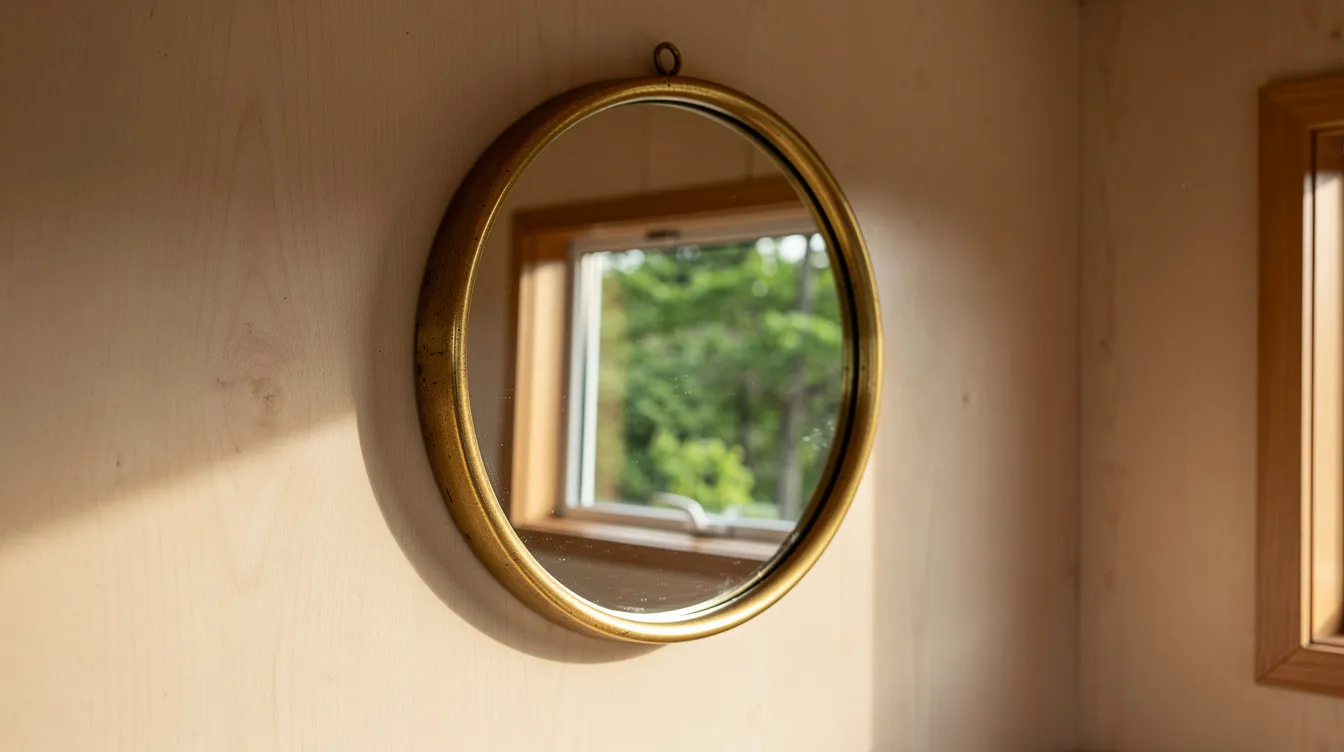
In a tiny home, a single mirror can visually expand a 7 ft wide room, doubling the perceived size. But mirrors are indiscriminate amplifiers. They reflect whatever sits in front of them: a full pantry (abundance), a messy shoe pile (stress), open sky through a window (freedom). Mirrors can amplify natural light in small spaces, and strategically placed mirrors can brighten dark corners that would otherwise feel heavy.
Consider real scenarios: a mirror on a long hallway wall in a 24 ft trailer, a mirrored wardrobe door opposite a loft ladder, a reflective surface on a bathroom pocket door. Each one shapes how the room feels and how energy moves.
Before you hang anything, stand in the middle of your tiny home and ask: “What exactly will this mirror see all day?” Mirrors should not reflect clutter to avoid amplifying negative energy. If a mirror currently faces a pile of jackets or an overflowing dish rack, that is your first fix. Rotate it, relocate it, or tidy what it sees.
Choosing Mirror Shapes, Sizes, and Frames
Mirror shapes carry elemental meaning, and the right choice depends on your layout.
Shape | Element | Best Use in Tiny Homes |
|---|---|---|
Round/Oval | Metal | Above a compact dining table or bathroom sink; softens corners |
Rectangular | Wood | Along narrow walls or between windows to stretch a small space |
Square | Earth | Grounding tall loft walls; keep modest in size |
Choose round or oval mirrors to promote soft energy flow in small spaces. They work beautifully in cozy modern small bedrooms and tight bathrooms where sharp corners already dominate.
For frames, slim black metal brings clarity and modern metal energy, while a natural wood frame adds warmth when the structure already feels cold or sterile. Avoid aggressive, spiky frames in tight areas as they create harsh energy.
Size guidance: an 18–24 inch round mirror works well above a dining area, and a full-length 48–60 inch mirror suits a closet or bathroom door. Maintain a single-piece mirror for optimal energy flow rather than fragmented or multi-panel designs. As a proportion rule, a mirror should not exceed half the width of the wall it hangs on.
Best Mirror Placement Near the Front Door
The front door is the “mouth of qi” in feng shui, the point where energy enters your home. In most tiny homes, this main entrance sits just a few feet from the kitchen or sofa, making mirror placement here critical.
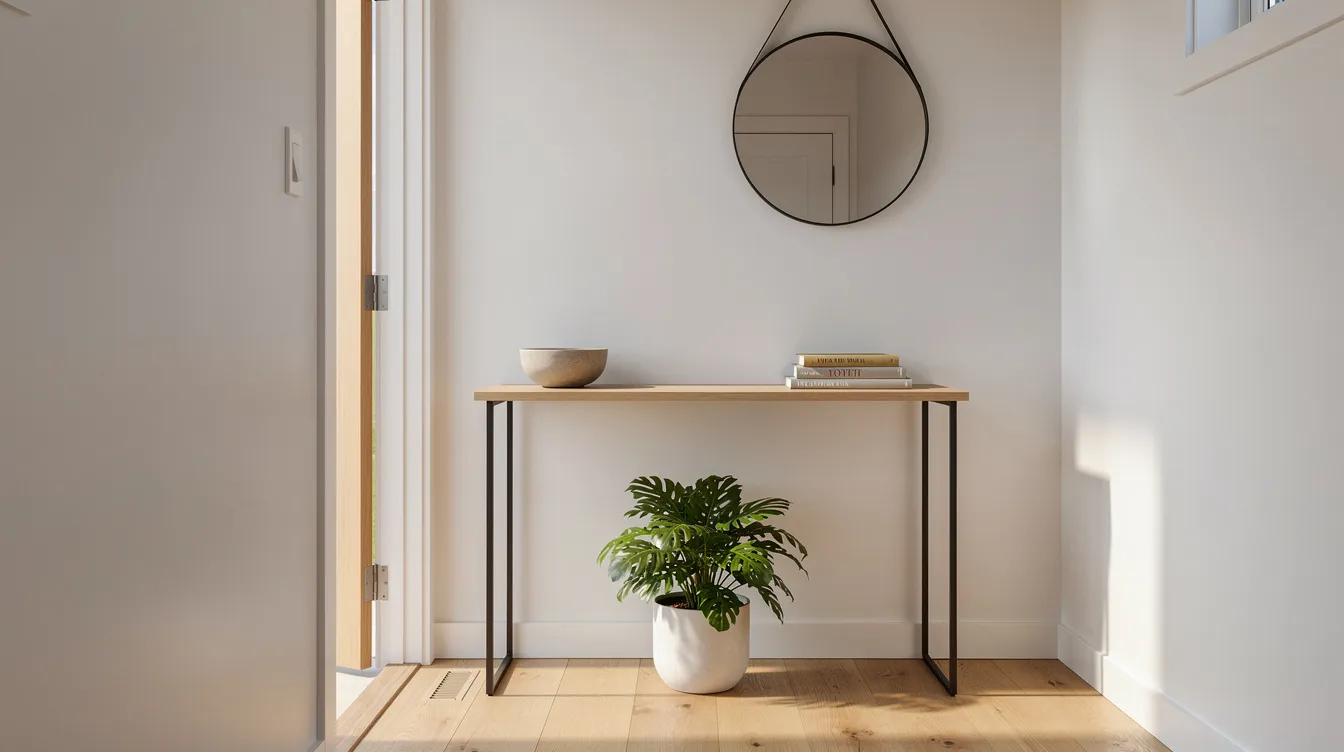
Never place a mirror directly facing the front door. In a 6–8 ft wide entry corridor, a mirror directly opposite the entrance can symbolically bounce good energy right back outside. Instead, hang the mirror on a side wall to gently pull light and qi inward while reflecting a calm scene like a small plant, a piece of art, or an organized shoe bench.
Define entryways to help energy settle before flowing through the home. Even when the door opens straight into the living area, you can create a sense of entry with a narrow console, a small rug (rugs can visually separate areas in small homes), and a medium-sized mirror on the adjacent wall. For off-grid or rural tiny homes, angle the entry mirror slightly to capture trees, mountains, or sky. Outdoor areas can extend living space and light access, and symbolically bringing nature inside through a reflection reinforces that connection.
Keep whatever the entry mirror reflects tidy: coats, mail, keys. This reflection doubles the first energetic impression of your entire home.
Dining Table, Abundance, and Mirror Magic
In feng shui, the dining table represents nourishment, friendships, and daily wealth, whether it is a four-seat farmhouse table or a fold-down surface in your tiny house kitchen. A mirror reflecting the dining area symbolically doubles food and connection.
Real tiny house setups that work: a wall-mounted drop-leaf table with a slim horizontal mirror above, or a 2-person round table paired with a round mirror centered on the wall. Make sure everyone seated is fully and comfortably reflected. Cutting off heads or showing only plates sends incomplete energy. Clear surfaces make a place feel bigger than it is, so keep the table tidy.
Mirrors can enhance energy flow by reflecting positive imagery, so a warm-framed mirror in wood or brass in the dining area balances stainless appliances and creates a welcoming, café-like feel. The quick “don’t”: avoid a mirror that reflects a perpetually cluttered surface covered in laptops and paperwork. If your dining table doubles as a desk, tidy it before meals or use a coffee table nearby for work overflow.
Mirrors in the Sleeping Area and Loft
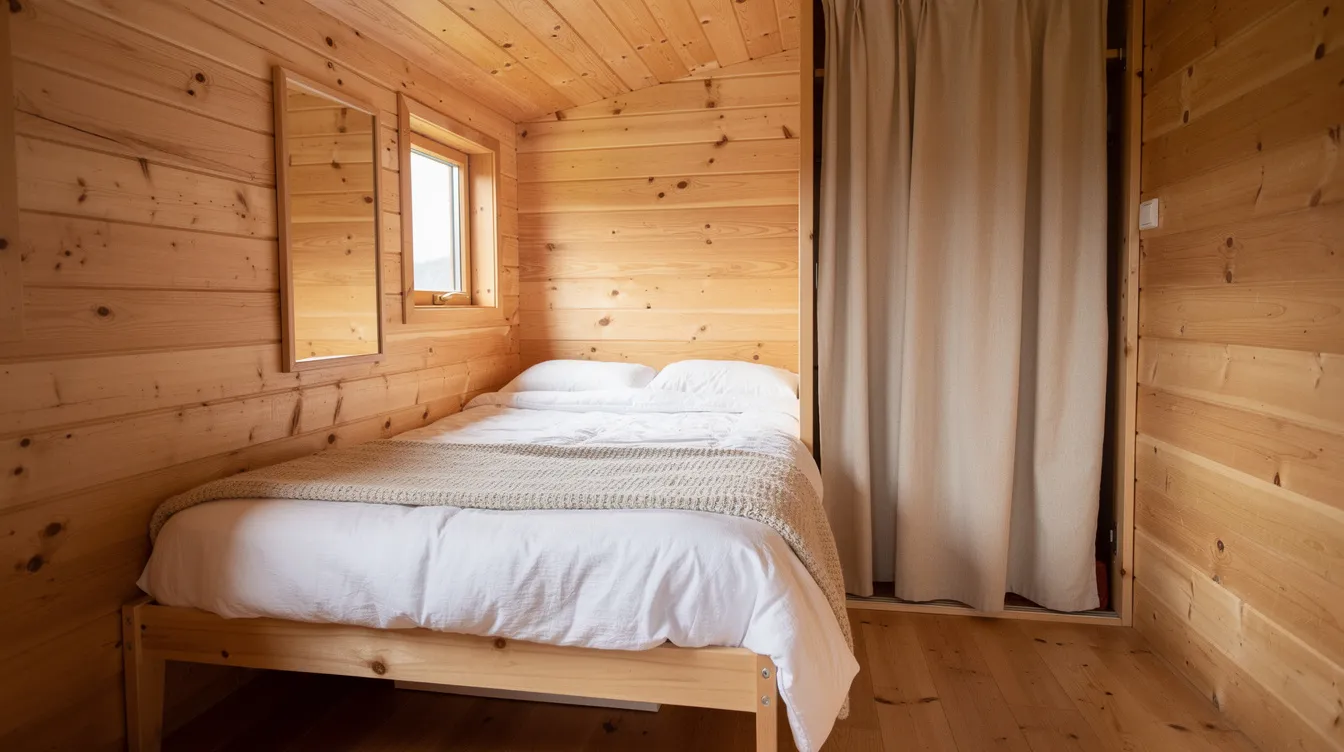
Sleeping areas should be yin: dark, calm, restful. In open lofts and studio-style tiny houses, maintaining this is harder. Avoid placing mirrors directly across from beds to prevent sleep disruption. Mirrors facing the bed at eye level can feel unsettling at night, disturb sleep, and symbolically split relationship energy.
Alternatives that work in small bedrooms and lofts:
- Place a small mirror on a low dresser at the foot of the loft where it does not directly reflect the mattress.
- Mount a mirror on the sidewall near the loft ladder.
- Use mirrored cabinet fronts under the loft or inside wardrobe doors so the reflection stays out of direct line of sight from the pillow.
For fixed or built-in mirrors like sliding closet doors, use folding screens or curtains to define different spaces and soften the reflection at night. A curtain or bamboo blind pulled across a mirrored surface at bedtime is a classic remedy inspired by Japanese small house design, where hidden mirrors behind dedicated doors keep the sleeping area peaceful. Strategically placed plants can also create visual barriers between a mirror and the bed in a tiny home.
Working with Mirrors in Micro Living Zones (Kitchen, Bathroom, Work Nook)
In tiny homes, kitchens, bathrooms, and work nooks often land within arm’s reach of each other, so a single mirror choice can affect several functions. Mirrors can visually open cramped areas when used thoughtfully in narrow spaces.
- Kitchen: Place a mirror or reflective backsplash to reflect natural light or a window, not stove burners or an overflowing dish rack. This keeps the area feeling bright and uncluttered.
- Bathroom: Avoid a mirror that directly reflects the toilet. If the layout forces it, keep the toilet lid closed and use a smaller oval mirror above the sink. Placing mirrors opposite windows in this zone reflects natural light deeper into the home.
- Work nook: A large mirror directly facing a laptop can feel mentally busy and overstimulating. Place a side-wall mirror or a small framed piece instead to give balanced energy without the sense of being watched.
- Galley layouts and hallways: One long, narrow mirror on the higher half of one wall widens the passage visually. Avoid two mirrors facing each other to prevent a disorienting hall-of-mirrors effect.
For vans and very small trailers under 150 sq ft, one carefully placed mirror near the cooking and sink area can serve grooming needs while maximizing storage space around it.
Balancing Elements: Metal, Wood, and Light in a Tiny Home
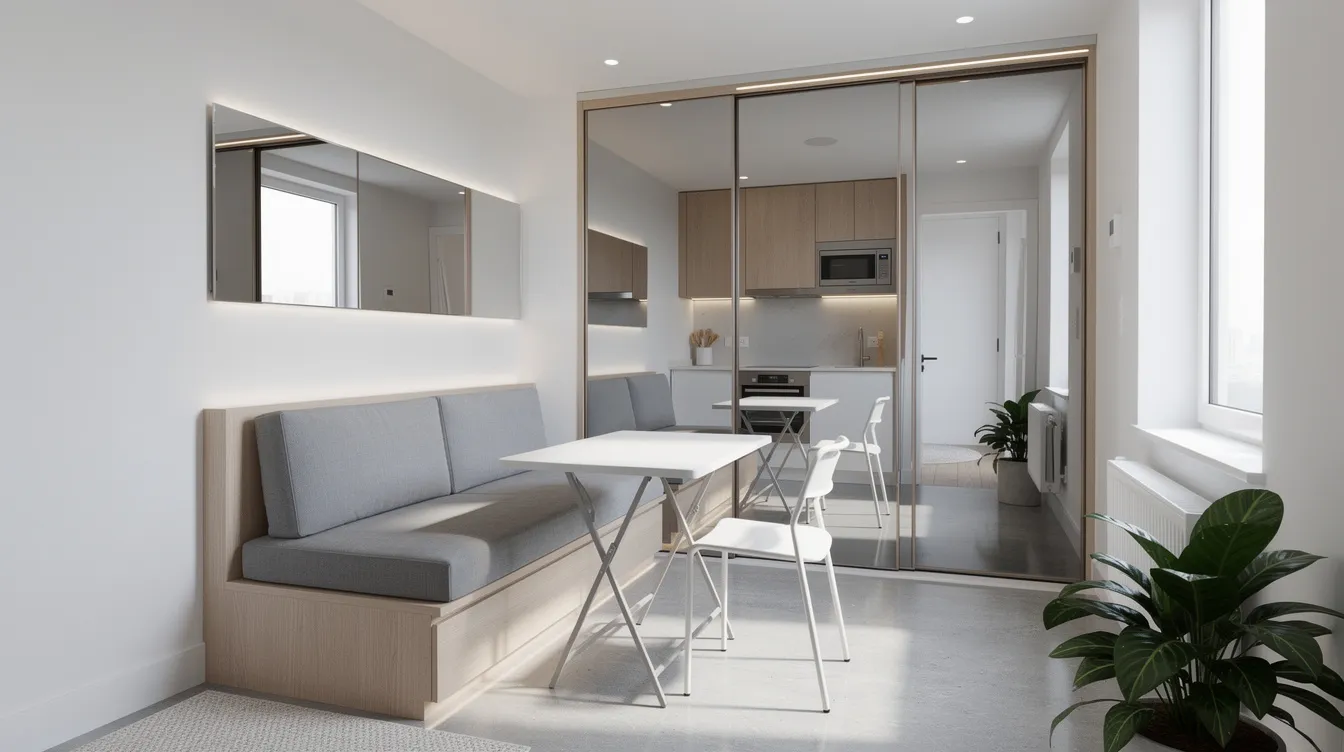
Most tiny houses have plenty of wood: pine walls, cedar siding, birch cabinets. This creates warmth but can overwhelm a small space without counterbalance. Mirrors count as both Water (reflective surface) and, when round or metal-framed, as metal element, which can clarify thinking and support focus.
Light colors on walls reflect more natural light, and pairing a wall mirror with a sconce or overhead LED bounces light deeper into a 7–8 ft wide tiny home. Uplighting makes ceilings feel higher and spaces brighter, a trick many Scandinavian tiny home designers use alongside mirrors. Placing mirrors opposite windows reflects natural light deeper into homes, reducing shadows and making the ceiling feel loftier.
If your tiny home starts to feel too sharp, cold, or metallic, warm the mood with green plants, soft textiles, and a wood-framed mirror instead of adding more metal surfaces. The goal is balance, not dominance of any single material. Discover what combination works by experimenting with one element at a time.
Practical Mirror Tips for Different Tiny Home Layouts
Feng shui solutions differ for a 26 ft tiny house on wheels, a 300 sq ft ADU, and a converted bus. Here are layout-specific ideas:
- Classic galley (kitchen one side, sofa the other): A single long mirror along the sofa wall, positioned to reflect windows and greenery, not the entry door. Pair with smart furniture choices to keep the reflection clean.
- L-shaped or U-shaped layouts: Use a mirror at the dead end of a short corridor to symbolically open the space. Make sure it reflects art or plants, not the bathroom.
- Loft homes with high ceilings: A vertically oriented mirror at ground level visually connects floor and ceiling, making the home feel taller and more cohesive. Great for A-frame loft houses.
- Studio micro apartments (under 250 sq ft): One medium-sized round mirror above the dining or work table serves as both a feng shui cure and a design focal point, creating the illusion of depth and openness.
Maintenance, Intention, and Ongoing Adjustments
Even the best mirror placement needs regular care. In a tiny home where steam, cooking grease, and dust accumulate quickly, keep mirrors clean and intact to ensure clear energy reflection in feng shui. Clean them weekly with low-toxic cleaners. Replace chipped, cracked, or badly warped mirrors promptly, as they symbolically represent fragmented energy, especially in sleeping or dining areas.
Most people use 20% of their stuff 80% of the time. Keep only the 20% you really love and use, go paperless to prevent clutter from building up, and develop a routine of tidying last thing at night. This discipline directly supports what your mirrors reflect.
When you hang a mirror, set an intention: better sleep, attracting community, feeling more spacious. Revisit that intention seasonally. Walk through your space in spring and autumn, check each reflection, and adjust angles or relocate as life needs change. We hope this post gives you a clear starting point.
For real-world examples, galleries, and more comments from the tiny house community, explore additional design and feng shui case studies on Explore Tiny House.
FAQ
These questions address common concerns tiny home owners have about feng shui and mirror placement that were not fully covered above. Each answer offers practical, layout-specific advice.
Can I have any mirror at all in my tiny home bedroom or loft?
Yes. Mirrors are welcome in sleeping areas as long as they do not directly face the bed at eye level when you are lying down. Place them at a lower height on a dresser, inside closet doors, or on a side wall where they reflect the wall or a plant rather than the sleeper. In tight lofts, a mirror inside a storage cabinet door works perfectly: you open it when you need it and close it before rest.
What if my tiny house already has a mirror opposite the front door?
If you can move it, relocate it to a side wall. If it is fixed, soften the effect by placing a small plant or artwork between the door and the mirror so the reflection is partially obscured. Make sure the reflected view is calm and orderly rather than chaotic. A fabric panel or decorative screen also works as a simple, renter-friendly cover in the far left corner of the entry.
How many mirrors are too many in a 200–300 sq ft tiny home?
Start with one larger mirror in a main community or transition area (entry or dining) and one smaller mirror in the bathroom. Add another only if a specific need arises, such as a full-length mirror inside a closet for dressing. More than two or three mirrors in very small rooms can create chaotic, fragmented energy and make the space feel disorienting rather than open.
Can I use mirrored furniture to save space and improve feng shui?
Mirrored furniture like a side table or cabinet front can be space-efficient, but use it sparingly. Orient it toward light and pleasant views, never toward cluttered shelves or electronics. Cheap or chipped mirrored furniture creates distorted reflections that undermine the clarity feng shui aims for, so choose quality pieces.
Does it matter which wall a mirror goes on if my tiny house is on wheels and can move?
For mobile tiny homes, compass directions shift every time you park, so rigid directional rules become less relevant. Focus instead on what the mirror reflects from the inside: comfort, sleep quality, and visual spaciousness matter more than which compass point the wall faces. Adjust the mirror based on your new surroundings whenever you land in a new spot.