

Nebraska does allow tiny homes, but regulations vary widely by municipality. There’s no single statewide law governing tiny houses. Instead, each of the state’s 93 counties and 500+ municipalities sets its own rules. This means your tiny living dreams depend heavily on location.
True tiny house communities—where multiple small dwellings share infrastructure and amenities—are still rare in Nebraska. Most organized options today function as RV-style parks or small pocket developments. However, several promising tiny home community projects are in planning stages, especially around Omaha, Lincoln, and South Sioux City.
Three factors determine where a tiny house community can legally exist:
- Zoning classification – Does the municipality allow multiple small dwellings on one parcel?
- Minimum square footage – Requirements range from 120 to 900 square feet depending on county
- Foundation vs. wheels – Tiny houses on wheels follow RV rules; foundation builds follow residential codes
Named Nebraska locations include The Hideaway in North Platte (an RV park welcoming tiny houses) and Omaha Green Cohousing (a community-focused development in progress). Rural counties like Dawson and Otoe offer additional opportunities for tiny living with their 120 square foot minimums.
Always verify current regulations with local zoning offices. Ordinances changed rapidly between 2024 and 2026, and more updates are expected.
- Introduction: Tiny Living and Community Life in Nebraska
- Legal Basics: What Makes a Tiny House Community Possible in Nebraska?
- Current Tiny House–Friendly Communities and Parks in Nebraska
- City and County Hotspots for Tiny House Communities
- Tiny House Living in South Sioux City and Northeastern Nebraska
- Comfortable Living in Tiny House Communities: Amenities and Design
- Costs: Joining or Developing a Tiny House Community in Nebraska
- How to Find (or Start) a Tiny House Community in Nebraska
- Future Outlook: Tiny House Communities in Nebraska Through 2030
- FAQ: Tiny House Communities in Nebraska
- Can I live full-time in a tiny house community in Nebraska?
- Are tiny houses on wheels (THOWs) treated differently from tiny homes on foundations?
- Do Nebraska tiny house communities allow renting or only owner-occupied homes?
- How does winter weather affect tiny house communities in Nebraska?
- Can I use a tiny home as an ADU in a Nebraska tiny house community?
Introduction: Tiny Living and Community Life in Nebraska
The tiny house movement hit Nebraska around 2014-2015. Rising housing costs drove much of the interest. Median home prices in the state jumped from $150,000 in 2015 to over $250,000 by 2025. Many Nebraskans started asking: why pay for space you don’t need?
Living in a tiny house community in Nebraska offers financial and lifestyle advantages such as reduced financial strain from large mortgages and maintenance costs. Tiny homes effectively reduce mortgage stress and have lower utility bills due to more efficient heating and cooling management. By 2025, Nebraska had over 1,200 registered tiny houses on wheels and park model RVs—double the number from just five years earlier.
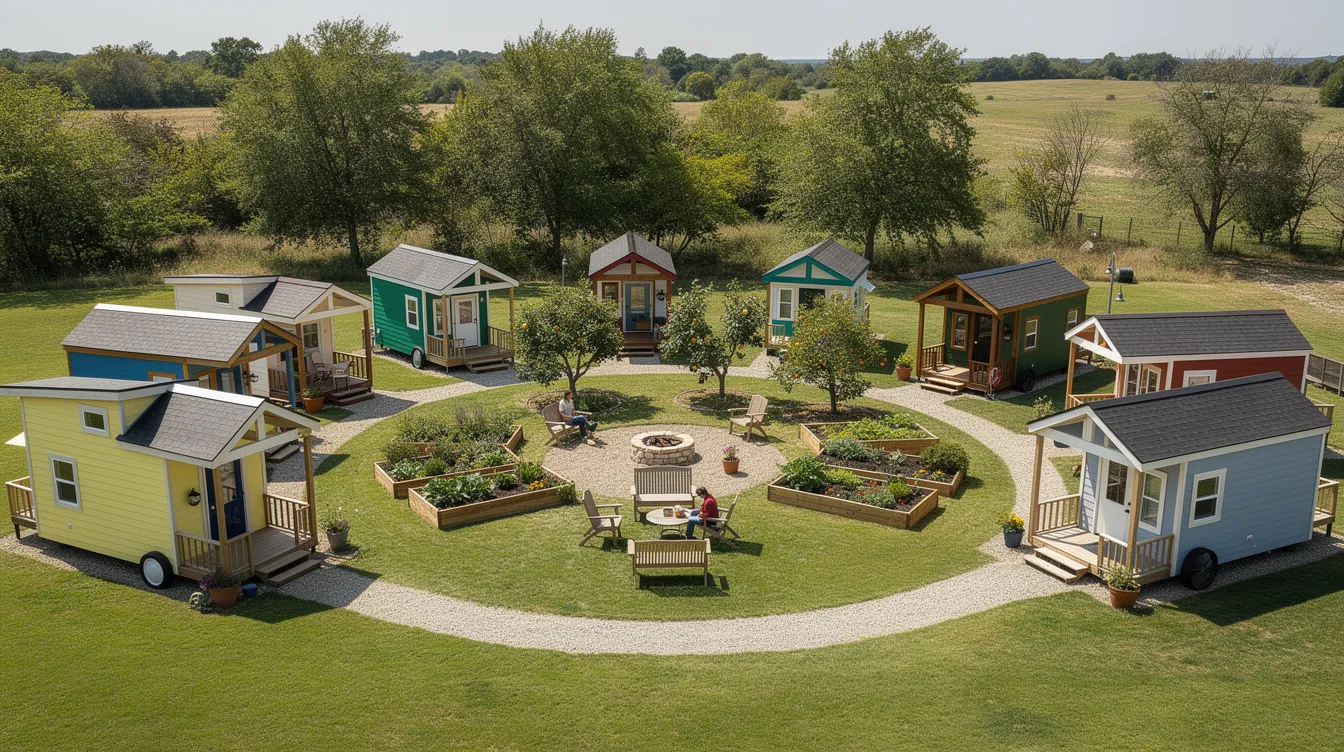
So what exactly is a “tiny house community”? It’s more than a single tiny home on a rural lot. A true tiny home community clusters five or more tiny structures (typically 120-400 square feet) on shared land. Residents share infrastructure like septic systems, water, electricity, and social spaces such as gardens or clubhouses. This creates something different from standard RV parks or standalone placements.
Nebraska has several emerging tiny house communities, primarily in Omaha and Lincoln, designed to provide sustainable, affordable, and supportive housing. But let’s be realistic: tiny home communities do exist in Nebraska, but there are not many, and details about their amenities are often scarce. Most current options fall into three categories:
- Individual tiny houses on private land
- RV parks that welcome tiny homes and park models
- Purpose-built communities with shared facilities (the rarest category)
Several cities and counties are actively exploring zoning changes to support more tiny living. This article covers concrete examples, county-by-county trends, and practical steps to find or create a tiny house community in Nebraska.
Legal Basics: What Makes a Tiny House Community Possible in Nebraska?
Nebraska does not have a single statewide “tiny house law.” Instead, the state adopted the International Residential Code (IRC) 2018 version in 2021, including Appendix Q for dwellings under 400 square feet. But here’s the catch: individual counties and municipalities decide whether to adopt these provisions.
Tiny homes are legal in Nebraska, but the regulations vary widely by municipality, with some counties adopting aspects of the International Residential Code for tiny homes. Many areas in Nebraska require tiny homes to comply with local zoning regulations, and building permits are often necessary before occupancy, so it helps to start with tiny house plans that fit your life and align with local code requirements.
Understanding key legal distinctions is essential:
Type | Classification | Where Allowed | Rules Applied |
|---|---|---|---|
Tiny House on Wheels (THOW) | RV/recreational vehicle | RV parks, campgrounds | DOT regulations, 12-month max stays in some zones |
Tiny House on Foundation | Permanent dwelling | Residential zones (if meeting minimums) | IRC building codes |
Park Model RV | ANSI A119.5 standard | RV parks (year-round in many) | Up to 400 sq ft max |
Some Nebraska cities actively make room for small-footprint homes. Norfolk adopted IRC Appendix Q in 2019, allowing tiny houses on foundations citywide with a 120 square foot minimum. Columbus created a Non-Traditional Residential District in 2021, capping tiny home size at 400 square feet and enabling “cottage courts” of 4-8 units. |
In Nebraska, the minimum size for tiny homes can vary, with some counties setting requirements as low as 120 square feet, while others may have higher minimums. Many areas in Nebraska that allow tiny homes have a minimum size requirement ranging from 70 to 200 square feet. Here’s how size requirements break down across the state:
- 120 sq ft minimum: Dawson, Otoe, Colfax, Antelope, Cherry, Thayer, Furnas counties
- 160 sq ft minimum: Hamilton County
- 200 sq ft minimum: Dodge County
- 320 sq ft minimum: Lancaster County, Kimball County
- 850-900 sq ft minimum: York, Sheridan, Merrick (essentially banning tiny homes)
Any tiny house community must satisfy three core requirements: zoning that allows multiple small dwellings on one parcel, building code compliance for all structures, and access to utilities or properly permitted septic systems. For communities of five or more units, septic systems need health department approval and typically cost $20,000-50,000.
Current Tiny House–Friendly Communities and Parks in Nebraska
Most real, on-the-ground “communities” in Nebraska today look like RV parks or small developments that openly welcome tiny houses and park models. Purpose-built tiny house villages remain rare, though several nonprofit and cohousing projects are changing that picture.
The Hideaway (North Platte, NE)
The Hideaway, located in North Platte, NE, is a full-service RV park that offers water, electric, and sewer hookups at every stall, making it a suitable spot for tiny home residents. Located in Lincoln County along the I-80 corridor, this park features 50+ sites with 50-amp electrical service and frost-free pedestals designed for winter occupancy.
Long-term rates run $400-600 per month, making it one of the more affordable options in central Nebraska. About 20% of current occupants live in tiny houses or park model RVs according to park owner interviews. The location works well for those who want tranquil country surroundings while remaining close to town amenities and resources.
Omaha Green Cohousing (Omaha, NE – In Development)
Omaha Green Cohousing is a developing tiny home community in Omaha, Nebraska, focused on fostering a simpler, more connected way of life. This project plans 25 units ranging from 200-500 square feet, with a common house, permaculture gardens, and shared meals.
The initiative attracts people looking for tiny living with strong community ties. Their vision combines comfortable living with sustainability—projected garden yields of 500 pounds of food annually per the project’s planning documents. A waitlist of 50+ interested parties suggests strong demand for this type of neighborhood.
The Cottages on 17th (Omaha, NE)
Tiny house communities in Nebraska are primarily focused on specialized housing solutions, particularly for individuals transitioning out of homelessness or incarceration. The Cottages project, groundbreaking in 2024, builds 50 tiny homes at 275 square feet each.
Backed by Siena Francis House nonprofit with $275,000 in city funding, this supportive tiny house community integrates on-site management, counseling, and peer support groups to assist with reintegration and long-term stability. Each home features a small porch, and the site includes a community center, gardens, and shared laundry facilities.
Hope Village (Lincoln, NE – Planning Stage)
Hope Village targets formerly incarcerated individuals with 30-40 tiny homes around 250 square feet each. Communities like Hope Village integrate on-site services such as case management, job training, and financial literacy programs.
Backed by city council, Department of Corrections stakeholders, and the Bridges to Hope nonprofit, this self-managed community will feature a communal kitchen and laundry. The project addresses a critical gap in housing for people who often face barriers to traditional rentals.
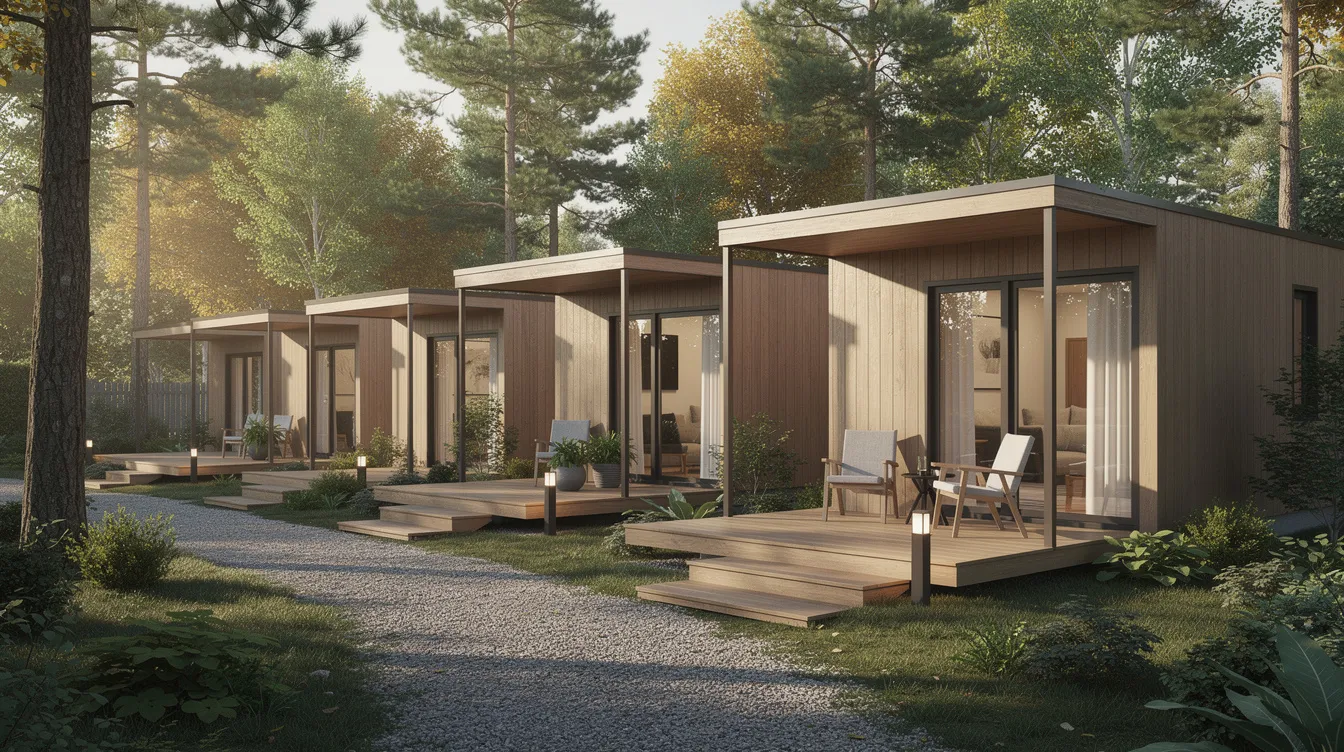
While not all these locations market themselves strictly as “tiny house communities,” they function that way by clustering small units, offering shared amenities, and sometimes organizing community events where neighbors connect and support each other.
City and County Hotspots for Tiny House Communities
Some Nebraska jurisdictions are more promising than others if you want to live in or develop a tiny house community. Here’s where to focus your search.
Norfolk, NE stands out as a leader in tiny house friendliness. The city adopted IRC Appendix Q in 2019, becoming one of the first Nebraska municipalities to explicitly welcome foundation tiny homes. The 120 square foot minimum makes infill tiny house clusters inside city limits feasible. Three variance requests for small-home developments were granted in 2024 alone.
Columbus, NE created its Non-Traditional Residential District in 2021 specifically to accommodate alternative housing. The 400 square foot maximum for tiny homes enables micro-neighborhoods and cottage courts. Two small developments with 6 units each were built in 2025, proving the concept works.
Dawson, Otoe, Colfax, and Antelope counties share 120 square foot minimums with 7-foot ceiling requirements. These rural areas generally support small dwellings and possible multi-home clusters on larger parcels. Land costs remain low—under $2,000 per acre in some western areas—making them attractive for groups of friends or small families looking to create their own community.
Hamilton County explicitly allows homes in the 160-899 square foot range, offering flexibility for off-grid or semi-rural tiny house communities. Kimball County sets its minimum at 320 square feet but remains viable for larger tiny home designs.
Contrast these with more restrictive counties. York, Sheridan, and Merrick impose 850-900 square foot minimums, essentially prohibiting tiny homes. Anyone hoping to establish a tiny home village in these areas faces an uphill battle requiring extensive zoning variances.
Proximity to cities like Lincoln, Omaha, Grand Island, and South Sioux City also affects community viability. Jobs paying around $50,000 average salary (healthcare and agriculture sectors), healthcare access, and essential services make nearby tiny house communities more practical for residents who need to walk or drive to work daily.
Tiny House Living in South Sioux City and Northeastern Nebraska
South Sioux City sits in Dakota County with a population around 13,000. Major employers include meatpacking plants and an Amazon facility, with median incomes around $45,000. Many residents are interested in affordable housing options, making tiny living increasingly appealing.
As of 2025-2026, tiny home allowance in South Sioux City remains officially uncertain. No clear published ordinances specifically address tiny homes. The municipality defaults to roughly 400 square foot minimums via IRC interpretation. However, park models and small manufactured homes exist in several mobile home parks throughout the area.
The practical reality: many residents pursue tiny living in this region by placing RV-style tiny houses or park models in RV and mobile home parks. Holiday Mobile Home Park reports approximately 20% tiny-occupied units. Long-term pad rental runs about $500 monthly at parks like Riverside RV. Additionally, unincorporated Dakota County allows tiny homes as ADUs with 120 square foot minimums on property with existing primary residences.
The Siouxland region offers cross-river options worth exploring. Iowa’s Woodbury County (Sioux City) permits THOW communities, including Tiny Village Siouxland with 15 units. South Dakota RV resorts nearby may also offer solutions for those willing to commute across state lines.
For readers in South Sioux City specifically:
- Contact city planning/zoning to ask about minimum dwelling sizes
- Inquire specifically about ADU rules and regulations
- Ask about RV and park model permanence limits
- Explore whether any local church or nonprofit is piloting a tiny home village concept—several organizations have expressed interest in veteran-focused villages
Comfortable Living in Tiny House Communities: Amenities and Design
Tiny home communities in Nebraska can still provide comfortable living with modern amenities despite smaller footprints. Many tiny house designs emphasize eco-friendly construction and sustainable living practices, and thoughtful tiny house interiors that maximize every square foot make compact homes feel open and efficient. The key lies in smart design and shared resources.
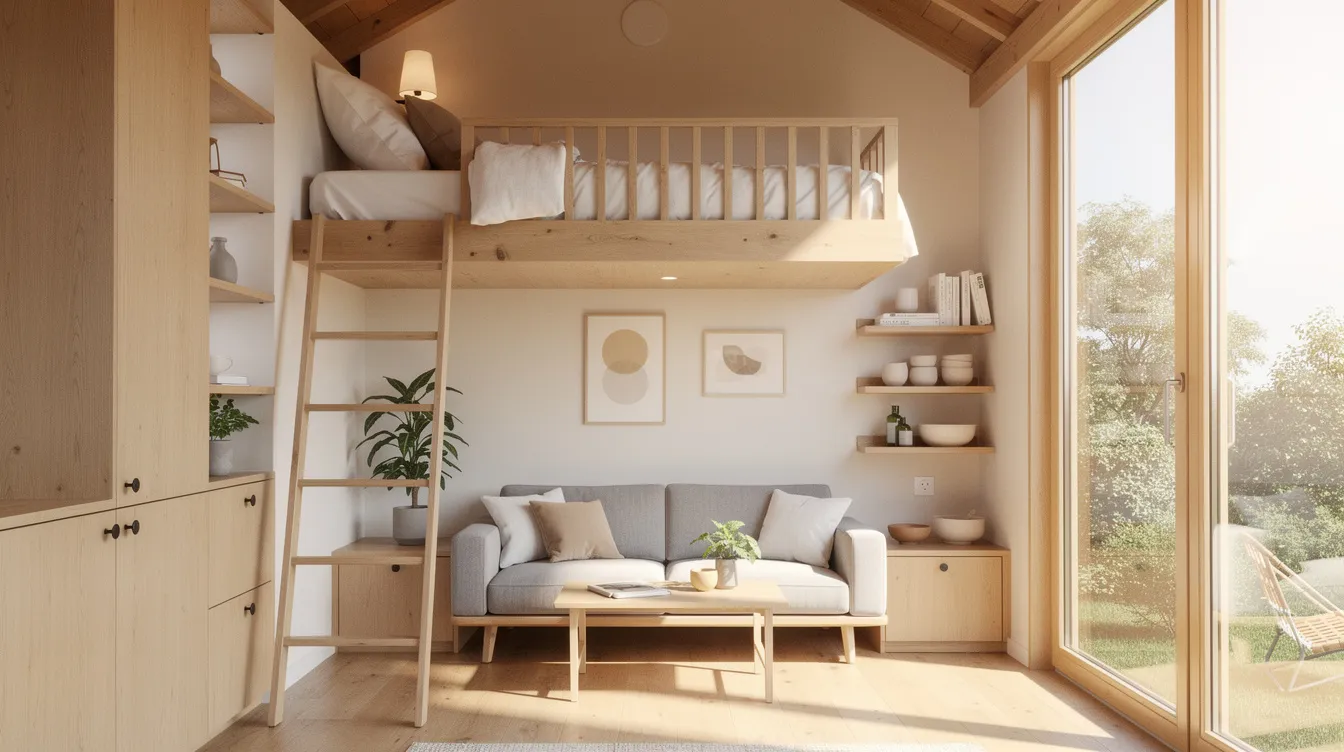
Residents in tiny house communities typically live in small homes (250–500 sq ft) with access to shared amenities such as community centers and laundry facilities. Individual tiny homes maximize space through features similar to elegant tiny homes that redefine modern living:
- High ceilings (7-10 feet) creating spacious feel
- Large windows with triple-pane glass (R-5 value for Nebraska’s dark winter months)
- Loft bedrooms adding 100+ square feet of sleeping space
- Full-size showers (32×32 inch minimum per IRC)
- Energy-efficient heating via mini-split heat pumps ($8,000 investment)
Shared community amenities transform the tiny lifestyle. A cozy 300 square foot home feels like part of a much larger living environment when you can walk to communal laundry, relax in a complete common kitchen, or enjoy walking paths through trees and gardens. Many communities incorporate dog parks, fire pit areas for gathering, co-working spaces, and outdoor deck areas.
Accessibility matters for aging residents. Single-level tiny houses with wider doors (36 inches), zero-step entries, and ramps allow older Nebraskans to age in place with low maintenance but comfortable surroundings. Several community designs absolutely prioritize these features.
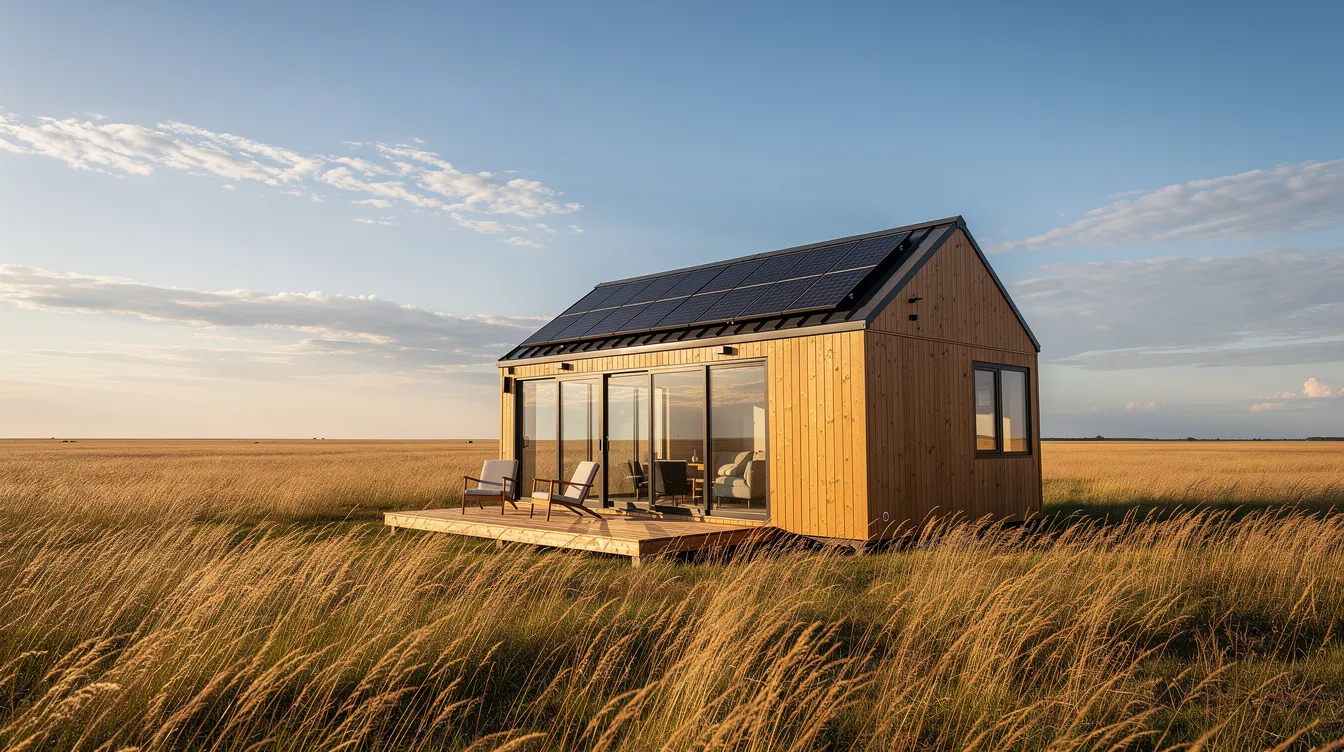
Off-grid options exist within some tiny house communities—solar panels ($10,000 for 5kW systems), rainwater collection, composting toilets. However, Nebraska building and health codes generally mandate grid-tied connections for septic/sewer in most zones. Winter preparation is essential: R-30 wall insulation and skirting with R-10 foam ($2,000) prevents pipe freezes when the sun sets and temperatures plummet.
Costs: Joining or Developing a Tiny House Community in Nebraska
The cost equation includes both the tiny house itself and the land or community component. Understanding both helps forward planning.
The average cost of a tiny home in Nebraska ranges from $30,000 to $60,000 for basic shell builds. Midrange construction with lofts, appliances, and quality finishes runs $70,000-90,000. Higher-end custom tiny homes for your perfect small-space living can cost between $90,000 and $100,000, particularly luxury park model tiny houses from manufacturers like Wind River.
Community-related costs vary by location type:
Cost Category | RV/Tiny Park | Rural Cluster | Cohousing |
|---|---|---|---|
Monthly pad rent | $400-800 | N/A (own land) | N/A |
HOA-style fees | Rare | $100-300/month | $100-300/month |
Utility hookups | Included | $5,000-15,000 | Included |
Septic/sewer tap | Included | $20,000 (shared) | Included |
Here’s a concrete scenario: Placing a 350 square foot park model in an RV park like The Hideaway costs approximately $80,000 for the home plus $600 monthly rent—totaling $14,000 annually in site costs. Compare that to creating a 5-home rural cluster in Dawson County on 10 acres ($50,000 for land), with total project costs around $400,000 ($80,000 per home) plus $10,000 for shared utilities. |
Setting up a tiny home in rural locations is typically more affordable due to lower land costs and fewer regulations compared to urban areas. Counties in central and western Nebraska offer land under $2,000 per acre, which can pair well with options from top micro house builders offering quality and affordability. However, savings must be weighed against commute times and access to services. A free plot in Furnas County means little if you’re driving an hour each way to work.
How to Find (or Start) a Tiny House Community in Nebraska
Many readers won’t find a perfect existing community nearby. You may need to search creatively or help start something new, beginning with deciding whether a tiny house for sale is right for you. Both paths require research and patience.
Define your tiny living goals first:
- Full-time residence or vacation/weekend home?
- THOW vs foundation build?
- Urban, small town, or rural Nebraska?
- Solo or creating space with friends and family?
Search strategies that work: Before you start scouting sites, looking at great tiny homes that redefine small-space living can clarify what kind of designs and layouts you want to accommodate.
- Combine terms like “tiny home,” “park model,” “RV park,” “tiny house community” with city names (South Sioux City, Lincoln, Omaha, Grand Island, Norfolk, Columbus) on Google
- Check Facebook groups—Nebraska Tiny House Living has 5,000+ members sharing location tips
- Browse local classifieds for RV park long-term spots
- Contact RV park owners directly to ask about tiny house policies
Networking builds opportunities: As you connect with others, you may find neighbors interested in tiny smart homes that offer efficient living anywhere and other tech-forward builds.
Join Nebraska-based tiny house Facebook groups where members share location discoveries. Attend local planning and zoning meetings—Lincoln held public hearings in 2025 on ADU expansions. Talk with RV park owners who may be open to long-term tiny house arrangements even if not formally advertised.
Starting your own small community involves:
- Selecting a county with flexible minimum sizes (Dawson, Otoe, Antelope at 120 sq ft)
- Verifying that multi-family or cluster housing is permitted through PUD or variance
- Planning infrastructure with engineers ($50,000+ for shared utilities)
- Working with a local land-use attorney ($5,000+ for zoning compliance)
Always get written approvals and permits before moving tiny homes to a shared property. Unpermitted clusters face fines up to $10,000. The rest of the process flows smoother with proper documentation and with a clear vision of the best cute tiny house designs for your dream home that you plan to place on the property.
Future Outlook: Tiny House Communities in Nebraska Through 2030
Tiny house communities will likely grow as Nebraska cities respond to housing shortages and demographic shifts. Young professionals seeking affordable entry-level housing and retirees downsizing from large family homes both drive demand.
Specific trends emerging through 2030:
- More IRC Appendix Q adoption: 15+ counties updated ordinances between 2024-2026, and 30 counties may adopt by 2030
- Loosening ADU rules: College towns and larger cities piloting accessory dwelling allowances
- Nonprofit-led villages: Transitional and supportive housing projects expanding beyond Omaha and Lincoln
- Light commercial integration: Mixed tiny home/small business developments along transportation corridors
Growth corridors will concentrate around Omaha, Lincoln, Grand Island, Columbus, and along I-80 where utilities and jobs make tiny house developments feasible. Experiences from other regions, such as Idaho tiny homes and guides to cozy living, suggest that tourism and outdoor recreation can also shape how these corridors evolve. The Tiny House Alliance Nebraska tracks these developments closely.
Tiny houses will remain a niche—but a growing one. Projections suggest 50+ communities by 2030 as housing shortages worsen (current vacancy rates around 10% per UNL studies). Around 20% of young adults and retirees express interest in tiny living according to Tiny House Association surveys.
Start researching now. Early movers benefit from lower land costs and established community positions as ordinances evolve between 2026 and 2030. The lifestyle offers world-class simplicity: less space, less maintenance, more connection with neighbors and the Nebraska landscape.
FAQ: Tiny House Communities in Nebraska
Can I live full-time in a tiny house community in Nebraska?
Full-time residency is possible in some Nebraska locations. RV parks like The Hideaway explicitly allow year-round occupancy with frost-free hookups designed for winter living. Foundation-built tiny homes meeting residential building codes qualify for permanent residence in zones like Norfolk’s citywide Appendix Q district.
Confirm whether a specific community is zoned for permanent residence, seasonal use only, or short-term stays like vacation rentals. Some RV parks impose 12-month maximum stays, requiring residents to briefly relocate before returning. Always get these details in writing from park management or zoning officials before committing.
Are tiny houses on wheels (THOWs) treated differently from tiny homes on foundations?
Yes—substantially different rules apply. Tiny houses on wheels classify as recreational vehicles under Nebraska DOT regulations. They must follow vehicle registration requirements and typically can only park in RV parks or campgrounds. Many municipalities restrict THOW occupancy to 6-12 months maximum.
Foundation-built tiny homes are treated like conventional houses under IRC or local building codes. They may qualify for residential zones if meeting minimum size and code requirements. Anyone planning a community should decide early whether it will be THOW-only, foundation-only, or mixed, because regulatory pathways differ significantly and affect site design.
Do Nebraska tiny house communities allow renting or only owner-occupied homes?
Policies vary considerably. RV-style parks typically offer long-term pad rentals where residents own the tiny house but rent the space—The Hideaway and similar parks operate this way. Future cohousing or cottage court communities may combine owner-occupied homes with limited rental units.
Ask about lease terms, subletting rules, and whether short-term rentals (Airbnb-style) are allowed within the community. Local zoning or HOA-style covenants may limit rental units to preserve neighborhood character. Some supportive communities like The Cottages are entirely rental-based for their target populations.
How does winter weather affect tiny house communities in Nebraska?
Nebraska’s cold winters—temperatures dropping to -20°F—require serious preparation. Proper insulation (R-30 walls recommended), high-quality triple-pane windows, and reliable heating (mini-split heat pumps or propane furnaces) are essential for comfortable living during the summer months’ opposite extreme.
Communities designed for year-round occupancy should provide frost-proof water hookups, buried utility lines, and protected sewer connections to prevent freeze damage. Budget for skirting installation ($2,000 for R-10 foam), storm preparedness supplies, and snow removal services in shared driveways. Well-designed tiny homes handle Nebraska winters absolutely fine with proper preparation.
Can I use a tiny home as an ADU in a Nebraska tiny house community?
In some counties—Buffalo, Dakota, Keith, and Fillmore—tiny homes are explicitly allowed as Accessory Dwelling Units on lots with existing primary homes. This creates a micro-community feel on single properties, particularly popular for family members or caregivers.
Formal multi-home “communities” consisting only of ADUs on one lot are rare and typically require special zoning approvals or Planned Unit Development (PUD) designations. Homeowners interested in ADUs should contact their local planning office to explore whether a tiny home ADU could be the first step toward a small-scale cluster on their property with friends or family members.