

Key Takeaways
- Target R-13 to R-21 for walls, R-30+ for roofs, and R-19+ for floors in most tiny houses, adjusting up or down based on your climate zone.
- High R value per inch matters more in tiny houses because wall cavities are shallow (typically 3.5 inches) and every inch of interior space counts.
- R-value measures the ability of an insulating material to resist heat flow, with higher values indicating better insulation effectiveness, which is crucial for energy efficiency and comfort in homes.
- Combining good R-values with air sealing and reduced thermal bridging often delivers better results than simply adding more insulation thickness.
- Common tiny house insulation options include closed cell spray foam (R-5.6 to R-8.0 per inch), rigid foam boards (R-3.8 to R-6.5 per inch), fiberglass batts (R-2.9 to R-3.8 per inch), and rock wool insulation (R-3.2 to R-4.1 per inch).
What Is R-Value and Why It Matters So Much in Tiny Houses?
R-value measures thermal resistance—how well an insulating material blocks heat transfer. Higher R-value equals better insulation. The effectiveness of insulation is quantified by its R-value, which allows for comparisons between different materials and helps determine the appropriate insulation needed based on climate and building type.
Here’s how common materials compare per inch:
Material | R-Value per Inch |
|---|---|
Fiberglass insulation | R-2.9 to R-3.8 |
Rock wool | R-3.2 to R-4.1 |
Rigid foam insulation | R-3.8 to R-6.5 |
Closed-cell spray foam | R-5.6 to R-8.0 |
A standard 2×4 tiny house wall with 3.5 inches of cavity depth realistically tops out around R-13 to R-21 depending on the insulation material. Adding continuous exterior rigid foam can push this higher. |
In tiny homes, high R value insulation is essential to prevent heat loss, as smaller living spaces can experience significant temperature fluctuations. You can’t easily thicken walls without breaking road-legal width limits (8.5 feet) or height limits (13’6”). Every square inch counts.
R-value only measures conductive heat flow. Air leaks and moisture control also strongly affect real-world comfort and energy use.

- Climate Zones and Tiny House R-Value Targets in 2026
- Designing the Tiny House Thermal Envelope
- Most Critical Areas to Insulate in a Tiny House
- Comparing Tiny House Insulation Options by R-Value
- Closed-Cell Spray Foam: Maximum R-Value per Inch
- Open-Cell Spray Foam: High Coverage, Moderate R-Value
- Fiberglass Batts: Budget-Friendly R-Value
- Rock Wool / Mineral Wool: High R with Fire and Sound Benefits
- Rigid Foam Board: Targeted High R-Value and Thermal Bridge Control
- Natural and Recycled Insulation Options
- Air Sealing and Thermal Bridging: Protecting Your R-Value Investment
- Weight, Mobility, and R-Value Trade-Offs
- Cost of Achieving High R-Value in Tiny Houses in 2026
- Putting It All Together: Example Tiny House R-Value Strategies
- FAQ: Tiny House Insulation R-Value
- What is the minimum R-value I can get away with in a tiny house?
- Can I retrofit my tiny house to increase R-value?
- How do I prevent condensation while chasing higher R-values?
- Is there a “best” insulation material for tiny houses in 2026?
- Do building codes for R-value apply to tiny houses and park models?
Climate Zones and Tiny House R-Value Targets in 2026
The U.S. Department of Energy divides the country into 8 climate zones, each with specific R-value recommendations for insulation to ensure adequate thermal resistance based on regional climate conditions. This map guides realistic R-value goals even for off-grid or non-permitted tiny houses.
In colder climates, higher R-values are necessary for insulation. For example, R-49 to R-60 is recommended for attics in colder regions, while R-13 is suggested for walls in milder climates.
Recommended R-Values by Climate:
Climate Band | Walls | Roof | Floor |
|---|---|---|---|
Warm (Zones 1-3) | R-13 to R-15 | R-30 | R-13 to R-19 |
Mixed/Cold (Zones 4-6) | R-19 to R-21 | R-38 to R-49 | R-19 to R-30 |
Very Cold (Zones 7-8) | R-20+ | R-49 to R-60 | R-30 to R-38 |
For tiny houses, the recommended R-values vary by climate zone, with R-30 to R-49 for attics, R-19 to R-21 for walls, and R-13 for floors in temperate climates, while colder areas require higher values. |
Park model tiny houses intended for year-round living in northern states should lean toward the higher end, and understanding tiny house park model homes helps you translate these benchmarks into real-world designs. Code-built homes in Zone 5 typically use at least R-20 cavity or R-13 plus R-10 continuous for walls, and R-49 in roofs—use these as benchmarks.
Designing the Tiny House Thermal Envelope
Your insulation only performs as rated when the thermal envelope is continuous and well-sealed, and good tiny house plans that fit your life should account for this from the start. Think of it as a complete wrapper around your tiny home.
The envelope layers from outside in:
- Exterior cladding/siding
- Weather-resistive barrier
- Continuous rigid foam insulation (where used)
- Sheathing
- Cavity insulation (fiberglass, rock wool, spray foam)
- Interior air barrier or vapor barrier
Thermal bridging happens when heat bypasses insulation through wall studs, rim joists, and trailer frames. In tiny houses with metal members and wheel wells, ignoring thermal bridging can cut effective R-value by 15 to 30 percent.
Continuous rigid foam board on the exterior (1 to 2 inches of XPS, EPS, or polyiso) boosts effective R-value and cuts thermal bridges without thickening interior walls.
Most Critical Areas to Insulate in a Tiny House
Roof, walls, floor, and openings behave differently thermally. Your R-value targets and material choices should vary by area.
Typical heat loss distribution in a tiny house:
- Roof: 30 to 40 percent
- Walls: 20 to 30 percent
- Floor: 15 to 25 percent
- Windows, doors, air leaks: 20 to 30 percent
Achieving design R-value in each assembly requires both correct material thickness and careful proper installation to avoid gaps and compression. Park model RV tiny houses can be insulated like small cottages, while tiny houses on wheels need lighter, vibration-resistant materials.
Roof / Ceiling: Reaching High R-Values in Limited Height
Under 13’6” legal road height, tiny house roof assemblies face the toughest balancing act between high R value and limited thickness. Heat rises, and proper insulation of the roof is essential since it is generally recommended to insulate at an R-30 level for tiny houses.
Practical R-value targets:
- Warm/mixed zones: R-30 minimum
- Cold zones: R-38+
- Very cold: R-49 to R-60
Combine 2×4 or 2×6 rafters filled with rock wool or fiberglass batts plus exterior rigid foam board to reduce thermal bridging. Closed-cell spray foam delivers maximum R per inch—about R-21 in just 3 inches.
Pay attention to condensation control. Vented “cold” roofs need proper baffles. Unvented roofs with spray foam insulation require a proper vapor strategy to stay dry over time.
Walls: Balancing High R-Value, Thickness, and Weight
Most tiny house walls use 2×4 wall studs at 16 inches on center, giving about 3.5 inches of cavity depth. This limits wall insulation options.
Realistic R-value examples:
- Fiberglass batts or rock wool in 2×4 walls: R-13 to R-15
- Closed-cell spray foam in 2×4 walls: R-19 to R-24
- 2×4 cavity plus 1 to 2 inch rigid foam outside: R-20 to R-25
Thermal bridging through wood framing lowers effective R-value, making continuous insulation especially valuable. Rock wool and dense-pack options add more weight than foam insulation—important for tiny houses on wheels that must stay under trailer GVWR.
Use 24 inches on center advanced framing where structurally allowed. This increases the insulated area and boosts effective R for the same wall thickness, and many custom tiny homes use similar strategies to balance performance with space.
Floor: Insulating Over a Cold Trailer Frame
The floor of a tiny house over open air can feel like a giant cold radiator if under-insulated. Insulating the floor of a tiny house is important as it can account for 10 to 20 percent of heat loss if not adequately insulated.
Target ranges:
- Mild zones: R-19 minimum
- Cold climates: R-25 to R-30+
Common tiny house floor insulation methods:
- Rigid foam boards cut between trailer flanges
- Fiberglass batts or rock wool supported by mesh
- Complete closed-cell spray foam on the underside
Metal trailer members and wheel wells create serious thermal bridging. Add rigid foam insulation around and over metal. Use insulated skirting for parked tiny houses in winter.
Exposed rigid foam under the trailer needs protection from road debris and moisture. Use plywood, metal, or spray-applied coatings to preserve R-value performance over time.
Doors and Windows: Plugging the R-Value Gaps
Even with R-30+ roof insulation, a few low-performance windows and a hollow-core door can dominate heat loss.
Recommendations:
- Insulated exterior doors (R-5+)
- Double-pane, low-E, argon-filled windows minimum
- Triple-pane for cold climates where budget allows
Window R-values are often expressed as U-factor. Simple conversion: R equals 1 divided by U. Target U-0.28 or lower (about R-3.6+) for cold air resistance.
Use low-expansion spray foam around window and door frames to seal air leaks. Continuous tape on flashing and good weatherstripping help the whole assembly perform closer to its rated value. Insulate window headers with rigid foam inserts and limit oversized glazing on north elevations.
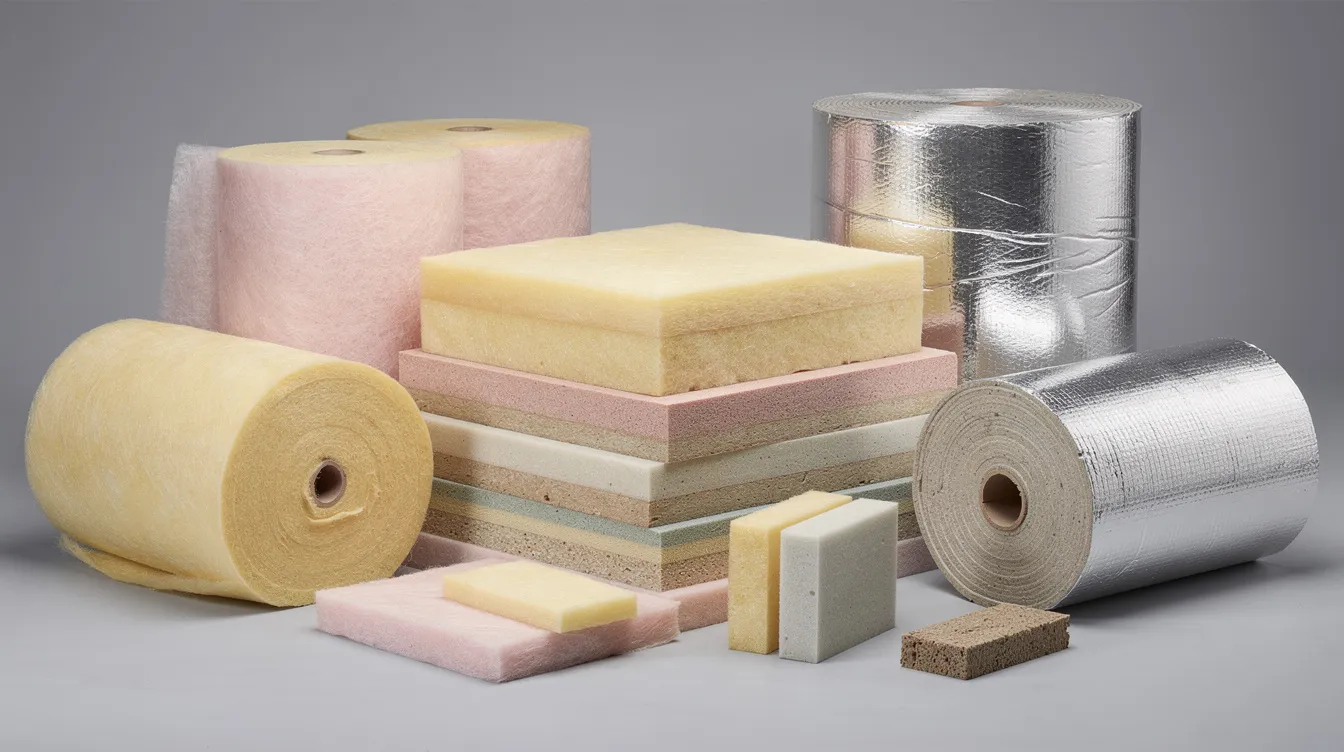
Comparing Tiny House Insulation Options by R-Value
Choosing the best insulation depends on R-value per inch, moisture behavior, weight, cost, and DIY-friendliness. While high r value insulation is important, the right choice also depends on weight limits and whether you’ll move often.
Closed-Cell Spray Foam: Maximum R-Value per Inch
Closed-cell spray foam insulation provides an R-value of approximately R-5.6 to R-8.0 per inch, making it a highly effective option for tiny houses. Some high-density products approach R-7.5 to R-8 in lab ratings.
It serves dual roles as insulation and air barrier, helping to seal unwanted air leaks while achieving high r value in cramped wall cavities. Closed-cell spray foam insulation dramatically increases energy efficiency, reducing monthly energy costs by about 30 percent, which can offset the initial higher cost within a few years.
Downsides include higher cost per board foot, need for professional equipment, and environmental considerations from blowing agents.
Example: A tiny house in Climate Zone 5 using 3 inches of closed cell spray foam in the roof (about R-21) plus 2 inches of foam board above (R-10 to R-13) reaches close to R-35.
Open-Cell Spray Foam: High Coverage, Moderate R-Value
Open-cell spray foam insulation typically offers an R-value of R-3.5 to R-3.7 per inch, providing moderate insulation at a lower cost compared to closed-cell options.
It’s vapor-permeable and less moisture resistant, requiring a proper vapor control strategy in humid climates. Open cell spray foam is lighter and less expensive, helping keep tiny house weight and budget controlled.
Example: Filling a 2×6 wall (5.5 inch cavity) with open-cell yields roughly R-19 to R-20—adequate in many mixed-climate tiny houses with good windows and air tightness.
Bonus: excellent sound-absorption in acoustically “live” tiny house interiors.
Fiberglass Batts: Budget-Friendly R-Value
Fiberglass insulation generally has an R-value range of R-2.9 to R-3.8 per inch, making it one of the most budget-friendly insulation options available for tiny houses. Common products include R-13 batts for 2×4 walls and R-21 or R-23 batts for 2×6 framing.
Fiberglass batts may seem like the cheapest way to insulate a home, but they can lead to higher energy bills over time compared to more efficient options like closed-cell spray foam. Gaps, compression, and poorly cut pieces significantly reduce effective R-value.
Traditional insulation like fiberglass is lightweight—an advantage for tiny houses on wheels. But it doesn’t add structural rigidity. Wear protective gear during installation and keep batts slightly oversized for snug friction fit in wall cavities.
Rock Wool / Mineral Wool: High R with Fire and Sound Benefits
Rock wool insulation provides an R-value of R-3.2 to R-4.1 per inch and is known for its moisture resistance and fire-retardant properties, making it a durable choice for tiny homes. Common products include R-15 for 2×4 walls and R-23 for 2×6 cavities.
Mineral wool is non-combustible, naturally moisture-resistant, and offers good sound attenuation. Its dense fibers maintain shape over time without sagging, preserving design R-value. It’s heavier than fiberglass—more concern for mobile tiny houses than park models.
Example: A Maine tiny house with 2×4 walls insulated with R-15 rock wool and R-23 roof batts handles winters below freezing. Strong choice around wood stoves or under metal roofing.
Rigid Foam Board: Targeted High R-Value and Thermal Bridge Control
Rigid foam board insulation can achieve R-values ranging from R-3.8 to R-6.5 per inch, making it effective for reducing thermal bridging in tiny houses.
Types and uses:
- EPS: Lower R per inch, affordable, vapor-open
- XPS: Higher R, good moisture resistance
- Polyiso: Highest R per inch, best for above-grade applications
Use rigid foam for continuous exterior wall insulation, under-floor and skirting insulation, and above-roof-deck layers. Pre cut panels or insulated panels save installation time.
Example: Adding 1.5 inches of polyiso (about R-9) over a 2×4 wall filled with R-15 batts raises effective wall R-value into the mid-20s.
Carefully tape and seal foam board joints. Use mechanical fastening to keep panels secure under highway vibration.
Natural and Recycled Insulation Options
Natural wool batts and recycled denim/cotton batts typically deliver R-3.5 to R-3.8 per inch. They appeal to those prioritizing low-toxicity insulating material and sustainable materials.
R-values compare to fiberglass, but they may absorb moisture more readily. Wool buffers moisture without losing much R-value—useful where humidity fluctuates quickly. These options are usually more expensive per R than fiberglass or rigid foam.
Natural options work well in stationary tiny houses or park model units when combined with robust air sealing and moisture control, especially in affordable tiny house buildings where sustainability and budget both matter. Protect from pests and bulk water to prevent mold growth.
Air Sealing and Thermal Bridging: Protecting Your R-Value Investment
Air sealing is crucial for the efficiency of insulation in tiny houses, as a leaky home can perform worse than a well-insulated but poorly sealed one.
Common air leak locations:
- Around windows and doors
- Electrical and plumbing penetrations
- Loft transitions
- Rim joist area over trailer frame
- Floor joists connections
Simple sealing techniques:
- Canned spray foam for small gaps
- Caulk at trim and sill joints
- Tape at sheathing seams
- Gaskets around electrical boxes
Use a smoke pen or thermal camera to find leaks. Thermal bridging through metal fasteners, steel trailer frames, and closely spaced studs conducts heat—dropping an R-21 wall’s thermal performance significantly.
Mitigation strategies include continuous exterior rigid foam, insulated wheel-well boxes, and limiting unnecessary framing members to maximize insulated area.
Weight, Mobility, and R-Value Trade-Offs
Tiny houses on wheels must respect trailer GVWR, axle ratings, and size limits. These directly influence how much insulation mass and thickness is practical and are key points to discuss with a top tiny house builder in NY or any experienced builder.
Weight comparison per cavity fill:
- Closed-cell spray foam: about 3 lb/cu ft
- Rock wool: 4 to 8 lb/cu ft
- Fiberglass: 0.5 to 1 lb/cu ft
Insulation must tolerate vibration, flexing, and moisture. Sprayed-in-place foam and rigid connections move less than loosely supported batts over thousands of road miles.
Park model tiny houses have more flexibility—heavier assemblies and thicker wall cavities create an energy efficient tiny home similar to a small cottage. Smart tiny house floor plans paired with well-chosen tiny house park model homes can take full advantage of this. Calculate approximate insulation weight before committing to materials. A comfortable living environment requires balancing thermal performance with mobility needs.
Cost of Achieving High R-Value in Tiny Houses in 2026
Square footage is small, but choosing high r value insulation can add several thousand dollars to a build.
2026 cost ranges:
Material | Cost |
|---|---|
Closed-cell spray foam | $0.90 to $1.10 per board foot |
Open-cell spray foam | $0.30 to $0.60 per sq ft |
Fiberglass batts | $0.30 to $0.80 per sq ft |
Rock wool | $1.00 to $2.50 per sq ft |
Rigid foam | $0.25 to $0.75 per sq ft |
Switching from standard insulation to high-performance insulation in a tiny house adds about $2,000 to your total construction cost, but this investment can lead to significant energy savings over time. |
Tiny houses have high surface-area-to-volume ratios. Upgrading from minimal to high R-values with good air sealing can cut heating and cooling energy use by 25 to 40 percent. In many climates, high-performance home insulation recoups its premium within 3 to 5 years of full-time occupancy.
Putting It All Together: Example Tiny House R-Value Strategies
Here are concrete assemblies for different climates and mobility needs.
Mixed-climate mobile tiny house:
- Walls: 2×4 with closed-cell spray foam (R-20)
- Roof: R-30 using spray foam plus rigid foam board
- Floor: R-21 using rigid foam plus spray foam around trailer frame
- Air sealing: Continuous at all penetrations
Cold-climate park model:
- Walls: 2×6 with rock wool (R-23) plus 1.5 inch exterior rigid foam (R-9)
- Roof: R-38 to R-49 with deep cavity batts and exterior rigid foam
- Floor: R-30+ over permanent foundation with thick layer of insulation
- Vapor barrier on warm side
Budget DIY mild climate:
- Walls: Fiberglass or rock wool batts in 2×4 (R-13 to R-15)
- Roof: R-30 with carefully installed batts
- Floor: R-19 batts between floor joists with air barrier
- Focus on sealing to seal air leaks at every penetration
Each assembly handles air quality, vapor control, and thermal bridging—not just nominal R-values, and different tiny house designs for modern living will prioritize these elements in different ways.
FAQ: Tiny House Insulation R-Value
What is the minimum R-value I can get away with in a tiny house?
Minimum depends on climate zone affect and comfort expectations. In mild U.S. climates (Zones 2-3), many builders use around R-13 walls, R-19 to R-30 roofs, and R-13 to R-19 floors as baselines. These are often below current code targets. Due to high surface-area-to-volume ratios, going slightly above these values makes a noticeable difference. If you’ll live full-time or move to cooler regions, choose insulation targets above these minimums.
Can I retrofit my tiny house to increase R-value?
Full retrofits are harder in tiny houses because wall cavities are shallow. Practical retrofits include adding rigid foam board and new siding to the exterior, re-insulating the floor underside with spray foam, improving air sealing, and upgrading windows and doors. Replacing cavity insulation usually requires removing interior finishes—best timed with other renovations. Tight spaces make interior work challenging.
How do I prevent condensation while chasing higher R-values?
As R-value increases, interior surfaces get warmer, which usually helps. But wrong vapor control can trap moisture in cold sheathing. Follow climate-appropriate strategies: smart vapor retarders on the warm side in cold climates, more vapor-open walls in hot-humid zones. Ensure adequate ventilation with bath fans and range hoods. Consider small HRVs for air quality in very tight tiny houses. Consult local building science guidance for complex assemblies.
Is there a “best” insulation material for tiny houses in 2026?
No single insulation is best for every tiny home insulation project. The optimal choice depends on climate, budget, mobility, sustainability goals, and how much space you’ll sacrifice, as well as the types of chalet tiny house models or cute tiny house designs you’re considering. Closed-cell spray foam and rigid foam board offer highest R-value per inch and excellent air sealing. Fiberglass and rock wool provide solid thermal resistance at lower cost. Think in terms of assemblies—combining materials to control air, moisture, and thermal bridging—rather than expecting one insulation options product to solve everything.
Do building codes for R-value apply to tiny houses and park models?
Many tiny houses on wheels fall under RV or park model standards rather than residential codes. However, energy performance targets from codes like IECC 2021 serve as valuable design guides. Park model units placed long-term may need to meet certain insulation criteria depending on jurisdiction. Check with your local authority or RV certification body to understand which R-value requirements apply to your specific project. Building for structural integrity and energy efficiency makes sense regardless of code requirements.