
Choosing between renting and buying a tiny house affects upfront costs, monthly expenses, flexibility and long-term equity. The right choice depends on your budget, lifestyle goals and how much control you want over your living space.
Below is a practical comparison of renting vs buying tiny houses in 2026.
Renting vs Buying Tiny Houses: Key Differences
The main difference comes down to financial commitment versus flexibility.
- Renting a tiny house requires lower cash upfront but builds no equity over time.
- Buying a tiny home involves higher initial investment but provides ownership benefits and customization freedom, especially if you choose from top tiny house designs for modern living.
- Rental agreements offer maximum flexibility while ownership means full responsibility for maintenance and legal compliance.
- Both options face similar zoning laws and legal challenges, but the financial stakes differ significantly.
Both approaches can support the tiny house lifestyle, but the experience and outcomes vary considerably.
Initial Costs and Financial Requirements
The upfront financial commitment creates a big difference between renting and buying tiny houses.
Renting a Tiny House Costs
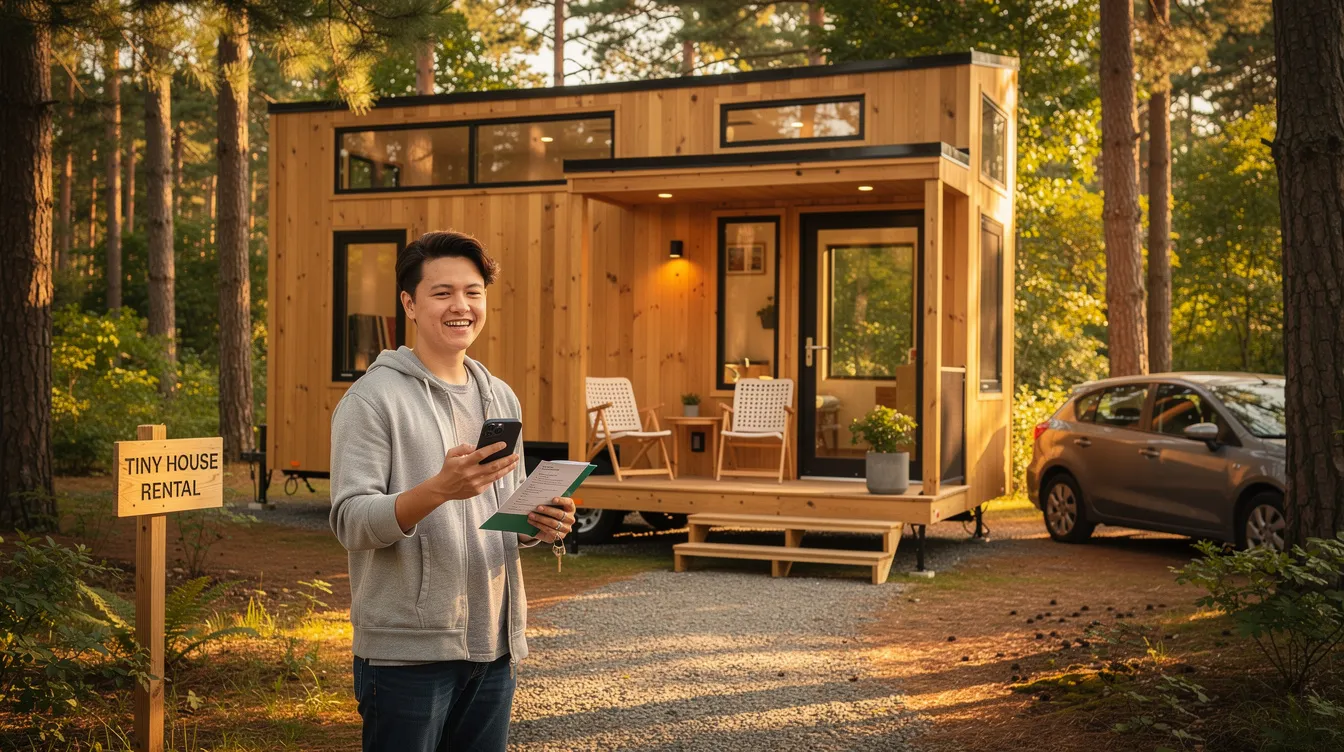
Renting requires minimal upfront capital. Security deposits typically range from $500 to $2,000, equivalent to one or two months of rent. Move-in costs stay manageable, often under $5,000 total.
No down payment or financing requirements apply. This makes renting accessible for those without large amounts of savings or those wanting to test tiny living before making a permanent commitment.
Buying a Tiny House Costs
The cost of a tiny house in the U.S. usually ranges from about $30,000 to $160,000 or more, with an average price of $300 to $400 per square foot, which is higher than many traditional homes.
Land costs add substantial expense. Rural area lots may cost $5,000 to $50,000, while suburban land often runs $30,000 to $100,000 or more. A close to everything location in a big city or coastal area increases prices dramatically.
A tiny home can cost between $30,000 and $100,000, while a traditional rental property may require an upfront payment of $80,000 to $100,000 for a down payment on a $350,000 rental property. This makes owning a tiny home potentially more accessible than traditional houses for some buyers.
Building a tiny home can involve various costs, including materials, labor, and permits, which can fluctuate widely based on the chosen design and location, so using a tiny home cost calculator can help you estimate and plan effectively. Site preparation, utility hookups, and surveying can add another $10,000 to $50,000 to the overall cost.
Monthly Expenses and Ongoing Costs
Monthly financial obligations differ significantly between renting and owning tiny houses.
Tiny House Rental Monthly Costs
Rent for tiny houses varies by market. Long-term rentals typically range from $600 to $1,500 monthly in most U.S. markets, with furnished units in prime areas costing more.
Rent for a one-bedroom apartment in many cities ranges from $1,500 to $2,500 per month, while a financed tiny home might come with lower monthly payments, depending on the financing terms, especially if you choose minimalist tiny houses for sustainable living that keep utility and maintenance costs low. This comparison shows tiny house rentals can surely save money compared to apartment versus buying decisions in expensive urban areas.
Hidden costs may apply. Lot fees in tiny house communities or RV park locations add $200 to $800 monthly. Utilities, if not included, add another $50 to $200. Renter’s insurance costs $10 to $30 monthly.
Tiny House Ownership Monthly Costs
Ownership spreads costs across multiple categories. Mortgage payments average $300 to $1,200 depending on loan terms and whether you financed the structure, land, or both.
Insurance for tiny houses typically costs $35 to $125 monthly, depending on classification as an RV, mobile home, or real property. Tiny homes typically require fewer resources to heat and cool due to their smaller size, which can lead to lower utility costs compared to larger homes—often $50 to $200 monthly for grid-connected properties.
Maintenance reserves should equal 1-2% of home value annually. For a $70,000 tiny house, expect $700 to $1,400 yearly in upkeep. If renting land rather than owning, lot lease fees range from $200 to $600 monthly plus utilities.
Making monthly payments rain or shine requires consistent budgeting. The total monthly cost of ownership often falls between $500 and $1,500, excluding land purchase costs.
Flexibility and Mobility Options
Lifestyle flexibility varies greatly depending on whether you rent or buy a tiny home.
Tiny House Rental Flexibility
Renting offers maximum flexibility. Short-term leases with 30-60 day notice periods allow easy relocation. No long-term financial commitments or selling hassles apply.
Renting provides the ability to test tiny house living before committing to purchase. You can experiment with different designs, locations, and community types without permanent obligation. This takes planning pressure off while you explore whether living minimally suits your specific circumstances.
Access to different locations means you can follow job opportunities, avoid fewer job opportunities in declining areas, or simply enjoy variety.
Tiny House Ownership Flexibility
Ownership provides complete control over customization and modifications. You can build a tiny home to your exact specifications, install off-grid systems, or upgrade features without landlord approval.
Mobile tiny houses offer relocation options but require significant planning. Many owners look at self contained tiny homes for modern off-grid living to combine mobility with independent power and water systems. Towing costs, site preparation, and zoning compliance must be verified at each new location. Zoning regulations can impose restrictions on where tiny homes can be placed, with some cities limiting their placement altogether.
Selling a tiny house can take 3 to 12 months depending on market demand. The buyer pool remains small—tiny houses represent far less than 0.01% of U.S. housing stock. Sellers often must price significantly below build cost to attract buyers.
Maintenance and Responsibility Levels
Maintenance obligations differ significantly between renters and owners of tiny houses.
Tiny House Rental Maintenance
Landlords handle major repairs, structural maintenance, property taxes, and major utility issues. Renters remain responsible for basic cleaning, minor upkeep, and appliance care.
No need to budget for roof repairs, plumbing emergencies, or appliance replacement. This arrangement works well for those preferring fewer responsibilities.
However, lease agreements in tiny house communities may assign some responsibilities differently. Always clarify what the rent includes before signing.
Tiny House Ownership Maintenance
Ownership means full responsibility for all repairs from plumbing to roofing. Tiny homes often have lower maintenance needs compared to traditional homes, but they still require regular upkeep to avoid issues in compact systems like plumbing and electrical setups.
Tiny houses present special maintenance challenges due to compact construction. Systems are often packed together, making moisture issues and roof leakage particularly critical. Trailer maintenance for tiny houses on wheels includes inspections, axle upkeep, and tire replacement.
Budget $1,200 to $3,600 annually for maintenance reserves. Emergency repairs require immediate attention to prevent cascading damage in tight spaces with less space for workarounds.
Location and Legal Considerations
Both renting and buying tiny houses face zoning challenges, but ownership involves additional legal complexity.
Renting Location Advantages
Rental locations are pre-approved by landlords familiar with local zoning laws. This removes the research burden from tenants. Whether in a small town, rural area, or designated community, compliance is the landlord’s responsibility.
Equal housing opportunity laws apply to rentals, providing tenant protections.
Buying Legal Challenges
Building codes for tiny homes can vary significantly by state, and some areas have special, simpler rules specifically for tiny homes. In 2018, the International Residential Code introduced Appendix Q, which relaxes requirements for homes of 400 square feet or less—but only if local jurisdictions adopt it.
Zoning laws often impose minimum dwelling sizes of 600 to 1,200 square feet that tiny houses cannot meet. Many codes classify tiny houses on wheels as RVs or park models, limiting where permanent residency is allowed.
Obtaining the necessary building permits is crucial when constructing a tiny home, as failing to do so can lead to fines or legal issues. RVIA certification may be required for mobile tiny houses in certain jurisdictions.
Even when public zoning allows tiny houses, HOAs or private covenants may ban them entirely, require minimum home sizes, or disallow non-traditional structures. These restrictions are often overlooked until after purchase.
The location of a tiny home significantly affects its cost, as land prices can vary greatly depending on whether the home is in a rural area or a major city. Research thoroughly before committing to buy a tiny home in any location.
Long-Term Value and Equity Building
The financial outcomes differ dramatically between renting and buying over time.
Renting Value Considerations
Renting builds no equity but avoids depreciation risk on tiny house structures. Monthly payments go to housing costs without creating ownership stakes.
This approach works well for those prioritizing flexibility over wealth building, or those uncertain about long-term tiny house commitment.
Buying Value Considerations
Tiny houses on wheels typically depreciate like vehicles. The pattern shows 15-25% value loss in the first year. After five years, many are worth only 40-60% of initial cost.
Tiny houses on permanent foundations with deeded land in desirable locations may retain value better, but they rarely appreciate like traditional homes. Opting for affordable tiny house buildings with smart designs can help balance upfront cost with long-term value. Much of the value ties to land appreciation, not the tiny structure itself.
In the right market, a tiny home can create steady rental income, especially as short-term rentals remain in demand. Owners who start with tiny homes under $20K for sale can sometimes achieve attractive returns if they manage expenses carefully. Tiny homes can be rented out for higher gross income on short-term rental platforms compared to long-term tenants, particularly in tourist markets.
The rental income potential of tiny homes heavily depends on location, local laws, zoning rules, and tourism demand. This represents a potential path to financial freedom for owners who can navigate these factors successfully.
Build equity primarily through land ownership rather than the structure. Even a tiny lot in an appreciating area provides more long-term value than a mobile tiny house without land.
Renting vs Buying Tiny Houses: Which Should You Choose?
Choose renting if you want lower upfront costs, maximum flexibility, and no maintenance responsibilities while testing the tiny house lifestyle. Renting works well for those with fewer amenities expectations, those exploring different locations, or those uncertain about the tiny house movement long-term.
Choose buying if you have sufficient capital, plan to stay long-term in one location, and want to build equity through land ownership. Exploring whether a tiny house for sale is right for you can clarify if this path fits your expectations and needs. Living in a tiny home requires significant lifestyle changes due to limited space, which can be a positive experience for those seeking a simpler life, but may feel restrictive for families or remote workers.
The appeal of tiny homes includes energy efficiency and sustainability benefits, as they typically use fewer resources and can incorporate eco-friendly features, and some buyers are now considering tiny smart homes for efficient living anywhere to add automation and advanced energy management, although these upgrades can increase initial costs.
The answer depends on your specific circumstances. Taking time to review tiny house plans that fit your life can help you visualize whether ownership aligns with your priorities. Both renting and buying tiny houses can work well when matched with your financial situation and lifestyle goals.
This article provides general informational guidance only and does not constitute financial or investment advice. Consult licensed professionals for decisions involving your own tiny house purchase or rental.