

Key Takeaways
- A well-planned tiny house exterior can make a small footprint feel spacious, welcoming, and high-end
- Mixing natural materials, two tone exteriors, and unique architectural features creates big visual impact
- Doors, windows, and rooflines are critical design tools for maximizing light, views, and curb appeal
- Smart outdoor features like porches, decks, and landscaping effectively extend your living space
- These ideas apply to both mobile and foundation tiny homes in 2026
Introduction: Why Tiny House Exteriors Matter
Your tiny home exterior is the first thing people see. It sets the tone for the entire home and shapes daily comfort and resale value. This post focuses on practical design inspiration for tiny house exteriors—not construction how-tos. Whether you’re planning a new build or refreshing an existing tiny house, you’ll find concrete ideas covering architectural features, color, materials, and outdoor spaces, which pair well with a full guide on how to build a tiny house.
- Choosing the Right Exterior Style for Your Tiny Home
- Smart Use of Materials for a Tiny House Exterior
- Colour and Texture: Making a Small Exterior Stand Out
- Architectural Features That Make Tiny Homes Feel Big
- Outdoor Living: Extending Space Beyond the Tiny House Walls
- Design Tips, Budget Ideas, and Planning Checklist
- FAQ
Choosing the Right Exterior Style for Your Tiny Home
The exterior style should reflect your lifestyle, climate, and site. A tiny home on a woodland lot looks different than one parked in an urban RV community. Think about how your house exterior will interact with its environment and how different tiny house plans that fit your life might influence your exterior choices.
Modern vs. rustic: what fits your lifestyle?
Modern tiny home exteriors feature clean lines, shed roofs, large glazing, and metal or fiber-cement cladding inspired by modernist tiny house designs. Rustic exteriors use natural materials like rough-sawn wood, stone skirting, and traditional gable roofs.
Consider maintenance too. Stained wood siding needs refreshing every 3-5 years. Painted metal panels last 10-20 years with minimal upkeep. Modern minimalists who travel often may prefer low maintenance options. Owners parking long-term on rural land might enjoy warm cedar aesthetics.
You can mix both styles—metal cladding with a warm timber porch creates a balanced, timeless look.
Coordinating exterior style with your interior layout
Window and door placement should match key interior zones. Consider:
- Floor-to-ceiling glass at the living room end
- Smaller windows near storage walls
- High clerestory windows for privacy
Align your exterior color palette with interior finishes. A light Scandinavian interior pairs beautifully with pale timber and white exterior, especially when paired with tiny house interiors that maximize every square foot. Sketch both exterior elevations and interior layout together early in the planning process.
Smart Use of Materials for a Tiny House Exterior
Material choices matter more on tiny homes. You’re working with limited space, weight limits for mobile homes, and constant weather exposure during towing. Balance natural materials with durable, low maintenance surfaces.
Natural materials that ground your tiny home in its setting
Incorporating natural materials like wood siding, stone accents, and reclaimed materials into tiny house exteriors adds a rustic touch and helps the home blend seamlessly with its environment.
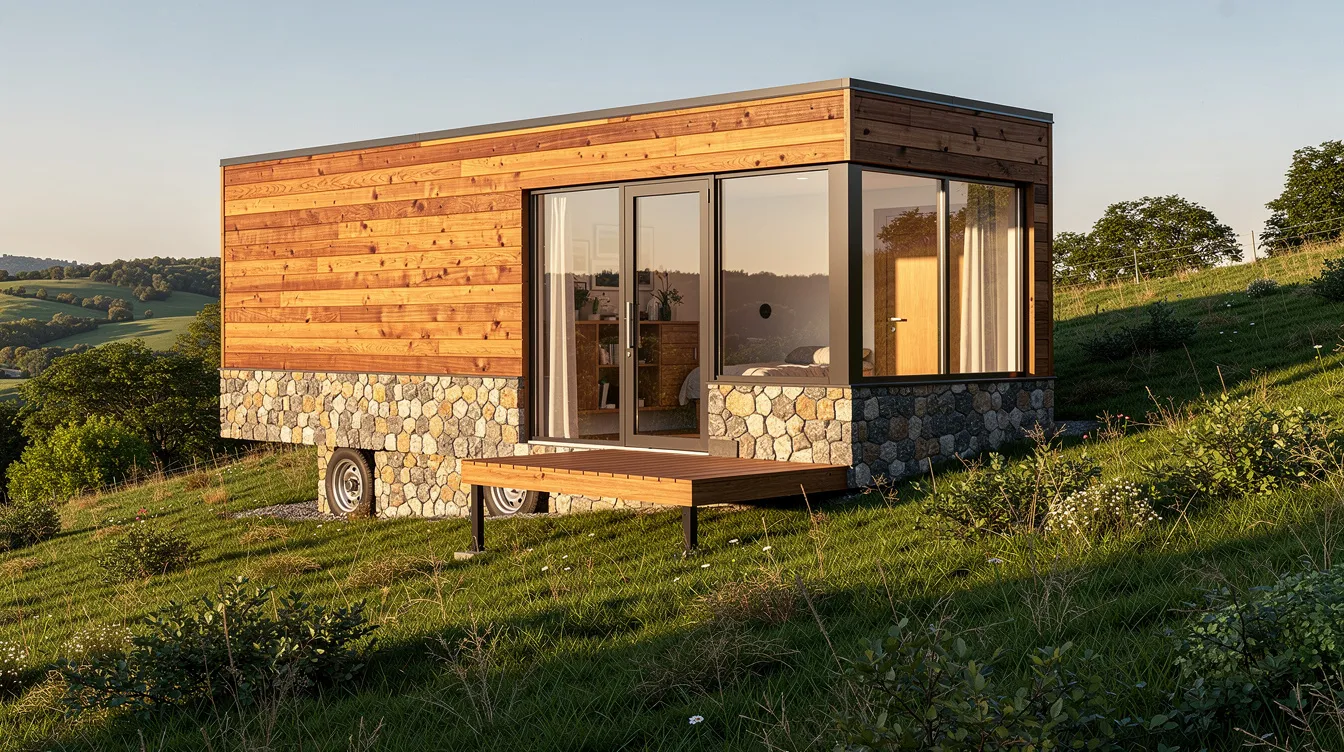
Wood siding is a popular choice for tiny homes due to its natural warmth and sustainability, with cedar being a top option for its resistance to insects and rot. Vertical board-and-batten creates height. Horizontal lap siding feels classic.
Reclaimed wood is an eco-friendly option that adds character to tiny house exteriors, as each piece has a unique history and weathered look. Use stone or brick as accent materials for skirting, entry steps, or feature walls.
Metal cladding and modern composite options
Corrugated steel, standing seam panels, and aluminum cladding offer sleek durability for modern tiny homes that aim to echo elegant tiny homes that redefine modern living. Benefits include:
- Fire resistance
- Lightweight for towing
- Low maintenance over 10-20 years
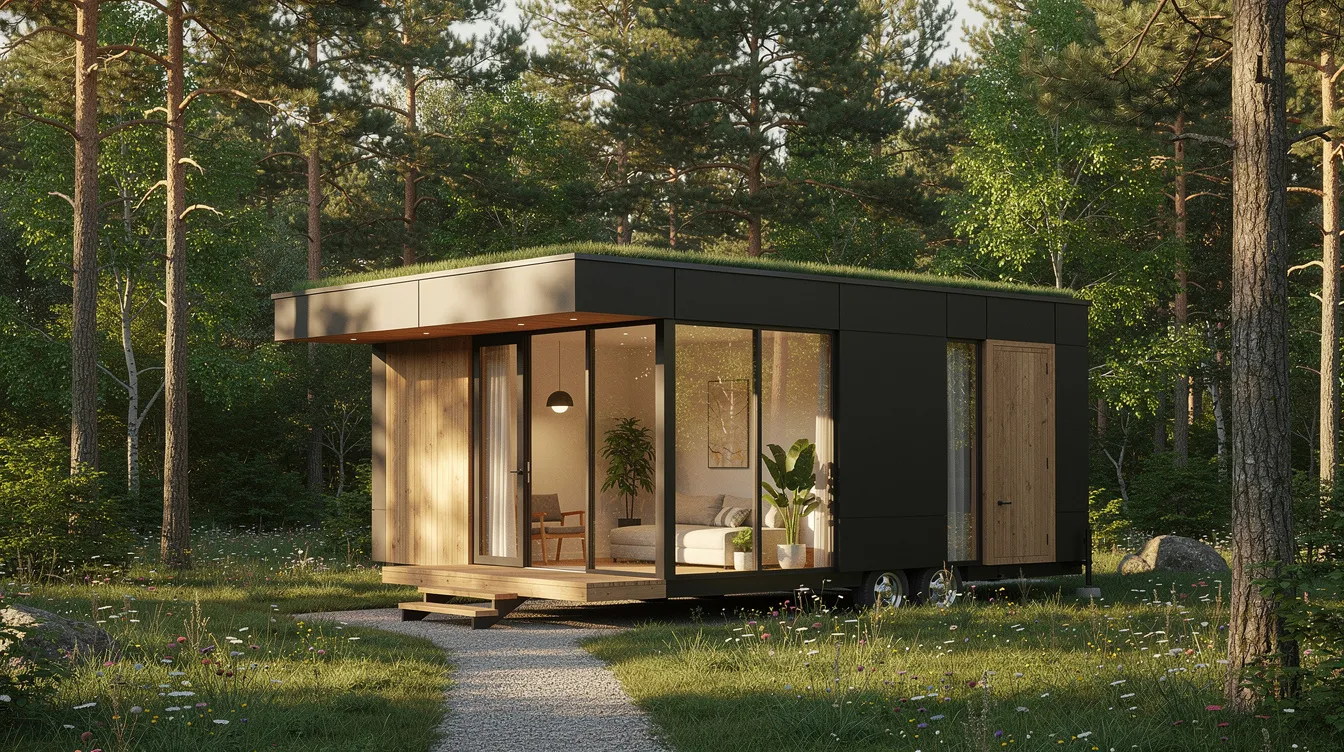
Matte black or dark charcoal metal paired with warm timber trim is an on-trend look in 2026 tiny home design. Fiber-cement and engineered wood panels mimic wood with better durability. Note that metal can be noisy in heavy rain—proper insulation helps.
Mixed-material tiny house exteriors for visual interest
Incorporating mixed materials in tiny home exteriors, such as pairing wood with stone or metal, adds depth and character while creating visually dynamic structures.
Try this layout:
- Metal on long sides
- Wood accent on the tow-end
- Contrasting material around the front door
Keep the palette cohesive with shared undertones. Smooth metal next to rough-sawn timber creates contrast without clutter.
Colour and Texture: Making a Small Exterior Stand Out
Color and texture can make a tiny house look larger, more modern, or cozier. Current trends favor deep greens, warm whites, charcoal blacks, and soft earth tones, much like many of the cute tiny house designs for your dream home.
Neutral tones vs. bold accents on tiny homes
Off-whites, light greys, and soft beige make a tiny house appear larger and more minimal. Deep blues, forest greens, and charcoal create drama with sophistication.
Bold colors can transform a tiny home into an eye-catching statement piece, with homeowners increasingly opting for vibrant hues like bright yellows, blues, and reds. The choice of exterior colors in tiny homes is significant, as it reflects the homeowner’s personality and can create a vibrant, energetic atmosphere.
Use bold accent colors for doors, window frames, or trim to avoid overwhelming the compact space. Test paint swatches outside in different light conditions before committing.
Using texture and siding patterns to add depth
Different textures working together create depth:
- Combine vertical board-and-batten with horizontal lap siding
- Add shingle sections at gables for cottage style
- Pair smooth metal with rough-sawn timber
Even a single color looks rich over varied textures. Limit to two primary textures plus one accent—too many makes a small home feel busy.
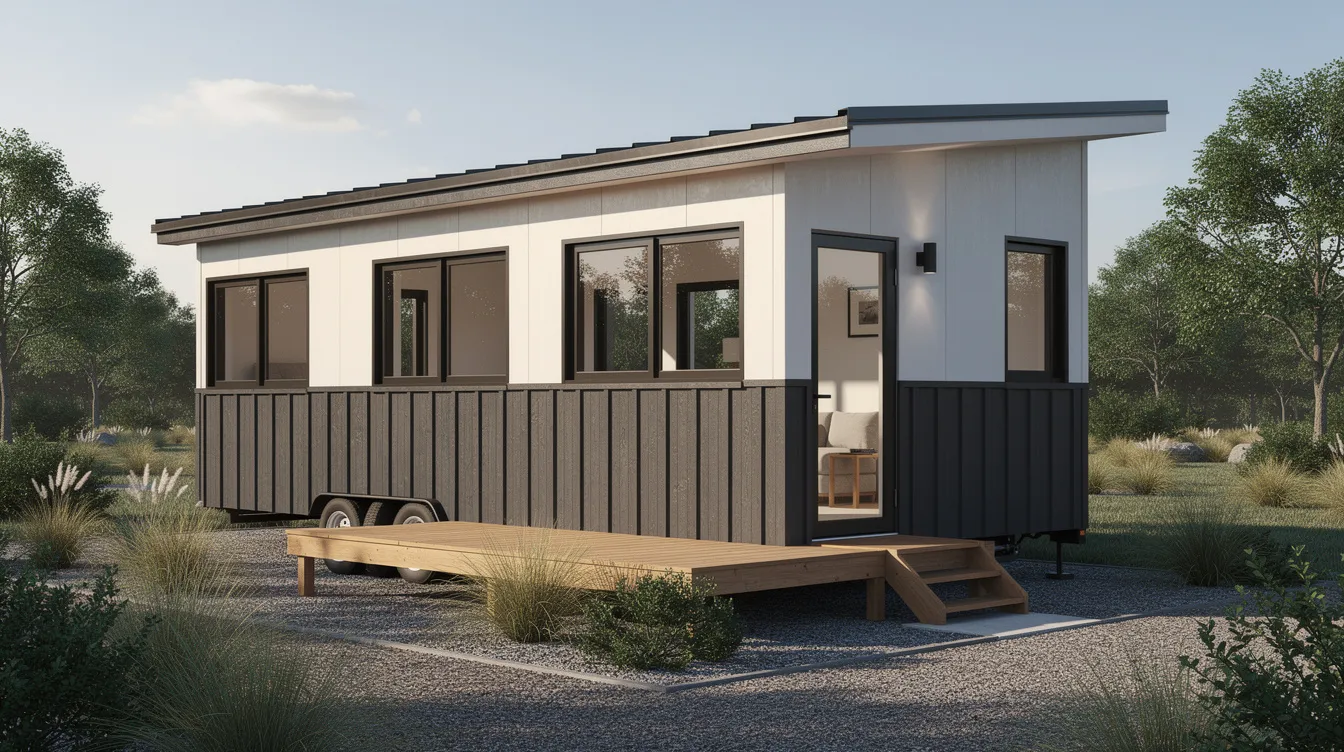
Two tone exteriors for modern tiny house design
Two-tone exteriors are a growing trend in modern tiny homes, combining a darker main color with lighter trim to create visual interest without overwhelming the small scale of the structure, and they frequently appear in top tiny house designs for modern living.
Popular color pairs:
- Charcoal and warm white
- Olive green and tan
- Black with natural wood
Using two-tone exteriors, which combine a darker main color with lighter trim, adds visual interest and depth to tiny homes without overwhelming their small scale. These schemes highlight rooflines, bump-outs, and unique architectural features beautifully.
Architectural Features That Make Tiny Homes Feel Big
Smart architectural features transform a basic box into a distinctive structure. High-impact elements include roof styles, bump-outs, overhangs, and window arrangements, which can even nod to colonial tiny house designs for cozy living.
Rooflines: gable, shed, flat, and A-frame options
Roof Style | Best For | Notes |
|---|---|---|
Gable | Traditional, loft spaces | Good for snow and rain |
Shed | Modern, solar panels | Simple to build |
Flat | Ultra-modern looks | Rooftop deck potential |
A-frame | Cabin-style, forest sites | Dramatic presence |
Consider regional climate, towing height limits, and interior headroom when choosing. |
Unique architectural features that add character
Unique architectural features, such as interesting shapes or angles, can enhance the visual appeal of tiny homes and provide functional benefits like additional outdoor space or improved rainwater drainage.
Ideas to explore, keeping in mind the impact of each feature on your overall budget and the estimates from a tiny home cost calculator:
- Cantilevered breakfast nooks
- Angled façades for a Scandinavian look
- Projecting window boxes
- Built-in exterior benches
- Small overhangs above doors
Windows and doors: compact elements, huge impact
Large windows in tiny homes allow for more natural light to enter, making the interior feel more spacious and connected to the outdoors. A picture window or sliding glass door can visually double perceived space.
Thoughtful window placement can significantly enhance comfort and energy efficiency in tiny homes, with high-set windows providing privacy while allowing fresh air. Custom door designs, such as French doors or glass sliding doors, can maximize natural light and visually open up small spaces in tiny homes.
Black-framed windows emphasize modern style. White or wood frames feel more traditional. Include at least one standout feature as the “hero” of your overall design.
Outdoor Living: Extending Space Beyond the Tiny House Walls
Outdoor features effectively expand livable area without increasing interior square footage, echoing the courtyards and patios often seen in Spanish style tiny house plans.
Porches, decks, and tiny patios
Front porches instantly boost charm and provide weather-protected entry. For tiny houses on wheels, consider removable or fold-down decks that maintain road-legal compliance.
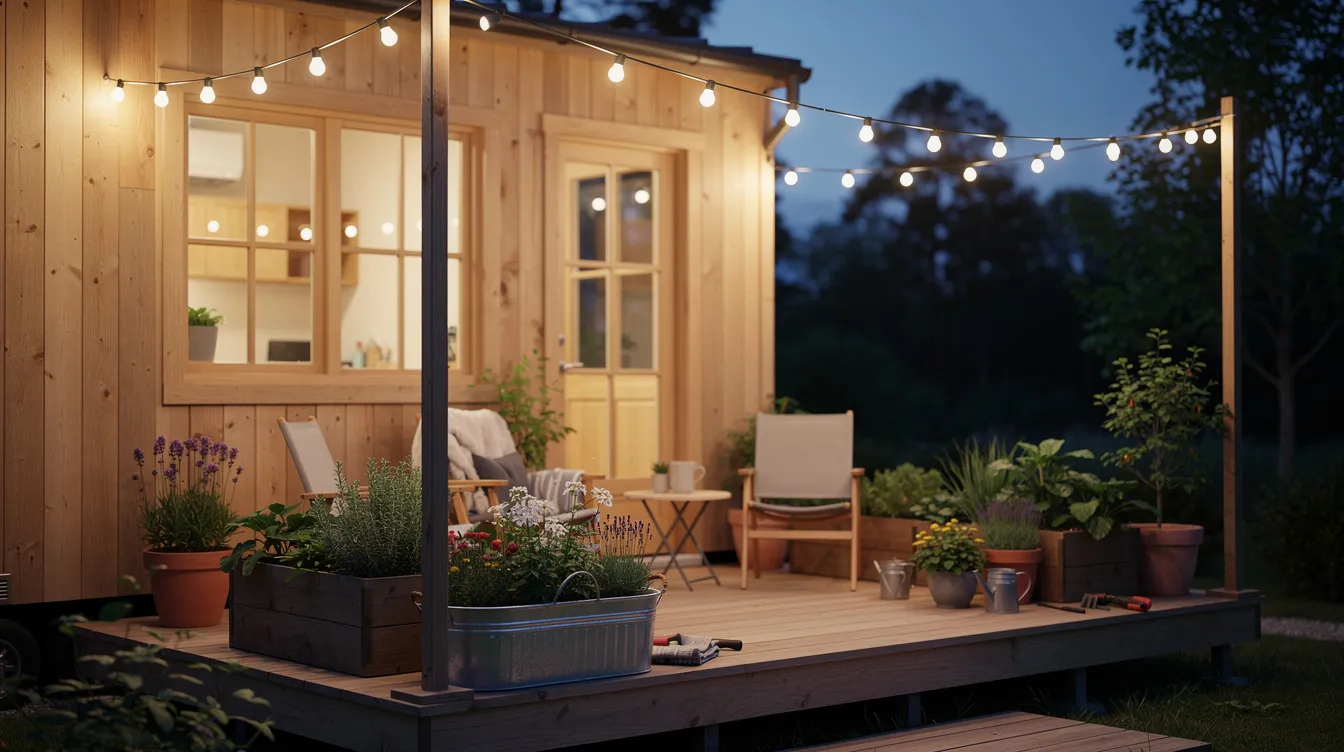
Small side decks with built-in benches, planters, and storage maximize every inch. Match decking material and stain color to your tiny house trim for a unified overall look.
Landscaping and integrating with the surroundings
Creative landscaping can enhance the exterior design of tiny homes, utilizing vertical gardens and container gardens to maximize limited ground space. Even minimal landscaping—gravel paths, a few trees—frames a tiny home beautifully.
Outdoor features like small fire pits and raised garden beds can serve dual purposes, providing both aesthetic appeal and functional outdoor living space. Use native plants to reduce maintenance. Movable planters work well for owners who might relocate.
Exterior lighting to highlight features after dark
Good lighting raises your modern tiny home’s exterior appeal at night, enhancing the overall ambiance.
Lighting ideas:
- Safety lighting at entries and steps
- Wall sconces emphasizing architectural lines
- String lights for ambiance
LED strip lights can be installed along walkways or under eaves to provide subtle illumination at night, highlighting architectural features. Solar-powered lights can be placed in the garden or around outdoor seating areas to create a cozy atmosphere while being eco-friendly.
Incorporating lighting elements such as solar powered lights and string lights can significantly enhance the curb appeal and ambiance of tiny homes at night. Warm white LEDs flatter natural materials like wood and stone better than harsh blue tones.
Design Tips, Budget Ideas, and Planning Checklist
Careful planning keeps your tiny house exterior beautiful, durable, and on budget.
Quick planning checklist:
- Measure your footprint and height limits
- Sketch elevations with interior layout
- Choose your overall style
- Pick materials suited to your climate
- Confirm local codes
- Plan maintenance schedules
Budget-friendly refreshes:
- Repaint the front door
- Replace house numbers
- Add new exterior light fixtures
- Install window boxes or hanging planters
- Pressure-wash siding and clean windows
Focus on the most visible façade first—usually the entry side—to maximize impact for limited cost.
FAQ
What exterior materials are best for a tiny house on wheels?
Lightweight, durable options like metal cladding, engineered wood, and fiber-cement are ideal. These resist road debris and weather exposure during travel. Keep heavy materials like stone or brick to small accent areas. Always confirm total weight with your builder before finalizing choices.
How often should I repaint or restain my tiny home exterior?
Quality exterior paint lasts 7-10 years depending on climate and sun exposure. Stained natural wood may need refreshing every 3-5 years in harsh weather zones. Metal and fiber-cement require less frequent maintenance. Schedule annual inspections to catch issues early.
Can I add a porch or deck to an existing tiny house?
Yes. For tiny houses on wheels, build decks as separate, free-standing structures for towing flexibility. Check local building codes and site conditions before building permanent platforms. Match deck materials to existing trim for a cohesive look.
How do I make a tiny house exterior look less like an RV?
Upgrade to residential-style windows and doors. Add proper trim and house-like siding profiles. Include architectural details like a small gable element or porch. Use landscaping and a defined path to reinforce the home feel. Warm, natural materials and thoughtful lighting shift the visual impression effectively.
What are quick, budget-friendly ways to refresh a tiny house exterior?
Start with simple upgrades: repaint the front door, add new house numbers, upgrade exterior light fixtures. Install window boxes or potted plants for instant life. Pressure-wash siding and re-stain decking. Focus on your most visible façade to maximize impact for limited budgets.